Read the Bible in a Year

Each day, we'll post passages so that you can read the Bible in one year. This is part of The Colossians 13:16 Project, sponsored by Cove Presbyterian Church, 3404 Main Street, Weirton, West Virginia. You're invited to worship with us Sundays, at 11:00 a.m. or Saturdays, at 6:30 p.m. You may also want to consider joining one our adult Bible Studies: Thursdays at 12:00 noon and Sundays at 9:30 a.m. and 10:00 a.m. We also have a full range of programs for children. If you want more information about the church, check out the other blogs. And please feel free to leave any comments.

The Bible in a Year is a ministry of Cove Presbyterian Church. We need your support to keep posting. If you find it helpful, you can support this blog by your contributions. They may be sent to Cove Presbyterian Church, 3404 Main Street, Weirton, WV 26062. You can also use the PayPal link below:

Image result for paypal donate
Showing posts with label Ralph Waldo Emerson. Show all posts

Tuesday, July 3, 2018

Bible Readings for July 2, 2018


Today our passages are 2 Kings 20:1–22:2; Acts 21:17-36; Psalm 150:1-6; and Proverbs 18:9-10. The readings are from The Message by Eugene H. Peterson. If you find these readings helpful, please consider sending an offering directly to Cove Presbyterian Church, 3404 Main Street, Weirton, West Virginia or through PayPal by using the link below.
https://www.paypal.com/cgi-bin/webscr?cmd=_s-xclick&hosted_button_id=NX3WLYQG5864L

2 Kings 20-22:2 (The Message)


2 Kings 20


1 Some time later Hezekiah became deathly sick. The prophet Isaiah son of Amoz paid him a visit and said, "Put your affairs in order; you're about to die—you haven't long to live." 2-3 Hezekiah turned from Isaiah and faced God, praying:
Remember, O God, who I am, what I've done! I've lived an honest life before you, My heart's been true and steady, I've lived to please you; lived for your approval.
And then the tears flowed. Hezekiah wept.
4-6 Isaiah, leaving, was not halfway across the courtyard when the word of God stopped him: "Go back and tell Hezekiah, prince of my people, 'God's word, Hezekiah! From the God of your ancestor David: I've listened to your prayer and I've observed your tears. I'm going to heal you. In three days you will walk on your own legs into The Temple of God. I've just added fifteen years to your life; I'm saving you from the king of Assyria, and I'm covering this city with my shield—for my sake and my servant David's sake.'"
7 Isaiah then said, "Prepare a plaster of figs."
They prepared the plaster, applied it to the boil, and Hezekiah was on his way to recovery.
8 Hezekiah said to Isaiah, "How do I know whether this is of God and not just the fig plaster? What confirming sign is there that God is healing me and that in three days I'll walk into The Temple of God on my own legs?"
9 "This will be your sign from God," said Isaiah, "that God is doing what he said he'd do: Do you want the shadow to advance ten degrees on the sundial or go back ten degrees? You choose."
10 Hezekiah said, "It would be easy to make the sun's shadow advance ten degrees. Make it go back ten degrees."
11 So Isaiah called out in prayer to God, and the shadow went back ten degrees on Ahaz's sundial.
12-13 Shortly after this, Merodach-Baladan, the son of Baladan king of Babylon, having heard that the king was sick, sent a get-well card and a gift to Hezekiah. Hezekiah was pleased and showed the messengers around the place—silver, gold, spices, aromatic oils, his stockpile of weapons—a guided tour of all his prized possessions. There wasn't a thing in his palace or kingdom that Hezekiah didn't show them.
14 And then Isaiah the prophet showed up: "And just what were these men doing here? Where did they come from and why?"
Hezekiah said, "They came from far away—from Babylon."
15 "And what did they see in your palace?"
"Everything," said Hezekiah. "There isn't anything I didn't show them—I gave them the grand tour."
16-18 Then Isaiah spoke to Hezekiah, "Listen to what God has to say about this: The day is coming when everything you own and everything your ancestors have passed down to you, right down to the last cup and saucer, will be cleaned out of here—plundered and packed off to Babylon. God's word! Worse yet, your sons, the progeny of sons you've begotten, will end up as eunuchs in the palace of the king of Babylon."
19 Hezekiah said to Isaiah, "If God says it, it must be good." But he was thinking to himself, "It won't happen during my lifetime—I'll enjoy peace and security as long as I live."
20-21 The rest of the life and times of Hezekiah, along with his projects, especially the way he engineered the Upper Pool and brought water into the city, are written in The Chronicles of the Kings of Judah. Hezekiah died and was buried with his ancestors. His son Manasseh became the next king. 

2 Kings 21

Manasseh of Judah
1-6Manasseh was twelve years old when he became king. He ruled for fifty-five years in Jerusalem. His mother's name was Hephzibah. In God's judgment he was a bad king—an evil king. He reintroduced all the moral rot and spiritual corruption that had been scoured from the country when God dispossessed the pagan nations in favor of the children of Israel. He rebuilt all the sex-and-religion shrines that his father Hezekiah had torn down, and he built altars and phallic images for the sex god Baal and sex goddess Asherah, exactly what Ahaz king of Israel had done. He worshiped the cosmic powers, taking orders from the constellations. He even built these pagan altars in The Temple of God, the very Jerusalem Temple dedicated exclusively by God's decree ("in Jerusalem I place my Name") to God's Name. And he built shrines to the cosmic powers and placed them in both courtyards of The Temple of God. He burned his own son in a sacrificial offering. He practiced black magic and fortunetelling. He held séances and consulted spirits from the underworld. Much evil—in God's judgment, a career in evil. And God was angry. 7-8 As a last straw he placed the carved image of the sex goddess Asherah in The Temple of God, a flagrant and provocative violation of God's well-known statement to both David and Solomon, "In this Temple and in this city Jerusalem, my choice out of all the tribes of Israel, I place my Name—exclusively and forever. Never again will I let my people Israel wander off from this land I gave to their ancestors. But here's the condition: They must keep everything I've commanded in the instructions my servant Moses passed on to them."
9 But the people didn't listen. Manasseh led them off the beaten path into practices of evil even exceeding the evil of the pagan nations that God had earlier destroyed.
10-12 God, thoroughly fed up, sent word through his servants the prophets: "Because Manasseh king of Judah has committed these outrageous sins, eclipsing the sin-performance of the Amorites before him, setting new records in evil, using foul idols to debase Judah into a nation of sinners, this is my judgment, God's verdict: I, the God of Israel, will visit catastrophe on Jerusalem and Judah, a doom so terrible that when people hear of it they'll shake their heads in disbelief, saying, 'I can't believe it!'
13-15 "I'll visit the fate of Samaria on Jerusalem, a rerun of Ahab's doom. I'll wipe out Jerusalem as you would wipe out a dish, wiping it out and turning it over to dry. I'll get rid of what's left of my inheritance, dumping them on their enemies. If their enemies can salvage anything from them, they're welcome to it. They've been nothing but trouble to me from the day their ancestors left Egypt until now. They pushed me to my limit; I won't put up with their evil any longer."
16 The final word on Manasseh was that he was an indiscriminate murderer. He drenched Jerusalem with the innocent blood of his victims. That's on top of all the sins in which he involved his people. As far as God was concerned, he'd turned them into a nation of sinners.
17-18 The rest of the life and times of Manasseh, everything he did and his sorry record of sin, is written in The Chronicles of the Kings of Judah. Manasseh died and joined his ancestors. He was buried in the palace garden, the Garden of Uzza. His son Amon became the next king. 
Amon of Judah
19-22 Amon was twenty-two years old when he became king. He was king for two years in Jerusalem. His mother's name was Meshullemeth, the daughter of Haruz. She was from Jotbah. In God's opinion he lived an evil life, just like his father Manasseh. He followed in the footsteps of his father, serving and worshiping the same foul gods his father had served. He totally deserted the God of his ancestors; he did not live God's way. 23-24 Amon's servants revolted and assassinated him, killing the king right in his own palace. But the people, in their turn, killed the conspirators against King Amon and then crowned Josiah, Amon's son, as king.
25-26 The rest of the life and times of Amon is written in The Chronicles of the Kings of Judah. They buried Amon in his burial plot in the Garden of Uzza. His son Josiah became the next king. 

2 Kings 22

Josiah of Judah
1-2 Josiah was eight years old when he became king. He ruled for thirty-one years in Jerusalem. His mother's name was Jedidah daughter of Adaiah; she was from Bozkath. He lived the way God wanted. He kept straight on the path blazed by his ancestor David, not one step to either left or right.

Acts 21:17-36 (The Message)


Jerusalem
17-19In Jerusalem, our friends, glad to see us, received us with open arms. The first thing next morning, we took Paul to see James. All the church leaders were there. After a time of greeting and small talk, Paul told the story, detail by detail, of what God had done among the non-Jewish people through his ministry. They listened with delight and gave God the glory. 20-21They had a story to tell, too: "And just look at what's been happening here—thousands upon thousands of God-fearing Jews have become believers in Jesus! But there's also a problem because they are more zealous than ever in observing the laws of Moses. They've been told that you advise believing Jews who live surrounded by unbelieving outsiders to go light on Moses, telling them that they don't need to circumcise their children or keep up the old traditions. This isn't sitting at all well with them.
22-24"We're worried about what will happen when they discover you're in town. There's bound to be trouble. So here is what we want you to do: There are four men from our company who have taken a vow involving ritual purification, but have no money to pay the expenses. Join these men in their vows and pay their expenses. Then it will become obvious to everyone that there is nothing to the rumors going around about you and that you are in fact scrupulous in your reverence for the laws of Moses.
25"In asking you to do this, we're not going back on our agreement regarding non-Jews who have become believers. We continue to hold fast to what we wrote in that letter, namely, to be careful not to get involved in activities connected with idols; to avoid serving food offensive to Jewish Christians; to guard the morality of sex and marriage."
26So Paul did it—took the men, joined them in their vows, and paid their way. The next day he went to the Temple to make it official and stay there until the proper sacrifices had been offered and completed for each of them. 
Paul Under Arrest
27-29When the seven days of their purification were nearly up, some Jews from around Ephesus spotted him in the Temple. At once they turned the place upside-down. They grabbed Paul and started yelling at the top of their lungs, "Help! You Israelites, help! This is the man who is going all over the world telling lies against us and our religion and this place. He's even brought Greeks in here and defiled this holy place." (What had happened was that they had seen Paul and Trophimus, the Ephesian Greek, walking together in the city and had just assumed that he had also taken him to the Temple and shown him around.) 30Soon the whole city was in an uproar, people running from everywhere to the Temple to get in on the action. They grabbed Paul, dragged him outside, and locked the Temple gates so he couldn't get back in and gain sanctuary.
31-32As they were trying to kill him, word came to the captain of the guard, "A riot! The whole city's boiling over!" He acted swiftly. His soldiers and centurions ran to the scene at once. As soon as the mob saw the captain and his soldiers, they quit beating Paul.
33-36The captain came up and put Paul under arrest. He first ordered him handcuffed, and then asked who he was and what he had done. All he got from the crowd were shouts, one yelling this, another that. It was impossible to tell one word from another in the mob hysteria, so the captain ordered Paul taken to the military barracks. But when they got to the Temple steps, the mob became so violent that the soldiers had to carry Paul. As they carried him away, the crowd followed, shouting, "Kill him! Kill him!" 

Psalm 150:1-6 (The Message)


Psalm 150


Hallelujah! Praise God in his holy house of worship,
praise him under the open skies;
Praise him for his acts of power,
praise him for his magnificent greatness;
Praise with a blast on the trumpet,
praise by strumming soft strings;
Praise him with castanets and dance,
praise him with banjo and flute;
Praise him with cymbals and a big bass drum,
praise him with fiddles and mandolin.
Let every living, breathing creature praise God!
Hallelujah!

Proverbs 18:9-10 (The Message)


9 Slack habits and sloppy work
are as bad as vandalism.

10 God's name is a place of protection—
good people can run there and be safe.

Verse of the Day

“You people of Judah are so deceitful that you even fool yourselves, and you can't change. But I know your deeds and your thoughts, and I will make sure you get what you deserve.” - Jeremiah 17:9-10
Today's passage is from the Contemporary English Version.

Ralph Waldo Emerson ca1857 retouched.jpg
Thought for the Day

American essayist, lecturer, and poet who led the Transcendentalist movement of the mid-19th century, Ralph Waldo Emerson wrote, “It is not length of life, but depth of life.”


Tuesday, May 16, 2017

Bible Readings for May 16, 2017


Today our passages are 1 Samuel 18:5–19:24; John 8:31-59; Psalm 112:1-10; and Proverbs 15:12-14. The readings are from the Contemporary English VersionIf you find these readings helpful, please consider sending an offering directly to Cove Presbyterian Church, 3404 Main Street, Weirton, West Virginia or through PayPal by using the link below.
 
https://www.paypal.com/cgi-bin/webscr?cmd=_s-xclick&hosted_button_id=NX3WLYQG5864L
 

1 Samuel 18:5-19:24 (Contemporary English Version)

5David was a success in everything that Saul sent him to do, and Saul made him a high officer in his army. That pleased everyone, including Saul's other officers.
   
Saul Becomes David's Enemy
 6David had killed Goliath, the battle was over, and the Israelite army set out for home. As the army went along, women came out of each Israelite town to welcome King Saul. They were singing happy songs and dancing to the music of tambourines and harps. 7They sang:    Saul has killed
   a thousand enemies;
   David has killed
   ten thousand enemies!
    8This song made Saul very angry, and he thought, "They are saying that David has killed ten times more enemies than I ever did. Next they will want to make him king." 9Saul never again trusted David.
    10The next day the LORD let an evil spirit take control of Saul, and he began acting like a crazy man inside his house. David came to play the harp for Saul as usual, but this time Saul had a spear in his hand. 11Saul thought, "I'll pin David to the wall." He threw the spear at David twice, but David dodged and got away both times.
    12Saul was afraid of David, because the LORD was helping David and was no longer helping him. 13Saul put David in charge of a thousand soldiers and sent him out to fight. 14The LORD helped David, and he and his soldiers always won their battles. 15This made Saul even more afraid of David. 16But everyone else in Judah and Israel was loyal to a<="" value="[a]" >[] David, because he led the army in battle. 17One day, Saul told David, "If you'll be brave and fight the LORD's battles for me, I'll let you marry my oldest daughter Merab." But Saul was really thinking, "I don't want to kill David myself, so I'll let the Philistines do it for me."
    18David answered, "How could I possibly marry your daughter? I'm not very important, and neither is my family."
    19But when the time came for David to marry Saul's daughter Merab, Saul told her to marry Adriel from the town of Meholah.
    20Saul had another daughter. Her name was Michal, and Saul found out that she was in love with David. This made Saul happy, 21and he thought, "I'll tell David he can marry Michal, but I'll set it up so that the Philistines will kill him." He told David, "I'm going to give you a second chance to marry one of my daughters."
    22-23Saul ordered his officials to speak to David in private, so they went to David and said, "Look, the king likes you, and all of his officials are loyal to you. Why not ask the king if you can marry his daughter Michal?"
   "I'm not rich [b<="">] or famous enough to marry princess Michal!" David answered. 24The officials went back to Saul and told him exactly what David had said. 25Saul was hoping that the Philistines would kill David, and he told his officials to tell David, "The king doesn't want any silver or gold. He only wants to get even with his enemies. All you have to do is to bring back proof that you have killed a hundred Philistines!" [c<="">] 26The officials told David, and David wanted to marry the princess. King Saul had set a time limit, and before it ran out, 27David and his men left and killed two hundred Philistines. He brought back the proof and showed it to Saul, so he could marry Michal. Saul agreed to let David marry Michal. 28Saul knew that she loved David, [d<="">] and he also realized that the LORD was helping David. 29But knowing those things made Saul even more afraid of David, and he was David's enemy for the rest of his life. 30The Philistine rulers kept coming to fight Israel, but whenever David fought them, he won. He was famous because he won more battles against the Philistines than any of Saul's other officers.
   

1 Samuel 19

Saul Tries To Have David Killed
 1One day, Saul told his son Jonathan and his officers to kill David. But Jonathan liked David a lot, 2-3and he warned David, "My father is trying to have you killed, so be very careful. Hide in a field tomorrow morning, and I'll bring him there. Then I'll talk to him about you, and if I find out anything, I'll let you know."     4-5The next morning, Jonathan reminded Saul about the many good things David had done for him. Then he said, "Why do you want to kill David? He hasn't done anything to you. He has served in your army and has always done what's best for you. He even risked his life to kill Goliath. The LORD helped Israel win a great victory that day, and it made you happy."
    6Saul agreed and promised, "I swear by the living LORD that I won't have David killed!"
    7Jonathan called to David and told him what Saul had said. Then he brought David to Saul, and David served in Saul's army just as he had done before.
    8The next time there was a war with the Philistines, David fought hard and forced them to retreat.
   
Michal Helps David Escape
 9-10One night, David was in Saul's home, playing the harp for him. Saul was sitting there, holding a spear, when an evil spirit from the LORD took control of him. Saul tried to pin David to the wall with the spear, but David dodged, and it stuck in the wall. David ran out of the house and escaped.     11Saul sent guards to watch David's house all night and then to kill him in the morning.
   Michal, David's wife, told him, "If you don't escape tonight, they'll kill you tomorrow!" 12She helped David go through a window and climb down to the ground. [e<="">] As David ran off, 13Michal put a statue in his bed. She put goat hair on its head and dressed it in some of David's clothes. 14The next morning, Saul sent guards to arrest David. But Michal told them, "David is sick."
    15Saul sent the guards back and told them, "Get David out of his bed and bring him to me, so I can have him killed."
    16When the guards went in, all they found in the bed was the statue with the goat hair on its head.
    17"Why have you tricked me this way?" Saul asked Michal. "You helped my enemy get away!"
   She answered, "He said he would kill me if I didn't help him escape!"
   
Samuel Helps David Escape
 18Meanwhile, David went to Samuel at Ramah and told him what Saul had done. Then Samuel and David went to Prophets Village [f<="">] and stayed there. 19Someone told Saul, "David is at Prophets Village in Ramah."     20Saul sent a few soldiers to bring David back. They went to Ramah and found Samuel in charge of a group of prophets who were all prophesying. Then the Spirit of God took control of the soldiers and they started prophesying too.
    21When Saul heard what had happened, he sent another group of soldiers, but they prophesied the same way. He sent a third group of soldiers, but the same thing happened to them. 22Finally, Saul left for Ramah himself. He went as far as the deep pit [g<="">] at the town of Secu, and he asked, "Where are Samuel and David?" "At Prophets Village in Ramah," the people answered.
    23Saul left for Ramah. But as he walked along, the Spirit of God took control of him, and he started prophesying. Then, when he reached Prophets Village, 24he stripped off his clothes and prophesied in front of Samuel. He dropped to the ground and lay there naked all day and night. That's how the saying started, "Is Saul now a prophet?"
   
Footnotes:
  1. 1 Samuel 18:16 was loyal to: Or "loved."
  2. 1 Samuel 18:22 not rich: It was the custom for a man to give the bride's father some silver or gold in order to marry his daughter, and it would take a large amount to marry the daughter of the king.
  3. 1 Samuel 18:25 proof. . . Philistines: Hebrew "one hundred Philistine foreskins." In ancient times soldiers would sometimes cut off body parts of their dead enemies to prove how many they had killed.
  4. 1 Samuel 18:28 she. . . David: Hebrew; one ancient translation "all Israel was loyal to David."
  5. 1 Samuel 19:12 ground: The house was probably built into the town wall, allowing David to come down outside the wall.
  6. 1 Samuel 19:18 Prophets Village: Or "Naioth."
  7. 1 Samuel 19:22 pit: A cistern, a large pit dug down into the rock and used for storing rainwater.

John 8:31-59 (Contemporary English Version)

The Truth Will Set You Free
 31Jesus told the people who had faith in him, "If you keep on obeying what I have said, you truly are my disciples. 32You will know the truth, and the truth will set you free."     33They answered, "We are Abraham's children! We have never been anyone's slaves. How can you say we will be set free?"
    34Jesus replied:
   I tell you for certain that anyone who sins is a slave of sin! 35And slaves don't stay in the family forever, though the Son will always remain in the family. 36If the Son gives you freedom, you are free! 37I know that you are from Abraham's family. Yet you want to kill me, because my message isn't really in your hearts. 38I am telling you what my Father has shown me, just as you are doing what your father has taught you.
   
Your Father Is the Devil
 39The people said to Jesus, "Abraham is our father!"    Jesus replied, "If you were Abraham's children, you would do what Abraham did. 40Instead, you want to kill me for telling you the truth that God gave me. Abraham never did anything like that. 41But you are doing exactly what your father does."
   "Don't accuse us of having someone else as our father!" they said. "We just have one father, and he is God."
    42Jesus answered:
   If God were your Father, you would love me, because I came from God and only from him. He sent me. I did not come on my own. 43Why can't you understand what I am talking about? Can't you stand to hear what I am saying? 44Your father is the devil, and you do exactly what he wants. He has always been a murderer and a liar. There is nothing truthful about him. He speaks on his own, and everything he says is a lie. Not only is he a liar himself, but he is also the father of all lies.
    45Everything I have told you is true, and you still refuse to have faith in me. 46Can any of you accuse me of sin? If you cannot, why won't you have faith in me? After all, I am telling you the truth. 47Anyone who belongs to God will listen to his message. But you refuse to listen, because you don't belong to God.
   
Jesus and Abraham
 48The people told Jesus, "We were right to say that you are a Samaritan a<="" value="[a]" >[] and that you have a demon in you!" 49Jesus answered, "I don't have a demon in me. I honor my Father, and you refuse to honor me. 50I don't want honor for myself. But there is one who wants me to be honored, and he is also the one who judges. 51I tell you for certain that if you obey my words, you will never die."     52Then the people said, "Now we are sure that you have a demon. Abraham is dead, and so are the prophets. How can you say that no one who obeys your words will ever die? 53Are you greater than our father Abraham? He died, and so did the prophets. Who do you think you are?"
    54Jesus replied, "If I honored myself, it would mean nothing. My Father is the one who honors me. You claim that he is your God, 55even though you don't really know him. If I said I didn't know him, I would be a liar, just like all of you. But I know him, and I do what he says. 56Your father Abraham was really glad to see me."
    57"You are not even fifty years old!" they said. "How could you have seen Abraham?"
    58Jesus answered, "I tell you for certain that even before Abraham was, I was, and I am." [b<="">] 59The people picked up stones to kill Jesus, but he hid and left the temple.
Footnotes:
  1. John 8:48 Samaritan: See 4.9 and the note there.
  2. John 8:58 I am: See the note at 8.24.

Psalm 112:1-10 (Contemporary English Version)

Psalm 112

God Blesses His Worshipers
 1Shout praises to the LORD!    The LORD blesses everyone
   who worships him and gladly
   obeys his teachings.
    2Their descendants will have
   great power in the land,
   because the LORD blesses
   all who do right.
    3They will get rich and prosper
   and will always be remembered
   for their fairness.
    4They will be so kind
   and merciful and good,
   that they will be a light
   in the dark
   for others
   who do the right thing.
    5Life will go well for those
   who freely lend
   and are honest in business.
    6They won't ever be troubled,
   and the kind things they do
   will never be forgotten.
    7Bad news won't bother them;
   they have decided
   to trust the LORD.
    8They are dependable
   and not afraid,
   and they will live to see
   their enemies defeated.
    9They will always be remembered
   and greatly praised,
   because they were kind
   and freely gave to the poor.
    10When evil people see this,
   they angrily bite their tongues
   and disappear.
   They will never get
   what they really want.


Proverbs 15:12-14 (Contemporary English Version)

12Those who sneer at others
   don't like to be corrected,
   and they won't ask help
   from someone with sense.
    13Happiness makes you smile;
   sorrow can crush you.
    14Anyone with good sense
   is eager to learn more,
   but fools are hungry
   for foolishness.


Verse of the Day

“The LORD your God wins victory after victory and is always with you. He celebrates and sings because of you, and he will refresh your life with his love.” - Zephaniah 3:17
Today's passage is from the Contemporary English Version.


Ralph Waldo Emerson ca1857 retouched.jpgThought for the Day

American essayist, lecturer, and poet who led the transcendentalist movement of the mid-19th century, Ralph Waldo Emerson wrote, “A man is usually more careful of his money than he is of his principles.”


Image result for missionaries cannibalsA Joke for the Day
 
Two missionaries in Africa get apprehended by a tribe of very hostile cannibals who put them in a large pot of water. They build a huge fire under it, and leave them there. A few minutes later, one of the missionaries starts to laugh uncontrollably.
 
The other missionary can't believe it. He says, "What's wrong with you? We're being boiled alive! They're gonna eat us! What could possibly be funny at a time like this?"
 

The other missionary says, "I just peed in the soup!"

Monday, October 17, 2016

Bible Readings for October 17, 2019


Today our passages are Jeremiah 30:1–31:26; 1 Timothy 2:1-15; Psalm 87:1-7; and Proverbs 25:18-19. The readings are from The Message by Eugene H. Peterson. If you missed a day, you can find all the readings at our blog, The Bible in a Year. If you find these readings helpful, please consider sending an offering directly to Cove Presbyterian Church, 3404 Main Street, Weirton, West Virginia or through PayPal by using the link below.
 
https://www.paypal.com/cgi-bin/webscr?cmd=_s-xclick&hosted_button_id=NX3WLYQG5864L

Jeremiah 30-31:26 (The Message)


Jeremiah 30

Don't Despair, Israel
 1-2 This is the Message Jeremiah received from God: "God's Message, the God of Israel: 'Write everything I tell you in a book. 3"'Look. The time is coming when I will turn everything around for my people, both Israel and Judah. I, God, say so. I'll bring them back to the land I gave their ancestors, and they'll take up ownership again.'"  4This is the way God put it to Israel and Judah:

 5-7"God's Message:

   "'Cries of panic are being heard.
   The peace has been shattered.
Ask around! Look around!
   Can men bear babies?
So why do I see all these he-men
   holding their bellies like women in labor,
Faces contorted,
   pale as death?
The blackest of days,
   no day like it ever!
A time of deep trouble for Jacob—
   but he'll come out of it alive.

 8-9"'And then I'll enter the darkness.
   I'll break the yoke from their necks,
Cut them loose from the harness.
   No more slave labor to foreigners!
They'll serve their God
   and the David-King I'll establish for them.

 10-11"'So fear no more, Jacob, dear servant.
   Don't despair, Israel.
Look up! I'll save you out of faraway places,
   I'll bring your children back from exile.
Jacob will come back and find life good,
   safe and secure.
I'll be with you. I'll save you.
   I'll finish off all the godless nations
Among which I've scattered you,
   but I won't finish you off.
I'll punish you, but fairly.
   I won't send you off with just a slap on the wrist.'

 12-15"This is God's Message:
   "'You're a burned-out case,
   as good as dead.
Everyone has given up on you.
   You're hopeless.
All your fair-weather friends have skipped town
   without giving you a second thought.
But I delivered the knockout blow,
   a punishment you will never forget,
Because of the enormity of your guilt,
   the endless list of your sins.
So why all this self-pity, licking your wounds?
   You deserve all this, and more.
Because of the enormity of your guilt,
   the endless list of your sins,
I've done all this to you.

 16-17"'Everyone who hurt you will be hurt;
   your enemies will end up as slaves.
Your plunderers will be plundered;
   your looters will become loot.
As for you, I'll come with healing,
   curing the incurable,
Because they all gave up on you
   and dismissed you as hopeless—
   that good-for-nothing Zion.'

 18-21"Again, God's Message:
   "'I'll turn things around for Jacob.
   I'll compassionately come in and rebuild homes.
The town will be rebuilt on its old foundations;
   the mansions will be splendid again.
Thanksgivings will pour out of the windows;
   laughter will spill through the doors.
Things will get better and better.
   Depression days are over.
They'll thrive, they'll flourish.
   The days of contempt will be over.
They'll look forward to having children again,
   to being a community in which I take pride.
I'll punish anyone who hurts them,
   and their prince will come from their own ranks.
One of their own people shall be their leader.
   Their ruler will come from their own ranks.
I'll grant him free and easy access to me.
   Would anyone dare to do that on his own,
   to enter my presence uninvited?' God's Decree.

 22"'And that's it: You'll be my very own people,
   I'll be your very own God.'"

 23-24Look out! God's hurricane is let loose,
   his hurricane blast,
Spinning the heads of the wicked like dust devils!
   God's raging anger won't let up
Until he's made a clean sweep
   completing the job he began.
When the job's done
   you'll see it's been well done.

Jeremiah 31

 1 "And when that happens"—God's Decree— "it will be plain as the sun at high noon:
I'll be the God of every man, woman, and child in Israel
   and they shall be my very own people."
 2-6This is the way God put it:
   "They found grace out in the desert,
   these people who survived the killing.
Israel, out looking for a place to rest,
   met God out looking for them!"
God told them, "I've never quit loving you and never will.
   Expect love, love, and more love!
And so now I'll start over with you and build you up again,
   dear virgin Israel.
You'll resume your singing,
   grabbing tambourines and joining the dance.
You'll go back to your old work of planting vineyards
   on the Samaritan hillsides,
And sit back and enjoy the fruit—
   oh, how you'll enjoy those harvests!
The time's coming when watchmen will call out
   from the hilltops of Ephraim:
'On your feet! Let's go to Zion,
   go to meet our God!'"

 7Oh yes, God says so:
   "Shout for joy at the top of your lungs for Jacob!
   Announce the good news to the number-one nation!
Raise cheers! Sing praises. Say,
   'God has saved his people,
   saved the core of Israel.'

 8"Watch what comes next: "I'll bring my people back
   from the north country
And gather them up from the ends of the earth,
   gather those who've gone blind
And those who are lame and limping,
   gather pregnant women,
Even the mothers whose birth pangs have started,
   bring them all back, a huge crowd!

 9"Watch them come! They'll come weeping for joy
   as I take their hands and lead them,
Lead them to fresh flowing brooks,
   lead them along smooth, uncluttered paths.
Yes, it's because I'm Israel's Father
   and Ephraim's my firstborn son!

 10-14"Hear this, nations! God's Message!
   Broadcast this all over the world!
Tell them, 'The One who scattered Israel
   will gather them together again.
From now on he'll keep a careful eye on them,
   like a shepherd with his flock.'
I, God, will pay a stiff ransom price for Jacob;
   I'll free him from the grip of the Babylonian bully.
The people will climb up Zion's slopes shouting with joy,
   their faces beaming because of God's bounty—
Grain and wine and oil,
   flocks of sheep, herds of cattle.
Their lives will be like a well-watered garden,
   never again left to dry up.
Young women will dance and be happy,
   young men and old men will join in.
I'll convert their weeping into laughter,
   lavishing comfort, invading their grief with joy.
I'll make sure that their priests get three square meals a day
   and that my people have more than enough.'" God's Decree.

 15-17Again, God's Message:
   "Listen to this! Laments coming out of Ramah,
   wild and bitter weeping.
It's Rachel weeping for her children,
   Rachel refusing all solace.
Her children are gone,
   gone—long gone into exile."
But God says, "Stop your incessant weeping,
   hold back your tears.
Collect wages from your grief work." God's Decree.
   "They'll be coming back home!
There's hope for your children." God's Decree.

 18-19"I've heard the contrition of Ephraim.
   Yes, I've heard it clearly, saying,
'You trained me well.
   You broke me, a wild yearling horse, to the saddle.
Now put me, trained and obedient, to use.
   You are my God.
After those years of running loose, I repented.
   After you trained me to obedience,
I was ashamed of my past, my wild, unruly past.
   Humiliated, I beat on my chest.
Will I ever live this down?'

 20"Oh! Ephraim is my dear, dear son,
   my child in whom I take pleasure!
Every time I mention his name,
   my heart bursts with longing for him!
Everything in me cries out for him.
   Softly and tenderly I wait for him." God's Decree.

 21-22"Set up signposts to mark your trip home.
   Get a good map.
Study the road conditions.
   The road out is the road back.
Come back, dear virgin Israel,
   come back to your hometowns.
How long will you flit here and there, indecisive?
   How long before you make up your fickle mind?
God will create a new thing in this land:
   A transformed woman will embrace the transforming God!"

 23-24A Message from Israel's God-of-the-Angel-Armies: "When I've turned everything around and brought my people back, the old expressions will be heard on the streets: 'God bless you!'...'O True Home!'...'O Holy Mountain!' All Judah's people, whether in town or country, will get along just fine with each other.
 25I'll refresh tired bodies;
   I'll restore tired souls.

 26Just then I woke up and looked around—what a pleasant and satisfying sleep!


1 Timothy 2:1-15 (The Message)

1 Timothy 2

Simple Faith and Plain Truth
 1-3The first thing I want you to do is pray. Pray every way you know how, for everyone you know. Pray especially for rulers and their governments to rule well so we can be quietly about our business of living simply, in humble contemplation. This is the way our Savior God wants us to live.  4-7He wants not only us but everyone saved, you know, everyone to get to know the truth we've learned: that there's one God and only one, and one Priest-Mediator between God and us—Jesus, who offered himself in exchange for everyone held captive by sin, to set them all free. Eventually the news is going to get out. This and this only has been my appointed work: getting this news to those who have never heard of God, and explaining how it works by simple faith and plain truth.
 8-10Since prayer is at the bottom of all this, what I want mostly is for men to pray—not shaking angry fists at enemies but raising holy hands to God. And I want women to get in there with the men in humility before God, not primping before a mirror or chasing the latest fashions but doing something beautiful for God and becoming beautiful doing it.
 11-15I don't let women take over and tell the men what to do. They should study to be quiet and obedient along with everyone else. Adam was made first, then Eve; woman was deceived first—our pioneer in sin!—with Adam right on her heels. On the other hand, her childbearing brought about salvation, reversing Eve. But this salvation only comes to those who continue in faith, love, and holiness, gathering it all into maturity. You can depend on this.


Psalm 87:1-7 (The Message)

Psalm 87

A Korah Psalm
 1-3 He founded Zion on the Holy Mountain— and oh, how God loves his home!
   Loves it far better than all
      the homes of Jacob put together!
   God's hometown—oh!
      everyone there is talking about you!

 4 I name them off, those among whom I'm famous:
      Egypt and Babylon,
      also Philistia,
      even Tyre, along with Cush.
   Word's getting around; they point them out:
      "This one was born again here!"

 5 The word's getting out on Zion:
      "Men and women, right and left,
      get born again in her!"

 6 God registers their names in his book:
      "This one, this one, and this one—
      born again, right here."

 7 Singers and dancers give credit to Zion:
      "All my springs are in you!"


Proverbs 25:18-19 (The Message)


 18 Anyone who tells lies against the neighbors
   in court or on the street is a loose cannon.

 19 Trusting a double-crosser when you're in trouble
   is like biting down on an abscessed tooth.


Verse of the Day

“Our LORD, you are the friend of your worshipers, and you make an agreement with all of us. I always look to you, because you rescue me from every trap.” - Psalm 25:14-15
Today's passage is from the Contemporary English Version.

 
Ralph Waldo Emerson ca1857 retouched.jpg
Thought for the Day

American essayist, lecturer, and poet who led the Transcendentalist movement of the mid-19th century, Ralph Waldo Emerson wrote, “Our greatest glory is not in never failing, but in rising up every time we fail.”

Saturday, July 2, 2016

Bible Readings for July 2, 2016


Today our passages are 2 Kings 20:1–22:2; Acts 21:17-36; Psalm 150:1-6; and Proverbs 18:9-10. The readings are from The Message by Eugene H. PetersonIf you find these readings helpful, please consider sending an offering directly to Cove Presbyterian Church, 3404 Main Street, Weirton, West Virginia or through PayPal.

2 Kings 20-22:2 (The Message)


2 Kings 20

1 Some time later Hezekiah became deathly sick. The prophet Isaiah son of Amoz paid him a visit and said, "Put your affairs in order; you're about to die—you haven't long to live." 2-3 Hezekiah turned from Isaiah and faced God, praying:
Remember, O God, who I am, what I've done! I've lived an honest life before you, My heart's been true and steady, I've lived to please you; lived for your approval.

And then the tears flowed. Hezekiah wept.
4-6 Isaiah, leaving, was not halfway across the courtyard when the word of God stopped him: "Go back and tell Hezekiah, prince of my people, 'God's word, Hezekiah! From the God of your ancestor David: I've listened to your prayer and I've observed your tears. I'm going to heal you. In three days you will walk on your own legs into The Temple of God. I've just added fifteen years to your life; I'm saving you from the king of Assyria, and I'm covering this city with my shield—for my sake and my servant David's sake.'"
7 Isaiah then said, "Prepare a plaster of figs."
They prepared the plaster, applied it to the boil, and Hezekiah was on his way to recovery.
8 Hezekiah said to Isaiah, "How do I know whether this is of God and not just the fig plaster? What confirming sign is there that God is healing me and that in three days I'll walk into The Temple of God on my own legs?"
9 "This will be your sign from God," said Isaiah, "that God is doing what he said he'd do: Do you want the shadow to advance ten degrees on the sundial or go back ten degrees? You choose."
10 Hezekiah said, "It would be easy to make the sun's shadow advance ten degrees. Make it go back ten degrees."
11 So Isaiah called out in prayer to God, and the shadow went back ten degrees on Ahaz's sundial.
12-13 Shortly after this, Merodach-Baladan, the son of Baladan king of Babylon, having heard that the king was sick, sent a get-well card and a gift to Hezekiah. Hezekiah was pleased and showed the messengers around the place—silver, gold, spices, aromatic oils, his stockpile of weapons—a guided tour of all his prized possessions. There wasn't a thing in his palace or kingdom that Hezekiah didn't show them.
14 And then Isaiah the prophet showed up: "And just what were these men doing here? Where did they come from and why?"
Hezekiah said, "They came from far away—from Babylon."
15 "And what did they see in your palace?"
"Everything," said Hezekiah. "There isn't anything I didn't show them—I gave them the grand tour."
16-18 Then Isaiah spoke to Hezekiah, "Listen to what God has to say about this: The day is coming when everything you own and everything your ancestors have passed down to you, right down to the last cup and saucer, will be cleaned out of here—plundered and packed off to Babylon. God's word! Worse yet, your sons, the progeny of sons you've begotten, will end up as eunuchs in the palace of the king of Babylon."
19 Hezekiah said to Isaiah, "If God says it, it must be good." But he was thinking to himself, "It won't happen during my lifetime—I'll enjoy peace and security as long as I live."
20-21 The rest of the life and times of Hezekiah, along with his projects, especially the way he engineered the Upper Pool and brought water into the city, are written in The Chronicles of the Kings of Judah. Hezekiah died and was buried with his ancestors. His son Manasseh became the next king.

2 Kings 21

Manasseh of Judah
1-6Manasseh was twelve years old when he became king. He ruled for fifty-five years in Jerusalem. His mother's name was Hephzibah. In God's judgment he was a bad king—an evil king. He reintroduced all the moral rot and spiritual corruption that had been scoured from the country when God dispossessed the pagan nations in favor of the children of Israel. He rebuilt all the sex-and-religion shrines that his father Hezekiah had torn down, and he built altars and phallic images for the sex god Baal and sex goddess Asherah, exactly what Ahaz king of Israel had done. He worshiped the cosmic powers, taking orders from the constellations. He even built these pagan altars in The Temple of God, the very Jerusalem Temple dedicated exclusively by God's decree ("in Jerusalem I place my Name") to God's Name. And he built shrines to the cosmic powers and placed them in both courtyards of The Temple of God. He burned his own son in a sacrificial offering. He practiced black magic and fortunetelling. He held séances and consulted spirits from the underworld. Much evil—in God's judgment, a career in evil. And God was angry. 7-8 As a last straw he placed the carved image of the sex goddess Asherah in The Temple of God, a flagrant and provocative violation of God's well-known statement to both David and Solomon, "In this Temple and in this city Jerusalem, my choice out of all the tribes of Israel, I place my Name—exclusively and forever. Never again will I let my people Israel wander off from this land I gave to their ancestors. But here's the condition: They must keep everything I've commanded in the instructions my servant Moses passed on to them."
9 But the people didn't listen. Manasseh led them off the beaten path into practices of evil even exceeding the evil of the pagan nations that God had earlier destroyed.
10-12 God, thoroughly fed up, sent word through his servants the prophets: "Because Manasseh king of Judah has committed these outrageous sins, eclipsing the sin-performance of the Amorites before him, setting new records in evil, using foul idols to debase Judah into a nation of sinners, this is my judgment, God's verdict: I, the God of Israel, will visit catastrophe on Jerusalem and Judah, a doom so terrible that when people hear of it they'll shake their heads in disbelief, saying, 'I can't believe it!'
13-15 "I'll visit the fate of Samaria on Jerusalem, a rerun of Ahab's doom. I'll wipe out Jerusalem as you would wipe out a dish, wiping it out and turning it over to dry. I'll get rid of what's left of my inheritance, dumping them on their enemies. If their enemies can salvage anything from them, they're welcome to it. They've been nothing but trouble to me from the day their ancestors left Egypt until now. They pushed me to my limit; I won't put up with their evil any longer."
16 The final word on Manasseh was that he was an indiscriminate murderer. He drenched Jerusalem with the innocent blood of his victims. That's on top of all the sins in which he involved his people. As far as God was concerned, he'd turned them into a nation of sinners.
17-18 The rest of the life and times of Manasseh, everything he did and his sorry record of sin, is written in The Chronicles of the Kings of Judah. Manasseh died and joined his ancestors. He was buried in the palace garden, the Garden of Uzza. His son Amon became the next king.
Amon of Judah
19-22 Amon was twenty-two years old when he became king. He was king for two years in Jerusalem. His mother's name was Meshullemeth, the daughter of Haruz. She was from Jotbah. In God's opinion he lived an evil life, just like his father Manasseh. He followed in the footsteps of his father, serving and worshiping the same foul gods his father had served. He totally deserted the God of his ancestors; he did not live God's way. 23-24 Amon's servants revolted and assassinated him, killing the king right in his own palace. But the people, in their turn, killed the conspirators against King Amon and then crowned Josiah, Amon's son, as king.
25-26 The rest of the life and times of Amon is written in The Chronicles of the Kings of Judah. They buried Amon in his burial plot in the Garden of Uzza. His son Josiah became the next king.

2 Kings 22

Josiah of Judah
1-2 Josiah was eight years old when he became king. He ruled for thirty-one years in Jerusalem. His mother's name was Jedidah daughter of Adaiah; she was from Bozkath. He lived the way God wanted. He kept straight on the path blazed by his ancestor David, not one step to either left or right.

Acts 21:17-36 (The Message)


Jerusalem
17-19In Jerusalem, our friends, glad to see us, received us with open arms. The first thing next morning, we took Paul to see James. All the church leaders were there. After a time of greeting and small talk, Paul told the story, detail by detail, of what God had done among the non-Jewish people through his ministry. They listened with delight and gave God the glory. 20-21They had a story to tell, too: "And just look at what's been happening here—thousands upon thousands of God-fearing Jews have become believers in Jesus! But there's also a problem because they are more zealous than ever in observing the laws of Moses. They've been told that you advise believing Jews who live surrounded by unbelieving outsiders to go light on Moses, telling them that they don't need to circumcise their children or keep up the old traditions. This isn't sitting at all well with them.
22-24"We're worried about what will happen when they discover you're in town. There's bound to be trouble. So here is what we want you to do: There are four men from our company who have taken a vow involving ritual purification, but have no money to pay the expenses. Join these men in their vows and pay their expenses. Then it will become obvious to everyone that there is nothing to the rumors going around about you and that you are in fact scrupulous in your reverence for the laws of Moses.
25"In asking you to do this, we're not going back on our agreement regarding non-Jews who have become believers. We continue to hold fast to what we wrote in that letter, namely, to be careful not to get involved in activities connected with idols; to avoid serving food offensive to Jewish Christians; to guard the morality of sex and marriage."
26So Paul did it—took the men, joined them in their vows, and paid their way. The next day he went to the Temple to make it official and stay there until the proper sacrifices had been offered and completed for each of them.
Paul Under Arrest
27-29When the seven days of their purification were nearly up, some Jews from around Ephesus spotted him in the Temple. At once they turned the place upside-down. They grabbed Paul and started yelling at the top of their lungs, "Help! You Israelites, help! This is the man who is going all over the world telling lies against us and our religion and this place. He's even brought Greeks in here and defiled this holy place." (What had happened was that they had seen Paul and Trophimus, the Ephesian Greek, walking together in the city and had just assumed that he had also taken him to the Temple and shown him around.) 30Soon the whole city was in an uproar, people running from everywhere to the Temple to get in on the action. They grabbed Paul, dragged him outside, and locked the Temple gates so he couldn't get back in and gain sanctuary.
31-32As they were trying to kill him, word came to the captain of the guard, "A riot! The whole city's boiling over!" He acted swiftly. His soldiers and centurions ran to the scene at once. As soon as the mob saw the captain and his soldiers, they quit beating Paul.
33-36The captain came up and put Paul under arrest. He first ordered him handcuffed, and then asked who he was and what he had done. All he got from the crowd were shouts, one yelling this, another that. It was impossible to tell one word from another in the mob hysteria, so the captain ordered Paul taken to the military barracks. But when they got to the Temple steps, the mob became so violent that the soldiers had to carry Paul. As they carried him away, the crowd followed, shouting, "Kill him! Kill him!"

Psalm 150:1-6 (The Message)


Psalm 150


Hallelujah! Praise God in his holy house of worship,
praise him under the open skies;
Praise him for his acts of power,
praise him for his magnificent greatness;
Praise with a blast on the trumpet,
praise by strumming soft strings;
Praise him with castanets and dance,
praise him with banjo and flute;
Praise him with cymbals and a big bass drum,
praise him with fiddles and mandolin.
Let every living, breathing creature praise God!
Hallelujah!

Proverbs 18:9-10 (The Message)


9 Slack habits and sloppy work
are as bad as vandalism.

10 God's name is a place of protection—
good people can run there and be safe.


Verse of the Day
“You people of Judah are so deceitful that you even fool yourselves, and you can't change. But I know your deeds and your thoughts, and I will make sure you get what you deserve.” - Jeremiah 17:9-10
Today's passage is from the Contemporary English Version.
Ralph Waldo Emerson ca1857 retouched.jpg
Thought for the Day
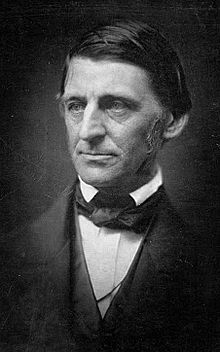
American essayist, lecturer, and poet who led the Transcendentalist movement of the mid-19th century, Ralph Waldo Emerson wrote, “It is not length of life, but depth of life.”