Read the Bible in a Year

Each day, we'll post passages so that you can read the Bible in one year. This is part of The Colossians 13:16 Project, sponsored by Cove Presbyterian Church, 3404 Main Street, Weirton, West Virginia. You're invited to worship with us Sundays, at 11:00 a.m. or Saturdays, at 6:30 p.m. You may also want to consider joining one our adult Bible Studies: Thursdays at 12:00 noon and Sundays at 9:30 a.m. and 10:00 a.m. We also have a full range of programs for children. If you want more information about the church, check out the other blogs. And please feel free to leave any comments.

The Bible in a Year is a ministry of Cove Presbyterian Church. We need your support to keep posting. If you find it helpful, you can support this blog by your contributions. They may be sent to Cove Presbyterian Church, 3404 Main Street, Weirton, WV 26062. You can also use the PayPal link below:

Image result for paypal donate
Showing posts with label Acts. Show all posts

Thursday, July 11, 2019

Bible Readings for July 11, 2019

Today our passages are 1 Chronicles 11:1–12:18; Acts 28:1-31; Psalm 9:1-12; and Proverbs 19:1-3. The readings are from the Contemporary English Version. If you find these readings helpful, please consider sending an offering directly to Cove Presbyterian Church, 3404 Main Street, Weirton, West Virginia or through PayPal by using the link below.
https://www.paypal.com/cgi-bin/webscr?cmd=_s-xclick&hosted_button_id=NX3WLYQG5864L

1 Chronicles 11-12:18 (Contemporary English Version)


1 Chronicles 11

David Becomes King of Israel
(2 Samuel 5.1-3)
 1Israel's leaders met with David at Hebron and said, "We are your relatives, 2and we know that you have led our army into battle, even when Saul was still our king. The LORD God has promised that you would rule our country and take care of us like a shepherd. 3So we have come to crown you king of Israel."
   David made an agreement with the leaders and asked the LORD to be their witness. Then the leaders poured olive oil on David's head to show that he was now king of Israel. This happened just as the LORD's prophet Samuel had said.   
David Captures Jerusalem
(2 Samuel 5.6-10)
 4Jerusalem was called Jebus at the time, and David led Israel's army to attack the town. 5The Jebusites said, "You won't be able to get in here!" But David captured the fortress of Mount Zion, which is now called the City of David.
    6David had told his troops, "The first soldier to kill a Jebusite will become my army commander." And since Joab son of Zeruiah attacked first, he became commander.
    7Later, David moved to the fortress--that's why it's called the City of David. 8He had the city rebuilt, starting at the landfill on the east side. [a] Meanwhile, Joab supervised the repairs to the rest of the city. 9David became a great and strong ruler, because the LORD All-Powerful was on his side.  
The Three Warriors
(2 Samuel 23.8-17)
 10The LORD had promised that David would become king, and so everyone in Israel gave David their support. Certain warriors also helped keep his kingdom strong.
    11The first of these warriors was Jashobeam the son of Hachmoni, the leader of the Three Warriors. [b] In one battle he killed three hundred men with his spear. 12Another one of the Three Warriors was Eleazar son of Dodo the Ahohite. 13During a battle against the Philistines at Pas-Dammim, all the Israelite soldiers ran away, 14except Eleazar, who stayed with David. They took their positions in a nearby barley field and defeated the Philistines! The LORD gave Israel a great victory that day.
    15One time the Three Warriors [c] went to meet David among the rocks at Adullam Cave. The Philistine army had set up camp in Rephaim Valley 16and had taken over Bethlehem. David was in a fortress, 17and he said, "I'm very thirsty. I wish I had a drink of water from the well by the gate to Bethlehem." 18The Three Warriors sneaked through the Philistine camp and got some water from the well near Bethlehem's gate. They took it back to David, but he refused to drink it. Instead, he poured out the water as a sacrifice to the LORD 19and said, "Drinking this water would be like drinking the blood of these men who risked their lives to get it for me."
   The Three Warriors did these brave deeds.   
The Thirty Warriors
(2 Samuel 23.18-39)
 20Joab's brother Abishai was the leader of the Thirty Warriors, [d] and in one battle he killed three hundred men with his spear. He was just as famous as the Three Warriors 21and was more famous than the rest of the Thirty Warriors. He was their commander, but he never became one of the Three Warriors. [e] 22Benaiah the son of Jehoiada was a brave man from Kabzeel who did some amazing things. One time he killed two of Moab's best fighters, and one snowy day he went into a pit and killed a lion. 23Another time he killed an Egyptian who was seven and a half feet tall and was armed with a spear. Benaiah only had a club, so he grabbed the spear from the Egyptian and killed him with it. 24Benaiah did things like that; he was just as brave as the Three Warriors, 25even though he never became one of them. And he was certainly as famous as the rest of the Thirty Warriors. So David made him the leader of his own bodyguard.
    26-47Here is a list of the other famous warriors:
   Asahel the brother of Joab; Elhanan the son of Dodo from Bethlehem; Shammoth from Haror; Helez from Pelon; Ira the son of Ikkesh from Tekoa; Abiezer from Anathoth; Sibbecai the Hushathite; Ilai [f] the Ahohite; Maharai from Netophah; Heled the son of Baanah from Netophah; Ithai the son of Ribai from Gibeah in Benjamin; Benaiah from Pirathon; Hurai [g] from near the streams on Mount Gaash; Abiel from Arbah; Azmaveth from Baharum; Eliahba from Shaalbon; Hashem [h] the Gizonite; Jonathan the son of Shagee from Harar; Ahiam the son of Sachar the Hararite; Eliphal the son of Ur; Hepher from Mecherah; Ahijah from Pelon; Hezro from Carmel; Naarai the son of Ezbai; Joel the brother of Nathan; Mibhar the son of Hagri; Zelek from Ammon; Naharai from Beeroth who carried Joab's weapons; Ira the Ithrite; Gareb the Ithrite; Uriah the Hittite; Zabad the son of Ahlai; Adina the son of Shiza, a leader in the Reuben tribe, and thirty of his soldiers; Hanan the son of Maacah; Joshaphat from Mithan; Uzzia from Ashterah; Shama and Jeiel the sons of Hotham from Aroer; Jediael and Joha the sons of Shimri from Tiz; Eliel from Mahavah; Jeribai and Joshaviah the sons of Elnaam; Ithmah from Moab; Eliel, Obed, and Jaasiel from Mezobah.

1 Chronicles 12

David's Men at Ziklag
 1Some time earlier, David had gone to live in the town of Ziklag to escape from King Saul. While David was there, several brave warriors joined him to help fight his battles. [i]
Warriors from the Benjamin tribe
 2 Several of these warriors were from King Saul's own tribe of Benjamin. They were experts at using a bow and arrows, and they could shoot an arrow or sling a stone with either hand. 3-7Their leaders were Ahiezer and Joash, the sons of Shemaah from Gibeah. Here is a list of those men from Benjamin: Jeziel and Pelet the sons of Azmaveth; Beracah and Jehu from Anathoth; Ishmaiah from Gibeon, who was the leader of the Thirty Warriors; Jeremiah, Jahaziel, Johanan, and Jozabad from Gederah; Eluzai, Jerimoth, Bealiah, Shemariah, and Shephatiah from Haruph; Elkanah, Isshiah, Azarel, Joezer, and Jashobeam from the Korah clan; Joelah and Zebadiah the sons of Jeroham from Gedor.   
Warriors from the Gad tribe
 8 Men from the tribe of Gad also joined David at his fortress in the desert and served as his warriors. They were also brave soldiers--fierce as lions and quick as gazelles. They were always prepared to fight with shields and spears. 9-13There were eleven of them, ranked in the following order: Ezer the leader, then Obadiah, Eliab, Mishmannah, Jeremiah, Attai, Eliel, Johanan, Elzabad, Jeremiah, and Machbannai.
    14All these men were army officers; some were high-ranking officers over a thousand troops, and others were officers over a hundred troops. 15Earlier, they had crossed the Jordan River when it flooded, and they chased out the people who lived in the valleys on each side of the river.   
Warriors from the Benjamin and Judah tribes
 16 One time a group of men from the tribes of Benjamin and Judah went to the fortress where David was staying. 17David met them outside and said, "If you are coming as friends to fight on my side, then stay and join us. But if you try to turn me over to my enemies, the God our ancestors worshiped will punish you, because I have done nothing wrong."
    18Amasai, who later became the leader of the Thirty Warriors, was one of these men who went to David. God's Spirit took control of him, and he said, "We will join you, David son of Jesse! You and your followers will always be successful, because God fights on your side."
   So David agreed to let them stay, and he even put them in charge of his soldiers who raided enemy villages.
   
Footnotes:
  1. 1 Chronicles 11:8 the landfill on the east side: The Hebrew text has "the Millo," which probably refers to a landfill to strengthen and extend the hill where the city was built.
  2. 1 Chronicles 11:11 the Three Warriors: One ancient translation and 2 Samuel 23.8; Hebrew "the Thirty Warriors." The "Three Warriors" was the most honored group of warriors and may have been part of the "Thirty Warriors." "Three" and "thirty" are spelled almost the same in Hebrew, so there is some confusion in the manuscripts as to which group is being talked about in some places in the following lists.
  3. 1 Chronicles 11:15 the Three Warriors: Hebrew "three of the thirty most important warriors."
  4. 1 Chronicles 11:20 the Thirty Warriors: One ancient translation; Hebrew "the Three Warriors." The "Thirty Warriors" was the second most honored group of warriors and may have also been officers in the army.
  5. 1 Chronicles 11:21 Warriors: One possible meaning for the difficult Hebrew text of these verses.
  6. 1 Chronicles 11:26 Ilai: Or "Zalmon" (see 2 Samuel 23.24-39).
  7. 1 Chronicles 11:26 Hurai: Or "Hiddai" (see 2 Samuel 23.24-39).
  8. 1 Chronicles 11:26 Hashem: One ancient translation; Hebrew "the sons of Hashem."
  9. 1 Chronicles 12:1 David had gone. . . battles: Ziklag was the Philistine town that King Achish of Gath gave David in return for his loyalty (see 1 Samuel 27.6). This happened during the time that David was living as an outlaw, so the events in this chapter actually took place before chapter 11 when David became king of Israel.

Acts 28:1-31 (Contemporary English Version)


Acts 28

On the Island of Malta
 1When we came ashore, we learned that the island was called Malta. 2The local people were very friendly, and they welcomed us by building a fire, because it was rainy and cold.
    3After Paul had gathered some wood and had put it on the fire, the heat caused a snake to crawl out, and it bit him on the hand. 4When the local people saw the snake hanging from Paul's hand, they said to each other, "This man must be a murderer! He didn't drown in the sea, but the goddess of justice will kill him anyway."
    5Paul shook the snake off into the fire and wasn't harmed. 6The people kept thinking that Paul would either swell up or suddenly drop dead. They watched him for a long time, and when nothing happened to him, they changed their minds and said, "This man is a god."
    7The governor of the island was named Publius, and he owned some of the land around there. Publius was very friendly and welcomed us into his home for three days. 8His father was in bed, sick with fever and stomach trouble, and Paul went to visit him. Paul healed the man by praying and placing his hands on him.
    9After this happened, everyone on the island brought their sick people to Paul, and they were all healed. 10The people were very respectful to us, and when we sailed, they gave us everything we needed.   
From Malta to Rome
 11Three months later we sailed in a ship that had been docked at Malta for the winter. The ship was from Alexandria in Egypt and was known as "The Twin Gods." [a] 12We arrived in Syracuse and stayed for three days. 13From there we sailed to Rhegium. The next day a south wind began to blow, and two days later we arrived in Puteoli. 14There we found some of the Lord's followers, who begged us to stay with them. A week later we left for the city of Rome. 15Some of the followers in Rome heard about us and came to meet us at the Market of Appius and at the Three Inns. When Paul saw them, he thanked God and was encouraged.   
Paul in Rome
 16We arrived in Rome, and Paul was allowed to live in a house by himself with a soldier to guard him.
    17Three days after we got there, Paul called together some of the Jewish leaders and said:
   My friends, I have never done anything to hurt our people, and I have never gone against the customs of our ancestors. But in Jerusalem I was handed over as a prisoner to the Romans. 18They looked into the charges against me and wanted to release me. They found that I had not done anything deserving death. 19The Jewish leaders disagreed, so I asked to be tried by the Emperor.
   But I don't have anything to say against my own nation. 20I am bound by these chains because of what we people of Israel hope for. That's why I have called you here to talk about this hope of ours.
    21The leaders replied, "No one from Judea has written us a letter about you. And not one of them has come here to report on you or to say anything against you. 22But we would like to hear what you have to say. We understand that people everywhere are against this new group."
    23They agreed on a time to meet with Paul, and many of them came to his house. From early morning until late in the afternoon, Paul talked to them about God's kingdom. He used the Law of Moses and the Books of the Prophets [b] to try to win them over to Jesus. 24Some of the leaders agreed with what Paul said, but others did not. 25Since they could not agree among themselves, they started leaving. But Paul said, "The Holy Spirit said the right thing when he sent Isaiah the prophet 26to tell our ancestors,
   `Go to these people
   and tell them:
   You will listen and listen,
   but never understand.
   You will look and look,
   but never see.
    27All of you
   have stubborn hearts.
   Your ears are stopped up,
   and your eyes are covered.
   You cannot see or hear
   or understand.
   If you could,
   you would turn to me,
   and I would heal you.' "
    28-29Paul said, "You may be sure that God wants to save the Gentiles! And they will listen." [c] 30For two years Paul stayed in a rented house and welcomed everyone who came to see him. 31He bravely preached about God's kingdom and taught about the Lord Jesus Christ, and no one tried to stop him.
   
Footnotes:
  1. Acts 28:11 known as "The Twin Gods": Or "carried on its bow a wooden carving of the Twin Gods." These gods were Castor and Pollux, two of the favorite gods among sailors.
  2. Acts 28:23 Law of Moses and the Books of the Prophets: The Jewish Bible, that is, the Old Testament.
  3. Acts 28:28 And they will listen: Some manuscripts add, "After Paul said this, the people left, but they got into a fierce argument among themselves."

Psalm 9:1-12 (Contemporary English Version)


Psalm 9

(A psalm by David for the music leader. To the tune "The Death of the Son.")
Sing Praises to the LORD
 1I will praise you, LORD,
   with all my heart
   and tell about the wonders
   you have worked.
    2God Most High, I will rejoice;
   I will celebrate and sing
   because of you.
    3When my enemies face you,
   they run away and stumble
   and are destroyed.
    4You take your seat as judge,
   and your fair decisions prove
   that I was in the right.
    5You warn the nations
   and destroy evil people;
   you wipe out their names
   forever and ever.
    6Our enemies are destroyed
   completely for all time.
   Their cities are torn down,
   and they will never
   be remembered again.
    7You rule forever, LORD,
   and you are on your throne,
   ready for judgment.
    8You judge the world fairly
   and treat all nations
   with justice.
    9The poor can run to you
   because you are a fortress
   in times of trouble.
    10Everyone who honors your name
   can trust you,
   because you are faithful
   to all who depend on you.
    11You rule from Zion, LORD,
   and we sing about you
   to let the nations know
   everything you have done.
    12You did not forget
   to punish the guilty
   or listen to the cries
   of those in need.


Proverbs 19:1-3 (Contemporary English Version)


Proverbs 19

It's Wise To Be Patient
 1It's better to be poor
   and live right
   than to be a stupid liar.
    2Willingness and stupidity
   don't go well together.
   If you are too eager,
   you will miss the road.
    3We are ruined
   by our own stupidity,
   though we blame the LORD.

Verse of the Day

“LORD God, you stretched out your mighty arm and made the sky and the earth. You can do anything.” - Jeremiah 32:17
Today's passage is from the Contemporary English Version.

Related imageThought for the Day

American writer, E. B. White wrote, “Prejudice is a great time saver. You can form opinions without having to get the facts.”

A Joke for Today

Image result for traffic cop jokesA man was speeding down the highway, feeling secure in a gaggle of cars all traveling at the same speed. However, as they passed a speed trap, he got nailed with an infrared speed detector and was pulled over.

The officer handed him the citation, received his signature and was about to walk away when the man asked, "Officer, I know I was speeding, but I don't think it's fair - there were plenty of other cars around me who were going just as fast, so why did *I* get the ticket?"

"Ever go fishing?" the policeman suddenly asked the man.

"Ummm, yeah..." the startled man replied.

The officer grinned and added, "Ever catch *all* the fish?"

Wednesday, July 10, 2019

Bible Readings for July 10, 2019

Today our passages are 1 Chronicles 7:1–8:40; Acts 27:1-20; Psalm 7:1-17; and Proverbs 18:22. The readings are from the Contemporary English Version. If you find these readings helpful, please consider sending an offering directly to Cove Presbyterian Church, 3404 Main Street, Weirton, West Virginia or through PayPal by using the link below.
https://www.paypal.com/cgi-bin/webscr?cmd=_s-xclick&hosted_button_id=NX3WLYQG5864L

1 Chronicles 9-10:14 (Contemporary English Version)


1 Chronicles 9

The People Who Returned from Babylonia and Settled in Jerusalem
 1Everyone in Israel was listed in the official family records that were included in the history of Israel's kings.    The people of Judah were taken to Babylonia as prisoners because they sinned against the LORD. 2And the first people to return to their towns included priests, Levites, temple workers, and other Israelites. 3People from the tribes of Judah, Benjamin, Ephraim, and Manasseh settled in Jerusalem.
    4-6There were six hundred ninety people from the Judah tribe who settled in Jerusalem. They were all descendants of Judah's three sons: Perez, Shelah, and Zerah. Their leaders were Uthai, Asaiah, and Jeuel. Uthai was the son of Ammihud and a descendant of Omri, Imri, Bani, and Perez. Asaiah was a descendant of Shelah; Jeuel was a descendant of Zerah.
    7-9There were also nine hundred fifty-six family leaders from the Benjamin tribe who settled in Jerusalem. They included: Sallu son of Meshullam, grandson of Hodaviah, and great-grandson of Hassenuah; Ibneiah son of Jeroham; Elah son of Uzzi and grandson of Michri; Meshullam son of Shephatiah, grandson of Reuel, and great-grandson of Ibnijah.     
The Priests Who Settled in Jerusalem
 10-12Here is a list of priests who settled in Jerusalem: Jedaiah; Jehoiarib; Jachin; Azariah, who was a temple official, and whose ancestors included Hilkiah, Meshullam, Zadok, Meraioth, and Ahitub; Adaiah son of Jeroham, whose ancestors included Pashhur and Malchijah; Maasai son of Adiel, whose ancestors included Jahzerah, Meshullam, Meshillemith, and Immer.     13There was a total of 1,760 priests, all of them family leaders in their clan and trained in the work at the temple.     
The Levites Who Settled in Jerusalem
 14-16Here is a list of Levites who settled in Jerusalem: Shemaiah from the Merari clan, whose ancestors included Hasshub, Azrikam, and Hashabiah; Bakbakkar; Heresh; Galal; Mattaniah son of Mica, whose ancestors included Zichri and Asaph; Obadiah son of Shemaiah, whose ancestors included Galal and Jeduthun; Berechiah son of Asa and grandson of Elkanah, who had lived in the villages near the town of Netophah.     
The Temple Guards Who Settled in Jerusalem
 17Shallum, Akkub, Talmon, Ahiman, and their relatives were the guards at the temple gates. Shallum was the leader of this clan, 18and for a long time they had been the guards at the King's Gate on the east side of the city. Before that, their ancestors guarded the entrance to the Levite camp.     19Shallum son of Kore, [a] as well as the other men in the Korahite clan, guarded the entrance to the temple, just as their ancestors had guarded the entrance to the sacred tent. 20Phinehas son of Eleazar had supervised their work because the LORD was with him. 21Zechariah son of Meshelemiah was also one of the guards at the temple.
    22There was a total of two hundred twelve guards, all of them listed in the family records in their towns. Their ancestors had been chosen by King David and by Samuel the prophet to be responsible for this work, 23and now they guarded the temple gates.
    24There was one full-time guard appointed to each of the four sides of the temple. 25Their assistants lived in the villages outside the city, and every seven days a group of them would come into the city and take their turn at guard duty. 26The four full-time guards were Levites, and they supervised the other guards and were responsible for the rooms in the temple and the supplies kept there. 27They guarded the temple day and night and opened its doors every morning.     
The Duties of the Levites
 28Some of the Levites were responsible for the equipment used in worship at the temple, and they had to count everything before and after it was used. 29Others were responsible for the temple furnishings and its sacred objects, as well as the flour, wine, olive oil, incense, and spices. 30But only the priests could mix the spices. 31Mattithiah, Shallum's oldest son, was a member of the Levite clan of Korah, and he was in charge of baking the bread used for offerings. [b]32The Levites from the Kohath clan were in charge of baking the sacred loaves of bread for each Sabbath. [c] 33The Levite family leaders who were the musicians also lived at the temple. They had no other responsibilities, because they were on duty day and night.     34All of these men were family leaders in the Levi tribe and were listed that way in their family records. They lived in Jerusalem.     
King Saul's Family
(1 Chronicles 8.29-38)
 35Jeiel had settled the town of Gibeon, where he and his wife Maacah lived. 36They had ten sons, who were born in the following order: Abdon, Zur, Kish, Baal, Ner, Nadab, 37Gedor, Ahio, Zechariah, and Mikloth 38the father of Shimeam. Some of them went to live in Jerusalem near their relatives.     39Ner was the father of Kish and the grandfather of King Saul.
   Saul had four sons: Jonathan, Malchishua, Abinadab, and Eshbaal. [d] 40-41Jonathan was the father of Meribbaal, [e]the grandfather of Micah, and the great-grandfather of Pithon, Melech, Tahrea, and Ahaz. [f] 42-44The descendants of Ahaz included Jarah, Alemeth, Azmaveth, Zimri, Moza, Binea, Rephaiah, Eleasah, and Azel and his six sons: Azrikam, Bocheru, Ishmael, Sheariah, Obadiah, and Hanan. 

1 Chronicles 10

King Saul and His Sons Die
(1 Samuel 31.1-13)
 1The Philistines fought against Israel in a battle at Mount Gilboa. Israel's soldiers ran from the Philistines, and many of them were killed. 2The Philistines closed in on Saul and his sons and killed three of them: Jonathan, Abinadab, and Malchishua. 3The fighting was fierce around Saul, and he was badly wounded by enemy arrows.     4Saul told the soldier who carried his weapons, "Kill me with your sword! I don't want those godless Philistines to torture and make fun of me."
   But the soldier was afraid to kill him. Then Saul stuck himself in the stomach with his own sword and fell on the blade. 5When the soldier realized that Saul was dead, he killed himself in the same way.
    6Saul, three of his sons, and all his male relatives were dead. 7The Israelites who lived in Jezreel Valley [g] learned that their army had run away and that Saul and his sons were dead. They ran away too, and the Philistines moved into the towns the Israelites left behind. 8The next day the Philistines came back to the battlefield to carry away the weapons of the dead Israelite soldiers. When they found the bodies of Saul and his sons on Mount Gilboa, 9they took Saul's weapons, pulled off his armor, and cut off his head. Then they sent messengers everywhere in Philistia to spread the news among their people and to thank the idols of their gods. 10They put Saul's armor in the temple of their gods and hung his head in the temple of their god Dagon.
    11When the people who lived in Jabesh in Gilead heard what the Philistines had done to Saul, 12some brave men went to get his body and the bodies of his three sons. The men brought the bodies back to Jabesh, where they buried them under an oak tree. Then for seven days, they went without eating to show their sorrow.
    13Saul died because he was unfaithful and disobeyed the LORD. He even asked advice from a woman who talked to spirits of the dead, 14instead of asking the LORD. So the LORD had Saul killed and gave his kingdom to David, the son of Jesse.
    
Footnotes:
  1. 1 Chronicles 9:19 Shallum son of Kore: Hebrew "Shallum son of Kore, grandson of Ebiasaph, and great-grandson of Korah."
  2. 1 Chronicles 9:31 the bread used for offerings: See Leviticus 2.4-7.
  3. 1 Chronicles 9:32 the sacred loaves of bread for each Sabbath: See Leviticus 24.5-9.
  4. 1 Chronicles 9:39 Eshbaal: See the note at 8.33.
  5. 1 Chronicles 9:40 Meribbaal: See the note at 8.34.
  6. 1 Chronicles 9:40 and Ahaz: Most ancient translations and 8.35; the Hebrew text does not have this name.
  7. 1 Chronicles 10:7 Jezreel Valley: Hebrew "the valley."

Acts 27:21-44 (Contemporary English Version)


21Since none of us had eaten anything for a long time, Paul stood up and told the men:
   You should have listened to me! If you had stayed on in Crete, you would not have had this damage and loss. 22But now I beg you to cheer up, because you will be safe. Only the ship will be lost.
    23I belong to God, and I worship him. Last night he sent an angel 24to tell me, "Paul, don't be afraid! You will stand trial before the Emperor. And because of you, God will save the lives of everyone on the ship." 25Cheer up! I am sure that God will do exactly what he promised. 26But we will first be shipwrecked on some island.
    27For fourteen days and nights we had been blown around over the Mediterranean Sea. But about midnight the sailors realized that we were getting near land. 28They measured and found that the water was about one hundred twenty feet deep. A little later they measured again and found it was only about ninety feet. 29The sailors were afraid that we might hit some rocks, and they let down four anchors from the back of the ship. Then they prayed for daylight.
    30The sailors wanted to escape from the ship. So they lowered the lifeboat into the water, pretending that they were letting down an anchor from the front of the ship. 31But Paul said to Captain Julius and the soldiers, "If the sailors don't stay on the ship, you won't have any chance to save your lives." 32The soldiers then cut the ropes that held the lifeboat and let it fall into the sea.
    33Just before daylight Paul begged the people to eat something. He told them, "For fourteen days you have been so worried that you haven't eaten a thing. 34I beg you to eat something. Your lives depend on it. Do this and not one of you will be hurt."
    35After Paul had said this, he took a piece of bread and gave thanks to God. Then in front of everyone, he broke the bread and ate some. 36They all felt encouraged, and each of them ate something. 37There were 276 people on the ship, 38and after everyone had eaten, they threw the cargo of wheat into the sea to make the ship lighter. 
The Shipwreck
 39Morning came, and the ship's crew saw a coast that they did not recognize. But they did see a cove with a beach. So they decided to try to run the ship aground on the beach. 40They cut the anchors loose and let them sink into the sea. At the same time they untied the ropes that were holding the rudders. Next, they raised the sail at the front of the ship and let the wind carry the ship toward the beach. 41But it ran aground on a sandbank. The front of the ship stuck firmly in the sand, and the rear was being smashed by the force of the waves.     42The soldiers decided to kill the prisoners to keep them from swimming away and escaping. 43But Captain Julius wanted to save Paul's life, and he did not let the soldiers do what they had planned. Instead, he ordered everyone who could swim to dive into the water and head for shore. 44Then he told the others to hold on to planks of wood or parts of the ship. At last, everyone safely reached shore. 

Psalm 8:1-9 (Contemporary English Version)


Psalm 8

(A psalm by David for the music leader. (Psalm 8 leader: The Hebrew text adds " according to the gittith," which may refer to either a musical instrument or a tune.) )
The Wonderful Name of the LORD
 1Our LORD and Ruler,    your name is wonderful
   everywhere on earth!
   You let your glory be seen [a] in the heavens above.
    2With praises from children
   and from tiny infants,
   you have built a fortress.
   It makes your enemies silent,
   and all who turn against you
   are left speechless.
    3I often think of the heavens
   your hands have made,
   and of the moon and stars
   you put in place.
    4Then I ask, "Why do you care
   about us humans?
   Why are you concerned
   for us weaklings?"
    5You made us a little lower
   than you yourself, [b] and you have crowned us
   with glory and honor.
    6You let us rule everything
   your hands have made.
   And you put all of it
   under our power--
    7the sheep and the cattle,
   and every wild animal,
    8the birds in the sky,
   the fish in the sea,
   and all ocean creatures.
    9Our LORD and Ruler,
   your name is wonderful
   everywhere on earth!
    
Footnotes:
  1. Psalm 8:1 You. . . seen: Or " I will worship your glory."
  2. Psalm 8:5 you yourself: Or " the angels" or " the beings in heaven."

Proverbs 18:23-24 (Contemporary English Version)


23The poor must beg for help,
   but the rich can give
   a harsh reply.
    24Some friends don't help, [a] but a true friend is closer
   than your own family.
    
Footnotes:
  1. Proverbs 18:24 Some. . . help: One possible meaning for the difficult Hebrew text.

Verse of the Day

“God is the one who began this good work in you, and I am certain that he won't stop before it is complete on the day that Christ Jesus returns.” - Philippians 1:6 
Today's passage is from the Contemporary English Version.

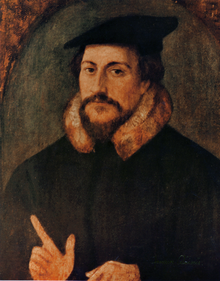
John Calvin by Holbein.pngThought for the Day

French theologian, pastor and reformer during the Protestant Reformation, John Calvin wrote, "Man's mind is like a store of idolatry and superstition; so much so that if a man believes his own mind it is certain that he will forsake God and forge some idol in his own brain."

A Joke for Today

Image result for bridge to hawaiiA man was walking along a beach and stumbled across an old lamp. He picked it up, rubbed it and out popped a genie.

The genie said, "You released me from the lamp, blah blah blah. This is the fourth time this month and I'm getting a little sick of these wishes so you can forget about three. You only get one wish!"

The man sat and thought about it for a while and said, "I've always wanted to go to Hawaii but I'm scared to fly and I get very seasick.

"Could you build me a bridge to Hawaii so I can drive over there to visit?"

The genie laughed and said, "That's impossible! Think of the logistics of that! How would the supports ever reach the bottom of the Pacific? Think of how much concrete! How much steel! You're going to have to think of another wish."

The man agreed, and tried to think of a really good wish. Finally, he said, "I've been married and divorced four times. My wives always said that I don't care and that I'm insensitive. So, I wish that I could understand women. I want to know how they feel inside and what they're thinking when they give me the silent treatment. I want to figure out why they're crying, know what they really want when they say 'nothing', and know how to make them truly happy."

The genie paused for a while and said, "How many lanes do you want on that bridge?"

Tuesday, July 9, 2019

Bible Readings for July 9, 2019

Today our passages are 1 Chronicles 7:1–8:40; Acts 27:1-20; Psalm 7:1-17; and Proverbs 18:22. The readings are from the Contemporary English Version. If you find these readings helpful, please consider sending an offering directly to Cove Presbyterian Church, 3404 Main Street, Weirton, West Virginia or through PayPal by using the link below.
https://www.paypal.com/cgi-bin/webscr?cmd=_s-xclick&hosted_button_id=NX3WLYQG5864L

1 Chronicles 7-8:40 (Contemporary English Version)


1 Chronicles 7

The Descendants of Issachar
 1Issachar was the father of four sons: Tola, Puah, Jashub, and Shimron.
    2Tola was the father of Uzzi, Rephaiah, Jeriel, Jahmai, Ibsam, and Shemuel, who were all brave soldiers and family leaders in their clan. There were 22,600 people in Tola's family by the time David became king.
    3Uzzi was the father of Izrahiah and the grandfather of Michael, Obadiah, Joel, and Isshiah, who were also family leaders. 4Their families were so large that they had 36,000 soldiers in their clans. 5In fact, according to family records, the tribe of Issachar had a total of 87,000 warriors.   
The Descendants of Benjamin and Dan
 6Benjamin was the father of three sons: Bela, Becher, and Jediael.
    7Bela was the father of Ezbon, Uzzi, Uzziel, Jerimoth, and Iri. They were all brave soldiers and family leaders in their father's clan. The number of soldiers in their clan was 22,034.
    8Becher was the father of Zemirah, Joash, Eliezer, Elioenai, Omri, Jeremoth, Abijah, Anathoth, and Alemeth. 9The official family records listed 20,200 soldiers in the families of this clan, as well as their family leaders.
    10Jediael was the father of Bilhan and the grandfather of Jeush, Benjamin, Ehud, Chenaanah, Zethan, Tarshish, and Ahishahar. 11They were family leaders in their clan, which had 17,200 soldiers prepared to fight in battle. 12Ir was the father of Shuppim and Huppim, who also belonged to this clan.
   Dan [a] was the father of Hushim.
The Descendants of Naphtali
 13Naphtali's mother was Bilhah, [b] and he was the father of Jahziel, Guni, Jezer, and Shallum.
The Descendants of Manasseh
 14Manasseh and his Syrian wife [c] were the parents of Asriel and Machir the father of Gilead. 15Machir found a wife for Huppim and one for Shuppim. Machir had a sister named Maacah. Zelophehad was also a descendant of Manasseh, and he had five daughters. [d] 16Machir and his wife Maacah were the parents of Peresh and Sheresh. Peresh was the father of Ulam and Rekem. 17Ulam was the father of Bedan. These were all descendants of Gilead, the son of Machir and the grandson of Manasseh.
    18Gilead's sister Hammolecheth was the mother of Ishhod, Abiezer, and Mahlah.
    19Shemida, another descendant of Manasseh, was the father of Ahian, Shechem, Likhi, and Aniam.   
The Descendants of Ephraim
 20Ephraim was the father of Shuthelah and the ancestor of Bered, Tahath, Eleadah, Tahath, 21Zabad, and Shuthelah.
   Ephraim had two other sons, Ezer and Elead. But they were killed when they tried to steal livestock from the people who lived in the territory of Gath. 22Ephraim mourned for his sons a long time, and his relatives came to comfort him. 23Some time later his wife gave birth to another son, and Ephraim named him Beriah, because he was born during a time of misery. [e] 24Ephraim's daughter was Sheerah. She built the towns of Lower Beth-Horon, Upper Beth-Horon, and Uzzen-Sheerah.
    25Ephraim also had a son named Rephah, and his descendants included Resheph, Telah, Tahan, 26Ladan, Ammihud, Elishama, 27Nun, and Joshua.
    28The descendants of Ephraim took over the territory as far south as Bethel, as far east as Naaran, and as far west as Gezer. Their territory included all the villages around these towns, as well as Shechem, Ayyah, and the nearby villages.
    29The descendants of Manasseh settled in the territory that included Beth-Shan, Taanach, Megiddo, Dor, and the nearby villages.
   The descendants of Joseph [f] lived in these towns and villages.
The Descendants of Asher
 30Asher had four sons, Imnah, Ishvah, Ishvi, and Beriah, and one daughter, Serah.
    31Beriah was the father of Heber and Malchiel the father of Birzaith. 32Heber was the father of three sons, Japhlet, Shomer, and Hotham, and one daughter, Shua. 33Japhlet was the father of Pasach, Bimhal, and Ashvath. 34Shomer was the father of Ahi, Rohgah, Hubbah, and Aram. 35And Japhlet's brother Hotham [g] was the father of Zophah, Imna, Shelesh, and Amal. 36Zophah was the father of Suah, Harnepher, Shual, Beri, Imrah, 37Bezer, Hod, Shamma, Shilshah, Ithran, and Beera. 38Jether was the father of Jephunneh, Pispa, and Ara. 39Ulla was the father of Arah, Hanniel, and Rizia.
    40These were the descendants of Asher, and they were all respected family leaders and brave soldiers. The tribe of Asher had a total of 26,000 soldiers.
   

1 Chronicles 8

More Descendants of Benjamin
 1Benjamin had five sons, who were born in the following order: Bela, Ashbel, Aharah, 2Nohah, and Rapha. 3Bela was the father of Addar, Gera, Abihud, 4Abishua, Naaman, Ahoah, 5Gera, Shephuphan, and Huram.
    6-7Ehud was the father of Naaman, Ahijah, and Gera. They were clan leaders in the town of Geba, but were later forced to move to the town of Manahath, and Gera led the way. He had two sons: Uzza and Ahihud.
    8-11Shaharaim and his wife Hushim had two sons: Abitub and Elpaal. But Shaharaim later divorced her and his other wife, Baara. Then he moved to the country of Moab and married Hodesh, and they had seven sons: Jobab, Zibia, Mesha, Malcam, Jeuz, Sachia, and Mirmah. They were all family leaders in his clan. 12Elpaal was the father of Eber, Misham, and Shemed, who settled the towns of Ono and Lod, as well as the nearby villages.
    13Beriah and Shema were family leaders in the clan that lived in the town of Aijalon and that forced out the people of Gath. 14-16Beriah's descendants included Ahio, Shashak, Jeremoth, Zebadiah, Arad, Eder, Michael, Ishpah, and Joha. 17-18Elpaal's descendants included Zebadiah, Meshullam, Hizki, Heber, Ishmerai, Izliah, and Jobab. 19-21Shimei's descendants included Jakim, Zichri, Zabdi, Elienai, Zillethai, Eliel, Adaiah, Beraiah, and Shimrath. 22-25Shashak's descendants included Ishpan, Eber, Eliel, Abdon, Zichri, Hanan, Hananiah, Elam, Anthothijah, Iphdeiah, and Penuel. 26-27Jeroham's descendants included Shamsherai, Shehariah, Athaliah, Jaareshiah, Elijah, and Zichri. 28These were the family leaders in their ancestor's clan, and they and their descendants lived in Jerusalem.
    29Jeiel [h] settled the town of Gibeon. He and his wife Maacah lived there 30along with their sons, who were born in the following order: Abdon, Zur, Kish, Baal, Ner, [i] Nadab, 31Gedor, Ahio, Zecher, 32and Mikloth the father of Shimeah. Some of them went to live in Jerusalem near their relatives.
The Descendants of King Saul
 33Ner was the father of Kish and the grandfather of King Saul.
   Saul had four sons: Jonathan, Malchishua, Abinadab, and Eshbaal. [j] 34Jonathan was the father of Meribbaal, [k] the grandfather of Micah, 35and the great-grandfather of Pithon, Melech, Tarea, and Ahaz. 36Saul's other descendants were Jehoaddah, Alemeth, Azmaveth, Zimri, Moza, 37Binea, Raphah, Eleasah, Azel, 38as well as Azel's six sons: Azrikam, Bocheru, Ishmael, Sheariah, Obadiah, and Hanan. 39Azel's brother Eshek was the father of Ulam, Jeush, and Eliphelet. 40Ulam's sons were brave soldiers who were experts at using a bow and arrows. They had a total of one hundred fifty children and grandchildren. All of these belonged to the tribe of Benjamin.
   
Footnotes:
  1. 1 Chronicles 7:12 Dan: The Hebrew text has "Aher," which can mean "someone else" (see Genesis 46.23-25).
  2. 1 Chronicles 7:13 Bilhah: One of Jacob's wives and the mother of Dan and Naphtali (see Genesis 46.23-25).
  3. 1 Chronicles 7:14 wife: See the note at 2.46.
  4. 1 Chronicles 7:15 Zelophehad. . . daughters: One possible meaning for the difficult Hebrew text (see also Numbers 26.28-33).
  5. 1 Chronicles 7:23 Beriah. . . misery: In Hebrew "Beriah" sounds like "in misery."
  6. 1 Chronicles 7:29 Joseph: Hebrew "Joseph son of Israel."
  7. 1 Chronicles 7:35 Hotham: The Hebrew text has "Helem," another spelling of the name.
  8. 1 Chronicles 8:29 Jeiel: One ancient translation and 9.35; the Hebrew text does not have this name.
  9. 1 Chronicles 8:30 Ner: One ancient translation and 9.36; the Hebrew text does not have this name.
  10. 1 Chronicles 8:33 Eshbaal: Also called "Ishbosheth" (see 2 Samuel 2.8 and the note there).
  11. 1 Chronicles 8:34 Meribbaal: Also called "Mephibosheth" (see 2 Samuel 4.4 and the note there).

Acts 27:1-20 (Contemporary English Version)


Acts 27

Paul Is Taken to Rome
 1When it was time for us to sail to Rome, Captain Julius from the Emperor's special troops was put in charge of Paul and the other prisoners. 2We went aboard a ship from Adramyttium that was about to sail to some ports along the coast of Asia. Aristarchus from Thessalonica in Macedonia sailed on the ship with us.
    3The next day we came to shore at Sidon. Captain Julius was very kind to Paul. He even let him visit his friends, so they could give him whatever he needed. 4When we left Sidon, the winds were blowing against us, and we sailed close to the island of Cyprus to be safe from the wind. 5Then we sailed south of Cilicia and Pamphylia until we came to the port of Myra in Lycia. 6There the army captain found a ship from Alexandria that was going to Italy. So he ordered us to board that ship.
    7We sailed along slowly for several days and had a hard time reaching Cnidus. The wind would not let us go any farther in that direction, so we sailed past Cape Salmone, where the island of Crete would protect us from the wind. 8We went slowly along the coast and finally reached a place called Fair Havens, not far from the town of Lasea.
    9By now we had already lost a lot of time, and sailing was no longer safe. In fact, even the Great Day of Forgiveness [a] was past. 10Then Paul spoke to the crew of the ship, "Men, listen to me! If we sail now, our ship and its cargo will be badly damaged, and many lives will be lost." 11But Julius listened to the captain of the ship and its owner, rather than to Paul. 12The harbor at Fair Havens wasn't a good place to spend the winter. Because of this, almost everyone agreed that we should at least try to sail along the coast of Crete as far as Phoenix. It had a harbor that opened toward the southwest and northwest, [b] and we could spend the winter there.
The Storm at Sea
 13When a gentle wind from the south started blowing, the men thought it was a good time to do what they had planned. So they pulled up the anchor, and we sailed along the coast of Crete. 14But soon a strong wind called "The Northeaster" blew against us from the island. 15The wind struck the ship, and we could not sail against it. So we let the wind carry the ship.
    16We went along the island of Cauda on the side that was protected from the wind. We had a hard time holding the lifeboat in place, 17but finally we got it where it belonged. Then the sailors wrapped ropes around the ship to hold it together. They lowered the sail and let the ship drift along, because they were afraid it might hit the sandbanks in the gulf of Syrtis.
    18The storm was so fierce that the next day they threw some of the ship's cargo overboard. 19Then on the third day, with their bare hands they threw overboard some of the ship's gear. 20For several days we could not see either the sun or the stars. A strong wind kept blowing, and we finally gave up all hope of being saved.
   
Footnotes:
  1. Acts 27:9 Great Day of Forgiveness: This Jewish festival took place near the end of September. The sailing season was dangerous after the middle of September, and it was stopped completely between the middle of November and the middle of March.
  2. Acts 27:12 southwest and northwest: Or "northeast and southeast."

Psalm 7:1-17 (Contemporary English Version)


Psalm 7

(Written by David. (Psalm 7 Written by David: The Hebrew text has " a shiggaion by David," which may refer to a psalm of mourning.) He sang this to the LORD because of Cush from the tribe of Benjamin.)
The LORD Always Does Right
 1You, LORD God,
   are my protector.
   Rescue me and keep me safe
   from all who chase me.
    2Or else they will rip me apart
   like lions
   attacking a victim,
   and no one will save me.
    3I am innocent, LORD God!
    4I have not betrayed a friend
   or had pity on an enemy [a] who attacks for no reason.
    5If I have done any of this,
   then let my enemies
   chase and capture me.
   Let them stomp me to death
   and leave me in the dirt.
    6Get angry, LORD God!
   Do something!
   Attack my furious enemies.
   See that justice is done.
    7Make the nations come to you,
   as you sit on your throne [b] above them all.
    8Our LORD, judge the nations!
   Judge me
   and show that I
   am honest and innocent.
    9You know every heart and mind,
   and you always do right.
   Now make violent people stop,
   but protect all of us
   who obey you.
    10You, God, are my shield,
   the protector of everyone
   whose heart is right.
    11You see that justice is done,
   and each day
   you take revenge.
    12Whenever your enemies refuse
   to change their ways,
   you sharpen your sword
   and string your bow.
    13Your deadly arrows are ready
   with flaming tips.
    14An evil person is like a woman
   about to give birth
   to a hateful, deceitful,
   and rebellious child.
    15Such people dig a deep hole,
   then fall in it themselves.
    16The trouble they cause
   comes back on them,
   and their heads are crushed
   by their own evil deeds.
    17I will praise you, LORD!
   You always do right.
   I will sing about you,
   the LORD Most High.
   
Footnotes:
  1. Psalm 7:4 had pity on an enemy: Or " failed to have pity on an enemy."
  2. Psalm 7:7 sit. . . throne: Or " return to your place."

Proverbs 18:22 (Contemporary English Version)


22A man's greatest treasure
   is his wife--
   she is a gift from the LORD.

Verse of the Day

“I pray that Christ Jesus and the church will forever bring praise to God. His power at work in us can do far more than we dare ask or imagine. Amen.” - Ephesians 3:20-21
Today's passage is from the Contemporary English Version.

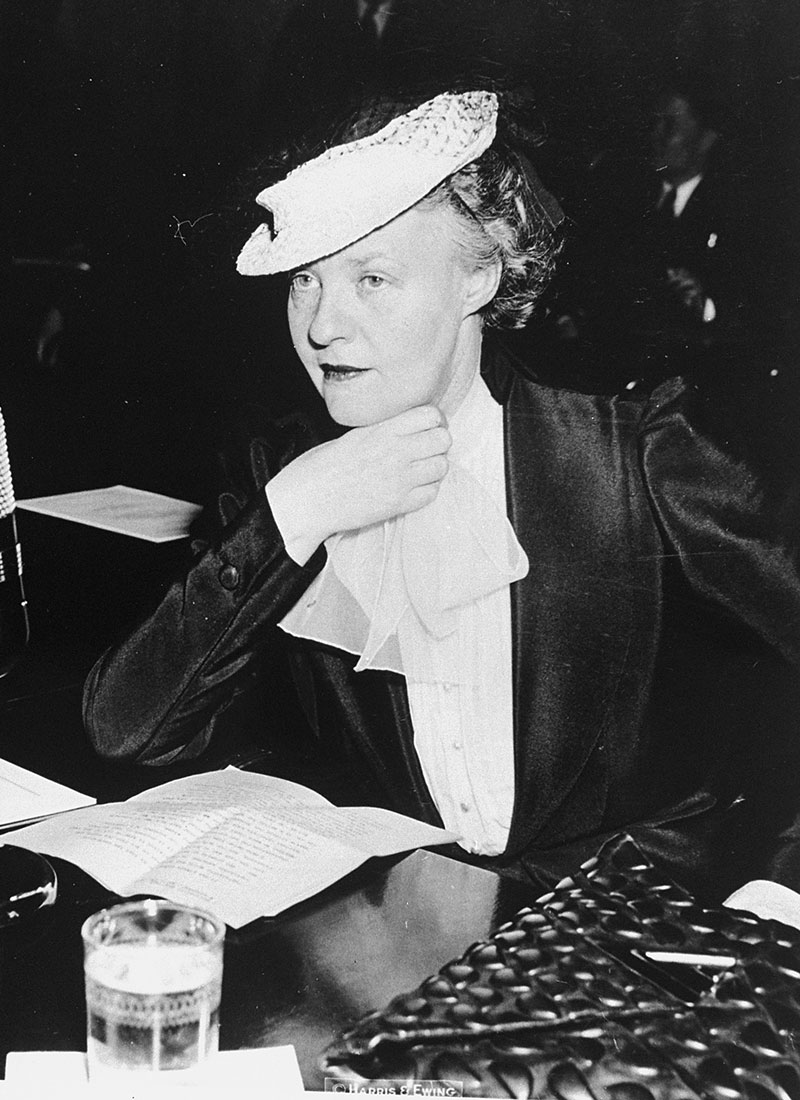
Related imageThought for the Day

American journalist and radio broadcaster, Dorothy Thompson wrote, “When liberty is taken away by force it can be restored by force. When it is relinquished voluntarily by default it can never be recovered.”


Image result for pastor wife jokesA Joke for Today

The poor country pastor was livid when he confronted his wife with the receipt for a $250 dress she had bought. 

"How could you do this!" he exclaimed.

"I don't know," she wailed, "I was standing in the store looking at the dress. Then I found myself trying it on. It was like the Devil was whispering to me, 'Gee, you look great in that dress. You should buy it.'"

"Well," the pastor persisted, "You know how to deal with him! Just tell him, "Get behind me, Satan!"

"I did," replied his wife, "but then he said 'It looks great from back here, too!'"