Read the Bible in a Year

Each day, we'll post passages so that you can read the Bible in one year. This is part of The Colossians 13:16 Project, sponsored by Cove Presbyterian Church, 3404 Main Street, Weirton, West Virginia. You're invited to worship with us Sundays, at 11:00 a.m. or Saturdays, at 6:30 p.m. You may also want to consider joining one our adult Bible Studies: Thursdays at 12:00 noon and Sundays at 9:30 a.m. and 10:00 a.m. We also have a full range of programs for children. If you want more information about the church, check out the other blogs. And please feel free to leave any comments.

The Bible in a Year is a ministry of Cove Presbyterian Church. We need your support to keep posting. If you find it helpful, you can support this blog by your contributions. They may be sent to Cove Presbyterian Church, 3404 Main Street, Weirton, WV 26062. You can also use the PayPal link below:

Image result for paypal donate
Showing posts with label John Calvin. Show all posts

Wednesday, July 10, 2019

Bible Readings for July 10, 2019

Today our passages are 1 Chronicles 7:1–8:40; Acts 27:1-20; Psalm 7:1-17; and Proverbs 18:22. The readings are from the Contemporary English VersionIf you find these readings helpful, please consider sending an offering directly to Cove Presbyterian Church, 3404 Main Street, Weirton, West Virginia or through PayPal by using the link below.
https://www.paypal.com/cgi-bin/webscr?cmd=_s-xclick&hosted_button_id=NX3WLYQG5864L

1 Chronicles 9-10:14 (Contemporary English Version)


1 Chronicles 9

The People Who Returned from Babylonia and Settled in Jerusalem
 1Everyone in Israel was listed in the official family records that were included in the history of Israel's kings.    The people of Judah were taken to Babylonia as prisoners because they sinned against the LORD. 2And the first people to return to their towns included priests, Levites, temple workers, and other Israelites. 3People from the tribes of Judah, Benjamin, Ephraim, and Manasseh settled in Jerusalem.
    4-6There were six hundred ninety people from the Judah tribe who settled in Jerusalem. They were all descendants of Judah's three sons: Perez, Shelah, and Zerah. Their leaders were Uthai, Asaiah, and Jeuel. Uthai was the son of Ammihud and a descendant of Omri, Imri, Bani, and Perez. Asaiah was a descendant of Shelah; Jeuel was a descendant of Zerah.
    7-9There were also nine hundred fifty-six family leaders from the Benjamin tribe who settled in Jerusalem. They included: Sallu son of Meshullam, grandson of Hodaviah, and great-grandson of Hassenuah; Ibneiah son of Jeroham; Elah son of Uzzi and grandson of Michri; Meshullam son of Shephatiah, grandson of Reuel, and great-grandson of Ibnijah.     
The Priests Who Settled in Jerusalem
 10-12Here is a list of priests who settled in Jerusalem: Jedaiah; Jehoiarib; Jachin; Azariah, who was a temple official, and whose ancestors included Hilkiah, Meshullam, Zadok, Meraioth, and Ahitub; Adaiah son of Jeroham, whose ancestors included Pashhur and Malchijah; Maasai son of Adiel, whose ancestors included Jahzerah, Meshullam, Meshillemith, and Immer.     13There was a total of 1,760 priests, all of them family leaders in their clan and trained in the work at the temple.     
The Levites Who Settled in Jerusalem
 14-16Here is a list of Levites who settled in Jerusalem: Shemaiah from the Merari clan, whose ancestors included Hasshub, Azrikam, and Hashabiah; Bakbakkar; Heresh; Galal; Mattaniah son of Mica, whose ancestors included Zichri and Asaph; Obadiah son of Shemaiah, whose ancestors included Galal and Jeduthun; Berechiah son of Asa and grandson of Elkanah, who had lived in the villages near the town of Netophah.     
The Temple Guards Who Settled in Jerusalem
 17Shallum, Akkub, Talmon, Ahiman, and their relatives were the guards at the temple gates. Shallum was the leader of this clan, 18and for a long time they had been the guards at the King's Gate on the east side of the city. Before that, their ancestors guarded the entrance to the Levite camp.     19Shallum son of Kore, [a] as well as the other men in the Korahite clan, guarded the entrance to the temple, just as their ancestors had guarded the entrance to the sacred tent. 20Phinehas son of Eleazar had supervised their work because the LORD was with him. 21Zechariah son of Meshelemiah was also one of the guards at the temple.
    22There was a total of two hundred twelve guards, all of them listed in the family records in their towns. Their ancestors had been chosen by King David and by Samuel the prophet to be responsible for this work, 23and now they guarded the temple gates.
    24There was one full-time guard appointed to each of the four sides of the temple. 25Their assistants lived in the villages outside the city, and every seven days a group of them would come into the city and take their turn at guard duty. 26The four full-time guards were Levites, and they supervised the other guards and were responsible for the rooms in the temple and the supplies kept there. 27They guarded the temple day and night and opened its doors every morning.     
The Duties of the Levites
 28Some of the Levites were responsible for the equipment used in worship at the temple, and they had to count everything before and after it was used. 29Others were responsible for the temple furnishings and its sacred objects, as well as the flour, wine, olive oil, incense, and spices. 30But only the priests could mix the spices. 31Mattithiah, Shallum's oldest son, was a member of the Levite clan of Korah, and he was in charge of baking the bread used for offerings. [b]32The Levites from the Kohath clan were in charge of baking the sacred loaves of bread for each Sabbath. [c] 33The Levite family leaders who were the musicians also lived at the temple. They had no other responsibilities, because they were on duty day and night.     34All of these men were family leaders in the Levi tribe and were listed that way in their family records. They lived in Jerusalem.     
King Saul's Family
(1 Chronicles 8.29-38)
 35Jeiel had settled the town of Gibeon, where he and his wife Maacah lived. 36They had ten sons, who were born in the following order: Abdon, Zur, Kish, Baal, Ner, Nadab, 37Gedor, Ahio, Zechariah, and Mikloth 38the father of Shimeam. Some of them went to live in Jerusalem near their relatives.     39Ner was the father of Kish and the grandfather of King Saul.
   Saul had four sons: Jonathan, Malchishua, Abinadab, and Eshbaal. [d] 40-41Jonathan was the father of Meribbaal, [e]the grandfather of Micah, and the great-grandfather of Pithon, Melech, Tahrea, and Ahaz. [f] 42-44The descendants of Ahaz included Jarah, Alemeth, Azmaveth, Zimri, Moza, Binea, Rephaiah, Eleasah, and Azel and his six sons: Azrikam, Bocheru, Ishmael, Sheariah, Obadiah, and Hanan. 

1 Chronicles 10

King Saul and His Sons Die
(1 Samuel 31.1-13)
 1The Philistines fought against Israel in a battle at Mount Gilboa. Israel's soldiers ran from the Philistines, and many of them were killed. 2The Philistines closed in on Saul and his sons and killed three of them: Jonathan, Abinadab, and Malchishua. 3The fighting was fierce around Saul, and he was badly wounded by enemy arrows.     4Saul told the soldier who carried his weapons, "Kill me with your sword! I don't want those godless Philistines to torture and make fun of me."
   But the soldier was afraid to kill him. Then Saul stuck himself in the stomach with his own sword and fell on the blade. 5When the soldier realized that Saul was dead, he killed himself in the same way.
    6Saul, three of his sons, and all his male relatives were dead. 7The Israelites who lived in Jezreel Valley [g] learned that their army had run away and that Saul and his sons were dead. They ran away too, and the Philistines moved into the towns the Israelites left behind. 8The next day the Philistines came back to the battlefield to carry away the weapons of the dead Israelite soldiers. When they found the bodies of Saul and his sons on Mount Gilboa, 9they took Saul's weapons, pulled off his armor, and cut off his head. Then they sent messengers everywhere in Philistia to spread the news among their people and to thank the idols of their gods. 10They put Saul's armor in the temple of their gods and hung his head in the temple of their god Dagon.
    11When the people who lived in Jabesh in Gilead heard what the Philistines had done to Saul, 12some brave men went to get his body and the bodies of his three sons. The men brought the bodies back to Jabesh, where they buried them under an oak tree. Then for seven days, they went without eating to show their sorrow.
    13Saul died because he was unfaithful and disobeyed the LORD. He even asked advice from a woman who talked to spirits of the dead, 14instead of asking the LORD. So the LORD had Saul killed and gave his kingdom to David, the son of Jesse.
    
Footnotes:
  1. 1 Chronicles 9:19 Shallum son of Kore: Hebrew "Shallum son of Kore, grandson of Ebiasaph, and great-grandson of Korah."
  2. 1 Chronicles 9:31 the bread used for offerings: See Leviticus 2.4-7.
  3. 1 Chronicles 9:32 the sacred loaves of bread for each Sabbath: See Leviticus 24.5-9.
  4. 1 Chronicles 9:39 Eshbaal: See the note at 8.33.
  5. 1 Chronicles 9:40 Meribbaal: See the note at 8.34.
  6. 1 Chronicles 9:40 and Ahaz: Most ancient translations and 8.35; the Hebrew text does not have this name.
  7. 1 Chronicles 10:7 Jezreel Valley: Hebrew "the valley."

Acts 27:21-44 (Contemporary English Version)


21Since none of us had eaten anything for a long time, Paul stood up and told the men:
   You should have listened to me! If you had stayed on in Crete, you would not have had this damage and loss. 22But now I beg you to cheer up, because you will be safe. Only the ship will be lost.
    23I belong to God, and I worship him. Last night he sent an angel 24to tell me, "Paul, don't be afraid! You will stand trial before the Emperor. And because of you, God will save the lives of everyone on the ship." 25Cheer up! I am sure that God will do exactly what he promised. 26But we will first be shipwrecked on some island.
    27For fourteen days and nights we had been blown around over the Mediterranean Sea. But about midnight the sailors realized that we were getting near land. 28They measured and found that the water was about one hundred twenty feet deep. A little later they measured again and found it was only about ninety feet. 29The sailors were afraid that we might hit some rocks, and they let down four anchors from the back of the ship. Then they prayed for daylight.
    30The sailors wanted to escape from the ship. So they lowered the lifeboat into the water, pretending that they were letting down an anchor from the front of the ship. 31But Paul said to Captain Julius and the soldiers, "If the sailors don't stay on the ship, you won't have any chance to save your lives." 32The soldiers then cut the ropes that held the lifeboat and let it fall into the sea.
    33Just before daylight Paul begged the people to eat something. He told them, "For fourteen days you have been so worried that you haven't eaten a thing. 34I beg you to eat something. Your lives depend on it. Do this and not one of you will be hurt."
    35After Paul had said this, he took a piece of bread and gave thanks to God. Then in front of everyone, he broke the bread and ate some. 36They all felt encouraged, and each of them ate something. 37There were 276 people on the ship, 38and after everyone had eaten, they threw the cargo of wheat into the sea to make the ship lighter. 
The Shipwreck
 39Morning came, and the ship's crew saw a coast that they did not recognize. But they did see a cove with a beach. So they decided to try to run the ship aground on the beach. 40They cut the anchors loose and let them sink into the sea. At the same time they untied the ropes that were holding the rudders. Next, they raised the sail at the front of the ship and let the wind carry the ship toward the beach. 41But it ran aground on a sandbank. The front of the ship stuck firmly in the sand, and the rear was being smashed by the force of the waves.     42The soldiers decided to kill the prisoners to keep them from swimming away and escaping. 43But Captain Julius wanted to save Paul's life, and he did not let the soldiers do what they had planned. Instead, he ordered everyone who could swim to dive into the water and head for shore. 44Then he told the others to hold on to planks of wood or parts of the ship. At last, everyone safely reached shore. 

Psalm 8:1-9 (Contemporary English Version)


Psalm 8

(A psalm by David for the music leader. (Psalm 8 leader: The Hebrew text adds " according to the gittith," which may refer to either a musical instrument or a tune.) )
The Wonderful Name of the LORD
 1Our LORD and Ruler,    your name is wonderful
   everywhere on earth!
   You let your glory be seen [a] in the heavens above.
    2With praises from children
   and from tiny infants,
   you have built a fortress.
   It makes your enemies silent,
   and all who turn against you
   are left speechless.
    3I often think of the heavens
   your hands have made,
   and of the moon and stars
   you put in place.
    4Then I ask, "Why do you care
   about us humans?
   Why are you concerned
   for us weaklings?"
    5You made us a little lower
   than you yourself, [b] and you have crowned us
   with glory and honor.
    6You let us rule everything
   your hands have made.
   And you put all of it
   under our power--
    7the sheep and the cattle,
   and every wild animal,
    8the birds in the sky,
   the fish in the sea,
   and all ocean creatures.
    9Our LORD and Ruler,
   your name is wonderful
   everywhere on earth!
    
Footnotes:
  1. Psalm 8:1 You. . . seen: Or " I will worship your glory."
  2. Psalm 8:5 you yourself: Or " the angels" or " the beings in heaven."

Proverbs 18:23-24 (Contemporary English Version)


23The poor must beg for help,
   but the rich can give
   a harsh reply.
    24Some friends don't help, [a] but a true friend is closer
   than your own family.

    
Footnotes:
  1. Proverbs 18:24 Some. . . help: One possible meaning for the difficult Hebrew text.

Verse of the Day

“God is the one who began this good work in you, and I am certain that he won't stop before it is complete on the day that Christ Jesus returns.” - Philippians 1:6 
Today's passage is from the Contemporary English Version.

John Calvin by Holbein.pngThought for the Day

French theologian, pastor and reformer during the Protestant Reformation, John Calvin wrote, "Man's mind is like a store of idolatry and superstition; so much so that if a man believes his own mind it is certain that he will forsake God and forge some idol in his own brain."

A Joke for Today

Image result for bridge to hawaiiA man was walking along a beach and stumbled across an old lamp. He picked it up, rubbed it and out popped a genie.

The genie said, "You released me from the lamp, blah blah blah. This is the fourth time this month and I'm getting a little sick of these wishes so you can forget about three. You only get one wish!"

The man sat and thought about it for a while and said, "I've always wanted to go to Hawaii but I'm scared to fly and I get very seasick.

"Could you build me a bridge to Hawaii so I can drive over there to visit?"

The genie laughed and said, "That's impossible! Think of the logistics of that! How would the supports ever reach the bottom of the Pacific? Think of how much concrete! How much steel! You're going to have to think of another wish."

The man agreed, and tried to think of a really good wish. Finally, he said, "I've been married and divorced four times. My wives always said that I don't care and that I'm insensitive. So, I wish that I could understand women. I want to know how they feel inside and what they're thinking when they give me the silent treatment. I want to figure out why they're crying, know what they really want when they say 'nothing', and know how to make them truly happy."

The genie paused for a while and said, "How many lanes do you want on that bridge?"

Tuesday, July 10, 2018

Bible Readings for July 10, 2018


Today our passages are 1 Chronicles 9:1–10:14; Acts 27:21-44; Psalm 8:1-9; and Proverbs 18:23-24. The readings are from The Message by Eugene H. Peterson.  If you find these readings helpful, please consider sending an offering directly to Cove Presbyterian Church, 3404 Main Street, Weirton, West Virginia or through PayPal by using the link below.
https://www.paypal.com/cgi-bin/webscr?cmd=_s-xclick&hosted_button_id=NX3WLYQG5864L

Chronicles 9-10:14 (The Message) 

1 Chronicles 9


 1 This is the complete family tree for all Israel, recorded in the Royal Annals of the Kings of Israel and Judah at the time they were exiled to Babylon because of their unbelieving and disobedient lives. 
The Back-from-Exile Community in Jerusalem
2 The first Israelites to return from exile to their homes and cities were the priests, the Levites, and the temple support staff. 
 3-6 Returning to Jerusalem from the families of Judah, Benjamin, Ephraim, and Manasseh were the following: Uthai son of Ammihud, the son of Omri, the son of Imri, the son of Bani, from the line of Perez son of Judah; from the Shilonites were Asaiah the firstborn and his sons; from the family of Zerah there was Jeuel. There were 690 in the Judah group. 
 7-9 From the family of Benjamin were Sallu son of Meshullam, the son of Hodaviah, the son of Hassenuah, and Ibneiah son of Jeroham, and Elah son of Uzzi, the son of Micri, and Meshullam son of Shephatiah, the son of Reuel, the son of Ibnijah. There were 956 in the Benjamin group. All these named were heads of families. 
 10-13 From the company of priests there were Jedaiah; Jehoiarib; Jakin; Azariah son of Hilkiah, the son of Meshullam, the son of Zadok, the son of Meraioth, the son of Ahitub, who was in charge of taking care of the house of God; Adaiah son of Jeroham, the son of Pashhur, the son of Malkijah; also Maasai son of Adiel, the son of Jahzerah, the son of Meshullam, the son of Meshillemith, the son of Immer. The priests, all of them heads of families, numbered 1,760, skilled and seasoned servants in the work of worshiping God. 
 14-16 From the Levites were Shemaiah son of Hasshub, the son of Azrikam, the son of Hashabiah, a Merarite; then Bakbakkar, Heresh, Galal, Mattaniah son of Mica, the son of Zicri, the son of Asaph; also Obadiah son of Shemaiah, the son of Galal, the son of Jeduthun; and finally Berekiah son of Asa, the son of Elkanah, who lived in the villages of the Netophathites. 
 17-18 The security guards were Shallum, Akkub, Talmon, Ahiman, and their brothers. Shallum was the chief and up to now the security guard at the King's Gate on the east. They also served as security guards at the camps of Levite families. 
 19-25 Shallum son of Kore, the son of Ebiasaph, the son of Korah, along with his brothers in the Korahite family, were in charge of the services of worship as doorkeepers of the Tent, as their ancestors had guarded the entrance to the camp of God. In the early days, Phinehas son of Eleazar was in charge of the security guards—God be with him! Now Zechariah son of Meshelemiah was the security guard at the entrance of the Tent of Meeting. The number of those who had been chosen to be security guards was 212—they were officially registered in their own camps. David and Samuel the seer handpicked them for their dependability. They and their sons had the permanent responsibility for guarding the gates of God's house, the house of worship; the main security guards were posted at the four entrances, east, west, north, and south; their brothers in the villages were scheduled to give them relief weekly—the four main security guards were responsible for round-the-clock surveillance. 
 26-32 Being Levites, they were responsible for the security of all supplies and valuables in the house of God. They kept watch all through the night and had the key to open the doors each morning. Some were in charge of the articles used in The Temple worship—they counted them both when they brought them in and when they took them out. Others were in charge of supplies in the sanctuary—flour, wine, oil, incense, and spices. And some of the priests were assigned to mixing the oils for the perfume. The Levite Mattithiah, the firstborn son of Shallum the Korahite, was responsible for baking the bread for the services of worship. Some of the brothers, sons of the Kohathites, were assigned to preparing the bread set out on the table each Sabbath. 
 33-34 And then there were the musicians, all heads of Levite families. They had permanent living quarters in The Temple; because they were on twenty-four-hour duty, they were exempt from all other duties. These were the heads of Levite families as designated in their family tree. They lived in Jerusalem. 
The Family of Saul
35-38 Jeiel the father of Gibeon lived at Gibeon; his wife was Maacah. His firstborn son was Abdon, followed by Zur, Kish, Baal, Ner, Nadab, Gedor, Ahio, Zechariah, and Mikloth. Mikloth had Shimeam. They lived in the same neighborhood as their relatives in Jerusalem. 
 39-44 Ner had Kish, Kish had Saul, Saul had Jonathan, Malki-Shua, Abinadab, and Esh-Baal. Merib-Baal was the son of Jonathan and Merib-Baal had Micah. Micah's sons were Pithon, Melech, and Tahrea. Ahaz had Jarah, Jarah had Alemeth, Azmaveth, and Zimri; Zimri had Moza, Moza had Binea, Rephaiah was his son, Eleasah was his son, and Azel was his son. Azel had six sons: Azrikam, Bokeru, Ishmael, Sheariah, Obadiah, and Hanan—the sons of Azel. 

1 Chronicles 10


 1-5 The Philistines went to war against Israel; the Israelites ran for their lives from the Philistines but fell, slaughtered on Mount Gilboa. The Philistines zeroed in on Saul and his sons and killed his sons Jonathan, Abinadab, and Malki-Shua. The battle went hard against Saul—the archers found him and wounded him. Saul said to his armor bearer, "Draw your sword and finish me off before these pagan pigs get to me and make a sport of my body." But his armor bearer, restrained by both reverence and fear, wouldn't do it. So Saul took his own sword and killed himself. The armor bearer, panicked because Saul was dead, then killed himself. 
 6-7 So Saul and his three sons—all four the same day—died. When all the Israelites in the valley saw that the army had fled and that Saul and his sons were dead, they abandoned their cities and ran off; the Philistines came and moved in. 
 8-10 The next day the Philistines came to plunder the dead bodies and found Saul and his sons dead on Mount Gilboa. They stripped Saul, removed his head and his armor, and put them on exhibit throughout Philistia, reporting the victory news to their idols and the people. Then they put Saul's armor on display in the temple of their gods and placed his skull as a trophy in the temple of their god Dagon. 
 11-12 The people of Jabesh Gilead heard what the Philistines had done to Saul. All of their fighting men went into action—retrieved the bodies of Saul and his sons and brought them to Jabesh, gave them a dignified burial under the oak at Jabesh, and mourned their deaths for seven days. 
 13-14 Saul died in disobedience, disobedient to God. He didn't obey God's words. Instead of praying, he went to a witch to seek guidance. Because he didn't go to God for help, God took his life and turned the kingdom over to David son of Jesse. 


Acts 27:21-44 (The Message)


 21-22With our appetite for both food and life long gone, Paul took his place in our midst and said, "Friends, you really should have listened to me back in Crete. We could have avoided all this trouble and trial. But there's no need to dwell on that now. From now on, things are looking up! I can assure you that there'll not be a single drowning among us, although I can't say as much for the ship—the ship itself is doomed.
 23-26"Last night God's angel stood at my side, an angel of this God I serve, saying to me, 'Don't give up, Paul. You're going to stand before Caesar yet—and everyone sailing with you is also going to make it.' So, dear friends, take heart. I believe God will do exactly what he told me. But we're going to shipwreck on some island or other."
 27-29On the fourteenth night, adrift somewhere on the Adriatic Sea, at about midnight the sailors sensed that we were approaching land. Sounding, they measured a depth of 120 feet, and shortly after that ninety feet. Afraid that we were about to run aground, they threw out four anchors and prayed for daylight.
 30-32Some of the sailors tried to jump ship. They let down the lifeboat, pretending they were going to set out more anchors from the bow. Paul saw through their guise and told the centurion and his soldiers, "If these sailors don't stay with the ship, we're all going down." So the soldiers cut the lines to the lifeboat and let it drift off.
 33-34With dawn about to break, Paul called everyone together and proposed breakfast: "This is the fourteenth day we've gone without food. None of us has felt like eating! But I urge you to eat something now. You'll need strength for the rescue ahead. You're going to come out of this without even a scratch!"
 35-38He broke the bread, gave thanks to God, passed it around, and they all ate heartily—276 of us, all told! With the meal finished and everyone full, the ship was further lightened by dumping the grain overboard.
 39-41At daybreak, no one recognized the land—but then they did notice a bay with a nice beach. They decided to try to run the ship up on the beach. They cut the anchors, loosed the tiller, raised the sail, and ran before the wind toward the beach. But we didn't make it. Still far from shore, we hit a reef and the ship began to break up.
 42-44The soldiers decided to kill the prisoners so none could escape by swimming, but the centurion, determined to save Paul, stopped them. He gave orders for anyone who could swim to dive in and go for it, and for the rest to grab a plank. Everyone made it to shore safely. 


Psalm 8:1-9 (The Message)


Psalm 8

A David Psalm
 1 God, brilliant Lord, yours is a household name.

 2 Nursing infants gurgle choruses about you;
      toddlers shout the songs
   That drown out enemy talk,
      and silence atheist babble.

 3-4 I look up at your macro-skies, dark and enormous,
      your handmade sky-jewelry,
   Moon and stars mounted in their settings.
      Then I look at my micro-self and wonder,
   Why do you bother with us?
      Why take a second look our way?

 5-8 Yet we've so narrowly missed being gods,
      bright with Eden's dawn light.
   You put us in charge of your handcrafted world,
      repeated to us your Genesis-charge,
   Made us lords of sheep and cattle,
      even animals out in the wild,
   Birds flying and fish swimming,
      whales singing in the ocean deeps.

 9 God, brilliant Lord,
      your name echoes around the world.


Proverbs 18:23-24 (The Message)


 23 The poor speak in soft supplications;
   the rich bark out answers.

 24 Friends come and friends go,
   but a true friend sticks by you like family. 


Verse of the Day

“God is the one who began this good work in you, and I am certain that he won't stop before it is complete on the day that Christ Jesus returns.” - Philippians 1:6 
Today's passage is from the Contemporary English Version.

John Calvin by Holbein.pngThought for the Day

French theologian, pastor and reformer in Geneva during the Protestant Reformation, John Calvin wrote, “A dog barks when his master is attacked. I would be a coward if I saw that God's truth is attacked and yet would remain silent.”

A Joke for Today

Image result for pet names for girlfriend

What's in a name? Apparently, a lot more than you (or I) ever thought there was. Here's what his pet name for you really means…..

Darling — Depends on how he says it. If he stresses the first syllable, then he's probably done something wrong or wants money.

Dear — Probably a leftover from his parents. Expect him to wear woolly cardigans, smoke a pipe and prefer a mug of Ovaltine to lager.

Sweetheart — If it's said patronizingly, it's not so sweet. But when uttered in earnest, it may send your own sweet heart aflutter.

Babe — Not to be confused with the film of the same name. Check for flares or signs that he's a 70s throwback. He's a bit of a medallion man. Chances are he's got his initials on his chunky ring. Leave immediately if he tries to sell you a second-hand car.

Baby doll — This type of man will probably require you to wear transparent frilly nighties even in the dead of winter. He doesn't want you to grow up, and obviously can't deal with real women.

Princess — Never trust a man who calls you princess. You may think you're being treated like royalty, but beware of Prince Charmings – they may be secretly plotting your over- throw.

Sexy — Fine if you're sexy. If you're not, who cares? He probably thinks you are anyway!!

My girlfriend — He's honest, open and probably glad to have you around. The next thing you know he'll be using your name!

The wife — If you're married then he probably thinks he owns you. If you're not, he probably thinks you act like his wife, in which case, he thinks he owns you.

My other half — You complete the set – he's only half a man without you. But it may make you feel as though you are losing your identity somewhere.

The missus — See The Wife.

My partner — He's right on. Probably likes eating tofu and hugging trees.

My significant other — He's even more right on. Probably thinks it's cruel to eat tofu and that trees need their own space.

She who must be obeyed — He thinks you're a nag, but probably doesn't lift a finger around the house.

Monday, July 10, 2017

Bible Readings for July 10, 2017


Today our passages are 1 Chronicles 7:1–8:40; Acts 27:1-20; Psalm 7:1-17; and Proverbs 18:22. The readings are from the Contemporary English VersionIf you find these readings helpful, please consider sending an offering directly to Cove Presbyterian Church, 3404 Main Street, Weirton, West Virginia or through PayPal by using the link below.


https://www.paypal.com/cgi-bin/webscr?cmd=_s-xclick&hosted_button_id=NX3WLYQG5864L

1 Chronicles 9-10:14 (Contemporary English Version)

1 Chronicles 9

The People Who Returned from Babylonia and Settled in Jerusalem
 1Everyone in Israel was listed in the official family records that were included in the history of Israel's kings.    The people of Judah were taken to Babylonia as prisoners because they sinned against the LORD. 2And the first people to return to their towns included priests, Levites, temple workers, and other Israelites. 3People from the tribes of Judah, Benjamin, Ephraim, and Manasseh settled in Jerusalem.
    4-6There were six hundred ninety people from the Judah tribe who settled in Jerusalem. They were all descendants of Judah's three sons: Perez, Shelah, and Zerah. Their leaders were Uthai, Asaiah, and Jeuel. Uthai was the son of Ammihud and a descendant of Omri, Imri, Bani, and Perez. Asaiah was a descendant of Shelah; Jeuel was a descendant of Zerah.
    7-9There were also nine hundred fifty-six family leaders from the Benjamin tribe who settled in Jerusalem. They included: Sallu son of Meshullam, grandson of Hodaviah, and great-grandson of Hassenuah; Ibneiah son of Jeroham; Elah son of Uzzi and grandson of Michri; Meshullam son of Shephatiah, grandson of Reuel, and great-grandson of Ibnijah.
   
The Priests Who Settled in Jerusalem
 10-12Here is a list of priests who settled in Jerusalem: Jedaiah; Jehoiarib; Jachin; Azariah, who was a temple official, and whose ancestors included Hilkiah, Meshullam, Zadok, Meraioth, and Ahitub; Adaiah son of Jeroham, whose ancestors included Pashhur and Malchijah; Maasai son of Adiel, whose ancestors included Jahzerah, Meshullam, Meshillemith, and Immer.     13There was a total of 1,760 priests, all of them family leaders in their clan and trained in the work at the temple.
   
The Levites Who Settled in Jerusalem
 14-16Here is a list of Levites who settled in Jerusalem: Shemaiah from the Merari clan, whose ancestors included Hasshub, Azrikam, and Hashabiah; Bakbakkar; Heresh; Galal; Mattaniah son of Mica, whose ancestors included Zichri and Asaph; Obadiah son of Shemaiah, whose ancestors included Galal and Jeduthun; Berechiah son of Asa and grandson of Elkanah, who had lived in the villages near the town of Netophah.    
The Temple Guards Who Settled in Jerusalem
 17Shallum, Akkub, Talmon, Ahiman, and their relatives were the guards at the temple gates. Shallum was the leader of this clan, 18and for a long time they had been the guards at the King's Gate on the east side of the city. Before that, their ancestors guarded the entrance to the Levite camp.     19Shallum son of Kore, [a] as well as the other men in the Korahite clan, guarded the entrance to the temple, just as their ancestors had guarded the entrance to the sacred tent. 20Phinehas son of Eleazar had supervised their work because the LORD was with him. 21Zechariah son of Meshelemiah was also one of the guards at the temple.
    22There was a total of two hundred twelve guards, all of them listed in the family records in their towns. Their ancestors had been chosen by King David and by Samuel the prophet to be responsible for this work, 23and now they guarded the temple gates.
    24There was one full-time guard appointed to each of the four sides of the temple. 25Their assistants lived in the villages outside the city, and every seven days a group of them would come into the city and take their turn at guard duty. 26The four full-time guards were Levites, and they supervised the other guards and were responsible for the rooms in the temple and the supplies kept there. 27They guarded the temple day and night and opened its doors every morning.
   
The Duties of the Levites
 28Some of the Levites were responsible for the equipment used in worship at the temple, and they had to count everything before and after it was used. 29Others were responsible for the temple furnishings and its sacred objects, as well as the flour, wine, olive oil, incense, and spices. 30But only the priests could mix the spices. 31Mattithiah, Shallum's oldest son, was a member of the Levite clan of Korah, and he was in charge of baking the bread used for offerings. [b] 32The Levites from the Kohath clan were in charge of baking the sacred loaves of bread for each Sabbath. [c] 33The Levite family leaders who were the musicians also lived at the temple. They had no other responsibilities, because they were on duty day and night.     34All of these men were family leaders in the Levi tribe and were listed that way in their family records. They lived in Jerusalem.
   
King Saul's Family
(1 Chronicles 8.29-38)
 35Jeiel had settled the town of Gibeon, where he and his wife Maacah lived. 36They had ten sons, who were born in the following order: Abdon, Zur, Kish, Baal, Ner, Nadab, 37Gedor, Ahio, Zechariah, and Mikloth 38the father of Shimeam. Some of them went to live in Jerusalem near their relatives.     39Ner was the father of Kish and the grandfather of King Saul.
   Saul had four sons: Jonathan, Malchishua, Abinadab, and Eshbaal. [d] 40-41Jonathan was the father of Meribbaal, [e] the grandfather of Micah, and the great-grandfather of Pithon, Melech, Tahrea, and Ahaz. [f] 42-44The descendants of Ahaz included Jarah, Alemeth, Azmaveth, Zimri, Moza, Binea, Rephaiah, Eleasah, and Azel and his six sons: Azrikam, Bocheru, Ishmael, Sheariah, Obadiah, and Hanan.

1 Chronicles 10

King Saul and His Sons Die
(1 Samuel 31.1-13)
 1The Philistines fought against Israel in a battle at Mount Gilboa. Israel's soldiers ran from the Philistines, and many of them were killed. 2The Philistines closed in on Saul and his sons and killed three of them: Jonathan, Abinadab, and Malchishua. 3The fighting was fierce around Saul, and he was badly wounded by enemy arrows.     4Saul told the soldier who carried his weapons, "Kill me with your sword! I don't want those godless Philistines to torture and make fun of me."
   But the soldier was afraid to kill him. Then Saul stuck himself in the stomach with his own sword and fell on the blade. 5When the soldier realized that Saul was dead, he killed himself in the same way.
    6Saul, three of his sons, and all his male relatives were dead. 7The Israelites who lived in Jezreel Valley [g] learned that their army had run away and that Saul and his sons were dead. They ran away too, and the Philistines moved into the towns the Israelites left behind. 8The next day the Philistines came back to the battlefield to carry away the weapons of the dead Israelite soldiers. When they found the bodies of Saul and his sons on Mount Gilboa, 9they took Saul's weapons, pulled off his armor, and cut off his head. Then they sent messengers everywhere in Philistia to spread the news among their people and to thank the idols of their gods. 10They put Saul's armor in the temple of their gods and hung his head in the temple of their god Dagon.
    11When the people who lived in Jabesh in Gilead heard what the Philistines had done to Saul, 12some brave men went to get his body and the bodies of his three sons. The men brought the bodies back to Jabesh, where they buried them under an oak tree. Then for seven days, they went without eating to show their sorrow.
    13Saul died because he was unfaithful and disobeyed the LORD. He even asked advice from a woman who talked to spirits of the dead, 14instead of asking the LORD. So the LORD had Saul killed and gave his kingdom to David, the son of Jesse.
   
Footnotes:
  1. 1 Chronicles 9:19 Shallum son of Kore: Hebrew "Shallum son of Kore, grandson of Ebiasaph, and great-grandson of Korah."
  2. 1 Chronicles 9:31 the bread used for offerings: See Leviticus 2.4-7.
  3. 1 Chronicles 9:32 the sacred loaves of bread for each Sabbath: See Leviticus 24.5-9.
  4. 1 Chronicles 9:39 Eshbaal: See the note at 8.33.
  5. 1 Chronicles 9:40 Meribbaal: See the note at 8.34.
  6. 1 Chronicles 9:40 and Ahaz: Most ancient translations and 8.35; the Hebrew text does not have this name.
  7. 1 Chronicles 10:7 Jezreel Valley: Hebrew "the valley."

Acts 27:21-44 (Contemporary English Version)

21Since none of us had eaten anything for a long time, Paul stood up and told the men:
   You should have listened to me! If you had stayed on in Crete, you would not have had this damage and loss. 22But now I beg you to cheer up, because you will be safe. Only the ship will be lost.
    23I belong to God, and I worship him. Last night he sent an angel 24to tell me, "Paul, don't be afraid! You will stand trial before the Emperor. And because of you, God will save the lives of everyone on the ship." 25Cheer up! I am sure that God will do exactly what he promised. 26But we will first be shipwrecked on some island.
    27For fourteen days and nights we had been blown around over the Mediterranean Sea. But about midnight the sailors realized that we were getting near land. 28They measured and found that the water was about one hundred twenty feet deep. A little later they measured again and found it was only about ninety feet. 29The sailors were afraid that we might hit some rocks, and they let down four anchors from the back of the ship. Then they prayed for daylight.
    30The sailors wanted to escape from the ship. So they lowered the lifeboat into the water, pretending that they were letting down an anchor from the front of the ship. 31But Paul said to Captain Julius and the soldiers, "If the sailors don't stay on the ship, you won't have any chance to save your lives." 32The soldiers then cut the ropes that held the lifeboat and let it fall into the sea.
    33Just before daylight Paul begged the people to eat something. He told them, "For fourteen days you have been so worried that you haven't eaten a thing. 34I beg you to eat something. Your lives depend on it. Do this and not one of you will be hurt."
    35After Paul had said this, he took a piece of bread and gave thanks to God. Then in front of everyone, he broke the bread and ate some. 36They all felt encouraged, and each of them ate something. 37There were 276 people on the ship, 38and after everyone had eaten, they threw the cargo of wheat into the sea to make the ship lighter.
   
The Shipwreck
 39Morning came, and the ship's crew saw a coast that they did not recognize. But they did see a cove with a beach. So they decided to try to run the ship aground on the beach. 40They cut the anchors loose and let them sink into the sea. At the same time they untied the ropes that were holding the rudders. Next, they raised the sail at the front of the ship and let the wind carry the ship toward the beach. 41But it ran aground on a sandbank. The front of the ship stuck firmly in the sand, and the rear was being smashed by the force of the waves.     42The soldiers decided to kill the prisoners to keep them from swimming away and escaping. 43But Captain Julius wanted to save Paul's life, and he did not let the soldiers do what they had planned. Instead, he ordered everyone who could swim to dive into the water and head for shore. 44Then he told the others to hold on to planks of wood or parts of the ship. At last, everyone safely reached shore.


Psalm 8:1-9 (Contemporary English Version)

Psalm 8

(A psalm by David for the music leader. (Psalm 8 leader: The Hebrew text adds " according to the gittith," which may refer to either a musical instrument or a tune.) )
The Wonderful Name of the LORD
 1Our LORD and Ruler,    your name is wonderful
   everywhere on earth!
   You let your glory be seen [a] in the heavens above.
    2With praises from children
   and from tiny infants,
   you have built a fortress.
   It makes your enemies silent,
   and all who turn against you
   are left speechless.
    3I often think of the heavens
   your hands have made,
   and of the moon and stars
   you put in place.
    4Then I ask, "Why do you care
   about us humans?
   Why are you concerned
   for us weaklings?"
    5You made us a little lower
   than you yourself, [b] and you have crowned us
   with glory and honor.
    6You let us rule everything
   your hands have made.
   And you put all of it
   under our power--
    7the sheep and the cattle,
   and every wild animal,
    8the birds in the sky,
   the fish in the sea,
   and all ocean creatures.
    9Our LORD and Ruler,
   your name is wonderful
   everywhere on earth!
   
Footnotes:
  1. Psalm 8:1 You. . . seen: Or " I will worship your glory."
  2. Psalm 8:5 you yourself: Or " the angels" or " the beings in heaven."

Proverbs 18:23-24 (Contemporary English Version)

23The poor must beg for help,
   but the rich can give
   a harsh reply.
    24Some friends don't help, [a] but a true friend is closer
   than your own family.
   
Footnotes:
  1. Proverbs 18:24 Some. . . help: One possible meaning for the difficult Hebrew text.

Verse of the Day
“God is the one who began this good work in you, and I am certain that he won't stop before it is complete on the day that Christ Jesus returns.” - Philippians 1:6
Today's passage is from the Contemporary English Version.

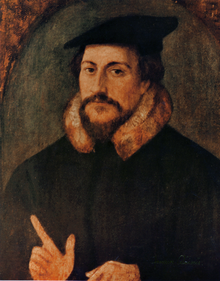
John Calvin by Holbein.pngThought for the Day

French theologian, pastor and reformer during the Protestant Reformation, John Calvin wrote, "Man's mind is like a store of idolatry and superstition; so much so that if a man believes his own mind it is certain that he will forsake God and forge some idol in his own brain."

A Joke for Today

Image result for bridge to hawaiiA man was walking along a beach and stumbled across an old lamp. He picked it up, rubbed it and out popped a genie.

The genie said, "You released me from the lamp, blah blah blah. This is the fourth time this month and I'm getting a little sick of these wishes so you can forget about three. You only get one wish!"

The man sat and thought about it for a while and said, "I've always wanted to go to Hawaii but I'm scared to fly and I get very seasick.

"Could you build me a bridge to Hawaii so I can drive over there to visit?"

The genie laughed and said, "That's impossible! Think of the logistics of that! How would the supports ever reach the bottom of the Pacific? Think of how much concrete! How much steel! You're going to have to think of another wish."

The man agreed, and tried to think of a really good wish. Finally, he said, "I've been married and divorced four times. My wives always said that I don't care and that I'm insensitive. So, I wish that I could understand women. I want to know how they feel inside and what they're thinking when they give me the silent treatment. I want to figure out why they're crying, know what they really want when they say 'nothing', and know how to make them truly happy."

The genie paused for a while and said, "How many lanes do you want on that bridge?"