Read the Bible in a Year

Each day, we'll post passages so that you can read the Bible in one year. This is part of The Colossians 13:16 Project, sponsored by Cove Presbyterian Church, 3404 Main Street, Weirton, West Virginia. You're invited to worship with us Sundays, at 11:00 a.m. or Saturdays, at 6:30 p.m. You may also want to consider joining one our adult Bible Studies: Thursdays at 12:00 noon and Sundays at 9:30 a.m. and 10:00 a.m. We also have a full range of programs for children. If you want more information about the church, check out the other blogs. And please feel free to leave any comments.

The Bible in a Year is a ministry of Cove Presbyterian Church. We need your support to keep posting. If you find it helpful, you can support this blog by your contributions. They may be sent to Cove Presbyterian Church, 3404 Main Street, Weirton, WV 26062. You can also use the PayPal link below:

Image result for paypal donate
Showing posts with label Joseph Joubert. Show all posts

Monday, May 7, 2018

Bible Readings for May 7, 2018


Today our passages are 1 Samuel 1:1–2:21; John 5:1-23; Psalm 105:37-45; and Proverbs 14:28-29. The readings are from The Message by Eugene H. Peterson.  If you find these readings helpful, please consider sending an offering directly to Cove Presbyterian Church, 3404 Main Street, Weirton, West Virginia or through PayPal by using the link below.
https://www.paypal.com/cgi-bin/webscr?cmd=_s-xclick&hosted_button_id=NX3WLYQG5864L


1 Samuel 1-2:21 (The Message)


1 Samuel 1

Hannah Pours Out Her Heart to God
1-2There once was a man who lived in Ramathaim. He was descended from the old Zuph family in the Ephraim hills. His name was Elkanah. (He was connected with the Zuphs from Ephraim through his father Jeroham, his grandfather Elihu, and his great-grandfather Tohu.) He had two wives. The first was Hannah; the second was Peninnah. Peninnah had children; Hannah did not. 3-7 Every year this man went from his hometown up to Shiloh to worship and offer a sacrifice to God-of-the-Angel-Armies. Eli and his two sons, Hophni and Phinehas, served as the priests of God there. When Elkanah sacrificed, he passed helpings from the sacrificial meal around to his wife Peninnah and all her children, but he always gave an especially generous helping to Hannah because he loved her so much, and because God had not given her children. But her rival wife taunted her cruelly, rubbing it in and never letting her forget that God had not given her children. This went on year after year. Every time she went to the sanctuary of God she could expect to be taunted. Hannah was reduced to tears and had no appetite.
8 Her husband Elkanah said, "Oh, Hannah, why are you crying? Why aren't you eating? And why are you so upset? Am I not of more worth to you than ten sons?"
9-11 So Hannah ate. Then she pulled herself together, slipped away quietly, and entered the sanctuary. The priest Eli was on duty at the entrance to God's Temple in the customary seat. Crushed in soul, Hannah prayed to God and cried and cried—inconsolably. Then she made a vow:
Oh, God-of-the-Angel-Armies,
If you'll take a good, hard look at my pain,
If you'll quit neglecting me and go into action for me
By giving me a son,
I'll give him completely, unreservedly to you.
I'll set him apart for a life of holy discipline.
12-14 It so happened that as she continued in prayer before God, Eli was watching her closely. Hannah was praying in her heart, silently. Her lips moved, but no sound was heard. Eli jumped to the conclusion that she was drunk. He approached her and said, "You're drunk! How long do you plan to keep this up? Sober up, woman!"
15-16 Hannah said, "Oh no, sir—please! I'm a woman hard used. I haven't been drinking. Not a drop of wine or beer. The only thing I've been pouring out is my heart, pouring it out to God. Don't for a minute think I'm a bad woman. It's because I'm so desperately unhappy and in such pain that I've stayed here so long."
17 Eli answered her, "Go in peace. And may the God of Israel give you what you have asked of him."
18 "Think well of me—and pray for me!" she said, and went her way. Then she ate heartily, her face radiant.
19 Up before dawn, they worshiped God and returned home to Ramah. Elkanah slept with Hannah his wife, and Godbegan making the necessary arrangements in response to what she had asked. 
Dedicating the Child to God
20 Before the year was out, Hannah had conceived and given birth to a son. She named him Samuel, explaining, "I asked God for him." 21-22 When Elkanah next took his family on their annual trip to Shiloh to worship God, offering sacrifices and keeping his vow, Hannah didn't go. She told her husband, "After the child is weaned, I'll bring him myself and present him before God—and that's where he'll stay, for good."
23-24 Elkanah said to his wife, "Do what you think is best. Stay home until you have weaned him. Yes! Let God complete what he has begun!"
So she did. She stayed home and nursed her son until she had weaned him. Then she took him up to Shiloh, bringing also the makings of a generous sacrificial meal—a prize bull, flour, and wine. The child was so young to be sent off!
25-26 They first butchered the bull, then brought the child to Eli. Hannah said, "Excuse me, sir. Would you believe that I'm the very woman who was standing before you at this very spot, praying to God? I prayed for this child, and God gave me what I asked for. And now I have dedicated him to God. He's dedicated to God for life."
Then and there, they worshiped God

1 Samuel 2


1 Hannah prayed: I'm bursting with God-news! I'm walking on air.
I'm laughing at my rivals. I'm dancing my salvation. 2-5 Nothing and no one is holy like God,
no rock mountain like our God.
Don't dare talk pretentiously—
not a word of boasting, ever!
For God knows what's going on.
He takes the measure of everything that happens.
The weapons of the strong are smashed to pieces,
while the weak are infused with fresh strength.
The well-fed are out begging in the streets for crusts,
while the hungry are getting second helpings.
The barren woman has a houseful of children,
while the mother of many is bereft.
6-10 God brings death and God brings life,
brings down to the grave and raises up.
God brings poverty and God brings wealth;
he lowers, he also lifts up.
He puts poor people on their feet again;
he rekindles burned-out lives with fresh hope,
Restoring dignity and respect to their lives—
a place in the sun!
For the very structures of earth are God's;
he has laid out his operations on a firm foundation.
He protectively cares for his faithful friends, step by step,
but leaves the wicked to stumble in the dark.
No one makes it in this life by sheer muscle!
God's enemies will be blasted out of the sky,
crashed in a heap and burned.
God will set things right all over the earth,
he'll give strength to his king,
he'll set his anointed on top of the world! 11 Elkanah went home to Ramah. The boy stayed and served God in the company of Eli the priest. 
Samuel Serves God
12-17 Eli's own sons were a bad lot. They didn't know God and could not have cared less about the customs of priests among the people. Ordinarily, when someone offered a sacrifice, the priest's servant was supposed to come up and, while the meat was boiling, stab a three-pronged fork into the cooking pot. The priest then got whatever came up on the fork. But this is how Eli's sons treated all the Israelites who came to Shiloh to offer sacrifices to God. Before they had even burned the fat to God, the priest's servant would interrupt whoever was sacrificing and say, "Hand over some of that meat for the priest to roast. He doesn't like boiled meat; he likes his rare." If the man objected, "First let the fat be burned—God's portion!—then take all you want," the servant would demand, "No, I want it now. If you won't give it, I'll take it." It was a horrible sin these young servants were committing—and right in the presence of God!—desecrating the holy offerings to God18-20 In the midst of all this, Samuel, a boy dressed in a priestly linen tunic, served God. Additionally, every year his mother would make him a little robe cut to his size and bring it to him when she and her husband came for the annual sacrifice. Eli would bless Elkanah and his wife, saying, "God give you children to replace this child you have dedicated to God." Then they would go home.
21 God was most especially kind to Hannah. She had three more sons and two daughters! The boy Samuel stayed at the sanctuary and grew up with God

John 5:1-23 (The Message)


John 5

Even on the Sabbath
1-6Soon another Feast came around and Jesus was back in Jerusalem.
Near the Sheep Gate in Jerusalem there was a pool, in Hebrew called Bethesda, with five alcoves. Hundreds of sick people—blind, crippled, paralyzed—were in these alcoves. One man had been an invalid there for thirty-eight years. When Jesus saw him stretched out by the pool and knew how long he had been there, he said, "Do you want to get well?"
7The sick man said, "Sir, when the water is stirred, I don't have anybody to put me in the pool. By the time I get there, somebody else is already in."
8-9Jesus said, "Get up, take your bedroll, start walking." The man was healed on the spot. He picked up his bedroll and walked off.
9-10That day happened to be the Sabbath. The Jews stopped the healed man and said, "It's the Sabbath. You can't carry your bedroll around. It's against the rules."
11But he told them, "The man who made me well told me to. He said, 'Take your bedroll and start walking.'"
12-13They asked, "Who gave you the order to take it up and start walking?" But the healed man didn't know, for Jesus had slipped away into the crowd.
14A little later Jesus found him in the Temple and said, "You look wonderful! You're well! Don't return to a sinning life or something worse might happen."
15-16The man went back and told the Jews that it was Jesus who had made him well. That is why the Jews were out to get Jesus—because he did this kind of thing on the Sabbath.
17But Jesus defended himself. "My Father is working straight through, even on the Sabbath. So am I."
18That really set them off. The Jews were now not only out to expose him; they were out to kill him. Not only was he breaking the Sabbath, but he was calling God his own Father, putting himself on a level with God.
What the Father Does, the Son Does
19-20So Jesus explained himself at length. "I'm telling you this straight. The Son can't independently do a thing, only what he sees the Father doing. What the Father does, the Son does. The Father loves the Son and includes him in everything he is doing.
20-23"But you haven't seen the half of it yet, for in the same way that the Father raises the dead and creates life, so does the Son. The Son gives life to anyone he chooses. Neither he nor the Father shuts anyone out. The Father handed all authority to judge over to the Son so that the Son will be honored equally with the Father. Anyone who dishonors the Son, dishonors the Father, for it was the Father's decision to put the Son in the place of honor.

Psalm 105:37-45 (The Message)


23-42 Then Israel entered Egypt,
Jacob immigrated to the Land of Ham.
God gave his people lots of babies;
soon their numbers alarmed their foes.
He turned the Egyptians against his people;
they abused and cheated God's servants.
Then he sent his servant Moses,
and Aaron, whom he also chose.
They worked marvels in that spiritual wasteland,
miracles in the Land of Ham.
He spoke, "Darkness!" and it turned dark—
they couldn't see what they were doing.
He turned all their water to blood
so that all their fish died;
He made frogs swarm through the land,
even into the king's bedroom;
He gave the word and flies swarmed,
gnats filled the air.
He substituted hail for rain,
he stabbed their land with lightning;
He wasted their vines and fig trees,
smashed their groves of trees to splinters;
With a word he brought in locusts,
millions of locusts, armies of locusts;
They consumed every blade of grass in the country
and picked the ground clean of produce;
He struck down every firstborn in the land,
the first fruits of their virile powers.
He led Israel out, their arms filled with loot,
and not one among his tribes even stumbled.
Egypt was glad to have them go—
they were scared to death of them.
God spread a cloud to keep them cool through the day
and a fire to light their way through the night;
They prayed and he brought quail,
filled them with the bread of heaven;
He opened the rock and water poured out;
it flowed like a river through that desert—
All because he remembered his Covenant,
his promise to Abraham, his servant.

43-45 Remember this! He led his people out singing for joy;
his chosen people marched, singing their hearts out!
He made them a gift of the country they entered,
helped them seize the wealth of the nations
So they could do everything he told them—
could follow his instructions to the letter.
Hallelujah!

Proverbs 14:28-29 (The Message)


28 The mark of a good leader is loyal followers;
leadership is nothing without a following.

29 Slowness to anger makes for deep understanding;
a quick-tempered person stockpiles stupidity.

Verse of the Day

“Always be joyful and never stop praying. Whatever happens, keep thanking God because of Jesus Christ. This is what God wants you to do.” - 1 Thessalonians 5:16-18
Today's passage is from the Contemporary English Version


Thought for the Day

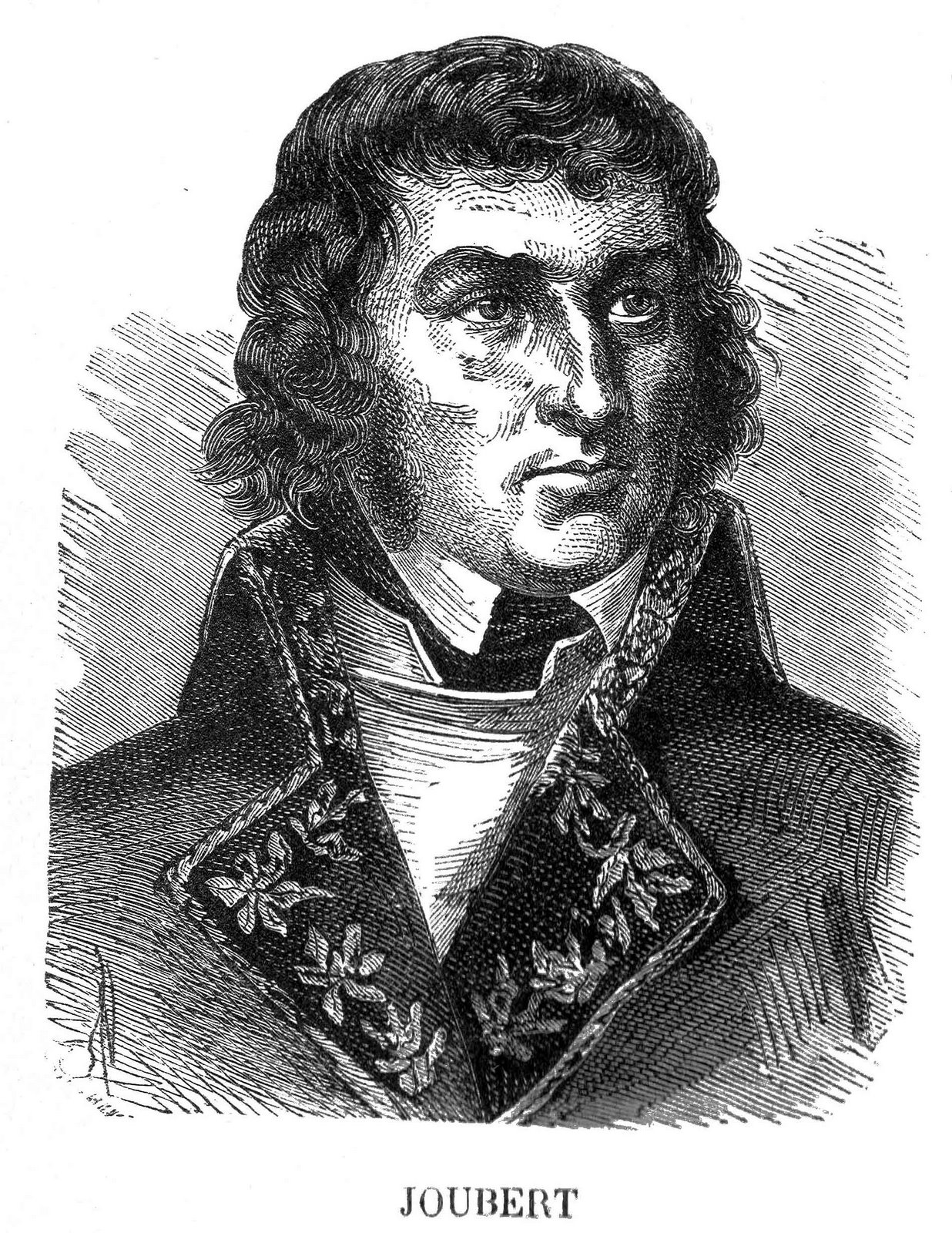
French moralist and essayist, Joseph Joubert wrote, “It is better to debate a question without settling it than to settle a question without debating it.”


Image result for donald duck trump

A Joke for Today

Donald is walking out of the White House and heading toward his limo, when a possible assassin steps forward and aims a gun.

A secret service agent, new on the job, shouts 'Mickey Mouse!'

This startles the would-be assassin and he is captured.

Later, the secret service agent's supervisor takes him aside and asks, 'What in the hell made you shout Mickey Mouse?'

Blushing, the agent replies, 'I got nervous. I meant to shout 'Donald, duck!'

Thursday, July 7, 2016

Bible Readings for July 7, 2016


Today our passages are 1 Chronicles 4:5–5:17; Acts 25:1-27; Psalm 5:1-12; and Proverbs 18:19. The readings are from The Message by Eugene H. PetersonIf you find these readings helpful, please consider sending an offering directly to Cove Presbyterian Church, 3404 Main Street, Weirton, West Virginia or through PayPal.

1 Chronicles 4:5-5:17 (The Message)

 5-8 Ashhur the father of Tekoa had two wives, Helah and Naarah. Naarah gave birth to Ahuzzam, Hepher, Temeni, and Haahashtari—Naarah's children. Helah's sons were Zereth, Zohar, Ethnan, and Koz, who had Anub, Hazzobebah, and the families of Aharhel son of Harum.

9-10 Jabez was a better man than his brothers, a man of honor. His mother had named him Jabez (Oh, the pain!), saying, "A painful birth! I bore him in great pain!" Jabez prayed to the God of Israel: "Bless me, O bless me! Give me land, large tracts of land. And provide your personal protection—don't let evil hurt me." God gave him what he asked.


11-12 Kelub, Shuhah's brother, had Mehir; Mehir had Eshton; Eshton had Beth Rapha, Paseah, and Tehinnah, who founded Ir Nahash (City of Smiths). These were known as the men of Recah.

 13 The sons of Kenaz: Othniel and Seraiah.
    The sons of Othniel: Hathath and Meonothai.
 14 Meonothai had Ophrah; Seraiah had Joab, the founder of Ge Harashim (Colony of Artisans).
 15 The sons of Caleb son of Jephunneh: Iru, Elah, and Naam.
    The son of Elah: Kenaz.
 16 The sons of Jehallelel: Ziph, Ziphah, Tiria, and Asarel.
 17-18 The sons of Ezrah: Jether, Mered, Epher, and Jalon. One of Mered's wives, Pharaoh's daughter Bithiah, gave birth to Miriam, Shammai, and Ishbah the father of Eshtemoa. His Judean wife gave birth to Jered father of Gedor, Heber father of Soco, and Jekuthiel father of Zanoah.
 19 The sons of Hodiah's wife, Naham's sister: the father of Keilah the Garmite, and Eshtemoa the Maacathite.
 20 The sons of Shimon: Amnon, Rinnah, Ben-Hanan, and Tilon.
    The sons of Ishi: Zoheth and Ben-Zoheth.
 21-23 The sons of Shelah son of Judah: Er the father of Lecah, Laadah the father of Mareshah and the family of linen workers at Beth Ashbea, Jokim, the men of Cozeba, and Joash and Saraph, who ruled in Moab and Jashubi Lehem. (These records are from very old traditions.) They were the potters who lived at Netaim and Gederah, resident potters who worked for the king.
The Family of Simeon
24-25 The Simeon family tree: Nemuel, Jamin, Jarib, Zerah, and Shaul; Shaul had Shallum, Shallum had Mibsam, and Mibsam had Mishma.  26 The sons of Mishma: Hammuel had Zaccur and Zaccur had Shimei.
 27-33 Shimei had sixteen sons and six daughters, but his brothers were not nearly as prolific and never became a large family like Judah. They lived in Beersheba, Moladah, Hazar Shual, Bilhah, Ezem, Tolad, Bethuel, Hormah, Ziklag, Beth Marcaboth, Hazar Susim, Beth Biri, and Shaaraim. They lived in these towns until David became king. Other settlements in the vicinity were the five towns of Etam, Ain, Rimmon, Token, and Ashan, and all the villages around these towns as far as Baalath. These were their settlements. And they kept good family records.
 34-40 Meshobab; Jamlech; Joshah the son of Amaziah; Joel; Jehu the son of Joshibiah, the son of Seraiah, the son of Asiel; Elioenai; Jaakobah; Jeshohaiah; Asaiah; Adiel; Jesimiel; Benaiah; and Ziza the son of Shiphi, the son of Allon, the son of Jedaiah, the son of Shimri, the son of Shemaiah—all these were the leaders in their families. They prospered and increased in numbers so that they had to go as far as Gedor (Gerar) to the east of the valley looking for pasture for their flocks. And they found it—lush pasture, lots of elbow room, peaceful and quiet.
 40-43 Some Hamites had lived there in former times. But the men in these family trees came when Hezekiah was king of Judah and attacked the Hamites, tearing down their tents and houses. There was nothing left of them, as you can see today. Then they moved in and took over because of the great pastureland. Five hundred of these Simeonites went on and invaded the hill country of Seir, led by Pelatiah, Neariah, Rephaiah, and Uzziel, the sons of Ishi. They killed all the escaped Amalekites who were still around. And they still live there.

1 Chronicles 5

The Family of Reuben
 1-2 The family of Reuben the firstborn of Israel: Though Reuben was Israel's firstborn, after he slept with his father's concubine, a defiling act, his rights as the firstborn were passed on to the sons of Joseph son of Israel. He lost his "firstborn" place in the family tree. And even though Judah became the strongest of his brothers and King David eventually came from that family, the firstborn rights stayed with Joseph.  3 The sons of Reuben, firstborn of Israel: Hanoch, Pallu, Hezron, and Carmi.
 4-6 The descendants of Joel: Shemaiah his son, Gog his son, Shimei his son, Micah his son, Reaiah his son, Baal his son, and Beerah his son, whom Tiglath-Pileser king of Assyria took into exile. Beerah was the prince of the Reubenites.
 7-10 Beerah's brothers are listed in the family tree by families: first Jeiel, followed by Zechariah: then Bela son of Azaz, the son of Shema, the son of Joel. Joel lived in the area from Aroer to Nebo and Baal Meon. His family occupied the land up to the edge of the desert that goes all the way to the Euphrates River, since their growing herds of livestock spilled out of Gilead. During Saul's reign they fought and defeated the Hagrites; they then took over their tents and lived in them on the eastern frontier of Gilead.

11-12 The family of Gad were their neighbors in Bashan, as far as Salecah: Joel was the chief, Shapham the second-in-command, and then Janai, the judge in Bashan.

 13-15 Their brothers, by families, were Michael, Meshullam, Sheba, Jorai, Jacan, Zia, and Eber—seven in all. These were the sons of Abihail son of Huri, the son of Jaroah, the son of Gilead, the son of Michael, the son of Jeshishai, the son of Jahdo, the son of Buz. Ahi son of Abdiel, the son of Guni, was head of their family.
 16 The family of Gad lived in Gilead and Bashan, including the outlying villages and extending as far as the pastures of Sharon.
 17 They were all written into the official family tree during the reigns of Jotham king of Judah and Jeroboam king of Israel.


Acts 25:1-27 (The Message)

Acts 25

An Appeal to Caesar
 1-3Three days after Festus arrived in Caesarea to take up his duties as governor, he went up to Jerusalem. The high priests and top leaders renewed their vendetta against Paul. They asked Festus if he wouldn't please do them a favor by sending Paul to Jerusalem to respond to their charges. A lie, of course—they had revived their old plot to set an ambush and kill him along the way.  4-5Festus answered that Caesarea was the proper jurisdiction for Paul, and that he himself was going back there in a few days. "You're perfectly welcome," he said, "to go back with me then and accuse him of whatever you think he's done wrong."
 6-7About eight or ten days later, Festus returned to Caesarea. The next morning he took his place in the courtroom and had Paul brought in. The minute he walked in, the Jews who had come down from Jerusalem were all over him, hurling the most extreme accusations, none of which they could prove.
 8Then Paul took the stand and said simply, "I've done nothing wrong against the Jewish religion, or the Temple, or Caesar. Period."
 9Festus, though, wanted to get on the good side of the Jews and so said, "How would you like to go up to Jerusalem, and let me conduct your trial there?"
 10-11Paul answered, "I'm standing at this moment before Caesar's bar of justice, where I have a perfect right to stand. And I'm going to keep standing here. I've done nothing wrong to the Jews, and you know it as well as I do. If I've committed a crime and deserve death, name the day. I can face it. But if there's nothing to their accusations—and you know there isn't—nobody can force me to go along with their nonsense. We've fooled around here long enough. I appeal to Caesar."
 12Festus huddled with his advisors briefly and then gave his verdict: "You've appealed to Caesar; you'll go to Caesar!"
 13-17A few days later King Agrippa and his wife, Bernice, visited Caesarea to welcome Festus to his new post. After several days, Festus brought up Paul's case to the king. "I have a man on my hands here, a prisoner left by Felix. When I was in Jerusalem, the high priests and Jewish leaders brought a bunch of accusations against him and wanted me to sentence him to death. I told them that wasn't the way we Romans did things. Just because a man is accused, we don't throw him out to the dogs. We make sure the accused has a chance to face his accusers and defend himself of the charges. So when they came down here I got right on the case. I took my place in the courtroom and put the man on the stand.
 18-21"The accusers came at him from all sides, but their accusations turned out to be nothing more than arguments about their religion and a dead man named Jesus, who the prisoner claimed was alive. Since I'm a newcomer here and don't understand everything involved in cases like this, I asked if he'd be willing to go to Jerusalem and be tried there. Paul refused and demanded a hearing before His Majesty in our highest court. So I ordered him returned to custody until I could send him to Caesar in Rome."
 22Agrippa said, "I'd like to see this man and hear his story."
   "Good," said Festus. "We'll bring him in first thing in the morning and you'll hear it for yourself."
 23The next day everybody who was anybody in Caesarea found his way to the Great Hall, along with the top military brass. Agrippa and Bernice made a flourishing grand entrance and took their places. Festus then ordered Paul brought in.
 24-26Festus said, "King Agrippa and distinguished guests, take a good look at this man. A bunch of Jews petitioned me first in Jerusalem, and later here, to do away with him. They have been most vehement in demanding his execution. I looked into it and decided that he had committed no crime. He requested a trial before Caesar and I agreed to send him to Rome. But what am I going to write to my master, Caesar? All the charges made by the Jews were fabrications, and I've uncovered nothing else.
 26-27"That's why I've brought him before this company, and especially you, King Agrippa: so we can come up with something in the nature of a charge that will hold water. For it seems to me silly to send a prisoner all that way for a trial and not be able to document what he did wrong."


Psalm 5:1-12 (The Message)

Psalm 5

A David Psalm
 1-3 Listen, God! Please, pay attention! Can you make sense of these ramblings, my groans and cries? King-God, I need your help.
   Every morning
      you'll hear me at it again.
   Every morning
      I lay out the pieces of my life
      on your altar
      and watch for fire to descend.

 4-6 You don't socialize with Wicked,
      or invite Evil over as your houseguest.
   Hot-Air-Boaster collapses in front of you;
      you shake your head over Mischief-Maker.
   God destroys Lie-Speaker;
      Blood-Thirsty and Truth-Bender disgust you.

 7-8 And here I am, your invited guest—
      it's incredible!
   I enter your house; here I am,
      prostrate in your inner sanctum,
   Waiting for directions
      to get me safely through enemy lines.

 9-10 Every word they speak is a land mine;
      their lungs breathe out poison gas.
   Their throats are gaping graves,
      their tongues slick as mudslides.
   Pile on the guilt, God!
      Let their so-called wisdom wreck them.
   Kick them out! They've had their chance.

 11-12 But you'll welcome us with open arms
      when we run for cover to you.
   Let the party last all night!
      Stand guard over our celebration.
   You are famous, God, for welcoming God-seekers,
      for decking us out in delight.


Proverbs 18:19 (The Message)


 19 Do a favor and win a friend forever;
   nothing can untie that bond.


Verse of the Day
“Your way is perfect, LORD, and your word is correct. You are a shield for those who run to you for help.” - Psalm 18:30
Today's passage is from the Contemporary English Version.

 
Thought for the Day
French moralist and essayist, Joseph Joubert wrote, “A part of kindness consists in loving people more than they deserve.”

Tuesday, September 2, 2014

Bible Readings for September 2, 2014


Today our passages are Ecclesiastes 1:1–3:22; 2 Corinthians 6:1-13; Psalm 46:1-11; and Proverbs 22:15. The readings are from The Message by Eugene H. Peterson


Ecclesiastes 1-3:22 (The Message)

Ecclesiastes 1

The Quester
 1These are the words of the Quester, David's son and king in Jerusalem 2-11 Smoke, nothing but smoke. [That's what the Quester says.] There's nothing to anything—it's all smoke.
   What's there to show for a lifetime of work,
      a lifetime of working your fingers to the bone?
   One generation goes its way, the next one arrives,
      but nothing changes—it's business as usual for old planet earth.
   The sun comes up and the sun goes down,
      then does it again, and again—the same old round.
   The wind blows south, the wind blows north.
      Around and around and around it blows,
      blowing this way, then that—the whirling, erratic wind.
   All the rivers flow into the sea,
      but the sea never fills up.
   The rivers keep flowing to the same old place,
      and then start all over and do it again.
   Everything's boring, utterly boring—
      no one can find any meaning in it.
   Boring to the eye,
      boring to the ear.
   What was will be again,
      what happened will happen again.
   There's nothing new on this earth.
      Year after year it's the same old thing.
   Does someone call out, "Hey, this is new"?
      Don't get excited—it's the same old story.
   Nobody remembers what happened yesterday.
      And the things that will happen tomorrow?
   Nobody'll remember them either.
      Don't count on being remembered.
I've Seen It All
 12-14 Call me "the Quester." I've been king over Israel in Jerusalem. I looked most carefully into everything, searched out all that is done on this earth. And let me tell you, there's not much to write home about. God hasn't made it easy for us. I've seen it all and it's nothing but smoke—smoke, and spitting into the wind.

 15 Life's a corkscrew that can't be straightened,
   A minus that won't add up.

 16-17 I said to myself, "I know more and I'm wiser than anyone before me in Jerusalem. I've stockpiled wisdom and knowledge." What I've finally concluded is that so-called wisdom and knowledge are mindless and witless—nothing but spitting into the wind.

 18 Much learning earns you much trouble.
   The more you know, the more you hurt.

Ecclesiastes 2


    I said to myself, "Let's go for it—experiment with pleasure, have a good time!" But there was nothing to it, nothing but smoke.

   What do I think of the fun-filled life? Insane! Inane!
      My verdict on the pursuit of happiness? Who needs it?
   With the help of a bottle of wine
      and all the wisdom I could muster,
   I tried my level best
      to penetrate the absurdity of life.
   I wanted to get a handle on anything useful we mortals might do
      during the years we spend on this earth.
I Never Said No to Myself
 4-8 Oh, I did great things: built houses,
      planted vineyards,
      designed gardens and parks
         and planted a variety of fruit trees in them,
      made pools of water
         to irrigate the groves of trees.
   I bought slaves, male and female,
         who had children, giving me even more slaves;
      then I acquired large herds and flocks,
         larger than any before me in Jerusalem.
   I piled up silver and gold,
         loot from kings and kingdoms.
   I gathered a chorus of singers to entertain me with song,
      and—most exquisite of all pleasures—
      voluptuous maidens for my bed.  9-10 Oh, how I prospered! I left all my predecessors in Jerusalem far behind, left them behind in the dust. What's more, I kept a clear head through it all. Everything I wanted I took—I never said no to myself. I gave in to every impulse, held back nothing. I sucked the marrow of pleasure out of every task—my reward to myself for a hard day's work!
I Hate Life
 11 Then I took a good look at everything I'd done, looked at all the sweat and hard work. But when I looked, I saw nothing but smoke. Smoke and spitting into the wind. There was nothing to any of it. Nothing.  12-14 And then I took a hard look at what's smart and what's stupid. What's left to do after you've been king? That's a hard act to follow. You just do what you can, and that's it. But I did see that it's better to be smart than stupid, just as light is better than darkness. Even so, though the smart ones see where they're going and the stupid ones grope in the dark, they're all the same in the end. One fate for all—and that's it.
 15-16 When I realized that my fate's the same as the fool's, I had to ask myself, "So why bother being wise?" It's all smoke, nothing but smoke. The smart and the stupid both disappear out of sight. In a day or two they're both forgotten. Yes, both the smart and the stupid die, and that's it.
 17 I hate life. As far as I can see, what happens on earth is a bad business. It's smoke—and spitting into the wind.
 18-19 And I hated everything I'd accomplished and accumulated on this earth. I can't take it with me—no, I have to leave it to whoever comes after me. Whether they're worthy or worthless—and who's to tell?—they'll take over the earthly results of my intense thinking and hard work. Smoke.
 20-23 That's when I called it quits, gave up on anything that could be hoped for on this earth. What's the point of working your fingers to the bone if you hand over what you worked for to someone who never lifted a finger for it? Smoke, that's what it is. A bad business from start to finish. So what do you get from a life of hard labor? Pain and grief from dawn to dusk. Never a decent night's rest. Nothing but smoke.
 24-26 The best you can do with your life is have a good time and get by the best you can. The way I see it, that's it—divine fate. Whether we feast or fast, it's up to God. God may give wisdom and knowledge and joy to his favorites, but sinners are assigned a life of hard labor, and end up turning their wages over to God's favorites. Nothing but smoke—and spitting into the wind.

Ecclesiastes 3

There's a Right Time for Everything
 1 There's an opportune time to do things, a right time for everything on the earth:

 2-8 A right time for birth and another for death,
   A right time to plant and another to reap,
   A right time to kill and another to heal,
   A right time to destroy and another to construct,
   A right time to cry and another to laugh,
   A right time to lament and another to cheer,
   A right time to make love and another to abstain,
   A right time to embrace and another to part,
   A right time to search and another to count your losses,
   A right time to hold on and another to let go,
   A right time to rip out and another to mend,
   A right time to shut up and another to speak up,
   A right time to love and another to hate,
   A right time to wage war and another to make peace.  9-13 But in the end, does it really make a difference what anyone does? I've had a good look at what God has given us to do—busywork, mostly. True, God made everything beautiful in itself and in its time—but he's left us in the dark, so we can never know what God is up to, whether he's coming or going. I've decided that there's nothing better to do than go ahead and have a good time and get the most we can out of life. That's it—eat, drink, and make the most of your job. It's God's gift.
 14 I've also concluded that whatever God does, that's the way it's going to be, always. No addition, no subtraction. God's done it and that's it. That's so we'll quit asking questions and simply worship in holy fear.
 15 Whatever was, is.
   Whatever will be, is.
   That's how it always is with God.
God's Testing Us
 16-18 I took another good look at what's going on: The very place of judgment— corrupt! The place of righteousness—corrupt! I said to myself, "God will judge righteous and wicked." There's a right time for every thing, every deed—and there's no getting around it. I said to myself regarding the human race, "God's testing the lot of us, showing us up as nothing but animals."  19-22 Humans and animals come to the same end—humans die, animals die. We all breathe the same air. So there's really no advantage in being human. None. Everything's smoke. We all end up in the same place—we all came from dust, we all end up as dust. Nobody knows for sure that the human spirit rises to heaven or that the animal spirit sinks into the earth. So I made up my mind that there's nothing better for us men and women than to have a good time in whatever we do—that's our lot. Who knows if there's anything else to life?


2 Corinthians 6:1-13 (The Message)

2 Corinthians 6

Staying at Our Post
 1-10Companions as we are in this work with you, we beg you, please don't squander one bit of this marvelous life God has given us. God reminds us,
   I heard your call in the nick of time;
   The day you needed me, I was there to help.
Well, now is the right time to listen, the day to be helped. Don't put it off; don't frustrate God's work by showing up late, throwing a question mark over everything we're doing. Our work as God's servants gets validated—or not—in the details. People are watching us as we stay at our post, alertly, unswervingly . . . in hard times, tough times, bad times; when we're beaten up, jailed, and mobbed; working hard, working late, working without eating; with pure heart, clear head, steady hand; in gentleness, holiness, and honest love; when we're telling the truth, and when God's showing his power; when we're doing our best setting things right; when we're praised, and when we're blamed; slandered, and honored; true to our word, though distrusted; ignored by the world, but recognized by God; terrifically alive, though rumored to be dead; beaten within an inch of our lives, but refusing to die; immersed in tears, yet always filled with deep joy; living on handouts, yet enriching many; having nothing, having it all.  11-13Dear, dear Corinthians, I can't tell you how much I long for you to enter this wide-open, spacious life. We didn't fence you in. The smallness you feel comes from within you. Your lives aren't small, but you're living them in a small way. I'm speaking as plainly as I can and with great affection. Open up your lives. Live openly and expansively!


Psalm 46:1-11 (The Message)

Psalm 46

A Song of the Sons of Korah
 1-3 God is a safe place to hide, ready to help when we need him.
   We stand fearless at the cliff-edge of doom,
      courageous in seastorm and earthquake,
   Before the rush and roar of oceans,
      the tremors that shift mountains.    Jacob-wrestling God fights for us,
      God-of-Angel-Armies protects us.

 4-6 River fountains splash joy, cooling God's city,
      this sacred haunt of the Most High.
   God lives here, the streets are safe,
      God at your service from crack of dawn.
   Godless nations rant and rave, kings and kingdoms threaten,
      but Earth does anything he says.

 7 Jacob-wrestling God fights for us,
      God-of-Angel-Armies protects us.

 8-10 Attention, all! See the marvels of God!
      He plants flowers and trees all over the earth,
   Bans war from pole to pole,
      breaks all the weapons across his knee.
   "Step out of the traffic! Take a long,
      loving look at me, your High God,
      above politics, above everything."

 11 Jacob-wrestling God fights for us,
      God-of-Angel-Armies protects us.


Proverbs 22:15 (The Message)


 15 Young people are prone to foolishness and fads;
   the cure comes through tough-minded discipline.


Verse of the Day

“Our LORD, your love is seen all over the world. Teach me your laws.” - Psalm 119:64
Today's passage is from the Contemporary English Version.


Thought for the Day
 

French moralist and essayist, Joseph Joubert wrote, “Never cur what you can untie.”

Thursday, February 27, 2014

Bible Readings for February 27, 2014


Today our passages are Leviticus 20:22–22:16; Mark 9:1-29; Psalm 43:1-5; and Proverbs 10:18. The readings are from The Message by Eugene H. Peterson.


Leviticus 20:22-22:16 (The Message)

22-23 "Do what I tell you, all my decrees and laws; live by them so that the land where I'm bringing you won't vomit you out. You simply must not live like the nations I'm driving out before you. They did all these things and I hated every minute of it.
24-26 "I've told you, remember, that you will possess their land that I'm giving to you as an inheritance, a land flowing with milk and honey. I am God, your God, who has distinguished you from the nations. So live like it: Distinguish between ritually clean and unclean animals and birds. Don't pollute yourselves with any animal or bird or crawling thing which I have marked out as unclean for you. Live holy lives before me because I, God, am holy. I have distinguished you from the nations to be my very own.
27 "A man or woman who is a medium or sorcerer among you must be put to death. You must kill them by stoning. They're responsible for their own deaths."

Leviticus 21

Holy Priests
1-41 God spoke to Moses: "Speak to the priests, the sons of Aaron. Tell them, A priest must not ritually contaminate himself by touching the dead, except for close relatives: mother, father, son, daughter, brother, or an unmarried sister who is dependent on him since she has no husband; for these he may make himself ritually unclean, but he must not contaminate himself with the dead who are only related to him by marriage and thus profane himself. 5-6 "Priests must not shave their heads or trim their beards or gash their bodies. They must be holy to their God and must not profane the name of their God. Because their job is to present the gifts of God, the food of their God, they are to be holy.
7-8 "Because a priest is holy to his God he must not marry a woman who has been a harlot or a cult prostitute or a divorced woman. Make sure he is holy because he serves the food of your God. Treat him as holy because I, God, who make you holy, am holy.
9 "If a priest's daughter defiles herself in prostitution, she disgraces her father. She must be burned at the stake.
10-12 "The high priest, the one among his brothers who has received the anointing oil poured on his head and been ordained to wear the priestly vestments, must not let his hair go wild and tangled nor wear ragged and torn clothes. He must not enter a room where there is a dead body. He must not ritually contaminate himself, even for his father or mother; and he must neither abandon nor desecrate the Sanctuary of his God because of the dedication of the anointing oil which is upon him. I am God.
13-15 "He is to marry a young virgin, not a widow, not a divorcee, not a cult prostitute—he is only to marry a virgin from his own people. He must not defile his descendants among his people because I am God who makes him holy."
16-23 God spoke to Moses: "Tell Aaron, None of your descendants, in any generation to come, who has a defect of any kind may present as an offering the food of his God. That means anyone who is blind or lame, disfigured or deformed, crippled in foot or hand, hunchbacked or dwarfed, who has anything wrong with his eyes, who has running sores or damaged testicles. No descendant of Aaron the priest who has any defect is to offer gifts to God; he has a defect and so must not offer the food of his God. He may eat the food of his God, both the most holy and the holy, but because of his defect he must not go near the curtain or approach the Altar. It would desecrate my Sanctuary. I am God who makes them holy."
24 Moses delivered this message to Aaron, his sons, and to all the People of Israel.

Leviticus 22

1-2 God spoke to Moses: "Tell Aaron and his sons to treat the holy offerings that the Israelites consecrate to me with reverence so they won't desecrate my holy name. I am God. 3 "Tell them, From now on, if any of your descendants approaches in a state of ritual uncleanness the holy offerings that the Israelites consecrate to God, he will be cut off from my presence. I am God.
4-8 "Each and every one of Aaron's descendants who has an infectious skin disease or a discharge may not eat any of the holy offerings until he is clean. Also, if he touches anything defiled by a corpse, or has an emission of semen, or is contaminated by touching a crawling creature, or touches a person who is contaminated for whatever reason—a person who touches any such thing will be ritually unclean until evening and may not eat any of the holy offerings unless he has washed well with water. After the sun goes down he is clean and may go ahead and eat the holy offerings; they are his food. But he must not contaminate himself by eating anything found dead or torn by wild animals. I am God.
9 "The priests must observe my instructions lest they become guilty and die by treating the offerings with irreverence. I am God who makes them holy.
10-13 "No layperson may eat anything set apart as holy. Nor may a priest's guest or his hired hand eat anything holy. But if a priest buys a slave, the slave may eat of it; also the slaves born in his house may eat his food. If a priest's daughter marries a layperson, she may no longer eat from the holy contributions. But if the priest's daughter is widowed or divorced and without children and returns to her father's household as before, she may eat of her father's food. But no layperson may eat of it.
14 "If anyone eats from a holy offering accidentally, he must give back the holy offering to the priest and add twenty percent to it.
15-16 "The priests must not treat with irreverence the holy offerings of the Israelites that they contribute to God lest they desecrate themselves and make themselves guilty when they eat the holy offerings. I am God who makes them holy."


Mark 9:1-29 (The Message)

Mark 9

1 Then he drove it home by saying, "This isn't pie in the sky by and by. Some of you who are standing here are going to see it happen, see the kingdom of God arrive in full force." In a Light-Radiant Cloud
2-4Six days later, three of them did see it. Jesus took Peter, James, and John and led them up a high mountain. His appearance changed from the inside out, right before their eyes. His clothes shimmered, glistening white, whiter than any bleach could make them. Elijah, along with Moses, came into view, in deep conversation with Jesus.
5-6Peter interrupted, "Rabbi, this is a great moment! Let's build three memorials— one for you, one for Moses, one for Elijah." He blurted this out without thinking, stunned as they all were by what they were seeing.
7Just then a light-radiant cloud enveloped them, and from deep in the cloud, a voice: "This is my Son, marked by my love. Listen to him."
8The next minute the disciples were looking around, rubbing their eyes, seeing nothing but Jesus, only Jesus.
9-10Coming down the mountain, Jesus swore them to secrecy. "Don't tell a soul what you saw. After the Son of Man rises from the dead, you're free to talk." They puzzled over that, wondering what on earth "rising from the dead" meant.
11Meanwhile they were asking, "Why do the religion scholars say that Elijah has to come first?"
12-13Jesus replied, "Elijah does come first and get everything ready for the coming of the Son of Man. They treated this Elijah like dirt, much like they will treat the Son of Man, who will, according to Scripture, suffer terribly and be kicked around contemptibly."
There Are No Ifs
14-16When they came back down the mountain to the other disciples, they saw a huge crowd around them, and the religion scholars cross-examining them. As soon as the people in the crowd saw Jesus, admiring excitement stirred them. They ran and greeted him. He asked, "What's going on? What's all the commotion?"
17-18A man out of the crowd answered, "Teacher, I brought my mute son, made speechless by a demon, to you. Whenever it seizes him, it throws him to the ground. He foams at the mouth, grinds his teeth, and goes stiff as a board. I told your disciples, hoping they could deliver him, but they couldn't."
19-20Jesus said, "What a generation! No sense of God! How many times do I have to go over these things? How much longer do I have to put up with this? Bring the boy here." They brought him. When the demon saw Jesus, it threw the boy into a seizure, causing him to writhe on the ground and foam at the mouth.
21-22He asked the boy's father, "How long has this been going on?"
"Ever since he was a little boy. Many times it pitches him into fire or the river to do away with him. If you can do anything, do it. Have a heart and help us!"
23Jesus said, "If? There are no 'ifs' among believers. Anything can happen."
24No sooner were the words out of his mouth than the father cried, "Then I believe. Help me with my doubts!"
25-27Seeing that the crowd was forming fast, Jesus gave the vile spirit its marching orders: "Dumb and deaf spirit, I command you—Out of him, and stay out!" Screaming, and with much thrashing about, it left. The boy was pale as a corpse, so people started saying, "He's dead." But Jesus, taking his hand, raised him. The boy stood up.
28After arriving back home, his disciples cornered Jesus and asked, "Why couldn't we throw the demon out?"
29He answered, "There is no way to get rid of this kind of demon except by prayer."


Psalm 43:1-5 (The Message)

Psalm 43

1-2 Clear my name, God; stick up for me against these loveless, immoral people.
Get me out of here, away
from these lying degenerates.
I counted on you, God.
Why did you walk out on me?
Why am I pacing the floor, wringing my hands
over these outrageous people?

3-4 Give me your lantern and compass,
give me a map,
So I can find my way to the sacred mountain,
to the place of your presence,
To enter the place of worship,
meet my exuberant God,
Sing my thanks with a harp,
magnificent God, my God.

5 Why are you down in the dumps, dear soul?
Why are you crying the blues?
Fix my eyes on God—
soon I'll be praising again.
He puts a smile on my face.
He's my God.


Proverbs 10:18 (The Message)


18 Liars secretly hoard hatred;
fools openly spread slander.


Verse of the Day

“Children, you show love for others by truly helping them, and not merely by talking about it.” - 1 John 3:18
Today's passage is from the Contemporary English Version.


Thought for the Day
 

French moralist and essayist, Joseph Joubert wrote, “Imagination is the eye of the soul.”