Read the Bible in a Year
Each day, we'll post passages so that you can read the Bible in one year. This is part of The Colossians 13:16 Project, sponsored by Cove Presbyterian Church, 3404 Main Street, Weirton, West Virginia. You're invited to worship with us Sundays, at 11:00 a.m. or Saturdays, at 6:30 p.m. You may also want to consider joining one our adult Bible Studies: Thursdays at 12:00 noon and Sundays at 9:30 a.m. and 10:00 a.m. We also have a full range of programs for children. If you want more information about the church, check out the other blogs. And please feel free to leave any comments.
The Bible in a Year is a ministry of Cove Presbyterian Church. We need your support to keep posting. If you find it helpful, you can support this blog by your contributions. They may be sent to Cove Presbyterian Church, 3404 Main Street, Weirton, WV 26062. You can also use the PayPal link below:
Today our
passages are Numbers 21:1–22:20; Luke 1:26-56; Psalm 57:1-11;
and Proverbs 11:9-11. The readings are the Contemporary English
Version.
Numbers 21-22:20 (Contemporary English Version)
Numbers 21
Israel Defeats the Canaanites at Hormah
1The Canaanite king of Arad lived in the Southern Desert of
Canaan, and when he heard that the Israelites were on their way to the village
of Atharim, he attacked and took some of them hostage.
2The Israelites prayed, " Our
LORD, if you will help us defeat these Canaanites, we will completely destroy
their towns and everything in them, to show that they belong to you."
3The LORD answered their prayer and
helped them wipe out the Canaanite army and completely destroy their towns.
That's why one of the towns is named Hormah, which means " Destroyed Place."
Moses Makes a Bronze Snake
4The Israelites had to go around the territory of Edom, so
when they left Mount Hor, they headed south toward the Red Sea.
But along the way, the people became so impatient 5that they complained against God and said to Moses, " Did
you bring us out of Egypt, just to let us die in the desert? There's no water
out here, and we can't stand this awful food!" 6Then the LORD sent poisonous snakes that bit and killed
many of them.
7Some of the people went to
Moses and admitted, " It was wrong of us to insult you and the LORD. Now please
ask him to make these snakes go away."
Moses prayed, 8and the LORD
answered, " Make a snake out of bronze and place it on top of a pole. Anyone who
gets bitten can look at the snake and won't die."
9Moses obeyed the LORD. And all
of those who looked at the bronze snake lived, even though they had been bitten
by the poisonous snakes.
Israel's Journey to Moab
10As
the Israelites continued their journey to Canaan, they camped at Oboth, 11then at Iye-Abarim in the desert east of
Moab, 12and then in the Zered Gorge.
13After that, they crossed the Arnon
River gorge and camped in the Moabite desert bordering Amorite territory. The
Arnon was the border between the Moabites and the Amorites. 14A song in The Book of the LORD's Battles
mentions the town of Waheb with its creeks in the territory of Suphah. It also
mentions the Arnon River, 15with its
valleys that lie alongside the Moabite border and extend to the town of Ar. 16From the Arnon, the Israelites went to the
well near the town of Beer, where the LORD had said to Moses, " Call the people
together, and I will give them water to drink."
17That's also the same well the
Israelites sang about in this song:
Let's celebrate!
The well has given us water.
18With their royal scepters,
our leaders pointed out
where to dig the well.
The Israelites left the desert and camped near the town of Mattanah, 19then at Nahaliel, and then at Bamoth. 20Finally, they reached Moabite territory,
where they camped near Mount Pisgah
in a valley overlooking the desert north of the Dead Sea.
Israel Defeats King Sihon the Amorite
(Deuteronomy 2.26-37)
21The
Israelites sent this message to King Sihon of the Amorites:
22Please let us pass through
your territory. We promise to stay away from your fields and vineyards, and we
won't drink any water from your wells. As long as we're in your land, we won't
get off the main road.
23But Sihon refused to let Israel
travel through his land. Instead, he called together his entire army and marched
into the desert to attack Israel near the town of Jahaz. 24Israel defeated them and took over the Amorite territory
from the Arnon River gorge in the south to the Jabbok River gorge in the north.
Beyond the Jabbok was the territory of the Ammonites, who were much stronger
than Israel.
25The Israelites settled in the
Amorite towns, including the capital city of Heshbon with its surrounding
villages. 26King Sihon had ruled from
Heshbon, after defeating the Moabites and taking over their land north of the
Arnon River gorge. 27That's why the
Amorites had written this poem about Heshbon:
Come and rebuild Heshbon,
King Sihon's capital city!
28His armies marched out
like fiery flames,
burning down the town of Ar
and destroying
the hills along the Arnon River.
29You Moabites are done for!
Your god Chemosh
deserted your people;
they were captured, taken away
by King Sihon the Amorite.
30We completely defeated Moab.
The towns of Heshbon and Dibon,
of Nophah and Medeba
are ruined and gone.
31After the Israelites had settled in
the Amorite territory, 32Moses sent
some men to explore the town of Jazer. Later, the Israelites captured the
villages surrounding it and forced out the Amorites who lived there.
Israel Defeats King Og of Bashan
(Deuteronomy 3.1-11)
33The
Israelites headed toward the region of Bashan, where King Og ruled, and he led
his entire army to Edrei to meet Israel in battle.
34The LORD said to Moses, "
Don't be afraid of Og. I will help you defeat him and his army, just as you did
King Sihon who ruled in Heshbon. Og's territory will be yours."
35So the Israelites wiped out
Og, his family, and his entire army--there were no survivors. Then Israel took
over the land of Bashan.
Numbers 22
1Israel moved from
there to the hills of Moab, where they camped across the Jordan River from the
town of Jericho.
King Balak of Moab Hires Balaam To Curse Israel
2-3When King Balak
of Moab and his people heard how many Israelites there were and what they had
done to the Amorites, he and the Moabites were terrified and panicked. 4They said to the Midianite leaders, " That
bunch of Israelites will wipe out everything in sight, like a bull eating grass
in a field." So King Balak 5sent a
message to Balaam son of Beor who lived among his relatives in the town of
Pethor near the Euphrates River. It said:
I need your help. A huge group of people has come here from Egypt and
settled near my territory. 6They are
too powerful for us to defeat, so would you come and place a curse on them?
Maybe then we can run them off. I know that anyone you bless will be successful,
but anyone you curse will fail.
7The leaders of Moab and Midian
left and took along money to pay Balaam for his work. When they got to his
house, they gave him Balak's message.
8" Spend the night here," Balaam
replied, " and tomorrow I will tell you the LORD's answer." So the officials
stayed at his house.
9During the night, God asked
Balaam, " Who are these people at your house?"
10" They are messengers from
King Balak of Moab," Balaam answered. " He sent them 11to ask me to go to Moab and place a curse on the people
who have come there from Egypt. They have settled everywhere around him, and he
wants to run them off."
12But God replied, " Don't go
with Balak's messengers. I have blessed those people who have come from Egypt,
so don't curse them."
13The next morning, Balaam said
to Balak's officials, " Go on back home. The LORD says I cannot go with you."
14The officials left and told
Balak that Balaam refused to come.
15Then Balak sent a larger group
of officials, who were even more important than the first ones. 16They went to Balaam and told him that
Balak had said, " Balaam, if you come to Moab, 17I'll pay you very well and do whatever you ask. Just come
and place a curse on these people."
18Balaam answered, " Even if
Balak offered me a palace full of silver or gold, I wouldn't do anything to
disobey the LORD my God. 19You are
welcome to spend the night here, just as the others did. I will find out if the
LORD has something else to say about this."
20That night, God said, "
Balaam, I'll let you go to Moab with Balak's messengers, but do only what I
say."
Luke 1:26-56 (Contemporary English Version)
An Angel Tells about the Birth of Jesus
26One month later God sent the angel Gabriel to the town of
Nazareth in Galilee 27with a message
for a virgin named Mary. She was engaged to Joseph from the family of King
David. 28The angel greeted Mary and
said, "You are truly blessed! The Lord is with you."
29Mary was confused by the
angel's words and wondered what they meant. 30Then the angel told Mary, "Don't be afraid! God is
pleased with you, 31and you will have
a son. His name will be Jesus. 32He
will be great and will be called the Son of God Most High. The Lord God will
make him king, as his ancestor David was. 33He will rule the people of Israel forever, and his
kingdom will never end."
34Mary asked the angel, "How
can this happen? I am not married!"
35The angel answered, "The Holy
Spirit will come down to you, and God's power will come over you. So your child
will be called the holy Son of God. 36Your relative Elizabeth is also going to have a son, even
though she is old. No one thought she could ever have a baby, but in three
months she will have a son. 37Nothing
is impossible for God!"
38Mary said, "I am the Lord's
servant! Let it happen as you have said." And the angel left her.
Mary Visits Elizabeth
39A
short time later Mary hurried to a town in the hill country of Judea. 40She went into Zechariah's home, where she
greeted Elizabeth. 41When Elizabeth
heard Mary's greeting, her baby moved within her.
The Holy Spirit came upon Elizabeth. 42Then in a loud voice she said to Mary:
God has blessed you more than any other woman! He has also blessed the
child you will have. 43Why should the
mother of my Lord come to me? 44As
soon as I heard your greeting, my baby became happy and moved within me. 45The Lord has blessed you because you
believed that he will keep his promise.
Mary's Song of Praise
46Mary
said:
With all my heart
I praise the Lord,
47and I am glad
because of God my Savior.
48He cares for me,
his humble servant.
From now on,
all people will say
God has blessed me.
49God All-Powerful has done
great things for me,
and his name is holy.
50He always shows mercy
to everyone
who worships him.
51The Lord has used
his powerful arm
to scatter those
who are proud.
52He drags strong rulers
from their thrones
and puts humble people
in places of power.
53God gives the hungry
good things to eat,
and sends the rich away
with nothing.
54He helps his servant Israel
and is always merciful
to his people.
55The Lord made this promise
to our ancestors,
to Abraham and his family
forever!
56Mary stayed with Elizabeth
about three months. Then she went back home.
Psalm 57:1-11 (Contemporary English Version)
Psalm 57
(For the music leader. To the tune "Don't Destroy." (Psalm 57; 58 Don't
Destroy: One possible meaning for the difficult Hebrew text.) A special
psalm by David when he was in the cave while running from Saul.)
Praise and Trust in Times of Trouble
1God Most High, have pity on me!
Have mercy.
I run to you
for safety.
In the shadow of your wings,
I seek protection
till danger dies down.
2I pray to you, my protector.
3You will send help from heaven
and save me,
but you will bring trouble
on my attackers.
You are faithful,
and you can be trusted.
4I live among lions,
who gobble down people!
They have spears and arrows
instead of teeth,
and they have sharp swords
instead of tongues.
5May you, my God, be honored
above the heavens;
may your glory be seen
everywhere on earth.
6Enemies set traps for my feet
and struck me down.
They dug a pit in my path,
but fell in it themselves.
7I am faithful to you,
and you can trust me.
I will sing and play music
for you, my God.
8I feel wide awake!
I will wake up my harp
and wake up the sun.
9I will praise you, Lord,
for everyone to hear,
and I will sing hymns to you
in every nation.
10Your love reaches higher
than the heavens;
your loyalty extends
beyond the clouds.
11May you, my God, be honored
above the heavens;
may your glory be seen
everywhere on earth.
Proverbs 11:9-11 (Contemporary English Version)
9Dishonest people use gossip
to destroy their neighbors;
good people are protected
by their own good sense.
10When honest people prosper
and the wicked disappear,
the whole city celebrates.
11When God blesses his people,
their city prospers,
but deceitful liars
can destroy a city.
Verse of the Day
“Do your best to improve your faith. You can do this by adding goodness,
understanding, self-control, patience, devotion to God, concern for others, and
love. If you keep growing in this way, it will show that what you know about our
Lord Jesus Christ has made your lives useful and meaningful.” - 2
Peter 1:5-8

Thought
for the Day
Genevan philosopher, writer, and composer of the 18th century, Jean-Jacques
Rousseau wrote, “People who know little are usually great talkers, while men
who know much say little.”
2 Samuel 13:1-39 (The Message)
2 Samuel 13
1-4 Some time
later, this happened: Absalom, David's son, had a sister who was very
attractive. Her name was Tamar. Amnon, also David's son, was in love with her.
Amnon was obsessed with his sister Tamar to the point of making himself sick
over her. She was a virgin, so he couldn't see how he could get his hands on
her. Amnon had a good friend, Jonadab, the son of David's brother Shimeah.
Jonadab was exceptionally streetwise. He said to Amnon, "Why are you moping
around like this, day after day—you, the son of the king! Tell me what's eating
at you."
"In a word, Tamar," said Amnon. "My brother Absalom's sister. I'm in love
with her."
5 "Here's what you do," said
Jonadab. "Go to bed and pretend you're sick. When your father comes to visit
you, say, 'Have my sister Tamar come and prepare some supper for me here where I
can watch her and she can feed me.'"
6 So Amnon took to his bed and acted
sick. When the king came to visit, Amnon said, "Would you do me a favor? Have my
sister Tamar come and make some nourishing dumplings here where I can watch her
and be fed by her."
7 David sent word to Tamar who was
home at the time: "Go to the house of your brother Amnon and prepare a meal for
him."
8-9 So Tamar went to her brother
Amnon's house. She took dough, kneaded it, formed it into dumplings, and cooked
them while he watched from his bed. But when she took the cooking pot and served
him, he wouldn't eat.
9-11 Amnon said, "Clear everyone out
of the house," and they all cleared out. Then he said to Tamar, "Bring the food
into my bedroom, where we can eat in privacy." She took the nourishing dumplings
she had prepared and brought them to her brother Amnon in his bedroom. But when
she got ready to feed him, he grabbed her and said, "Come to bed with me,
sister!"
12-13 "No, brother!" she said,
"Don't hurt me! This kind of thing isn't done in Israel! Don't do this terrible
thing! Where could I ever show my face? And you—you'll be out on the street in
disgrace. Oh, please! Speak to the king—he'll let you marry me."
14 But he wouldn't listen. Being
much stronger than she, he raped her.
15 No sooner had Amnon raped her
than he hated her—an immense hatred. The hatred that he felt for her was greater
than the love he'd had for her. "Get up," he said, "and get out!"
16-18 "Oh no, brother," she said.
"Please! This is an even worse evil than what you just did to me!"
But he wouldn't listen to her. He called for his valet. "Get rid of this
woman. Get her out of my sight! And lock the door after her." The valet threw
her out and locked the door behind her.
18-19 She was wearing a long-sleeved
gown. (That's how virgin princesses used to dress from early adolescence on.)
Tamar poured ashes on her head, then she ripped the long-sleeved gown, held her
head in her hands, and walked away, sobbing as she went.
20 Her brother Absalom said to her,
"Has your brother Amnon had his way with you? Now, my dear sister, let's keep it
quiet—a family matter. He is, after all, your brother. Don't take this so hard."
Tamar lived in her brother Absalom's home, bitter and desolate.
21-22 King David heard the whole
story and was enraged, but he didn't discipline Amnon. David doted on him
because he was his firstborn. Absalom quit speaking to Amnon—not a word, whether
good or bad—because he hated him for violating his sister Tamar.
23-24 Two years went by. One day
Absalom threw a sheep-shearing party in Baal Hazor in the vicinity of Ephraim
and invited all the king's sons. He also went to the king and invited him.
"Look, I'm throwing a sheep-shearing party. Come, and bring your servants."
25 But the king said, "No, son—not
this time, and not the whole household. We'd just be a burden to you." Absalom
pushed, but David wouldn't budge. But he did give him his blessing.
26-27 Then Absalom said, "Well, if
you won't come, at least let my brother Amnon come."
"And why," said the king, "should he go with you?" But Absalom was so
insistent that he gave in and let Amnon and all the rest of the king's sons go.
28 Absalom prepared a banquet fit
for a king. Then he instructed his servants, "Look sharp, now. When Amnon is
well into the sauce and feeling no pain, and I give the order 'Strike Amnon,'
kill him. And don't be afraid—I'm the one giving the command. Courage! You can
do it!"
29-31 Absalom's servants did to
Amnon exactly what their master ordered. All the king's sons got out as fast as
they could, jumped on their mules, and rode off. While they were still on the
road, a rumor came to the king: "Absalom just killed all the king's sons—not one
is left!" The king stood up, ripped his clothes to shreds, and threw himself on
the floor. All his servants who were standing around at the time did the same.
32-33 Just then, Jonadab, his
brother Shimeah's son, stepped up. "My master must not think that all the young
men, the king's sons, are dead. Only Amnon is dead. This happened because of
Absalom's outrage since the day that Amnon violated his sister Tamar. So my
master, the king, mustn't make things worse than they are, thinking that all
your sons are dead. Only Amnon is dead."
34 Absalom fled.
Just then the sentry on duty looked up and saw a cloud of dust on the road
from Horonaim alongside the mountain. He came and told the king, "I've just seen
a bunch of men on the Horonaim road, coming around the mountain."
35-37 Then Jonadab exclaimed to the
king, "See! It's the king's sons coming, just as I said!" He had no sooner said
the words than the king's sons burst in—loud laments and weeping! The king
joined in, along with all the servants—loud weeping, many tears. David mourned
the death of his son a long time.
37-39 When Absalom fled, he went to
Talmai son of Ammihud, king of Geshur. He was there three years. The king
finally gave up trying to get back at Absalom. He had come to terms with Amnon's
death.
John 17:1-26 (The Message)
John 17
Jesus' Prayer for His Followers
1-5 Jesus said these things. Then, raising his eyes in
prayer, he said:
Father, it's time.
Display the bright splendor of your
Son
So the Son in turn may show your bright splendor.
You put him in
charge of everything human
So he might give real and eternal life to all in
his charge.
And this is the real and eternal life:
That they know you,
The one and only true God,
And Jesus Christ, whom you sent.
I
glorified you on earth
By completing down to the last detail
What you
assigned me to do.
And now, Father, glorify me with your very own splendor,
The very splendor I had in your presence
Before there was a world.
6-12I spelled out your character in
detail
To the men and women you gave me.
They were yours in the first
place;
Then you gave them to me,
And they have now done what you said.
They know now, beyond the shadow of a doubt,
That everything you gave me
is firsthand from you,
For the message you gave me, I gave them;
And
they took it, and were convinced
That I came from you.
They believed
that you sent me.
I pray for them.
I'm not praying for the God-rejecting
world
But for those you gave me,
For they are yours by right.
Everything mine is yours, and yours mine,
And my life is on display in
them.
For I'm no longer going to be visible in the world;
They'll
continue in the world
While I return to you.
Holy Father, guard them as
they pursue this life
That you conferred as a gift through me,
So they
can be one heart and mind
As we are one heart and mind.
As long as I was
with them, I guarded them
In the pursuit of the life you gave through me;
I even posted a night watch.
And not one of them got away,
Except
for the rebel bent on destruction
(the exception that proved the rule of
Scripture).
13-19Now I'm returning to you.
I'm saying these things in the world's hearing
So my people can
experience
My joy completed in them.
I gave them your word;
The
godless world hated them because of it,
Because they didn't join the world's
ways,
Just as I didn't join the world's ways.
I'm not asking that you
take them out of the world
But that you guard them from the Evil One.
They are no more defined by the world
Than I am defined by the world.
Make them holy—consecrated—with the truth;
Your word is consecrating
truth.
In the same way that you gave me a mission in the world,
I give
them a mission in the world.
I'm consecrating myself for their sakes
So
they'll be truth-consecrated in their mission.
20-23I'm praying not only for them
But also for those who will believe in me
Because of them and their
witness about me.
The goal is for all of them to become one heart and mind—
Just as you, Father, are in me and I in you,
So they might be one heart
and mind with us.
Then the world might believe that you, in fact, sent me.
The same glory you gave me, I gave them,
So they'll be as unified and
together as we are—
I in them and you in me.
Then they'll be mature in
this oneness,
And give the godless world evidence
That you've sent me
and loved them
In the same way you've loved me.
24-26Father, I want those you gave
me
To be with me, right where I am,
So they can see my glory, the
splendor you gave me,
Having loved me
Long before there ever was a
world.
Righteous Father, the world has never known you,
But I have known
you, and these disciples know
That you sent me on this mission.
I have
made your very being known to them—
Who you are and what you do—
And
continue to make it known,
So that your love for me
Might be in them
Exactly as I am in them.
Proverbs 16:6-7 (The Message)
6 Guilt is banished through
love and truth;
Fear-of-God
deflects evil.
7 When God
approves of your life,
even your enemies will end up shaking your hand.
Verse of the Day
“When others are happy, be happy with them, and when they are sad, be sad.” -
Romans
12:15
Thought for the
Day
Genevan philosopher, writer, and composer of the 18th century, Jean-Jacques
Rousseau wrote, “You forget that the fruits belong to all and that the land
belongs to no one.”
Today our
passages are 2 Chronicles 29:1-36; Romans 14:1-23; Psalm 24:1-10; and Proverbs
20:12. The readings are the
Contemporary English
Version.
2 Chronicles 29:1-36 (Contemporary English Version)
2 Chronicles 29
King Hezekiah of Judah
(2 Kings 18.1-3)
1Hezekiah
was twenty-five years old when he became king of Judah, and he ruled twenty-nine
years from Jerusalem. His mother was Abijah daughter of Zechariah.
2Hezekiah obeyed the LORD by
doing right, just as his ancestor David had done.
The Temple Is Purified
3In
the first month of
the first year of Hezekiah's rule, he unlocked the doors to the LORD's temple
and had them repaired.
4Then he called the priests and
Levites to the east courtyard of the temple
5and said: It's time to purify
the temple of the LORD God of our ancestors. You Levites must first go through
the ceremony to make yourselves clean, then go into the temple and bring out
everything that is unclean and unacceptable to the LORD.
6Some of our ancestors were
unfaithful and disobeyed the LORD our God. Not only did they turn their backs on
the LORD, but they also completely ignored his temple.
7They locked the doors, then let
the lamps go out and stopped burning incense and offering sacrifices to him.
8The LORD became terribly angry
at the people of Judah and Jerusalem, and everyone was shocked and horrified at
what he did to punish them. Not only were
9our ancestors killed in battle,
but our own children and wives were taken captive.
10So I have decided to renew our
agreement with the LORD God of Israel. Maybe then he will stop being so angry at
us.
11Let's not waste any time, my
friends. You are the ones who were chosen to be the LORD's priests and to offer
him sacrifices.
12-14When Hezekiah finished
talking, the following Levite leaders went to work:
Mahath son of Amasai and Joel son of Azariah from the Kohath clan; Kish
son of Abdi and Azariah son of Jehallelel from the Merari clan; Joah son of
Zimmah and Eden son of Joah from the Gershon clan; Shimri and Jeuel from the
Elizaphan clan; Zechariah and Mattaniah from the Asaph clan; Jehuel and Shimei
from the Heman clan; Shemaiah and Uzziel from the Jeduthun clan.
15These leaders gathered
together the rest of the Levites, and they all went through the ceremony to make
themselves clean. Then they began to purify the temple according to the Law of
the LORD, just as Hezekiah had commanded.
16The priests went into the
temple and carried out everything that was unclean. They put these things in the
courtyard, and from there, the Levites carried them outside the city to Kidron
Valley.
17The priests and Levites began
their work on the first day of the first month. It
took them one week to purify the courtyards of the temple and another week to
purify the temple. So on the sixteenth day of that same month
18they went back to Hezekiah and
said: Your Majesty, we have finished our work. The entire temple is now pure
again, and so is the altar and its utensils, as well as the table for the sacred
loaves of bread and its utensils.
19And we have brought back all
the things that King Ahaz took from the temple during the time he was unfaithful
to God. We purified them and put them back in front of the altar.
Worship in the Temple
20Right
away, Hezekiah called together the officials of Jerusalem, and they went to the
temple.
21They brought with them seven
bulls, seven rams, seven lambs, and seven goats as
sacrifices to take away the sins of Hezekiah's family and of the people of
Judah, as well as to purify the temple. Hezekiah told the priests, who were
descendants of Aaron, to sacrifice these animals on the altar.
22The priests killed the bulls,
the rams, and the lambs, then splattered the blood on the altar.
23They took the goats to
Hezekiah and the worshipers, and they laid their hands on the animals.
24The priests then killed the
goats and splattered the blood on the altar as a sacrifice to take away the sins
of everyone in Israel, because Hezekiah had commanded that these sacrifices be
made for all the people of Israel.
25Next, Hezekiah assigned the
Levites to their places in the temple. He gave them cymbals, harps, and other
stringed instruments, according to the instructions that the LORD had given King
David and the two prophets, Gad and Nathan.
26The Levites were ready to play
the instruments that had belonged to David; the priests were ready to blow the
trumpets.
27As soon as Hezekiah gave the
signal for the sacrifices to be burned on the altar, the musicians began singing
praises to the LORD and playing their instruments,
28and everyone worshiped the
LORD. This continued until the last animal was sacrificed.
29After that, Hezekiah and the
crowd of worshipers knelt down and worshiped the LORD.
30Then Hezekiah and his
officials ordered the Levites to sing the songs of praise that David and Asaph
the prophet had written. And so they bowed down and joyfully sang praises to the
LORD.
31Hezekiah said to the crowd,
"Now that you are once again acceptable to the LORD, bring sacrifices and
offerings to give him thanks."
The people did this, and some of them voluntarily brought animals to be
offered as sacrifices.
32Seventy bulls, one hundred
rams, and two hundred lambs were brought as sacrifices to please the LORD;
33six hundred bulls and three
thousand sheep were brought as sacrifices to ask the LORD's blessing.
34There were not enough priests
to skin all these animals, because many of the priests had not taken the time to
go through the ceremony to make themselves clean. However, since all the Levites
had made themselves clean, they helped the priests until the last animal was
skinned.
35Besides all the sacrifices
that were burned on the altar, the fat from the other animal sacrifices was
burned, and the offerings of wine were poured over the altar. So the temple was
once again used for worshiping the LORD.
36Hezekiah and the people of
Judah celebrated, because God had helped them make this happen so quickly.
Romans 14:1-23 (Contemporary English Version)
Romans 14
Don't Criticize Others
1Welcome all the Lord's followers, even those whose faith
is weak. Don't criticize them for having beliefs that are different from yours.
2Some think it is all right to eat
anything, while those whose faith is weak will eat only vegetables. 3But you should not criticize others for
eating or for not eating. After all, God welcomes everyone. 4What right do you have to criticize someone else's
servants? Only their Lord can decide if they are doing right, and the Lord will
make sure that they do right.
5Some of the Lord's followers
think one day is more important than another. Others think all days are the
same. But each of you should make up your own mind. 6Any followers who count one day more important than
another day do it to honor their Lord. And any followers who eat meat give
thanks to God, just like the ones who don't eat meat.
7Whether we live or die, it
must be for God, rather than for ourselves. 8Whether we live or die, it must be for the Lord. Alive or
dead, we still belong to the Lord. 9This is because Christ died and rose to life, so that he
would be the Lord of the dead and of the living. 10Why do you criticize other followers of the Lord? Why do
you look down on them? The day is coming when God will judge all of us. 11In the Scriptures God says,
"I swear by my very life
that everyone will kneel down
and praise my name!"
12And so, each of us must give
an account to God for what we do.
Don't Cause Problems for Others
13We must stop judging others. We must also make up our
minds not to upset anyone's faith. 14The Lord Jesus has made it clear to me that God considers
all foods fit to eat. But if you think some foods are unfit to eat, then for you
they are not fit.
15If you are hurting others by
the foods you eat, you are not guided by love. Don't let your appetite destroy
someone Christ died for. 16Don't let
your right to eat bring shame to Christ. 17God's kingdom isn't about eating and drinking. It is
about pleasing God, about living in peace, and about true happiness. All this
comes from the Holy Spirit. 18If you
serve Christ in this way, you will please God and be respected by people. 19We should try to
live at peace and help each other have a strong faith. 20Don't let your appetite destroy what God has done. All
foods are fit to eat, but it is wrong to cause problems for others by what you
eat. 21It is best not to eat meat or
drink wine or do anything else that causes problems for other followers of the
Lord. 22What you believe about these
things should be kept between you and God. You are fortunate, if your actions
don't make you have doubts. 23But if
you do have doubts about what you eat, you are going against your beliefs. And
you know that is wrong, because anything you do against your beliefs is sin.
Psalm 24:1-10 (Contemporary English Version)
Psalm 24
(A psalm by David.)
Who Can Enter the LORD's Temple?
1The earth and everything on it
belong to the LORD.
The world and its people
belong to him.
2The LORD placed it all
on the oceans and rivers.
3Who may climb the LORD's hill
or
stand in his holy temple?
4Only those who do right
for the right reasons,
and don't worship idols
or tell lies under oath.
5The LORD God, who saves them,
will bless and reward them,
6because they worship and serve
the God of Jacob.
7Open the ancient gates,
so that the glorious king
may come in.
8Who is this glorious king?
He is our LORD, a strong
and mighty warrior.
9Open the ancient gates,
so that the glorious king
may come in.
10Who is this glorious king?
He is our LORD,
the All-Powerful!
Proverbs 20:12 (Contemporary English Version)
12Hearing and seeing
are gifts from the LORD.
Verse of the Day
“Yet some people accepted him and put their faith in him. So he gave them the
right to be the children of God. They were not God's children by nature or
because of any human desires. God himself was the one who made them his
children.” - John
1:12-13
Thought
for the Day
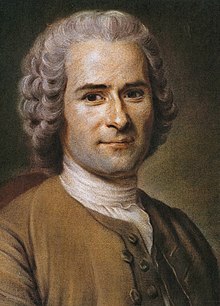
Jean-Jacques
Rousseau, Genevan philosopher, writer, and composer of the 18th-century,
wrote, “What wisdom can you find that is greater than kindness?”




.jpg)
