Read the Bible in a Year

Each day, we'll post passages so that you can read the Bible in one year. This is part of The Colossians 13:16 Project, sponsored by Cove Presbyterian Church, 3404 Main Street, Weirton, West Virginia. You're invited to worship with us Sundays, at 11:00 a.m. or Saturdays, at 6:30 p.m. You may also want to consider joining one our adult Bible Studies: Thursdays at 12:00 noon and Sundays at 9:30 a.m. and 10:00 a.m. We also have a full range of programs for children. If you want more information about the church, check out the other blogs. And please feel free to leave any comments.

The Bible in a Year is a ministry of Cove Presbyterian Church. We need your support to keep posting. If you find it helpful, you can support this blog by your contributions. They may be sent to Cove Presbyterian Church, 3404 Main Street, Weirton, WV 26062. You can also use the PayPal link below:

Image result for paypal donate
Showing posts with label Romans. Show all posts

Saturday, August 3, 2019

Bible Readings for August 3, 2018

Today our passages are 2 Chronicles 33:14–34:33; Romans 16:8-27; Psalm 26:1-12; and Proverbs 20:19. The readings are from the Contemporary English VersionIf you find these readings helpful, please consider sending an offering directly to Cove Presbyterian Church, 3404 Main Steet, Weirton, West Virginia or through PayPal by using the link below.
https://www.paypal.com/cgi-bin/webscr?cmd=_s-xclick&hosted_button_id=NX3WLYQG5864L

2 Chronicles 33:14-34:33 (Contemporary English Version)


14Later, Manasseh rebuilt the eastern section of Jerusalem's outer wall and made it taller. This section went from Gihon Valley north to Fish Gate and around the part of the city called Mount Ophel. He also assigned army officers to each of the fortified cities in Judah. [a]
   15Manasseh also removed the idols and the stone image of the foreign god from the temple, and he gathered the altars he had built near the temple and in other parts of Jerusalem. He threw all these things outside the city.
   16Then he repaired the LORD's altar and offered sacrifices to thank him and sacrifices to ask his blessing. [b] He gave orders that everyone in Judah must worship the LORD God of Israel.
   17The people obeyed Manasseh, but they worshiped the LORD at their own shrines.
   18Everything else Manasseh did while he was king, including his prayer to the LORD God and the warnings from his prophets, is written in The History of the Kings of Israel.
   19Hozai [c] wrote a lot about Manasseh, including his prayer and God's answer. But Hozai also recorded the evil things Manasseh did before turning back to God, as well as a list of places where Manasseh set up idols, and where he built local shrines and places to worship Asherah.
   20Manasseh died and was buried near the palace, and his son Amon became king.   
King Amon of Judah
(2 Kings 21.19-26)
 21Amon was twenty-two years old when he became king of Judah, and he ruled from Jerusalem for two years.
   22Amon disobeyed the LORD, just as his father Manasseh had done, and he worshiped and offered sacrifices to the idols his father had made.
   23Manasseh had turned back to the LORD, but Amon refused to do that. Instead, he sinned even more than his father.
   24Some of Amon's officials plotted against him and killed him in his palace.
   25But the people of Judah killed the murderers of Amon and made his son Josiah king.
   

2 Chronicles 34

King Josiah of Judah
(2 Kings 22.1,2)
 1Josiah was eight years old when he became king of Judah, and he ruled thirty-one years from Jerusalem.
   2He followed the example of his ancestor David and always obeyed the LORD.   
Josiah Stops the Worship of Foreign Gods
(2 Kings 23.4-20)
 3When Josiah was only sixteen years old he began worshiping God, just as his ancestor David had done. Then, four years later, he decided to destroy the local shrines [d] in Judah and Jerusalem, as well as the sacred poles [e] for worshiping the goddess Asherah and the idols of foreign gods.
   4He watched as the altars for the worship of the god Baal were torn down, and as the nearby incense altars were smashed. The Asherah poles, the idols, and the stone images were also smashed, and the pieces were scattered over the graves of their worshipers.
   5Josiah then had the bones of the pagan priests burned on the altars. [f] And so Josiah got rid of the worship of foreign gods in Judah and Jerusalem.
   6He did the same things in the towns and ruined villages [g] in the territories of West Manasseh, Ephraim, and Simeon, as far as the border of Naphtali.
   7Everywhere in the northern kingdom of Israel, Josiah tore down pagan altars and Asherah poles; he crushed idols to dust and smashed incense altars. Then Josiah went back to Jerusalem.   
Hilkiah Finds The Book of God's Law
(2 Kings 22.3-20)
 8In the eighteenth year of Josiah's rule in Judah, after he had gotten rid of all the sinful things from the land and from the LORD's temple, he sent three of his officials to repair the temple. They were Shaphan son of Azaliah, Governor Maaseiah of Jerusalem, and Joah son of Joahaz, who kept the government records.
   9These three men went to Hilkiah the high priest. They gave him the money that the Levite guards had collected from the people of West Manasseh, Ephraim, and the rest of Israel, as well as those living in Judah, Benjamin, and Jerusalem.
   10Then the money was turned over to the men who supervised the repairs to the temple. They used some of it to pay the workers,
   11and they gave the rest of it to the carpenters and builders, who used it to buy the stone and wood they needed to repair the other buildings that Judah's kings had not taken care of.
   12The workers were honest, and their supervisors were Jahath and Obadiah from the Levite clan of Merari, and Zechariah and Meshullam from the Levite clan of Kohath. Other Levites, who were all skilled musicians,
   13were in charge of carrying supplies and supervising the workers. Other Levites were appointed to stand guard around the temple.
   14While the money was being given to these supervisors, Hilkiah found the book that contained the laws that the LORD had given to Moses.
   15Hilkiah handed the book to Shaphan the official and said, "Look what I found here in the temple--The Book of God's Law."
   16Shaphan took the book to Josiah and reported, "Your officials are doing everything you wanted.
   17They have collected the money from the temple and have given it to the men supervising the repairs.
   18But there's something else, Your Majesty. The priest Hilkiah gave me this book." Then Shaphan read it aloud.
   19When Josiah heard what was in The Book of God's Law, he tore his clothes in sorrow.
   20At once he called together Hilkiah, Shaphan, Ahikam son of Shaphan, Abdon son of Micah, [h] and his own servant Asaiah. He said,
   21"The LORD must be furious with me and everyone else in Israel and Judah, because our ancestors did not obey the laws written in this book. Go find out what the LORD wants us to do."
   22Hilkiah and the four other men left right away and went to talk with Huldah the prophet. Her husband was Shallum, [i] who was in charge of the king's clothes. Huldah lived in the northern part of Jerusalem, and when they met in her home,
   23she said: You were sent here by King Josiah, and this is what the LORD God of Israel says to him:
   24"Josiah, I am the LORD! And I intend to punish this country and everyone in it, just as this book says.
   25The people of Judah and Israel have rejected me. They have offered sacrifices to foreign gods and have worshiped their own idols. I can't stand it any longer. I am furious.
   26-27"Josiah, listen to what I am going to do. I noticed how sad you were when you heard that this country and its people would be completely wiped out. You even tore your clothes in sorrow, and I heard you cry.
   28So before I destroy this place, I will let you die in peace."
   The men left and reported to Josiah what Huldah had said.   
Josiah Reads The Book of God's Law
(2 Kings 23.1-3)
 29King Josiah called together the leaders of Judah and Jerusalem.
   30Then he went to the LORD's temple, together with all the people of Judah and Jerusalem, the priests, and the Levites.
   Finally, when everybody was there, he read aloud The Book of God's Law [j] that had been found in the temple.
   31After Josiah had finished reading, he stood in the place reserved for the king. He promised in the LORD's name to faithfully obey the LORD and to follow his laws and teachings that were written in the book.
   32Then he asked the people of Jerusalem and Benjamin to make that same promise and to obey the God their ancestors had worshiped.
   33Josiah destroyed all the idols in the territories of Israel, and he commanded everyone in Israel to worship only the LORD God. The people did not turn away from the LORD God of their ancestors for the rest of Josiah's rule as king.
   
Footnotes:
  1. 2 Chronicles 33:14 fortified cities in Judah: At this time, Judah was under the control of Assyria. The fortifications mentioned in this verse may have been done under orders from Assyrian officials, hoping to strengthen their southern border against the rising power of Egypt.
  2. 2 Chronicles 33:16 sacrifices to ask his blessing: See the note at 29.33.
  3. 2 Chronicles 33:19 Hozai: Or "The prophets."
  4. 2 Chronicles 34:3 local shrines: See the note at 11.15.
  5. 2 Chronicles 34:3 sacred poles: See the note at 14.3.
  6. 2 Chronicles 34:5 the bones of the pagan priests burned on the altars: This made the altars unclean, so that they could not be used in worshiping any god.
  7. 2 Chronicles 34:6 ruined villages: One possible meaning for the difficult Hebrew text.
  8. 2 Chronicles 34:20 Abdon son of Micah: Also called "Achbor son of Micaiah" (see 2 Kings 22.12).
  9. 2 Chronicles 34:22 Shallum: Hebrew "Shallum son of Tokhath son of Hasrah."
  10. 2 Chronicles 34:30 The Book of God's Law: The Hebrew text has "The Book of God's Agreement," which is the same as "The Book of God's Law" in verses 15 and 19. In traditional translations this is called "The Book of the Covenant."

Romans 16:8-27 (Contemporary English Version)


8Greet Ampliatus, my dear friend whose faith is in the Lord.
    9Greet Urbanus, who serves Christ along with us.
   Greet my dear friend Stachys.
    10Greet Apelles, a faithful servant of Christ.
   Greet Aristobulus and his family.
    11Greet Herodion, who is a relative [a] of mine. Greet Narcissus and the others in his family, who have faith in the Lord.
    12Greet Tryphaena and Tryphosa, who work hard for the Lord.
   Greet my dear friend Persis. She also works hard for the Lord.
    13Greet Rufus, that special servant of the Lord, and greet his mother, who has been like a mother to me.
    14Greet Asyncritus, Phlegon, Hermes, Patrobas, and Hermas, as well as our friends who are with them.
    15Greet Philologus, Julia, Nereus and his sister, and Olympas, and all of God's people who are with them.
    16Be sure to give each other a warm greeting.
   All of Christ's churches greet you.
    17My friends, I beg you to watch out for anyone who causes trouble and divides the church by refusing to do what all of you were taught. Stay away from them! 18They want to serve themselves and not Christ the Lord. Their flattery and fancy talk fool people who don't know any better. 19I am glad that everyone knows how well you obey the Lord. But still, I want you to understand what is good and not have anything to do with evil. 20Then God, who gives peace, will soon crush Satan under your feet. I pray that our Lord Jesus will be kind to you.
    21Timothy, who works with me, sends his greetings, and so do my relatives, [b] Lucius, Jason, and Sosipater. 22I, Tertius, also send my greetings. I am a follower of the Lord, and I wrote this letter. [c] 23-24Gaius welcomes me and the whole church into his home, and he sends his greetings.
   Erastus, the city treasurer, and our dear friend Quartus send their greetings too. [d]
Paul's Closing Prayer
 25Praise God! He can make you strong by means of my good news, which is the message about [e] Jesus Christ. For ages and ages this message was kept secret, 26but now at last it has been told. The eternal God commanded his prophets to write about the good news, so that all nations would obey and have faith. 27And now, because of Jesus Christ, we can praise the only wise God forever! Amen. [f]
Footnotes:
  1. Romans 16:11 relative(s): See the note at verse 7.
  2. Romans 16:21 relative(s): See the note at verse 7.
  3. Romans 16:22 I wrote this letter: Paul probably dictated this letter to Tertius.
  4. Romans 16:23 send their greetings too: Some manuscripts add, " I pray that our Lord Jesus Christ will always be kind to you. Amen."
  5. Romans 16:25 about: Or " from."
  6. Romans 16:27 Amen: Some manuscripts have verses 25-27 after 14.23. Others have the verses here and after 14.23, and one manuscript has them after 15.33.

Psalm 26:1-12 (Contemporary English Version)


Psalm 26

(By David.)
The Prayer of an Innocent Person
 1Show that I am right, LORD!
   I stay true to myself,
   and I have trusted you
   without doubting.
    2Test my thoughts and find out
   what I am like.
    3I never forget your kindness,
   and I am always faithful
   to you. [a] 4I don't spend my time
   with worthless liars
    5or go with evil crowds.
    6I wash my hands, LORD,
   to show my innocence,
   and I worship at your altar,
    7while gratefully singing
   about your wonders.
    8I love the temple
   where you live,
   and where
   your glory shines.
    9Don't sweep me away,
   as you do sinners.
   Don't punish me with death
   as you do those people
   who are brutal
    10or full of meanness
   or who bribe others.
    11I stay true to myself.
   Be kind and rescue me.
    12Now I stand on solid ground!
   And when your people meet,
   I will praise you, LORD.
   
Footnotes:
  1. Psalm 26:3 I am. . . to you: Or " I trust your faithfulness."

Proverbs 20:19 (Contemporary English Version)


19Stay away from gossips--
   they tell everything.

Verse of the Day

“But the LORD told him, "Samuel, don't think Eliab is the one just because he's tall and handsome. He isn't the one I've chosen. People judge others by what they look like, but I judge people by what is in their hearts.” - 1 Samuel 16:7
Today's passage is from the Contemporary English Version.

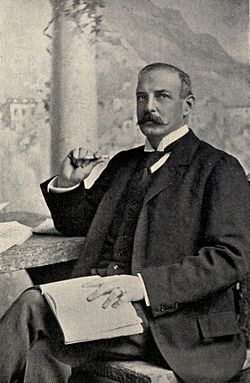
Stanley Baldwin ggbain.32267.jpgThought for the Day

British Conservative Party statesman who dominated the government of the United Kingdom between the world wars, serving as Prime Minister on three occasions, Stanley Baldwin wrote, “I am not struck so much by the diversity of testimony as by the many-sidedness of truth.”


Image result for divorce jokes
A Joke for Today

A man and woman were having marriage problems, and decided to end their union after a very short time together. After a most brief attempt to reconcile, the couple went to court to finalize their break-up.

The judge asked the husband, “What has brought you to this point, where you are not able to keep this marriage together?”

The husband said, “In the six weeks we've been together, we haven't been able to agree on one thing.”

The wife said, “Seven weeks.”

Friday, August 2, 2019

Bible Readings for August 2, 2019

Today our passages are 2 Chronicles 32:1–33:13; Romans 15:23–16:7; Psalm 25:16-22; and Proverbs 20:16-18. The readings are from the Contemporary English VersionIf you find these readings helpful, please consider sending an offering directly to Cove Presbyterian Church, 3404 Main Steet, Weirton, West Virginia or through PayPal by using the link below.
https://www.paypal.com/cgi-bin/webscr?cmd=_s-xclick&hosted_button_id=NX3WLYQG5864L

2 Chronicles 32-33:13 (Contemporary English Version)


2 Chronicles 32

King Sennacherib of Assyria Invades Judah
(2 Kings 18.13-37; Isaiah 36.1-22)
 1After King Hezekiah had faithfully obeyed the LORD's instructions by doing these things, King Sennacherib of Assyria invaded Judah. He attacked the fortified cities and thought he would capture every one of them.    2As soon as Hezekiah learned that Sennacherib was planning to attack Jerusalem,
   3-4he and his officials worked out a plan to cut off the supply of water outside the city, so that the Assyrians would have no water when they came to attack. The officials got together a large work force that stopped up the springs and streams near Jerusalem.
   5Hezekiah also had workers repair the broken sections of the city wall. Then they built defense towers and an outer wall to help protect the one already there. The landfill on the east side of David's City was also strengthened.
   He gave orders to make a large supply of weapons and shields,
   6and he appointed army commanders over the troops. Then he gathered the troops together in the open area in front of the city gate and said to them:
   7Be brave and confident! There's no reason to be afraid of King Sennacherib and his powerful army. We are much more powerful,
   8because the LORD our God fights on our side. The Assyrians must rely on human power alone.
   These words encouraged the army of Judah.
   9When Sennacherib and his troops were camped at the town of Lachish, he sent a message to Hezekiah and the people in Jerusalem. It said:
   10I am King Sennacherib of Assyria, and I have Jerusalem surrounded. Do you think you can survive my attack?
   11Hezekiah your king is telling you that the LORD your God will save you from me. But he is lying, and you'll die of hunger and thirst.
   12Didn't Hezekiah tear down all except one of the LORD's altars and places of worship? [a] And didn't he tell you people of Jerusalem and Judah to worship at that one place?
   13You've heard what my ancestors and I have done to other nations. Were the gods of those nations able to defend their land against us?
   14None of those gods kept their people safe from the kings of Assyria. Do you really think your God can do any better?
   15Don't be fooled by Hezekiah! No god of any nation has ever been able to stand up to Assyria. Believe me, your God cannot keep you safe!
   16The Assyrian officials said terrible things about the LORD God and his servant Hezekiah.
   17Sennacherib's letter even made fun of the LORD. It said, "The gods of other nations could not save their people from Assyria's army, and neither will the God that Hezekiah worships."
   18The officials said all these things in Hebrew, so that everyone listening from the city wall would understand and be terrified and surrender.
   19The officials talked about the LORD God as if he were nothing but an ordinary god or an idol that someone had made.     
The Death of King Sennacherib
(2 Kings 19.14-19,35-37; Isaiah 37.14-20; 37.36-38)
 20Hezekiah and the prophet Isaiah son of Amoz asked the LORD for help,    21and he sent an angel that killed every soldier and commander in the Assyrian camp.
   Sennacherib returned to Assyria, completely disgraced. Then one day he went into the temple of his god where some of his sons killed him.
   22The LORD rescued Hezekiah and the people of Jerusalem from Sennacherib and also protected them from other enemies.
   23People brought offerings to Jerusalem for the LORD and expensive gifts for Hezekiah, and from that day on, every nation on earth respected Hezekiah.     
Hezekiah Gets Sick and Almost Dies
(2 Kings 20.1-11; Isaiah 38.1-8)
 24About this same time, Hezekiah got sick and was almost dead. He prayed, and the LORD gave him a sign that he would recover.    25But Hezekiah was so proud that he refused to thank the LORD for everything he had done for him. This made the LORD angry, and he punished Hezekiah and the people of Judah and Jerusalem.
   26Hezekiah and the people later felt sorry and asked the LORD to forgive them. So the LORD did not punish them as long as Hezekiah was king.     
Hezekiah's Wealth
(2 Kings 20.12-19; Isaiah 39.1-8)
 27Hezekiah was very rich, and everyone respected him. He built special rooms to store the silver, the gold, the precious stones and spices, the shields, and the other valuable possessions.    28Storehouses were also built for his supply of grain, wine, and olive oil; barns were built for his cattle, and pens were put up for his sheep.
   29God made Hezekiah extremely rich, so he bought even more sheep, goats, and cattle. And he built towns where he could keep all these animals.
   30It was Hezekiah who built a tunnel that carried the water from Gihon Spring into the city of Jerusalem. In fact, everything he did was successful!
   31Even when the leaders of Babylonia sent messengers to ask Hezekiah about the sign God had given him, God let Hezekiah give his own answer to test him and to see if he would remain faithful.   
Hezekiah Dies
(2 Kings 20.20,21)
 32Everything else Hezekiah did while he was king, including how faithful he was to the LORD, is included in the records kept by Isaiah the prophet. These are written in The History of the Kings of Judah and Israel.    33When Hezekiah died, he was buried in the section of the royal tombs that was reserved for the most respected kings, [b] and everyone in Judah and Jerusalem honored him. His son Manasseh then became king.
    

2 Chronicles 33

King Manasseh of Judah
(2 Kings 21.1-9,17,18)
 1Manasseh was twelve years old when he became king of Judah, and he ruled fifty-five years from Jerusalem.   2Manasseh disobeyed the LORD by following the disgusting customs of the nations that the LORD had forced out of Israel.
   3He rebuilt the local shrines [c] that his father Hezekiah had torn down. He built altars for the god Baal and set up sacred poles [d] for worshiping the goddess Asherah. And he faithfully worshiped the stars in the sky.
   4In the temple, where only the LORD was supposed to be worshiped, Manasseh built altars for pagan gods
   5and for the stars. He placed these altars in both courtyards of the temple
   6-7and even set up a stone image of a foreign god. Manasseh practiced magic and witchcraft; he asked fortunetellers for advice and sacrificed his own sons in Hinnom Valley. He did many other sinful things and made the LORD very angry.
   Years ago, God had told David and Solomon:
   Jerusalem is the place I prefer above all others in Israel. It belongs to me, and there in the temple I will be worshiped forever.
   8If my people will faithfully obey all the laws and teaching I gave to my servant Moses, I will never again force them to leave the land I gave to their ancestors.
   9But the people of Judah and Jerusalem listened to Manasseh and did even more sinful things than the nations the LORD had wiped out.
   10The LORD tried to warn Manasseh and the people about their sins, but they ignored the warning.
   11So he let Assyrian army commanders invade Judah and capture Manasseh. They put a hook in his nose and tied him up in chains, and they took him to Babylon.
   12While Manasseh was held captive there, he asked the LORD God to forgive him and to help him.
   13The LORD listened to Manasseh's prayer and saw how sorry he was, and so he let him go back to Jerusalem and rule as king. Manasseh knew from then on that the LORD was God.
   
Footnotes:
  1. 2 Chronicles 32:12 worship: Hezekiah actually had torn down the places where idols were worshiped, and he had told the people to worship the LORD at the one place of worship in Jerusalem. But the Assyrian leader was confused and thought these were also places where the LORD was supposed to be worshiped.
  2. 2 Chronicles 32:33 in the section. . . reserved for the most respected kings: One possible meaning for the difficult Hebrew text.
  3. 2 Chronicles 33:3 local shrines: See the note at 11.15.
  4. 2 Chronicles 33:3 sacred poles: See the note at 14.3.

Romans 15:23-16:7 (Contemporary English Version)


23Now there is nothing left for me to do in this part of the world, and for years I have wanted to visit you. 24So I plan to stop off on my way to Spain. Then after a short, but refreshing, visit with you, I hope you will quickly send me on.
    25-26I am now on my way to Jerusalem to deliver the money that the Lord's followers in Macedonia and Achaia collected for God's needy people. 27This is something they really wanted to do. But sharing their money with the Jews was also like paying back a debt, because the Jews had already shared their spiritual blessings with the Gentiles. 28After I have safely delivered this money, I will visit you and then go on to Spain. 29And when I do arrive in Rome, I know it will be with the full blessings of Christ.
    30My friends, by the power of the Lord Jesus Christ and by the love that comes from the Holy Spirit, I beg you to pray sincerely with me and for me. 31Pray that God will protect me from the unbelievers in Judea, and that his people in Jerusalem will be pleased with what I am doing. 32Ask God to let me come to you and have a pleasant and refreshing visit. 33I pray that God, who gives peace, will be with all of you. Amen.
    

Romans 16

Personal Greetings
 1I have good things to say about Phoebe, who is a leader in the church at Cenchreae. 2Welcome her in a way that is proper for someone who has faith in the Lord and is one of God's own people. Help her in any way you can. After all, she has proved to be a respected leader for many others, including me.     3Give my greetings to Priscilla and Aquila. They have not only served Christ Jesus together with me, 4but they have even risked their lives for me. I am grateful for them and so are all the Gentile churches. 5Greet the church that meets in their home.
   Greet my dear friend Epaenetus, who was the first person in Asia to have faith in Christ.
    6Greet Mary, who has worked so hard for you.
    7Greet my relatives [a] Andronicus and Junias, [b] who were in jail with me. They are highly respected by the apostles and were followers of Christ before I was. 

Footnotes:
  1. Romans 16:7 relatives: Or "Jewish friends."
  2. Romans 16:7 Junias: Or "Junia." Some manuscripts have "Julia."

Psalm 25:16-22 (Contemporary English Version)


16I am lonely and troubled.
   Show that you care
   and have pity on me.
    17My awful worries keep growing.
   Rescue me from sadness.
    18See my troubles and misery
   and forgive my sins.
    19Look at all my enemies!
   See how much they hate me.
    20I come to you for shelter.
   Protect me, keep me safe,
   and don't disappoint me.
    21I obey you with all my heart,
   and I trust you, knowing
   that you will save me.
    22Our God, please save Israel
   from all of its troubles. 


Proverbs 20:16-18 (Contemporary English Version)


16You deserve to lose your coat
   if you loan it to someone
   to guarantee payment
   for the debt of a stranger.
    17The food you get by cheating
   may taste delicious,
   but it turns to gravel.
    18Be sure you have sound advice
   before making plans
   or starting a war. 


Verse of the Day

“Obey God's message! Don't fool yourselves by just listening to it.” - James 1:22 
Today's passage is from the Contemporary English Version.

F Marion Crawford.jpgThought for the Day

American writer noted for his many novels, especially those set in Italy, and for his classic weird and fantastic stories, Francis Marion Crawford wrote, “To expect defeat is nine-tenths of defeat itself.”

A Joke for Today

Related imageA pig and a chicken were walking by a church where a gala charity event was taking place. Getting caught up in the spirit, the pig suggested to the chicken that they each make a contribution.

"Great idea!" the chicken cried. "Let's offer them ham and eggs?"

"Not so fast," said the pig testily. "For you, that's a contribution. For me, it's a total commitment."

Thursday, August 1, 2019

Bible Readings for August 1, 2019

Today our passages are 2 Chronicles 30:1–31:21; Romans 15:1-22; Psalm 25:1-15; and Proverbs 20:13-15. The readings are from the Contemporary English VersionIf you find these readings helpful, please consider sending an offering directly to Cove Presbyterian Church, 3404 Main Steet, Weirton, West Virginia or through PayPal by using the link below.
https://www.paypal.com/cgi-bin/webscr?cmd=_s-xclick&hosted_button_id=NX3WLYQG5864L

2 Chronicles 30-31:21 (Contemporary English Version)


2 Chronicles 30

Hezekiah Prepares To Celebrate Passover
 1-4Passover wasn't celebrated in the first month, [a] which was the usual time, because many of the priests were still unclean and unacceptable to serve, and because not everyone in Judah had come to Jerusalem for the festival. So Hezekiah, his officials, and the people agreed to celebrate Passover in the second month. [b] Hezekiah sent a message to everyone in Israel and Judah, including those in the territories of Ephraim and West Manasseh, inviting them to the temple in Jerusalem for the celebration of Passover in honor of the LORD God of Israel.    5Everyone from Beersheba in the south to Dan in the north was invited. This was the largest crowd of people that had ever celebrated Passover, according to the official records.
   6Hezekiah's messengers went everywhere in Israel and Judah with the following letter:
   People of Israel, now that you have survived the invasion of the Assyrian kings, [c] it's time for you to turn back to the LORD God our ancestors Abraham, Isaac, and Jacob worshiped. If you do this, he will stop being angry.
   7Don't follow the example of your ancestors and your Israelite relatives in the north. They were unfaithful to the LORD, and he punished them horribly.
   8Don't be stubborn like your ancestors. Decide now to obey the LORD our God! Come to Jerusalem and worship him in the temple that will belong to him forever. Then he will stop being angry,
   9and the enemies that have captured your families will show pity and send them back home. The LORD God is kind and merciful, and if you turn back to him, he will no longer turn his back on you.
   10The messengers went to every town in Ephraim and West Manasseh as far north as the territory of Zebulun, but everyone laughed and insulted them.
   11Only a few people from the tribes of Asher, West Manasseh, and Zebulun were humble and went to Jerusalem.
   12God also made everyone in Judah eager to do what Hezekiah and his officials had commanded.    
Passover Is Celebrated
 13In the second month, [d] a large crowd of people gathered in Jerusalem to celebrate the Festival of Thin Bread. [e]   14They took all the foreign altars and incense altars in Jerusalem and threw them into Kidron Valley.
   15-17Then, on the fourteenth day of that same month, the Levites began killing the lambs for Passover, because many of the worshipers were unclean and were not allowed to kill their own lambs. Meanwhile, some of the priests and Levites felt ashamed because they had not gone through the ceremony to make themselves clean. They immediately went through that ceremony and went to the temple, where they offered sacrifices to please the LORD. [f] Then the priests and Levites took their positions, according to the Law of Moses, the servant of God. As the Levites killed the lambs, they handed some of the blood to the priests, who splattered it on the altar.
   18-19Most of the people that came from Ephraim, West Manasseh, Issachar, and Zebulun had not made themselves clean, but they ignored God's Law and ate the Passover lambs anyway. Hezekiah found out what they had done and prayed, "LORD God, these people are unclean according to the laws of holiness. But they are worshiping you, just as their ancestors did. So, please be kind and forgive them."
   20The LORD answered Hezekiah's prayer and did not punish them.
   21The worshipers in Jerusalem were very happy and celebrated the Festival for seven days. The Levites and priests sang praises to the LORD every day and played their instruments.
   22Hezekiah thanked the Levites for doing such a good job, leading the celebration.
   The worshipers celebrated for seven days by offering sacrifices, by eating the sacred meals, and by praising the LORD God of their ancestors.
   23Everyone was so excited that they agreed to celebrate seven more days.
   24So Hezekiah gave the people one thousand bulls and seven thousand sheep to be offered as sacrifices and to be used as food for the sacred meals. His officials gave one thousand bulls and ten thousand sheep, and many more priests agreed to go through the ceremony to make themselves clean.
   25Everyone was very happy, including those from Judah and Israel, the priests and Levites, and the foreigners living in Judah and Israel.
   26It was the biggest celebration in Jerusalem since the days of King Solomon, the son of David.
   27The priests and Levites asked God to bless the people, and from his home in heaven, he did.
    

2 Chronicles 31

The People Destroy the Local Shrines
(2 Kings 18.4)
 1After the Festival, the people went to every town in Judah and smashed the stone images of foreign gods and cut down the sacred poles [g] for worshiping the goddess Asherah. They destroyed all the local shrines [h] and foreign altars in Judah, as well as those in the territories of Benjamin, Ephraim, and West Manasseh. Then everyone went home.     
Offerings for the Priests and Levites
 2Hezekiah divided the priests and Levites into groups, according to their duties. Then he assigned them the responsibilities of offering sacrifices to please the LORD [i] and sacrifices to ask his blessing. [j] He also appointed people to serve at the temple and to sing praises at the temple gates.    3Hezekiah provided animals from his own herds and flocks to use for the morning and evening sacrifices, as well as for the sacrifices during the Sabbath celebrations, the New Moon Festivals, and the other religious feasts required by the Law of the LORD.
   4He told the people of Jerusalem to bring the offerings that were to be given to the priests and Levites, so that they would have time to serve the LORD with their work.
   5As soon as the people heard what the king wanted, they brought a tenth of everything they owned, including their best grain, wine, olive oil, honey, and other crops.
   6The people from the other towns of Judah brought a tenth of their herds and flocks, as well as a tenth of anything they had dedicated to the LORD.
   7The people started bringing their offerings to Jerusalem in the third month, [k] and the last ones arrived four months later.
   8When Hezekiah and his officials saw these offerings, they thanked the LORD and the people.
   9Hezekiah asked the priests and Levites about the large amount of offerings.
   10The high priest at the time was Azariah, a descendant of Zadok, and he replied, "Ever since the people have been bringing us their offerings, we have had more than enough food and supplies. The LORD has certainly blessed his people. Look at how much is left over!"
   11So the king gave orders for storerooms to be built in the temple, and when they were completed,
   12-13all the extra offerings were taken there. Hezekiah and Azariah then appointed Conaniah the Levite to be in charge of these storerooms. His brother Shimei was his assistant, and the following Levites worked with them: Jehiel, Azaziah, Nahath, Asahel, Jerimoth, Jozabad, Eliel, Ismachiah, Mahath, and Benaiah.
   14Kore son of Imnah was assigned to guard the East Gate, and he was put in charge of receiving the offerings voluntarily given to God and of dividing them among the priests and Levites.
   15-16He had six assistants who were responsible for seeing that all the priests in the other towns of Judah also got their share of these offerings. They were Eden, Miniamin, Jeshua, Shemaiah, Amariah, and Shecaniah.
   Every priest and every Levite over thirty [l] years old who worked daily in the temple received part of these offerings, according to their duties.
   17The priests were listed in the official records by clans, and the Levites twenty years old and older were listed by their duties.
   18The official records also included their wives and children, because they had also been faithful in keeping themselves clean and acceptable to serve the LORD.
   19Hezekiah also appointed other men to take food and supplies to the priests and Levites whose homes were in the pastureland around the towns of Judah. But the priests had to be descendants of Aaron, and the Levites had to be listed in the official records.
   20-21Everything Hezekiah did while he was king of Judah, including what he did for the temple in Jerusalem, was right and good. He was a successful king, because he obeyed the LORD God with all his heart.
   
Footnotes:
  1. 2 Chronicles 30:1 first month: See the note at 29.3.
  2. 2 Chronicles 30:1 second month: See the note at 3.1,2.
  3. 2 Chronicles 30:6 the invasion of the Assyrian kings: See 2 Kings 17.1-22.
  4. 2 Chronicles 30:13 second month: See the note at 3.1,2.
  5. 2 Chronicles 30:13 the Festival of Thin Bread: The celebration of this Festival began one day after Passover. And so these two festivals were often referred to as one.
  6. 2 Chronicles 30:15 sacrifices to please the LORD: See the note at 1.6.
  7. 2 Chronicles 31:1 sacred poles: See the note at 14.3.
  8. 2 Chronicles 31:1 local shrines: See the note at 11.15.
  9. 2 Chronicles 31:2 sacrifices to please the LORD: See the note at 1.6.
  10. 2 Chronicles 31:2 sacrifices to ask his blessing: See the note at 29.33.
  11. 2 Chronicles 31:7 third month: Sivan, the third month of the Hebrew calendar, from about mid-May to mid-June.
  12. 2 Chronicles 31:15 thirty: The Hebrew text has "three" instead of "thirty"; in Hebrew, these two words look almost exactly the same (see also Numbers 4.3; 1 Chronicles 23.3).

Romans 15:1-22 (Contemporary English Version)


Romans 15

Please Others and Not Yourself
 1If our faith is strong, we should be patient with the Lord's followers whose faith is weak. We should try to please them instead of ourselves. 2We should think of their good and try to help them by doing what pleases them. 3Even Christ did not try to please himself. But as the Scriptures say, "The people who insulted you also insulted me." 4And the Scriptures were written to teach and encourage us by giving us hope. 5God is the one who makes us patient and cheerful. I pray that he will help you live at peace with each other, as you follow Christ. 6Then all of you together will praise God, the Father of our Lord Jesus Christ.     
The Good News Is for Jews and Gentiles
 7Honor God by accepting each other, as Christ has accepted you. 8I tell you that Christ came as a servant of the Jews to show that God has kept the promises he made to their famous ancestors. Christ also came, 9so that the Gentiles would praise God for being kind to them. It is just as the Scriptures say,    "I will tell the nations
   about you,
   and I will sing praises
   to your name."
    10The Scriptures also say to the Gentiles, "Come and celebrate with God's people."
    11Again the Scriptures say,
   "Praise the Lord,
   all you Gentiles.
   All you nations, come
   and worship him."
    12Isaiah says,
   "Someone from David's family
   will come to power.
   He will rule the nations,
   and they will put their hope
   in him."
    13I pray that God, who gives hope, will bless you with complete happiness and peace because of your faith. And may the power of the Holy Spirit fill you with hope.     
Paul's Work as a Missionary
 14My friends, I am sure that you are very good and that you have all the knowledge you need to teach each other. 15But I have spoken to you plainly and have tried to remind you of some things. God was so kind to me! 16He chose me to be a servant of Christ Jesus for the Gentiles and to do the work of a priest in the service of his good news. God did this so that the Holy Spirit could make the Gentiles into a holy offering, pleasing to him.     17Because of Christ Jesus, I can take pride in my service for God. 18In fact, all I will talk about is how Christ let me speak and work, so that the Gentiles would obey him. 19Indeed, I will tell how Christ worked miracles and wonders by the power of the Holy Spirit. I have preached the good news about him all the way from Jerusalem to Illyricum. 20But I have always tried to preach where people have never heard about Christ. I am like a builder who doesn't build on anyone else's foundation. 21It is just as the Scriptures say,
   "All who haven't been told
   about him
   will see him,
   and those who haven't heard
   about him
   will understand."     
Paul's Plan To Visit Rome
 22My work has always kept me from coming to see you.
 

Psalm 25:1-15 (Contemporary English Version)


Psalm 25

(By David.)
A Prayer for Guidance and Help
 1I offer you my heart, LORD God,     2and I trust you.
   Don't make me ashamed
   or let enemies defeat me.
    3Don't disappoint any
   of your worshipers,
   but disappoint all
   deceitful liars.
    4Show me your paths
   and teach me to follow;
    5guide me by your truth
   and instruct me.
   You keep me safe,
   and I always trust you.
    6Please, LORD, remember,
   you have always
   been patient and kind.
    7Forget each wrong I did
   when I was young.
   Show how truly kind you are
   and remember me.
    8You are honest and merciful,
   and you teach sinners
   how to follow your path.
    9You lead humble people
   to do what is right
   and to stay on your path.
    10In everything you do,
   you are kind and faithful
   to everyone who keeps
   our agreement with you.
    11Be true to your name, LORD,
   by forgiving each one
   of my terrible sins.
    12You will show the right path
   to all who worship you.
    13They will have plenty,
   and then their children
   will receive the land.
    14Our LORD, you are the friend
   of your worshipers,
   and you make an agreement
   with all of us.
    15I always look to you,
   because you rescue me
   from every trap. 


Proverbs 20:13-15 (Contemporary English Version)


13If you sleep all the time, 
   you will starve; 
   if you get up and work, 
   you will have enough food. 
    14Everyone likes to brag 
   about getting a bargain. 
    15Sensible words are better 
   than gold or jewels. 


Verse of the Day

“You are my place of safety and my shield. Your word is my only hope.” - Psalm 119:114 
Today's passage is from the Contemporary English Version.

Related imageThought for the Day

King of Saudi Arabia and Custodian of the Two Holy Mosques from 2005 to his death in 2015, Abdullah of Saudi Arabia wrote, “No matter how powerful, countries cannot rule the whole world. The world is ruled by brains, by justice, by morals and by fairness.”

Related imageA Joke for Today

A frog walks into a bank. He goes to the only open teller, and sees that her name is Paddy Whack. "Hey, listen" says the frog. "I really need a loan! I'm out of work, and my wife and tadpoles are at home starving! I need money so I can feed them and provide for them!"

Now Paddy feels very sorry for the poor frog and asks him if he has any collateral. He holds up a small glass elephant. Paddy is a little surprised by this, and quite unsure, but she feels so sorry for the the poor frog that she takes the elephant to her manager. "Mr. Manager, sir," Paddy begins "there is a frog out there who desperately needs a loan. He's out of work and he has a wife and tadpoles who are at home starving. He needs some money so he can provide for them! But all he has for collateral is this little glass elephant. What should I do?"

Well, Mr. Manager takes a good hard look at that elephant, thinks about it a little, and then replies, "It's a knick-knack, Paddy Whack, give the frog a loan!"