Read the Bible in a Year

Each day, we'll post passages so that you can read the Bible in one year. This is part of The Colossians 13:16 Project, sponsored by Cove Presbyterian Church, 3404 Main Street, Weirton, West Virginia. You're invited to worship with us Sundays, at 11:00 a.m. or Saturdays, at 6:30 p.m. You may also want to consider joining one our adult Bible Studies: Thursdays at 12:00 noon and Sundays at 9:30 a.m. and 10:00 a.m. We also have a full range of programs for children. If you want more information about the church, check out the other blogs. And please feel free to leave any comments.

The Bible in a Year is a ministry of Cove Presbyterian Church. We need your support to keep posting. If you find it helpful, you can support this blog by your contributions. They may be sent to Cove Presbyterian Church, 3404 Main Street, Weirton, WV 26062. You can also use the PayPal link below:

Image result for paypal donate
Showing posts with label Henry J. Kaiser. Show all posts

Monday, July 1, 2019

Bible Readings for June 30, 2019

Today our passages are 2 Kings 17:1–18:12; Acts 20:1-38; Psalm 148:1-14; and Proverbs 18:6-7. The readings are from the Contemporary English Version. If you find these readings helpful, please consider sending an offering directly to Cove Presbyterian Church, 3404 Main Street, Weirton, West Virginia or through PayPal by using the link below.
https://www.paypal.com/cgi-bin/webscr?cmd=_s-xclick&hosted_button_id=NX3WLYQG5864L

2 Kings 17-18:12 (Contemporary English Version)


2 Kings 17

King Hoshea of Israel
 1Hoshea son of Elah became king of Israel in the twelfth year of Ahaz's rule in Judah, and he ruled nine years from Samaria. 2Hoshea disobeyed the LORD and sinned, but not as much as the earlier Israelite kings had done.     3During Hoshea's rule, King Shalmaneser of Assyria [a] invaded Israel; he took control of the country and made Hoshea pay taxes. 4But later, Hoshea refused to pay the taxes and asked King So of Egypt to help him rebel. When Shalmaneser found out, he arrested Hoshea and put him in prison. 
Samaria Is Destroyed and the Israelites Are Taken to Assyria
 5Shalmaneser invaded Israel and attacked the city of Samaria for three years, 6before capturing it in the ninth year of Hoshea's rule. The Assyrian king [b] took the Israelites away to Assyria as prisoners. He forced some of them to live in the town of Halah, others to live near the Habor River in the territory of Gozan, and still others to live in towns where the Median people lived. 7All of this happened because the people of Israel had sinned against the LORD their God, who had rescued them from Egypt, where they had been slaves. They worshiped foreign gods, 8followed the customs of the nations that the LORD had forced out of Israel, and were just as sinful as the Israelite kings. 9Even worse, the Israelites tried to hide their sins from the LORD their God. They built their own local shrines everywhere in Israel--from small towns to large, walled cities. 10They also built stone images of foreign gods and set up sacred poles [c] for the worship of Asherah on every hill and under every shady tree. 11They offered sacrifices at the shrines, [d] just as the foreign nations had done before the LORD forced them out of Israel. They did sinful things that made the LORD very angry. 12Even though the LORD had commanded the Israelites not to worship idols, [e] they did it anyway. 13So the LORD made sure that every prophet warned Israel and Judah with these words: "I, the LORD, command you to stop doing sinful things and start obeying my laws and teachings! I gave them to your ancestors, and I told my servants the prophets to repeat them to you." 14But the Israelites would not listen; they were as stubborn as their ancestors who had refused to worship the LORD their God. 15They ignored the LORD's warnings and commands, and they rejected the solemn agreement he had made with their ancestors. They worshiped worthless idols and became worthless themselves. The LORD had told the Israelites not to do the things that the foreign nations around them were doing, but Israel became just like them.     16The people of Israel disobeyed all the commands of the LORD their God. They made two gold statues of calves and set up a sacred pole for Asherah; they also worshiped the stars and the god Baal. 17They used magic and witchcraft and even sacrificed their own children. The Israelites were determined to do whatever the LORD hated. 18The LORD became so furious with the people of Israel that he allowed them to be carried away as prisoners.
   Only the people living in Judah were left, 19but they also disobeyed the LORD's commands and acted like the Israelites. 20So the LORD turned his back on everyone in Israel and Judah [f] and let them be punished and defeated until no one was left. 21Earlier, when the LORD took the northern tribes away from David's family, [g] the people living in northern Israel chose Jeroboam son of Nebat as their king. Jeroboam caused the Israelites to sin and to stop worshiping the LORD. 22The people kept on sinning like Jeroboam, 23until the LORD got rid of them, just as he had warned his servants the prophets. That's why the people of Israel were taken away as prisoners to Assyria, and that's where they remained.     
Foreigners Are Resettled in Israel
 24The king of Assyria took people who were living in the cities of Babylon, Cuthah, Avva, Hamath, and Sepharvaim, and forced them to move to Israel. They took over the towns where the Israelites had lived, including the capital city of Samaria.     25At first these people did not worship the LORD, so he sent lions to attack them, and the lions killed some of them. 26A messenger told the king of Assyria, "The people you moved to Israel don't know how to worship the god of that country. So he sent lions that have attacked and killed some of them."
    27The king replied, "Get one of the Israelite priests we brought here and send him back to Israel. He can live there and teach them about the god of that country." 28One of the Israelite priests was chosen to go back to Israel. He lived in Bethel and taught the people how to worship the LORD.
    29But in towns all over Israel, the different groups of people made statues of their own gods, then they placed these idols in local Israelite [h] shrines. 30The people from Babylonia made the god Succoth-Benoth; those from Cuthah made the god Nergal; those from Hamath made Ashima; 31those from Avva made Nibhaz and Tartak; and the people from Sepharvaim sacrificed their children to their own gods Adrammelech and Anammelech. 32-33They worshiped their own gods, just as they had before they were taken away to Israel. They also worshiped the LORD, but they chose their own people to be priests at the shrines. 34Everyone followed their old customs. None of them worshiped only the LORD, and they refused to obey the laws and commands that the LORD had given to the descendants of Jacob, the man he named Israel. 35At the time when the LORD had made his solemn agreement with the people of Israel, he told them: Do not worship any other gods! Do not bow down to them or offer them a sacrifice. 36Worship only me! I am the one who rescued you from Egypt with my mighty power. Bow down to me and offer sacrifices. 37Never worship any other god, always obey my laws and teachings, 38and remember the solemn agreement between us.
   I will say it again: Do not worship any god 39except me. I am the LORD your God, and I will rescue you from all your enemies.
    40But the people living in Israel ignored that command and kept on following their old customs. 41They did worship the LORD, but they also worshiped their own idols. Their descendants did the same thing.
    

2 Kings 18

King Hezekiah of Judah
(2 Chronicles 29.1,2; 31.1)
 1Hezekiah son of Ahaz became king of Judah in the third year of Hoshea's rule in Israel. 2Hezekiah was twenty-five years old when he became king, and he ruled twenty-nine years from Jerusalem. His mother Abi was the daughter of Zechariah.     3Hezekiah obeyed the LORD, just as his ancestor David had done. 4He destroyed the local shrines, then tore down the images of foreign gods and cut down the sacred pole for worshiping the goddess Asherah. He also smashed the bronze snake Moses had made. The people had named it Nehushtan [i] and had been offering sacrifices to it. 5Hezekiah trusted the LORD God of Israel. No other king of Judah was like Hezekiah, either before or after him. 6He was completely faithful to the LORD and obeyed the laws the LORD had given to Moses for the people. 7The LORD helped Hezekiah, so he was successful in everything he did. He even rebelled against the king of Assyria, refusing to be his servant. 8Hezekiah defeated the Philistine towns as far away as Gaza--from the smallest towns to the large, walled cities.
    9During the fourth year of Hezekiah's rule, which was the seventh year of Hoshea's rule in Israel, King Shalmaneser of Assyria led his troops to Samaria, the capital city of Israel. They attacked 10and captured it three years later, [j] in the sixth year of Hezekiah's rule and the ninth year of Hoshea's rule. 11The king of Assyria [k] took the Israelites away as prisoners; he forced some of them to live in the town of Halah, others to live near the Habor River in the territory of Gozan, and still others to live in towns where the Median people lived. 12All of that happened because the people of Israel had not obeyed the LORD their God. They rejected the solemn agreement he had made with them, and they ignored everything that the LORD's servant Moses had told them. 

Footnotes:
  1. 2 Kings 17:3 King Shalmaneser of Assyria: The son of Tiglath Pileser, who ruled Assyria from 727 to 722 B.C.
  2. 2 Kings 17:6 The Assyrian king: Probably Sargon, Shalmaneser's successor. Shalmaneser died after the city of Samaria was captured (722 B.C.) but before the people were taken away as prisoners (720 B.C.). Sargon ruled Assyria from 721 to 705 B.C.
  3. 2 Kings 17:10 sacred poles: See the note at 13.6,7.
  4. 2 Kings 17:11 shrines: See the note at 12.3.
  5. 2 Kings 17:12 the LORD. . . idols: See Exodus 20.4,5.
  6. 2 Kings 17:20 Israel and Judah: Or "Israel," that is, the northern kingdom only.
  7. 2 Kings 17:21 when the LORD. . . family: See 1 Kings 11.29-39.
  8. 2 Kings 17:29 Israelite: The Hebrew text has "Samaritan," which is a later word to describe the people who lived in northern Israel at this time.
  9. 2 Kings 18:4 the bronze snake. . . Nehushtan: See Numbers 21.8,9. "Nehushtan" is a nickname that sounds like the Hebrew words for "snake" and "bronze."
  10. 2 Kings 18:10 three years later: When the Israelites measured time, part of a year could be counted as a whole year.
  11. 2 Kings 18:11 The king of Assyria: Probably Sargon, Shalmaneser's successor (see the note at 17.6).

Acts 20:1-38 (Contemporary English Version)


Acts 20

Paul Goes through Macedonia and Greece
 1When the riot was over, Paul sent for the followers and encouraged them. He then told them good-by and left for Macedonia. 2As he traveled from place to place, he encouraged the followers with many messages. Finally, he went to Greece [a] 3and stayed there for three months. Paul was about to sail to Syria. But some of the Jewish leaders plotted against him, so he decided to return by way of Macedonia. 4With him were Sopater, son of Pyrrhus from Berea, and Aristarchus and Secundus from Thessalonica. Gaius from Derbe was also with him, and so were Timothy and the two Asians, Tychicus and Trophimus. 5They went on ahead to Troas and waited for us there. 6After the Festival of Thin Bread, we sailed from Philippi. Five days later we met them in Troas and stayed there for a week.     
Paul's Last Visit to Troas
 7On the first day of the week [b] we met to break bread together. [c] Paul spoke to the people until midnight because he was leaving the next morning. 8In the upstairs room where we were meeting, there were a lot of lamps. 9A young man by the name of Eutychus was sitting on a window sill. While Paul was speaking, the young man got very sleepy. Finally, he went to sleep and fell three floors all the way down to the ground. When they picked him up, he was dead. 10Paul went down and bent over Eutychus. He took him in his arms and said, "Don't worry! He's alive." 11After Paul had gone back upstairs, he broke bread, and ate with us. He then spoke until dawn and left. 12Then the followers took the young man home alive and were very happy.     
The Voyage from Troas to Miletus
 13Paul decided to travel by land to Assos. The rest of us went on ahead by ship, and we were to take him aboard there. 14When he met us in Assos, he came aboard, and we sailed on to Mitylene. 15The next day we came to a place near Chios, and the following day we reached Samos. The day after that we sailed to Miletus. 16Paul had decided to sail on past Ephesus, because he did not want to spend too much time in Asia. He was in a hurry and wanted to be in Jerusalem in time for Pentecost. [d]
Paul Says Good-By to the Church Leaders of Ephesus
 17From Miletus, Paul sent a message for the church leaders at Ephesus to come and meet with him. 18When they got there, he said:    You know everything I did during the time I was with you when I first came to Asia. 19Some of the Jews plotted against me and caused me a lot of sorrow and trouble. But I served the Lord and was humble. 20When I preached in public or taught in your homes, I didn't hold back from telling anything that would help you. 21I told Jews and Gentiles to turn to God and have faith in our Lord Jesus.
    22I don't know what will happen to me in Jerusalem, but I must obey God's Spirit and go there. 23In every city I visit, I am told by the Holy Spirit that I will be put in jail and will be in trouble in Jerusalem. 24But I don't care what happens to me, as long as I finish the work that the Lord Jesus gave me to do. And that work is to tell the good news about God's great kindness.
    25I have gone from place to place, preaching to you about God's kingdom, but now I know that none of you will ever see me again. 26I tell you today that I am no longer responsible for any of you! 27I have told you everything God wants you to know. 28Look after yourselves and everyone the Holy Spirit has placed in your care. Be like shepherds to God's church. It is the flock that he bought with the blood of his own Son. [e] 29I know that after I am gone, others will come like fierce wolves to attack you. 30Some of your own people will tell lies to win over the Lord's followers. 31Be on your guard! Remember how day and night for three years I kept warning you with tears in my eyes.
    32I now place you in God's care. Remember the message about his great kindness! This message can help you and give you what belongs to you as God's people. 33I have never wanted anyone's money or clothes. 34You know how I have worked with my own hands to make a living for myself and my friends. 35By everything I did, I showed how you should work to help everyone who is weak. Remember that our Lord Jesus said, "More blessings come from giving than from receiving."
    36After Paul had finished speaking, he knelt down with all of them and prayed. 37Everyone cried and hugged and kissed him. 38They were especially sad because Paul had told them, "You will never see me again."
   Then they went with him to the ship.
    
Footnotes:
  1. Acts 20:2 Greece: Probably Corinth.
  2. Acts 20:7 On the first day of the week: Since the Jewish day began at sunset, the meeting would have begun in the evening.
  3. Acts 20:7 break bread together: See the note at 2.46.
  4. Acts 20:16 in time for Pentecost: The Jewish people liked to be in Jerusalem for this festival (see the note at 2.1).
  5. Acts 20:28 the blood of his own Son: Or "his own blood."

Psalm 148:1-14 (Contemporary English Version)


Psalm 148

Come Praise the LORD
 1Shout praises to the LORD!    Shout the LORD's praises
   in the highest heavens.
    2All of you angels,
   and all who serve him above,
   come and offer praise.
    3Sun and moon,
   and all of you bright stars,
   come and offer praise.
    4Highest heavens,
   and the water
   above the highest heavens, [a] come and offer praise.
    5Let all things praise
   the name of the LORD,
   because they were created
   at his command.
    6He made them to last forever,
   and nothing can change
   what he has done. [b] 7All creatures on earth,
   you obey his commands,
   so come praise the LORD!
    8Sea monsters and the deep sea,
   fire and hail,
   snow and frost,
   and every stormy wind,
   come praise the LORD!
    9All mountains and hills,
   fruit trees and cedars,
    10every wild and tame animal,
   all reptiles and birds,
   come praise the LORD!
    11Every king and every ruler,
   all nations on earth,
    12every man and every woman,
   young people and old,
   come praise the LORD!
    13All creation, come praise
   the name of the LORD.
   Praise his name alone.
   The glory of God is greater
   than heaven and earth.
    14Like a bull with mighty horns,
   the LORD protects
   his faithful nation Israel,
   because they belong to him.
   Shout praises to the LORD!
    
Footnotes:
  1. Psalm 148:4 the water. . . heavens: It was believed that the earth and the heavens were surrounded by water.
  2. Psalm 148:6 nothing. . . done: Or " his laws will never change."

Proverbs 18:6-7 (Contemporary English Version)


6Foolish talk will get you
   into a lot of trouble.
    7Saying foolish things
   is like setting a trap
   to destroy yourself. 


Verse of the Day

“Then there will be only one LORD who rules as King and whose name is worshiped everywhere on earth.” - Zechariah 14:9 
Today's passage is from the Contemporary English Version.
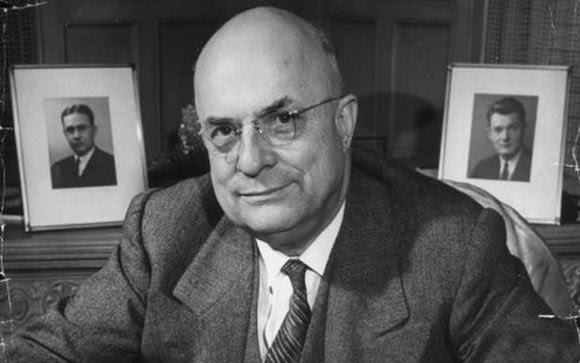
 
Image result for Henry J. KaiserThought for the Day

American industrialist who became known as the father of modern American shipbuilding, Henry J. Kaiser wrote, “Problems are only opportunities in work clothes.”


A Joke for Today
 
Image result for funny parachute jokeA doctor, a lawyer, a little boy and a minister were out for a Sunday afternoon flight on a small private plane. Suddenly, the plane developed engine trouble.
 
In spite of the best efforts of the pilot, the plane started to go down. Finally, the pilot grabbed a parachute, yelled to the passengers that they had better jump, and bailed out.
 
Unfortunately, there were only three parachutes remaining. The doctor grabbed one and said "I'm a doctor, I save lives, so I must live," and jumped out.
 
The lawyer then said, "I'm a lawyer and lawyers are the smartest people in the world. I deserve to live."
 
He also grabbed a parachute and jumped.
 
The minister looked at the little boy and said, "Son, I've lived a long and full life. You are young and have your whole life ahead of you. Take the last parachute and live in peace."
 
The little boy handed the parachute back to the priest and said, "Not to worry, Pastor. The 'smartest man in the world' just took off with my back pack."

Monday, September 4, 2017

Bible Readings for September 3, 2017


Today our passages are 
Ecclesiastes 4:1–6:12; 2 Corinthians 6:14–7:7; Psalm 47:1-9; and Proverbs 22:16. The readings are from the Contemporary English Version. If you find these readings helpful, please consider sending an offering directly to Cove Presbyterian Church, 3404 Main Steet, Weirton, West Virginia or through PayPal by using the link below.

https://www.paypal.com/cgi-bin/webscr?cmd=_s-xclick&hosted_button_id=NX3WLYQG5864L


Ecclesiastes 4-6:12 (Contemporary English Version)

Ecclesiastes 4

 1I looked again and saw people being mistreated everywhere on earth. They were crying, but no one was there to offer comfort, and those who mistreated them were powerful. 2I said to myself, "The dead are better off than the living. 3But those who have never been born are better off than anyone else, because they have never seen the terrible things that happen on this earth."     4Then I realized that we work and do wonderful things just because we are jealous of others. This makes no more sense than chasing the wind. [a] 5Fools will fold their hands
   and starve to death.
    6Yet a very little food
   eaten in peace
   is better than twice as much
   earned from overwork
   and chasing the wind. [b]
    7Once again I saw that nothing on earth makes sense. 8For example, some people don't have friends or family. But they are never satisfied with what they own, and they never stop working to get more. They should ask themselves, "Why am I always working to have more? Who will get what I leave behind?" What a senseless and miserable life!
   
It Is Better To Have a Friend
 9You are better off to have a friend than to be all alone, because then you will get more enjoyment out of what you earn. 10If you fall, your friend can help you up. But if you fall without having a friend nearby, you are really in trouble. 11If you sleep alone, you won't have anyone to keep you warm on a cold night. 12Someone might be able to beat up one of you, but not both of you. As the saying goes, "A rope made from three strands of cord is hard to break."     13You may be poor and young. But if you are wise, you are better off than a foolish old king who won't listen to advice. 14Even if you were not born into the royal family and have been a prisoner and poor, you can still be king. 15I once saw everyone in the world follow a young leader who came to power after the king was gone. 16His followers could not even be counted. But years from now, no one will praise him--this makes no more sense than chasing the wind.
   

Ecclesiastes 5

Be Careful How You Worship
 1Be careful what you do when you enter the house of God. Some fools go there to offer sacrifices, even though they haven't sinned. But it's best just to listen when you go to worship. 2Don't talk before you think or make promises to God without thinking them through. God is in heaven, and you are on earth, so don't talk too much. 3If you keep thinking about something, you will dream about it. If you talk too much, you will say the wrong thing.     4God doesn't like fools. So don't be slow to keep your promises to God. 5It's better not to make a promise at all than to make one and not keep it. 6Don't let your mouth get you in trouble! And don't say to the worship leader, [c] "I didn't mean what I said." God can destroy everything you have worked for, so don't say something that makes God angry. 7Respect and obey God! Daydreaming leads to a lot of senseless talk. [d] 8Don't be surprised if the poor of your country are abused, and injustice takes the place of justice. After all, the lower officials must do what the higher ones order them to do. 9And since the king is the highest official, he benefits most from the taxes paid on the land. [e] 10If you love money and wealth, you will never be satisfied with what you have. This doesn't make sense either. 11The more you have, the more everyone expects from you. Your money won't do you any good--others will just spend it for you. 12If you have to work hard for a living, you can rest well at night, even if you don't have much to eat. But if you are rich, you can't even sleep.
    13I have seen something terribly unfair. People get rich, but it does them no good. 14Suddenly they lose everything in a bad business deal, then have nothing to leave for their children. 15They came into this world naked, and when they die, they will be just as naked. They can't take anything with them, and they won't have anything to show for all their work. 16That's terribly unfair. They leave the world just as they came into it. They gained nothing from running after the wind. 17Besides all this, they are always gloomy at mealtime, and they are troubled, sick, and bitter. [f] 18What is the best thing to do in the short life that God has given us? I think we should enjoy eating, drinking, and working hard. This is what God intends for us to do. 19Suppose you are very rich and able to enjoy everything you own. Then go ahead and enjoy working hard--this is God's gift to you. 20God will keep you so happy that you won't have time to worry about each day.
   

Ecclesiastes 6

Don't Depend on Wealth
 1There is something else terribly unfair, and it troubles everyone on earth. 2God may give you everything you want--money, property, and wealth. Then God doesn't let you enjoy it, and someone you don't even know gets it all. That's senseless and terribly unfair!     3You may live a long time and have a hundred children. But a child born dead is better off than you, unless you enjoy life and have a decent burial. 4-5That child will never live to see the sun or to have a name, and it will go straight to the world of darkness. But it will still find more rest than you, 6even if you live two thousand years and don't enjoy life. As you know, we all end up in the same place.
    7We struggle just to have enough to eat, but we are never satisfied. 8We may be sensible, yet we are no better off than a fool. And if we are poor, it still doesn't do us any good to try to live right. 9It's better to enjoy what we have than to always want something else, because that makes no more sense than chasing the wind. [g] 10Everything that happens was decided long ago. We humans know what we are like, and we can't argue with God, because he is [h] too strong for us. 11The more we talk, the less sense we make, so what good does it do to talk? 12Life is short and meaningless, and it fades away like a shadow. Who knows what is best for us? Who knows what will happen after we are gone?
Footnotes:
  1. Ecclesiastes 4:4 chasing the wind: See the note at 1.14.
  2. Ecclesiastes 4:6 even. . . sinned: One possible meaning for the difficult Hebrew text.
  3. Ecclesiastes 5:6 worship leader: Or "messenger."
  4. Ecclesiastes 5:7 Daydreaming. . . talk: One possible meaning for the difficult Hebrew text.
  5. Ecclesiastes 5:9 land: One possible meaning for the difficult Hebrew text of verse 9.
  6. Ecclesiastes 5:17 bitter: One possible meaning for the difficult Hebrew text of verse 17.
  7. Ecclesiastes 6:9 chasing the wind: See the note at 1.14,17.
  8. Ecclesiastes 6:10 with God, because he is: Or "with anyone who is."


2 Corinthians 6:14-7:7 (Contemporary English Version)

The Temple of the Living God
 14Stay away from people who are not followers of the Lord! Can someone who is good get along with someone who is evil? Are light and darkness the same? 15Is Christ a friend of Satan? [a] Can people who follow the Lord have anything in common with those who don't? 16Do idols belong in the temple of God? We are the temple of the living God, as God himself says, "I will live with these people    and walk among them.
   I will be their God,
   and they will be
   my people."
    17The Lord also says,
   "Leave them and stay away!
   Don't touch anything
   that isn't clean.
   Then I will welcome you
    18and be your Father.
   You will be my sons
   and my daughters,
   as surely as I am God,
   the All-Powerful."
   

2 Corinthians 7

 1My friends, God has made us these promises. So we should stay away from everything that keeps our bodies and spirits from being clean. We should honor God and try to be completely like him.    
The Church Makes Paul Happy
 2Make a place for us in your hearts! We haven't mistreated or hurt anyone. We haven't cheated anyone. 3I am not saying this to be hard on you. But, as I have said before, you will always be in our thoughts, whether we live or die. 4I trust you completely. [b] I am always proud of you, and I am greatly encouraged. In all my trouble I am still very happy. 5After we came to Macedonia, we didn't have any chance to rest. We were faced with all kinds of problems. We were troubled by enemies and troubled by fears. 6But God cheers up people in need, and that is what he did when he sent Titus to us. 7Of course, we were glad to see Titus, but what really made us glad is the way you cheered him up. He told how sorry you were and how concerned you were about me. And this made me even happier.    
Footnotes:
  1. 2 Corinthians 6:15 Satan: The Greek text has "Beliar," which is another form of the Hebrew word "Belial," meaning "wicked" or "useless." The Jewish people sometimes used this as a name for Satan.
  2. 2 Corinthians 7:4 I trust you completely: Or "I have always spoken the truth to you" or "I can speak freely to you."

Psalm 47:1-9 (Contemporary English Version)

Psalm 47

(A psalm for the people of Korah and for the music leader.)
God Rules the Nations
 1All of you nations,    clap your hands
   and shout
   joyful praises to God.
    2The LORD Most High is fearsome,
   the ruler of all the earth.
    3God has put every nation
   under our power,
    4and he chose for us the land
   that was the pride of Jacob,
   his favorite.
    5God goes up to his throne,
   as people shout
   and trumpets blast.
    6Sing praises to God our King,
    7the ruler of all the earth!
   Praise God with songs.
    8God rules the nations
   from his sacred throne.
    9Their leaders come together
   and are now the people
   of Abraham's God.
   All rulers on earth
   surrender their weapons,
   and God is greatly praised!


Proverbs 22:16 (Contemporary English Version)

16Cheat the poor to make profit
   or give gifts to the rich--
   either way you lose.


Verse of the Day

“[It Is Best To Obey the LORD]with this message: People of Israel, I am the holy LORD God, the one who rescues you. For your own good, I teach you, and I lead you along the right path.” - Isaiah 48:17
Today's passage is from the Contemporary English Version.


Thought for the Day
 
American industrialist who became known as the father of modern American shipbuilding, Henry J. Kaiser wrote, “When your work speaks for itself, don't interrupt.”

Friday, June 30, 2017

Bible Readings for June 30, 2017


Today our passages are 2 Kings 17:1–18:12; Acts 20:1-38; Psalm 148:1-14; and Proverbs 18:6-7. The readings are from the Contemporary English Version. If you find these readings helpful, please consider sending an offering directly to Cove Presbyterian Church, 3404 Main Street, Weirton, West Virginia or through PayPal by using the link below.
 
https://www.paypal.com/cgi-bin/webscr?cmd=_s-xclick&hosted_button_id=NX3WLYQG5864L

2 Kings 17-18:12 (Contemporary English Version)

2 Kings 17

King Hoshea of Israel
 1Hoshea son of Elah became king of Israel in the twelfth year of Ahaz's rule in Judah, and he ruled nine years from Samaria. 2Hoshea disobeyed the LORD and sinned, but not as much as the earlier Israelite kings had done.     3During Hoshea's rule, King Shalmaneser of Assyria [a] invaded Israel; he took control of the country and made Hoshea pay taxes. 4But later, Hoshea refused to pay the taxes and asked King So of Egypt to help him rebel. When Shalmaneser found out, he arrested Hoshea and put him in prison.
Samaria Is Destroyed and the Israelites Are Taken to Assyria
 5Shalmaneser invaded Israel and attacked the city of Samaria for three years, 6before capturing it in the ninth year of Hoshea's rule. The Assyrian king [b] took the Israelites away to Assyria as prisoners. He forced some of them to live in the town of Halah, others to live near the Habor River in the territory of Gozan, and still others to live in towns where the Median people lived. 7All of this happened because the people of Israel had sinned against the LORD their God, who had rescued them from Egypt, where they had been slaves. They worshiped foreign gods, 8followed the customs of the nations that the LORD had forced out of Israel, and were just as sinful as the Israelite kings. 9Even worse, the Israelites tried to hide their sins from the LORD their God. They built their own local shrines everywhere in Israel--from small towns to large, walled cities. 10They also built stone images of foreign gods and set up sacred poles [c] for the worship of Asherah on every hill and under every shady tree. 11They offered sacrifices at the shrines, [d] just as the foreign nations had done before the LORD forced them out of Israel. They did sinful things that made the LORD very angry. 12Even though the LORD had commanded the Israelites not to worship idols, [e] they did it anyway. 13So the LORD made sure that every prophet warned Israel and Judah with these words: "I, the LORD, command you to stop doing sinful things and start obeying my laws and teachings! I gave them to your ancestors, and I told my servants the prophets to repeat them to you." 14But the Israelites would not listen; they were as stubborn as their ancestors who had refused to worship the LORD their God. 15They ignored the LORD's warnings and commands, and they rejected the solemn agreement he had made with their ancestors. They worshiped worthless idols and became worthless themselves. The LORD had told the Israelites not to do the things that the foreign nations around them were doing, but Israel became just like them.     16The people of Israel disobeyed all the commands of the LORD their God. They made two gold statues of calves and set up a sacred pole for Asherah; they also worshiped the stars and the god Baal. 17They used magic and witchcraft and even sacrificed their own children. The Israelites were determined to do whatever the LORD hated. 18The LORD became so furious with the people of Israel that he allowed them to be carried away as prisoners.
   Only the people living in Judah were left, 19but they also disobeyed the LORD's commands and acted like the Israelites. 20So the LORD turned his back on everyone in Israel and Judah [f] and let them be punished and defeated until no one was left. 21Earlier, when the LORD took the northern tribes away from David's family, [g] the people living in northern Israel chose Jeroboam son of Nebat as their king. Jeroboam caused the Israelites to sin and to stop worshiping the LORD. 22The people kept on sinning like Jeroboam, 23until the LORD got rid of them, just as he had warned his servants the prophets. That's why the people of Israel were taken away as prisoners to Assyria, and that's where they remained.
   
Foreigners Are Resettled in Israel
 24The king of Assyria took people who were living in the cities of Babylon, Cuthah, Avva, Hamath, and Sepharvaim, and forced them to move to Israel. They took over the towns where the Israelites had lived, including the capital city of Samaria.     25At first these people did not worship the LORD, so he sent lions to attack them, and the lions killed some of them. 26A messenger told the king of Assyria, "The people you moved to Israel don't know how to worship the god of that country. So he sent lions that have attacked and killed some of them."
    27The king replied, "Get one of the Israelite priests we brought here and send him back to Israel. He can live there and teach them about the god of that country." 28One of the Israelite priests was chosen to go back to Israel. He lived in Bethel and taught the people how to worship the LORD.
    29But in towns all over Israel, the different groups of people made statues of their own gods, then they placed these idols in local Israelite [h] shrines. 30The people from Babylonia made the god Succoth-Benoth; those from Cuthah made the god Nergal; those from Hamath made Ashima; 31those from Avva made Nibhaz and Tartak; and the people from Sepharvaim sacrificed their children to their own gods Adrammelech and Anammelech. 32-33They worshiped their own gods, just as they had before they were taken away to Israel. They also worshiped the LORD, but they chose their own people to be priests at the shrines. 34Everyone followed their old customs. None of them worshiped only the LORD, and they refused to obey the laws and commands that the LORD had given to the descendants of Jacob, the man he named Israel. 35At the time when the LORD had made his solemn agreement with the people of Israel, he told them: Do not worship any other gods! Do not bow down to them or offer them a sacrifice. 36Worship only me! I am the one who rescued you from Egypt with my mighty power. Bow down to me and offer sacrifices. 37Never worship any other god, always obey my laws and teachings, 38and remember the solemn agreement between us.
   I will say it again: Do not worship any god 39except me. I am the LORD your God, and I will rescue you from all your enemies.
    40But the people living in Israel ignored that command and kept on following their old customs. 41They did worship the LORD, but they also worshiped their own idols. Their descendants did the same thing.
   

2 Kings 18

King Hezekiah of Judah
(2 Chronicles 29.1,2; 31.1)
 1Hezekiah son of Ahaz became king of Judah in the third year of Hoshea's rule in Israel. 2Hezekiah was twenty-five years old when he became king, and he ruled twenty-nine years from Jerusalem. His mother Abi was the daughter of Zechariah.     3Hezekiah obeyed the LORD, just as his ancestor David had done. 4He destroyed the local shrines, then tore down the images of foreign gods and cut down the sacred pole for worshiping the goddess Asherah. He also smashed the bronze snake Moses had made. The people had named it Nehushtan [i] and had been offering sacrifices to it. 5Hezekiah trusted the LORD God of Israel. No other king of Judah was like Hezekiah, either before or after him. 6He was completely faithful to the LORD and obeyed the laws the LORD had given to Moses for the people. 7The LORD helped Hezekiah, so he was successful in everything he did. He even rebelled against the king of Assyria, refusing to be his servant. 8Hezekiah defeated the Philistine towns as far away as Gaza--from the smallest towns to the large, walled cities.
    9During the fourth year of Hezekiah's rule, which was the seventh year of Hoshea's rule in Israel, King Shalmaneser of Assyria led his troops to Samaria, the capital city of Israel. They attacked 10and captured it three years later, [j] in the sixth year of Hezekiah's rule and the ninth year of Hoshea's rule. 11The king of Assyria [k] took the Israelites away as prisoners; he forced some of them to live in the town of Halah, others to live near the Habor River in the territory of Gozan, and still others to live in towns where the Median people lived. 12All of that happened because the people of Israel had not obeyed the LORD their God. They rejected the solemn agreement he had made with them, and they ignored everything that the LORD's servant Moses had told them.
Footnotes:
  1. 2 Kings 17:3 King Shalmaneser of Assyria: The son of Tiglath Pileser, who ruled Assyria from 727 to 722 B.C.
  2. 2 Kings 17:6 The Assyrian king: Probably Sargon, Shalmaneser's successor. Shalmaneser died after the city of Samaria was captured (722 B.C.) but before the people were taken away as prisoners (720 B.C.). Sargon ruled Assyria from 721 to 705 B.C.
  3. 2 Kings 17:10 sacred poles: See the note at 13.6,7.
  4. 2 Kings 17:11 shrines: See the note at 12.3.
  5. 2 Kings 17:12 the LORD. . . idols: See Exodus 20.4,5.
  6. 2 Kings 17:20 Israel and Judah: Or "Israel," that is, the northern kingdom only.
  7. 2 Kings 17:21 when the LORD. . . family: See 1 Kings 11.29-39.
  8. 2 Kings 17:29 Israelite: The Hebrew text has "Samaritan," which is a later word to describe the people who lived in northern Israel at this time.
  9. 2 Kings 18:4 the bronze snake. . . Nehushtan: See Numbers 21.8,9. "Nehushtan" is a nickname that sounds like the Hebrew words for "snake" and "bronze."
  10. 2 Kings 18:10 three years later: When the Israelites measured time, part of a year could be counted as a whole year.
  11. 2 Kings 18:11 The king of Assyria: Probably Sargon, Shalmaneser's successor (see the note at 17.6).

Acts 20:1-38 (Contemporary English Version)

Acts 20

Paul Goes through Macedonia and Greece
 1When the riot was over, Paul sent for the followers and encouraged them. He then told them good-by and left for Macedonia. 2As he traveled from place to place, he encouraged the followers with many messages. Finally, he went to Greece [a] 3and stayed there for three months. Paul was about to sail to Syria. But some of the Jewish leaders plotted against him, so he decided to return by way of Macedonia. 4With him were Sopater, son of Pyrrhus from Berea, and Aristarchus and Secundus from Thessalonica. Gaius from Derbe was also with him, and so were Timothy and the two Asians, Tychicus and Trophimus. 5They went on ahead to Troas and waited for us there. 6After the Festival of Thin Bread, we sailed from Philippi. Five days later we met them in Troas and stayed there for a week.    
Paul's Last Visit to Troas
 7On the first day of the week [b] we met to break bread together. [c] Paul spoke to the people until midnight because he was leaving the next morning. 8In the upstairs room where we were meeting, there were a lot of lamps. 9A young man by the name of Eutychus was sitting on a window sill. While Paul was speaking, the young man got very sleepy. Finally, he went to sleep and fell three floors all the way down to the ground. When they picked him up, he was dead. 10Paul went down and bent over Eutychus. He took him in his arms and said, "Don't worry! He's alive." 11After Paul had gone back upstairs, he broke bread, and ate with us. He then spoke until dawn and left. 12Then the followers took the young man home alive and were very happy.    
The Voyage from Troas to Miletus
 13Paul decided to travel by land to Assos. The rest of us went on ahead by ship, and we were to take him aboard there. 14When he met us in Assos, he came aboard, and we sailed on to Mitylene. 15The next day we came to a place near Chios, and the following day we reached Samos. The day after that we sailed to Miletus. 16Paul had decided to sail on past Ephesus, because he did not want to spend too much time in Asia. He was in a hurry and wanted to be in Jerusalem in time for Pentecost. [d]
Paul Says Good-By to the Church Leaders of Ephesus
 17From Miletus, Paul sent a message for the church leaders at Ephesus to come and meet with him. 18When they got there, he said:    You know everything I did during the time I was with you when I first came to Asia. 19Some of the Jews plotted against me and caused me a lot of sorrow and trouble. But I served the Lord and was humble. 20When I preached in public or taught in your homes, I didn't hold back from telling anything that would help you. 21I told Jews and Gentiles to turn to God and have faith in our Lord Jesus.
    22I don't know what will happen to me in Jerusalem, but I must obey God's Spirit and go there. 23In every city I visit, I am told by the Holy Spirit that I will be put in jail and will be in trouble in Jerusalem. 24But I don't care what happens to me, as long as I finish the work that the Lord Jesus gave me to do. And that work is to tell the good news about God's great kindness.
    25I have gone from place to place, preaching to you about God's kingdom, but now I know that none of you will ever see me again. 26I tell you today that I am no longer responsible for any of you! 27I have told you everything God wants you to know. 28Look after yourselves and everyone the Holy Spirit has placed in your care. Be like shepherds to God's church. It is the flock that he bought with the blood of his own Son. [e] 29I know that after I am gone, others will come like fierce wolves to attack you. 30Some of your own people will tell lies to win over the Lord's followers. 31Be on your guard! Remember how day and night for three years I kept warning you with tears in my eyes.
    32I now place you in God's care. Remember the message about his great kindness! This message can help you and give you what belongs to you as God's people. 33I have never wanted anyone's money or clothes. 34You know how I have worked with my own hands to make a living for myself and my friends. 35By everything I did, I showed how you should work to help everyone who is weak. Remember that our Lord Jesus said, "More blessings come from giving than from receiving."
    36After Paul had finished speaking, he knelt down with all of them and prayed. 37Everyone cried and hugged and kissed him. 38They were especially sad because Paul had told them, "You will never see me again."
   Then they went with him to the ship.
   
Footnotes:
  1. Acts 20:2 Greece: Probably Corinth.
  2. Acts 20:7 On the first day of the week: Since the Jewish day began at sunset, the meeting would have begun in the evening.
  3. Acts 20:7 break bread together: See the note at 2.46.
  4. Acts 20:16 in time for Pentecost: The Jewish people liked to be in Jerusalem for this festival (see the note at 2.1).
  5. Acts 20:28 the blood of his own Son: Or "his own blood."

Psalm 148:1-14 (Contemporary English Version)

Psalm 148

Come Praise the LORD
 1Shout praises to the LORD!    Shout the LORD's praises
   in the highest heavens.
    2All of you angels,
   and all who serve him above,
   come and offer praise.
    3Sun and moon,
   and all of you bright stars,
   come and offer praise.
    4Highest heavens,
   and the water
   above the highest heavens, [a] come and offer praise.
    5Let all things praise
   the name of the LORD,
   because they were created
   at his command.
    6He made them to last forever,
   and nothing can change
   what he has done. [b] 7All creatures on earth,
   you obey his commands,
   so come praise the LORD!
    8Sea monsters and the deep sea,
   fire and hail,
   snow and frost,
   and every stormy wind,
   come praise the LORD!
    9All mountains and hills,
   fruit trees and cedars,
    10every wild and tame animal,
   all reptiles and birds,
   come praise the LORD!
    11Every king and every ruler,
   all nations on earth,
    12every man and every woman,
   young people and old,
   come praise the LORD!
    13All creation, come praise
   the name of the LORD.
   Praise his name alone.
   The glory of God is greater
   than heaven and earth.
    14Like a bull with mighty horns,
   the LORD protects
   his faithful nation Israel,
   because they belong to him.
   Shout praises to the LORD!
   
Footnotes:
  1. Psalm 148:4 the water. . . heavens: It was believed that the earth and the heavens were surrounded by water.
  2. Psalm 148:6 nothing. . . done: Or " his laws will never change."

Proverbs 18:6-7 (Contemporary English Version)

6Foolish talk will get you
   into a lot of trouble.
    7Saying foolish things
   is like setting a trap
   to destroy yourself.


Verse of the Day

“Then there will be only one LORD who rules as King and whose name is worshiped everywhere on earth.” - Zechariah 14:9
Today's passage is from the Contemporary English Version.

 
Image result for Henry J. KaiserThought for the Day

American industrialist who became known as the father of modern American shipbuilding, Henry J. Kaiser wrote, “Problems are only opportunities in work clothes.”


A Joke for Today
 
Image result for funny parachute jokeA doctor, a lawyer, a little boy and a minister were out for a Sunday afternoon flight on a small private plane. Suddenly, the plane developed engine trouble.
 
In spite of the best efforts of the pilot, the plane started to go down. Finally, the pilot grabbed a parachute, yelled to the passengers that they had better jump, and bailed out.
 
Unfortunately, there were only three parachutes remaining. The doctor grabbed one and said "I'm a doctor, I save lives, so I must live," and jumped out.
 
The lawyer then said, "I'm a lawyer and lawyers are the smartest people in the world. I deserve to live."
 
He also grabbed a parachute and jumped.
 
The minister looked at the little boy and said, "Son, I've lived a long and full life. You are young and have your whole life ahead of you. Take the last parachute and live in peace."
 

The little boy handed the parachute back to the priest and said, "Not to worry, Pastor. The 'smartest man in the world' just took off with my back pack."