

Today our passages are Exodus 34:1–35:9; Matthew 27:15-31; Psalm 33:12-22; and Proverbs 9:1-6. The readings are the Contemporary English Version. If you find these readings helpful, please consider sending an offering directly to Cove Presbyterian Church, 3404 Main Street, Weirton, West Virginia or through PayPal by using the link below.

Exodus 34-35:9 (Contemporary English Version)
Exodus 34
The Second Set of Commandments
(Deuteronomy 10.1-5)
1One day the LORD said to Moses, " Cut two flat stones like the first ones I made, and I will write on them the same commandments that were on the two you broke. 2Be ready tomorrow morning to come up Mount Sinai and meet me at the top. 3No one is to come with you or to be on the mountain at all. Don't even let the sheep and cattle graze at the foot of the mountain." 4So Moses cut two flat stones like the first ones, and early the next morning he carried them to the top of Mount Sinai, just as the LORD had commanded. 5The LORD God came down in a cloud and stood beside Moses there on the mountain. God spoke his holy name, " the LORD." [a] 6Then he passed in front of Moses and called out, " I am the LORD God. I am merciful and very patient with my people. I show great love, and I can be trusted. 7I keep my promises to my people forever, but I also punish anyone who sins. When people sin, I punish them and their children, and also their grandchildren and great-grandchildren." 8Moses quickly bowed down to the ground and worshiped the LORD. 9He prayed, " LORD, if you really are pleased with me, I pray that you will go with us. It is true that these people are sinful and rebellious, but forgive our sin and let us be your people."A Promise and Its Demands
(Exodus 23.14-19; Deuteronomy 7.1-5; 16.1-17)
10The LORD said: I promise to perform miracles for you that have never been seen anywhere on earth. Neighboring nations will stand in fear and know that I was the one who did these marvelous things. 11I will force out the Amorites, the Canaanites, the Hittites, the Perizzites, the Hivites, and the Jebusites, but you must do what I command you today. 12Don't make treaties with any of those people. If you do, it will be like falling into a trap. 13Instead, you must destroy their altars and tear down the sacred poles [b] they use in the worship of the goddess Asherah. 14I demand your complete loyalty--you must not worship any other god! 15Don't make treaties with the people there, or you will soon find yourselves worshiping their gods and taking part in their sacrificial meals. 16Your men will even marry their women and be influenced to worship their gods. 17Don't make metal images of gods.18Don't fail to observe the Festival of Thin Bread in the month of Abib. [c] Obey me and eat bread without yeast for seven days during Abib, because that is the month you left Egypt. 19The first-born males of your families and of your flocks and herds belong to me.
20You can save the life of a first-born donkey [d] by sacrificing a lamb; if you don't, you must break the donkey's neck. You must save every first-born son. Bring an offering every time you come to worship.
21Do your work in six days and rest on the seventh day, even during the seasons for plowing and harvesting. 22Celebrate the Harvest Festival [e] each spring when you start harvesting your wheat, and celebrate the Festival of Shelters [f] each autumn when you pick your fruit. 23Your men must come to worship me three times a year, because I am the LORD God of Israel. 24I will force the nations out of your land and enlarge your borders. Then no one will try to take your property when you come to worship me these three times each year.
25When you sacrifice an animal on the altar, don't offer bread made with yeast. And don't save any part of the Passover meal for the next day.
26I am the LORD your God, and you must bring the first part of your harvest to the place of worship.
Don't boil a young goat in its mother's milk.
27The LORD told Moses to put these laws in writing, as part of his agreement with Israel. 28Moses stayed on the mountain with the LORD for forty days and nights, without eating or drinking. And he wrote down the Ten Commandments, the most important part of God's agreement with his people.
Moses Comes Down from Mount Sinai
29Moses came down from Mount Sinai, carrying the Ten Commandments. His face was shining brightly because the LORD had been speaking to him. But Moses did not know at first that his face was shining. 30When Aaron and the others looked at Moses, they saw that his face was shining, and they were afraid to go near him. 31Moses called out for Aaron and the leaders to come to him, and he spoke with them. 32Then the rest of the people of Israel gathered around Moses, and he gave them the laws that the LORD had given him on Mount Sinai. 33The face of Moses kept shining, and after he had spoken with the people, he covered his face with a veil. 34Moses would always remove the veil when he went into the sacred tent to speak with the LORD. And when he came out, he would tell the people everything the LORD had told him to say. 35They could see that his face was still shining. So after he had spoken with them, he would put the veil back on and leave it on until the next time he went to speak with the LORD.Exodus 35
Laws for the Sabbath
1Moses called together the people of Israel and told them that the LORD had said: 2You have six days in which to do your work. But the seventh day must be dedicated to me, your LORD, as a day of rest. Whoever works on the Sabbath will be put to death. 3Don't even build a cooking fire at home on the Sabbath.Offerings for the Sacred Tent
(Exodus 25.1-9; 35.10-19)
4Moses told the people of Israel that the LORD had said: 5I would welcome an offering from anyone who wants to give something. You may bring gold, silver, or bronze; 6blue, purple, or red wool; fine linen; goat hair; 7tanned ram skin or fine leather; acacia wood; 8olive oil for the lamp; sweet-smelling spices for the oil of dedication and for the incense; or 9onyx [g] stones or other gems for the sacred vest and breastpiece.
Footnotes:
- Exodus 34:5 the LORD: See the note at 3.14,15.
- Exodus 34:13 sacred poles: Or " trees," used as symbols of Asherah, the goddess of fertility.
- Exodus 34:18 Abib: See the note at 12.2.
- Exodus 34:20 donkey: See the note at 13.13.
- Exodus 34:22 Harvest Festival: See the note at 23.16.
- Exodus 34:22 Festival of Shelters: See the note at 23.16.
- Exodus 35:9 onyx: See the note at 25.7.
Matthew 27:15-31 (Contemporary English Version)
The Death Sentence
(Mark 15.6-15; Luke 23.13-26; John 18.39--19.16)
15During Passover the governor always freed a prisoner chosen by the people. 16At that time a well-known terrorist named Jesus Barabbas [a] was in jail. 17So when the crowd came together, Pilate asked them, "Which prisoner do you want me to set free? Do you want Jesus Barabbas or Jesus who is called the Messiah?" 18Pilate knew that the leaders had brought Jesus to him because they were jealous. 19While Pilate was judging the case, his wife sent him a message. It said, "Don't have anything to do with that innocent man. I have had nightmares because of him." 20But the chief priests and the leaders convinced the crowds to ask for Barabbas to be set free and for Jesus to be killed. 21Pilate asked the crowd again, "Which of these two men do you want me to set free?""Barabbas!" they replied.
22Pilate asked them, "What am I to do with Jesus, who is called the Messiah?"
They all yelled, "Nail him to a cross!"
23Pilate answered, "But what crime has he done?"
"Nail him to a cross!" they yelled even louder.
24Pilate saw that there was nothing he could do and that the people were starting to riot. So he took some water and washed his hands [b] in front of them and said, "I won't have anything to do with killing this man. You are the ones doing it!" 25Everyone answered, "We and our own families will take the blame for his death!"
26Pilate set Barabbas free. Then he ordered his soldiers to beat Jesus with a whip and nail him to a cross.
Soldiers Make Fun of Jesus
(Mark 15.16-21; John 19.2,3)
27The governor's soldiers led Jesus into the fortress [c] and brought together the rest of the troops. 28They stripped off Jesus' clothes and put a scarlet robe [d] on him. 29They made a crown out of thorn branches and placed it on his head, and they put a stick in his right hand. The soldiers knelt down and pretended to worship him. They made fun of him and shouted, "Hey, you king of the Jews!" 30Then they spit on him. They took the stick from him and beat him on the head with it.Jesus Is Nailed to a Cross
(Mark 15.22-32; Luke 23.27-43; John 19.17-27)
31When the soldiers had finished making fun of Jesus, they took off the robe. They put his own clothes back on him and led him off to be nailed to a cross.
Footnotes:
- Matthew 27:16 Jesus Barabbas: Here and in verse 17 many manuscripts have "Barabbas."
- Matthew 27:24 washed his hands: To show that he was innocent.
- Matthew 27:27 fortress: The place where the Roman governor stayed. It was probably at Herod's palace west of Jerusalem, though it may have been Fortress Antonia north of the temple, where the Roman troops were stationed.
- Matthew 27:28 scarlet robe: This was probably a Roman soldier's robe.
Psalm 33:12-22 (Contemporary English Version)
12The LORD blesses each nation
that worships only him.
He blesses his chosen ones.
13The LORD looks at the world
14from his throne in heaven,
and he watches us all.
15The LORD gave us each a mind,
and nothing we do
can be hidden from him.
16Mighty armies alone
cannot win wars for a king;
great strength by itself
cannot keep a soldier safe.
17In war the strength of a horse
cannot be trusted
to take you to safety.
18But the LORD watches over
all
who honor him
and trust his kindness.
19He protects them from death
and starvation.
20We depend on you, LORD,
to help and protect us.
21You make our hearts glad
because we trust you,
the only God.
22Be kind and bless us!
We depend on you.
2She has prepared the meat
and set out the wine.
Her feast is ready.
3She has sent her servant women
to announce her invitation
from the highest hills:
4"Everyone who is ignorant
or foolish is invited!
5All of you are welcome
to my meat and wine.
6If you want to live,
give up your foolishness
and let understanding
guide your steps."
Verse of the Day
“Love rejoices in the truth, but not in evil. Love is always supportive, loyal, hopeful, and trusting.” - 1 Corinthians 13: 6-7
that worships only him.
He blesses his chosen ones.
13The LORD looks at the world
14from his throne in heaven,
and he watches us all.
15The LORD gave us each a mind,
and nothing we do
can be hidden from him.
16Mighty armies alone
cannot win wars for a king;
great strength by itself
cannot keep a soldier safe.
17In war the strength of a horse
cannot be trusted
to take you to safety.
18But the LORD watches over
all
who honor him
and trust his kindness.
19He protects them from death
and starvation.
20We depend on you, LORD,
to help and protect us.
21You make our hearts glad
because we trust you,
the only God.
22Be kind and bless us!
We depend on you.
Proverbs 9:1-6 (Contemporary English Version)
Proverbs 9
Wisdom Gives a Feast
1Wisdom has built her house with its seven columns.2She has prepared the meat
and set out the wine.
Her feast is ready.
3She has sent her servant women
to announce her invitation
from the highest hills:
4"Everyone who is ignorant
or foolish is invited!
5All of you are welcome
to my meat and wine.
6If you want to live,
give up your foolishness
and let understanding
guide your steps."
Verse of the Day
“Love rejoices in the truth, but not in evil. Love is always supportive, loyal, hopeful, and trusting.” - 1 Corinthians 13: 6-7
Today's passage is from the Contemporary English Version.
 Thought for the Day
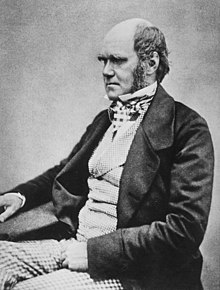
English naturalist, geologist and biologist, Charles Darwin wrote, “Ignorance more frequently begets confidence than does knowledge: it is those who know little, and not those who know much, who so positively assert that this or that problem will never be solved by science.”
A man is driving down the road and his car breaks down near a monastery.
 He goes to the monastery, knocks on the door, and says, "My car broke down. Do you think I could stay the night?"
 The monks graciously accept him, feed him dinner, and even fix his car. As the man tries to fall asleep, he hears a strange sound. A sound unlike anything he's ever heard before. The Sirens that nearly seduced Odysseus into crashing his ship comes to his mind. He doesn't sleep that night.
He tosses and turns trying to figure out what could possibly be making such a seductive sound. The next morning, he asks the monks what the sound was, but they say, "We can't tell you. You're not a monk."Distraught, the man is forced to leave.
Years later, after never being able to forget that sound, the man goes back to the monastery and pleads for the answer again.
The monks reply, "We can't tell you. You're not a monk."
The man says, "If the only way I can find out what is making that beautiful sound is to become a monk, then please, make me a monk."
The monks reply, "You must travel the earth and tell us how many blades of grass there are and the exact number of grains of sand. When you find these answers, you will have become a monk."
The man sets about his task .
After years of searching he returns as a gray-haired old man and knocks on the door of the monastery. A monk answers. He is taken before a gathering of all the monks.
"In my quest to find what makes that beautiful sound, I traveled the earth and have found what you asked for: By design, the world is in a state of perpetual change. Only God knows what you ask. All a man can know is himself, and only then if he is honest and reflective and willing to strip away self deception."
The monks reply, "Congratulations. You have become a monk. We shall now show you the way to the mystery of the sacred sound."
The monks lead the man to a wooden door, where the head monk says,"The sound is beyond that door."
The monks give him the key, and he opens the door. Behind the wooden door is another door made of stone. The man is given the key to the stone door and he opens it, only to find a door made of ruby. And so it went that he needed keys to doors of emerald, pearl and diamond.
Finally, they come to a door made of solid gold. The sound has become very clear and definite. The monks say, "This is the last key to the last door."
The man is apprehensive to no end. His life's wish is behind that door!
With trembling hands, he unlocks the door, turns the knob, and slowly pushes the door open. Falling to his knees, he is utterly amazed to discover the source of that haunting and seductive sound...
But, of course, I can't tell you what it is because you're not a monk.


