

Today our passages are 2 Kings 15:1–16:20;
Acts 19:13-41; Psalm 147:1-20; and Proverbs 18:4-5. The readings
are the Contemporary English
Version.
2 Kings 15-16:20 (Contemporary English Version)
2 Kings 15
King Azariah of Judah
(2 Chronicles 26.1-23)
1Azariah son of Amaziah became king of Judah in Jeroboam's twenty-seventh year as king of Israel. 2He was only sixteen years old when he became king, and he ruled fifty-two years from Jerusalem, which was also the hometown of his mother Jecoliah. 3Azariah obeyed the LORD by doing right, as his father Amaziah had done. 4But Azariah did not destroy the local shrines, [a] and they were still used as places for offering sacrifices. 5The LORD punished Azariah with leprosy [b] for the rest of his life. He wasn't allowed to live in the royal palace, so his son Jotham lived there and ruled in his place. 6Everything else Azariah did while he was king is written in The History of the Kings of Judah. 7Azariah died and was buried beside his ancestors in Jerusalem. His son Jotham then became king.King Zechariah of Israel
8Zechariah son of Jeroboam became king of Israel in the thirty-eighth year of Azariah's rule in Judah, but he ruled only six months from Samaria. 9Like his ancestors, Zechariah disobeyed the LORD by following the evil ways of Jeroboam son of Nebat, who had caused the Israelites to sin. 10Shallum son of Jabesh plotted against Zechariah and killed him in public. [c] Shallum then became king. 11-12So the LORD had kept his promise to Jehu that the next four kings of Israel would come from his family. [d] Everything else Zechariah did while he was king is written in The History of the Kings of Israel.King Shallum of Israel
13Shallum became king of Israel in the thirty-ninth year of Azariah's [e] rule in Judah. But only one month after Shallum became king, 14-16Menahem son of Gadi came to Samaria from Tirzah and killed him. Menahem then became king. The town of Tiphsah would not surrender to him, so he destroyed it and all the surrounding towns as far as Tirzah. He killed everyone living in Tiphsah, and with his sword he even ripped open pregnant women. Everything else Shallum did while he was king, including his plot against Zechariah, is written in The History of the Kings of Israel.King Menahem of Israel
17Menahem became king of Israel in Azariah's thirty-ninth year as king of Judah, and he ruled Israel ten years from Samaria. 18He constantly disobeyed the LORD by following the example of Jeroboam son of Nebat, who had caused the Israelites to sin. 19During Menahem's rule, King Tiglath Pileser [f] of Assyria invaded Israel. He agreed to help Menahem keep control of his kingdom, if Menahem would pay him over thirty tons of silver. 20So Menahem ordered every rich person in Israel to give him at least one pound of silver, and he gave it all to Tiglath Pileser, who stopped his attack and left Israel. 21Everything else Menahem did while he was king is written in The History of the Kings of Israel. 22Menahem died, and his son Pekahiah became king.King Pekahiah of Israel
23Pekahiah became king of Israel in the fiftieth year of Azariah's rule in Judah, and he ruled two years from Samaria. 24He disobeyed the LORD and caused the Israelites to sin, just as Jeroboam son of Nebat had done. 25Pekah son of Remaliah was Pekahiah's chief officer, but he made plans to kill the king. So he and fifty men from Gilead broke into the strongest part of the palace in Samaria and murdered Pekahiah, together with Argob and Arieh. [g] Pekah then became king. 26Everything else Pekahiah did while he was king is written in The History of the Kings of Israel.King Pekah of Israel
27Pekah son of Remaliah became king of Israel in Azariah's fifty-second year as king of Judah, and he ruled twenty years from Samaria. 28He disobeyed the LORD and followed the evil example of Jeroboam son of Nebat, who had caused the Israelites to sin. 29During Pekah's rule, King Tiglath Pileser of Assyria marched into Israel. He captured the territories of Gilead and Galilee, including the towns of Ijon, Abel-Bethmaacah, Janoah, Kedesh, and Hazor, as well as the entire territory of Naphtali. Then he took Israelites from those regions to Assyria as prisoners. [h] 30In the twentieth year of Jotham's rule in Judah, Hoshea son of Elah plotted against Pekah and murdered him. Hoshea then became king of Israel.31Everything else Pekah did while he was king is written in The History of the Kings of Israel.
King Jotham of Judah
(2 Chronicles 27.1-9)
32Jotham son of Azariah [i] became king of Judah in the second year of Pekah's rule in Israel. 33Jotham was twenty-five years old when he became king, and he ruled sixteen years from Jerusalem. His mother Jerusha was the daughter of Zadok. 34Jotham followed the example of his father by obeying the LORD and doing right. 35It was Jotham who rebuilt the Upper Gate that led into the court around the LORD's temple. But the local shrines were not destroyed, and they were still used as places for offering sacrifices. 36Everything else Jotham did while he was king is written in The History of the Kings of Judah. 37During his rule, the LORD let King Rezin of Syria and King Pekah of Israel start attacking Judah. 38Jotham died and was buried beside his ancestors in Jerusalem, and his son Ahaz became king.2 Kings 16
King Ahaz of Judah
(2 Chronicles 28.1-27)
1Ahaz son of Jotham became king of Judah in the seventeenth year of Pekah's rule in Israel. 2He was twenty years old at the time, and he ruled from Jerusalem for sixteen years. Ahaz wasn't like his ancestor David. Instead, he disobeyed the LORD 3and was even more sinful than the kings of Israel. He sacrificed his own son, which was a disgusting custom of the nations that the LORD had forced out of Israel. 4Ahaz offered sacrifices at the local shrines, as well as on every hill and in the shade of large trees.5-6While Ahaz was ruling Judah, the king of Edom recaptured the town of Elath from Judah and forced out the people of Judah. Edomites [j] then moved into Elath, and they still live there. About the same time, King Rezin of Syria and King Pekah of Israel marched to Jerusalem and attacked, but they could not capture it.
7Ahaz sent a message to King Tiglath Pileser of Assyria that said, "Your Majesty, King Rezin and King Pekah are attacking me, your loyal servant. Please come and rescue me." 8Along with the message, Ahaz sent silver and gold from the LORD's temple and from the palace treasury as a gift for the Assyrian king.
9As soon as Tiglath Pileser received the message, he and his troops marched to Syria. He captured the capital city of Damascus, then he took the people living there to the town of Kir as prisoners and killed King Rezin. [k] 10Later, Ahaz went to Damascus to meet Tiglath Pileser. And while Ahaz was there, he saw an altar and sent a model of it back to Uriah the priest, along with the plans for building one. 11Uriah followed the plans and built an altar exactly like the one in Damascus, finishing it just before Ahaz came back.
12When Ahaz returned, he went to see the altar and to offer sacrifices on it. He walked up to the altar 13and poured wine over it. Then he offered sacrifices to please the LORD, to give him thanks, and to ask for his blessings. [l] 14After that, he had the bronze altar moved aside, [m] so his new altar would be right in front of the LORD's temple. 15He told Uriah the priest: From now on, the morning and evening sacrifices as well as all gifts of grain and wine are to be offered on this altar. The sacrifices for the people and for the king must also be offered here. Sprinkle the blood from all the sacrifices on it, but leave the bronze altar for me to use for prayer and finding out what God wants me to do.
16Uriah did everything Ahaz told him.
17Ahaz also had the side panels and the small bowls taken off the movable stands in the LORD's temple. He had the large bronze bowl, called the Sea, removed from the bronze bulls on which it rested and had it placed on a stand made of stone. 18He took down the special tent that was used for worship on the Sabbath [n] and closed up the private entrance that the kings of Judah used for going into the temple. He did all these things to please Tiglath Pileser. 19Everything else Ahaz did while he was king is written in The History of the Kings of Judah. 20Ahaz died and was buried beside his ancestors in Jerusalem, [o] and his son Hezekiah became king.
Footnotes:
- 2 Kings 15:4 local shrines: See the note at 12.3.
- 2 Kings 15:5 leprosy: See the note at 5.1.
- 2 Kings 15:10 in public: Hebrew; some manuscripts of one ancient translation "in Ibleam."
- 2 Kings 15:11 So the LORD. . . family: See 10.28-31.
- 2 Kings 15:13 Azariah's: The Hebrew text has "Uzziah's," another spelling of the name.
- 2 Kings 15:19 Tiglath Pileser: The Hebrew text has "Pul," another name for Tiglath Pileser, who ruled Assyria from 745 to 727 B.C.
- 2 Kings 15:25 together with Argob and Arieh: One possible meaning for the difficult Hebrew text.
- 2 Kings 15:29 prisoners: The events in this verse probably took place around 733 B.C.
- 2 Kings 15:32 Azariah: See the note at 15.13.
- 2 Kings 16:5 the king of Edom. . . Edomites: The Hebrew text has "King Rezin of Syria. . . Syrians"; in Hebrew, there is only one letter difference between "Edom" and "Aram," which is the usual Hebrew name for Syria in the Bible (see also 2 Chronicles 28.17).
- 2 Kings 16:9 King Rezin: This probably took place around 734 B.C., before the events in 15.29.
- 2 Kings 16:13 offered. . . blessings: In traditional translations, these sacrifices are usually called "whole burnt offerings," "grain offerings," and "peace offerings." These are described in Leviticus 1--3.
- 2 Kings 16:14 aside: Hebrew "to the north."
- 2 Kings 16:18 the special tent. . . Sabbath: One possible meaning for the difficult Hebrew text.
- 2 Kings 16:20 Jerusalem: See the note at 8.24.
Acts 19:13-41 (Contemporary English Version)
13Some Jewish men started going
around trying to force out evil spirits by using the name of the Lord Jesus.
They said to the spirits, "Come out in the name of that same Jesus that Paul
preaches about!"
14Seven sons of a Jewish high priest named Sceva were doing this, 15when an evil spirit said to them, "I know Jesus! And I have heard about Paul. But who are you?" 16Then the man with the evil spirit jumped on them and beat them up. They ran out of the house, naked and bruised.
17When the Jews and Gentiles in Ephesus heard about this, they were so frightened that they praised the name of the Lord Jesus. 18Many who were followers now started telling everyone about the evil things they had been doing. 19Some who had been practicing witchcraft even brought their books and burned them in public. These books were worth about fifty thousand silver coins. 20So the Lord's message spread and became even more powerful.
Friends, you know that we make a good living at this. 26But you have surely seen and heard how this man Paul is upsetting a lot of people, not only in Ephesus, but almost everywhere in Asia. He claims that the gods we humans make are not really gods at all. 27Everyone will start saying terrible things about our business. They will stop respecting the temple of the goddess Artemis, who is worshiped in Asia and all over the world. Our great goddess will be forgotten!
28When the workers heard this, they got angry and started shouting, "Great is Artemis, the goddess of the Ephesians!" 29Soon the whole city was in a riot, and some men grabbed Gaius and Aristarchus, who had come from Macedonia with Paul. Then everyone in the crowd rushed to the place where the town meetings were held.
30Paul wanted to go out and speak to the people, but the Lord's followers would not let him. 31A few of the local officials were friendly to Paul, and they sent someone to warn him not to go.
32Some of the people in the meeting were shouting one thing, and others were shouting something else. Everyone was completely confused, and most of them did not even know why they were there.
33Several of the Jewish leaders pushed a man named Alexander to the front of the crowd and started telling him what to say. He motioned with his hand and tried to explain what was going on. 34But when the crowd saw that he was Jewish, they all shouted for two hours, "Great is Artemis, the goddess of the Ephesians!"
35Finally, a town official made the crowd be quiet. Then he said:
People of Ephesus, who in the world doesn't know that our city is the center for worshiping the great goddess Artemis? Who doesn't know that her image which fell from heaven is right here? 36No one can deny this, and so you should calm down and not do anything foolish. 37You have brought men in here who have not robbed temples or spoken against our goddess.
38If Demetrius and his workers have a case against these men, we have courts and judges. Let them take their complaints there. 39But if you want to do more than that, the matter will have to be brought before the city council. 40We could easily be accused of starting a riot today. There is no excuse for it! We cannot even give a reason for this uproar.
41After saying this, he told the people to leave.
and it is right and good
to sing praises to him.
2The LORD rebuilds Jerusalem
and brings the people of Israel
back home again.
3He renews our hopes
and heals our bodies.
4He decided how many stars
there would be in the sky
and gave each one a name.
5Our LORD is great and powerful!
He understands everything.
6The LORD helps the poor,
but he smears the wicked
in the dirt.
7Celebrate and sing!
Play your harps
for the LORD our God.
8He fills the sky with clouds
and sends rain to the earth,
so that the hills
will be green with grass.
9He provides food for cattle
and for the young ravens,
when they cry out.
10The LORD doesn't care about
the strength of horses
or powerful armies.
11The LORD is pleased only
with those who worship him
and trust his love.
12Everyone in Jerusalem,
come and praise
the LORD your God!
13He makes your city gates strong
and blesses your people
by giving them children.
14God lets you live in peace,
and he gives you
the very best wheat.
15As soon as God speaks,
the earth obeys.
16He covers the ground with snow
like a blanket of wool,
and he scatters frost
like ashes on the ground.
17God sends down hailstones
like chips of rocks.
Who can stand the cold?
18At his command the ice melts,
the wind blows,
and streams begin to flow.
19God gave his laws and teachings
to the descendants of Jacob,
the nation of Israel.
20But he has not given his laws
to any other nation.
Shout praises to the LORD!
14Seven sons of a Jewish high priest named Sceva were doing this, 15when an evil spirit said to them, "I know Jesus! And I have heard about Paul. But who are you?" 16Then the man with the evil spirit jumped on them and beat them up. They ran out of the house, naked and bruised.
17When the Jews and Gentiles in Ephesus heard about this, they were so frightened that they praised the name of the Lord Jesus. 18Many who were followers now started telling everyone about the evil things they had been doing. 19Some who had been practicing witchcraft even brought their books and burned them in public. These books were worth about fifty thousand silver coins. 20So the Lord's message spread and became even more powerful.
The Riot in Ephesus
21After all of this had happened, Paul decided [a] to visit Macedonia and Achaia on his way to Jerusalem. Paul had said, "From there I will go on to Rome." 22So he sent his two helpers, Timothy and Erastus, to Macedonia. But he stayed on in Asia for a while. 23At that time there was serious trouble because of the Lord's Way. [b] 24A silversmith named Demetrius had a business that made silver models of the temple of the goddess Artemis. Those who worked for him earned a lot of money. 25Demetrius brought together everyone who was in the same business and said:Friends, you know that we make a good living at this. 26But you have surely seen and heard how this man Paul is upsetting a lot of people, not only in Ephesus, but almost everywhere in Asia. He claims that the gods we humans make are not really gods at all. 27Everyone will start saying terrible things about our business. They will stop respecting the temple of the goddess Artemis, who is worshiped in Asia and all over the world. Our great goddess will be forgotten!
28When the workers heard this, they got angry and started shouting, "Great is Artemis, the goddess of the Ephesians!" 29Soon the whole city was in a riot, and some men grabbed Gaius and Aristarchus, who had come from Macedonia with Paul. Then everyone in the crowd rushed to the place where the town meetings were held.
30Paul wanted to go out and speak to the people, but the Lord's followers would not let him. 31A few of the local officials were friendly to Paul, and they sent someone to warn him not to go.
32Some of the people in the meeting were shouting one thing, and others were shouting something else. Everyone was completely confused, and most of them did not even know why they were there.
33Several of the Jewish leaders pushed a man named Alexander to the front of the crowd and started telling him what to say. He motioned with his hand and tried to explain what was going on. 34But when the crowd saw that he was Jewish, they all shouted for two hours, "Great is Artemis, the goddess of the Ephesians!"
35Finally, a town official made the crowd be quiet. Then he said:
People of Ephesus, who in the world doesn't know that our city is the center for worshiping the great goddess Artemis? Who doesn't know that her image which fell from heaven is right here? 36No one can deny this, and so you should calm down and not do anything foolish. 37You have brought men in here who have not robbed temples or spoken against our goddess.
38If Demetrius and his workers have a case against these men, we have courts and judges. Let them take their complaints there. 39But if you want to do more than that, the matter will have to be brought before the city council. 40We could easily be accused of starting a riot today. There is no excuse for it! We cannot even give a reason for this uproar.
41After saying this, he told the people to leave.
Footnotes:
- Acts 19:21 Paul decided: Or "Paul was led by the Holy Spirit."
- Acts 19:23 the Lord's Way: See the note at 9.2.
Psalm 147:1-20 (Contemporary English Version)
Psalm 147
Sing and Praise the LORD
1Shout praises to the LORD! Our God is kind,and it is right and good
to sing praises to him.
2The LORD rebuilds Jerusalem
and brings the people of Israel
back home again.
3He renews our hopes
and heals our bodies.
4He decided how many stars
there would be in the sky
and gave each one a name.
5Our LORD is great and powerful!
He understands everything.
6The LORD helps the poor,
but he smears the wicked
in the dirt.
7Celebrate and sing!
Play your harps
for the LORD our God.
8He fills the sky with clouds
and sends rain to the earth,
so that the hills
will be green with grass.
9He provides food for cattle
and for the young ravens,
when they cry out.
10The LORD doesn't care about
the strength of horses
or powerful armies.
11The LORD is pleased only
with those who worship him
and trust his love.
12Everyone in Jerusalem,
come and praise
the LORD your God!
13He makes your city gates strong
and blesses your people
by giving them children.
14God lets you live in peace,
and he gives you
the very best wheat.
15As soon as God speaks,
the earth obeys.
16He covers the ground with snow
like a blanket of wool,
and he scatters frost
like ashes on the ground.
17God sends down hailstones
like chips of rocks.
Who can stand the cold?
18At his command the ice melts,
the wind blows,
and streams begin to flow.
19God gave his laws and teachings
to the descendants of Jacob,
the nation of Israel.
20But he has not given his laws
to any other nation.
Shout praises to the LORD!
Proverbs 18:4-5 (Contemporary English Version)
4Words of wisdom
are a stream
that flows
from a deep fountain.
5It's wrong to favor the guilty
and keep the innocent
from getting justice.
Verse of the Day
“You, LORD, will always treat me with kindness. Your love never fails. You have made us what we are. Don't give up on us now!” - Psalm 138:8
are a stream
that flows
from a deep fountain.
5It's wrong to favor the guilty
and keep the innocent
from getting justice.
Verse of the Day
“You, LORD, will always treat me with kindness. Your love never fails. You have made us what we are. Don't give up on us now!” - Psalm 138:8
Today's passage is from the Contemporary
English Version.
 Thought
for the Day
Thought
for the Day
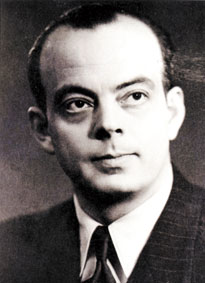
French aristocrat, writer, poet, and pioneering aviator, Antoine de
Saint Exupéry wrote, “Confuse not love with the raptures of possession,
which bring the cruelest of sufferings. For, notwithstanding the general
opinion, love does not cause suffering: what causes it is the sense of
ownership, which is love's opposite.”


