Read the Bible in a Year

Each day, we'll post passages so that you can read the Bible in one year. This is part of The Colossians 13:16 Project, sponsored by Cove Presbyterian Church, 3404 Main Street, Weirton, West Virginia. You're invited to worship with us Sundays, at 11:00 a.m. or Saturdays, at 6:30 p.m. You may also want to consider joining one our adult Bible Studies: Thursdays at 12:00 noon and Sundays at 9:30 a.m. and 10:00 a.m. We also have a full range of programs for children. If you want more information about the church, check out the other blogs. And please feel free to leave any comments.

The Bible in a Year is a ministry of Cove Presbyterian Church. We need your support to keep posting. If you find it helpful, you can support this blog by your contributions. They may be sent to Cove Presbyterian Church, 3404 Main Street, Weirton, WV 26062. You can also use the PayPal link below:

Image result for paypal donate
Showing posts with label Alexander the Great. Show all posts

Sunday, July 21, 2019

Bible Readings for July 20, 2019

Today our passages are 2 Chronicles 1:1–3:17; Romans 6:1-23; Psalm 16:1-11; and Proverbs 19:20-21. The readings are from the Contemporary English VersionIf you find these readings helpful, please consider sending an offering directly to Cove Presbyterian Church, 3404 Main Steet, Weirton, West Virginia or through PayPal by using the link below.
https://www.paypal.com/cgi-bin/webscr?cmd=_s-xclick&hosted_button_id=NX3WLYQG5864L

2 Chronicles 1-3:17 (Contemporary English Version)


2 Chronicles 1

The LORD Makes Solomon Wise
(1 Kings 3.1-15)
 1King Solomon, the son of David, was now in complete control of his kingdom, because the LORD God had blessed him and made him a powerful king.    2-5At that time, the sacred tent that Moses the servant of the LORD had made in the desert was still kept at Gibeon, and in front of the tent was the bronze altar that Bezalel [a] had made. One day, Solomon told the people of Israel, the army commanders, the officials, and the family leaders, to go with him to the place of worship at Gibeon, even though his father King David had already moved the sacred chest from Kiriath-Jearim to the tent that he had set up for it in Jerusalem. Solomon and the others went to Gibeon to worship the LORD,
   6and there at the bronze altar, Solomon offered a thousand animals as sacrifices to please the LORD. [b]
   7God appeared to Solomon that night in a dream and said, "Solomon, ask for anything you want, and I will give it to you."
   8Solomon answered:
   LORD God, you were always loyal to my father David, and now you have made me king of Israel.
   9I am supposed to rule these people, but there are as many of them as there are specks of dust on the ground. So keep the promise you made to my father
   10and make me wise. Give me the knowledge I'll need to be the king of this great nation of yours.
   11God replied:
   Solomon, you could have asked me to make you rich or famous or to let you live a long time. Or you could have asked for your enemies to be destroyed. Instead, you asked for wisdom and knowledge to rule my people.
   12So I will make you wise and intelligent. But I will also make you richer and more famous than any king before or after you.
   13Solomon then left Gibeon and returned to Jerusalem, the capital city of Israel.     
Solomon's Wealth
(1 Kings 10.26-29)
 14Solomon had a force of one thousand four hundred chariots and twelve thousand horses that he kept in Jerusalem and other towns.    15While Solomon was king of Israel, there was silver and gold everywhere in Jerusalem, and cedar was as common as ordinary sycamore trees in the foothills.
   16-17Solomon's merchants bought his horses and chariots in the regions of Musri and Kue. [c] They paid about fifteen pounds of silver for a chariot and almost four pounds of silver for a horse. They also sold horses and chariots to the Hittite and Syrian kings.
    

2 Chronicles 2

Solomon Asks Hiram To Help Build the Temple
(1 Kings 5.1-12)
 1Solomon decided to build a temple where the LORD would be worshiped, and also to build a palace for himself.    2He assigned seventy thousand men to carry building supplies and eighty thousand to cut stone from the hills. And he chose three thousand six hundred men to supervise these workers.
   3Solomon sent the following message to King Hiram of Tyre:
   Years ago, when my father David was building his palace, you supplied him with cedar logs. Now will you send me supplies?
   4I am building a temple where the LORD my God will be worshiped. Sweet-smelling incense will be burned there, and sacred bread will be offered to him. Worshipers will offer sacrifices to the LORD every morning and evening, every Sabbath, and on the first day of each month, as well as during all our religious festivals. These things will be done for all time, just as the LORD has commanded.
   5This will be a great temple, because our God is greater than all other gods.
   6No one can ever build a temple large enough for God--even the heavens are too small a place for him to live in! All I can do is build a place where we can offer sacrifices to him.
   7Send me a worker who can not only carve, but who can work with gold, silver, bronze, and iron, as well as make brightly colored cloth. The person you send will work here in Judah and Jerusalem with the skilled workers that my father has already hired.
   8I know that you have workers who are experts at cutting lumber in Lebanon. So would you please send me some cedar, pine, and juniper logs? My workers will be there to help them,
   9because I'll need a lot of lumber to build such a large and glorious temple.
   10I will pay your woodcutters one hundred twenty-five thousand bushels of wheat, the same amount of barley, one hundred fifteen thousand gallons of wine, and that same amount of olive oil.
   11Hiram sent his answer back to Solomon:
   I know that the LORD must love his people, because he has chosen you to be their king.
   12Praise the LORD God of Israel who made heaven and earth! He has given David a son who isn't only wise and smart, but who has the knowledge to build a temple for the LORD and a palace for himself.
   13I am sending Huram Abi to you. He is very bright.
   14His mother was from the Israelite tribe of Dan, and his father was from Tyre. Not only is Huram an expert at working with gold, silver, bronze, iron, stone, and wood, but he can also make colored cloth and fine linen. And he can carve anything if you give him a pattern to follow. He can help your workers and those hired by your father King David.
   15Go ahead and send the wheat, barley, olive oil, and wine you promised to pay my workers.
   16I will tell them to start cutting down trees in Lebanon. They will cut as many as you need, then tie them together into rafts, and float them down along the coast to Joppa. Your workers can take them to Jerusalem from there.     
Solomon's Work Force
 17Solomon counted all the foreigners who were living in Israel, just as his father David had done when he was king, and the total was 153,600.    18He assigned 70,000 of them to carry building supplies and 80,000 of them to cut stone from the hills. He chose 3,600 others to supervise the workers and to make sure the work was completed.
    

2 Chronicles 3

The Temple Is Built
(1 Kings 6.1-38)
 1-2Solomon's workers began building the temple in Jerusalem on the second day of the second month, [d] four years after Solomon had become king of Israel. It was built on Mount Moriah where the LORD had appeared to David at the threshing place that had belonged to Araunah [e] from Jebus.    3The inside of the temple was ninety feet long and thirty feet wide, according to the older standards. [f]
   4Across the front of the temple was a porch thirty feet wide and thirty feet [g] high. The inside walls of the porch were covered with pure gold.
   5Solomon had the inside walls of the temple's main room paneled first with pine and then with a layer of gold, and he had them decorated with carvings of palm trees and designs that looked like chains.
   6He used precious stones to decorate the temple, and he used gold imported from Parvaim [h]
   7to decorate the ceiling beams, the doors, the door frames, and the walls. Solomon also had the workers carve designs of winged creatures into the walls.
   8The most holy place was thirty feet square, and its walls were covered with almost twenty-five tons of fine gold.
   9More than a pound of gold was used to cover the heads of the nails. The walls of the small storage rooms were also covered with gold. [i]
   10Solomon had two statues of winged creatures [j] made to put in the most holy place, and he covered them with gold.
   11-13Each creature had two wings and was fifteen feet from the tip of one wing to the tip of the other wing. Solomon set them next to each other in the most holy place, facing the doorway. Their wings were spread out and reached all the way across the thirty foot room.
   14A curtain [k] was made of fine linen woven with blue, purple, and red wool, and embroidered with designs of winged creatures.     
The Two Columns
(1 Kings 7.15-22)
 15Two columns were made for the entrance to the temple. Each one was fifty-two feet tall and had a cap on top that was seven and a half feet high.    16The top of each column was decorated with designs that looked like chains [l] and with a hundred carvings of pomegranates. [m]
   17Solomon had one of the columns placed on the south side of the temple's entrance; it was called Jachin. [n] The other one was placed on the north side of the entrance; it was called Boaz. [o]
   
Footnotes:
  1. 2 Chronicles 1:2 Bezalel: Hebrew "Bezalel son of Uri son of Hur."
  2. 2 Chronicles 1:6 sacrifices to please the LORD: These sacrifices have traditionally been called "whole burnt offerings," because the whole animal was burned on the altar. A main purpose of such sacrifices was to please the LORD with the smell of the sacrifice, and so in the CEV they are often called "sacrifices to please the LORD."
  3. 2 Chronicles 1:16 Musri and Kue: Hebrew "Egypt and Kue." Musri and Kue were regions located in what is today southeast Turkey.
  4. 2 Chronicles 3:1 second month: Ziv, the second month of the Hebrew calendar, from about mid-April to mid-May.
  5. 2 Chronicles 3:1 Araunah: The Hebrew text has "Ornan," another spelling of the name (see 2 Samuel 24.18-25; 1 Chronicles 21.18--22.1).
  6. 2 Chronicles 3:3 according to the older standards: There were possibly two different standards of measurement during Israel's history.
  7. 2 Chronicles 3:4 thirty feet: Some manuscripts of two ancient translations; Hebrew "one hundred eighty feet."
  8. 2 Chronicles 3:6 Parvaim: An unknown place.
  9. 2 Chronicles 3:9 The walls. . . gold: One possible meaning for the difficult Hebrew text.
  10. 2 Chronicles 3:10 statues of winged creatures: These were symbols of the LORD's throne on earth (see Exodus 25.18-22).
  11. 2 Chronicles 3:14 A curtain: To separate the most holy place from the main room of the temple.
  12. 2 Chronicles 3:16 designs that looked like chains: One possible meaning for the difficult Hebrew text.
  13. 2 Chronicles 3:16 pomegranates: A pomegranate is a small red fruit that looks like an apple. In ancient times, it was a symbol of life.
  14. 2 Chronicles 3:17 Jachin: Or "He (God) makes secure."
  15. 2 Chronicles 3:17 Boaz: Or "He (God) is strong."

Romans 6:1-23 (Contemporary English Version)


Romans 6

Dead to Sin but Alive because of Christ
 1What should we say? Should we keep on sinning, so that God's wonderful kindness will show up even better? 2No, we should not! If we are dead to sin, how can we go on sinning? 3Don't you know that all who share in Christ Jesus by being baptized also share in his death? 4When we were baptized, we died and were buried with Christ. We were baptized, so that we would live a new life, as Christ was raised to life by the glory of God the Father.     5If we shared in Jesus' death by being baptized, we will be raised to life with him. 6We know that the persons we used to be were nailed to the cross with Jesus. This was done, so that our sinful bodies would no longer be the slaves of sin. 7We know that sin doesn't have power over dead people.
    8As surely as we died with Christ, we believe we will also live with him. 9We know that death no longer has any power over Christ. He died and was raised to life, never again to die. 10When Christ died, he died for sin once and for all. But now he is alive, and he lives only for God. 11In the same way, you must think of yourselves as dead to the power of sin. But Christ Jesus has given life to you, and you live for God.
    12Don't let sin rule your body. After all, your body is bound to die, so don't obey its desires 13or let any part of it become a slave of evil. Give yourselves to God, as people who have been raised from death to life. Make every part of your body a slave that pleases God. 14Don't let sin keep ruling your lives. You are ruled by God's kindness and not by the Law.     
Slaves Who Do What Pleases God
 15What does all this mean? Does it mean we are free to sin, because we are ruled by God's wonderful kindness and not by the Law? Certainly not! 16Don't you know that you are slaves of anyone you obey? You can be slaves of sin and die, or you can be obedient slaves of God and be acceptable to him. 17You used to be slaves of sin. But I thank God that with all your heart you obeyed the teaching you received from me. 18Now you are set free from sin and are slaves who please God.     19I am using these everyday examples, because in some ways you are still weak. You used to let the different parts of your body be slaves of your evil thoughts. But now you must make every part of your body serve God, so that you will belong completely to him.
    20When you were slaves of sin, you didn't have to please God. 21But what good did you receive from the things you did? All you have to show for them is your shame, and they lead to death. 22Now you have been set free from sin, and you are God's slaves. This will make you holy and will lead you to eternal life. 23Sin pays off with death. But God's gift is eternal life given by Jesus Christ our Lord. 


Psalm 16:1-11 (Contemporary English Version)


Psalm 16

(A special psalm by David.)
The Best Choice
 1Protect me, LORD God!    I run to you for safety,
    2and I have said,
   "Only you are my Lord!
   Every good thing I have
   is a gift from you."
    3Your people are wonderful,
   and they make me happy, [a] 4but worshipers of other gods
   will have much sorrow. [b] I refuse to offer sacrifices
   of blood to those gods
   or worship in their name.
    5You, LORD, are all I want!
   You are my choice,
   and you keep me safe.
    6You make my life pleasant,
   and my future is bright.
    7I praise you, LORD,
   for being my guide.
   Even in the darkest night,
   your teachings fill my mind.
    8I will always look to you,
   as you stand beside me
   and protect me from fear.
    9With all my heart,
   I will celebrate,
   and I can safely rest.
    10I am your chosen one.
   You won't leave me in the grave
   or let my body decay.
    11You have shown me
   the path to life,
   and you make me glad
   by being near to me.
   Sitting at your right side, [c] I will always be joyful.
    
Footnotes:
  1. Psalm 16:3 Your people. . . happy: Or " I was happy worshiping gods I thought were powerful."
  2. Psalm 16:4 but. . . sorrow: One possible meaning for the difficult Hebrew text.
  3. Psalm 16:11 right side: The place of power and honor.

Proverbs 19:20-21 (Contemporary English Version)


20Pay attention to advice
   and accept correction,
   so you can live sensibly.
    21We may make a lot of plans,
   but the LORD will do
   what he has decided. 


Verse of the Day

“But if we live in the light, as God does, we share in life with each other. And the blood of his Son Jesus washes all our sins away.” - 1 John 1:7 
Today's passage is from the Contemporary English Version.

Alexander the Great mosaic.jpgThought for the Day

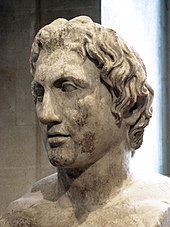
A king of the Ancient Greek kingdom of Macedon and a member of the Argead dynasty, Alexander the Great wrote, “I had rather excel others in the knowledge of what is excellent, than in the extent of my power and dominion.”


Image result for woman praying car
A Joke for Today

A woman was driving down the street in a sweat because she had an important meeting and couldn’t find a parking space. Looking up toward heaven, she said, “Lord, take pity on me. If you find me a parking place I’ll go to church every Sunday for the rest of my life and give up drinking wine.”Miraculously, a parking space opened up right in front of her destination.

The woman looked up to heaven and said, “Never mind, Lord; I found one on my own.”

Thursday, July 20, 2017

Bible Readings for July 20, 2017


Today our passages are 2 Chronicles 1:1–3:17; Romans 6:1-23; Psalm 16:1-11; and Proverbs 19:20-21. The readings are from the Contemporary English VersionIf you find these readings helpful, please consider sending an offering directly to Cove Presbyterian Church, 3404 Main Steet, Weirton, West Virginia or through PayPal by using the link below.


https://www.paypal.com/cgi-bin/webscr?cmd=_s-xclick&hosted_button_id=NX3WLYQG5864L

2 Chronicles 1-3:17 (Contemporary English Version)


2 Chronicles 1

The LORD Makes Solomon Wise
(1 Kings 3.1-15)
 1King Solomon, the son of David, was now in complete control of his kingdom, because the LORD God had blessed him and made him a powerful king.    2-5At that time, the sacred tent that Moses the servant of the LORD had made in the desert was still kept at Gibeon, and in front of the tent was the bronze altar that Bezalel [a] had made. One day, Solomon told the people of Israel, the army commanders, the officials, and the family leaders, to go with him to the place of worship at Gibeon, even though his father King David had already moved the sacred chest from Kiriath-Jearim to the tent that he had set up for it in Jerusalem. Solomon and the others went to Gibeon to worship the LORD,
   6and there at the bronze altar, Solomon offered a thousand animals as sacrifices to please the LORD. [b]
   7God appeared to Solomon that night in a dream and said, "Solomon, ask for anything you want, and I will give it to you."
   8Solomon answered:
   LORD God, you were always loyal to my father David, and now you have made me king of Israel.
   9I am supposed to rule these people, but there are as many of them as there are specks of dust on the ground. So keep the promise you made to my father
   10and make me wise. Give me the knowledge I'll need to be the king of this great nation of yours.
   11God replied:
   Solomon, you could have asked me to make you rich or famous or to let you live a long time. Or you could have asked for your enemies to be destroyed. Instead, you asked for wisdom and knowledge to rule my people.
   12So I will make you wise and intelligent. But I will also make you richer and more famous than any king before or after you.
   13Solomon then left Gibeon and returned to Jerusalem, the capital city of Israel.
   
Solomon's Wealth
(1 Kings 10.26-29)
 14Solomon had a force of one thousand four hundred chariots and twelve thousand horses that he kept in Jerusalem and other towns.    15While Solomon was king of Israel, there was silver and gold everywhere in Jerusalem, and cedar was as common as ordinary sycamore trees in the foothills.
   16-17Solomon's merchants bought his horses and chariots in the regions of Musri and Kue. [c] They paid about fifteen pounds of silver for a chariot and almost four pounds of silver for a horse. They also sold horses and chariots to the Hittite and Syrian kings.
   

2 Chronicles 2

Solomon Asks Hiram To Help Build the Temple
(1 Kings 5.1-12)
 1Solomon decided to build a temple where the LORD would be worshiped, and also to build a palace for himself.    2He assigned seventy thousand men to carry building supplies and eighty thousand to cut stone from the hills. And he chose three thousand six hundred men to supervise these workers.
   3Solomon sent the following message to King Hiram of Tyre:
   Years ago, when my father David was building his palace, you supplied him with cedar logs. Now will you send me supplies?
   4I am building a temple where the LORD my God will be worshiped. Sweet-smelling incense will be burned there, and sacred bread will be offered to him. Worshipers will offer sacrifices to the LORD every morning and evening, every Sabbath, and on the first day of each month, as well as during all our religious festivals. These things will be done for all time, just as the LORD has commanded.
   5This will be a great temple, because our God is greater than all other gods.
   6No one can ever build a temple large enough for God--even the heavens are too small a place for him to live in! All I can do is build a place where we can offer sacrifices to him.
   7Send me a worker who can not only carve, but who can work with gold, silver, bronze, and iron, as well as make brightly colored cloth. The person you send will work here in Judah and Jerusalem with the skilled workers that my father has already hired.
   8I know that you have workers who are experts at cutting lumber in Lebanon. So would you please send me some cedar, pine, and juniper logs? My workers will be there to help them,
   9because I'll need a lot of lumber to build such a large and glorious temple.
   10I will pay your woodcutters one hundred twenty-five thousand bushels of wheat, the same amount of barley, one hundred fifteen thousand gallons of wine, and that same amount of olive oil.
   11Hiram sent his answer back to Solomon:
   I know that the LORD must love his people, because he has chosen you to be their king.
   12Praise the LORD God of Israel who made heaven and earth! He has given David a son who isn't only wise and smart, but who has the knowledge to build a temple for the LORD and a palace for himself.
   13I am sending Huram Abi to you. He is very bright.
   14His mother was from the Israelite tribe of Dan, and his father was from Tyre. Not only is Huram an expert at working with gold, silver, bronze, iron, stone, and wood, but he can also make colored cloth and fine linen. And he can carve anything if you give him a pattern to follow. He can help your workers and those hired by your father King David.
   15Go ahead and send the wheat, barley, olive oil, and wine you promised to pay my workers.
   16I will tell them to start cutting down trees in Lebanon. They will cut as many as you need, then tie them together into rafts, and float them down along the coast to Joppa. Your workers can take them to Jerusalem from there.
   
Solomon's Work Force
 17Solomon counted all the foreigners who were living in Israel, just as his father David had done when he was king, and the total was 153,600.    18He assigned 70,000 of them to carry building supplies and 80,000 of them to cut stone from the hills. He chose 3,600 others to supervise the workers and to make sure the work was completed.
   

2 Chronicles 3

The Temple Is Built
(1 Kings 6.1-38)
 1-2Solomon's workers began building the temple in Jerusalem on the second day of the second month, [d] four years after Solomon had become king of Israel. It was built on Mount Moriah where the LORD had appeared to David at the threshing place that had belonged to Araunah [e] from Jebus.    3The inside of the temple was ninety feet long and thirty feet wide, according to the older standards. [f]
   4Across the front of the temple was a porch thirty feet wide and thirty feet [g] high. The inside walls of the porch were covered with pure gold.
   5Solomon had the inside walls of the temple's main room paneled first with pine and then with a layer of gold, and he had them decorated with carvings of palm trees and designs that looked like chains.
   6He used precious stones to decorate the temple, and he used gold imported from Parvaim [h]
   7to decorate the ceiling beams, the doors, the door frames, and the walls. Solomon also had the workers carve designs of winged creatures into the walls.
   8The most holy place was thirty feet square, and its walls were covered with almost twenty-five tons of fine gold.
   9More than a pound of gold was used to cover the heads of the nails. The walls of the small storage rooms were also covered with gold. [i]
   10Solomon had two statues of winged creatures [j] made to put in the most holy place, and he covered them with gold.
   11-13Each creature had two wings and was fifteen feet from the tip of one wing to the tip of the other wing. Solomon set them next to each other in the most holy place, facing the doorway. Their wings were spread out and reached all the way across the thirty foot room.
   14A curtain [k] was made of fine linen woven with blue, purple, and red wool, and embroidered with designs of winged creatures.
   
The Two Columns
(1 Kings 7.15-22)
 15Two columns were made for the entrance to the temple. Each one was fifty-two feet tall and had a cap on top that was seven and a half feet high.    16The top of each column was decorated with designs that looked like chains [l] and with a hundred carvings of pomegranates. [m]
   17Solomon had one of the columns placed on the south side of the temple's entrance; it was called Jachin. [n] The other one was placed on the north side of the entrance; it was called Boaz. [o]
   
Footnotes:
  1. 2 Chronicles 1:2 Bezalel: Hebrew "Bezalel son of Uri son of Hur."
  2. 2 Chronicles 1:6 sacrifices to please the LORD: These sacrifices have traditionally been called "whole burnt offerings," because the whole animal was burned on the altar. A main purpose of such sacrifices was to please the LORD with the smell of the sacrifice, and so in the CEV they are often called "sacrifices to please the LORD."
  3. 2 Chronicles 1:16 Musri and Kue: Hebrew "Egypt and Kue." Musri and Kue were regions located in what is today southeast Turkey.
  4. 2 Chronicles 3:1 second month: Ziv, the second month of the Hebrew calendar, from about mid-April to mid-May.
  5. 2 Chronicles 3:1 Araunah: The Hebrew text has "Ornan," another spelling of the name (see 2 Samuel 24.18-25; 1 Chronicles 21.18--22.1).
  6. 2 Chronicles 3:3 according to the older standards: There were possibly two different standards of measurement during Israel's history.
  7. 2 Chronicles 3:4 thirty feet: Some manuscripts of two ancient translations; Hebrew "one hundred eighty feet."
  8. 2 Chronicles 3:6 Parvaim: An unknown place.
  9. 2 Chronicles 3:9 The walls. . . gold: One possible meaning for the difficult Hebrew text.
  10. 2 Chronicles 3:10 statues of winged creatures: These were symbols of the LORD's throne on earth (see Exodus 25.18-22).
  11. 2 Chronicles 3:14 A curtain: To separate the most holy place from the main room of the temple.
  12. 2 Chronicles 3:16 designs that looked like chains: One possible meaning for the difficult Hebrew text.
  13. 2 Chronicles 3:16 pomegranates: A pomegranate is a small red fruit that looks like an apple. In ancient times, it was a symbol of life.
  14. 2 Chronicles 3:17 Jachin: Or "He (God) makes secure."
  15. 2 Chronicles 3:17 Boaz: Or "He (God) is strong."

Romans 6:1-23 (Contemporary English Version)

Romans 6

Dead to Sin but Alive because of Christ
 1What should we say? Should we keep on sinning, so that God's wonderful kindness will show up even better? 2No, we should not! If we are dead to sin, how can we go on sinning? 3Don't you know that all who share in Christ Jesus by being baptized also share in his death? 4When we were baptized, we died and were buried with Christ. We were baptized, so that we would live a new life, as Christ was raised to life by the glory of God the Father.     5If we shared in Jesus' death by being baptized, we will be raised to life with him. 6We know that the persons we used to be were nailed to the cross with Jesus. This was done, so that our sinful bodies would no longer be the slaves of sin. 7We know that sin doesn't have power over dead people.
    8As surely as we died with Christ, we believe we will also live with him. 9We know that death no longer has any power over Christ. He died and was raised to life, never again to die. 10When Christ died, he died for sin once and for all. But now he is alive, and he lives only for God. 11In the same way, you must think of yourselves as dead to the power of sin. But Christ Jesus has given life to you, and you live for God.
    12Don't let sin rule your body. After all, your body is bound to die, so don't obey its desires 13or let any part of it become a slave of evil. Give yourselves to God, as people who have been raised from death to life. Make every part of your body a slave that pleases God. 14Don't let sin keep ruling your lives. You are ruled by God's kindness and not by the Law.
   
Slaves Who Do What Pleases God
 15What does all this mean? Does it mean we are free to sin, because we are ruled by God's wonderful kindness and not by the Law? Certainly not! 16Don't you know that you are slaves of anyone you obey? You can be slaves of sin and die, or you can be obedient slaves of God and be acceptable to him. 17You used to be slaves of sin. But I thank God that with all your heart you obeyed the teaching you received from me. 18Now you are set free from sin and are slaves who please God.     19I am using these everyday examples, because in some ways you are still weak. You used to let the different parts of your body be slaves of your evil thoughts. But now you must make every part of your body serve God, so that you will belong completely to him.
    20When you were slaves of sin, you didn't have to please God. 21But what good did you receive from the things you did? All you have to show for them is your shame, and they lead to death. 22Now you have been set free from sin, and you are God's slaves. This will make you holy and will lead you to eternal life. 23Sin pays off with death. But God's gift is eternal life given by Jesus Christ our Lord.


Psalm 16:1-11 (Contemporary English Version)

Psalm 16

(A special psalm by David.)
The Best Choice
 1Protect me, LORD God!    I run to you for safety,
    2and I have said,
   "Only you are my Lord!
   Every good thing I have
   is a gift from you."
    3Your people are wonderful,
   and they make me happy, [a] 4but worshipers of other gods
   will have much sorrow. [b] I refuse to offer sacrifices
   of blood to those gods
   or worship in their name.
    5You, LORD, are all I want!
   You are my choice,
   and you keep me safe.
    6You make my life pleasant,
   and my future is bright.
    7I praise you, LORD,
   for being my guide.
   Even in the darkest night,
   your teachings fill my mind.
    8I will always look to you,
   as you stand beside me
   and protect me from fear.
    9With all my heart,
   I will celebrate,
   and I can safely rest.
    10I am your chosen one.
   You won't leave me in the grave
   or let my body decay.
    11You have shown me
   the path to life,
   and you make me glad
   by being near to me.
   Sitting at your right side, [c] I will always be joyful.
   
Footnotes:
  1. Psalm 16:3 Your people. . . happy: Or " I was happy worshiping gods I thought were powerful."
  2. Psalm 16:4 but. . . sorrow: One possible meaning for the difficult Hebrew text.
  3. Psalm 16:11 right side: The place of power and honor.

Proverbs 19:20-21 (Contemporary English Version)

20Pay attention to advice
   and accept correction,
   so you can live sensibly.
    21We may make a lot of plans,
   but the LORD will do
   what he has decided.


Verse of the Day

“But if we live in the light, as God does, we share in life with each other. And the blood of his Son Jesus washes all our sins away.” - 1 John 1:7
Today's passage is from the Contemporary English Version.

Alexander the Great mosaic.jpgThought for the Day

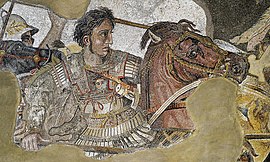
A king of the Ancient Greek kingdom of Macedon and a member of the Argead dynasty, Alexander the Great wrote, “I had rather excel others in the knowledge of what is excellent, than in the extent of my power and dominion.”


Image result for woman praying car
A Joke for Today

A woman was driving down the street in a sweat because she had an important meeting and couldn’t find a parking space. Looking up toward heaven, she said, “Lord, take pity on me. If you find me a parking place I’ll go to church every Sunday for the rest of my life and give up drinking wine.”Miraculously, a parking space opened up right in front of her destination.

The woman looked up to heaven and said, “Never mind, Lord; I found one on my own.”

Saturday, August 29, 2015

Bible Readings for August 29, 2015


Today our passages are Job 31:1–33:33; 2 Corinthians 3:1-18; Psalm 43:1-5; and Proverbs 22:8-9. The readings are from the Contemporary English VersionIf you find these readings helpful, please consider sending an offering directly to Cove Presbyterian Church, 3404 Main Street, Weirton, West Virginia or through PayPal. 

Job 31-33:33 (Contemporary English Version)

Job 31

Job Continues
I Promised Myself
 1I promised myself    never to stare with desire
   at a young woman.
    2God All-Powerful punishes
   men who do that.
    3In fact, God sends disaster
   on all who sin,
    4and he keeps a close watch
   on everything I do.
    5I am not dishonest or deceitful,
    6and I beg God to prove
   my innocence.
    7If I have disobeyed him
   or even wanted to,
    8then others can eat my harvest
   and uproot my crops.
    9If I have desired someone's wife
   and chased after her,
    10then let some stranger
   steal my wife from me.
    11If I took someone's wife,
   it would be a horrible crime,
    12sending me to destruction
   and my crops to the flames. [a] 13When my servants
   complained against me,
   I was fair to them.
    14Otherwise, what answer
   would I give to God
   when he judges me?
    15After all, God is the one
   who gave life to each of us
   before we were born.
   
I Have Never Cheated Anyone
 16I have never cheated widows    or others in need,
    17and I have always shared
   my food with orphans.
    18Since the time I was young,
   I have cared for orphans
   and helped widows. [b] 19I provided clothes for the poor,
    20and I was praised
   for supplying woolen garments
   to keep them warm.
    21If I have ever raised my arm
   to threaten an orphan
   when the power was mine,
    22I hope that arm will fall
   from its socket.
    23I could not have been abusive;
   I was terrified at the thought
   that God might punish me.
    24I have never trusted
   the power of wealth,
    25or taken pride in owning
   many possessions.
    26I have never openly or secretly
    27worshiped the sun or moon.
    28Such horrible sins
   would have deserved
   punishment from God.
    29I have never laughed
   when my enemies
   were struck by disaster.
    30Neither have I sinned
   by asking God
   to send down on them
   the curse of death.
    31No one ever went hungry [c] at my house,
    32and travelers
   were always welcome.
    33Many have attempted to hide
   their sins from others--
   but I refused.
    34And the fear of public disgrace
   never forced me
   to keep silent
   about what I had done.
   
Why Doesn't God Listen?
 35Why doesn't God All-Powerful    listen and answer?
   If God has something against me,
   let him speak up
   or put it in writing!
    36Then I would wear his charges
   on my clothes and forehead.
    37And with my head held high,
   I would tell him everything
   I have ever done.
    38I have never mistreated
   the land I farmed
   and made it mourn. [d] 39Nor have I cheated
   my workers
   and caused them pain. [e] 40If I had, I would pray
   for weeds instead of wheat
   to grow in my fields.
   After saying these things,
   Job was silent.
   

Job 32

Elihu Is Upset with Job's Friends
 1Finally, these three men stopped arguing with Job, because he refused to admit that he was guilty.     2Elihu from Buz [f] was there, and he had become upset with Job for blaming God instead of himself. 3He was also angry with Job's three friends for not being able to prove that Job was wrong. 4Elihu was younger than these three, and he let them speak first. 5But he became irritated when they could not answer Job, 6and he said to them: I am much younger than you,
   so I have shown respect
   by keeping silent.
    7I once believed age
   was the source of wisdom;
    8now I truly realize
   wisdom comes from God.
    9Age is no guarantee of wisdom
   and understanding.
    10That's why I ask you
   to listen to me.
   
I Eagerly Listened
 11I eagerly listened    to each of your arguments,
    12but not one of you proved
   Job to be wrong.
    13You shouldn't say,
   "We know what's right!
   Let God punish him."
    14Job hasn't spoken against me,
   and so I won't answer him
   with your arguments.
    15All of you are shocked;
   you don't know what to say.
    16But am I to remain silent,
   just because you
   have stopped speaking?
    17No! I will give my opinion,
    18because I have so much to say,
   that I can't keep quiet.
    19I am like a swollen wineskin,
   and I will burst [g] 20if I don't speak.
    21I don't know how to be unfair
   or to flatter anyone--
    22if I did, my Creator
   would quickly destroy me!
   

Job 33

Elihu Speaks
Job, Listen to Me!
 1Job, listen to me!    Pay close attention.
    2Everything I will say
    3is true and sincere,
    4just as surely as the Spirit
   of God All-Powerful [h] gave me the breath of life.
    5Now line up your arguments
   and prepare to face me.
    6We each were made from clay,
   and God has no favorites,
    7so don't be afraid of me
   or what I might do.
   
I Have Heard You Argue
 8I have heard you argue     9that you are innocent,
   guilty of nothing.
    10You claim that God
   has made you his enemy,
    11that he has bound your feet
   and blocked your path.
    12But, Job, you're wrong--
   God is greater
   than any human.
    13So why do you challenge God
   to answer you? [i] 14God speaks in different ways,
   and we don't always
   recognize his voice.
    15Sometimes in the night,
   he uses terrifying dreams
    16to give us warnings.
    17God does this to make us turn
   from sin and pride
    18and to protect us
   from being swept away
   to the world of the dead.
    19Sometimes we are punished
   with a serious illness
   and aching joints.
    20Merely the thought
   of our favorite food
   makes our stomachs sick,
    21and we become so skinny
   that our bones stick out.
    22We feel death and the grave
   taking us in their grip.
    23One of a thousand angels
   then comes to our rescue
   by saying we are innocent.
    24The angel shows kindness,
   commanding death to release us,
   because the price was paid.
    25Our health is restored,
   we feel young again,
    26and we ask God to accept us.
   Then we joyfully worship God,
   and we are rewarded
   because we are innocent.
    27When that happens,
   we tell everyone,
   "I sinned and did wrong,
   but God forgave me
    28and rescued me from death!
   Now I will see the light."
    29God gives each of us
   chance after chance
    30to be saved from death
   and brought into the light
   that gives life.
    31So, Job, pay attention
   and don't interrupt,
    32though I would gladly listen
   to anything you say
   that proves you are right.
    33Otherwise, listen in silence
   to my wisdom.
   
Footnotes:
  1. Job 31:12 flames: One possible meaning for the difficult Hebrew text of verse 12.
  2. Job 31:18 widows: One possible meaning for the difficult Hebrew text of verse 18.
  3. Job 31:31 ever went hungry: Or "was ever sexually abused" (see Genesis 19.1-11; Judges 19.22-30). In ancient Israel, the lives of one's guests were sacred and had to be protected at any cost.
  4. Job 31:38 mourn: In biblical times there were strict regulations for proper use of the land, and land that was abused was said to "mourn" and become no longer productive.
  5. Job 31:39 pain: One possible meaning for the difficult Hebrew text of verse 39.
  6. Job 32:2 Elihu from Buz: The Hebrew text has "Elihu son of Barachel from Buz of the family of Ram." Buz may have been somewhere in the territory of Edom; in Jeremiah 25.23 it is mentioned along with Dedan and Tema (see 6.19).
  7. Job 32:19 swollen wineskin. . . burst: While the juice from grapes was becoming wine, it would swell and stretch the skins in which it had been stored; sometimes the swelling would burst the wineskins.
  8. Job 33:4 the Spirit of God All-Powerful: Or "God All-Powerful."
  9. Job 33:13 answer you: One possible meaning for the difficult Hebrew text of verse 13.

2 Corinthians 3:1-18 (Contemporary English Version)

2 Corinthians 3

God's New Agreement
 1Are we once again bragging about ourselves? Do we need letters to you or from you to tell others about us? Some people do need letters that tell about them. 2But you are our letter, and you are in our [a] hearts for everyone to read and understand. 3You are like a letter written by Christ and delivered by us. But you are not written with pen and ink or on tablets made of stone. You are written in our hearts by the Spirit of the living God. 4We are sure about all this. Christ makes us sure in the very presence of God. 5We don't have the right to claim that we have done anything on our own. God gives us what it takes to do all that we do. 6He makes us worthy to be the servants of his new agreement that comes from the Holy Spirit and not from a written Law. After all, the Law brings death, but the Spirit brings life.     7The Law of Moses brought only the promise of death, even though it was carved on stones and given in a wonderful way. Still the Law made Moses' face shine so brightly that the people of Israel could not look at it, even though it was a fading glory. 8So won't the agreement that the Spirit brings to us be even more wonderful? 9If something that brings the death sentence is glorious, won't something that makes us acceptable to God be even more glorious? 10In fact, the new agreement is so wonderful that the Law is no longer glorious at all. 11The Law was given with a glory that faded away. But the glory of the new agreement is much greater, because it will never fade away.
    12This wonderful hope makes us feel like speaking freely. 13We are not like Moses. His face was shining, but he covered it to keep the people of Israel from seeing the brightness fade away. 14The people were stubborn, and something still keeps them from seeing the truth when the Law is read. Only Christ can take away the covering that keeps them from seeing.
    15When the Law of Moses is read, they have their minds covered over 16with a covering that is removed only for those who turn to the Lord. 17The Lord and the Spirit are one and the same, and the Lord's Spirit sets us free. 18So our faces are not covered. They show the bright glory of the Lord, as the Lord's Spirit makes us more and more like our glorious Lord.
   
Footnotes:
  1. 2 Corinthians 3:2 our: Some manuscripts have "your."

Psalm 43:1-5 (Contemporary English Version)

Psalm 43

A Prayer in Times of Trouble
 1Show that I am right, God!    Defend me against everyone
   who doesn't know you;
   rescue me from each
   of those deceitful liars.
    2I run to you
   for protection.
   Why have you turned me away?
   Why must enemies mistreat me
   and make me sad?
    3Send your light and your truth
   to guide me.
   Let them lead me to your house
   on your sacred mountain.
    4Then I will worship
   at your altar
   because you
   make me joyful.
   You are my God,
   and I will praise you.
   Yes, I will praise you
   as I play my harp.
    5Why am I discouraged?
   Why am I restless?
   I trust you!
   And I will praise you again
   because you help me,
   and you are my God.


Proverbs 22:8-9 (Contemporary English Version)

8Troublemakers get in trouble,
   and their terrible anger
   will get them nowhere.
    9The LORD blesses everyone
   who freely gives food
   to the poor.


Verse of the Day

“Faith in Christ Jesus is what makes each of you equal with each other, whether you are a Jew or a Greek, a slave or a free person, a man or a woman.” - Galatians 3:28
Today's passage is from the Contemporary English Version.

Thought for the Day

King of the Ancient Greek kingdom of Macedon and a member of the Argead dynasty, Alexander the Great wrote, “I am not afraid of an army of lions led by a sheep; I am afraid of an army of sheep led by a lion.”