Read the Bible in a Year

Each day, we'll post passages so that you can read the Bible in one year. This is part of The Colossians 13:16 Project, sponsored by Cove Presbyterian Church, 3404 Main Street, Weirton, West Virginia. You're invited to worship with us Sundays, at 11:00 a.m. or Saturdays, at 6:30 p.m. You may also want to consider joining one our adult Bible Studies: Thursdays at 12:00 noon and Sundays at 9:30 a.m. and 10:00 a.m. We also have a full range of programs for children. If you want more information about the church, check out the other blogs. And please feel free to leave any comments.

The Bible in a Year is a ministry of Cove Presbyterian Church. We need your support to keep posting. If you find it helpful, you can support this blog by your contributions. They may be sent to Cove Presbyterian Church, 3404 Main Street, Weirton, WV 26062. You can also use the PayPal link below:

Image result for paypal donate
Showing posts with label Voltaire. Show all posts

Monday, November 21, 2016

Bible Readings for November 21, 2016


Today our passages are Ezekiel 42:1– 43:27; James 5:1-20; Psalm 119:1-16; and Proverbs 28:6-7. The readings are from The Message by Eugene H. PetersonIf you find these readings helpful, please consider sending an offering directly to Cove Presbyterian Church, 3404 Main Street, Weirton, West Virginia or through PayPal by using the link below.
 
https://www.paypal.com/cgi-bin/webscr?cmd=_s-xclick&hosted_button_id=NX3WLYQG5864L

Ezekiel 42-43:27 (The Message)

Ezekiel 42

 1-9 The man led me north into the outside courtyard and brought me to the rooms that are in front of the open space and the house facing north. The length of the house on the north was one hundred seventy-five feet, and its width eighty-seven and a half feet. Across the thirty-five feet that separated the inside courtyard from the paved walkway at the edge of the outside courtyard, the rooms rose level by level for three stories. In front of the rooms on the inside was a hallway seventeen and a half feet wide and one hundred seventy-five feet long. Its entrances were from the north. The upper rooms themselves were narrower, their galleries being wider than on the first and second floors of the building. The rooms on the third floor had no pillars like the pillars in the outside courtyard and were smaller than the rooms on the first and second floors. There was an outside wall parallel to the rooms and the outside courtyard. It fronted the rooms for eighty-seven and a half feet. The row of rooms facing the outside courtyard was eighty-seven and a half feet long. The row on the side nearest the Sanctuary was one hundred seventy-five feet long. The first-floor rooms had their entrance from the east, coming in from the outside courtyard.  10-12 On the south side along the length of the courtyard's outside wall and fronting on the Temple courtyard were rooms with a walkway in front of them. These were just like the rooms on the north—same exits and dimensions—with the main entrance from the east leading to the hallway and the doors to the rooms the same as those on the north side. The design on the south was a mirror image of that on the north.
 13-14 Then he said to me, "The north and south rooms adjacent to the open area are holy rooms where the priests who come before God eat the holy offerings. There they place the holy offerings—grain offerings, sin offerings, and guilt offerings. These are set-apart rooms, holy space. After the priests have entered the Sanctuary, they must not return to the outside courtyard and mingle among the people until they change the sacred garments in which they minister and put on their regular clothes."
 15-16 After he had finished measuring what was inside the Temple area, he took me out the east gate and measured it from the outside. Using his measuring stick, he measured the east side: eight hundred seventy-five feet.
 17 He measured the north side: eight hundred seventy-five feet.
 18 He measured the south side: eight hundred seventy-five feet.
 19 Last of all he went to the west side and measured it: eight hundred seventy-five feet.
 20 He measured the wall on all four sides. Each wall was eight hundred seventy-five feet. The walls separated the holy from the ordinary.

Ezekiel 43

The Meaning of the Temple
 1-3 The man brought me to the east gate. Oh! The bright Glory of the God of Israel rivered out of the east sounding like the roar of floodwaters, and the earth itself glowed with the bright Glory. It looked just like what I had seen when he came to destroy the city, exactly like what I had seen earlier at the Kebar River. And again I fell, face to the ground.  4-5 The bright Glory of God poured into the Temple through the east gate. The Spirit put me on my feet and led me to the inside courtyard and—oh! the bright Glory of God filled the Temple!
 6-9 I heard someone speaking to me from inside the Temple while the man stood beside me. He said, "Son of man, this is the place for my throne, the place I'll plant my feet. This is the place where I'll live with the Israelites forever. Neither the people of Israel nor their kings will ever again drag my holy name through the mud with their whoring and the no-god idols their kings set up at all the wayside shrines. When they set up their worship shrines right alongside mine with only a thin wall between them, they dragged my holy name through the mud with their obscene and vile worship. Is it any wonder that I destroyed them in anger? So let them get rid of their whoring ways and the stinking no-god idols introduced by their kings and I'll move in and live with them forever.
 10-11 "Son of man, tell the people of Israel all about the Temple so they'll be dismayed by their wayward lives. Get them to go over the layout. That will bring them up short. Show them the whole plan of the Temple, its ins and outs, the proportions, the regulations, and the laws. Draw a picture so they can see the design and meaning and live by its design and intent.
 12 "This is the law of the Temple: As it radiates from the top of the mountain, everything around it becomes holy ground. Yes, this is law, the meaning, of the Temple.
 13-14 "These are the dimensions of the altar, using the long (twenty-one-inch) ruler. The gutter at its base is twenty-one inches deep and twenty-one inches wide, with a four-inch lip around its edge.
 14-15 "The height of the altar is three and a half feet from the base to the first ledge and twenty inches wide. From the first ledge to the second ledge it is seven feet high and twenty-one inches wide. The altar hearth is another seven feet high. Four horns stick upward from the hearth twenty-one inches high.
 16-17 "The top of the altar, the hearth, is square, twenty-one by twenty-one feet. The upper ledge is also square, twenty-four and a half feet on each side, with a ten-and-a-half-inch lip and a twenty-one-inch-wide gutter all the way around.
    "The steps of the altar ascend from the east."
 18 Then the man said to me, "Son of man, God, the Master, says: 'These are the ordinances for conduct at the altar when it is built, for sacrificing burnt offerings and sprinkling blood on it.
 19-21 "'For a sin offering, give a bull to the priests, the Levitical priests who are from the family of Zadok who come into my presence to serve me. Take some of its blood and smear it on the four horns of the altar that project from the four corners of the top ledge and all around the lip. That's to purify the altar and make it fit for the sacrifice. Then take the bull for the sin offerings and burn it in the place set aside for this in the courtyard outside the Sanctuary.
 22-24 "'On the second day, offer a male goat without blemish for a sin offering. Purify the altar the same as you purified it for the bull. Then, when you have purified it, offer a bull without blemish and a ram without blemish from the flock. Present them before God. Sprinkle salt on them and offer them as a burnt offering to God.
 25-26 "'For seven days, prepare a goat for a sin offering daily, and also a bull and a ram from the flock, animals without blemish. For seven days the priests are to get the altar ready for its work, purifying it. This is how you dedicate it.
 27 "'After these seven days of dedication, from the eighth day on, the priests will present your burnt offerings and your peace offerings. And I'll accept you with pleasure, with delight! Decree of God, the Master.'"


James 5:1-20 (The Message)

James 5

Destroying Your Life from Within
 1-3 And a final word to you arrogant rich: Take some lessons in lament. You'll need buckets for the tears when the crash comes upon you. Your money is corrupt and your fine clothes stink. Your greedy luxuries are a cancer in your gut, destroying your life from within. You thought you were piling up wealth. What you've piled up is judgment.  4-6All the workers you've exploited and cheated cry out for judgment. The groans of the workers you used and abused are a roar in the ears of the Master Avenger. You've looted the earth and lived it up. But all you'll have to show for it is a fatter than usual corpse. In fact, what you've done is condemn and murder perfectly good persons, who stand there and take it.
 7-8Meanwhile, friends, wait patiently for the Master's Arrival. You see farmers do this all the time, waiting for their valuable crops to mature, patiently letting the rain do its slow but sure work. Be patient like that. Stay steady and strong. The Master could arrive at any time.
 9Friends, don't complain about each other. A far greater complaint could be lodged against you, you know. The Judge is standing just around the corner.
 10-11Take the old prophets as your mentors. They put up with anything, went through everything, and never once quit, all the time honoring God. What a gift life is to those who stay the course! You've heard, of course, of Job's staying power, and you know how God brought it all together for him at the end. That's because God cares, cares right down to the last detail.
 12And since you know that he cares, let your language show it. Don't add words like "I swear to God" to your own words. Don't show your impatience by concocting oaths to hurry up God. Just say yes or no. Just say what is true. That way, your language can't be used against you.
Prayer to Be Reckoned With
 13-15Are you hurting? Pray. Do you feel great? Sing. Are you sick? Call the church leaders together to pray and anoint you with oil in the name of the Master. Believing-prayer will heal you, and Jesus will put you on your feet. And if you've sinned, you'll be forgiven—healed inside and out.  16-18Make this your common practice: Confess your sins to each other and pray for each other so that you can live together whole and healed. The prayer of a person living right with God is something powerful to be reckoned with. Elijah, for instance, human just like us, prayed hard that it wouldn't rain, and it didn't—not a drop for three and a half years. Then he prayed that it would rain, and it did. The showers came and everything started growing again.
 19-20My dear friends, if you know people who have wandered off from God's truth, don't write them off. Go after them. Get them back and you will have rescued precious lives from destruction and prevented an epidemic of wandering away from God.


Psalm 119:1-16 (The Message)

Psalm 119


    You're blessed when you stay on course, walking steadily on the road revealed by God.
   You're blessed when you follow his directions,
      doing your best to find him.
   That's right—you don't go off on your own;
      you walk straight along the road he set.
   You, God, prescribed the right way to live;
      now you expect us to live it.
   Oh, that my steps might be steady,
      keeping to the course you set;
   Then I'd never have any regrets
      in comparing my life with your counsel.
   I thank you for speaking straight from your heart;
      I learn the pattern of your righteous ways.
   I'm going to do what you tell me to do;
      don't ever walk off and leave me.
 9-16 How can a young person live a clean life?
      By carefully reading the map of your Word.
   I'm single-minded in pursuit of you;
      don't let me miss the road signs you've posted.
   I've banked your promises in the vault of my heart
      so I won't sin myself bankrupt.
   Be blessed, God;
      train me in your ways of wise living.
   I'll transfer to my lips
      all the counsel that comes from your mouth;
   I delight far more in what you tell me about living
      than in gathering a pile of riches.
   I ponder every morsel of wisdom from you,
      I attentively watch how you've done it.
   I relish everything you've told me of life,
      I won't forget a word of it.


Proverbs 28:6-7 (The Message)


 6 It's better to be poor and direct
   than rich and crooked.

 7 Practice God's law—get a reputation for wisdom;
   hang out with a loose crowd—embarrass your family.


Verse of the Day

“I never stop thanking my God for being kind enough to give you Christ Jesus, who helps you speak and understand so well.” - 1 Corinthians 1:4-5
Today's passage is from the Contemporary English Version.


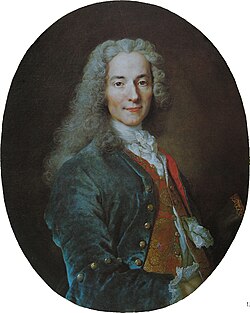
Nicolas de Largillière, François-Marie Arouet dit Voltaire (vers 1724-1725) -001.jpg
Thought for the Day

French Enlightenment writer, historian, and philosopher, Voltaire wrote, “Money is always to be found when men are to be sent to the frontiers to be destroyed: when the object is to preserve them, it is no longer so.”

Sunday, June 12, 2016

Bible Readings for June 12, 2016


Today our passages are 1 Kings 9:1–10:29; Acts 8:14-40; Psalm 130:1-8; and Proverbs 17:2-3. The readings are from The Message by Eugene H. PetersonIf you find these readings helpful, please consider sending an offering directly to Cove Presbyterian Church, 3404 Main Street, Weirton, West Virginia or through PayPal.

1 Kings 9-10:29 (The Message)

1 Kings 9

 1-2 After Solomon had completed building The Temple of God and his own palace, all the projects he had set his heart on doing, God appeared to Solomon again, just as he had appeared to him at Gibeon.  3-5 And God said to him, "I've listened to and received all your prayers, your ever-so-passionate prayers. I've sanctified this Temple that you have built: My Name is stamped on it forever; my eyes are on it and my heart in it always. As for you, if you live in my presence as your father David lived, pure in heart and action, living the life I've set out for you, attentively obedient to my guidance and judgments, then I'll back your kingly rule over Israel, make it a sure thing on a solid foundation. The same guarantee I gave David your father I'm giving you: 'You can count on always having a descendant on Israel's throne.'
 6-9 "But if you or your sons betray me, ignoring my guidance and judgments, taking up with alien gods by serving and worshiping them, then the guarantee is off: I'll wipe Israel right off the map and repudiate this Temple I've just sanctified to honor my Name. And Israel will become nothing but a bad joke among the peoples of the world. And this Temple, splendid as it now is, will become an object of contempt; visitors will shake their heads, saying, 'Whatever happened here? What's the story behind these ruins?' Then they'll be told, 'The people who used to live here betrayed their God, the very God who rescued their ancestors from Egypt; they took up with alien gods, worshiping and serving them. That's what's behind this God-visited devastation.'"

10-12 At the end of twenty years, having built the two buildings, The Temple of God and his personal palace, Solomon rewarded Hiram king of Tyre with a gift of twenty villages in the district of Galilee. Hiram had provided him with all the cedar and cypress and gold that he had wanted. But when Hiram left Tyre to look over the villages that Solomon had given him, he didn't like what he saw.

 13-14 He said, "What kind of reward is this, my friend? Twenty backwoods hick towns!" People still refer to them that way. This is all Hiram got from Solomon in exchange for four and a half tons of gold!

15 This is the work record of the labor force that King Solomon raised to build The Temple of God, his palace, the defense complex (the Millo), the Jerusalem wall, and the fortified cities of Hazor, Megiddo, and Gezer.

 16-17 Pharaoh king of Egypt had come up and captured Gezer, torched it, and killed all the Canaanites who lived there. He gave it as a wedding present to his daughter, Solomon's wife. So Solomon rebuilt Gezer.
 17-19 He also built Lower Beth Horon, Baalath, and Tamar in the desert, back-country storehouse villages, and villages for chariots and horses. Solomon built widely and extravagantly in Jerusalem, in Lebanon, and wherever he fancied.
 20-23 The remnants from the original inhabitants of the land (Amorites, Hittites, Perizzites, Hivites, and Jebusites—all non-Israelites), survivors of the holy wars, were rounded up by Solomon for his gangs of slave labor, a policy still in effect. But true Israelites were not treated this way; they were used in his army and administration—government leaders and commanders of his chariots and charioteers. They were also the project managers responsible for Solomon's building operations—550 of them in charge of the workforce.
 24 It was after Pharaoh's daughter ceremonially ascended from the City of David and took up residence in the house built especially for her that Solomon built the defense complex (the Millo).
 25 Three times a year Solomon worshiped at the Altar of God, sacrificing Whole-Burnt-Offerings and Peace-Offerings, and burning incense in the presence of God. Everything that had to do with The Temple he did generously and well; he didn't skimp.
 26-28 And ships! King Solomon also built ships at Ezion Geber, located near Elath in Edom on the Red Sea. Hiram sent seaworthy sailors to assist Solomon's men with the fleet. They embarked for Ophir, brought back sixteen tons of gold, and presented it to King Solomon.

1 Kings 10

The Queen of Sheba Visits
 1-5 The queen of Sheba heard about Solomon and his connection with the Name of God. She came to put his reputation to the test by asking tough questions. She made a grand and showy entrance into Jerusalem—camels loaded with spices, a huge amount of gold, and precious gems. She came to Solomon and talked about all the things that she cared about, emptying her heart to him. Solomon answered everything she put to him—nothing stumped him. When the queen of Sheba experienced for herself Solomon's wisdom and saw with her own eyes the palace he had built, the meals that were served, the impressive array of court officials and sharply dressed waiters, the lavish crystal, and the elaborate worship extravagant with Whole-Burnt-Offerings at the steps leading up to The Temple of God, it took her breath away.  6-9 She said to the king, "It's all true! Your reputation for accomplishment and wisdom that reached all the way to my country is confirmed. I wouldn't have believed it if I hadn't seen it for myself; they didn't exaggerate! Such wisdom and elegance—far more than I could ever have imagined. Lucky the men and women who work for you, getting to be around you every day and hear your wise words firsthand! And blessed be God, your God, who took such a liking to you and made you king. Clearly, God's love for Israel is behind this, making you king to keep a just order and nurture a God-pleasing people."
 10 She then gave the king four and a half tons of gold, and also sack after sack of spices and expensive gems. There hasn't been a cargo of spices like that since that shipload the queen of Sheba brought to King Solomon.
 11-12 The ships of Hiram also imported gold from Ophir along with tremendous loads of fragrant sandalwood and expensive gems. The king used the sandalwood for fine cabinetry in The Temple of God and the palace complex, and for making harps and dulcimers for the musicians. Nothing like that shipment of sandalwood has been seen since.
 13 King Solomon for his part gave the queen of Sheba all her heart's desire—everything she asked for, on top of what he had already so generously given her. Satisfied, she returned home with her train of servants.

14-15 Solomon received twenty-five tons of gold in tribute annually. This was above and beyond the taxes and profit on trade with merchants and assorted kings and governors.

 16-17 King Solomon crafted two hundred body-length shields of hammered gold—seven and a half pounds of gold to each shield—and three hundred smaller shields about half that size. He stored the shields in the House of the Forest of Lebanon.
 18-20 The king built a massive throne of ivory accented with a veneer of gold. The throne had six steps leading up to it, its back shaped like an arch. The armrests on each side were flanked by lions. Lions, twelve of them, were placed at either end of the six steps. There was no throne like it in any of the surrounding kingdoms.
 21 King Solomon's chalices and tankards were made of gold and all the dinnerware and serving utensils in the House of the Forest of Lebanon were pure gold—nothing was made of silver; silver was considered common and cheap.
 22 The king had a fleet of ocean-going ships at sea with Hiram's ships. Every three years the fleet would bring in a cargo of gold, silver, and ivory, and apes and peacocks.
 23-25 King Solomon was wiser and richer than all the kings of the earth—he surpassed them all. People came from all over the world to be with Solomon and drink in the wisdom God had given him. And everyone who came brought gifts—artifacts of gold and silver, fashionable robes and gowns, the latest in weapons, exotic spices, and horses and mules—parades of visitors, year after year.
 26-29 Solomon collected chariots and horses: fourteen hundred chariots and twelve thousand horses! He stabled them in the special chariot cities as well as in Jerusalem. The king made silver as common as rocks and cedar as common as the fig trees in the lowland hills. His horses were brought in from Egypt and Cilicia, specially acquired by the king's agents. Chariots from Egypt went for fifteen pounds of silver and a horse for about three and three-quarter pounds of silver. Solomon carried on a brisk horse-trading business with the Hittite and Aramean royal houses.

Acts 8:14-40 (The Message)

 14-17When the apostles in Jerusalem received the report that Samaria had accepted God's Message, they sent Peter and John down to pray for them to receive the Holy Spirit. Up to this point they had only been baptized in the name of the Master Jesus; the Holy Spirit hadn't yet fallen on them. Then the apostles laid their hands on them and they did receive the Holy Spirit.
 18-19When Simon saw that the apostles by merely laying on hands conferred the Spirit, he pulled out his money, excited, and said, "Sell me your secret! Show me how you did that! How much do you want? Name your price!"
 20-23Peter said, "To hell with your money! And you along with it. Why, that's unthinkable—trying to buy God's gift! You'll never be part of what God is doing by striking bargains and offering bribes. Change your ways—and now! Ask the Master to forgive you for trying to use God to make money. I can see this is an old habit with you; you reek with money-lust."
 24"Oh!" said Simon, "pray for me! Pray to the Master that nothing like that will ever happen to me!"
 25And with that, the apostles were on their way, continuing to witness and spread the Message of God's salvation, preaching in every Samaritan town they passed through on their return to Jerusalem.
The Ethiopian Eunuch
 26-28Later God's angel spoke to Philip: "At noon today I want you to walk over to that desolate road that goes from Jerusalem down to Gaza." He got up and went. He met an Ethiopian eunuch coming down the road. The eunuch had been on a pilgrimage to Jerusalem and was returning to Ethiopia, where he was minister in charge of all the finances of Candace, queen of the Ethiopians. He was riding in a chariot and reading the prophet Isaiah.  29-30The Spirit told Philip, "Climb into the chariot." Running up alongside, Philip heard the eunuch reading Isaiah and asked, "Do you understand what you're reading?"
 31-33He answered, "How can I without some help?" and invited Philip into the chariot with him. The passage he was reading was this:

   As a sheep led to slaughter,
      and quiet as a lamb being sheared,
   He was silent, saying nothing.
      He was mocked and put down, never got a fair trial.
   But who now can count his kin
      since he's been taken from the earth?

 34-35The eunuch said, "Tell me, who is the prophet talking about: himself or some other?" Philip grabbed his chance. Using this passage as his text, he preached Jesus to him.
 36-39As they continued down the road, they came to a stream of water. The eunuch said, "Here's water. Why can't I be baptized?" He ordered the chariot to stop. They both went down to the water, and Philip baptized him on the spot. When they came up out of the water, the Spirit of God suddenly took Philip off, and that was the last the eunuch saw of him. But he didn't mind. He had what he'd come for and went on down the road as happy as he could be.
 40Philip showed up in Azotus and continued north, preaching the Message in all the villages along that route until he arrived at Caesarea.


Psalm 130:1-8 (The Message)

Psalm 130

A Pilgrim Song
 1-2 Help, God—the bottom has fallen out of my life! Master, hear my cry for help!
   Listen hard! Open your ears!
      Listen to my cries for mercy.

 3-4 If you, God, kept records on wrongdoings,
      who would stand a chance?
   As it turns out, forgiveness is your habit,
      and that's why you're worshiped.

 5-6 I pray to God—my life a prayer—
      and wait for what he'll say and do.
   My life's on the line before God, my Lord,
      waiting and watching till morning,
      waiting and watching till morning.

 7-8 O Israel, wait and watch for God
      with God's arrival comes love,
      with God's arrival comes generous redemption.
   No doubt about it—he'll redeem Israel,
      buy back Israel from captivity to sin.


Proverbs 17:2-3 (The Message)


 2 A wise servant takes charge of an unruly child
   and is honored as one of the family.

 3 As silver in a crucible and gold in a pan,
   so our lives are assayed by God.


Verse of the Day
“[(A psalm by David for the music leader.)][The Wonders of God and the Goodness of His Law]The heavens keep telling the wonders of God, and the skies declare what he has done. Each day informs the following day; each night announces to the next.” - Psalm 19:1-2
Today's passage is from the Contemporary English Version.

 
Nicolas de Largillière, François-Marie Arouet dit Voltaire (vers 1724-1725) -001.jpg
Thought for the Day
French Enlightenment writer, historian, and philosopher famous for his wit, Voltaire wrote, “Every man is guilty of all the good he did not do.”

Monday, December 21, 2015

Bible Readings for December 21, 2015


Today our passages are Zechariah 1:1-21; Revelation 12:1–13:1a; Psalm 140:1-13; and Proverbs 30:17. The readings are from the Contemporary English VersionIf you find these readings helpful, please consider sending an offering directly to Cove Presbyterian Church, 3404 Main Street, Weirton, West Virginia or through PayPal. 

Zechariah 1:1-21 (Contemporary English Version)

Zechariah 1

Turn to the LORD
 1I am the prophet Zechariah, the son of Berechiah and the grandson of Iddo.    In the eighth month of the second year that Darius was king of Persia, [a] the LORD told me to say: 2-3Israel, I, the LORD All-Powerful, was very angry with your ancestors. But if you people will return to me, I will turn and help you. 4Don't be stubborn like your ancestors. They were warned by the earlier prophets [b] to give up their evil and turn back to me, but they paid no attention. 5Where are your ancestors now? Not even prophets live forever. 6But my warnings and my words spoken by the prophets caught up with your ancestors. So they turned back to me and said, "LORD All-Powerful, you have punished us for our sins, just as you had planned."
   
First Vision: Horses and Riders
 7-8On the twenty-fourth day of Shebat, [c] which was the eleventh month of that same year, [d] the LORD spoke to me in a vision during the night: In a valley among myrtle trees, [e] I saw someone on a red horse, with riders on red, brown, and white horses behind him. 9An angel was there to explain things to me, and I asked, "Sir, who are these riders?" "I'll tell you," the angel answered.     10Right away, the man standing among the myrtle trees said, "These are the ones the LORD has sent to find out what's happening on earth."
    11Then the riders spoke to the LORD's angel, who was standing among the myrtle trees, and they said, "We have gone everywhere and have discovered that the whole world is at peace."
    12At this, the angel said, "LORD All-Powerful, for seventy years you have been angry with Jerusalem and the towns of Judah. When are you ever going to have mercy on them?"
    13The LORD's answer was kind and comforting. 14So the angel told me to announce:
   I, the LORD All-Powerful, am very protective of Jerusalem. 15For a while I was angry at the nations, but now I am furious, because they have made things worse for Jerusalem and are not the least bit concerned. 16And so, I will have pity on Jerusalem. The city will be completely rebuilt, and my temple will stand again. 17I also promise that my towns will prosper--Jerusalem will once again be my chosen city, and I will comfort the people of Zion.
   
Second Vision: Animal Horns
 18Next, I saw four animal horns. [f] 19-21The angel who was sent to explain was there, and so I asked, "What do these mean?" His answer was, "These horns are the nations that scattered the people of Judah, Israel, and Jerusalem, and took away their freedom."    Then the LORD showed me four blacksmiths, and I asked, "What are they going to do?"
   He replied, "They are going to terrify and crush those horns."
   
Footnotes:
  1. Zechariah 1:1 eighth month. . . second year. . . king of Persia: Bul, the eighth month of the Hebrew calender, from about mid-October to mid-November; the second year of the rule of Darius was 520 B.C.
  2. Zechariah 1:4 the earlier prophets: Those who preached before the fall of Jerusalem in either 587 or 586 B.C.
  3. Zechariah 1:7 Shebat: The eleventh month of the Hebrew calendar, from about mid-January to mid-February.
  4. Zechariah 1:7 that same year: See verse 1 and the note there.
  5. Zechariah 1:7 myrtle trees: Evergreen shrubs, which in ancient times were symbols of fertility and renewal.
  6. Zechariah 1:18 animal horns: Horns, especially those of a bull, were symbols of power in ancient times. The number "four" would signal completeness, one representing each of the four directions.

Revelation 12-13:1 (Contemporary English Version)

Revelation 12

The Woman and the Dragon
 1Something important appeared in the sky. It was a woman whose clothes were the sun. The moon was under her feet, and a crown made of twelve stars was on her head. 2She was about to give birth, and she was crying because of the great pain.     3Something else appeared in the sky. It was a huge red dragon with seven heads and ten horns, and a crown on each of its seven heads. 4With its tail, it dragged a third of the stars from the sky and threw them down to the earth. Then the dragon turned toward the woman, because it wanted to eat her child as soon as it was born.
    5The woman gave birth to a son, who would rule all nations with an iron rod. The boy was snatched away. He was taken to God and placed on his throne. 6The woman ran into the desert to a place that God had prepared for her. There she would be taken care of for one thousand two hundred sixty days.
   
Michael Fights the Dragon
 7A war broke out in heaven. Michael and his angels were fighting against the dragon and its angels. 8But the dragon lost the battle. It and its angels were forced out of their places in heaven 9and were thrown down to the earth. Yes, that old snake and his angels were thrown out of heaven! That snake, who fools everyone on earth, is known as the devil and Satan. 10Then I heard a voice from heaven shout,    "Our God has shown
   his saving power,
   and his kingdom has come!
   God's own Chosen One
   has shown his authority.
   Satan accused our people
   in the presence of God
   day and night.
   Now he has been thrown out!
    11Our people defeated Satan
   because of the blood [a] of the Lamb
   and the message of God.
   They were willing
   to give up their lives.
    12The heavens should rejoice,
   together with everyone
   who lives there.
   But pity the earth
   and the sea,
   because the devil
   was thrown down
   to the earth.
   He knows his time is short,
   and he is very angry."
    13When the dragon realized that it had been thrown down to the earth, it tried to make trouble for the woman who had given birth to a son. 14But the woman was given two wings like those of a huge eagle, so that she could fly into the desert. There she would escape from the snake and be taken care of for a time, two times, and half a time.
    15The snake then spewed out water like a river to sweep the woman away. 16But the earth helped her and swallowed the water that had come from the dragon's mouth. 17This made the dragon terribly angry with the woman. So it started a war against the rest of her children. They are the people who obey God and are faithful to what Jesus did and taught. 18The dragon [b] stood on the beach beside the sea.

Revelation 13

The Two Beasts
 1I looked and saw a beast coming up from the sea. This one had ten horns and seven heads, and a crown was on each of its ten horns. On each of its heads were names that were an insult to God.
Footnotes:
  1. Revelation 12:11 blood: Or "death."
  2. Revelation 12:18 The dragon: The text has "he," and some manuscripts have "I."

Psalm 140:1-13 (Contemporary English Version)

Psalm 140

(A psalm by David for the music leader.)
A Prayer for the LORD's Help
 1Rescue me from cruel    and violent enemies, LORD!
    2They think up evil plans
   and always cause trouble.
    3Their words bite deep
   like the poisonous fangs
   of a snake.
    4Protect me, LORD, from cruel
   and brutal enemies,
   who want to destroy me.
    5Those proud people have hidden
   traps and nets
   to catch me as I walk.
    6You, LORD, are my God!
   Please listen to my prayer.
    7You have the power to save me,
   and you keep me safe
   in every battle.
    8Don't let the wicked succeed
   in doing what they want,
   or else they might never
   stop planning evil.
    9They have me surrounded,
   but make them the victims
   of their own vicious lies. [a] 10Dump flaming coals on them
   and throw them into pits
   where they can't climb out.
    11Chase those cruel liars away!
   Let trouble hunt them down.
    12Our LORD, I know that you
   defend the homeless
   and see that the poor
   are given justice.
    13Your people will praise you
   and will live with you
   because they do right.
   
Footnotes:
  1. Psalm 140:9 or else. . . lies: One possible meaning for the difficult Hebrew text.

Proverbs 30:17 (Contemporary English Version)

17Don't make fun of your father
   or disobey your mother--
   crows will peck out your eyes,
   and buzzards will eat
   the rest of you.


Verse of the Day
“and while they were there, she gave birth to her first-born son. She dressed him in baby clothes and laid him on a bed of hay, because there was no room for them in the inn.” - Luke 2:6-7
Today's passage is from the Contemporary English Version.

 
Nicolas de Largillière, François-Marie Arouet dit Voltaire (vers 1724-1725) -001.jpg
Thought for the Day
French Enlightenment writer, historian, and philosopher famous for his wit, his attacks on the established Catholic Church, and his advocacy of freedom of religion, freedom of expression, and separation of church and state, Voltaire wrote, “Judge a man by his questions rather than his answers.”

Wednesday, April 22, 2015

Bible Readings for April 22, 2015


Today our passages are Joshua 24:1-33; Luke 21:1-28; Psalm 89:38-52; and Proverbs 13:20-23. The readings are the Contemporary English Version


Joshua 24:1-33 (Contemporary English Version)

Joshua 24

We Will Worship and Obey the LORD
 1Joshua called the tribes of Israel together for a meeting at Shechem. He had the leaders, including the old men, the judges, and the officials, come up and stand near the sacred tent. [a] 2Then Joshua told everyone to listen to this message from the LORD, the God of Israel: Long ago your ancestors lived on the other side of the Euphrates River, and they worshiped other gods. This continued until the time of your ancestor Terah and his two sons, Abraham and Nahor. 3But I brought Abraham across the Euphrates River and led him through the land of Canaan. I blessed him by giving him Isaac, the first in a line of many descendants. 4Then I gave Isaac two sons, Jacob and Esau. I had Esau live in the hill country of Mount Seir, but your ancestor Jacob and his children went to live in Egypt.     5-6Later I sent Moses and his brother Aaron to help your people, and I made all those horrible things happen to the Egyptians. I brought your ancestors out of Egypt, but the Egyptians got in their chariots and on their horses and chased your ancestors, catching up with them at the Red Sea. [b] 7Your people cried to me for help, so I put a dark cloud between them and the Egyptians. Then I opened up the sea and let your people walk across on dry ground. But when the Egyptians tried to follow, I commanded the sea to swallow them, and they drowned while you watched. You lived in the desert for a long time, 8then I brought you into the land east of the Jordan River. The Amorites were living there, and they fought you. But with my help, you defeated them, wiped them out, and took their land. 9King Balak decided that his nation Moab would go to war against you, so he asked Balaam [c] to come and put a curse on you. 10But I wouldn't listen to Balaam, and I rescued you by making him bless you instead of curse you. 11You crossed the Jordan River and came to Jericho. The rulers of Jericho fought you, and so did the Amorites, the Perizzites, the Canaanites, the Hittites, the Girgashites, the Hivites, and the Jebusites. I helped you defeat them all. 12Your enemies ran from you, but not because you had swords and bows and arrows. I made your enemies panic and run away, as I had done with the two Amorite kings east of the Jordan River.
    13You didn't have to work for this land--I gave it to you. Now you live in towns you didn't build, and you eat grapes and olives from vineyards and trees you didn't plant.
    14Then Joshua told the people:
   Worship the LORD, obey him, and always be faithful. Get rid of the idols your ancestors worshiped when they lived on the other side of the Euphrates River and in Egypt. 15But if you don't want to worship the LORD, then choose right now! Will you worship the same idols your ancestors did? Or since you're living on land that once belonged to the Amorites, maybe you'll worship their gods. I won't. My family and I are going to worship and obey the LORD!
    16The people answered:
   We could never worship other gods or stop worshiping the LORD. 17The LORD is our God. We were slaves in Egypt as our ancestors had been, but we saw the LORD work miracles to set our people free and to bring us out of Egypt. Even though other nations were all around us, the LORD protected us wherever we went. 18And when we fought the Amorites and the other nations that lived in this land, the LORD made them run away. Yes, we will worship and obey the LORD, because the LORD is our God.
    19Joshua said:
   The LORD is fearsome; he is the one true God, and I don't think you are able to worship and obey him in the ways he demands. You would have to be completely faithful, and if you sin or rebel, he won't let you get away with it. 20If you turn your backs on the LORD and worship the gods of other nations, the LORD will turn against you. He will make terrible things happen to you and wipe you out, even though he had been good to you before.
    21But the people shouted, " We won't worship any other gods. We will worship and obey only the LORD!"
    22Joshua said, " You have heard yourselves say that you will worship and obey the LORD. Isn't that true?"
   " Yes, it's true," they answered.
    23Joshua said, " But you still have some idols, like those the other nations worship. Get rid of your idols! You must decide once and for all that you really want to obey the LORD God of Israel."
    24The people said, " The LORD is our God, and we will worship and obey only him."
    25Joshua helped Israel make an agreement with the LORD that day at Shechem. Joshua made laws for Israel 26and wrote them down in The Book of the Law [d] of God. Then he set up a large stone under the oak tree at the place of worship in Shechem 27and told the people, " Look at this stone. It has heard everything that the LORD has said to us. Our God can call this stone as a witness if we ever reject him." 28Joshua sent everyone back to their homes.
   
Joshua, Joseph, and Eleazar Are Buried
 29Not long afterwards, the LORD's servant Joshua died at the age of one hundred ten. 30The Israelites buried him in his own land at Timnath-Serah, north of Mount Gaash in the hill country of Ephraim.     31As long as Joshua lived, Israel worshiped and obeyed the LORD. There were other leaders old enough to remember everything that the LORD had done for Israel. And for as long as these men lived, Israel continued to worship and obey the LORD.
    32When the people of Israel left Egypt, they brought the bones of Joseph along with them. They took the bones to the town of Shechem and buried them in the field that Jacob had bought for one hundred pieces of silver [e] from Hamor, the founder of Shechem. The town and the field both [f] became part of the land belonging to the descendants of Joseph. 33When Eleazar the priest [g] died, he was buried in the hill country of Ephraim on a hill that belonged to his son Phinehas.
Footnotes:
  1. Joshua 24:1 near. . . tent: Or " in front of the sacred chest" ; Hebrew " in the presence of God."
  2. Joshua 24:5 Red Sea: See the note at 2.10.
  3. Joshua 24:9 King Balak. . . Balaam: The Hebrew text has " King Balak the son of Zippor. . . Balaam the son of Beor."
  4. Joshua 24:26 Law: See the note at 8.30-32.
  5. Joshua 24:32 pieces of silver: One possible meaning for the difficult Hebrew word.
  6. Joshua 24:32 town. . . both: One possible meaning for the difficult Hebrew text.
  7. Joshua 24:33 Eleazar the priest: Hebrew " Eleazar the son of Aaron."

Luke 21:1-28 (Contemporary English Version)

Luke 21

A Widow's Offering
(Mark 12.41-44)
 1Jesus looked up and saw some rich people tossing their gifts into the offering box. 2He also saw a poor widow putting in two pennies. 3And he said, "I tell you that this poor woman has put in more than all the others. 4Everyone else gave what they didn't need. But she is very poor and gave everything she had."    
The Temple Will Be Destroyed
(Matthew 24.1,2; Mark 13.1,2)
 5Some people were talking about the beautiful stones used to build the temple and about the gifts that had been placed in it. Jesus said, 6"Do you see these stones? The time is coming when not one of them will be left in place. They will all be knocked down."    
Warning about Trouble
(Matthew 24.3-14; Mark 13.3-13)
 7Some people asked, "Teacher, when will all this happen? How can we know when these things are about to take place?"     8Jesus replied:
   Don't be fooled by those who will come and claim to be me. They will say, "I am Christ!" and "Now is the time!" But don't follow them. 9When you hear about wars and riots, don't be afraid. These things will have to happen first, but that isn't the end.
    10Nations will go to war against one another, and kingdoms will attack each other. 11There will be great earthquakes, and in many places people will starve to death and suffer terrible diseases. All sorts of frightening things will be seen in the sky.
    12Before all this happens, you will be arrested and punished. You will be tried in your meeting places and put in jail. Because of me you will be placed on trial before kings and governors. 13But this will be your chance to tell about your faith.
    14Don't worry about what you will say to defend yourselves. 15I will give you the wisdom to know what to say. None of your enemies will be able to oppose you or to say that you are wrong. 16You will be betrayed by your own parents, brothers, family, and friends. Some of you will even be killed. 17Because of me, you will be hated by everyone. 18But don't worry! [a] 19You will be saved by being faithful to me.
Jerusalem Will Be Destroyed
(Matthew 24.15-21; Mark 13.14-19)
 20When you see Jerusalem surrounded by soldiers, you will know that it will soon be destroyed. 21If you are living in Judea at that time, run to the mountains. If you are in the city, leave it. And if you are out in the country, don't go back into the city. 22This time of punishment is what is written about in the Scriptures. 23It will be an awful time for women who are expecting babies or nursing young children! Everywhere in the land people will suffer horribly and be punished. 24Some of them will be killed by swords. Others will be carried off to foreign countries. Jerusalem will be overrun by foreign nations until their time comes to an end.    
When the Son of Man Appears
(Matthew 24.29-31; Mark 13.24-27)
 25Strange things will happen to the sun, moon, and stars. The nations on earth will be afraid of the roaring sea and tides, and they won't know what to do. 26People will be so frightened that they will faint because of what is happening to the world. Every power in the sky will be shaken. [b] 27Then the Son of Man will be seen, coming in a cloud with great power and glory. 28When all of this starts happening, stand up straight and be brave. You will soon be set free.
Footnotes:
  1. Luke 21:18 But don't worry: The Greek text has " Not a hair of your head will be lost," which means, " There's no need to worry."
  2. Luke 21:26 Every power in the sky will be shaken: In ancient times people thought that the stars were spiritual powers.

Psalm 89:38-52 (Contemporary English Version)

38You are now angry, God,
   and you have turned your back
   on your chosen king.
    39You broke off your agreement
   with your servant, the king,
   and you completely destroyed
   his kingdom.
    40The walls of his city
   have been broken through,
   and every fortress
   now lies in ruin.
    41All who pass by
   take what they want,
   and nations everywhere
   joke about the king.
    42You made his enemies powerful
   and let them celebrate.
    43But you forced him to retreat
   because you did not fight
   on his side.
    44You took his crown [a] and threw his throne
   in the dirt.
    45You made an old man of him
   and put him to shame.
    46How much longer, LORD?
   Will you hide forever?
   How long will your anger
   keep burning like fire?
    47Remember, life is short! [b] Why did you empty our lives
   of all meaning?
    48No one can escape the power
   of death and the grave.
    49Our Lord, where is the love
   you have always shown
   and that you promised
   so faithfully to David?
    50Remember your servant, Lord!
   People make jokes about me,
   and I suffer many insults.
    51I am your chosen one,
   but your enemies chase
   and make fun of me.
    52Our LORD, we praise you
   forever. Amen and amen.
   
Footnotes:
  1. Psalm 89:44 You took. . . crown: One possible meaning for the difficult Hebrew text.
  2. Psalm 89:47 Remember. . . short: One possible meaning for the difficult Hebrew text.

Proverbs 13:20-23 (Contemporary English Version)

20Wise friends make you wise,
   but you hurt yourself
   by going around with fools.
    21You are in for trouble
   if you sin,
   but you will be rewarded
   if you live right.
    22If you obey God,
   you will have something
   to leave your grandchildren.
   If you don't obey God,
   those who live right
   will get what you leave.
    23Even when the land of the poor
   produces good crops,
   they get cheated
   out of what they grow. [a]
Footnotes:
  1. Proverbs 13:23 grow: One possible meaning for the difficult Hebrew text of verse 23.

 
Verse of the Day
 
“God's eternal power and character cannot be seen. But from the beginning of creation, God has shown what these are like by all he has made. That's why those people don't have any excuse.” - Romans 1:20
Today's passage is from the Contemporary English Version.


Nicolas de Largillière, François-Marie Arouet dit Voltaire (vers 1724-1725) -001.jpg
Thought for the Day
 

French Enlightenment writer, historian, and philosopher famous for his wit, his attacks on the established Catholic Church, and his advocacy of freedom of religion, freedom of expression, and separation of church and state, Voltaire wrote, “It is difficult to free fools from the chains they revere.”