Read the Bible in a Year

Each day, we'll post passages so that you can read the Bible in one year. This is part of The Colossians 13:16 Project, sponsored by Cove Presbyterian Church, 3404 Main Street, Weirton, West Virginia. You're invited to worship with us Sundays, at 11:00 a.m. or Saturdays, at 6:30 p.m. You may also want to consider joining one our adult Bible Studies: Thursdays at 12:00 noon and Sundays at 9:30 a.m. and 10:00 a.m. We also have a full range of programs for children. If you want more information about the church, check out the other blogs. And please feel free to leave any comments.

The Bible in a Year is a ministry of Cove Presbyterian Church. We need your support to keep posting. If you find it helpful, you can support this blog by your contributions. They may be sent to Cove Presbyterian Church, 3404 Main Street, Weirton, WV 26062. You can also use the PayPal link below:

Image result for paypal donate
Showing posts with label Thomas Jefferson. Show all posts

Thursday, July 4, 2019

Bible Readings for July 4, 2019

Today our passages are 2 Kings 23:31–25:30; Acts 22:17–23:10; Psalm 2:1-12; and Proverbs 18:13. The readings are from the Contemporary English VersionIf you find these readings helpful, please consider sending an offering directly to Cove Presbyterian Church, 3404 Main Street, Weirton, West Virginia or through PayPal by using the link below.
https://www.paypal.com/cgi-bin/webscr?cmd=_s-xclick&hosted_button_id=NX3WLYQG5864L

2 Kings 23:31-25:30 (Contemporary English Version)

King Jehoahaz of Judah
(2 Chronicles 36.2-4)
 31Jehoahaz was twenty-three years old when he became king of Judah, and he ruled from Jerusalem only three months. His mother Hamutal was the daughter of Jeremiah from Libnah. 32Jehoahaz disobeyed the LORD, just as some of his ancestors had done.     33King Neco of Egypt had Jehoahaz arrested and put in prison at Riblah a<="" value="[a]" >[] near Hamath. Then he forced the people of Judah to pay him almost four tons of silver and about seventy-five pounds of gold as taxes. 34Neco appointed Josiah's son Eliakim king of Judah, and changed his name to Jehoiakim. He took Jehoahaz as a prisoner to Egypt, where he died. 35Jehoiakim forced the people of Judah to pay higher taxes, so he could give Neco the silver and gold he demanded.     
King Jehoiakim of Judah
(2 Chronicles 36.5-8)
 36Jehoiakim was twenty-five years old when he was appointed king, and he ruled eleven years from Jerusalem. His mother Zebidah was the daughter of Pedaiah from Rumah. 37Jehoiakim disobeyed the LORD by following the example of his ancestors.     

2 Kings 24


 1During Jehoiakim's rule, King Nebuchadnezzar of Babylonia [b<="">] invaded and took control of Judah. Jehoiakim obeyed Nebuchadnezzar for three years, but then he rebelled. 2At that time, the LORD started sending troops to rob and destroy towns in Judah. Some of these troops were from Babylonia, and others were from Syria, Moab, and Ammon. The LORD had sent his servants the prophets to warn Judah about this, 3and now he was making it happen. The country of Judah was going to be wiped out, because Manasseh had sinned 4and caused many innocent people to die. The LORD would not forgive this.     5Everything else Jehoiakim did while he was king is written in The History of the Kings of Judah. 6Jehoiakim died, and his son Jehoiachin became king.
    7King Nebuchadnezzar defeated King Neco of Egypt and took control of his land from the Egyptian Gorge all the way north to the Euphrates River. So Neco never invaded Judah again. [c<="">] 
King Jehoiachin of Judah Is Taken to Babylon
(2 Chronicles 36.9,10)
 8Jehoiachin was eighteen years old when he became king of Judah, and he ruled only three months from Jerusalem. His mother Nehushta was the daughter of Elnathan from Jerusalem. 9Jehoiachin disobeyed the LORD, just as his father Jehoiakim had done.     10King Nebuchadnezzar of Babylonia sent troops to attack Jerusalem soon after Jehoiachin became king. 11During the attack, Nebuchadnezzar himself arrived at the city. 12Jehoiachin immediately surrendered, together with his mother and his servants, as well as his army officers and officials. Then Nebuchadnezzar had Jehoiachin arrested. These things took place in the eighth year of Nebuchadnezzar's rule in Babylonia. [d<="">]13The LORD had warned [e<="">] that someday the treasures would be taken from the royal palace and from the temple, including the gold objects that Solomon had made for the temple. And that's exactly what Nebuchadnezzar ordered his soldiers to do. 14He also led away as prisoners the Jerusalem officials, the military leaders, and the skilled workers--ten thousand in all. Only the very poorest people were left in Judah. 15Nebuchadnezzar took Jehoiachin to Babylon, along with his mother, his wives, his officials, and the most important leaders of Judah. 16He also led away seven thousand soldiers, one thousand skilled workers, and anyone who would be useful in battle.
    17Then Nebuchadnezzar appointed Jehoiachin's uncle Mattaniah king of Judah and changed his name to Zedekiah.     
King Zedekiah of Judah
(2 Chronicles 36.11-16; Jeremiah 52.1-3)
 18Zedekiah was twenty-one years old when he was appointed king of Judah, and he ruled from Jerusalem for eleven years. His mother Hamutal was the daughter of Jeremiah from Libnah. 19Zedekiah disobeyed the LORD, just as Jehoiakim had done. 20It was Zedekiah who finally rebelled against Nebuchadnezzar.    The people of Judah and Jerusalem had made the LORD so angry that he finally turned his back on them. That's why these horrible things were happening.
    

2 Kings 25

Jerusalem Is Captured and Destroyed
(2 Chronicles 36.17-21; Jeremiah 52.3-30)
 1In Zedekiah's ninth year as king, on the tenth day of the tenth month, [f<="">] King Nebuchadnezzar of Babylonia led his entire army to attack Jerusalem. The troops set up camp outside the city and built ramps up to the city walls. 2-3After a year and a half, all the food in Jerusalem was gone. Then on the ninth day of the fourth [g<="">] month, 4the Babylonian troops broke through the city wall. [h<="">] That same night, Zedekiah and his soldiers tried to escape through the gate near the royal garden, even though they knew the enemy had the city surrounded. They headed toward the desert, 5but the Babylonian troops caught up with them near Jericho. They arrested Zedekiah, but his soldiers scattered in every direction. 6Zedekiah was taken to Riblah, where Nebuchadnezzar put him on trial and found him guilty. 7Zedekiah's sons were killed right in front of him. His eyes were then poked out, and he was put in chains and dragged off to Babylon.     8About a month later, [i<="">] in Nebuchadnezzar's nineteenth year as king, Nebuzaradan, who was his official in charge of the guards, arrived in Jerusalem. 9Nebuzaradan burned down the LORD's temple, the king's palace, and every important building in the city, as well as all the houses. 10Then he ordered the Babylonian soldiers to break down the walls around Jerusalem. 11He led away as prisoners the people left in the city, including those who had become loyal to Nebuchadnezzar. 12Only some of the poorest people were left behind to work the vineyards and the fields. 13The Babylonian soldiers took the two bronze columns that stood in front of the temple, the ten movable bronze stands, and the large bronze bowl called the Sea. They broke them into pieces so they could take the bronze to Babylonia. 14They carried off the bronze things used for worship at the temple, including the pans for hot ashes, and the shovels, snuffers, and also the dishes for incense, 15as well as the fire pans and the sprinkling bowls. Nebuzaradan ordered his soldiers to take everything made of gold or silver.
    16The pile of bronze from the columns, the stands, and the large bowl that Solomon had made for the temple was too large to be weighed. 17Each column had been twenty-seven feet tall with a bronze cap four and a half feet high. These caps were decorated with bronze designs--some of them like chains and others like pomegranates. [j<="">] 18Next, Nebuzaradan arrested Seraiah the chief priest, Zephaniah his assistant, and three temple officials. 19Then he arrested one of the army commanders, the king's five personal advisors, and the officer in charge of gathering the troops for battle. He also found sixty more soldiers who were still in Jerusalem. 20Nebuzaradan led them all to Riblah 21near Hamath, where Nebuchadnezzar had them killed.
   The people of Judah no longer lived in their own country.     
Gedaliah Is Made Ruler of the People Left in Judah
(Jeremiah 40.7-9; 41.1-3)
 22King Nebuchadnezzar appointed Gedaliah son of Ahikam [k<="">] to rule the few people still living in Judah. 23When the army officers and troops heard that Gedaliah was their ruler, the officers met with him at Mizpah. These men were Ishmael son of Nethaniah, Johanan son of Kareah, Seraiah son of Tanhumeth from Netophah, and Jaazaniah from Maacah. 24Gedaliah said to them, "Everything will be fine, I promise. We don't need to be afraid of the Babylonian rulers, if we live here peacefully and do what Nebuchadnezzar says."     25Ishmael [l<="">] was from the royal family. And about two months after Gedaliah began his rule, [m<="">] Ishmael and ten other men went to Mizpah. They killed Gedaliah and his officials, including those from Judah and those from Babylonia. 26After that, the army officers and all the people in Mizpah, whether important or not, were afraid of what the Babylonians might do. So they left Judah and went to Egypt. 
Jehoiachin Is Set Free
(Jeremiah 52.31-34)
 27Jehoiachin was a prisoner in Babylon for thirty-seven years. Then Evil-Merodach became king of Babylonia, [n<="">]and in the first year of his rule, on the twenty-seventh day of the twelfth month, [o<="">] he let Jehoiachin out of prison. 28Evil-Merodach was kind to Jehoiachin and honored him more than any of the other kings held prisoner there. 29Jehoiachin was even allowed to wear regular clothes, and he ate at the king's table every day. 30As long as Jehoiachin lived, he was paid a daily allowance to buy whatever he needed. 

Footnotes:
  1. 2 Kings 23:33 Riblah: An important town in Syria on the Orontes River.
  2. 2 Kings 24:1 King Nebuchadnezzar of Babylonia: Ruled Babylonia 605-562 B.C.
  3. 2 Kings 24:7 again: Nebuchadnezzar defeated the Egyptian army in 605 B.C. at the town of Carchemish. But a few years later, he was forced to retreat all the way back to Babylonia, which allowed Jehoiakim to rebel (see verse 1).
  4. 2 Kings 24:12 Babylonia: These events took place in 597 B.C.
  5. 2 Kings 24:13 warned: See 20.16-18.
  6. 2 Kings 25:1 tenth month: Tebeth, the tenth month of the Hebrew calendar, from about mid-December to mid-January.
  7. 2 Kings 25:2 fourth: This word is not in the Hebrew text here, but see the parallel in Jeremiah 52.5,6.
  8. 2 Kings 25:4 wall: Jerusalem was destroyed in 586 B.C.
  9. 2 Kings 25:8 About a month later: Hebrew "On the seventh day of the fifth month."
  10. 2 Kings 25:17 pomegranates: A bright red fruit that looks like an apple.
  11. 2 Kings 25:22 Ahikam: Hebrew "Ahikam son of Shaphan."
  12. 2 Kings 25:25 Ishmael: Hebrew "Ishmael son of Nethaniah son of Elishama."
  13. 2 Kings 25:25 about two months. . . his rule: Hebrew "in the seventh month."
  14. 2 Kings 25:27 Evil-Merodach. . . Babylonia: The son of Nebuchadnezzar, who ruled Babylonia from 562 to 560 B.C.
  15. 2 Kings 25:27 twelfth month: Adar, the twelfth month of the Hebrew calendar, from about mid-February to mid-March.

Acts 22:17-23:10 (Contemporary English Version)


17After this I returned to Jerusalem and went to the temple to pray. There I had a vision 18of the Lord who said to me, "Hurry and leave Jerusalem! The people won't listen to what you say about me."
    19I replied, "Lord, they know that in many of our meeting places I arrested and beat people who had faith in you. 20Stephen was killed because he spoke for you, and I stood there and cheered them on. I even guarded the clothes of the men who murdered him."
    21But the Lord told me to go, and he promised to send me far away to the Gentiles.
    22The crowd listened until Paul said this. Then they started shouting, "Get rid of this man! He doesn't deserve to live." 23They kept shouting. They waved their clothes around and threw dust into the air.     
Paul and the Roman Army Commander
 24The Roman commander ordered Paul to be taken into the fortress and beaten with a whip. He did this to find out why the people were screaming at Paul.     25While the soldiers were tying Paul up to be beaten, he asked the officer standing there, "Is it legal to beat a Roman citizen before he has been tried in court?"
    26When the officer heard this, he went to the commander and said, "What are you doing? This man is a Roman citizen!"
    27The commander went to Paul and asked, "Tell me, are you a Roman citizen?"
   "Yes," Paul answered.
    28The commander then said, "I paid a lot of money to become a Roman citizen." a<="" value="[a]" >[] But Paul replied, "I was born a Roman citizen."
    29The men who were about to beat and question Paul quickly backed off. And the commander himself was frightened when he realized that he had put a Roman citizen in chains.     
Paul Is Tried by the Council
 30The next day the commander wanted to know the real reason why the Jewish leaders had brought charges against Paul. So he had Paul's chains removed, and he ordered the chief priests and the whole council to meet. Then he had Paul led in and made him stand in front of them.     

Acts 23


 1Paul looked straight at the council members and said, "My friends, to this day I have served God with a clear conscience!"     2Then Ananias the high priest ordered the men standing beside Paul to hit him on the mouth. 3Paul turned to the high priest and said, "You whitewashed wall! [b<="">] God will hit you. You sit there to judge me by the Law of Moses. But at the same time you order men to break the Law by hitting me." 4The men standing beside Paul asked, "Don't you know you are insulting God's high priest?"
    5Paul replied, "Oh! I didn't know he was the high priest. The Scriptures do tell us not to speak evil about a leader of our people."
    6When Paul saw that some of the council members were Sadducees and others were Pharisees, he shouted, "My friends, I am a Pharisee and the son of a Pharisee. I am on trial simply because I believe that the dead will be raised to life."
    7As soon as Paul said this, the Pharisees and the Sadducees got into a big argument, and the council members started taking sides. 8The Sadducees do not believe in angels or spirits or that the dead will rise to life. But the Pharisees believe in all of these, 9and so there was a lot of shouting. Some of the teachers of the Law of Moses were Pharisees. Finally, they became angry and said, "We don't find anything wrong with this man. Maybe a spirit or an angel really did speak to him."
    10The argument became fierce, and the commander was afraid that Paul would be pulled apart. So he ordered the soldiers to go in and rescue Paul. Then they took him back into the fortress.
    
Footnotes:
  1. Acts 22:28 Roman citizen: See the note at 16.37.
  2. Acts 23:3 whitewashed wall: Someone who pretends to be good, but really isn't.

Psalm 2:1-12 (Contemporary English Version)


Psalm 2

The LORD's Chosen King
 1Why do the nations plot, a<="" value="[a]" >[] and why do their people    make useless plans? [b<="">] 2The kings of this earth
   have all joined together
   to turn against the LORD
   and his chosen one.
    3They say, "Let's cut the ropes
   and set ourselves free!"
    4In heaven the LORD laughs
   as he sits on his throne,
   making fun of the nations.
    5The LORD becomes furious
   and threatens them.
   His anger terrifies them
   as he says,
    6"I've put my king on Zion,
   my sacred hill."
    7I will tell the promise
   that the LORD made to me:
   "You are my son, because today
   I have become your father.
    8Ask me for the nations,
   and every nation on earth
   will belong to you.
    9You will smash them
   with an iron rod
   and shatter them
   like dishes of clay."
    10Be smart, all you rulers,
   and pay close attention.
    11Serve and honor the LORD;
   be glad and tremble.
    12Show respect to his son
   because if you don't,
   the LORD might become furious
   and suddenly destroy you. [c<="">] But he blesses and protects
   everyone who runs to him.
    
Footnotes:
  1. Psalm 2:1 Why. . . plot: Or " Why are the nations restless?"
  2. Psalm 2:1 make useless plans: Or " grumble uselessly."
  3. Psalm 2:12 Serve. . . you: One possible meaning for the difficult Hebrew text of verses 11,12.

Proverbs 18:13 (Contemporary English Version)


13It's stupid and embarrassing 
   to give an answer 
   before you listen. 

Verse of the Day

“The LORD blesses each nation that worships only him. He blesses his chosen ones.” - Psalm 33:12 
Today's passage is from the Contemporary English Version.

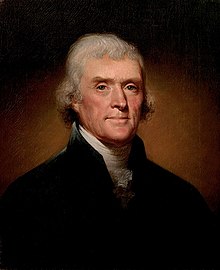
Official Presidential portrait of Thomas Jefferson (by Rembrandt Peale, 1800)(cropped).jpgThought for the Day

American statesman, diplomat, lawyer, architect, and Founding Father who served as the third president of the United States from 1801 to 1809, Thomas Jefferson wrote, “We hold these truths to be self-evident: that all men are created equal; that they are endowed by their Creator with certain unalienable rights; that among these are life, liberty, and the pursuit of happiness.”


A Joke for Today

Image result for 4th of july jokesThere was one little boy in the teacher's class who really struggled to learn.

One day the teacher asked him who signed the Declaration of Independence, and of course he didn't know.

The teacher asked him every day for a week but still he couldn’t give the right answer.

Finally, in desperation, she called the boy’s father to come and see her. She said to him, "Your boy won’t tell me who signed the Declaration of Independence."

The father said to his son, "Come here, boy, and sit down."

The boy duly did as he was told and then his dad said to him, "Now if you signed that stupid thing, just admit it so we can get out of here."

Thursday, April 13, 2017

Bible Readings for April 13, 2017


Today our passages are Joshua 9:3–10:43; Luke 16:19–17:10; Psalm 83:1-18; and Proverbs 13:4. The readings are from the Contemporary English Version. If you find these readings helpful, please consider sending an offering directly to Cove Presbyterian Church, 3404 Main Street, Weirton, West Virginia or through PayPal by using the link below.
 
https://www.paypal.com/cgi-bin/webscr?cmd=_s-xclick&hosted_button_id=NX3WLYQG5864L
 

Joshua 9:3-10:43 (Contemporary English Version)

3The people of Gibeon had also heard what Joshua had done to Jericho and Ai. 4So they decided that some of their men should pretend to be messengers to Israel from a faraway country. [a] The men put worn-out bags on their donkeys and found some old wineskins that had cracked and had been sewn back together. 5Their sandals were old and patched, and their clothes were worn out. They even took along some dry and crumbly bread. 6Then they went to the Israelite camp at Gilgal, where they said to Joshua and the men of Israel, " We have come from a country that is far from here. Please make a peace treaty with us." 7-8The Israelites replied, " But maybe you really live near us. We can't make a peace treaty with you if you live nearby." [b] The Gibeonites [c] said, " If you make a peace treaty with us, we will be your servants." " Who are you?" Joshua asked. " Where do you come from?"
   They answered:
    9We are your servants, and we live far from here. We came because the LORD your God is so famous. We heard what the LORD did in Egypt 10and what he did to those two Amorite kings on the other side of the Jordan: King Og of Bashan, who lived in Ashtaroth, and King Sihon of Heshbon.
    11Our leaders and everyone who lives in our country told us to meet with you and tell you that all of us are your servants. They said to ask you to make a peace treaty with our people. They told us to be sure and take along enough food for our journey. 12See this dry, crumbly bread of ours? It was hot out of the oven when we packed the food on the day we left our homes. 13These cracked wineskins were new when we filled them, and our clothes and sandals are worn out because we have traveled so far.
    14The Israelites tried some of the food, [d] but they did not ask the LORD if he wanted them to make a treaty. 15So Joshua made a peace treaty with the messengers and promised that Israel would not kill their people. Israel's leaders swore that Israel would keep this promise. 16-17A couple of days later, [e] the Israelites found out that these people actually lived in the nearby towns of Gibeon, Chephirah, Beeroth, and Kiriath-Jearim. [f] So the Israelites left the place where they had camped and arrived at the four towns two days later. [g] 18But they did not attack the towns, because the Israelite leaders had sworn in the name of the LORD that they would let these people live. The Israelites complained about their leaders' decision not to attack, 19-21but the leaders reminded them, " We promised these people in the name of the LORD God of Israel that we would let them live, so we must not harm them. If we break our promise, God will punish us. We'll let them live, but we'll make them cut wood and carry water for our people."
    22Joshua told some of his soldiers, " I want to meet with the Gibeonite leaders. Bring them here."
   When the Gibeonites came, Joshua said, " You live close to us. Why did you lie by claiming you lived far away? 23Now you are under a curse, and your people will have to send workers to cut wood and carry water for the place of worship." [h] 24The Gibeonites answered, " The LORD your God told his servant Moses that you were to kill everyone who lives here and take their land for yourselves. We were afraid you would kill us, and so we tricked you into making a peace treaty. But we agreed to be your servants, 25and you are strong enough to do anything to us that you want. We just ask you to do what seems right."
    26Joshua did not let the Israelites kill the Gibeonites, 27but he did tell the Gibeonites that they would have to be servants of the nation of Israel. They would have to cut firewood and bring it for the priests to use for burning sacrifices on the LORD's altar, wherever the LORD decided the altar would be. The Gibeonites would also have to carry water for the priests. And that is still the work of the Gibeonites.
   

Joshua 10

Joshua Commands the Sun To Stand Still
 1King Adonizedek of Jerusalem [i] heard that Joshua had captured and destroyed the town of Ai, and then killed its king as he had done at Jericho. He also learned that the Gibeonites had signed a peace treaty with Israel. 2This frightened Adonizedek and his people. They knew that Gibeon was a large town, as big as the towns that had kings, and even bigger than the town of Ai had been. And all of the men of Gibeon were warriors. 3So Adonizedek sent messages to the kings of four other towns: King Hoham of Hebron, King Piram of Jarmuth, King Japhia of Lachish, and King Debir of Eglon. The messages said, 4" The Gibeonites have signed a peace treaty with Joshua and the Israelites. Come and help me attack Gibeon!" 5When these five Amorite kings called their armies together and attacked Gibeon, 6the Gibeonites sent a message to the Israelite camp at Gilgal: " Joshua, please come and rescue us! The Amorite kings from the hill country have joined together and are attacking us. We are your servants, so don't let us down. Please hurry!"     7Joshua and his army, including his best warriors, left Gilgal. 8" Joshua," the LORD said, " don't be afraid of the Amorites. They will run away when you attack, and I will help you defeat them."
    9Joshua marched all night from Gilgal to Gibeon and made a surprise attack on the Amorite camp. 10The LORD made the enemy panic, and the Israelites started killing them right and left. They [j] chased the Amorite troops up the road to Beth-Horon and kept on killing them, until they reached the towns of Azekah and Makkedah. [k] 11And while these troops were going down through Beth-Horon Pass, [l] the LORD made huge hailstones fall on them all the way to Azekah. More of the enemy soldiers died from the hail than from the Israelite weapons. 12-13The LORD was helping the Israelites defeat the Amorites that day. So about noon, Joshua prayed to the LORD loud enough for the Israelites to hear:
   " Our LORD, make the sun stop
   in the sky over Gibeon,
   and the moon stand still
   over Aijalon Valley." [m] So the sun and the moon
   stopped and stood still
   until Israel defeated its enemies.
   This poem can be found in The Book of Jashar. [n] The sun stood still and didn't go down for about a whole day. 14Never before and never since has the LORD done anything like that for someone who prayed. The LORD was really fighting for Israel. 15After the battle, Joshua and the Israelites went back to their camp at Gilgal.
   
Joshua Kills the Five Enemy Kings
 16While the enemy soldiers were running from the Israelites, the five enemy kings ran away and hid in a cave near Makkedah. 17Joshua's soldiers told him, " The five kings have been found in a cave near Makkedah."     18Joshua answered, " Roll some big stones over the mouth of the cave and leave a few soldiers to guard it. 19But you and everyone else must keep after the enemy troops, because they will be safe if they reach their walled towns. Don't let them get away! The LORD our God is helping us get rid of them." 20So Joshua and the Israelites almost wiped out the enemy soldiers. Only a few safely reached their walled towns.
    21The Israelite army returned to their camp at Makkedah, where Joshua was waiting for them. No one around there dared say anything bad about the Israelites. 22Joshua told his soldiers, " Now, move the rocks from the entrance to the cave and bring those five kings to me."
    23The soldiers opened the entrance to the cave and brought out the kings of Jerusalem, Hebron, Jarmuth, Lachish, and Eglon. 24After Joshua had called the army together, he forced the five kings to lie down on the ground. Then he called his officers forward and told them, " You fought these kings along with me, so put your feet on their necks." The officers did, 25and Joshua continued, " Don't ever be afraid or discouraged. Be brave and strong. This is what the LORD will do to all your enemies."
    26Joshua killed the five kings and told his men to hang each body on a tree. Then at sunset 27he told some of his troops, " Take the bodies down and throw them into the cave where the kings were found. Cover the entrance to the cave with big rocks."
   Joshua's troops obeyed his orders, and those rocks are still there.
   
Joshua Continues the Fighting
 28Later that day, Joshua captured Makkedah and killed its king and everyone else in the town, just as he had done at Jericho.     29Joshua and his army left Makkedah and attacked the town of Libnah. 30The LORD let them capture the town and its king, and they killed the king and everyone else, just as they had done at Jericho.
    31Joshua then led his army to Lachish, and they set up camp around the town. They attacked, 32and the next day the LORD let them capture the town. They killed everyone, as they had done at Libnah. 33King Horam of Gezer arrived to help Lachish, but Joshua and his troops attacked and destroyed him and his army.
    34From Lachish, Joshua took his troops to Eglon, where they set up camp surrounding the town. They attacked, 35captured it that same day, then killed everyone, as they had done at Lachish.
    36Joshua and his army left Eglon and attacked Hebron. 37They captured the town and the nearby villages, then killed everyone, including the king. They destroyed Hebron in the same way they had destroyed Eglon.
    38Joshua and the Israelite army turned and attacked Debir. 39They captured the town, and its nearby villages. Then they destroyed Debir and killed its king, together with everyone else, just as they had done with Hebron and Libnah.
    40Joshua captured towns everywhere in the land: In the central hill country and the foothills to the west, in the Southern Desert and the region that slopes down toward the Dead Sea. Whenever he captured a town, he would kill the king and everyone else, as the LORD God of Israel had commanded. 41Joshua wiped out towns from Kadesh-Barnea to Gaza, everywhere in the region of Goshen, [o] and as far north as Gibeon. 42-43The LORD fought on Israel's side, so Joshua and the Israelite army were able to capture these kings and take their land. They fought one battle after another, then they went back to their camp at Gilgal after capturing all that land.
Footnotes:
  1. Joshua 9:4 So. . . country: One possible meaning for the difficult Hebrew text.
  2. Joshua 9:7 nearby: See Deuteronomy 20.10-18.
  3. Joshua 9:7 Gibeonites: Hebrew " Hivites."
  4. Joshua 9:14 tried. . . food: Probably to see if it really was old or to show that they wanted peace.
  5. Joshua 9:16 A couple. . . later: The Hebrew text has " At the end of three days," meaning two days after the day the treaty was made.
  6. Joshua 9:16 Gibeon, Chephirah, Beeroth, and Kiriath-Jearim: These towns were twenty to thirty miles west of the Israelite camp at Gilgal.
  7. Joshua 9:16 A couple of days. . . later: Or " A couple of days later, the Israelites moved their camp to the area near the towns of Gibeon, Chephirah, Beeroth, and Kiriath-Jearim. When they arrived, they realized that they had made a peace treaty with the people of these nearby towns!"
  8. Joshua 9:23 the place of worship: The Hebrew text has " God's house," which at that time was the sacred tent.
  9. Joshua 10:1 Jerusalem: Jerusalem was not an Israelite city at this time.
  10. Joshua 10:10 They: Or " The LORD."
  11. Joshua 10:10 Makkedah: A total distance of about twenty-five miles.
  12. Joshua 10:11 Beth-Horon Pass: A two-mile long, steeply-sloping valley between the towns of Upper Beth-Horon and Lower Beth-Horon.
  13. Joshua 10:12 Aijalon Valley: A valley southwest of Beth-Horon Pass.
  14. Joshua 10:12 Book of Jashar: This book may have been a collection of ancient war songs.
  15. Joshua 10:41 Goshen: A region between the hill country of Judah and the desert further south. Not the same Goshen as in Genesis 47.4-6.

Luke 16:19-17:10 (Contemporary English Version)

Lazarus and the Rich Man
 19There was once a rich man who wore expensive clothes and every day ate the best food. 20But a poor beggar named Lazarus was brought to the gate of the rich man's house. 21He was happy just to eat the scraps that fell from the rich man's table. His body was covered with sores, and dogs kept coming up to lick them. 22The poor man died, and angels took him to the place of honor next to Abraham. [a] The rich man also died and was buried. 23He went to hell [b] and was suffering terribly. When he looked up and saw Abraham far off and Lazarus at his side, 24he said to Abraham, "Have pity on me! Send Lazarus to dip his finger in water and touch my tongue. I'm suffering terribly in this fire." 25Abraham answered, "My friend, remember that while you lived, you had everything good, and Lazarus had everything bad. Now he is happy, and you are in pain. 26And besides, there is a deep ditch between us, and no one from either side can cross over."     27But the rich man said, "Abraham, then please send Lazarus to my father's home. 28Let him warn my five brothers, so they won't come to this horrible place."
    29Abraham answered, "Your brothers can read what Moses and the prophets [c] wrote. They should pay attention to that." 30Then the rich man said, "No, that's not enough! If only someone from the dead would go to them, they would listen and turn to God."
    31So Abraham said, "If they won't pay attention to Moses and the prophets, they won't listen even to someone who comes back from the dead."
   

Luke 17

Faith and Service
(Matthew 18.6,7,21,22; Mark 9.42)
 1Jesus said to his disciples:    There will always be something that causes people to sin. But anyone who causes them to sin is in for trouble. A person who causes even one of my little followers to sin 2would be better off thrown into the ocean with a heavy stone tied around their neck. 3So be careful what you do.
   Correct any followers [d] of mine who sin, and forgive the ones who say they are sorry. 4Even if one of them mistreats you seven times in one day and says, "I am sorry," you should still forgive that person. 5The apostles said to the Lord, "Make our faith stronger!"
    6Jesus replied:
   If you had faith no bigger than a tiny mustard seed, you could tell this mulberry tree to pull itself up, roots and all, and to plant itself in the ocean. And it would!
    7If your servant comes in from plowing or from taking care of the sheep, would you say, "Welcome! Come on in and have something to eat"? 8No, you wouldn't say that. You would say, "Fix me something to eat. Get ready to serve me, so I can have my meal. Then later on you can eat and drink." 9Servants don't deserve special thanks for doing what they are supposed to do. 10And that's how it should be with you. When you've done all you should, then say, "We are merely servants, and we have simply done our duty."
   
Footnotes:
  1. Luke 16:22 the place of honor next to Abraham: The Jewish people thought that heaven would be a banquet that God would give for them. Abraham would be the most important person there, and the guest of honor would sit next to him.
  2. Luke 16:23 hell: The Greek text has " hades," which the Jewish people often thought of as the place where the dead wait for the final judgment.
  3. Luke 16:29 Moses and the prophets: The Jewish Scriptures, that is, the Old Testament.
  4. Luke 17:3 followers: The Greek text has " brothers," which is often used in the New Testament for followers of Jesus.

Psalm 83:1-18 (Contemporary English Version)

Psalm 83

(A song and a psalm by Asaph.)
God Rules All the Earth
 1Our God, don't just sit there,    silently doing nothing!
    2Your hateful enemies
   are turning against you
   and rebelling.
    3They are sly, and they plot
   against those you treasure.
    4They say, "Let's wipe out
   the nation of Israel
   and make sure that no one
   remembers its name!"
    5All of them fully agree
   in their plans against you,
   and among them are
    6Edom and the Ishmaelites;
   Moab and the Hagrites;
    7Gebal, Ammon, and Amalek;
   Philistia and Phoenicia. [a] 8Even Assyria has joined forces
   with Moab and Ammon. [b] 9Our Lord, punish all of them
   as you punished Midian.
   Destroy them, as you destroyed
   Sisera and Jabin
   at Kishon Creek 10near Endor,
   and let their bodies rot.
    11Treat their leaders as you did
   Oreb and Zeeb,
   Zebah and Zalmunna.
    12All of them said, "We'll take
   God's valuable land!"
    13Our God, scatter them around
   like dust in a whirlwind.
    14Just as flames destroy forests
   on the mountains,
    15pursue and terrify them
   with storms of your own.
    16Make them blush with shame,
   until they turn and worship
   you, our LORD.
    17Let them be forever ashamed
   and confused.
   Let them die in disgrace.
    18Make them realize that you
   are the LORD Most High,
   the only ruler of earth!
   
Footnotes:
  1. Psalm 83:7 Phoenicia: The Hebrew text has " Tyre," the main city in Phoenicia.
  2. Psalm 83:8 Moab and Ammon: The Hebrew text has " the descendants of Lot," whose older daughter was the mother of the Moabites and whose younger daughter was the mother of the Ammonites (see Genesis 19.30-38).

Proverbs 13:4 (Contemporary English Version)

4No matter how much you want,
   laziness won't help a bit,
   but hard work will reward you
   with more than enough.


Verse of the Day

“All of us have sinned and fallen short of God's glory. But God treats us much better than we deserve, and because of Christ Jesus, he freely accepts us and sets us free from our sins.” - Romans 3:23-24
Today's passage is from the Contemporary English Version.


Official Presidential portrait of Thomas Jefferson (by Rembrandt Peale, 1800).jpg
Thought for the Day

American Founding Father who was the principal author of the Declaration of Independence and later served as the third President of the United States from 1801 to 1809, Thomas Jefferson wrote, “I had rather be shut up in a very modest cottage with my books, my family and a few old friends, dining on simple bacon, and letting the world roll on as it liked, than to occupy the most splendid post, which any human power can give.”

Tuesday, December 1, 2015

Bible Readings for December 1, 2015


Today our passages are Daniel 8:1-27; 1 John 2:1-17; Psalm 120:1-7; and Proverbs 28:25-26. The readings are from the Contemporary English Version.  If you find these readings helpful, please consider sending an offering directly to Cove Presbyterian Church, 3404 Main Street, Weirton, West Virginia or through PayPal. 


Daniel 8:1-27 (Contemporary English Version)

Daniel 8

Vision of a Ram and a Goat

Daniel wrote:
In the third year of King Belshazzar of Babylonia,[a] I had a second vision in which I was in Susa, the chief city of Babylonia’s Elam Province. I was beside the Ulai River,[b] when I looked up and saw a ram standing there with two horns on its head—both of them were long, but the second one was longer than the first. The ram went charging toward the west, the north, and the south. No other animals were strong enough to oppose him, and nothing could save them from his power. So he did as he pleased and became even more powerful.
I kept on watching and saw a goat come from the west and charge across the entire earth, without even touching the ground. Between his eyes was a powerful horn,[c] and with tremendous anger the goat started toward the ram that I had seen beside the river.[d] The goat was so fierce that its attack broke both horns of the ram, leaving him powerless. Then the goat stomped on the ram, and no one could do anything to help. After this, the goat became even more powerful. But at the peak of his power, his mighty horn was broken, and four other mighty horns took its place—one pointing to the north and one to the east, one to the south and one to the west.
A little horn came from one of these, and its power reached to the south, the east, and even to the holy land.[e] 10 It became so strong that it attacked the stars in the sky, which were heaven’s army.[f] Then it threw some of them down to the earth and stomped on them. 11-12 It humiliated heaven’s army and dishonored its leader[g] by keeping him from offering the daily sacrifices. In fact, it was so terrible that it even disgraced the temple and wiped out true worship. It also did everything else it wanted to do.
13 Then one of the holy angels asked another, “When will the daily sacrifices be offered again? What about this horrible rebellion? When will the temple and heaven’s army no longer be trampled in the dust?”
14 The other answered, “It will be two thousand three hundred evenings and mornings before the temple is dedicated and in use again.”

Gabriel Interprets the Vision

15 Daniel wrote:
I was trying to figure out the meaning of the vision, when someone suddenly appeared there beside me. 16 And from beside the Ulai River,[h] a voice like that of a human said, “Gabriel, help him understand the vision.”
17 Gabriel came over, and I fell to the ground in fear. Then he said, “You are merely a human, but you need to understand that this vision is about the end of time.”
18 While he was speaking, I fell facedown in a deep sleep. But he lifted me to my feet 19 and said:
Listen, and I will tell you what will happen at the end of time, when God has chosen to show his anger. 20 The two horns of the ram are the kings of Media and Persia, 21 the goat is the kingdom of Greece, and the powerful horn between his eyes is the first of its kings. 22 After this horn is broken, four other kingdoms will appear, but they won’t be as strong.
23 When these rulers have become as evil as possible, their power will end, and then a king who is dangerous and cannot be trusted will appear. 24 He will gain strength, but not on his own, and he will cause terrible destruction. He will wipe out powerful leaders and God’s people as well.25 His deceitful lies will make him so successful, that he will think he is really great. Suddenly he will kill many people, and he will even attack God, the Supreme Ruler. But God will crush him!
26 This vision about the evenings and mornings is true, but these things won’t happen for a long time, so don’t tell it to others.
27 After this, I was so worn out and weak that it was several days before I could get out of bed and go about my duties for the king. I was disturbed by this vision that made no sense to me.

Footnotes:

  1. 8.1 third year. . . Babylonia: 552 B.C., two years after the first vision (see 7.1,2).
  2. 8.2 River: Or “Gate.”
  3. 8.5 powerful horn: Hebrew “horn of vision.”
  4. 8.6 river: See the note at 8.2.
  5. 8.9 holy land: Hebrew “the lovely land.”
  6. 8.10 heaven’s army: In verses 10-13 the Hebrew word translated “heaven’s army” may also mean “God’s people.”
  7. 8.11,12 leader: Hebrew “prince.”
  8. 8.16 River: See the note at 8.2.

1 John 2:1-17 (Contemporary English Version)

1 John 2

Christ Helps Us

My children, I am writing this so that you won’t sin. But if you do sin, Jesus Christ always does the right thing, and he will speak to the Father for us.Christ is the sacrifice that takes away our sins and the sins of all the world’s people.
When we obey God, we are sure that we know him. But if we claim to know him and don’t obey him, we are lying and the truth isn’t in our hearts. We truly love God only when we obey him as we should, and then we know that we belong to him. If we say we are his, we must follow the example of Christ.

The New Commandment

My dear friends, I am not writing to give you a new commandment. It is the same one that you were first given, and it is the message you heard. But it really is a new commandment, and you know its true meaning, just as Christ does. You can see the darkness fading away and the true light already shining.
If we claim to be in the light and hate someone, we are still in the dark.10 But if we love others, we are in the light, and we don’t cause problems for them.[a] 11 If we hate others, we are living and walking in the dark. We don’t know where we are going, because we can’t see in the dark.
12 Children, I am writing you,
    because your sins
have been forgiven
    in the name of Christ.
13 Parents, I am writing you,
    because you have known
the one who was there
    from the beginning.
Young people, I am writing you,
because you have defeated
    the evil one.
14 Children, I am writing you,
because you have known
    the Father.
Parents, I am writing you,
    because you have known
the one who was there
    from the beginning.
Young people, I am writing you,
    because you are strong.
God’s message is firm
    in your hearts,
and you have defeated
    the evil one.
15 Don’t love the world or anything that belongs to the world. If you love the world, you cannot love the Father. 16 Our foolish pride comes from this world, and so do our selfish desires and our desire to have everything we see. None of this comes from the Father. 17 The world and the desires it causes are disappearing. But if we obey God, we will live forever.

Footnotes:

  1. 2.10 and we don’t cause problems for them: Or “and we can see anything that might make us fall.”

Psalm 120:1-7 (Contemporary English Version)

A Prayer for the Lord’s Help

When I am in trouble, I pray,
    “Come and save me, Lord,
    from deceitful liars!”
What punishment is fitting
    for you deceitful liars?
    Your reward should be
    sharp and flaming arrows!
But I must live as a foreigner
among the people of Meshech
    and in the tents of Kedar.[a]
I have spent too much time
    living among people
    who hate peace.
I am in favor of peace,
but when I speak of it,
    all they want is war.

Footnotes:

  1. 120.5 Meshech. . . Kedar: Meshech was a country near the Black Sea, and Kedar was a tribe of the Syrian desert.

Proverbs 28:25-26 (Contemporary English Version)


25 
25 Selfish people cause trouble,
    but you will live a full life
    if you trust the Lord.
26 Only fools would trust
    what they alone think,
    but if you live by wisdom,
    you will do all right.


Verse of the Day

“In the beginning was the one who is called the Word. The Word was with God and was truly God. From the very beginning the Word was with God. The Word became a human being and lived here with us. We saw his true glory, the glory of the only Son of the Father. From him all the kindness and all the truth of God have come down to us.” - John 1:1-2, 14
Today's passage is from the Contemporary English Version.


Portrait of Thomas Jefferson by Rembrandt Peale
Thought for the Day

American lawyer and Founding Father, principal author of the Declaration of Independence (1776) the second Vice President of the United States (1797–1801) and the third President (1801–1809), Thomas Jefferson wrote, “Honesty is the first chapter in the book of wisdom.”