Read the Bible in a Year

Each day, we'll post passages so that you can read the Bible in one year. This is part of The Colossians 13:16 Project, sponsored by Cove Presbyterian Church, 3404 Main Street, Weirton, West Virginia. You're invited to worship with us Sundays, at 11:00 a.m. or Saturdays, at 6:30 p.m. You may also want to consider joining one our adult Bible Studies: Thursdays at 12:00 noon and Sundays at 9:30 a.m. and 10:00 a.m. We also have a full range of programs for children. If you want more information about the church, check out the other blogs. And please feel free to leave any comments.

The Bible in a Year is a ministry of Cove Presbyterian Church. We need your support to keep posting. If you find it helpful, you can support this blog by your contributions. They may be sent to Cove Presbyterian Church, 3404 Main Street, Weirton, WV 26062. You can also use the PayPal link below:

Image result for paypal donate
Showing posts with label Oliver Wendell Holmes. Show all posts

Friday, March 8, 2019

Bible Readings for March 8, 2019

Today our passages are Numbers 10:1–11:23; Mark 14:1-21; Psalm 51:1-19; and Proverbs 10:31-32. The readings are the Contemporary English Version. If you find these readings helpful, please consider sending an offering directly to Cove Presbyterian Church, 3404 Main Street, Weirton, West Virginia or through PayPal by using the link below. 
https://www.paypal.com/cgi-bin/webscr?cmd=_s-xclick&hosted_button_id=NX3WLYQG5864L


Numbers 10-11:23 (Contemporary English Version)


Numbers 10

The Silver Trumpets
 1The LORD told Moses:     2Have someone make two trumpets out of hammered silver. These will be used to call the people together and to give the signal for moving your camp. 3If both trumpets are blown, everyone is to meet with you at the entrance to the sacred tent. 4But if just one is blown, only the twelve tribal leaders need to come together. 
    5-6Give a signal on a trumpet when it is time to break camp. The first blast will be the signal for the tribes camped on the east side, and the second blast will be the signal for those on the south. 7But when you want everyone to come together, sound a different signal on the trumpet. 8The priests of Aaron's family will be the ones to blow the trumpets, and this law will never change. 
    9Whenever you go into battle against an enemy attacking your land, give a warning signal on the trumpets. Then I, the LORD, will hear it and rescue you. 10During the celebration of the New Moon Festival and other religious festivals, sound the trumpets while you offer sacrifices. This will be a reminder that I am the LORD your God.     
The Israelites Begin Their Journey
 11On the twentieth day of the second month a<="" value="[a]" >[] of that same year, the cloud over the sacred tent moved on. 12So the Israelites broke camp and left the Sinai Desert. And some time later, the cloud stopped in the Paran Desert. [b<="">] 13This was the first time the LORD had told Moses to command the people of Israel to move on. 14Judah and the tribes that camped alongside it marched out first, carrying their banner. Nahshon son of Amminadab was the leader of the Judah tribe, 15Nethanel son of Zuar was the leader of the Issachar tribe, 16and Eliab son of Helon was the leader of the Zebulun tribe.     17The sacred tent had been taken down, and the Gershonites and the Merarites carried it, marching behind the Judah camp. 
    18Reuben and the tribes that camped alongside it marched out second, carrying their banner. Elizur son of Shedeur was the leader of the Reuben tribe, 19Shelumiel son of Zurishaddai was the leader of the Simeon tribe, 20and Eliasaph son of Deuel was the leader of the Gad tribe. 
    21Next were the Kohathites, carrying the objects for the sacred tent, which was to be set up before they arrived at the new camp. 
    22Ephraim and the tribes that camped alongside it marched next, carrying their banner. Elishama son of Ammihud was the leader of the Ephraim tribe, 23Gamaliel son of Pedahzur was the leader of the Manasseh tribe, 24and Abidan son of Gideoni was the leader of the Benjamin tribe. 
    25Dan and the tribes that camped alongside it were to protect the Israelites against an attack from behind, and so they marched last, carrying their banner. Ahiezer son of Ammishaddai was the leader of the tribe of Dan, 26Pagiel son of Ochran was the leader of the Asher tribe, 27and Ahira son of Enan was the leader of the Naphtali tribe. 
    28This was the order in which the Israelites marched each time they moved their camp. 
    29Hobab [c<="">] the Midianite, the father-in-law of Moses, was there. And Moses said to him, " We're leaving for the place the LORD has promised us. He has said that all will go well for us. So come along, and we will make sure that all goes well for you." 30" No, I won't go," Hobab answered. " I'm returning home to be with my own people." 
    31" Please go with us!" Moses said. " You can be our guide because you know the places to camp in the desert. 32Besides that, if you go, we will give you a share of the good things the LORD gives us." 
    33The people of Israel began their journey from Mount Sinai. [d<="">] They traveled three days, and the Levites who carried the sacred chest led the way, so the LORD could show them where to camp. 34And the cloud always stayed with them. 35Each day as the Israelites began their journey, Moses would pray, " Our LORD, defeat your enemies and make them run!" 36And when they stopped to set up camp, he would pray, " Our LORD, stay close to Israel's thousands and thousands of people." 
    

Numbers 11

The Israelites Complain
 1One day the Israelites started complaining about their troubles. The LORD heard them and became so angry that he destroyed the outer edges of their camp with fire.     2When the people begged Moses to help, he prayed, and the fire went out. 3They named the place " Burning," [e<="">] because in his anger the LORD had set their camp on fire. 
The People Grumble about Being Hungry
 4One day some worthless foreigners among the Israelites became greedy for food, and even the Israelites themselves began moaning, " We don't have any meat! 5In Egypt we could eat all the fish we wanted, and there were cucumbers, melons, onions, and garlic. 6But we're starving out here, and the only food we have is this manna."     7The manna was like small whitish seeds 8-9and tasted like something baked with sweet olive oil. It appeared at night with the dew. In the morning the people would collect the manna, grind or crush it into flour, then boil it and make it into thin wafers. 
    10The Israelites stood around their tents complaining. Moses heard them and was upset that they had made the LORD angry. 11He prayed: 
   I am your servant, LORD, so why are you doing this to me? What have I done to deserve this? You've made me responsible for all these people, 12but they're not my children. You told me to nurse them along and to carry them to the land you promised their ancestors. 13They keep whining for meat, but where can I get meat for them? 14This job is too much for me. How can I take care of all these people by myself? 15If this is the way you're going to treat me, just kill me now and end my miserable life!     
Seventy Leaders Are Chosen To Help Moses
 16The LORD said to Moses:    Choose seventy of Israel's respected leaders and go with them to the sacred tent. 17While I am talking with you there, I will give them some of your authority, so they can share responsibility for my people. You will no longer have to care for them by yourself. 
    18As for the Israelites, I have heard them complaining about not having meat and about being better off in Egypt. So tell them to make themselves acceptable to me, because tomorrow they will have meat. 19-20In fact, they will have meat day after day for a whole month--not just a few days, or even ten or twenty. They turned against me and wanted to return to Egypt. Now they will eat meat until they get sick of it. 
    21Moses replied, " At least six hundred thousand grown men are here with me. How can you say there will be enough meat to feed them and their families for a whole month? 22Even if we butchered all of our sheep and cattle, or caught every fish in the sea, we wouldn't have enough to feed them." 
    23The LORD answered, " I can do anything! Watch and you'll see my words come true." 
    
Footnotes:
  1. Numbers 10:11 second month: See the note at 1.1.
  2. Numbers 10:12 the Paran Desert: Probably a general name for the northernmost part of the Sinai Desert.
  3. Numbers 10:29 Hobab: Hebrew " Hobab son of Reuel."
  4. Numbers 10:33 Mount Sinai: Hebrew " the LORD's mountain."
  5. Numbers 11:3 Burning: Or " Taberah."

Mark 14:1-21 (Contemporary English Version)


Mark 14

A Plot To Kill Jesus
(Matthew 26.1-5; Luke 22.1,2; John 11.45-53)
 1It was now two days before Passover and the Festival of Thin Bread. The chief priests and the teachers of the Law of Moses were planning how they could sneak around and have Jesus arrested and put to death. 2They were saying, "We must not do it during the festival, because the people will riot."     
At Bethany
(Matthew 26.6-13; John 12.1-8)
 3Jesus was eating in Bethany at the home of Simon, who once had leprosy, a<="" value="[a]" >[] when a woman came in with a very expensive bottle of sweet-smelling perfume. [b<="">] After breaking it open, she poured the perfume on Jesus' head. 4This made some of the guests angry, and they complained, "Why such a waste? 5We could have sold this perfume for more than three hundred silver coins and given the money to the poor!" So they started saying cruel things to the woman.     6But Jesus said: 
   Leave her alone! Why are you bothering her? She has done a beautiful thing for me. 7You will always have the poor with you. And whenever you want to, you can give to them. But you won't always have me here with you. 8She has done all she could by pouring perfume on my body to prepare it for burial. 9You may be sure that wherever the good news is told all over the world, people will remember what she has done. And they will tell others.     
Judas and the Chief Priests
(Matthew 26.14-16; Luke 22.3-6)
 10Judas Iscariot [c<="">] was one of the twelve disciples. He went to the chief priests and offered to help them arrest Jesus. 11They were glad to hear this, and they promised to pay him. So Judas started looking for a good chance to betray Jesus.     
Jesus Eats with His Disciples
(Matthew 26.17-25; Luke 22.7-14,21-23; John 13.21-30)
 12It was the first day of the Festival of Thin Bread, and the Passover lambs were being killed. Jesus' disciples asked him, "Where do you want us to prepare the Passover meal?"     13Jesus said to two of the disciples, "Go into the city, where you will meet a man carrying a jar of water. [d<="">] Follow him, 14and when he goes into a house, say to the owner, `Our teacher wants to know if you have a room where he can eat the Passover meal with his disciples.' 15The owner will take you upstairs and show you a large room furnished and ready for you to use. Prepare the meal there." 
    16The two disciples went into the city and found everything just as Jesus had told them. So they prepared the Passover meal. 
    17-18While Jesus and the twelve disciples were eating together that evening, he said, "The one who will betray me is now eating with me." 
    19This made the disciples sad, and one after another they said to Jesus, "You surely don't mean me!" 
    20He answered, "It is one of you twelve men who is eating from this dish with me. 21The Son of Man will die, just as the Scriptures say. But it is going to be terrible for the one who betrays me. That man would be better off if he had never been born." 
    
Footnotes:
  1. Mark 14:3 leprosy: In biblical times the word "leprosy" was used for many different skin diseases.
  2. Mark 14:3 sweet-smelling perfume: The Greek text has "perfume made of pure spikenard," a plant used to make perfume.
  3. Mark 14:10 Iscariot: See the note at 3.19.
  4. Mark 14:13 a man carrying a jar of water: A male slave carrying water could mean that the family was rich.

Psalm 51:1-19 (Contemporary English Version)


Psalm 51

(For the music leader. A psalm by David when the prophet Nathan came to him after David had been with Bathsheba.)
A Prayer for Forgiveness
 1You are kind, God!    Please have pity on me. 
   You are always merciful! 
   Please wipe away my sins. 
    2Wash me clean from all 
   of my sin and guilt. 
    3I know about my sins, 
   and I cannot forget 
   my terrible guilt. 
    4You are really the one 
   I have sinned against; 
   I have disobeyed you 
   and have done wrong. 
   So it is right and fair for you 
   to correct and punish me. 
    5I have sinned and done wrong 
   since the day I was born. 
    6But you want complete honesty, 
   so teach me true wisdom. 
    7Wash me with hyssop a<="" value="[a]" >[] until I am clean 
   and whiter than snow. 
    8Let me be happy and joyful! 
   You crushed my bones, 
   now let them celebrate. 
    9Turn your eyes from my sin 
   and cover my guilt. 
    10Create pure thoughts in me 
   and make me faithful again. 
    11Don't chase me away from you 
   or take your Holy Spirit 
   away from me. 
    12Make me as happy as you did 
   when you saved me; 
   make me want to obey! 
    13I will teach sinners your Law, 
   and they will return to you. 
    14Keep me from any deadly sin. 
   Only you can save me! 
   Then I will shout and sing 
   about your power to save. 
    15Help me to speak, 
   and I will praise you, Lord. 
    16Offerings and sacrifices 
   are not what you want. 
    17The way to please you 
   is to feel sorrow 
   deep in our hearts. 
   This is the kind of sacrifice 
   you won't refuse. 
    18Please be willing, Lord, 
   to help the city of Zion 
   and to rebuild its walls. 
    19Then you will be pleased 
   with the proper sacrifices, 
   and we will offer bulls 
   on your altar once again. 
    
Footnotes:
  1. Psalm 51:7 hyssop: A small bush with bunches of small, white flowers. It was sometimes used as a symbol for making a person clean from sin.

Proverbs 10:31-32 (Contemporary English Version)


31Honest people speak sensibly,
   but deceitful liars
   will be silenced.
    32If you obey the Lord,
   you will always know
   the right thing to say.
   But no one will trust you
   if you tell lies.


Verse of the Day

“[Paul Gives Thanks]Praise God, the Father of our Lord Jesus Christ! The Father is a merciful God, who always gives us comfort. He comforts us when we are in trouble, so that we can share that same comfort with others in trouble.” - 2 Corinthians 1:3-4 
Today's passage is from the Contemporary English Version.

Oliver Wendell Holmes Jr circa 1930-edit.jpgThought for the Day

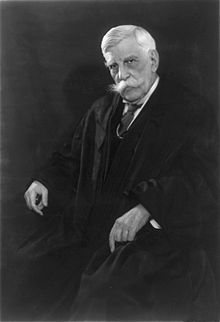
American jurist who served as an Associate Justice of the Supreme Court of the United States from 1902 to 1932, and as Acting Chief Justice of the United States in January–February 1930, Oliver Wendell Holmes, Jr. wrote, “The main part of intellectual education is not the acquisition of facts, but learning how to make facts live.”

Related imageA Joke for Today

A woman was telling her friend, "It was I who made my husband a millionaire."

"And what was he before you married him?" asked the friend. 

The woman replied, "A billionaire."

Tuesday, July 24, 2018

Bible Readings for July 24, 2018

Today our passages are 2 Chronicles 11:1–13:22; Romans 8:22-39; Psalm 18:37-50; and Proverbs 19:27-29. The readings are from The Message by Eugene H. Peterson. If you find these readings helpful, please consider sending an offering directly to Cove Presbyterian Church, 3404 Main Street, Weirton, West Virginia or through PayPal by using the link below.
Image result for paypal banner


2 Chronicles 11-13:22 (The Message)


2 Chronicles 11


 1When Rehoboam got back to Jerusalem he called up the men of the tribes of Judah and Benjamin, 180,000 of their best soldiers, to go to war against Israel and recover the kingdom.  2-4 At the same time the word of God came to Shemaiah, a holy man, "Tell this to Rehoboam son of Solomon, king of Judah, along with all the Israelites in Judah and Benjamin, This is God's word: Don't march out; don't fight against your brothers the Israelites. Go back home, every last one of you; I'm in charge here." And they did it; they did what God said and went home.
 5-12 Rehoboam continued to live in Jerusalem but built up a defense system for Judah all around: in Bethlehem, Etam, Tekoa, Beth Zur, Soco, Adullam, Gath, Mareshah, Ziph, Adoraim, Lachish, Azekah, Zorah, Aijalon, and Hebron—a line of defense protecting Judah and Benjamin. He beefed up the fortifications, appointed commanders, and put in supplies of food, olive oil, and wine. He installed arms—large shields and spears—in all the forts, making them very strong. So Judah and Benjamin were secure for the time.
 13-17 The priests and Levites from all over Israel came and made themselves available to Rehoboam. The Levites left their pastures and properties and moved to Judah and Jerusalem because Jeroboam and his sons had dismissed them from the priesthood of God and replaced them with his own priests to preside over the worship centers at which he had installed goat and calf demon-idols. Everyone from all the tribes of Israel who determined to seek the God of Israel migrated with the priests and Levites to Jerusalem to worship there, sacrificing to the God of their ancestors. That gave a tremendous boost to the kingdom of Judah. They stuck with Rehoboam son of Solomon for three years, loyal to the ways of David and Solomon for this period.
 18-21 Rehoboam married Mahalath daughter of Jerimoth, David's son, and Abihail daughter of Eliab, Jesse's son. Mahalath bore him Jeush, Shemariah, and Zaham. Then he married Maacah, Absalom's daughter, and she bore him Abijah, Attai, Ziza, and Shelomith. Maacah was Rehoboam's favorite wife; he loved her more than all his other wives and concubines put together (and he had a lot—eighteen wives and sixty concubines who produced twenty-eight sons and sixty daughters!).
 22-23 Rehoboam designated Abijah son of Maacah as the "first son" and leader of the brothers—he intended to make him the next king. He was shrewd in deploying his sons in all the fortress cities that made up his defense system in Judah and Benjamin; he kept them happy with much food and many wives. 

2 Chronicles 12


 1 By the time Rehoboam had secured his kingdom and was strong again, he, and all Israel with him, had virtually abandoned God and his ways.
2-4 In Rehoboam's fifth year, because he and the people were unfaithful to God, Shishak king of Egypt invaded as far as Jerusalem. He came with twelve hundred chariots and sixty thousand cavalry, and soldiers from all over—the Egyptian army included Libyans, Sukkites, and Ethiopians. They took the fortress cities of Judah and advanced as far as Jerusalem itself.
 5 Then the prophet Shemaiah, accompanied by the leaders of Judah who had retreated to Jerusalem before Shishak, came to Rehoboam and said, "God's word: You abandoned me; now I abandon you to Shishak."
 6 The leaders of Israel and the king were repentant and said, "God is right."
 7-8 When God saw that they were humbly repentant, the word of God came to Shemaiah: "Because they are humble, I'll not destroy them—I'll give them a break; I won't use Shishak to express my wrath against Jerusalem. What I will do, though, is make them Shishak's subjects—they'll learn the difference between serving me and serving human kings."
 9 Then Shishak king of Egypt attacked Jerusalem. He plundered the treasury of The Temple of God and the treasury of the royal palace—he took everything he could lay his hands on. He even took the gold shields that Solomon had made.
 10-11 King Rehoboam replaced the gold shields with bronze shields and gave them to the guards who were posted at the entrance to the royal palace. Whenever the king went to God's Temple, the guards went with him carrying the shields, but they always returned them to the guardroom.
 12 Because Rehoboam was repentant, God's anger was blunted, so he wasn't totally destroyed. The picture wasn't entirely bleak—there were some good things going on in Judah.
 13-14 King Rehoboam regrouped and reestablished his rule in Jerusalem. He was forty-one years old when he became king and continued as king for seventeen years in Jerusalem, the city God chose out of all the tribes of Israel as the special presence of his Name. His mother was Naamah from Ammon. But the final verdict on Rehoboam was that he was a bad king—God was not important to him; his heart neither cared for nor sought after God.
 15-16 The history of Rehoboam, from start to finish, is written in the memoirs of Shemaiah the prophet and Iddo the seer that contain the family trees. There was war between Rehoboam and Jeroboam the whole time. Rehoboam died and was buried with his ancestors in the City of David. His son Abijah ruled after him. 

2 Chronicles 13

King Abijah
 1-2 In the eighteenth year of the rule of King Jeroboam, Abijah took over the throne of Judah. He ruled in Jerusalem three years. His mother was Maacah daughter of Uriel of Gibeah.  2-3 War broke out between Abijah and Jeroboam. Abijah started out with 400,000 of his best soldiers; Jeroboam countered with 800,000 of his best.
 4-7 Abijah took a prominent position on Mount Zemaraim in the hill country of Ephraim and gave this speech: "Listen, Jeroboam and all Israel! Don't you realize that God, the one and only God of Israel, established David and his sons as the permanent rulers of Israel, ratified by a 'covenant of salt'—God's kingdom ruled by God's king? And what happened? Jeroboam, the son of Solomon's slave Nebat, rebelled against his master. All the riffraff joined his cause and were too much for Rehoboam, Solomon's true heir. Rehoboam didn't know his way around—besides he was a real wimp; he couldn't stand up against them.
 8-9 "Taking advantage of that weakness, you are asserting yourself against the very rule of God that is delegated to David's descendants—you think you are so big with your huge army backed up by the golden-calf idols that Jeroboam made for you as gods! But just look at what you've done—you threw out the priests of God, the sons of Aaron, and the Levites, and made priests to suit yourselves, priests just like the pagans have. Anyone who shows up with enough money to pay for it can be a priest! A priest of No-God!
 10-11 "But for the rest of us in Judah, we're sticking with God. We have not traded him in for the latest model—we're keeping the tried-and-true priests of Aaron to lead us to God and the Levites to lead us in worship by sacrificing Whole-Burnt-Offerings and aromatic incense to God at the daily morning and evening prayers, setting out fresh holy bread on a clean table, and lighting the lamps on the golden Lampstand every night. We continue doing what God told us to in the way he told us to do it; but you have rid yourselves of him.
 12 "Can't you see the obvious? God is on our side; he's our leader. And his priests with trumpets are all ready to blow the signal to battle. O Israel—don't fight against God, the God of your ancestors. You will not win this battle."
 13-18 While Abijah was speaking, Jeroboam had sent men around to take them by surprise from the rear: Jeroboam in front of Judah and the ambush behind. When Judah looked back, they saw they were attacked front and back. They prayed desperately to God, the priests blew their trumpets, and the soldiers of Judah shouted their battle cry. At the battle cry, God routed Jeroboam and all Israel before Abijah and Judah. The army of Israel scattered before Judah; God gave them the victory. Abijah and his troops slaughtered them—500,000 of Israel's best fighters were killed that day. The army of Israel fell flat on its face—a humiliating defeat. The army of Judah won hands down because they trusted God, the God of their ancestors.
 19-21 Abijah followed up his victory by pursuing Jeroboam, taking the towns of Bethel, Jeshanah, and Ephron with their surrounding villages. Jeroboam never did recover from his defeat while Abijah lived. Later on God struck him down and he died. Meanwhile Abijah flourished; he married fourteen wives and ended up with a family of twenty-two sons and sixteen daughters.
 22 The rest of the history of Abijah, what he did and said, is written in the study written by Iddo the prophet. 

Romans 8:22-39 (The Message)


 22-25All around us we observe a pregnant creation. The difficult times of pain throughout the world are simply birth pangs. But it's not only around us; it's within us. The Spirit of God is arousing us within. We're also feeling the birth pangs. These sterile and barren bodies of ours are yearning for full deliverance. That is why waiting does not diminish us, any more than waiting diminishes a pregnant mother. We are enlarged in the waiting. We, of course, don't see what is enlarging us. But the longer we wait, the larger we become, and the more joyful our expectancy.
 26-28Meanwhile, the moment we get tired in the waiting, God's Spirit is right alongside helping us along. If we don't know how or what to pray, it doesn't matter. He does our praying in and for us, making prayer out of our wordless sighs, our aching groans. He knows us far better than we know ourselves, knows our pregnant condition, and keeps us present before God. That's why we can be so sure that every detail in our lives of love for God is worked into something good.
 29-30God knew what he was doing from the very beginning. He decided from the outset to shape the lives of those who love him along the same lines as the life of his Son. The Son stands first in the line of humanity he restored. We see the original and intended shape of our lives there in him. After God made that decision of what his children should be like, he followed it up by calling people by name. After he called them by name, he set them on a solid basis with himself. And then, after getting them established, he stayed with them to the end, gloriously completing what he had begun.
 31-39So, what do you think? With God on our side like this, how can we lose? If God didn't hesitate to put everything on the line for us, embracing our condition and exposing himself to the worst by sending his own Son, is there anything else he wouldn't gladly and freely do for us? And who would dare tangle with God by messing with one of God's chosen? Who would dare even to point a finger? The One who died for us—who was raised to life for us!—is in the presence of God at this very moment sticking up for us. Do you think anyone is going to be able to drive a wedge between us and Christ's love for us? There is no way! Not trouble, not hard times, not hatred, not hunger, not homelessness, not bullying threats, not backstabbing, not even the worst sins listed in Scripture:

   They kill us in cold blood because they hate you.
   We're sitting ducks; they pick us off one by one.
None of this fazes us because Jesus loves us. I'm absolutely convinced that nothing—nothing living or dead, angelic or demonic, today or tomorrow, high or low, thinkable or unthinkable—absolutely nothing can get between us and God's love because of the way that Jesus our Master has embraced us.


Psalm 18:37-50 (The Message)


 31-42 Is there any god like God?
      Are we not at bedrock?
   Is not this the God who armed me,
      then aimed me in the right direction?
   Now I run like a deer;
      I'm king of the mountain.
   He shows me how to fight;
      I can bend a bronze bow!
   You protect me with salvation-armor;
      you hold me up with a firm hand,
      caress me with your gentle ways.
   You cleared the ground under me
      so my footing was firm.
   When I chased my enemies I caught them;
      I didn't let go till they were dead men.
   I nailed them; they were down for good;
      then I walked all over them.
   You armed me well for this fight,
      you smashed the upstarts.
   You made my enemies turn tail,
      and I wiped out the haters.
   They cried "uncle"
      but Uncle didn't come;
   They yelled for God
      and got no for an answer.
   I ground them to dust; they gusted in the wind.
      I threw them out, like garbage in the gutter.

 43-45 You rescued me from a squabbling people;
      you made me a leader of nations.
   People I'd never heard of served me;
      the moment they got wind of me they listened.
   The foreign devils gave up; they came
      on their bellies, crawling from their hideouts.

 46-48 Live, God! Blessings from my Rock,
      my free and freeing God, towering!
   This God set things right for me
      and shut up the people who talked back.
   He rescued me from enemy anger,
      he pulled me from the grip of upstarts,
   He saved me from the bullies.

 49-50 That's why I'm thanking you, God,
      all over the world.
   That's why I'm singing songs
      that rhyme your name.
   God's king takes the trophy;
      God's chosen is beloved.
   I mean David and all his children—
      always.


Proverbs 19:27-29 (The Message)


 27 If you quit listening, dear child, and strike off on your own,
   you'll soon be out of your depth.

 28 An unprincipled witness desecrates justice;
   the mouths of the wicked spew malice.

 29 The irreverent have to learn reverence the hard way;
   only a slap in the face brings fools to attention.


Verse of the Day

“Life will go well for those who freely lend and are honest in business.” - Psalm 112:5 
Today's passage is from the Contemporary English Version.

 
Oliver Wendell Holmes Sr c1879.jpg
Thought for the Day

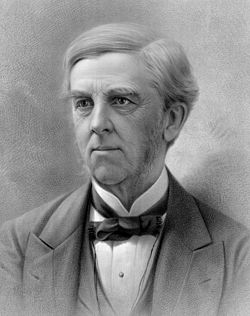
American physician, poet, professor, lecturer, and author based in Boston, Oliver Wendell Holmes, Sr. wrote, “The young man knows the rules, but the old man knows the exceptions.”


Sunday, July 24, 2016

Bible Readings for July 24, 2016


Today our passages are 2 Chronicles 11:1–13:22; Romans 8:22-39; Psalm 18:37-50; and Proverbs 19:27-29. The readings are from The Message by Eugene H. Peterson. If you find these readings helpful, please consider sending an offering directly to Cove Presbyterian Church, 3404 Main Street, Weirton, West Virginia or through PayPal.

2 Chronicles 11-13:22 (The Message)

2 Chronicles 11

 1When Rehoboam got back to Jerusalem he called up the men of the tribes of Judah and Benjamin, 180,000 of their best soldiers, to go to war against Israel and recover the kingdom.  2-4 At the same time the word of God came to Shemaiah, a holy man, "Tell this to Rehoboam son of Solomon, king of Judah, along with all the Israelites in Judah and Benjamin, This is God's word: Don't march out; don't fight against your brothers the Israelites. Go back home, every last one of you; I'm in charge here." And they did it; they did what God said and went home.
 5-12 Rehoboam continued to live in Jerusalem but built up a defense system for Judah all around: in Bethlehem, Etam, Tekoa, Beth Zur, Soco, Adullam, Gath, Mareshah, Ziph, Adoraim, Lachish, Azekah, Zorah, Aijalon, and Hebron—a line of defense protecting Judah and Benjamin. He beefed up the fortifications, appointed commanders, and put in supplies of food, olive oil, and wine. He installed arms—large shields and spears—in all the forts, making them very strong. So Judah and Benjamin were secure for the time.
 13-17 The priests and Levites from all over Israel came and made themselves available to Rehoboam. The Levites left their pastures and properties and moved to Judah and Jerusalem because Jeroboam and his sons had dismissed them from the priesthood of God and replaced them with his own priests to preside over the worship centers at which he had installed goat and calf demon-idols. Everyone from all the tribes of Israel who determined to seek the God of Israel migrated with the priests and Levites to Jerusalem to worship there, sacrificing to the God of their ancestors. That gave a tremendous boost to the kingdom of Judah. They stuck with Rehoboam son of Solomon for three years, loyal to the ways of David and Solomon for this period.
 18-21 Rehoboam married Mahalath daughter of Jerimoth, David's son, and Abihail daughter of Eliab, Jesse's son. Mahalath bore him Jeush, Shemariah, and Zaham. Then he married Maacah, Absalom's daughter, and she bore him Abijah, Attai, Ziza, and Shelomith. Maacah was Rehoboam's favorite wife; he loved her more than all his other wives and concubines put together (and he had a lot—eighteen wives and sixty concubines who produced twenty-eight sons and sixty daughters!).
 22-23 Rehoboam designated Abijah son of Maacah as the "first son" and leader of the brothers—he intended to make him the next king. He was shrewd in deploying his sons in all the fortress cities that made up his defense system in Judah and Benjamin; he kept them happy with much food and many wives.

2 Chronicles 12

 1 By the time Rehoboam had secured his kingdom and was strong again, he, and all Israel with him, had virtually abandoned God and his ways.
2-4 In Rehoboam's fifth year, because he and the people were unfaithful to God, Shishak king of Egypt invaded as far as Jerusalem. He came with twelve hundred chariots and sixty thousand cavalry, and soldiers from all over—the Egyptian army included Libyans, Sukkites, and Ethiopians. They took the fortress cities of Judah and advanced as far as Jerusalem itself.

 5 Then the prophet Shemaiah, accompanied by the leaders of Judah who had retreated to Jerusalem before Shishak, came to Rehoboam and said, "God's word: You abandoned me; now I abandon you to Shishak."
 6 The leaders of Israel and the king were repentant and said, "God is right."
 7-8 When God saw that they were humbly repentant, the word of God came to Shemaiah: "Because they are humble, I'll not destroy them—I'll give them a break; I won't use Shishak to express my wrath against Jerusalem. What I will do, though, is make them Shishak's subjects—they'll learn the difference between serving me and serving human kings."
 9 Then Shishak king of Egypt attacked Jerusalem. He plundered the treasury of The Temple of God and the treasury of the royal palace—he took everything he could lay his hands on. He even took the gold shields that Solomon had made.
 10-11 King Rehoboam replaced the gold shields with bronze shields and gave them to the guards who were posted at the entrance to the royal palace. Whenever the king went to God's Temple, the guards went with him carrying the shields, but they always returned them to the guardroom.
 12 Because Rehoboam was repentant, God's anger was blunted, so he wasn't totally destroyed. The picture wasn't entirely bleak—there were some good things going on in Judah.
 13-14 King Rehoboam regrouped and reestablished his rule in Jerusalem. He was forty-one years old when he became king and continued as king for seventeen years in Jerusalem, the city God chose out of all the tribes of Israel as the special presence of his Name. His mother was Naamah from Ammon. But the final verdict on Rehoboam was that he was a bad king—God was not important to him; his heart neither cared for nor sought after God.
 15-16 The history of Rehoboam, from start to finish, is written in the memoirs of Shemaiah the prophet and Iddo the seer that contain the family trees. There was war between Rehoboam and Jeroboam the whole time. Rehoboam died and was buried with his ancestors in the City of David. His son Abijah ruled after him.

2 Chronicles 13

King Abijah
 1-2 In the eighteenth year of the rule of King Jeroboam, Abijah took over the throne of Judah. He ruled in Jerusalem three years. His mother was Maacah daughter of Uriel of Gibeah.  2-3 War broke out between Abijah and Jeroboam. Abijah started out with 400,000 of his best soldiers; Jeroboam countered with 800,000 of his best.
 4-7 Abijah took a prominent position on Mount Zemaraim in the hill country of Ephraim and gave this speech: "Listen, Jeroboam and all Israel! Don't you realize that God, the one and only God of Israel, established David and his sons as the permanent rulers of Israel, ratified by a 'covenant of salt'—God's kingdom ruled by God's king? And what happened? Jeroboam, the son of Solomon's slave Nebat, rebelled against his master. All the riffraff joined his cause and were too much for Rehoboam, Solomon's true heir. Rehoboam didn't know his way around—besides he was a real wimp; he couldn't stand up against them.
 8-9 "Taking advantage of that weakness, you are asserting yourself against the very rule of God that is delegated to David's descendants—you think you are so big with your huge army backed up by the golden-calf idols that Jeroboam made for you as gods! But just look at what you've done—you threw out the priests of God, the sons of Aaron, and the Levites, and made priests to suit yourselves, priests just like the pagans have. Anyone who shows up with enough money to pay for it can be a priest! A priest of No-God!
 10-11 "But for the rest of us in Judah, we're sticking with God. We have not traded him in for the latest model—we're keeping the tried-and-true priests of Aaron to lead us to God and the Levites to lead us in worship by sacrificing Whole-Burnt-Offerings and aromatic incense to God at the daily morning and evening prayers, setting out fresh holy bread on a clean table, and lighting the lamps on the golden Lampstand every night. We continue doing what God told us to in the way he told us to do it; but you have rid yourselves of him.
 12 "Can't you see the obvious? God is on our side; he's our leader. And his priests with trumpets are all ready to blow the signal to battle. O Israel—don't fight against God, the God of your ancestors. You will not win this battle."
 13-18 While Abijah was speaking, Jeroboam had sent men around to take them by surprise from the rear: Jeroboam in front of Judah and the ambush behind. When Judah looked back, they saw they were attacked front and back. They prayed desperately to God, the priests blew their trumpets, and the soldiers of Judah shouted their battle cry. At the battle cry, God routed Jeroboam and all Israel before Abijah and Judah. The army of Israel scattered before Judah; God gave them the victory. Abijah and his troops slaughtered them—500,000 of Israel's best fighters were killed that day. The army of Israel fell flat on its face—a humiliating defeat. The army of Judah won hands down because they trusted God, the God of their ancestors.
 19-21 Abijah followed up his victory by pursuing Jeroboam, taking the towns of Bethel, Jeshanah, and Ephron with their surrounding villages. Jeroboam never did recover from his defeat while Abijah lived. Later on God struck him down and he died. Meanwhile Abijah flourished; he married fourteen wives and ended up with a family of twenty-two sons and sixteen daughters.
 22 The rest of the history of Abijah, what he did and said, is written in the study written by Iddo the prophet.

Romans 8:22-39 (The Message)

 22-25All around us we observe a pregnant creation. The difficult times of pain throughout the world are simply birth pangs. But it's not only around us; it's within us. The Spirit of God is arousing us within. We're also feeling the birth pangs. These sterile and barren bodies of ours are yearning for full deliverance. That is why waiting does not diminish us, any more than waiting diminishes a pregnant mother. We are enlarged in the waiting. We, of course, don't see what is enlarging us. But the longer we wait, the larger we become, and the more joyful our expectancy.
 26-28Meanwhile, the moment we get tired in the waiting, God's Spirit is right alongside helping us along. If we don't know how or what to pray, it doesn't matter. He does our praying in and for us, making prayer out of our wordless sighs, our aching groans. He knows us far better than we know ourselves, knows our pregnant condition, and keeps us present before God. That's why we can be so sure that every detail in our lives of love for God is worked into something good.
 29-30God knew what he was doing from the very beginning. He decided from the outset to shape the lives of those who love him along the same lines as the life of his Son. The Son stands first in the line of humanity he restored. We see the original and intended shape of our lives there in him. After God made that decision of what his children should be like, he followed it up by calling people by name. After he called them by name, he set them on a solid basis with himself. And then, after getting them established, he stayed with them to the end, gloriously completing what he had begun.
 31-39So, what do you think? With God on our side like this, how can we lose? If God didn't hesitate to put everything on the line for us, embracing our condition and exposing himself to the worst by sending his own Son, is there anything else he wouldn't gladly and freely do for us? And who would dare tangle with God by messing with one of God's chosen? Who would dare even to point a finger? The One who died for us—who was raised to life for us!—is in the presence of God at this very moment sticking up for us. Do you think anyone is going to be able to drive a wedge between us and Christ's love for us? There is no way! Not trouble, not hard times, not hatred, not hunger, not homelessness, not bullying threats, not backstabbing, not even the worst sins listed in Scripture:

   They kill us in cold blood because they hate you.
   We're sitting ducks; they pick us off one by one.
None of this fazes us because Jesus loves us. I'm absolutely convinced that nothing—nothing living or dead, angelic or demonic, today or tomorrow, high or low, thinkable or unthinkable—absolutely nothing can get between us and God's love because of the way that Jesus our Master has embraced us.


Psalm 18:37-50 (The Message)


 31-42 Is there any god like God?
      Are we not at bedrock?
   Is not this the God who armed me,
      then aimed me in the right direction?
   Now I run like a deer;
      I'm king of the mountain.
   He shows me how to fight;
      I can bend a bronze bow!
   You protect me with salvation-armor;
      you hold me up with a firm hand,
      caress me with your gentle ways.
   You cleared the ground under me
      so my footing was firm.
   When I chased my enemies I caught them;
      I didn't let go till they were dead men.
   I nailed them; they were down for good;
      then I walked all over them.
   You armed me well for this fight,
      you smashed the upstarts.
   You made my enemies turn tail,
      and I wiped out the haters.
   They cried "uncle"
      but Uncle didn't come;
   They yelled for God
      and got no for an answer.
   I ground them to dust; they gusted in the wind.
      I threw them out, like garbage in the gutter.

 43-45 You rescued me from a squabbling people;
      you made me a leader of nations.
   People I'd never heard of served me;
      the moment they got wind of me they listened.
   The foreign devils gave up; they came
      on their bellies, crawling from their hideouts.

 46-48 Live, God! Blessings from my Rock,
      my free and freeing God, towering!
   This God set things right for me
      and shut up the people who talked back.
   He rescued me from enemy anger,
      he pulled me from the grip of upstarts,
   He saved me from the bullies.

 49-50 That's why I'm thanking you, God,
      all over the world.
   That's why I'm singing songs
      that rhyme your name.
   God's king takes the trophy;
      God's chosen is beloved.
   I mean David and all his children—
      always.


Proverbs 19:27-29 (The Message)


 27 If you quit listening, dear child, and strike off on your own,
   you'll soon be out of your depth.

 28 An unprincipled witness desecrates justice;
   the mouths of the wicked spew malice.

 29 The irreverent have to learn reverence the hard way;
   only a slap in the face brings fools to attention.


Verse of the Day
“Life will go well for those who freely lend and are honest in business.” - Psalm 112:5
Today's passage is from the Contemporary English Version.

 
Oliver Wendell Holmes Sr c1879.jpg
Thought for the Day
American physician, poet, professor, lecturer, and author based in Boston, Oliver Wendell Holmes, Sr. wrote, “The young man knows the rules, but the old man knows the exceptions.”