Read the Bible in a Year

Each day, we'll post passages so that you can read the Bible in one year. This is part of The Colossians 13:16 Project, sponsored by Cove Presbyterian Church, 3404 Main Street, Weirton, West Virginia. You're invited to worship with us Sundays, at 11:00 a.m. or Saturdays, at 6:30 p.m. You may also want to consider joining one our adult Bible Studies: Thursdays at 12:00 noon and Sundays at 9:30 a.m. and 10:00 a.m. We also have a full range of programs for children. If you want more information about the church, check out the other blogs. And please feel free to leave any comments.

The Bible in a Year is a ministry of Cove Presbyterian Church. We need your support to keep posting. If you find it helpful, you can support this blog by your contributions. They may be sent to Cove Presbyterian Church, 3404 Main Street, Weirton, WV 26062. You can also use the PayPal link below:

Image result for paypal donate
Showing posts with label George Halas. Show all posts

Wednesday, June 22, 2016

Bible Readings for June 22, 2016


Today our passages are 2 Kings 3:1–4:17; Acts 14:8-28; Psalm 140:1-13; and Proverbs 17:22. The readings are from The Message by Eugene H. Peterson If you find these readings helpful, please consider sending an offering directly to Cove Presbyterian Church, 3404 Main Street, Weirton, West Virginia or through PayPal.

2 Kings 3-4:17 (The Message)

2 Kings 3

Joram of Israel
 1-3 Joram son of Ahab began his rule over Israel in Samaria in the eighteenth year of Jehoshaphat king of Judah. He was king for twelve years. In God's sight he was a bad king. But he wasn't as bad as his father and mother—to his credit he destroyed the obscene Baal stone that his father had made. But he hung on to the sinful practices of Jeroboam son of Nebat, the ones that had corrupted Israel for so long. He wasn't about to give them up.  4-7 King Mesha of Moab raised sheep. He was forced to give the king of Israel 100,000 lambs and another 100,000 rams. When Ahab died, the king of Moab rebelled against the king of Israel. So King Joram set out from Samaria and prepared Israel for war. His first move was to send a message to Jehoshaphat king of Judah: "The king of Moab has rebelled against me. Would you join me and fight him?"
 7-8 "I'm with you all the way," said Jehoshaphat. "My troops are your troops, my horses are your horses. Which route shall we take?"
    "Through the badlands of Edom."
 9 The king of Israel, the king of Judah, and the king of Edom started out on what proved to be a looping detour. After seven days they had run out of water for both army and animals.
 10 The king of Israel said, "Bad news! God has gotten us three kings out here to dump us into the hand of Moab."
 11 But Jehoshaphat said, "Isn't there a prophet of God anywhere around through whom we can consult God?"
    One of the servants of the king of Israel said, "Elisha son of Shaphat is around somewhere—the one who was Elijah's right-hand man."
 12 Jehoshaphat said, "Good! A man we can trust!" So the three of them— the king of Israel, Jehoshaphat, and the king of Edom—went to meet him.
 13 Elisha addressed the king of Israel, "What do you and I have in common? Go consult the puppet-prophets of your father and mother."
    "Never!" said the king of Israel. "It's God who has gotten us into this fix, dumping all three of us kings into the hand of Moab."
 14-15 Elisha said, "As God-of-the-Angel-Armies lives, and before whom I stand ready to serve, if it weren't for the respect I have for Jehoshaphat king of Judah, I wouldn't give you the time of day. But considering—bring me a minstrel." (When a minstrel played, the power of God came on Elisha.)
 16-19 He then said, "God's word: Dig ditches all over this valley. Here's what will happen—you won't hear the wind, you won't see the rain, but this valley is going to fill up with water and your army and your animals will drink their fill. This is easy for God to do; he will also hand over Moab to you. You will ravage the country: Knock out its fortifications, level the key villages, clear-cut the orchards, clog the springs, and litter the cultivated fields with stones."
 20 In the morning—it was at the hour of morning sacrifice—the water had arrived, water pouring in from the west, from Edom, a flash flood filling the valley with water.
 21-22 By this time everyone in Moab had heard that the kings had come up to make war against them. Everyone who was able to handle a sword was called into service and took a stand at the border. They were up and ready early in the morning when the sun rose over the water. From where the Moabites stood, the water reflecting the sun looked red, like blood.
 23 "Blood! Look at the blood!" they said. "The kings must have fought each other—a bloody massacre! Go for the loot, Moab!"
 24-25 When Moab entered the camp of Israel, the Israelites were up on their feet killing Moabites right and left, the Moabites running for their lives, Israelites relentless in pursuit—a slaughter. They leveled the towns, littered the cultivated fields with rocks, clogged the springs, and clear-cut the orchards. Only the capital, Kir Hareseth, was left intact, and that not for long; it too was surrounded and attacked with thrown and flung rocks.
 26-27 When the king of Moab realized that he was fighting a losing battle, he took seven hundred swordsmen to hack a corridor past the king of Edom, but they didn't make it. Then he took his son, his firstborn who would succeed him as king, and sacrificed him on the city wall. That set off furious anger against Israel. Israel pulled back and returned home.

2 Kings 4

 1 One day the wife of a man from the guild of prophets called out to Elisha, "Your servant my husband is dead. You well know what a good man he was, devoted to God. And now the man to whom he was in debt is on his way to collect by taking my two children as slaves."  2 Elisha said, "I wonder how I can be of help. Tell me, what do you have in your house?"
    "Nothing," she said. "Well, I do have a little oil."
 3-4 "Here's what you do," said Elisha. "Go up and down the street and borrow jugs and bowls from all your neighbors. And not just a few—all you can get. Then come home and lock the door behind you, you and your sons. Pour oil into each container; when each is full, set it aside."
 5-6 She did what he said. She locked the door behind her and her sons; as they brought the containers to her, she filled them. When all the jugs and bowls were full, she said to one of her sons, "Another jug, please."
    He said, "That's it. There are no more jugs."
    Then the oil stopped.
 7 She went and told the story to the man of God. He said, "Go sell the oil and make good on your debts. Live, both you and your sons, on what's left."

8 One day Elisha passed through Shunem. A leading lady of the town talked him into stopping for a meal. And then it became his custom: Whenever he passed through, he stopped by for a meal.

 9-10 "I'm certain," said the woman to her husband, "that this man who stops by with us all the time is a holy man of God. Why don't we add on a small room upstairs and furnish it with a bed and desk, chair and lamp, so that when he comes by he can stay with us?"
 11 And so it happened that the next time Elisha came by he went to the room and lay down for a nap.
 12 Then he said to his servant Gehazi, "Tell the Shunammite woman I want to see her." He called her and she came to him.
 13 Through Gehazi Elisha said, "You've gone far beyond the call of duty in taking care of us; what can we do for you? Do you have a request we can bring to the king or to the commander of the army?"
    She replied, "Nothing. I'm secure and satisfied in my family."
 14 Elisha conferred with Gehazi: "There's got to be something we can do for her. But what?"
    Gehazi said, "Well, she has no son, and her husband is an old man."
 15 "Call her in," said Elisha. He called her and she stood at the open door.
 16 Elisha said to her, "This time next year you're going to be nursing an infant son."
    "O my master, O Holy Man," she said, "don't play games with me, teasing me with such fantasies!"
 17 The woman conceived. A year later, just as Elisha had said, she had a son.


Acts 14:8-28 (The Message)

Gods or Men?
 8-10There was a man in Lystra who couldn't walk. He sat there, crippled since the day of his birth. He heard Paul talking, and Paul, looking him in the eye, saw that he was ripe for God's work, ready to believe. So he said, loud enough for everyone to hear, "Up on your feet!" The man was up in a flash—jumped up and walked around as if he'd been walking all his life.  11-13When the crowd saw what Paul had done, they went wild, calling out in their Lyconian dialect, "The gods have come down! These men are gods!" They called Barnabas "Zeus" and Paul "Hermes" (since Paul did most of the speaking). The priest of the local Zeus shrine got up a parade—bulls and banners and people lined right up to the gates, ready for the ritual of sacrifice.
 14-15When Barnabas and Paul finally realized what was going on, they stopped them. Waving their arms, they interrupted the parade, calling out, "What do you think you're doing! We're not gods! We are men just like you, and we're here to bring you the Message, to persuade you to abandon these silly god-superstitions and embrace God himself, the living God. We don't make God; he makes us, and all of this—sky, earth, sea, and everything in them.
 16-18"In the generations before us, God let all the different nations go their own way. But even then he didn't leave them without a clue, for he made a good creation, poured down rain and gave bumper crops. When your bellies were full and your hearts happy, there was evidence of good beyond your doing." Talking fast and hard like this, they prevented them from carrying out the sacrifice that would have honored them as gods—but just barely.
 19-20Then some Jews from Antioch and Iconium caught up with them and turned the fickle crowd against them. They beat Paul unconscious, dragged him outside the town and left him for dead. But as the disciples gathered around him, he came to and got up. He went back into town and the next day left with Barnabas for Derbe.
Plenty of Hard Times
 21-22After proclaiming the Message in Derbe and establishing a strong core of disciples, they retraced their steps to Lystra, then Iconium, and then Antioch, putting muscle and sinew in the lives of the disciples, urging them to stick with what they had begun to believe and not quit, making it clear to them that it wouldn't be easy: "Anyone signing up for the kingdom of God has to go through plenty of hard times."  23-26Paul and Barnabas handpicked leaders in each church. After praying— their prayers intensified by fasting—they presented these new leaders to the Master to whom they had entrusted their lives. Working their way back through Pisidia, they came to Pamphylia and preached in Perga. Finally, they made it to Attalia and caught a ship back to Antioch, where it had all started—launched by God's grace and now safely home by God's grace. A good piece of work.
 27-28On arrival, they got the church together and reported on their trip, telling in detail how God had used them to throw the door of faith wide open so people of all nations could come streaming in. Then they settled down for a long, leisurely visit with the disciples.


Psalm 140:1-13 (The Message)

Psalm 140

A David Psalm
 1-5 God, get me out of here, away from this evil; protect me from these vicious people.
   All they do is think up new ways to be bad;
      they spend their days plotting war games.
   They practice the sharp rhetoric of hate and hurt,
      speak venomous words that maim and kill.
   God, keep me out of the clutch of these wicked ones,
      protect me from these vicious people;
   Stuffed with self-importance, they plot ways to trip me up,
      determined to bring me down.
   These crooks invent traps to catch me
      and do their best to incriminate me.

 6-8 I prayed, "God, you're my God!
      Listen, God! Mercy!
   God, my Lord, Strong Savior,
      protect me when the fighting breaks out!
   Don't let the wicked have their way, God,
      don't give them an inch!"

 9-11 These troublemakers all around me—
      let them drown in their own verbal poison.
   Let God pile hellfire on them,
      let him bury them alive in crevasses!
   These loudmouths—
      don't let them be taken seriously;
   These savages—
      let the Devil hunt them down!

 12-13 I know that you, God, are on the side of victims,
      that you care for the rights of the poor.
   And I know that the righteous personally thank you,
      that good people are secure in your presence.


Proverbs 17:22 (The Message)


 22 A cheerful disposition is good for your health;
   gloom and doom leave you bone-tired.


Verse of the Day
“The LORD will protect you and keep you safe from all dangers. The LORD will protect you now and always wherever you go.” - Psalm 121:7-8
Today's passage is from the Contemporary English Version.
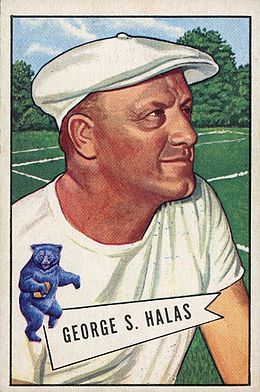
 
George Halas 1952 Bowman.jpg
Thought for the Day
Player, coach, owner, and pioneer in professional American football, George Halas wrote, “Nothing is work unless you'd rather be doing something else.”

Thursday, April 3, 2014

Bible Readings for April 3, 2014


Today our passages are Deuteronomy 23:1–25:19; Luke 10:13-37; Psalm 75:1-10; and Proverbs 12:12-14. The readings are from The Message by Eugene H. Peterson.


Deuteronomy 23-25:19 (The Message)

Deuteronomy 23

 1 No eunuch is to enter the congregation of God. 2 No bastard is to enter the congregation of God, even to the tenth generation, nor any of his children.
 3-6 No Ammonite or Moabite is to enter the congregation of God, even to the tenth generation, nor any of his children, ever. Those nations didn't treat you with hospitality on your travels out of Egypt, and on top of that they also hired Balaam son of Beor from Pethor in Mesopotamia to curse you. God, your God, refused to listen to Balaam but turned the curse into a blessing—how God, your God, loves you! Don't even try to get along with them or do anything for them, ever.
 7 But don't spurn an Edomite; he's your kin.
   And don't spurn an Egyptian; you were a foreigner in his land.
 8 Children born to Edomites and Egyptians may enter the congregation of God in the third generation.

9-11 When you are camped out, at war with your enemies, be careful to keep yourself from anything ritually defiling. If one of your men has become ritually unclean because of a nocturnal emission, he must go outside the camp and stay there until evening when he can wash himself, returning to the camp at sunset.
 12-14 Mark out an area outside the camp where you can go to relieve yourselves. Along with your weapons have a stick with you. After you relieve yourself, dig a hole with the stick and cover your excrement. God, your God, strolls through your camp; he's present to deliver you and give you victory over your enemies. Keep your camp holy; don't permit anything indecent or offensive in God's eyes.

15-16 Don't return a runaway slave to his master; he's come to you for refuge. Let him live wherever he wishes within the protective gates of your city. Don't take advantage of him.
 17-18 No daughter of Israel is to become a sacred prostitute; and no son of Israel is to become a sacred prostitute. And don't bring the fee of a sacred whore or the earnings of a priest-pimp to the house of God, your God, to pay for any vow—they are both an abomination to God, your God.
 19-20 Don't charge interest to your kinsmen on any loan: not for money or food or clothing or anything else that could earn interest. You may charge foreigners interest, but you may not charge your brothers interest; that way God, your God, will bless all the work that you take up and the land that you are entering to possess.
 21-23 When you make a vow to God, your God, don't put off keeping it; God, your God, expects you to keep it and if you don't you're guilty. But if you don't make a vow in the first place, there's no sin. If you say you're going to do something, do it. Keep the vow you willingly vowed to God, your God. You promised it, so do it.
 24-25 When you enter your neighbor's vineyard, you may eat all the grapes you want until you're full, but you may not put any in your bucket or bag. And when you walk through the ripe grain of your neighbor, you may pick the heads of grain, but you may not swing your sickle there.

Deuteronomy 24

 1-4 If a man marries a woman and then it happens that he no longer likes her because he has found something wrong with her, he may give her divorce papers, put them in her hand, and send her off. After she leaves, if she becomes another man's wife and he also comes to hate her and this second husband also gives her divorce papers, puts them in her hand, and sends her off, or if he should die, then the first husband who divorced her can't marry her again. She has made herself ritually unclean, and her remarriage would be an abomination in the Presence of God and defile the land with sin, this land that God, your God, is giving you as an inheritance.
 5 When a man takes a new wife, he is not to go out with the army or be given any business or work duties. He gets one year off simply to be at home making his wife happy.
 6 Don't seize a handmill or an upper millstone as collateral for a loan. You'd be seizing someone's very life.
 7 If a man is caught kidnapping one of his kinsmen, someone of the People of Israel, to enslave or sell him, the kidnapper must die. Purge that evil from among you.
 8-9 Warning! If a serious skin disease breaks out, follow exactly the rules set down by the Levitical priests. Follow them precisely as I commanded them. Don't forget what God, your God, did to Miriam on your way out of Egypt.
 10-13 When you make a loan of any kind to your neighbor, don't enter his house to claim his pledge. Wait outside. Let the man to whom you made the pledge bring the pledge to you outside. And if he is destitute, don't use his cloak as a bedroll; return it to him at nightfall so that he can sleep in his cloak and bless you. In the sight of God, your God, that will be viewed as a righteous act.
 14-15 Don't abuse a laborer who is destitute and needy, whether he is a fellow Israelite living in your land and in your city. Pay him at the end of each workday; he's living from hand to mouth and needs it now. If you hold back his pay, he'll protest to God and you'll have sin on your books.
 16 Parents shall not be put to death for their children, nor children for their parents. Each person shall be put to death for his own sin.
 17-18 Make sure foreigners and orphans get their just rights. Don't take the cloak of a widow as security for a loan. Don't ever forget that you were once slaves in Egypt and God, your God, got you out of there. I command you: Do what I'm telling you.
 19-22 When you harvest your grain and forget a sheaf back in the field, don't go back and get it; leave it for the foreigner, the orphan, and the widow so that God, your God, will bless you in all your work. When you shake the olives off your trees, don't go back over the branches and strip them bare—what's left is for the foreigner, the orphan, and the widow. And when you cut the grapes in your vineyard, don't take every last grape—leave a few for the foreigner, the orphan, and the widow. Don't ever forget that you were a slave in Egypt. I command you: Do what I'm telling you.

Deuteronomy 25

 1-3 When men have a legal dispute, let them go to court; the judges will decide between them, declaring one innocent and the other guilty. If the guilty one deserves punishment, the judge will have him prostrate himself before him and lashed as many times as his crime deserves, but not more than forty. If you hit him more than forty times, you will degrade him to something less than human.
 4 Don't muzzle an ox while it is threshing.
 5-6 When brothers are living together and one of them dies without having had a son, the widow of the dead brother shall not marry a stranger from outside the family; her husband's brother is to come to her and marry her and do the brother-in-law's duty by her. The first son that she bears shall be named after her dead husband so his name won't die out in Israel.
 7-10 But if the brother doesn't want to marry his sister-in-law, she is to go to the leaders at the city gate and say, "My brother-in-law refuses to keep his brother's name alive in Israel; he won't agree to do the brother-in-law's duty by me." Then the leaders will call for the brother and confront him. If he stands there defiant and says, "I don't want her," his sister-in-law is to pull his sandal off his foot, spit in his face, and say, "This is what happens to the man who refuses to build up the family of his brother—his name in Israel will be Family-No-Sandal."
 11-12 When two men are in a fight and the wife of the one man, trying to rescue her husband, grabs the genitals of the man hitting him, you are to cut off her hand. Show no pity.
 13-16 Don't carry around with you two weights, one heavy and the other light, and don't keep two measures at hand, one large and the other small. Use only one weight, a true and honest weight, and one measure, a true and honest measure, so that you will live a long time on the land that God, your God, is giving you. Dishonest weights and measures are an abomination to God, your God—all this corruption in business deals!
 17-19 Don't forget what Amalek did to you on the road after you left Egypt, how he attacked you when you were tired, barely able to put one foot in front of another, mercilessly cut off your stragglers, and had no regard for God. When God, your God, gives you rest from all the enemies that surround you in the inheritance-land God, your God, is giving you to possess, you are to wipe the name of Amalek from off the Earth. Don't forget!


Luke 10:13-37 (The Message)

 13-14"Doom, Chorazin! Doom, Bethsaida! If Tyre and Sidon had been given half the chances given you, they'd have been on their knees long ago, repenting and crying for mercy. Tyre and Sidon will have it easy on Judgment Day compared to you.
 15"And you, Capernaum! Do you think you're about to be promoted to heaven? Think again. You're on a mudslide to hell.
 16"The one who listens to you, listens to me. The one who rejects you, rejects me. And rejecting me is the same as rejecting God, who sent me."
 17The seventy came back triumphant. "Master, even the demons danced to your tune!"
 18-20Jesus said, "I know. I saw Satan fall, a bolt of lightning out of the sky. See what I've given you? Safe passage as you walk on snakes and scorpions, and protection from every assault of the Enemy. No one can put a hand on you. All the same, the great triumph is not in your authority over evil, but in God's authority over you and presence with you. Not what you do for God but what God does for you—that's the agenda for rejoicing."
 21At that, Jesus rejoiced, exuberant in the Holy Spirit. "I thank you, Father, Master of heaven and earth, that you hid these things from the know-it-alls and showed them to these innocent newcomers. Yes, Father, it pleased you to do it this way.
 22"I've been given it all by my Father! Only the Father knows who the Son is and only the Son knows who the Father is. The Son can introduce the Father to anyone he wants to."
 23-24He then turned in a private aside to his disciples. "Fortunate the eyes that see what you're seeing! There are plenty of prophets and kings who would have given their right arm to see what you are seeing but never got so much as a glimpse, to hear what you are hearing but never got so much as a whisper."
Defining "Neighbor"
 25Just then a religion scholar stood up with a question to test Jesus. "Teacher, what do I need to do to get eternal life?"  26He answered, "What's written in God's Law? How do you interpret it?"
 27He said, "That you love the Lord your God with all your passion and prayer and muscle and intelligence—and that you love your neighbor as well as you do yourself."
 28"Good answer!" said Jesus. "Do it and you'll live."
 29Looking for a loophole, he asked, "And just how would you define 'neighbor'?"
 30-32Jesus answered by telling a story. "There was once a man traveling from Jerusalem to Jericho. On the way he was attacked by robbers. They took his clothes, beat him up, and went off leaving him half-dead. Luckily, a priest was on his way down the same road, but when he saw him he angled across to the other side. Then a Levite religious man showed up; he also avoided the injured man.
 33-35"A Samaritan traveling the road came on him. When he saw the man's condition, his heart went out to him. He gave him first aid, disinfecting and bandaging his wounds. Then he lifted him onto his donkey, led him to an inn, and made him comfortable. In the morning he took out two silver coins and gave them to the innkeeper, saying, 'Take good care of him. If it costs any more, put it on my bill—I'll pay you on my way back.'
 36"What do you think? Which of the three became a neighbor to the man attacked by robbers?"
 37"The one who treated him kindly," the religion scholar responded.
   Jesus said, "Go and do the same."


Proverbs 12:12-14 (The Message)


 12 What the wicked construct finally falls into ruin,
   while the roots of the righteous give life, and more life.

Wise People Take Advice
 13 The gossip of bad people gets them in trouble;
   the conversation of good people keeps them out of it.

 14 Well-spoken words bring satisfaction;
   well-done work has its own reward.


Verse of the Day
 
“We must keep our eyes on Jesus, who leads us and makes our faith complete. He endured the shame of being nailed to a cross, because he knew that later on he would be glad he did. Now he is seated at the right side of God's throne!” - Hebrews 12:2
Today's passage is from the Contemporary English Version.


Halas44_1Thought for the Day
 
Player, coach, owner and pioneer in professional American football, George Halas said, “Nothing is work unless you’d rather be doing something else."