Read the Bible in a Year

Each day, we'll post passages so that you can read the Bible in one year. This is part of The Colossians 13:16 Project, sponsored by Cove Presbyterian Church, 3404 Main Street, Weirton, West Virginia. You're invited to worship with us Sundays, at 11:00 a.m. or Saturdays, at 6:30 p.m. You may also want to consider joining one our adult Bible Studies: Thursdays at 12:00 noon and Sundays at 9:30 a.m. and 10:00 a.m. We also have a full range of programs for children. If you want more information about the church, check out the other blogs. And please feel free to leave any comments.

The Bible in a Year is a ministry of Cove Presbyterian Church. We need your support to keep posting. If you find it helpful, you can support this blog by your contributions. They may be sent to Cove Presbyterian Church, 3404 Main Street, Weirton, WV 26062. You can also use the PayPal link below:

Image result for paypal donate
Showing posts with label Edward G. Bulwer-Lytton. Show all posts

Friday, July 27, 2018

Bible Readings for July 27, 2018


Today our passages are 2 Chronicles 29:1-36; Romans 14:1-23; Psalm 24:1-10; and Proverbs 20:12. The readings are from The Message by Eugene H. Peterson. If you find these readings helpful, please consider sending an offering directly to Cove Presbyterian Church, 3404 Main Street, Weirton, West Virginia or through PayPal by using the link below.
Image result for paypal banner


2 Chronicles 29:1-36 (The Message)


2 Chronicles 29

King Hezekiah
 1-2 Hezekiah became king when he was twenty-five years old and was king in Jerusalem for twenty-nine years. His mother was Abijah daughter of Zechariah. In God's opinion he was a good king; he kept to the standards of his ancestor David.  3-9 In the first month of the first year of his reign, Hezekiah, having first repaired the doors of The Temple of God, threw them open to the public. He assembled the priests and Levites in the court on the east side and said, "Levites, listen! Consecrate yourselves and consecrate The Temple of God—give this much-defiled place a good housecleaning. Our ancestors went wrong and lived badly before God—they discarded him, turned away from this house where we meet with God, and walked off. They boarded up the doors, turned out the lights, and canceled all the acts of worship of the God of Israel in the holy Temple. And because of that, God's anger flared up and he turned those people into a public exhibit of disaster, a moral history lesson—look and read! This is why our ancestors were killed, and this is why our wives and sons and daughters were taken prisoner and made slaves.
 10-11 "I have decided to make a covenant with the God of Israel and turn history around so that God will no longer be angry with us. Children, don't drag your feet in this! God has chosen you to take your place before him to serve in conducting and leading worship—this is your life work; make sure you do it and do it well."
 12-17 The Levites stood at attention: Mahath son of Amasai and Joel son of Azariah from the Kohathites; Kish son of Abdi and Azariah son of Jehallelel from the Merarites; Joah son of Zimmah and Eden son of Joah from the Gershonites; Shimri and Jeiel sons of Elizaphan; Zechariah and Mattaniah sons of Asaph; Jehiel and Shimei of the family of Heman; Shemaiah and Uzziel of the family of Jeduthun. They presented themselves and their brothers, consecrated themselves, and set to work cleaning up The Temple of God as the king had directed—as God directed! The priests started from the inside and worked out; they emptied the place of the accumulation of defiling junk—pagan rubbish that had no business in that holy place—and the Levites hauled it off to the Kidron Valley. They began the Temple cleaning on the first day of the first month and by the eighth day they had worked their way out to the porch—eight days it took them to clean and consecrate The Temple itself, and in eight more days they had finished with the entire Temple complex.
 18-19 Then they reported to Hezekiah the king, "We have cleaned up the entire Temple of God, including the Altar of Whole-Burnt-Offering and the Table of the Bread of the Presence with their furnishings. We have also cleaned up and consecrated all the vessels which King Ahaz had gotten rid of during his misrule. Take a look; we have repaired them. They're all there in front of the Altar of God."
 20-24 Then Hezekiah the king went to work: He got all the leaders of the city together and marched to The Temple of God. They brought with them seven bulls, seven rams, seven lambs, and seven he-goats to sacrifice as an Absolution-Offering for the royal family, for the Sanctuary, and for Judah as a whole; he directed the Aaronite priests to sacrifice them on the Altar of God. The priests butchered the bulls and then took the blood and sprinkled it on the Altar, and then the same with the rams and lambs. Finally they brought the goats up; the king and congregation laid their hands upon them. The priests butchered them and made an Absolution-Offering with their blood at the Altar to atone for the sin of all Israel—the king had ordered that the Whole-Burnt-Offering and the Absolution-Offering be for all Israel.
 25-26 The king ordered the Levites to take their places in The Temple of God with their musical instruments—cymbals, harps, zithers—following the original instructions of David, Gad the king's seer, and Nathan the prophet; this was God's command conveyed by his prophets. The Levites formed the orchestra of David, while the priests took up the trumpets.
 27-30 Then Hezekiah gave the signal to begin: The Whole-Burnt-Offering was offered on the Altar; at the same time the sacred choir began singing, backed up by the trumpets and the David orchestra while the entire congregation worshiped. The singers sang and the trumpeters played all during the sacrifice of the Whole-Burnt-Offering. When the offering of the sacrifice was completed, the king and everyone there knelt to the ground and worshiped. Then Hezekiah the king and the leaders told the Levites to finish things off with anthems of praise to God using lyrics by David and Asaph the seer. They sang their praises with joy and reverence, kneeling in worship.
 31-35 Hezekiah then made this response: "The dedication is complete—you're consecrated to God. Now you're ready: Come forward and bring your sacrifices and Thank-Offerings to The Temple of God."
    And come they did. Everyone in the congregation brought sacrifices and Thank-Offerings and some, overflowing with generosity, even brought Whole-Burnt-Offerings, a generosity expressed in seventy bulls, a hundred rams, and two hundred lambs—all for Whole-Burnt-Offerings for God! The total number of animals consecrated for sacrifice that day amounted to six hundred bulls and three thousand sheep. They ran out of priests qualified to slaughter all the Whole-Burnt-Offerings so their brother Levites stepped in and helped out while other priests consecrated themselves for the work. It turned out that the Levites had been more responsible in making sure they were properly consecrated than the priests had been. Besides the overflow of Whole-Burnt-Offerings there were also choice pieces for the Peace-Offerings and lavish libations that went with the Whole-Burnt-Offerings. The worship in The Temple of God was on a firm footing again!
 36 Hezekiah and the congregation celebrated: God had established a firm foundation for the lives of the people—and so quickly! 


Romans 14:1-23 (The Message)


Romans 14

Cultivating Good Relationships
 1 Welcome with open arms fellow believers who don't see things the way you do. And don't jump all over them every time they do or say something you don't agree with—even when it seems that they are strong on opinions but weak in the faith department. Remember, they have their own history to deal with. Treat them gently.  2-4For instance, a person who has been around for a while might well be convinced that he can eat anything on the table, while another, with a different background, might assume he should only be a vegetarian and eat accordingly. But since both are guests at Christ's table, wouldn't it be terribly rude if they fell to criticizing what the other ate or didn't eat? God, after all, invited them both to the table. Do you have any business crossing people off the guest list or interfering with God's welcome? If there are corrections to be made or manners to be learned, God can handle that without your help.
 5Or, say, one person thinks that some days should be set aside as holy and another thinks that each day is pretty much like any other. There are good reasons either way. So, each person is free to follow the convictions of conscience.
 6-9What's important in all this is that if you keep a holy day, keep it for God's sake; if you eat meat, eat it to the glory of God and thank God for prime rib; if you're a vegetarian, eat vegetables to the glory of God and thank God for broccoli. None of us are permitted to insist on our own way in these matters. It's God we are answerable to—all the way from life to death and everything in between—not each other. That's why Jesus lived and died and then lived again: so that he could be our Master across the entire range of life and death, and free us from the petty tyrannies of each other.
 10-12So where does that leave you when you criticize a brother? And where does that leave you when you condescend to a sister? I'd say it leaves you looking pretty silly—or worse. Eventually, we're all going to end up kneeling side by side in the place of judgment, facing God. Your critical and condescending ways aren't going to improve your position there one bit. Read it for yourself in Scripture:

   "As I live and breathe," God says,
      "every knee will bow before me;
   Every tongue will tell the honest truth
      that I and only I am God."
So tend to your knitting. You've got your hands full just taking care of your own life before God.
 13-14Forget about deciding what's right for each other. Here's what you need to be concerned about: that you don't get in the way of someone else, making life more difficult than it already is. I'm convinced—Jesus convinced me!—that everything as it is in itself is holy. We, of course, by the way we treat it or talk about it, can contaminate it.
 15-16If you confuse others by making a big issue over what they eat or don't eat, you're no longer a companion with them in love, are you? These, remember, are persons for whom Christ died. Would you risk sending them to hell over an item in their diet? Don't you dare let a piece of God-blessed food become an occasion of soul-poisoning!
 17-18God's kingdom isn't a matter of what you put in your stomach, for goodness' sake. It's what God does with your life as he sets it right, puts it together, and completes it with joy. Your task is to single-mindedly serve Christ. Do that and you'll kill two birds with one stone: pleasing the God above you and proving your worth to the people around you.
 19-21So let's agree to use all our energy in getting along with each other. Help others with encouraging words; don't drag them down by finding fault. You're certainly not going to permit an argument over what is served or not served at supper to wreck God's work among you, are you? I said it before and I'll say it again: All food is good, but it can turn bad if you use it badly, if you use it to trip others up and send them sprawling. When you sit down to a meal, your primary concern should not be to feed your own face but to share the life of Jesus. So be sensitive and courteous to the others who are eating. Don't eat or say or do things that might interfere with the free exchange of love.
 22-23Cultivate your own relationship with God, but don't impose it on others. You're fortunate if your behavior and your belief are coherent. But if you're not sure, if you notice that you are acting in ways inconsistent with what you believe—some days trying to impose your opinions on others, other days just trying to please them—then you know that you're out of line. If the way you live isn't consistent with what you believe, then it's wrong. 


Psalm 24:1-10 (The Message)


Psalm 24

A David Psalm
 1-2 God claims Earth and everything in it, God claims World and all who live on it.
   He built it on Ocean foundations,
      laid it out on River girders.

 3-4 Who can climb Mount God?
      Who can scale the holy north-face?
   Only the clean-handed,
      only the pure-hearted;
   Men who won't cheat,
      women who won't seduce.

 5-6 God is at their side;
      with God's help they make it.
   This, Jacob, is what happens
      to God-seekers, God-questers.

 7 Wake up, you sleepyhead city!
   Wake up, you sleepyhead people!
      King-Glory is ready to enter.

 8 Who is this King-Glory?
      God, armed
      and battle-ready.

 9 Wake up, you sleepyhead city!
   Wake up, you sleepyhead people!
      King-Glory is ready to enter.

 10 Who is this King-Glory?
      God-of-the-Angel-Armies:
      he is King-Glory.


Proverbs 20:12 (The Message)

Drinking from the Chalice of Knowledge
 12 Ears that hear and eyes that see—
   we get our basic equipment from God!


Verse of the Day
 
Yet some people accepted him and put their faith in him. So he gave them the right to be the children of God. They were not God's children by nature or because of any human desires. God himself was the one who made them his children.” - John 1:12-13
Today's passage is from the Contemporary English Version.
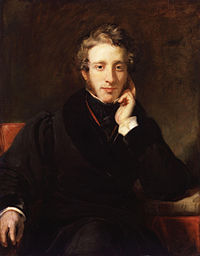
 
Edward George Earle Lytton Bulwer Lytton, 1st Baron Lytton by Henry William Pickersgill.jpgThought for the Day

English novelist, poet, playwright, and politician, Edward G. Bulwer-Lytton wrote, “Talent does what it can; genius does what it must.”


Sunday, July 31, 2016

Bible Readings for July 31, 2016


Today our passages are 2 Chronicles 29:1-36; Romans 14:1-23; Psalm 24:1-10; and Proverbs 20:12. The readings are from The Message by Eugene H. PetersonIf you find these readings helpful, please consider sending an offering directly to Cove Presbyterian Church, 3404 Main Street, Weirton, West Virginia or through PayPal.

2 Chronicles 29:1-36 (The Message)

2 Chronicles 29

King Hezekiah
 1-2 Hezekiah became king when he was twenty-five years old and was king in Jerusalem for twenty-nine years. His mother was Abijah daughter of Zechariah. In God's opinion he was a good king; he kept to the standards of his ancestor David.  3-9 In the first month of the first year of his reign, Hezekiah, having first repaired the doors of The Temple of God, threw them open to the public. He assembled the priests and Levites in the court on the east side and said, "Levites, listen! Consecrate yourselves and consecrate The Temple of God—give this much-defiled place a good housecleaning. Our ancestors went wrong and lived badly before God—they discarded him, turned away from this house where we meet with God, and walked off. They boarded up the doors, turned out the lights, and canceled all the acts of worship of the God of Israel in the holy Temple. And because of that, God's anger flared up and he turned those people into a public exhibit of disaster, a moral history lesson—look and read! This is why our ancestors were killed, and this is why our wives and sons and daughters were taken prisoner and made slaves.
 10-11 "I have decided to make a covenant with the God of Israel and turn history around so that God will no longer be angry with us. Children, don't drag your feet in this! God has chosen you to take your place before him to serve in conducting and leading worship—this is your life work; make sure you do it and do it well."
 12-17 The Levites stood at attention: Mahath son of Amasai and Joel son of Azariah from the Kohathites; Kish son of Abdi and Azariah son of Jehallelel from the Merarites; Joah son of Zimmah and Eden son of Joah from the Gershonites; Shimri and Jeiel sons of Elizaphan; Zechariah and Mattaniah sons of Asaph; Jehiel and Shimei of the family of Heman; Shemaiah and Uzziel of the family of Jeduthun. They presented themselves and their brothers, consecrated themselves, and set to work cleaning up The Temple of God as the king had directed—as God directed! The priests started from the inside and worked out; they emptied the place of the accumulation of defiling junk—pagan rubbish that had no business in that holy place—and the Levites hauled it off to the Kidron Valley. They began the Temple cleaning on the first day of the first month and by the eighth day they had worked their way out to the porch—eight days it took them to clean and consecrate The Temple itself, and in eight more days they had finished with the entire Temple complex.
 18-19 Then they reported to Hezekiah the king, "We have cleaned up the entire Temple of God, including the Altar of Whole-Burnt-Offering and the Table of the Bread of the Presence with their furnishings. We have also cleaned up and consecrated all the vessels which King Ahaz had gotten rid of during his misrule. Take a look; we have repaired them. They're all there in front of the Altar of God."
 20-24 Then Hezekiah the king went to work: He got all the leaders of the city together and marched to The Temple of God. They brought with them seven bulls, seven rams, seven lambs, and seven he-goats to sacrifice as an Absolution-Offering for the royal family, for the Sanctuary, and for Judah as a whole; he directed the Aaronite priests to sacrifice them on the Altar of God. The priests butchered the bulls and then took the blood and sprinkled it on the Altar, and then the same with the rams and lambs. Finally they brought the goats up; the king and congregation laid their hands upon them. The priests butchered them and made an Absolution-Offering with their blood at the Altar to atone for the sin of all Israel—the king had ordered that the Whole-Burnt-Offering and the Absolution-Offering be for all Israel.
 25-26 The king ordered the Levites to take their places in The Temple of God with their musical instruments—cymbals, harps, zithers—following the original instructions of David, Gad the king's seer, and Nathan the prophet; this was God's command conveyed by his prophets. The Levites formed the orchestra of David, while the priests took up the trumpets.
 27-30 Then Hezekiah gave the signal to begin: The Whole-Burnt-Offering was offered on the Altar; at the same time the sacred choir began singing, backed up by the trumpets and the David orchestra while the entire congregation worshiped. The singers sang and the trumpeters played all during the sacrifice of the Whole-Burnt-Offering. When the offering of the sacrifice was completed, the king and everyone there knelt to the ground and worshiped. Then Hezekiah the king and the leaders told the Levites to finish things off with anthems of praise to God using lyrics by David and Asaph the seer. They sang their praises with joy and reverence, kneeling in worship.
 31-35 Hezekiah then made this response: "The dedication is complete—you're consecrated to God. Now you're ready: Come forward and bring your sacrifices and Thank-Offerings to The Temple of God."
    And come they did. Everyone in the congregation brought sacrifices and Thank-Offerings and some, overflowing with generosity, even brought Whole-Burnt-Offerings, a generosity expressed in seventy bulls, a hundred rams, and two hundred lambs—all for Whole-Burnt-Offerings for God! The total number of animals consecrated for sacrifice that day amounted to six hundred bulls and three thousand sheep. They ran out of priests qualified to slaughter all the Whole-Burnt-Offerings so their brother Levites stepped in and helped out while other priests consecrated themselves for the work. It turned out that the Levites had been more responsible in making sure they were properly consecrated than the priests had been. Besides the overflow of Whole-Burnt-Offerings there were also choice pieces for the Peace-Offerings and lavish libations that went with the Whole-Burnt-Offerings. The worship in The Temple of God was on a firm footing again!
 36 Hezekiah and the congregation celebrated: God had established a firm foundation for the lives of the people—and so quickly!


Romans 14:1-23 (The Message)

Romans 14

Cultivating Good Relationships
 1 Welcome with open arms fellow believers who don't see things the way you do. And don't jump all over them every time they do or say something you don't agree with—even when it seems that they are strong on opinions but weak in the faith department. Remember, they have their own history to deal with. Treat them gently.  2-4For instance, a person who has been around for a while might well be convinced that he can eat anything on the table, while another, with a different background, might assume he should only be a vegetarian and eat accordingly. But since both are guests at Christ's table, wouldn't it be terribly rude if they fell to criticizing what the other ate or didn't eat? God, after all, invited them both to the table. Do you have any business crossing people off the guest list or interfering with God's welcome? If there are corrections to be made or manners to be learned, God can handle that without your help.
 5Or, say, one person thinks that some days should be set aside as holy and another thinks that each day is pretty much like any other. There are good reasons either way. So, each person is free to follow the convictions of conscience.
 6-9What's important in all this is that if you keep a holy day, keep it for God's sake; if you eat meat, eat it to the glory of God and thank God for prime rib; if you're a vegetarian, eat vegetables to the glory of God and thank God for broccoli. None of us are permitted to insist on our own way in these matters. It's God we are answerable to—all the way from life to death and everything in between—not each other. That's why Jesus lived and died and then lived again: so that he could be our Master across the entire range of life and death, and free us from the petty tyrannies of each other.
 10-12So where does that leave you when you criticize a brother? And where does that leave you when you condescend to a sister? I'd say it leaves you looking pretty silly—or worse. Eventually, we're all going to end up kneeling side by side in the place of judgment, facing God. Your critical and condescending ways aren't going to improve your position there one bit. Read it for yourself in Scripture:

   "As I live and breathe," God says,
      "every knee will bow before me;
   Every tongue will tell the honest truth
      that I and only I am God."
So tend to your knitting. You've got your hands full just taking care of your own life before God.

 13-14Forget about deciding what's right for each other. Here's what you need to be concerned about: that you don't get in the way of someone else, making life more difficult than it already is. I'm convinced—Jesus convinced me!—that everything as it is in itself is holy. We, of course, by the way we treat it or talk about it, can contaminate it.
 15-16If you confuse others by making a big issue over what they eat or don't eat, you're no longer a companion with them in love, are you? These, remember, are persons for whom Christ died. Would you risk sending them to hell over an item in their diet? Don't you dare let a piece of God-blessed food become an occasion of soul-poisoning!
 17-18God's kingdom isn't a matter of what you put in your stomach, for goodness' sake. It's what God does with your life as he sets it right, puts it together, and completes it with joy. Your task is to single-mindedly serve Christ. Do that and you'll kill two birds with one stone: pleasing the God above you and proving your worth to the people around you.
 19-21So let's agree to use all our energy in getting along with each other. Help others with encouraging words; don't drag them down by finding fault. You're certainly not going to permit an argument over what is served or not served at supper to wreck God's work among you, are you? I said it before and I'll say it again: All food is good, but it can turn bad if you use it badly, if you use it to trip others up and send them sprawling. When you sit down to a meal, your primary concern should not be to feed your own face but to share the life of Jesus. So be sensitive and courteous to the others who are eating. Don't eat or say or do things that might interfere with the free exchange of love.
 22-23Cultivate your own relationship with God, but don't impose it on others. You're fortunate if your behavior and your belief are coherent. But if you're not sure, if you notice that you are acting in ways inconsistent with what you believe—some days trying to impose your opinions on others, other days just trying to please them—then you know that you're out of line. If the way you live isn't consistent with what you believe, then it's wrong.


Psalm 24:1-10 (The Message)

Psalm 24

A David Psalm
 1-2 God claims Earth and everything in it, God claims World and all who live on it.
   He built it on Ocean foundations,
      laid it out on River girders.

 3-4 Who can climb Mount God?
      Who can scale the holy north-face?
   Only the clean-handed,
      only the pure-hearted;
   Men who won't cheat,
      women who won't seduce.

 5-6 God is at their side;
      with God's help they make it.
   This, Jacob, is what happens
      to God-seekers, God-questers.

 7 Wake up, you sleepyhead city!
   Wake up, you sleepyhead people!
      King-Glory is ready to enter.

 8 Who is this King-Glory?
      God, armed
      and battle-ready.

 9 Wake up, you sleepyhead city!
   Wake up, you sleepyhead people!
      King-Glory is ready to enter.

 10 Who is this King-Glory?
      God-of-the-Angel-Armies:
      he is King-Glory.


Proverbs 20:12 (The Message)

Drinking from the Chalice of Knowledge
 12 Ears that hear and eyes that see—
   we get our basic equipment from God!


Verse of the Day
 
Yet some people accepted him and put their faith in him. So he gave them the right to be the children of God. They were not God's children by nature or because of any human desires. God himself was the one who made them his children.” - John 1:12-13
Today's passage is from the Contemporary English Version.

 
Edward George Earle Lytton Bulwer Lytton, 1st Baron Lytton by Henry William Pickersgill.jpgThought for the Day
English novelist, poet, playwright, and politician, Edward G. Bulwer-Lytton wrote, “Talent does what it can; genius does what it must.”

Sunday, November 1, 2015

Bible Readings for November 1, 2015


Today our passages are Ezekiel 1:1–3:15; Hebrews 3:1-19; Psalm 104:1-23; and Proverbs 26:24-26. The readings are from the Contemporary English VersionIf you find these readings helpful, please consider sending an offering directly to Cove Presbyterian Church, 3404 Main Street, Weirton, West Virginia or through PayPal. 


Ezekiel 1-3:15 (Contemporary English Version)

Ezekiel 1

Ezekiel Sees the LORD's Glory
 1-3I am Ezekiel--a priest and the son of Buzi. [a] Five years after King Jehoiachin of Judah had been led away as a prisoner to Babylonia, I was living near the Chebar River among those who had been taken there with him. Then on the fifth day of the fourth month [b] of the thirtieth year, [c] the heavens suddenly opened. The LORD placed his hand upon me [d] and showed me some visions. 4I saw a windstorm blowing in from the north. Lightning flashed from a huge cloud and lit up the whole sky with a dazzling brightness. The fiery center of the cloud was as shiny as polished metal, 5and in that center I saw what looked like four living creatures. They were somewhat like humans, 6except that each one had four faces and four wings. 7Their legs were straight, but their feet looked like the hoofs of calves and sparkled like bronze. 8Under each of their wings, these creatures had a human hand. 9The four creatures were standing back to back with the tips of their wings touching. They moved together in every direction, without turning their bodies.
    10Each creature had the face of a human in front, the face of a lion on the right side, the face of a bull on the left, and the face of an eagle in back. 11Two wings [e] of each creature were spread out and touched the wings of the creatures on either side. The other two wings of each creature were folded against its body. 12Wherever the four living creatures went, they moved together without turning their bodies, because each creature faced straight ahead. 13The creatures were glowing like hot coals, and I saw something like a flaming torch moving back and forth among them. Lightning flashed from the torch every time its flame blazed up. [f] 14The creatures themselves moved as quickly as sparks jumping from a fire. [g] 15I then noticed that on the ground beside each of the four living creatures was a wheel, [h] 16shining like chrysolite. [i] Each wheel was exactly the same and had a second wheel that cut through the middle of it, [j] 17so that they could move in any direction without turning. 18The rims of the wheels were large and had eyes all the way around them. [k] 19-21The creatures controlled when and where the wheels moved--the wheels went wherever the four creatures went and stopped whenever they stopped. Even when the creatures flew in the air, the wheels were beside them. 22-23Above the living creatures, I saw something that was sparkling like ice, and it reminded me of a dome. Each creature had two of its wings stretched out toward the creatures on either side, with the other two wings folded against its body. 24Whenever the creatures flew, their wings roared like an ocean or a large army or even the voice of God All-Powerful. And whenever the creatures stopped, they folded their wings against their bodies.
    25When the creatures stopped flapping their wings, I heard a sound coming from above the dome. 26I then saw what looked like a throne made of sapphire, [l] and sitting on the throne was a figure in the shape of a human. 27From the waist up, it was glowing like metal in a hot furnace, and from the waist down it looked like the flames of a fire. The figure was surrounded by a bright light, 28as colorful as a rainbow that appears after a storm. I realized I was seeing the brightness of the LORD's glory! So I bowed with my face to the ground, and just then I heard a voice speaking to me.
   

Ezekiel 2

The LORD Chooses Ezekiel
 1The LORD [m] said, "Ezekiel, son of man, [n] I want you to stand up and listen." 2After he said this, his Spirit took control of me and lifted me to my feet. Then the LORD said: 3Ezekiel, I am sending you to the people of Israel. They are just like their ancestors who rebelled against me and refused to stop. 4They are stubborn and hardheaded. But I, the LORD God, have chosen you to tell them what I say. 5Those rebels may not even listen, but at least they will know that a prophet has come to them.
    6Don't be afraid of them or of anything they say. You may think you're in the middle of a thorn patch or a bunch of scorpions. But be brave 7and preach my message to them, whether they choose to listen or not. 8Ezekiel, don't rebel against me, as they have done. Instead, listen to everything I tell you.
   And now, Ezekiel, open your mouth and eat what I am going to give you.
    9Just then, I saw a hand stretched out toward me. And in it was a scroll. [o] 10The hand opened the scroll, and both sides of it were filled with words of sadness, mourning, and grief.

Ezekiel 3

 1The LORD said, "Ezekiel, son of man, after you eat this scroll, go speak to the people of Israel."
    2-3He handed me the scroll and said, "Eat this and fill up on it." So I ate the scroll, and it tasted sweet as honey.
    4The LORD said:
   Ezekiel, I am sending you to your own people. 5-6They are Israelites, not some strangers who speak a foreign language you can't understand. If I were to send you to foreign nations, they would listen to you. 7But the people of Israel will refuse to listen, because they have refused to listen to me. All of them are stubborn and hardheaded, 8so I will make you as stubborn as they are. 9You will be so determined to speak my message that nothing will stop you. I will make you hard like a diamond, and you'll have no reason to be afraid of those arrogant rebels.
    10Listen carefully to everything I say and then think about it. 11Then go to the people who were brought here to Babylonia with you and tell them you have a message from me, the LORD God. Do this, whether they listen to you or not.
    12The Spirit [p] lifted me up, and as the glory of the LORD started to leave, [q] I heard a loud, thundering noise behind me. 13It was the sound made by the creatures' wings as they brushed against each other, and by the rumble of the wheels beside them. 14Then the Spirit carried me away. The LORD's power had taken complete control of me, and I was both annoyed and angry.
    15When I was back with the others living at Abib Hill near the Chebar River, I sat among them for seven days, shocked at what had happened to me.
   
Footnotes:
  1. Ezekiel 1:1 a priest and the son of Buzi: Or "the son of Buzi the priest."
  2. Ezekiel 1:1 Five years. . . prisoner. . . fourth month: Probably July of 593 B.C.
  3. Ezekiel 1:1 thirtieth year: The event from which this date is figured is unknown.
  4. Ezekiel 1:1 The LORD placed his hand upon me: This was a sign that the LORD had chosen Ezekiel to be his prophet.
  5. Ezekiel 1:11 Two wings: One possible meaning for the difficult Hebrew text.
  6. Ezekiel 1:13 up: One possible meaning for the difficult Hebrew text of verse 13.
  7. Ezekiel 1:14 as sparks jumping from a fire: Or "as flashes of lightning."
  8. Ezekiel 1:15 wheel: One possible meaning for the difficult Hebrew text of verse 15.
  9. Ezekiel 1:16 chrysolite: A precious stone that has an olive green color.
  10. Ezekiel 1:16 a second wheel that cut through the middle of it: Or "a smaller wheel inside it."
  11. Ezekiel 1:18 them: One possible meaning for the difficult Hebrew text of verse 18.
  12. Ezekiel 1:26 sapphire: A precious stone that has a blue color.
  13. Ezekiel 2:1 The LORD: Hebrew "The voice."
  14. Ezekiel 2:1 Ezekiel, son of man: The Hebrew text has "Son of man," which is often used in this book when the LORD speaks directly to Ezekiel. It means that Ezekiel is a mere human, yet he is the one the LORD has chosen to be his prophet who speaks for him to the people of Israel.
  15. Ezekiel 2:9 scroll: A roll of paper or special leather used for writing on.
  16. Ezekiel 3:12 The Spirit: Or "A wind."
  17. Ezekiel 3:12 as the glory of the LORD started to leave: One possible meaning for the difficult Hebrew text.

Hebrews 3:1-19 (Contemporary English Version)

Hebrews 3

Jesus Is Greater than Moses
 1My friends, God has chosen you to be his holy people. So think about Jesus, the one we call our apostle and high priest! 2Jesus was faithful to God, who appointed him, just as Moses was faithful in serving all of [a] God's people. 3But Jesus deserves more honor than Moses, just as the builder of a house deserves more honor than the house. 4Of course, every house is built by someone, and God is really the one who built everything. 5Moses was a faithful servant and told God's people what would be said in the future. 6But Christ is the Son in charge of God's people. And we are those people, if we keep on being brave and don't lose hope.
   
A Rest for God's People
 7It is just as the Holy Spirit says,
   "If you hear God's voice today,
    8don't be stubborn!
   Don't rebel like those people
   who were tested
   in the desert.
    9For forty years your ancestors
   tested God
   and saw
   the things he did.
    10"Then God got tired of them
   and said,
   `You people never
   show good sense,
   and you don't understand
   what I want you to do.'
    11God became angry
   and told the people,
   `You will never enter
   my place of rest!' "
    12My friends, watch out! Don't let evil thoughts or doubts make any of you turn from the living God. 13You must encourage one another each day. And you must keep on while there is still a time that can be called "today." If you don't, then sin may fool some of you and make you stubborn. 14We were sure about Christ when we first became his people. So let's hold tightly to our faith until the end. 15The Scriptures say,
   "If you hear his voice today,
   don't be stubborn
   like those who rebelled."
    16Who were those people that heard God's voice and rebelled? Weren't they the same ones that came out of Egypt with Moses? 17Who were the people that made God angry for forty years? Weren't they the ones that sinned and died in the desert? 18And who did God say would never enter his place of rest? Weren't they the ones that disobeyed him? 19We see that those people did not enter the place of rest because they did not have faith.
   
Footnotes:
  1. Hebrews 3:2 all of: Some manuscripts do not have these words.

Psalm 104:1-23 (Contemporary English Version)

Psalm 104

The LORD Takes Care of His Creation
 1I praise you, LORD God,
   with all my heart.
   You are glorious and majestic,
   dressed in royal robes
    2and surrounded by light.
   You spread out the sky
   like a tent,
    3and you built your home
   over the mighty ocean.
   The clouds are your chariot
   with the wind as its wings.
    4The winds are your messengers,
   and flames of fire
   are your servants.
    5You built foundations
   for the earth,
   and it
   will never be shaken.
    6You covered the earth
   with the ocean
   that rose
   above the mountains.
    7Then your voice thundered!
   And the water flowed
    8down the mountains
   and through the valleys
   to the place you prepared.
    9Now you have set boundaries,
   so that the water will never
   flood the earth again.
    10You provide streams of water
   in the hills and valleys,
    11so that the donkeys
   and other wild animals
   can satisfy their thirst.
    12Birds build their nests nearby
   and sing in the trees.
    13From your home above
   you send rain on the hills
   and water the earth.
    14You let the earth produce
   grass for cattle,
   plants for our food,
    15wine to cheer us up,
   olive oil for our skin,
   and grain for our health.
    16Our LORD, your trees
   always have water,
   and so do the cedars
   you planted in Lebanon.
    17Birds nest in those trees,
   and storks make their home
   in the fir trees.
    18Wild goats find a home
   in the tall mountains,
   and small animals can hide
   between the rocks.
    19You created the moon
   to tell us the seasons.
   The sun knows when to set,
    20and you made the darkness,
   so the animals in the forest
   could come out at night.
    21Lions roar as they hunt
   for the food you provide.
    22But when morning comes,
   they return to their dens,
    23then we go out to work
   until the end of day.

Proverbs 26:24-26 (Contemporary English Version)

24The pleasant talk
   of an enemy
   hides more evil plans
    25than can be counted--
   so don't believe a word!
    26Everyone will see through
   those evil plans.


Verse of the Day

“My prayer is that light will flood your hearts and that you will understand the hope that was given to you when God chose you. Then you will discover the glorious blessings that will be yours together with all of God's people.” - Ephesians 1:18
Today's passage is from the Contemporary English Version.


Edward George Earle Lytton Bulwer Lytton, 1st Baron Lytton by Henry William Pickersgill.jpgThought for the Day

English novelist, poet, playwright, and politician, Edward G. Bulwer-Lytton wrote, “Talent does what it can; genius does what it must.”

Tuesday, April 14, 2015

Bible Readings for April 14, 2015


Today our passages are Joshua 11:1–12:24; Luke 17:11-37; Psalm 84:1-12; and Proverbs 13:5-6. The readings are the Contemporary English Version


Joshua 11-12:24 (Contemporary English Version)

Joshua 11

Joshua Captures Towns in the North
 1King Jabin of Hazor heard about Joshua's victories, so he sent messages to many nearby kings and asked them to join him in fighting Israel. He sent these messages to King Jobab of Madon, the kings of Shimron and Achshaph, 2the kings in the northern hill country and in the Jordan River valley south of Lake Galilee, a<="" value="[a]" >[] and the kings in the foothills and in Naphath-Dor to the west. 3He sent messages to the Canaanite kings in the east and the west, to the Amorite, Hittite, Perizzite, and Jebusite kings in the hill country, and to the Hivite kings in the region of Mizpah, near the foot of Mount Hermon. [b<="">] 4-5The kings and their armies went to Merom Pond, [c<="">] where they set up camp, and got ready to fight Israel. It seemed as though there were more soldiers and horses and chariots than there are grains of sand on a beach. 6The LORD told Joshua:    Don't let them frighten you! I'll help you defeat them, and by this time tomorrow they will be dead.
   When you attack, the first thing you have to do is to cripple their horses. Then after the battle is over, [d<="">] burn their chariots. 7Joshua and his army made a surprise attack against the enemy camp at Merom Pond [e<="">] 8-9and crippled the enemies' horses. [f<="">] Joshua followed the LORD's instructions, and the LORD helped Israel defeat the enemy. The Israelite army even chased enemy soldiers as far as Misrephoth-Maim to the northwest, [g<="">] the city of Sidon to the north, and Mizpeh Valley to the northeast. [h<="">] None of the enemy soldiers escaped alive. The Israelites came back after the battle and burned the enemy's chariots. 10Up to this time, the king of Hazor had controlled the kingdoms that had joined together to attack Israel, so Joshua led his army back and captured Hazor. They killed its king 11and everyone else, then they set the town on fire.
    12-15Joshua captured all the towns where the enemy kings had ruled. These towns were built on small hills, [i<="">] and Joshua did not set fire to any of these towns, except Hazor. The Israelites kept the animals and everything of value from these towns, but they killed everyone who lived in them, including their kings. That's what the LORD had told his servant Moses to do, that's what Moses had told Joshua to do, and that's exactly what Joshua did. 16Joshua and his army took control of the northern and southern hill country, the foothills to the west, the Southern Desert, the whole region of Goshen, [j<="">] and the Jordan River valley. 17-18They took control of the land from Mount Halak near the country of Edom in the south to Baal-Gad in Lebanon Valley at the foot of Mount Hermon in the north. Joshua and his army were at war with the kings in this region for a long time, but finally they captured and put to death the last king. 19-20The LORD had told Moses that he wanted the towns in this region destroyed and their people killed without mercy. That's why the LORD made the people in the towns stubborn and determined to fight Israel. The only town that signed a peace treaty with Israel was the Hivite town of Gibeon. The Israelite army captured the rest of the towns in battle.
    21During this same time, Joshua and his army killed the Anakim [k<="">] from the northern and southern hill country. They also destroyed the towns where the Anakim had lived, including Hebron, Debir, and Anab. 22There were not any Anakim left in the regions where the Israelites lived, although there were still some in Gaza, Gath, and Ashdod. [l<="">] 23That's how Joshua captured the land, just as the LORD had commanded Moses, and Joshua divided it up among the tribes.
   Finally, there was peace in the land.
   

Joshua 12

The Kings Defeated by the Israelites
 1Before Moses died, he and the people of Israel had defeated two kings east of the Jordan River. These kings had ruled the region from the Arnon River gorge in the south to Mount Hermon in the north, including the eastern side of the Jordan River valley.     2The first king that Moses and the Israelites defeated was an Amorite, King Sihon of Heshbon. [m<="">] The southern border of his kingdom ran down the middle of the Arnon River gorge, taking in the town of Aroer on the northern edge of the gorge. The Jabbok River separated Sihon's kingdom from the Ammonites on the east. Then the Jabbok turned west and became his northern border, so his kingdom included the southern half of the region of Gilead. 3Sihon also controlled the eastern side of the Jordan River valley from Lake Galilee [n<="">] south to Beth-Jeshimoth and the Dead Sea. In addition to these regions, he ruled the town called Slopes of Mount Pisgah [o<="">] and the land south of there at the foot of the hill. 4Next, Moses and the Israelites defeated King Og of Bashan, [p<="">] who lived in the town of Ashtaroth part of each year and in Edrei the rest of the year. Og was one of the last of the Rephaim. [q<="">] 5His kingdom stretched north to Mount Hermon, east to the town of Salecah, and included the land of Bashan as far west as the borders of the kingdoms of Geshur and Maacah. He also ruled the northern half of Gilead. 6Moses, the LORD's servant, had led the people of Israel in defeating Sihon and Og. Then Moses gave their land to the tribes of Reuben, Gad, and East Manasseh.
    7-8Later, Joshua and the Israelites defeated many kings west of the Jordan River, from Baal-Gad in Lebanon Valley in the north to Mount Halak near the country of Edom in the south. This region included the hill country and the foothills, the Jordan River valley and its western slopes, and the Southern Desert. Joshua and the Israelites took this land from the Hittites, the Amorites, the Canaanites, the Perizzites, the Hivites, and the Jebusites. Joshua divided up the land among the tribes of Israel.
   The Israelites defeated the kings of the following towns west of the Jordan River:
    9-24Jericho, Ai near Bethel, Jerusalem, Hebron, Jarmuth, Lachish, Eglon, Gezer, Debir, Geder, Hormah, Arad, Libnah, Adullam, Makkedah, Bethel, Tappuah, Hepher, Aphek, Lasharon, [r<="">] Madon, Hazor, Shimron-Meron, Achshaph, Taanach, Megiddo, Kedesh, Jokneam on Mount Carmel, Dor in Naphath-Dor, Goiim in Galilee, [s<="">] and Tirzah. [t<="">] There were thirty-one of these kings in all.
   
Footnotes:
  1. Joshua 11:2 Lake Galilee: The Hebrew text has " Lake Chinnereth," an earlier name.
  2. Joshua 11:3 Mizpah, near the foot of Mount Hermon: Probably the same region as Mizpeh Valley in verses 8,9, but different from the two other places named Mizpeh in 15.37-41; 18.25-28, and also different from the Mizpah mentioned in Genesis 31.49 and Judges 10.17.
  3. Joshua 11:4 Pond: Or " Gorge."
  4. Joshua 11:6 When. . . over: Or " After the battle is over, cripple their horses and burn their chariots."
  5. Joshua 11:7 Pond: See the note at 11.4,5.
  6. Joshua 11:8 and crippled the enemies' horses: It is also possible that the Israelites crippled the enemies' horses after the battle at the same time they burned the enemies' chariots; see the note at 11.6.
  7. Joshua 11:8 Misrephoth-Maim. . . northwest: Or " the town of Misrephoth to the northwest" or " the Misrephoth River."
  8. Joshua 11:8 northeast: These three areas were twenty to thirty-five miles north of Merom.
  9. Joshua 11:12 small hills: Towns were often built on top of the ruins of a previous town that had been destroyed. When this happened many times at one place, a hill was formed.
  10. Joshua 11:16 Goshen: See the note at 10.41.
  11. Joshua 11:21 Anakim: Perhaps a group of very large people that lived in Palestine before the Israelites (see Numbers 13.33 and Deuteronomy 2.10,11,20,21).
  12. Joshua 11:22 Gaza, Gath, and Ashdod: Towns in Philistia.
  13. Joshua 12:2 King Sihon of Heshbon: See Numbers 21.21-31.
  14. Joshua 12:3 Lake Galilee: See the note at 11.2.
  15. Joshua 12:3 the town called Slopes of Mount Pisgah: Or " the slopes of Mount Pisgah."
  16. Joshua 12:4 King Og of Bashan: See Numbers 21.33-35.
  17. Joshua 12:4 Rephaim: Perhaps a group of very large people that lived in Palestine before the Israelites (see Deuteronomy 2.10,11,20,21).
  18. Joshua 12:9 Aphek, Lasharon: Or " Aphek in the Sharon Plain."
  19. Joshua 12:9 Galilee: One ancient translation; Hebrew " Gilgal."
  20. Joshua 12:9 Jericho. . . Tirzah: There are some differences in this list between the Hebrew and several ancient translations.

Luke 17:11-37 (Contemporary English Version)

Ten Men with Leprosy
 11On his way to Jerusalem, Jesus went along the border between Samaria and Galilee. 12As he was going into a village, ten men with leprosy a<="" value="[a]" >[] came toward him. They stood at a distance 13and shouted, "Jesus, Master, have pity on us!" 14Jesus looked at them and said, "Go show yourselves to the priests." [b<="">] On their way they were healed. 15When one of them discovered that he was healed, he came back, shouting praises to God. 16He bowed down at the feet of Jesus and thanked him. The man was from the country of Samaria.     17Jesus asked, "Weren't ten men healed? Where are the other nine? 18Why was this foreigner the only one who came back to thank God?" 19Then Jesus told the man, "You may get up and go. Your faith has made you well."
   
God's Kingdom
(Matthew 24.23-28,37-41)
 20Some Pharisees asked Jesus when God's kingdom would come. He answered, "God's kingdom isn't something you can see. 21There is no use saying, `Look! Here it is' or `Look! There it is.' God's kingdom is here with you." [c<="">] 22Jesus said to his disciples:    The time will come when you will long to see one of the days of the Son of Man, but you will not. 23When people say to you, "Look there," or "Look here," don't go looking for him. 24The day of the Son of Man will be like lightning flashing across the sky. 25But first he must suffer terribly and be rejected by the people of today. 26When the Son of Man comes, things will be just as they were when Noah lived. 27People were eating, drinking, and getting married right up to the day when Noah went into the big boat. Then the flood came and drowned everyone on earth.
    28When Lot [d<="">] lived, people were also eating and drinking. They were buying, selling, planting, and building. 29But on the very day Lot left Sodom, fiery flames poured down from the sky and killed everyone. 30The same will happen on the day when the Son of Man appears. 31At that time no one on a rooftop [e<="">] should go down into the house to get anything. No one in a field should go back to the house for anything. 32Remember what happened to Lot's wife. [f<="">] 33People who try to save their lives will lose them, and those who lose their lives will save them. 34On that night two people will be sleeping in the same bed, but only one will be taken. The other will be left. 35-36Two women will be together grinding wheat, but only one will be taken. The other will be left. [g<="">] 37Then Jesus' disciples spoke up, "But where will this happen, Lord?"
   Jesus said, "Where there is a corpse, there will always be buzzards." [h<="">]
Footnotes:
  1. Luke 17:12 leprosy: See the note at 4.27.
  2. Luke 17:14 show yourselves to the priests: See the note at 5.14.
  3. Luke 17:21 here with you: Or " in your hearts."
  4. Luke 17:28 Noah. . . Lot: When God destroyed the earth by a flood, he saved Noah and his family. And when God destroyed the cities of Sodom and Gomorrah and the evil people who lived there, he rescued Lot and his family (see Genesis 19.1-29).
  5. Luke 17:31 rooftop: See the note at 5.19.
  6. Luke 17:32 what happened to Lot's wife: She turned into a block of salt when she disobeyed God (see Genesis 19.26).
  7. Luke 17:35 will be left: Some manuscripts add, " Two men will be in the same field, but only one will be taken. The other will be left."
  8. Luke 17:37 Where there is a corpse, there will always be buzzards: This saying may mean that when anything important happens, people soon know about it. Or the saying may mean that whenever something bad happens, curious people gather around and stare. But the word translated " buzzard" also means " eagle" and may refer to the Roman army, which had an eagle as its symbol.

Psalm 84:1-12 (Contemporary English Version)

Psalm 84

(For the music leader. (Psalm 84 leader: See the note at Psalm 8.) A psalm for the people of Korah.)
The Joy of Worship
 1LORD God All-Powerful,    your temple is so lovely!
    2Deep in my heart I long
   for your temple,
   and with all that I am
   I sing joyful songs to you.
    3LORD God All-Powerful,
   my King and my God,
   sparrows find a home
   near your altars;
   swallows build nests there
   to raise their young.
    4You bless everyone
   who lives in your house,
   and they sing your praises.
    5You bless all who depend
   on you for their strength
   and all who deeply desire
   to visit your temple.
    6When they reach Dry Valley, a<="" value="[a]" >[] springs start flowing,
   and the autumn rain fills it
   with pools of water. [b<="">] 7Your people grow stronger,
   and you, the God of gods,
   will be seen in Zion.
    8LORD God All-Powerful,
   the God of Jacob,
   please answer my prayer!
    9You are the shield
   that protects your people,
   and I am your chosen one.
   Won't you smile on me?
    10One day in your temple
   is better
   than a thousand
   anywhere else.
   I would rather serve
   in your house,
   than live in the homes
   of the wicked.
    11Our LORD and our God,
   you are like the sun
   and also like a shield.
   You treat us with kindness
   and with honor,
   never denying any good thing
   to those who live right.
    12LORD God All-Powerful,
   you bless everyone
   who trusts you.
   
Footnotes:
  1. Psalm 84:6 Dry Valley: Or " Balsam Tree Valley." The exact location is not known.
  2. Psalm 84:6 and. . . water: One possible meaning for the difficult Hebrew text.

Proverbs 13:5-6 (Contemporary English Version)

5A good person hates deceit,
   but those who are evil
   cause shame and disgrace.
    6Live right, and you are safe!
   But sin will destroy you.


Verse of the Day

“[Christ Was Raised to Life]My friends, I want you to remember the message that I preached and that you believed and trusted. I told you the most important part of the message exactly as it was told to me. That part is: Christ died for our sins, as the Scriptures say. He was buried, and three days later he was raised to life, as the Scriptures say.” - 1 Corinthians 15:1, 3-4
Today's passage is from the Contemporary English Version.


Edward George Earle Lytton Bulwer Lytton, 1st Baron Lytton by Henry William Pickersgill.jpgThought for the Day
 

English novelist, poet, playwright, and politician, Edward G. Bulwer-Lytton wrote, “Talent does what it can; genius does what it must.”