Read the Bible in a Year

Each day, we'll post passages so that you can read the Bible in one year. This is part of The Colossians 13:16 Project, sponsored by Cove Presbyterian Church, 3404 Main Street, Weirton, West Virginia. You're invited to worship with us Sundays, at 11:00 a.m. or Saturdays, at 6:30 p.m. You may also want to consider joining one our adult Bible Studies: Thursdays at 12:00 noon and Sundays at 9:30 a.m. and 10:00 a.m. We also have a full range of programs for children. If you want more information about the church, check out the other blogs. And please feel free to leave any comments.

The Bible in a Year is a ministry of Cove Presbyterian Church. We need your support to keep posting. If you find it helpful, you can support this blog by your contributions. They may be sent to Cove Presbyterian Church, 3404 Main Street, Weirton, WV 26062. You can also use the PayPal link below:

Image result for paypal donate
Showing posts with label Desiderius Erasmus. Show all posts

Wednesday, July 6, 2016

Bible Readings for July 6, 2016


Today our passages are 1 Chronicles 2:18–4:4; Acts 24:1-27; Psalm 4:1-8; and Proverbs 18:16-18. The readings are from The Message by Eugene H. PetersonIf you find these readings helpful, please consider sending an offering directly to Cove Presbyterian Church, 3404 Main Street, Weirton, West Virginia or through PayPal.

1 Chronicles 2:18-4:4 (The Message)

The Family of Caleb
18-24 Caleb son of Hezron had children by his wife Azubah and also by Jerioth. Azubah's sons were Jesher, Shobab, and Ardon. After Azubah died, Caleb married Ephrath, who gave birth to Hur. Hur had Uri and Uri had Bezalel. Some time later Hezron married the daughter of Makir the father of Gilead; he was sixty years old when he married her; she gave birth to Segub. Then Segub had Jair who owned twenty-three cities in the land of Gilead. Geshur and Aram captured the nomadic villages of Jair and Kenath and their satellite settlements—sixty towns. These all belonged to Makir the father of Gilead. After the death of Hezron, Caleb married Ephrathah the wife of his father Hezron; she then gave birth to Ashhur the father of Tekoa.
The Family of Jerahmeel
25-26 The sons of Jerahmeel, Hezron's firstborn: Ram his firstborn, followed by Bunah, Oren, Ozem, and Ahijah. Jerahmeel had another wife whose name was Atarah; she gave birth to Onam.  27 The sons of Ram, Jerahmeel's firstborn: Maaz, Jamin, and Eker.
 28-29 The sons of Onam: Shammai and Jada.
    The sons of Shammai: Nadab and Abishur. Abishur's wife was Abihail; she gave birth to Ahban and Molid.
 30 Nadab had Seled and Appaim. Seled died leaving no sons.
 31 Appaim had Ishi; Ishi had Sheshan; and Sheshan had Ahlai.
 32 Jada, Shammai's brother, had Jether and Jonathan. Jether died leaving no sons.
 33 Jonathan had Peleth and Zaza.
    This is the family tree of the sons of Jerahmeel.

34-41 Sheshan had no sons, only daughters. But Sheshan had an Egyptian servant, Jarha. Sheshan married his daughter to Jarha and she gave birth to Attai. Attai had Nathan, Nathan had Zabad, Zabad had Ephlal, Ephlal had Obed, Obed had Jehu, Jehu had Azariah, Azariah had Helez, Helez had Eleasah, Eleasah had Sismai, Sismai had Shallum, Shallum had Jekamiah, and Jekamiah had Elishama.


42 Jerahmeel's brother Caleb had a son, his firstborn, named Mesha; Mesha had Ziph; Ziph's son was Mareshah the father of Hebron.

 43-44 The sons of Hebron: Korah, Tappuah, Rekem, and Shema. Shema had Raham the father of Jorkeam; Rekem had Shammai.
 45 Shammai's son was Maon and Maon was the father of Beth Zur.
 46 Caleb's concubine Ephah gave birth to Haran, Moza, and Gazez; Haran had Gazez.
 47 The sons of Jahdai: Regem, Jotham, Geshan, Pelet, Ephah, and Shaaph.
 48-50 Another concubine of Caleb, Maacah, gave birth to Sheber and Tirhanah. She also bore Shaaph the father of Madmannah and Sheva the father of Macbenah and Gibea. Caleb's daughter was Acsah. These made up the Caleb branch of the family tree.
 50-51 The sons of Hur, Ephrathah's firstborn: Shobal who had Kiriath Jearim, Salma who had Bethlehem, and Hareph father of Beth Gader.
 52-53 The family of Shobal, father of Kiriath Jearim: Haroeh, half of the population of Manahath, the families of Kiriath Jearim, the Ithrites, the Puthites, the Shumathites, and the Mishraites. The Zorathites and Eshtaolites also came from this line.
 54-55 The sons of Salma: Bethlehem, the Netophathites, Atroth Beth Joab, half of the Manahathites, the Zorites, and the families of Sopherim who lived at Jabez—the Tirathites, the Shimeathites, and the Sucathites. They made up the Kenites who came from Hammath the father of the house of Recab.

1 Chronicles 3

The Family of David
 1-3These are the sons that David had while he lived at Hebron: His firstborn was Amnon by Ahinoam of Jezreel;    second, Daniel by Abigail of Carmel;
   third, Absalom born of Maacah, daughter of Talmai king of Geshur;
   fourth, Adonijah born of Haggith;
   fifth, Shephatiah born of Abital;
   sixth, Ithream born of his wife Eglah.
 4-9 He had these six sons while he was in Hebron; he was king there for seven years and six months.
    He went on to be king in Jerusalem for another thirty-three years. These are the sons he had in Jerusalem: first Shammua, then Shobab, Nathan, and Solomon. Bathsheba daughter of Ammiel was the mother of these four. And then there were another nine sons: Ibhar, Elishua, Eliphelet, Nogah, Nepheg, Japhia, Elishama, Eliada, Eliphelet—David's sons, plus Tamar their sister. There were other sons by his concubines.
 10-14 In the next generation Solomon had Rehoboam, who had Abijah, who had Asa, who had Jehoshaphat, who had Jehoram, who had Ahaziah, who had Joash, who had Amaziah, who had Azariah, who had Jotham, who had Ahaz, who had Hezekiah, who had Manasseh, who had Amon, who had Josiah.
 15 Josiah's firstborn was Johanan, followed by Jehoiakim, then Zedekiah, and finally Shallum.
 16 Jehoiakim's sons were Jeconiah (Jehoiachin) and Zedekiah.
 17-18 The sons of Jeconiah born while he was captive in Babylon: Shealtiel, Malkiram, Pedaiah, Shenazzar, Jekamiah, Hoshama, and Nedabiah.
 19-20 Pedaiah had Zerubbabel and Shimei; Zerubbabel had Meshullam and Hananiah. Shelomith was their sister. And then five more—Hashubah, Ohel, Berekiah, Hasadiah, and Jushab-Hesed.
 21 Hananiah's sons were Pelatiah and Jeshaiah. There were also sons of Rephaiah, sons of Arnan, sons of Obadiah, and sons of Shecaniah.
 22 Shecaniah had Shemaiah who in his turn had Hattush, Igal, Bariah, Neariah, and Shaphat—six of them.
 23 Neariah had three sons: Elioenai, Hizkiah, and Azrikam.
 24 And Elioenai had seven sons: Hodaviah, Eliashib, Pelaiah, Akkub, Johanan, Delaiah, and Anani.

1 Chronicles 4

An Appendix to the Family of Judah
 1-2 Sons of Judah: Perez, Hezron, Carmi, Hur, and Shobal. Reaiah, Shobal's son, had Jahath; and Jahath had Ahumai and Lahad. These made up the families of the Zorathites.  3-4 Sons of Etam: Jezreel, Ishma, and Idbash. Their sister was named Hazzelelponi. Penuel had Gedor and Ezer had Hushah. These were the sons of Hur, firstborn son of Ephrathah, who was the father of Bethlehem.


Acts 24:1-27 (The Message)

Acts 24

Paul States His Defense
 1-4 Within five days, the Chief Priest Ananias arrived with a contingent of leaders, along with Tertullus, a trial lawyer. They presented the governor with their case against Paul. When Paul was called before the court, Tertullus spoke for the prosecution: "Most Honorable Felix, we are most grateful in all times and places for your wise and gentle rule. We are much aware that it is because of you and you alone that we enjoy all this peace and gain daily profit from your reforms. I'm not going to tire you out with a long speech. I beg your kind indulgence in listening to me. I'll be quite brief.  5-8"We've found this man time and again disturbing the peace, stirring up riots against Jews all over the world, the ringleader of a seditious sect called Nazarenes. He's a real bad apple, I must say. We caught him trying to defile our holy Temple and arrested him. You'll be able to verify all these accusations when you examine him yourself."
 9The Jews joined in: "Hear, hear! That's right!"
 10-13The governor motioned to Paul that it was now his turn. Paul said, "I count myself fortunate to be defending myself before you, Governor, knowing how fair-minded you've been in judging us all these years. I've been back in the country only twelve days—you can check out these dates easily enough. I came with the express purpose of worshiping in Jerusalem on Pentecost, and I've been minding my own business the whole time. Nobody can say they saw me arguing in the Temple or working up a crowd in the streets. Not one of their charges can be backed up with evidence or witnesses.
 14-15"But I do freely admit this: In regard to the Way, which they malign as a dead-end street, I serve and worship the very same God served and worshiped by all our ancestors and embrace everything written in all our Scriptures. And I admit to living in hopeful anticipation that God will raise the dead, both the good and the bad. If that's my crime, my accusers are just as guilty as I am.
 16-19"Believe me, I do my level best to keep a clear conscience before God and my neighbors in everything I do. I've been out of the country for a number of years and now I'm back. While I was away, I took up a collection for the poor and brought that with me, along with offerings for the Temple. It was while making those offerings that they found me quietly at my prayers in the Temple. There was no crowd, there was no disturbance. It was some Jews from around Ephesus who started all this trouble. And you'll notice they're not here today. They're cowards, too cowardly to accuse me in front of you.
 20-21"So ask these others what crime they've caught me in. Don't let them hide behind this smooth-talking Tertullus. The only thing they have on me is that one sentence I shouted out in the council: 'It's because I believe in the resurrection that I've been hauled into this court!' Does that sound to you like grounds for a criminal case?"
 22-23Felix shilly-shallied. He knew far more about the Way than he let on, and could have settled the case then and there. But uncertain of his best move politically, he played for time. "When Captain Lysias comes down, I'll decide your case." He gave orders to the centurion to keep Paul in custody, but to more or less give him the run of the place and not prevent his friends from helping him.
 24-26A few days later Felix and his wife, Drusilla, who was Jewish, sent for Paul and listened to him talk about a life of believing in Jesus Christ. As Paul continued to insist on right relations with God and his people, about a life of moral discipline and the coming Judgment, Felix felt things getting a little too close for comfort and dismissed him. "That's enough for today. I'll call you back when it's convenient." At the same time he was secretly hoping that Paul would offer him a substantial bribe. These conversations were repeated frequently.
 27After two years of this, Felix was replaced by Porcius Festus. Still playing up to the Jews and ignoring justice, Felix left Paul in prison.


Psalm 4:1-8 (The Message)

Psalm 4

A David Psalm
 1 When I call, give me answers. God, take my side! Once, in a tight place, you gave me room;
   Now I'm in trouble again: grace me! hear me!

 2 You rabble—how long do I put up with your scorn?
   How long will you lust after lies?
   How long will you live crazed by illusion?

 3 Look at this: look
   Who got picked by God!
   He listens the split second I call to him.

 4-5 Complain if you must, but don't lash out.
   Keep your mouth shut, and let your heart do the talking.
   Build your case before God and wait for his verdict.

 6-7 Why is everyone hungry for more? "More, more," they say.
   "More, more."
   I have God's more-than-enough,
   More joy in one ordinary day

 7-8 Than they get in all their shopping sprees.
   At day's end I'm ready for sound sleep,
   For you, God, have put my life back together.

Proverbs 18:16-18 (The Message)


 16 A gift gets attention;
   it buys the attention of eminent people.

 17 The first speech in a court case is always convincing—
   until the cross-examination starts!

 18 You may have to draw straws
   when faced with a tough decision.


Verse of the Day

“The sky and the earth won't last forever, but my words will.” - Matthew 24:35
Today's passage is from the Contemporary English Version.
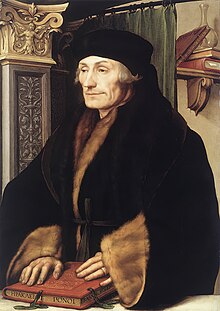
Holbein-erasmus.jpg
Thought for the Day
Dutch Renaissance humanist, Catholic priest, social critic, teacher, and theologian, Desiderius Erasmus wrote, “It is the chiefest point of happiness that a man is willing to be what he is.”

Tuesday, September 17, 2013

Bible Readings for September 17, 2013


Today our passages are Isaiah 25:1–28:13; Galatians 3:10-22; Psalm 61:1-8; and Proverbs 23:17-18. The readings are the Contemporary English Version.


Isaiah 25-28:13 (Contemporary English Version)

Isaiah 25

A Prayer of Thanks to God
 1You, LORD, are my God!    I will praise you
   for doing the wonderful things
   you had planned and promised
   since ancient times.
    2You have destroyed the fortress
   of our enemies,
   leaving their city in ruins.
   Nothing in that foreign city
   will ever be rebuilt.
    3Now strong and cruel nations
   will fear and honor you.
    4You have been a place of safety
   for the poor and needy
   in times of trouble.
   Brutal enemies pounded us
   like a heavy rain
   or the heat of the sun at noon,
   but you were our shelter.
    5Those wild foreigners struck
   like scorching desert heat.
   But you were like a cloud,
   protecting us from the sun.
   You kept our enemies from singing
   songs of victory.
   
The LORD Has Saved Us
 6On this mountain    the LORD All-Powerful
   will prepare
   for all nations
   a feast of the finest foods.
   Choice wines and the best meats
   will be served.
    7Here the LORD will strip away
   the burial clothes
   that cover the nations.
    8The LORD All-Powerful
   will destroy the power of death
   and wipe away all tears.
   No longer will his people
   be insulted everywhere.
   The LORD has spoken!
    9At that time, people will say,
   "The LORD has saved us!
   Let's celebrate.
   We waited and hoped--
   now our God is here."
    10The powerful arm of the LORD
   will protect this mountain.
   The Moabites will be put down
   and trampled on like straw
   in a pit of manure.
    11They will struggle to get out,
   but God will humiliate them
   no matter how hard they try. [a] 12The walls of their fortresses
   will be knocked down
   and scattered in the dirt.
   

Isaiah 26

A Song of Victory
 1The time is coming    when the people of Judah
   will sing this song:
   "Our city [b] is protected. The LORD is our fortress,
   and he gives us victory.
    2Open the city gates
   for a law-abiding nation
   that is faithful to God.
    3The LORD gives perfect peace
   to those whose faith is firm.
    4So always trust the LORD
   because he is forever
   our mighty rock. [c] 5God has put down our enemies
   in their mountain city [d] and rubbed it in the dirt.
    6Now the poor and abused
   stomp all over that city."
   
The LORD Can Be Trusted
 7Our LORD, you always do right,    and you make the path smooth
   for those who obey you.
    8You are the one we trust
   to bring about justice;
   above all else we want
   your name to be honored.
    9Throughout the night,
   my heart searches for you,
   because your decisions
   show everyone on this earth
   how to live right.
    10Even when the wicked
   are treated with mercy
   in this land of justice,
   they do wrong and are blind
   to your glory, our LORD.
    11Your hand is raised and ready
   to punish them,
   but they don't see it.
   Put them to shame!
   Show how much you care for us
   and throw them into the fire
   intended for your enemies.
    12You will give us peace, LORD,
   because everything we have done
   was by your power.
    13Others have ruled over us
   besides you, our LORD God,
   but we obey only you.
    14Those enemies are now dead
   and can never live again.
   You have punished them--
   they are destroyed,
   completely forgotten.
    15Our nation has grown
   because of you, our LORD.
   We have more land than before,
   and you are honored.
   
The LORD Gives Life to the Dead
 16When you punished our people,    they turned and prayed
   to you, our LORD. [e] 17Because of what you did to us,
   we suffered like a woman
   about to give birth.
    18But instead of having a child,
   our terrible pain
   produced only wind.
   We have won no victories,
   and we have no descendants
   to take over the earth.
    19Your people will rise to life!
   Tell them to leave their graves
   and celebrate with shouts.
   You refresh the earth
   like morning dew;
   you give life to the dead.
    20Go inside and lock the doors,
   my people.
   Hide there for a little while,
   until the LORD
   is no longer angry.
   
The Earth and the Sea Will Be Punished
 21The LORD will come out    to punish everyone on earth
   for their sins.
   And when he does,
   those who did violent crimes
   will be known and punished.
   

Isaiah 27

 1On that day, Leviathan, [f] the sea monster,    will squirm and try to escape,
   but the LORD will kill him
   with a cruel, sharp sword.
   
   
Protection and Forgiveness
The LORD said:
 2At that time you must sing    about a fruitful [g] vineyard. 3I, the LORD, will protect it
   and always keep it watered.
   I will guard it day and night
   to keep it from harm.
    4I am no longer angry.
   But if it produces thorns,
   I will go to war against it
   and burn it to the ground.
    5Yet if the vineyard depends
   on me for protection,
   it will become my friend
   and be at peace with me.
    6Someday Israel will take root
   like a vine.
   It will blossom and bear fruit
   that covers the earth.
    7I, the LORD, didn't punish and kill
   the people of Israel
   as fiercely as I punished
   and killed their enemies.
    8I carefully measured out
   Israel's punishment [h] and sent the scorching heat
   to chase them far away.
    9There's only one way
   that Israel's sin and guilt
   can be completely forgiven:
   They must crush the stones
   of every pagan altar
   and place of worship.
   
The LORD Will Bring His People Together
 10Fortress cities are left    like a desert
   where no one lives.
   Cattle walk through the ruins,
   stripping the trees bare.
    11When broken branches
   fall to the ground,
   women pick them up
   to feed the fire.
   But these people are so stupid
   that the God who created them
   will show them no mercy.
    12The time is coming when the LORD will shake the land between the Euphrates River and the border of Egypt, and one by one he will bring all of his people together. 13A loud trumpet will be heard. Then the people of Israel who were dragged away to Assyria and Egypt will return to worship the LORD on his holy mountain in Jerusalem.
   

Isaiah 28

Samaria Will Be Punished
 1The city of Samaria    above a fertile valley
   is in for trouble!
   Its leaders are drunkards,
   who stuff themselves
   with food and wine.
   But they will be like flowers
   that dry up and wilt.
    2Only the Lord is strong
   and powerful!
   His mighty hand
   will strike them down
   with the force of a hailstorm
   or a mighty whirlwind
   or an overwhelming flood.
    3Every drunkard in Ephraim [i] takes pride in Samaria,
   but it will be crushed.
    4Samaria above a fertile valley
   will quickly lose its glory.
   It will be gobbled down
   like the first ripe fig
   at harvest season.
    5When this time comes,
   the LORD All-Powerful
   will be a glorious crown
   for his people who survive.
    6He will see that justice rules
   and that his people
   are able
   to defend their cities.
   
Corrupt Leaders Will Be Punished
 7Priests and prophets stumble    because they are drunk.
   Their minds are too confused
   to receive God's messages
   or give honest decisions.
    8Their tables are covered,
   completely covered,
   with their stinking vomit.
    9You drunken leaders
   are like babies!
   How can you possibly understand
   or teach the LORD's message?
    10You don't even listen--
   all you hear is senseless sound
   after senseless sound. [j] 11So, the Lord will speak
   to his people
   in strange sounds
   and foreign languages. [k] 12He promised you
   perfect peace and rest,
   but you refused to listen.
    13Now his message to you
   will be senseless sound
   after senseless sound. [l] Then you will fall backwards,
   injured and trapped.
   
Footnotes:
  1. Isaiah 25:11 no matter. . . try: One possible meaning for the difficult Hebrew text.
  2. Isaiah 26:1 city: Probably Jerusalem.
  3. Isaiah 26:4 mighty rock: See the note at 17.10.
  4. Isaiah 26:5 our enemies. . . city: One possible meaning for the difficult Hebrew text.
  5. Isaiah 26:16 LORD: One possible meaning for the difficult Hebrew text of verse 16.
  6. Isaiah 27:1 Leviathan: God's victory over this monster sometimes stands for God's power over all creation and sometimes for his defeat of his enemies, especially Egypt.
  7. Isaiah 27:2 fruitful: Some Hebrew manuscripts have "lovely."
  8. Isaiah 27:8 I. . . punishment: One possible meaning for the difficult Hebrew text.
  9. Isaiah 28:3 Ephraim: The northern kingdom of Israel; Samaria was its capital.
  10. Isaiah 28:10 sound: One possible meaning for the difficult Hebrew text of verses 9,10.
  11. Isaiah 28:11 in. . . foreign languages: This probably refers to the language of the Assyrians.
  12. Isaiah 28:13 Now. . . sound: One possible meaning for the difficult Hebrew text.

Galatians 3:10-22 (Contemporary English Version)

10Anyone who tries to please God by obeying the Law is under a curse. The Scriptures say, "Everyone who doesn't obey everything in the Law is under a curse." 11No one can please God by obeying the Law. The Scriptures also say, "The people God accepts because of their faith will live." [a] 12The Law isn't based on faith. It promises life only to people who obey its commands. 13But Christ rescued us from the Law's curse, when he became a curse in our place. This is because the Scriptures say that anyone who is nailed to a tree is under a curse. 14And because of what Jesus Christ has done, the blessing that was promised to Abraham was taken to the Gentiles. This happened so that by faith we would be given the promised Holy Spirit.
   
The Law and the Promise
 15My friends, I will use an everyday example to explain what I mean. Once someone agrees to something, no one else can change or cancel the agreement. [b] 16That is how it is with the promises God made to Abraham and his descendant. [c] The promises were not made to many descendants, but only to one, and that one is Christ. 17What I am saying is that the Law cannot change or cancel God's promise that was made 430 years before the Law was given. 18If we have to obey the Law in order to receive God's blessings, those blessings don't really come to us because of God's promise. But God was kind to Abraham and made him a promise. 19What is the use of the Law? It was given later to show that we sin. But it was only supposed to last until the coming of that descendant [d] who was given the promise. In fact, angels gave the Law to Moses, and he gave it to the people. 20There is only one God, and the Law did not come directly from him.
Slaves and Children
 21Does the Law disagree with God's promises? No, it doesn't! If any law could give life to us, we could become acceptable to God by obeying that law. 22But the Scriptures say that sin controls everyone, so that God's promises will be for anyone who has faith in Jesus Christ.    
Footnotes:
  1. Galatians 3:11 The people God accepts because of their faith will live: Or " The people God accepts will live because of their faith."
  2. Galatians 3:15 Once someone. . . cancel the agreement: Or " Once a person makes out a will, no one can change or cancel it."
  3. Galatians 3:16 descendant: The Greek text has " seed," which may mean one or many descendants. In this verse Paul says it means Christ.
  4. Galatians 3:19 that descendant: Jesus.

Psalm 61:1-8 (Contemporary English Version)

Psalm 61

(A psalm by David for the music leader. Use with stringed instruments.)
Under the Protection of God
 1Please listen, God,    and answer my prayer!
    2I feel hopeless,
   and I cry out to you
   from a faraway land.
   Lead me to the mighty rock [a] high above me.
    3You are a strong tower,
   where I am safe
   from my enemies.
    4Let me live with you forever
   and find protection
   under your wings, my God.
    5You heard my promises,
   and you have blessed me,
   just as you bless everyone
   who worships you.
    6Let the king have a long
   and healthy life.
    7May he always rule
   with you, God, at his side;
   may your love and loyalty
   watch over him.
    8I will sing your praises
   forever
   and will always
   keep my promises.
   
Footnotes:
  1. Psalm 61:2 mighty rock: See the note at 18.2.

Proverbs 23:17-18 (Contemporary English Version)

-14-
 17 Don't be jealous of sinners,    but always honor the LORD.
    18Then you will truly have hope
   for the future.


Verse of the Day

“Do as God does. After all, you are his dear children.” - Ephesians 5:1
Today's passage is from the Contemporary English Version.


Holbein-erasmus.jpg
Thought for the Day

Desiderius Erasmus,  Dutch Renaissance humanist, Catholic priest, social critic, teacher, and theologian, wrote, “Prevention is better than cure.”

Monday, June 10, 2013

Bible Readings for June 10, 2013

 
Today our passages are 1 Kings 7:1-51; Acts 7:30-50; Psalm 128:1-6; and Proverbs 16:31-33. The readings are the Contemporary English Version.


1 Kings 7:1-51 (Contemporary English Version)

1 Kings 7

Solomon's Palace Is Built
 1Solomon's palace took thirteen years to build.     2-3Forest Hall was the largest room in the palace. It was one hundred fifty feet long, seventy-five feet wide, and forty-five feet high, and was lined with cedar from Lebanon. It had four rows of cedar pillars, fifteen in a row, and they held up forty-five cedar beams. The ceiling was covered with cedar. 4Three rows of windows on each side faced each other, 5and there were three doors on each side near the front of the hall.     6Pillar Hall was seventy-five feet long and forty-five feet wide. A covered porch supported by pillars went all the way across the front of the hall.     7Solomon's throne was in Justice Hall, where he judged cases. This hall was completely lined with cedar.     8The section of the palace where Solomon lived was behind Justice Hall and looked exactly like it. He had a similar place built for his wife, the daughter of the king of Egypt.     9From the foundation all the way to the top, these buildings and the courtyard were made out of the best stones [a] carefully cut to size, then smoothed on every side with saws. 10The foundation stones were huge, good stones--some of them fifteen feet long and others twelve feet long. 11The cedar beams and other stones that had been cut to size were on top of these foundation stones. 12The walls around the palace courtyard were made out of three layers of cut stones with one layer of cedar beams, just like the front porch and the inner courtyard of the temple.
Hiram Makes the Bronze Furnishings
(2 Chronicles 3.15-17; 4.1-10)
 13-14Hiram was a skilled bronze worker from the city of Tyre. [b] His father was now dead, but he also had been a bronze worker from Tyre, and his mother was from the tribe of Naphtali. King Solomon asked Hiram to come to Jerusalem and make the bronze furnishings to use for worship in the LORD's temple, and he agreed to do it.     15Hiram made two bronze columns twenty-seven feet tall and about six feet across. 16For the top of each column, he also made a bronze cap seven and a half feet high. 17The caps were decorated with seven rows of designs that looked like chains, [c] 18with two rows of designs that looked like pomegranates. [d] 19The caps for the columns of the porch were six feet high and were shaped like lilies. [e] 20The chain designs on the caps were right above the rounded tops of the two columns, and there were two hundred pomegranates in rows around each cap. 21Hiram placed the two columns on each side of the main door of the temple. The column on the south side was called Jachin, [f] and the one on the north was called Boaz. [g] 22The lily-shaped caps were on top of the columns.    This completed the work on the columns.     23Hiram also made a large bowl called the Sea. It was seven and a half feet deep, about fifteen feet across, and forty-five feet around. 24Two rows of bronze gourds were around the outer edge of the bowl, ten gourds to every eighteen inches. 25The bowl itself sat on top of twelve bronze bulls with three bulls facing outward in each of four directions. 26The sides of the bowl were four inches thick, and its rim was like a cup that curved outward like flower petals. The bowl held about eleven thousand gallons.     27Hiram made ten movable bronze stands, each one four and a half feet high, six feet long, and six feet wide. 28-29The sides were made with panels attached to frames decorated with flower designs. The panels themselves were decorated with figures of lions, bulls, and winged creatures. 30-31Each stand had four bronze wheels and axles and a round frame twenty-seven inches across, held up by four supports eighteen inches high. A small bowl rested in the frame. The supports were decorated with flower designs, and the frame with carvings.    The side panels of the stands were square, 32and the wheels and axles were underneath them. The wheels were about twenty-seven inches high 33and looked like chariot wheels. The axles, rims, spokes, and hubs were made out of bronze.     34-35Around the top of each stand was a nine-inch strip, and there were four braces [h] attached to the corners of each stand. The panels and the supports were attached to the stands, 36and the stands were decorated with flower designs and figures of lions, palm trees, and winged creatures. 37Hiram made the ten bronze stands from the same mold, so they were exactly the same size and shape. 38Hiram also made ten small bronze bowls, one for each stand. The bowls were six feet across and could hold about two hundred thirty gallons.     39He put five stands on the south side of the temple, five stands on the north side, and the large bowl at the southeast corner of the temple.     40Hiram made pans for hot ashes, and also shovels and sprinkling bowls.    This is a list of the bronze items that Hiram made for the LORD's temple:
A List of Everything inside the Temple
(2 Chronicles 4.11--5.1)
 41two columns; two bowl-shaped caps for the tops of the columns; two chain designs on the caps; 42four hundred pomegranates [i] for the chain designs; 43ten movable stands; ten small bowls for the stands; 44a large bowl; twelve bulls that held up the bowl; 45pans for hot ashes, and also shovels and sprinkling bowls. Hiram made these bronze things for Solomon 46near the Jordan River between Succoth and Zarethan by pouring melted bronze into clay molds.     47There were so many bronze things that Solomon never bothered to weigh them, and no one ever knew how much bronze was used.     48Solomon gave orders to make the following temple furnishings out of gold: the altar; the table that held the sacred loaves of bread; [j] 49ten lampstands that went in front of the most holy place; flower designs; lamps and tongs; 50cups, lamp snuffers, and small sprinkling bowls; dishes for incense; fire pans; and the hinges for the doors to the most holy place and the main room of the temple. 51After the LORD's temple was finished, Solomon put into its storage rooms everything that his father David had dedicated to the LORD, including the gold and the silver.    
Footnotes:
  1. 1 Kings 7:9 From. . . best stones: One possible meaning for the difficult Hebrew text.
  2. 1 Kings 7:13 Hiram. . . city of Tyre: This is not the same person as "King Hiram of Tyre" (see 5.1).
  3. 1 Kings 7:17 seven rows. . . chains: One possible meaning for the difficult Hebrew text.
  4. 1 Kings 7:18 pomegranates: One possible meaning for the difficult Hebrew text of verse 18. A pomegranate is a bright red fruit that looks like an apple. In ancient times, it was a symbol of life.
  5. 1 Kings 7:19 lilies: One possible meaning for the difficult Hebrew text of verse 19.
  6. 1 Kings 7:21 Jachin: Or "He makes secure."
  7. 1 Kings 7:21 Boaz: Or "He is strong."
  8. 1 Kings 7:34 braces: Or "handles."
  9. 1 Kings 7:42 pomegranates: See the note at 7.18.
  10. 1 Kings 7:48 sacred loaves of bread: This bread was offered to the LORD and was a symbol of the LORD's presence in the temple. It was put out on a special table, and was replaced with fresh bread each week (see Leviticus 24.5-9).

Acts 7:30-50 (Contemporary English Version)

30Forty years later, an angel appeared to Moses from a burning bush in the desert near Mount Sinai. 31Moses was surprised by what he saw. He went closer to get a better look, and the Lord said, 32"I am the God who was worshiped by your ancestors, Abraham, Isaac, and Jacob." Moses started shaking all over and didn't dare to look at the bush.     33The Lord said to him, "Take off your sandals. The place where you are standing is holy. 34With my own eyes I have seen the suffering of my people in Egypt. I have heard their groans and have come down to rescue them. Now I am sending you back to Egypt."     35This was the same Moses that the people rejected by saying, "Who made you our leader and judge?" God's angel had spoken to Moses from the bush. And God had even sent the angel to help Moses rescue the people and be their leader.     36In Egypt and at the Red Sea [a] and in the desert, Moses rescued the people by working miracles and wonders for forty years. 37Moses is the one who told the people of Israel, "God will choose one of your people to be a prophet, just as he chose me." 38Moses brought our people together in the desert, and the angel spoke to him on Mount Sinai. There he was given these life-giving words to pass on to us. 39But our ancestors refused to obey Moses. They rejected him and wanted to go back to Egypt. 40The people said to Aaron, "Make some gods to lead us! Moses led us out of Egypt, but we don't know what's happened to him now." 41Then they made an idol in the shape of a calf. They offered sacrifices to the idol and were pleased with what they had done.     42God turned his back on his people and left them. Then they worshiped the stars in the sky, just as it says in the Book of the Prophets, "People of Israel, you didn't offer sacrifices and offerings to me during those forty years in the desert. 43Instead, you carried the tent where the god Molech is worshiped, and you took along the star of your god Rephan. You made those idols and worshiped them. So now I will have you carried off beyond Babylonia."     44The tent where our ancestors worshiped God was with them in the desert. This was the same tent that God had commanded Moses to make. And it was made like the model that Moses had seen. 45Later it was given to our ancestors, and they took it with them when they went with Joshua. They carried the tent along as they took over the land from those people that God had chased out for them. Our ancestors used this tent until the time of King David. 46He pleased God and asked him if he could build a house of worship for the people [b] of Israel. 47And it was finally King Solomon who built a house for God. [c] 48But the Most High God doesn't live in houses made by humans. It is just as the prophet said, when he spoke for the Lord,     49"Heaven is my throne,    and the earth    is my footstool.    What kind of house    will you build for me?    In what place will I rest?     50I have made everything."    
Footnotes:
  1. Acts 7:36 Red Sea: This name comes from the Bible of the early Christians, a translation made into Greek about 200 B.C. It refers to the body of water that the Israelites crossed and was one of the marshes or fresh water lakes near the eastern part of the Nile Delta, where they lived and where the towns of Exodus 13.17--14.9 were located.
  2. Acts 7:46 the people: Some manuscripts have "God."
  3. Acts 7:47 God: Or "the people."

Psalm 128:1-6 (Contemporary English Version)

Psalm 128

(A song for worship.)
The LORD Rewards His Faithful People
 1The LORD will bless you    if you respect him    and obey his laws.     2Your fields will produce,    and you will be happy    and all will go well.     3Your wife will be as fruitful    as a grapevine,    and just as an olive tree    is rich with olives,    your home will be rich    with healthy children.     4That is how the LORD will bless    everyone who respects him.     5I pray that the LORD    will bless you from Zion    and let Jerusalem prosper    as long as you live.     6May you live long enough    to see your grandchildren.    Let's pray for peace in Israel!


Proverbs 16:31-33 (Contemporary English Version)

31Gray hair is a glorious crown    worn by those    who have lived right.     32Controlling your temper    is better than being a hero    who captures a city.     33We make our own decisions,    but the LORD alone    determines what happens.


Verse of the Day

“Put up with each other, and forgive anyone who does you wrong, just as Christ has forgiven you.” - Colossians 3:13
Today's passage is from the Contemporary English Version.


Holbein-erasmus.jpg
Thought for the Day
 
Dutch Renaissance humanist, Catholic priest, social critic, teacher, and theologian Desiderius Erasmus wrote, “It is the chiefest point of happiness that a man is willing to be what he is.”