Read the Bible in a Year

Each day, we'll post passages so that you can read the Bible in one year. This is part of The Colossians 13:16 Project, sponsored by Cove Presbyterian Church, 3404 Main Street, Weirton, West Virginia. You're invited to worship with us Sundays, at 11:00 a.m. or Saturdays, at 6:30 p.m. You may also want to consider joining one our adult Bible Studies: Thursdays at 12:00 noon and Sundays at 9:30 a.m. and 10:00 a.m. We also have a full range of programs for children. If you want more information about the church, check out the other blogs. And please feel free to leave any comments.

The Bible in a Year is a ministry of Cove Presbyterian Church. We need your support to keep posting. If you find it helpful, you can support this blog by your contributions. They may be sent to Cove Presbyterian Church, 3404 Main Street, Weirton, WV 26062. You can also use the PayPal link below:

Image result for paypal donate
Showing posts with label William Makepeace Thackeray. Show all posts

Wednesday, July 18, 2018

Bible Readings for July 18, 2018


Today our passages are 1 Chronicles 26:12–27:34; Romans 4:13–5:5; Psalm 14:1-7; and Proverbs 19:17. The readings are from The Message by Eugene H. Peterson.  If you find these readings helpful, please consider sending an offering directly to Cove Presbyterian Church, 3404 Main Street, Weirton, West Virginia or through PayPal by using the link below.
https://www.paypal.com/cgi-bin/webscr?cmd=_s-xclick&hosted_button_id=NX3WLYQG5864L


1 Chronicles 26:12-27:34 (The Message)


12-16 These teams of security guards, supervised by their leaders, kept order in The Temple of God, keeping up the traditions of their ancestors. They were all assigned to their posts by the same method regardless of the prominence of their families—each picked his gate assignment from a hat. Shelemiah was assigned to the East Gate; his son Zechariah, a shrewd counselor, got the North Gate. Obed-Edom got the South Gate; and his sons pulled duty at the storehouse. Shuppim and Hosah were posted to the West Gate and the Shalleketh Gate on the high road.
16-18 The guards stood shoulder to shoulder: six Levites per day on the east, four per day on the north and on the south, and two at a time at the storehouse. At the open court to the west, four guards were posted on the road and two at the court.
19 These are the teams of security guards from the sons of Korah and Merari. 
Financial Affairs: Accountants and Bookkeepers
20-22 Other Levites were put in charge of the financial affairs of The Temple of God. From the family of Ladan (all Gershonites) came Jehieli, and the sons of Jehieli, Zetham and his brother Joel. They supervised the finances of the sanctuary of God23-28 From the Amramites, the Izharites, the Hebronites, and the Uzzielites: Shubael, descended from Gershom the son of Moses, was the chief financial officer. His relatives through Eliezer: his son Rehabiah, his son Jeshaiah, his son Joram, his son Zicri, and his son Shelomith. Shelomith and his relatives were in charge of valuables consecrated by David the king, family heads, and various generals and commanders from the army. They dedicated the plunder that they had gotten in war to the work of the worship of God. In addition, everything that had been dedicated by Samuel the seer, Saul son of Kish, Abner son of Ner, and Joab son of Zeruiah—anything that had been dedicated, ever, was the responsibility of Shelomith and his family.
29-30 From the family of the Izharites, Kenaniah and sons were appointed as officials and judges responsible for affairs outside the work of worship and sanctuary. From the family of the Hebronites, Hashabiah and his relatives—1,700 well-qualified men—were responsible for administration of matters related to the worship of God and the king's work in the territory west of the Jordan.
31-32 According to the family tree of the Hebronites, Jeriah held pride of place. In the fortieth year of David's reign (his last), the Hebron family tree was researched and outstanding men were found at Jazer in Gilead, namely, Jeriah and 2,700 men of his extended family: David the king made them responsible for administration of matters related to the worship of God and the work of the king in the territory east of the Jordan—the Reubenites, the Gadites, and the half-tribe of Manasseh.
 

1 Chronicles 27

Military Organization
1 Here is the listing of the sons of Israel by family heads, commanders and captains, and other officers who served the king in everything military. Army divisions were on duty a month at a time for the twelve months of the year. Each division comprised 24,000 men. 2-3 First division, first month: Jashobeam son of Zabdiel was in charge with 24,000 men. He came from the line of Perez. He was over all the army officers during the first month.
4 The division for the second month: Dodai the Ahohite was in charge: 24,000 men; Mikloth was the leader of his division.
5-6 Commander for the third month: Benaiah son of Jehoiada the priest with 24,000 men. This was the same Benaiah who was a Mighty Man among the Thirty and their chief. His son Ammizabad was in charge of the division.
7 Fourth division for the fourth month: Asahel brother of Joab; his son Zebadiah succeeded him: 24,000 men.
8 Fifth division, fifth month: commander Shamhuth the Izrahite: 24,000 men.
9 Sixth division, sixth month: Ira son of Ikkesh the Tekoite: 24,000 men.
10 Seventh division, seventh month: Helez the Pelonite, an Ephraimite: 24,000 men.
11 Eighth division, eighth month: Sibbecai the Hushathite, a Zerahite: 24,000 men.
12 Ninth division, ninth month: Abiezer the Anathothite, a Benjaminite: 24,000 men.
13 Tenth division, tenth month: Maharai the Netophathite, a Zerahite: 24,000 men.
14 Eleventh division, eleventh month: Benaiah the Pirathomite, an Ephraimite: 24,000 men.
15 Twelfth division, twelfth month: Heldai the Netophathite from the family of Othniel: 24,000 men. 
Tribal Administrators
16-22 Administrators of the affairs of the tribes: for Reuben: Eliezer son of Zicri;
for Simeon: Shephatiah son of Maacah;
for Levi: Hashabiah son of Kemuel;
for Aaron: Zadok;
for Judah: Elihu, David's brother;
for Issachar: Omri son of Michael;
for Zebulun: Ishmaiah son of Obadiah;
for Naphtali: Jerimoth son of Azriel;
for Ephraim: Hoshea son of Azaziah;
for one half-tribe of Manasseh: Joel son of Pedaiah;
for the half-tribe of Manasseh in Gilead: Iddo son of Zechariah;
for Benjamin: Jaasiel son of Abner;
for Dan: Azarel son of Jeroham.
These are the administrative officers assigned to the tribes of Israel.
23-24 David didn't keep a count of men under the age of twenty, because God had promised to give Israel a population as numerous as the stars in the sky. Joab son of Zeruiah started out counting the men, but he never finished. God's anger broke out on Israel because of the counting. As it turned out, the numbers were never entered into the court records of King David. 
Supply Officers
25 The king's storage facilities were supervised by Azmaveth son of Adiel. Jonathan son of Uzziah was responsible for the warehouses in the outlying areas. 26 Ezri son of Kelub was in charge of the field workers on the farms.
27 Shimei the Ramathite was in charge of the vineyards and Zabdi the Shiphmite was in charge of grapes for the wine vats.
28 Baal-Hanan the Gederite was in charge of the olive and sycamore-fig trees in the western hills, and Joash was in charge of the olive oil.
29 Shitrai the Sharonite was in charge of herds grazing in Sharon and Shaphat son of Adlai was in charge of herds in the valley.
30-31 Obil the Ismaelite was in charge of the camels, Jehdeiah the Meronothite was in charge of the donkeys, and Jaziz the Hagrite was in charge of the flocks.
These were the ones responsible for taking care of King David's property. 
David's Counselors
32 Jonathan, David's uncle, a wise and literate counselor, and Jehiel son of Hacmoni, were responsible for rearing the king's sons. 33-34 Ahithophel was the king's counselor; Hushai the Arkite was the king's friend. Ahithophel was later replaced by Jehoiada son of Benaiah and by Abiathar.
Joab was commander of the king's army. 


Romans 4:13-5:5 (The Message)


13-15That famous promise God gave Abraham—that he and his children would possess the earth—was not given because of something Abraham did or would do. It was based on God's decision to put everything together for him, which Abraham then entered when he believed. If those who get what God gives them only get it by doing everything they are told to do and filling out all the right forms properly signed, that eliminates personal trust completely and turns the promise into an ironclad contract! That's not a holy promise; that's a business deal. A contract drawn up by a hard-nosed lawyer and with plenty of fine print only makes sure that you will never be able to collect. But if there is no contract in the first place, simply a promise—and God's promise at that—you can't break it.
16This is why the fulfillment of God's promise depends entirely on trusting God and his way, and then simply embracing him and what he does. God's promise arrives as pure gift. That's the only way everyone can be sure to get in on it, those who keep the religious traditions and those who have never heard of them. For Abraham is father of us all. He is not our racial father—that's reading the story backward. He is our faith father.
17-18We call Abraham "father" not because he got God's attention by living like a saint, but because God made something out of Abraham when he was a nobody. Isn't that what we've always read in Scripture, God saying to Abraham, "I set you up as father of many peoples"? Abraham was first named "father" and then became a father because he dared to trust God to do what only God could do: raise the dead to life, with a word make something out of nothing. When everything was hopeless, Abraham believed anyway, deciding to live not on the basis of what he saw he couldn't do but on what God said he would do. And so he was made father of a multitude of peoples. God himself said to him, "You're going to have a big family, Abraham!"
19-25Abraham didn't focus on his own impotence and say, "It's hopeless. This hundred-year-old body could never father a child." Nor did he survey Sarah's decades of infertility and give up. He didn't tiptoe around God's promise asking cautiously skeptical questions. He plunged into the promise and came up strong, ready for God, sure that God would make good on what he had said. That's why it is said, "Abraham was declared fit before God by trusting God to set him right." But it's not just Abraham; it's also us! The same thing gets said about us when we embrace and believe the One who brought Jesus to life when the conditions were equally hopeless. The sacrificed Jesus made us fit for God, set us right with God. 

Romans 5

Developing Patience
1-2By entering through faith into what God has always wanted to do for us—set us right with him, make us fit for him—we have it all together with God because of our Master Jesus. And that's not all: We throw open our doors to God and discover at the same moment that he has already thrown open his door to us. We find ourselves standing where we always hoped we might stand—out in the wide open spaces of God's grace and glory, standing tall and shouting our praise. 3-5There's more to come: We continue to shout our praise even when we're hemmed in with troubles, because we know how troubles can develop passionate patience in us, and how that patience in turn forges the tempered steel of virtue, keeping us alert for whatever God will do next. In alert expectancy such as this, we're never left feeling shortchanged. Quite the contrary—we can't round up enough containers to hold everything God generously pours into our lives through the Holy Spirit! 

Psalm 14:1-7 (The Message)


Psalm 14

A David Psalm
1 Bilious and bloated, they gas, "God is gone."
Their words are poison gas,
fouling the air; they poison
Rivers and skies;
thistles are their cash crop.

2 God sticks his head out of heaven.
He looks around.
He's looking for someone not stupid—
one man, even, God-expectant,
just one God-ready woman.

3 He comes up empty. A string
of zeros. Useless, unshepherded
Sheep, taking turns pretending
to be Shepherd.
The ninety and nine
follow their fellow.

4 Don't they know anything,
all these impostors?
Don't they know
they can't get away with this—
Treating people like a fast-food meal
over which they're too busy to pray?

5-6 Night is coming for them, and nightmares,
for God takes the side of victims.
Do you think you can mess
with the dreams of the poor?
You can't, for God
makes their dreams come true.

7 Is there anyone around to save Israel?
Yes. God is around; God turns life around.
Turned-around Jacob skips rope,
turned-around Israel sings laughter.
 

Proverbs 19:17 (The Message)


17 Mercy to the needy is a loan to God,
and God pays back those loans in full. 


Verse of the Day

“I will do right and praise you by learning to respect your perfect laws.” - Psalm 119:7 
Today's passage is from the Contemporary English Version.


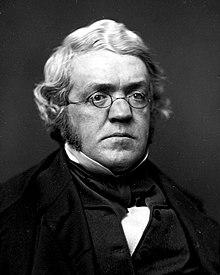
William Makepeace Thackeray by Jesse Harrison Whitehurst-crop.jpgThought for the Day

British novelist and author, William Makepeace Thackeray wrote, “Do not be in a hurry to succeed. What would you have to live for afterwards? Better make the horizon your goal; it will always be ahead of you.”


Image result for movie jokesA Joke for Today

Things You'd Never Have Known If Not For the Movies:

If you overpower a sentry or guard, his uniform will fit you perfectly.

It is possible to brush your teeth without any toothpaste foam appearing on your lips.

Handsome men don't belch or fart.

If you're a team of misfits and losers, you'll win the championship.

In a large city, the streets are always wet at night.

Most bathrooms do not have a toilet.

All orphans can sing and dance, both alone and in groups.

You'll find a parking space in front of your building in New York.

Saturday, May 7, 2016

Bible Readings for May 7, 2016


Today our passages are 1 Samuel 1:1–2:21; John 5:1-23; Psalm 105:37-45; and Proverbs 14:28-29. The readings are from The Message by Eugene H. PetersonIf you find these readings helpful, please consider sending an offering directly to Cove Presbyterian Church, 3404 Main Street, Weirton, West Virginia or through PayPal.

1 Samuel 1-2:21 (The Message)


1 Samuel 1

Hannah Pours Out Her Heart to God
1-2There once was a man who lived in Ramathaim. He was descended from the old Zuph family in the Ephraim hills. His name was Elkanah. (He was connected with the Zuphs from Ephraim through his father Jeroham, his grandfather Elihu, and his great-grandfather Tohu.) He had two wives. The first was Hannah; the second was Peninnah. Peninnah had children; Hannah did not. 3-7 Every year this man went from his hometown up to Shiloh to worship and offer a sacrifice to God-of-the-Angel-Armies. Eli and his two sons, Hophni and Phinehas, served as the priests of God there. When Elkanah sacrificed, he passed helpings from the sacrificial meal around to his wife Peninnah and all her children, but he always gave an especially generous helping to Hannah because he loved her so much, and because God had not given her children. But her rival wife taunted her cruelly, rubbing it in and never letting her forget that God had not given her children. This went on year after year. Every time she went to the sanctuary of God she could expect to be taunted. Hannah was reduced to tears and had no appetite.
8 Her husband Elkanah said, "Oh, Hannah, why are you crying? Why aren't you eating? And why are you so upset? Am I not of more worth to you than ten sons?"
9-11 So Hannah ate. Then she pulled herself together, slipped away quietly, and entered the sanctuary. The priest Eli was on duty at the entrance to God's Temple in the customary seat. Crushed in soul, Hannah prayed to God and cried and cried—inconsolably. Then she made a vow:
Oh, God-of-the-Angel-Armies,
If you'll take a good, hard look at my pain,
If you'll quit neglecting me and go into action for me
By giving me a son,
I'll give him completely, unreservedly to you.
I'll set him apart for a life of holy discipline.

12-14 It so happened that as she continued in prayer before God, Eli was watching her closely. Hannah was praying in her heart, silently. Her lips moved, but no sound was heard. Eli jumped to the conclusion that she was drunk. He approached her and said, "You're drunk! How long do you plan to keep this up? Sober up, woman!"
15-16 Hannah said, "Oh no, sir—please! I'm a woman hard used. I haven't been drinking. Not a drop of wine or beer. The only thing I've been pouring out is my heart, pouring it out to God. Don't for a minute think I'm a bad woman. It's because I'm so desperately unhappy and in such pain that I've stayed here so long."
17 Eli answered her, "Go in peace. And may the God of Israel give you what you have asked of him."
18 "Think well of me—and pray for me!" she said, and went her way. Then she ate heartily, her face radiant.
19 Up before dawn, they worshiped God and returned home to Ramah. Elkanah slept with Hannah his wife, and God began making the necessary arrangements in response to what she had asked.
Dedicating the Child to God
20 Before the year was out, Hannah had conceived and given birth to a son. She named him Samuel, explaining, "I asked God for him." 21-22 When Elkanah next took his family on their annual trip to Shiloh to worship God, offering sacrifices and keeping his vow, Hannah didn't go. She told her husband, "After the child is weaned, I'll bring him myself and present him before God—and that's where he'll stay, for good."
23-24 Elkanah said to his wife, "Do what you think is best. Stay home until you have weaned him. Yes! Let God complete what he has begun!"
So she did. She stayed home and nursed her son until she had weaned him. Then she took him up to Shiloh, bringing also the makings of a generous sacrificial meal—a prize bull, flour, and wine. The child was so young to be sent off!
25-26 They first butchered the bull, then brought the child to Eli. Hannah said, "Excuse me, sir. Would you believe that I'm the very woman who was standing before you at this very spot, praying to God? I prayed for this child, and God gave me what I asked for. And now I have dedicated him to God. He's dedicated to God for life."
Then and there, they worshiped God.

1 Samuel 2

1 Hannah prayed: I'm bursting with God-news! I'm walking on air.
I'm laughing at my rivals. I'm dancing my salvation. 2-5 Nothing and no one is holy like God,
no rock mountain like our God.
Don't dare talk pretentiously—
not a word of boasting, ever!
For God knows what's going on.
He takes the measure of everything that happens.
The weapons of the strong are smashed to pieces,
while the weak are infused with fresh strength.
The well-fed are out begging in the streets for crusts,
while the hungry are getting second helpings.
The barren woman has a houseful of children,
while the mother of many is bereft.
6-10 God brings death and God brings life,
brings down to the grave and raises up.
God brings poverty and God brings wealth;
he lowers, he also lifts up.
He puts poor people on their feet again;
he rekindles burned-out lives with fresh hope,
Restoring dignity and respect to their lives—
a place in the sun!
For the very structures of earth are God's;
he has laid out his operations on a firm foundation.
He protectively cares for his faithful friends, step by step,
but leaves the wicked to stumble in the dark.
No one makes it in this life by sheer muscle!
God's enemies will be blasted out of the sky,
crashed in a heap and burned.
God will set things right all over the earth,
he'll give strength to his king,
he'll set his anointed on top of the world!
11 Elkanah went home to Ramah. The boy stayed and served God in the company of Eli the priest.
Samuel Serves God
12-17 Eli's own sons were a bad lot. They didn't know God and could not have cared less about the customs of priests among the people. Ordinarily, when someone offered a sacrifice, the priest's servant was supposed to come up and, while the meat was boiling, stab a three-pronged fork into the cooking pot. The priest then got whatever came up on the fork. But this is how Eli's sons treated all the Israelites who came to Shiloh to offer sacrifices to God. Before they had even burned the fat to God, the priest's servant would interrupt whoever was sacrificing and say, "Hand over some of that meat for the priest to roast. He doesn't like boiled meat; he likes his rare." If the man objected, "First let the fat be burned—God's portion!—then take all you want," the servant would demand, "No, I want it now. If you won't give it, I'll take it." It was a horrible sin these young servants were committing—and right in the presence of God!—desecrating the holy offerings to God. 18-20 In the midst of all this, Samuel, a boy dressed in a priestly linen tunic, served God. Additionally, every year his mother would make him a little robe cut to his size and bring it to him when she and her husband came for the annual sacrifice. Eli would bless Elkanah and his wife, saying, "God give you children to replace this child you have dedicated to God." Then they would go home.
21 God was most especially kind to Hannah. She had three more sons and two daughters! The boy Samuel stayed at the sanctuary and grew up with God.

John 5:1-23 (The Message)

John 5

Even on the Sabbath
1-6Soon another Feast came around and Jesus was back in Jerusalem.
Near the Sheep Gate in Jerusalem there was a pool, in Hebrew called Bethesda, with five alcoves. Hundreds of sick people—blind, crippled, paralyzed—were in these alcoves. One man had been an invalid there for thirty-eight years. When Jesus saw him stretched out by the pool and knew how long he had been there, he said, "Do you want to get well?"
7The sick man said, "Sir, when the water is stirred, I don't have anybody to put me in the pool. By the time I get there, somebody else is already in."
8-9Jesus said, "Get up, take your bedroll, start walking." The man was healed on the spot. He picked up his bedroll and walked off.
9-10That day happened to be the Sabbath. The Jews stopped the healed man and said, "It's the Sabbath. You can't carry your bedroll around. It's against the rules."
11But he told them, "The man who made me well told me to. He said, 'Take your bedroll and start walking.'"
12-13They asked, "Who gave you the order to take it up and start walking?" But the healed man didn't know, for Jesus had slipped away into the crowd.
14A little later Jesus found him in the Temple and said, "You look wonderful! You're well! Don't return to a sinning life or something worse might happen."
15-16The man went back and told the Jews that it was Jesus who had made him well. That is why the Jews were out to get Jesus—because he did this kind of thing on the Sabbath.
17But Jesus defended himself. "My Father is working straight through, even on the Sabbath. So am I."
18That really set them off. The Jews were now not only out to expose him; they were out to kill him. Not only was he breaking the Sabbath, but he was calling God his own Father, putting himself on a level with God.
What the Father Does, the Son Does
19-20So Jesus explained himself at length. "I'm telling you this straight. The Son can't independently do a thing, only what he sees the Father doing. What the Father does, the Son does. The Father loves the Son and includes him in everything he is doing.
20-23"But you haven't seen the half of it yet, for in the same way that the Father raises the dead and creates life, so does the Son. The Son gives life to anyone he chooses. Neither he nor the Father shuts anyone out. The Father handed all authority to judge over to the Son so that the Son will be honored equally with the Father. Anyone who dishonors the Son, dishonors the Father, for it was the Father's decision to put the Son in the place of honor.

Psalm 105:37-45 (The Message)


23-42 Then Israel entered Egypt,
Jacob immigrated to the Land of Ham.
God gave his people lots of babies;
soon their numbers alarmed their foes.
He turned the Egyptians against his people;
they abused and cheated God's servants.
Then he sent his servant Moses,
and Aaron, whom he also chose.
They worked marvels in that spiritual wasteland,
miracles in the Land of Ham.
He spoke, "Darkness!" and it turned dark—
they couldn't see what they were doing.
He turned all their water to blood
so that all their fish died;
He made frogs swarm through the land,
even into the king's bedroom;
He gave the word and flies swarmed,
gnats filled the air.
He substituted hail for rain,
he stabbed their land with lightning;
He wasted their vines and fig trees,
smashed their groves of trees to splinters;
With a word he brought in locusts,
millions of locusts, armies of locusts;
They consumed every blade of grass in the country
and picked the ground clean of produce;
He struck down every firstborn in the land,
the first fruits of their virile powers.
He led Israel out, their arms filled with loot,
and not one among his tribes even stumbled.
Egypt was glad to have them go—
they were scared to death of them.
God spread a cloud to keep them cool through the day
and a fire to light their way through the night;
They prayed and he brought quail,
filled them with the bread of heaven;
He opened the rock and water poured out;
it flowed like a river through that desert—
All because he remembered his Covenant,
his promise to Abraham, his servant.

43-45 Remember this! He led his people out singing for joy;
his chosen people marched, singing their hearts out!
He made them a gift of the country they entered,
helped them seize the wealth of the nations
So they could do everything he told them—
could follow his instructions to the letter.

Hallelujah!

Proverbs 14:28-29 (The Message)


28 The mark of a good leader is loyal followers;
leadership is nothing without a following.

29 Slowness to anger makes for deep understanding;
a quick-tempered person stockpiles stupidity.

Verse of the Day
“Always be joyful and never stop praying. Whatever happens, keep thanking God because of Jesus Christ. This is what God wants you to do.” - 1 Thessalonians 5:16-18
Today's passage is from the Contemporary English Version.

William Makepeace Thackeray by Jesse Harrison Whitehurst-crop.jpg
Thought for the Day
English novelist of the 19th century, William Makepeace Thackeray wrote, “Mother is the name for God in the lips and hearts of little children.”

Sunday, November 24, 2013

Bible Readings for November 24, 3013


Today our passages are Ezekiel 47:1– 48:35; 1 Peter 2:11–3:7; Psalm 119:49-64; and Proverbs 28:12-13. The readings are the Contemporary English Version.

Ezekiel 47-48:35 (Contemporary English Version)


Ezekiel 47

The Stream Flowing from the Temple
 1The man took me back to the temple, where I saw a stream flowing from under the entrance. It began in the south part of the temple, where it ran past the altar and continued east through the courtyard.     2We walked out of the temple area through the north gate and went around to the east gate. I saw the small stream of water flowing east from the south side of the gate.
    3The man walked east, then took out his measuring stick and measured five hundred sixty yards downstream. He told me to wade through the stream there, and the water came up to my ankles. 4Then he measured another five hundred sixty yards downstream, and told me to wade through it there. The water came up to my knees. Another five hundred sixty yards downstream the water came up to my waist. 5Another five hundred sixty yards downstream, the stream had become a river that could be crossed only by swimming. 6The man said, "Ezekiel, son of man, pay attention to what you've seen."
   We walked to the riverbank, 7where I saw dozens of trees on each side. 8The man said:
   This water flows eastward to the Jordan River valley and empties into the Dead Sea, where it turns the salt water into fresh water. 9Wherever this water flows, there will be all kinds of animals and fish, because it will bring life and fresh water to the Dead Sea. 10From En-Gedi to Eneglaim, people will fish in the sea and dry their nets along the coast. There will be as many kinds of fish in the Dead Sea as there are in the Mediterranean Sea. 11But the marshes along the shore will remain salty, so that people can use the salt from them.
    12Fruit trees will grow all along this river and produce fresh fruit every month. The leaves will never dry out, because they will always have water from the stream that flows from the temple, and they will be used for healing people.
   
The Borders of the Land
 13-14The LORD God said to the people of Israel:    When the land is divided among the twelve tribes of Israel, the Joseph tribe [a] will receive two shares. Divide the land equally, because I promised your ancestors that this land would someday belong to their descendants. These are the borders of the land: 15The northern border will begin at the Mediterranean Sea, then continue eastward to Hethlon, to Lebo-Hamath, then across to Zedad, 16Berothah, [b] and Sibraim, which is on the border between the two kingdoms of Damascus and Hamath. The border will end at Hazer-Hatticon, which is on the border of Hauran. 17So the northern border will run between the Mediterranean Sea and Hazar-Enon, which is on the border between Damascus and Hamath. [c] 18The eastern border will begin on the border between the two kingdoms of Hauran and Damascus. It will run south along the Jordan River, which separates the territories of Gilead and Israel, and it will end at the Dead Sea near the town of Tamar. [d] 19The southern border will begin at Tamar, then run southwest to the springs near Meribath-Kadesh. It will continue along the Egyptian Gorge and will end at the Mediterranean Sea.
    20The western border will run north along the Mediterranean Sea to a point just west of Lebo-Hamath.
    21That is the land to be divided among the tribes of Israel. 22It will belong to the Israelites and to any foreigners living among them whose children were born in Israel. These foreigners must be treated like any other Israelite citizen, and they will receive 23a share of the land given to the tribe where they live. I, the LORD God, have spoken.
   

Ezekiel 48

The Division of Land among Tribes in the North
The LORD said:
 1-7Each tribe will receive a section of land that runs from the eastern border of Israel west to the Mediterranean Sea. The northern border of Israel will run along the towns of Hethlon and Lebo-Hamath, and will end at Hazar-Enon, which is on the border between the kingdoms of Damascus and Hamath. The tribes will receive their share of land in the following order, from north to south: Dan, Asher, Naphtali, Manasseh, Ephraim, Reuben, and Judah.    
The Special Section of Land
The LORD said:
 8South of Judah's territory will be a special section of land. Its length will be eight miles, and its width will run from the eastern border of Israel west to the Mediterranean Sea. My temple will be located in this section of land.     9An area in the center of this land will belong to me. It will be eight miles long and six [e] miles wide. 10I, the LORD, will give half of my sacred land to the priests. Their share will be eight miles long and three miles wide, and my temple will be right in the middle. 11Only priests who are descendants of Zadok will receive a share of this sacred land, because they remained faithful to me when the Levites and the rest of the Israelites started sinning. 12The land belonging to the priests will be the most sacred area and will lie south of the area that belongs to the Levites.
    13I will give the other half of my sacred land to the Levites. Their share will also be eight miles long and three miles wide, 14and they must never sell or trade any of this land--it is the best land and belongs to me.
    15South of my sacred land will be a section eight miles long and two miles wide. It will not be sacred, but will belong to the people of Israel and will include the city of Jerusalem, together with its houses and pastureland. 16The city will be a square: Each side will be a mile and a half long, 17and an open area four hundred twenty feet wide will surround the city. 18The land on the east and west sides of the city limits will be farmland for the people of Jerusalem; both sections will be three miles long and two miles wide. 19People from the city will farm the land, no matter which tribe they belong to.
    20And so the center of this special section of land will be for my sacred land, as well as for the city and its property. The land will be a square, eight miles on each side.
    21The regions east and west of this square of land will belong to the ruler of Israel. His property will run east to the Jordan River and west to the Mediterranean Sea. In the very center of his property will be my sacred land, as well as the temple, 22together with the share belonging to the Levites and the city of Jerusalem. The northern border of the ruler's property will be the land that belongs to Judah, and the southern border will be the land that belongs to Benjamin.
   
The Division of Land among Tribes in the South
The LORD God said:
 23-27South of this special section will be the land that belongs to the rest of Israel's tribes. Each tribe will receive a section of land that runs from the eastern border of Israel west to the Mediterranean Sea. The tribes will receive their share of land in the following order, from north to south: Benjamin, Simeon, Issachar, Zebulun, and Gad.     28Gad's southern border is also the southern border of Israel. It will begin at the town of Tamar, then run southwest to the springs near Meribath-Kadesh. It will continue along the Egyptian Gorge and end at the Mediterranean Sea.
    29That's how the land of Israel will be divided among the twelve tribes. I, the LORD God, have spoken.
   
The Gates of Jerusalem
The LORD said:
 30-34The city of Jerusalem will have twelve gates, three on each of the four sides of the city wall. These gates will be named after the twelve tribes of Israel. The gates of Reuben, Judah, and Levi will be in the north; Joseph, Benjamin, and Dan will be in the east; Simeon, Issachar, and Zebulun will be in the south; Gad, Asher, and Naphtali will be in the west. Each side of the city wall will be a mile and a half long, 35and so the total length of the wall will be six miles. The new name of the city will be "The-LORD-Is-Here!"    
Footnotes:
  1. Ezekiel 47:13 the Joseph tribe: That is, the two tribes of Manasseh and Ephraim, Joseph's sons.
  2. Ezekiel 47:16 to Lebo-Hamath, then across to Zedad, 16Berothah: One ancient translation; Hebrew "to Lebo-Zedad, 16 then across to Hamath, Berothah. "
  3. Ezekiel 47:17 which is on the border between Damascus and Hamath: One possible meaning for the difficult Hebrew text.
  4. Ezekiel 47:18 near the town of Tamar: One possible meaning for the difficult Hebrew text.
  5. Ezekiel 48:9 six: The Hebrew text has "three" (but see 45.1 and the note there).

1 Peter 2:11-3:7 (Contemporary English Version)

Live as God's Servants Should
 11Dear friends, you are foreigners and strangers on this earth. So I beg you not to surrender to those desires that fight against you. 12Always let others see you behaving properly, even though they may still accuse you of doing wrong. Then on the day of judgment, they will honor God by telling the good things they saw you do.     13The Lord wants you to obey all human authorities, especially the Emperor, who rules over everyone. 14You must also obey governors, because they are sent by the Emperor to punish criminals and to praise good citizens. 15God wants you to silence stupid and ignorant people by doing right. 16You are free, but still you are God's servants, and you must not use your freedom as an excuse for doing wrong. 17Respect everyone and show special love for God's people. Honor God and respect the Emperor.
   
The Example of Christ's Suffering
 18Servants, you must obey your masters and always show respect to them. Do this, not only to those who are kind and thoughtful, but also to those who are cruel. 19God will bless you, even if others treat you unfairly for being loyal to him. 20You don't gain anything by being punished for some wrong you have done. But God will bless you, if you have to suffer for doing something good. 21After all, God chose you to suffer as you follow in the footsteps of Christ, who set an example by suffering for you.     22Christ did not sin
   or ever tell a lie.
    23Although he was abused,
   he never tried to get even.
   And when he suffered,
   he made no threats.
   Instead, he had faith in God,
   who judges fairly.
    24Christ carried the burden
   of our sins.
   He was nailed to the cross,
   so that we would stop sinning
   and start living right.
   By his cuts and bruises
   you are healed.
    25You had wandered away
   like sheep.
   Now you have returned
   to the one
   who is your shepherd
   and protector.
   

1 Peter 3

Wives and Husbands
 1If you are a wife, you must put your husband first. Even if he opposes our message, you will win him over by what you do. No one else will have to say anything to him, 2because he will see how you honor God and live a pure life. 3Don't depend on things like fancy hairdos or gold jewelry or expensive clothes to make you look beautiful. 4Be beautiful in your heart by being gentle and quiet. This kind of beauty will last, and God considers it very special.     5Long ago those women who worshiped God and put their hope in him made themselves beautiful by putting their husbands first. 6For example, Sarah obeyed Abraham and called him her master. You are her true children, if you do right and don't let anything frighten you.
    7If you are a husband, you should be thoughtful of your wife. Treat her with honor, because she isn't as strong as you are, and she shares with you in the gift of life. Then nothing will stand in the way of your prayers.


Psalm 119:49-64 (Contemporary English Version)

49Don't forget your promise
   to me, your servant.
   I depend on it.
    50When I am hurting,
   I find comfort in your promise
   that leads to life.
    51Conceited people sneer at me,
   but I obey your Law.
    52I find true comfort, LORD,
   because your laws have stood
   the test of time.
    53I get furious when evil people
   turn against your Law.
    54No matter where I am,
   your teachings
   fill me with songs.
    55Even in the night
   I think about you, LORD,
   and I obey your Law.
    56You have blessed me
   because I have always followed
   your teachings.
    57You, LORD, are my choice,
   and I will obey you.
    58With all my heart
   I beg you to be kind to me,
   just as you have promised.
    59I pay careful attention
   as you lead me,
   and I follow closely.
    60As soon as you command,
   I do what you say.
    61Evil people may set a trap,
   but I obey your Law.
    62Your laws are so fair
   that I wake up
   and praise you
   in the middle of the night.
    63I choose as my friends
   everyone who worships you
   and follows your teachings.
    64Our LORD, your love is seen
   all over the world.
   Teach me your laws.


Proverbs 28:12-13 (Contemporary English Version)

12When an honest person wins,
   it's time to celebrate;
   when crooks are in control,
   it's best to hide.
    13If you don't confess your sins,
   you will be a failure.
   But God will be merciful
   if you confess your sins
   and give them up.


Verse of the Day

“[Christ Brings Real Life]You have accepted Christ Jesus as your Lord. Now keep on following him. Plant your roots in Christ and let him be the foundation for your life. Be strong in your faith, just as you were taught. And be grateful.” - Colossians 2:6-7
Today's passage is from the Contemporary English Version.


William Makepeace Thackeray by Jesse Harrison Whitehurst-crop.jpg
Thought for the Day

English novelist of the 19th century, William Makepeace Thackeray wrote, “A good laugh is sunshine in the house.”