Read the Bible in a Year

Each day, we'll post passages so that you can read the Bible in one year. This is part of The Colossians 13:16 Project, sponsored by Cove Presbyterian Church, 3404 Main Street, Weirton, West Virginia. You're invited to worship with us Sundays, at 11:00 a.m. or Saturdays, at 6:30 p.m. You may also want to consider joining one our adult Bible Studies: Thursdays at 12:00 noon and Sundays at 9:30 a.m. and 10:00 a.m. We also have a full range of programs for children. If you want more information about the church, check out the other blogs. And please feel free to leave any comments.

The Bible in a Year is a ministry of Cove Presbyterian Church. We need your support to keep posting. If you find it helpful, you can support this blog by your contributions. They may be sent to Cove Presbyterian Church, 3404 Main Street, Weirton, WV 26062. You can also use the PayPal link below:

Image result for paypal donate
Showing posts with label Thomas Aquinas. Show all posts

Wednesday, February 24, 2016

Bible Readings for February 24, 2016


Today our passages are Leviticus 15:1–16:28; Mark 7:1-23; Psalm 40:11-17; and Proverbs 10:13-14. The readings are from The Message by Eugene H. PetersonIf you find these readings helpful, please consider sending an offering directly to Cove Presbyterian Church, 3404 Main Street, Weirton, West Virginia or through PayPal.

Leviticus 15-16:28 (The Message)

Leviticus 15

Bodily Discharges
 1-3 God spoke to Moses and Aaron: "Speak to the People of Israel. Tell them, When a man has a discharge from his genitals, the discharge is unclean. Whether it comes from a seepage or an obstruction he is unclean. He is unclean all the days his body has a seepage or an obstruction.  4-7 "Every bed on which he lies is ritually unclean, everything on which he sits is unclean. If someone touches his bed or sits on anything he's sat on, or touches the man with the discharge, he has to wash his clothes and bathe in water; he remains unclean until evening.
 8-11 "If the man with the discharge spits on someone who is clean, that person has to wash his clothes and bathe in water; he remains unclean until evening. Every saddle on which the man with the discharge rides is unclean. Whoever touches anything that has been under him becomes unclean until evening. Anyone who carries such an object must wash his clothes and bathe with water; he remains unclean until evening. If the one with the discharge touches someone without first rinsing his hands with water, the one touched must wash his clothes and bathe with water; he remains unclean until evening.
 12 "If a pottery container is touched by someone with a discharge, you must break it; a wooden article is to be rinsed in water.
 13-15 "When a person with a discharge is cleansed from it, he is to count off seven days for his cleansing, wash his clothes, and bathe in running water. Then he is clean. On the eighth day he is to take two doves or two pigeons and come before God at the entrance of the Tent of Meeting and give them to the priest. The priest then offers one as an Absolution-Offering and one as a Whole-Burnt-Offering and makes atonement for him in the presence of God because of his discharge.
 16-18 "When a man has an emission of semen, he must bathe his entire body in water; he remains unclean until evening. Every piece of clothing and everything made of leather which gets semen on it must be washed with water; it remains unclean until evening. When a man sleeps with a woman and has an emission of semen, both are to wash in water; they remain unclean until evening.
 19-23 "When a woman has a discharge of blood, the impurity of her menstrual period lasts seven days. Anyone who touches her is unclean until evening. Everything on which she lies or sits during her period is unclean. Anyone who touches her bed or anything on which she sits must wash his clothes and bathe in water; he remains unclean until evening.
 24 "If a man sleeps with her and her menstrual blood gets on him, he is unclean for seven days and every bed on which he lies becomes unclean.
 25-27 "If a woman has a discharge of blood for many days, but not at the time of her monthly period, or has a discharge that continues beyond the time of her period, she is unclean the same as during the time of her period. Every bed on which she lies during the time of the discharge and everything on which she sits becomes unclean the same as in her monthly period. Anyone who touches these things becomes unclean and must wash his clothes and bathe in water; he remains unclean until evening.
 28-30 "When she is cleansed from her discharge, she is to count off seven days; then she is clean. On the eighth day she is to take two doves or two pigeons and bring them to the priest at the entrance to the Tent of Meeting. The priest will offer one for an Absolution-Offering and the other for a Whole-Burnt-Offering. The priest will make atonement for her in the presence of God because of the discharge that made her unclean.
 31 "You are responsible for keeping the People of Israel separate from that which makes them ritually unclean, lest they die in their unclean condition by defiling my Dwelling which is among them.
 32-33 "These are the procedures to follow for a man with a discharge or an emission of semen that makes him unclean, and for a woman in her menstrual period—any man or woman with a discharge and also for a man who sleeps with a woman who is unclean."

Leviticus 16

The Day of Atonement
 1-2 After the death of Aaron's two sons—they died when they came before God with strange fire—God spoke to Moses: "Tell your brother Aaron not to enter into the Holy of Holies, barging inside the curtain that's before the Atonement-Cover on the Chest whenever he feels like it, lest he die, because I am present in the Cloud over the Atonement-Cover.  3-5 "This is the procedure for Aaron when he enters the Holy Place: He will bring a young bull for an Absolution-Offering and a ram for a Whole-Burnt-Offering; he will put on the holy linen tunic and the linen underwear, tie the linen sash around him, and put on the linen turban. These are the sacred vestments so he must bathe himself with water before he puts them on. Then from the Israelite community he will bring two male goats for an Absolution-Offering and a Whole-Burnt-Offering.
 6-10 "Aaron will offer the bull for his own Absolution-Offering in order to make atonement for himself and his household. Then he will set the two goats before God at the entrance to the Tent of Meeting and cast lots over the two goats, one lot for God and the other lot for Azazel. He will offer the goat on which the lot to God falls as an Absolution-Offering. The goat on which the lot for Azazel falls will be sent out into the wilderness to Azazel to make atonement.
 11-14 "Aaron will present his bull for an Absolution-Offering to make atonement for himself and his household. He will slaughter his bull for the Absolution-Offering. He will take a censer full of burning coals from the Altar before God and two handfuls of finely ground aromatic incense and bring them inside the curtain and put the incense on the fire before God; the smoke of the incense will cover the Atonement-Cover which is over The Testimony so that he doesn't die. He will take some of the bull's blood and sprinkle it with his finger on the front of the Atonement-Cover, then sprinkle the blood before the Atonement-Cover seven times.
 15-17 "Next he will slaughter the goat designated as the Absolution-Offering for the people and bring the blood inside the curtain. He will repeat what he does with the bull's blood, sprinkling it on and before the Atonement-Cover. In this way he will make atonement for the Holy of Holies because of the uncleannesses of the Israelites, their acts of rebellion, and all their other sins. He will do the same thing for the Tent of Meeting which dwells among the people in the midst of their uncleanness. There is to be no one in the Tent of Meeting from the time Aaron goes in to make atonement in the Holy of Holies until he comes out, having made atonement for himself, his household, and the whole community of Israel.
 18-19 "Then he will come out to the Altar that is before God and make atonement for it. He will take some of the bull's blood and some of the goat's blood and smear it all around the four horns of the Altar. With his finger he will sprinkle some of the blood on it seven times to purify and consecrate it from the uncleannesses of the Israelites.
 20-22 "When Aaron finishes making atonement for the Holy of Holies, the Tent of Meeting, and the Altar, he will bring up the live goat, lay both hands on the live goat's head, and confess all the iniquities of the People of Israel, all their acts of rebellion, all their sins. He will put all the sins on the goat's head and send it off into the wilderness, led out by a man standing by and ready. The goat will carry all their iniquities to an empty wasteland; the man will let him loose out there in the wilderness.
 23-25 "Finally, Aaron will come into the Tent of Meeting and take off the linen clothes in which he dressed to enter the Holy of Holies and leave them there. He will bathe in water in a Holy Place, put on his priestly vestments, offer the Whole-Burnt-Offering for himself and the Whole-Burnt-Offering for the people, making atonement for himself and the people, and burn the fat of the Absolution-Offering on the Altar.
 26-28 "The man who takes the goat out to Azazel in the wilderness then will wash his clothes and bathe himself with water. After that he will be permitted to come back into the camp. The bull for the Absolution-Offering and the goat for the Absolution-Offering, whose blood has been taken into the Holy of Holies to make atonement, are to be taken outside the camp and burned—their hides, their meat, and their entrails. The man assigned to burn them up will then wash his clothes and bathe himself in water. Then he is free to come back into the camp.


Mark 7:1-23 (The Message)

Mark 7

The Source of Your Pollution
 1-4 The Pharisees, along with some religion scholars who had come from Jerusalem, gathered around him. They noticed that some of his disciples weren't being careful with ritual washings before meals. The Pharisees—Jews in general, in fact—would never eat a meal without going through the motions of a ritual hand-washing, with an especially vigorous scrubbing if they had just come from the market (to say nothing of the scourings they'd give jugs and pots and pans).
 5The Pharisees and religion scholars asked, "Why do your disciples flout the rules, showing up at meals without washing their hands?"
 6-8Jesus answered, "Isaiah was right about frauds like you, hit the bull's-eye in fact:

   These people make a big show of saying the right thing,
         but their heart isn't in it.
   They act like they are worshiping me,
         but they don't mean it.
   They just use me as a cover
         for teaching whatever suits their fancy,
   Ditching God's command
      and taking up the latest fads."
 9-13He went on, "Well, good for you. You get rid of God's command so you won't be inconvenienced in following the religious fashions! Moses said, 'Respect your father and mother,' and, 'Anyone denouncing father or mother should be killed.' But you weasel out of that by saying that it's perfectly acceptable to say to father or mother, 'Gift! What I owed you I've given as a gift to God,' thus relieving yourselves of obligation to father or mother. You scratch out God's Word and scrawl a whim in its place. You do a lot of things like this."
 14-15Jesus called the crowd together again and said, "Listen now, all of you— take this to heart. It's not what you swallow that pollutes your life; it's what you vomit—that's the real pollution."
 17When he was back home after being with the crowd, his disciples said, "We don't get it. Put it in plain language."
 18-19Jesus said, "Are you being willfully stupid? Don't you see that what you swallow can't contaminate you? It doesn't enter your heart but your stomach, works its way through the intestines, and is finally flushed." (That took care of dietary quibbling; Jesus was saying that all foods are fit to eat.)
 20-23He went on: "It's what comes out of a person that pollutes: obscenities, lusts, thefts, murders, adulteries, greed, depravity, deceptive dealings, carousing, mean looks, slander, arrogance, foolishness—all these are vomit from the heart. There is the source of your pollution."


Psalm 40:11-17 (The Message)


 11-12 Now God, don't hold out on me,
      don't hold back your passion.
   Your love and truth
      are all that keeps me together.
   When troubles ganged up on me,
      a mob of sins past counting,
   I was so swamped by guilt
      I couldn't see my way clear.
   More guilt in my heart than hair on my head,
      so heavy the guilt that my heart gave out.

 13-15 Soften up, God, and intervene;
      hurry and get me some help,
   So those who are trying to kidnap my soul
      will be embarrassed and lose face,
   So anyone who gets a kick out of making me miserable
      will be heckled and disgraced,
   So those who pray for my ruin
      will be booed and jeered without mercy.

 16-17 But all who are hunting for you—
      oh, let them sing and be happy.
   Let those who know what you're all about
      tell the world you're great and not quitting.
   And me? I'm a mess. I'm nothing and have nothing:
      make something of me.
   You can do it; you've got what it takes—
      but God, don't put it off.


Proverbs 10:13-14 (The Message)


 13 You'll find wisdom on the lips of a person of insight,
   but the shortsighted needs a slap in the face.

 14 The wise accumulate knowledge—a true treasure;
   know-it-alls talk too much—a sheer waste.


Verse of the Day
“I will bless you with a future filled with hope--a future of success, not of suffering. You will turn back to me and ask for help, and I will answer your prayers. You will worship me with all your heart, and I will be with you” - Jeremiah 29:11-13
Today's passage is from the Contemporary English Version.
 
Carlo Crivelli 007.jpg
Thought for the Day
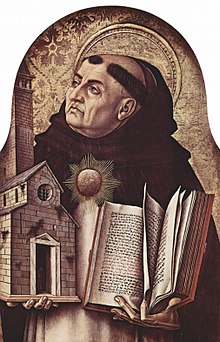
Italian Dominican friar Roman Catholic priest, who was an immensely influential philosopher, theologian and jurist in the tradition of scholasticism, Thomas Aquinas wrote “Love takes up where knowledge leaves off.”

Saturday, April 20, 2013

Bible Readings for April 20, 2013


Today our passages are Joshua 21:1–22:20; Luke 20:1-26; Psalm 89:1-13; and Proverbs 13:15-16. The readings are the Contemporary English Version.

Joshua 21-22:20 (Contemporary English Version)

Joshua 21

Levi's Towns
 1-2While the Israelites were still camped at Shiloh in the land of Canaan, the family leaders of the Levi tribe went to speak to the priest Eleazar, Joshua, and the family leaders of the other Israelite tribes. The leaders of Levi said, " The LORD told Moses that you have to give us towns and provide pastures for our animals." [a] 3Since the LORD had said this, the leaders of the other Israelite tribes agreed to give some of the towns and pastures from their tribal lands to Levi. 4The leaders asked the LORD to show them [b] in what order the clans of Levi would be given towns, and which towns each clan would receive. The Kohath clans were first. The descendants of Aaron, Israel's first priest, [c] were given thirteen towns from the tribes of Judah, Simeon, and Benjamin. 5The other members of the Kohath clans received ten towns from the tribes of Ephraim, Dan, and West Manasseh. 6The clans that were descendants of Gershon were given thirteen towns from the tribes of Issachar, Asher, Naphtali, and East Manasseh. 7The clans that were descendants of Merari [d] received twelve towns from the tribes of Reuben, Gad, and Zebulun. 8The LORD had told Moses that he would show the Israelites which towns and pastures to give to the clans of Levi, and he did.    
Towns from Judah, Simeon, Benjamin
 9-19 The descendants of Aaron from the Kohath clans of Levi were priests, and they were chosen to receive towns first. They were given thirteen towns and the pastureland around them. Nine of these towns were from the tribes of Judah and Simeon and four from Benjamin.    Hebron, Libnah, Jattir, Eshtemoa, Holon, Debir, Ashan, [e] Juttah, and Beth-Shemesh were from Judah and Simeon. Hebron, located in the hill country of Judah, was earlier called Arba's Town. [f] It had been named after Arba, the ancestor of the Anakim. [g] Hebron's pasturelands went along with the town, but its farmlands and the villages around it had been given to Caleb. [h] Hebron was also one of the Safe Towns for people who had accidentally killed someone. Gibeon, Geba, Anathoth, and Almon were from Benjamin.
   
Towns from Ephraim, Dan, West Manasseh
 20-26 The rest of the Kohath clans of the Levi tribe received ten towns and the pastureland around them. Four of these towns were from the tribe of Ephraim, four from Dan, and two from West Manasseh.    Shechem, Gezer, Kibzaim, and Beth-Horon were from Ephraim. Shechem was located in the hill country, and it was also one of the Safe Towns for people who had accidentally killed someone.
   Elteke, Gibbethon, Aijalon, and Gath-Rimmon were from Dan.
   Taanach and Jibleam [i] were from West Manasseh.
Towns from East Manasseh, Issachar, Asher, Naphtali
 27-33 The clans of Levi that were descendants of Gershon received thirteen towns and the pastureland around them. Two of these towns were from the tribe of East Manasseh, four from Issachar, four from Asher, and three from Naphtali.    Golan in Bashan and Beeshterah were from East Manasseh.
   Kishion, Daberath, Jarmuth, and En-Gannim were from Issachar.
   Mishal, Abdon, Helkath, and Rehob were from Asher.
   Kedesh in Galilee, Hammothdor, and Kartan were from Naphtali. Golan in Bashan and Kedesh in Galilee were also Safe Towns for people who had accidentally killed someone.
   
Towns from Zebulun, Reuben, Gad
 34-40 The rest of the Levi clans were descendants of Merari, and they received twelve towns with the pastureland around them. Four towns were from the tribe of Zebulun, four from Reuben, and four from Gad.    Jokneam, Kartah, Rimmonah, [j] and Nahalal were from Zebulun. Bezer, Jazah, Kedemoth, and Mephaath were from Reuben. Bezer was located in the desert flatlands east of the Jordan River across from Jericho. [k] Ramoth in Gilead, Mahanaim, Heshbon, and Jazer were from Gad.
   Bezer and Ramoth in Gilead were Safe Towns [l] for people who had accidentally killed someone. 41-42The people of the Levi tribe had a total of forty-eight towns within Israel, and they had pastures around each one of their towns.
   
Israel Settles in the Land
 43The LORD gave the Israelites the land he had promised their ancestors, and they captured it and settled in it. 44There still were enemies around Israel, but the LORD kept his promise to let his people live in peace. And whenever the Israelites did have to go to war, no enemy could defeat them. The LORD always helped Israel win. 45The LORD promised to do many good things for Israel, and he kept his promise every time.    

Joshua 22

The Two and a Half Tribes Return Home
 1Joshua had the men of the tribes of Reuben, Gad, and East Manasseh come for a meeting, and he told them:     2-3You have obeyed every command of the LORD your God and of his servant Moses. And you have done everything I've told you to do. It's taken a long time, but you have stayed and helped your relatives. 4The LORD promised to give peace to your relatives, and that's what he has done. Now it's time for you to go back to your own homes in the land that Moses gave you east of the Jordan River.
    5Moses taught you to love the LORD your God, to be faithful to him, and to worship and obey him with your whole heart and with all your strength. So be very careful to do everything Moses commanded.
    6-9You've become rich from what you've taken from your enemies. You have big herds of cattle, lots of silver, gold, bronze, and iron, and plenty of clothes. Take everything home with you and share with the people of your tribe.
   I pray that God will be kind to you. You are now free to go home.
   The tribes of Reuben and Gad started back to Gilead, their own land. Moses had given the land of Bashan to the East Manasseh tribe, so they started back along with Reuben and Gad. God had told Moses that these two and a half tribes should conquer Gilead and Bashan, and they had done so.
   Joshua had given land west of the Jordan River to the other half of the Manasseh tribe, so they stayed at Shiloh in the land of Canaan with the rest of the Israelites.
    10-11The tribes of Reuben, Gad, and East Manasseh reached the western side of the Jordan River valley [m] and built a huge altar there beside the river. When the rest of the Israelites heard what these tribes had done, [n] 12the Israelite men met at Shiloh to get ready to attack the two and a half tribes. 13But first they sent a priest, Phinehas the son of Eleazar, to talk with the two and a half tribes. 14Each of the tribes at Shiloh sent the leader of one of its families along with Phinehas. 15Phinehas and these leaders went to Gilead and met with the tribes of Reuben, Gad, and East Manasseh. They said:
    16All of the LORD's people have gathered together and have sent us to find out why you are unfaithful to our God. You have turned your backs on the LORD by building that altar. Why are you rebelling against him? 17Wasn't our people's sin at Peor [o] terrible enough for you? The LORD punished us by sending a horrible sickness that killed many of us, and we still suffer because of that sin. [p] 18Now you are turning your backs on the LORD again. If you don't stop rebelling against the LORD right now, he will be angry at the whole nation. 19If you don't think your land is a fit place to serve God, then move across the Jordan and live with us in the LORD's own land, where his sacred tent is located. But don't rebel against the LORD our God or against us by building another altar besides the LORD's own altar. [q] 20Don't you remember what happened when Achan was unfaithful [r] and took some of the things that belonged to God? This made God angry with the entire nation. Achan died because he sinned, but he also caused the death of many others.
Footnotes:
  1. Joshua 21:1 The LORD told Moses. . . animals: See Numbers 35.1-8.
  2. Joshua 21:4 asked the LORD to show them: Hebrew " cast lots to find out." See the note at 14.1-5.
  3. Joshua 21:4 The descendants. . . priest: Hebrew text; three ancient translations " The priests, the descendants of Aaron." The male descendants of Aaron would also be priests.
  4. Joshua 21:7 Kohath. . . Gershon. . . Merari: Sons of Levi, the ancestor of the tribe of Levi.
  5. Joshua 21:9 Ashan: One ancient translation and the parallel in 1 Chronicles 6.59; Hebrew " Ain."
  6. Joshua 21:9 Arba's Town: See the note at 14.15.
  7. Joshua 21:9 Anakim: See the note at 11.21.
  8. Joshua 21:9 Caleb: See 14.6-14.
  9. Joshua 21:20 Jibleam: One ancient translation and the parallel in 1 Chronicles 6.70; Hebrew " "Gath-Rimmon.""
  10. Joshua 21:34 Rimmonah: One possible meaning for the difficult Hebrew text.
  11. Joshua 21:34 Bezer. . . Jericho: One possible meaning for the difficult Hebrew text.
  12. Joshua 21:34 Bezer and Ramoth in Gilead were Safe Towns: One ancient translation; Hebrew " Ramoth in Gilead was a Safe Town."
  13. Joshua 22:10 western. . . valley: Or " the town of Geliloth, which is in the land of Canaan near the Jordan River."
  14. Joshua 22:10 built a huge altar. . . tribes had done: According to Deuteronomy 12.5-14, the LORD wanted the Israelites to have only one altar for offering sacrifices. To build another altar would be to disobey the LORD.
  15. Joshua 22:17 our people's sin at Peor: See Numbers 25.
  16. Joshua 22:17 we still. . . sin: Or " There are still people in Israel who want to worship other gods."
  17. Joshua 22:19 or against. . . altar: Or " by building another altar besides the LORD's own altar. That would even make us into rebels along with you."
  18. Joshua 22:20 Achan was unfaithful: See 7.1,26.

Luke 20:1-26 (Contemporary English Version)

Luke 20

A Question about Jesus' Authority
(Matthew 21.23-27; Mark 11.27-33)
 1One day, Jesus was teaching in the temple and telling the good news. So the chief priests, the teachers, and the nation's leaders 2asked him, "What right do you have to do these things? Who gave you this authority?"     3Jesus replied, "I want to ask you a question. 4Who gave John the right to baptize? Was it God in heaven or merely some human being?"
    5They talked this over and said to each other, "We can't say that God gave John this right. Jesus will ask us why we didn't believe John. 6And we can't say that it was merely some human who gave John the right to baptize. The crowd will stone us to death, because they think John was a prophet."
    7So they told Jesus, "We don't know who gave John the right to baptize."
    8Jesus replied, "Then I won't tell you who gave me the right to do what I do."
   
Renters of a Vineyard
(Matthew 21.33-46; Mark 12.1-12)
 9Jesus told the people this story:    A man once planted a vineyard and rented it out. Then he left the country for a long time. 10When it was time to harvest the crop, he sent a servant to ask the renters for his share of the grapes. But they beat up the servant and sent him away without anything. 11So the owner sent another servant. The renters also beat him up. They insulted him terribly and sent him away without a thing. 12The owner sent a third servant. He was also beaten terribly and thrown out of the vineyard.
    13The owner then said to himself, "What am I going to do? I know what. I'll send my son, the one I love so much. They will surely respect him!"
    14When the renters saw the owner's son, they said to one another, "Someday he will own the vineyard. Let's kill him! Then we can have it all for ourselves." 15So they threw him out of the vineyard and killed him.
   Jesus asked, "What do you think the owner of the vineyard will do? 16I'll tell you what. He will come and kill those renters and let someone else have his vineyard."
   When the people heard this, they said, "This must never happen!"
    17But Jesus looked straight at them and said, "Then what do the Scriptures mean when they say, `The stone that the builders tossed aside is now the most important stone of all'? 18Anyone who stumbles over this stone will get hurt, and anyone it falls on will be smashed to pieces."
    19The chief priests and the teachers of the Law of Moses knew that Jesus was talking about them when he was telling this story. They wanted to arrest him right then, but they were afraid of the people.
   
Paying Taxes
(Matthew 22.15-22; Mark 12.13-17)
 20Jesus' enemies kept watching him closely, because they wanted to hand him over to the Roman governor. So they sent some men who pretended to be good. But they were really spies trying to catch Jesus saying something wrong. 21The spies said to him, "Teacher, we know that you teach the truth about what God wants people to do. And you treat everyone with the same respect, no matter who they are. 22Tell us, should we pay taxes to the Emperor or not?"     23Jesus knew that they were trying to trick him. So he told them, 24"Show me a coin." Then he asked, "Whose picture and name are on it?"
   "The Emperor's," they answered.
    25Then he told them, "Give the Emperor what belongs to him and give God what belongs to God." 26Jesus' enemies could not catch him saying anything wrong there in front of the people. They were amazed at his answer and kept quiet.


Psalm 89:1-13 (Contemporary English Version)

Psalm 89

(A special psalm by Ethan the Ezrahite.)
The LORD's Agreement with David
 1Our LORD, I will sing    of your love forever.
   Everyone yet to be born
   will hear me praise
   your faithfulness.
    2I will tell them,
   "God's love
   can always be trusted,
   and his faithfulness lasts
   as long as the heavens."
    3You said, "David, my servant,
   is my chosen one,
   and this is the agreement
   I made with him:
    4David, one of your descendants
   will always be king."
    5Our LORD, let the heavens
   now praise your miracles,
   and let all of your angels
   praise your faithfulness.
    6None who live in the heavens
   can compare with you.
    7You are the most fearsome
   of all who live in heaven;
   all the others fear
   and greatly honor you.
    8You are LORD God All-Powerful!
   No one is as loving
   and faithful as you are.
    9You rule the roaring sea
   and calm its waves.
    10You crushed the monster Rahab, [a] and with your powerful arm
   you scattered your enemies.
    11The heavens and the earth
   belong to you.
   And so does the world
   with all its people
   because you created them
    12and everything else. [b] Mount Tabor and Mount Hermon
   gladly praise you.
    13You are strong and mighty!
   
Footnotes:
  1. Psalm 89:10 Rahab: Many people in the ancient world thought that the world was controlled by this sea monster that the Lord destroyed at the time of creation (see Isaiah 51.9).
  2. Psalm 89:12 and everything else: The Hebrew text has " Zaphon and Yamin," which may either be the names of mountains or refer to the directions " north and south," with the meaning " everything from north to south."

Proverbs 13:15-16 (Contemporary English Version)

15Sound judgment is praised,
   but people without good sense
   are on the way to disaster. [a] 16If you have good sense,
   you will act sensibly,
   but fools act like fools.
   
Footnotes:
  1. Proverbs 13:15 people. . . disaster: One possible meaning for the difficult Hebrew text.

 
Verse of the Day
 
“Where is its victory? Where is its sting?" Sin is what gives death its sting, and the Law is the power behind sin. But thank God for letting our Lord Jesus Christ give us the victory!” - 1 Corinthians 15:55-57
Today's passage is from the Contemporary English Version.


Thomas Aquinas by Fra Bartolommeo.jpgThought for the Day

Dominican priest, and an immensely influential philosopher and theologian in the tradition of scholasticism Thomas Aquinas wrote, “The things that we love tell us what we are."