Read the Bible in a Year

Each day, we'll post passages so that you can read the Bible in one year. This is part of The Colossians 13:16 Project, sponsored by Cove Presbyterian Church, 3404 Main Street, Weirton, West Virginia. You're invited to worship with us Sundays, at 11:00 a.m. or Saturdays, at 6:30 p.m. You may also want to consider joining one our adult Bible Studies: Thursdays at 12:00 noon and Sundays at 9:30 a.m. and 10:00 a.m. We also have a full range of programs for children. If you want more information about the church, check out the other blogs. And please feel free to leave any comments.

The Bible in a Year is a ministry of Cove Presbyterian Church. We need your support to keep posting. If you find it helpful, you can support this blog by your contributions. They may be sent to Cove Presbyterian Church, 3404 Main Street, Weirton, WV 26062. You can also use the PayPal link below:

Image result for paypal donate
Showing posts with label Robert Green Ingersoll. Show all posts

Saturday, August 11, 2018

Bible Readings for August 11, 2018


Today our passages are Nehemiah 1:1–3:14; 1 Corinthians 7:1-24; Psalm 31:19-24; and Proverbs 21:4. The readings are from The Message by Eugene H. Peterson. If you find these readings helpful, please consider sending an offering directly to Cove Presbyterian Church, 3404 Main Street, Weirton, West Virginia or through PayPal by using the link below.
Image result for paypal banner


Nehemiah 1-3:14 (The Message)


Nehemiah 1


1-2The memoirs of Nehemiah son of Hacaliah. It was the month of Kislev in the twentieth year. At the time I was in the palace complex at Susa. Hanani, one of my brothers, had just arrived from Judah with some fellow Jews. I asked them about the conditions among the Jews there who had survived the exile, and about Jerusalem.
3 They told me, "The exile survivors who are left there in the province are in bad shape. Conditions are appalling. The wall of Jerusalem is still rubble; the city gates are still cinders."
4 When I heard this, I sat down and wept. I mourned for days, fasting and praying before the God-of-Heaven.
5-6 I said, "God, God-of-Heaven, the great and awesome God, loyal to his covenant and faithful to those who love him and obey his commands: Look at me, listen to me. Pay attention to this prayer of your servant that I'm praying day and night in intercession for your servants, the People of Israel, confessing the sins of the People of Israel. And I'm including myself, I and my ancestors, among those who have sinned against you.
7-9 "We've treated you like dirt: We haven't done what you told us, haven't followed your commands, and haven't respected the decisions you gave to Moses your servant. All the same, remember the warning you posted to your servant Moses: 'If you betray me, I'll scatter you to the four winds, but if you come back to me and do what I tell you, I'll gather up all these scattered peoples from wherever they ended up and put them back in the place I chose to mark with my Name.'
10-11 "Well, there they are—your servants, your people whom you so powerfully and impressively redeemed. O Master, listen to me, listen to your servant's prayer—and yes, to all your servants who delight in honoring you—and make me successful today so that I get what I want from the king."
I was cupbearer to the king. 

Nehemiah 2


1-2 It was the month of Nisan in the twentieth year of Artaxerxes the king. At the hour for serving wine I brought it in and gave it to the king. I had never been hangdog in his presence before, so he asked me, "Why the long face? You're not sick are you? Or are you depressed?" 2-3 That made me all the more agitated. I said, "Long live the king! And why shouldn't I be depressed when the city, the city where all my family is buried, is in ruins and the city gates have been reduced to cinders?"
4-5 The king then asked me, "So what do you want?"
Praying under my breath to the God-of-Heaven, I said, "If it please the king, and if the king thinks well of me, send me to Judah, to the city where my family is buried, so that I can rebuild it."
6 The king, with the queen sitting alongside him, said, "How long will your work take and when would you expect to return?"
I gave him a time, and the king gave his approval to send me.
7-8 Then I said, "If it please the king, provide me with letters to the governors across the Euphrates that authorize my travel through to Judah; and also an order to Asaph, keeper of the king's forest, to supply me with timber for the beams of The Temple fortress, the wall of the city, and the house where I'll be living."
8-9 The generous hand of my God was with me in this and the king gave them to me. When I met the governors across The River (the Euphrates) I showed them the king's letters. The king even sent along a cavalry escort.
10 When Sanballat the Horonite and Tobiah the Ammonite official heard about this, they were very upset, angry that anyone would come to look after the interests of the People of Israel. 
"Come—Let's Build the Wall of Jerusalem"
11-12 And so I arrived in Jerusalem. After I had been there three days, I got up in the middle of the night, I and a few men who were with me. I hadn't told anyone what my God had put in my heart to do for Jerusalem. The only animal with us was the one I was riding. 13-16 Under cover of night I went past the Valley Gate toward the Dragon's Fountain to the Dung Gate looking over the walls of Jerusalem, which had been broken through and whose gates had been burned up. I then crossed to the Fountain Gate and headed for the King's Pool but there wasn't enough room for the donkey I was riding to get through. So I went up the valley in the dark continuing my inspection of the wall. I came back in through the Valley Gate. The local officials had no idea where I'd gone or what I was doing—I hadn't breathed a word to the Jews, priests, nobles, local officials, or anyone else who would be working on the job.
17-18 Then I gave them my report: "Face it: we're in a bad way here. Jerusalem is a wreck; its gates are burned up. Come—let's build the wall of Jerusalem and not live with this disgrace any longer." I told them how God was supporting me and how the king was backing me up.
They said, "We're with you. Let's get started." They rolled up their sleeves, ready for the good work.
19 When Sanballat the Horonite, Tobiah the Ammonite official, and Geshem the Arab heard about it, they laughed at us, mocking, "Ha! What do you think you're doing? Do you think you can cross the king?"
20 I shot back, "The God-of-Heaven will make sure we succeed. We're his servants and we're going to work, rebuilding. You can keep your nose out of it. You get no say in this—Jerusalem's none of your business!" 

Nehemiah 3


1-2The high priest Eliashib and his fellow priests were up and at it: They went to work on the Sheep Gate; they repaired it and hung its doors, continuing on as far as the Tower of the Hundred and the Tower of Hananel. The men of Jericho worked alongside them; and next to them, Zaccur son of Imri. 3-5 The Fish Gate was built by the Hassenaah brothers; they repaired it, hung its doors, and installed its bolts and bars. Meremoth son of Uriah, the son of Hakkoz, worked; next to him Meshullam son of Berekiah, the son of Meshezabel; next to him Zadok son of Baana; and next to him the Tekoites (except for their nobles, who wouldn't work with their master and refused to get their hands dirty with such work).
6-8 The Jeshanah Gate was rebuilt by Joiada son of Paseah and Meshullam son of Besodeiah; they repaired it, hung its doors, and installed its bolts and bars. Melatiah the Gibeonite, Jadon the Meronothite, and the men of Gibeon and Mizpah, which was under the rule of the governor from across the Euphrates, worked alongside them. Uzziel son of Harhaiah of the goldsmiths' guild worked next to him, and next to him Hananiah, one of the perfumers. They rebuilt the wall of Jerusalem as far as the Broad Wall.
9-10 The next section was worked on by Rephaiah son of Hur, mayor of a half-district of Jerusalem. Next to him Jedaiah son of Harumaph rebuilt the front of his house; Hattush son of Hashabneiah worked next to him.
11-12 Malkijah son of Harim and Hasshub son of Pahath-Moab rebuilt another section that included the Tower of Furnaces. Working next to him was Shallum son of Hallohesh, mayor of the other half-district of Jerusalem, along with his daughters.
13 The Valley Gate was rebuilt by Hanun and villagers of Zanoah; they repaired it, hung its doors, and installed its bolts and bars. They went on to repair 1,500 feet of the wall, as far as the Dung Gate.
14 The Dung Gate itself was rebuilt by Malkijah son of Recab, the mayor of the district of Beth Hakkerem; he repaired it, hung its doors, and installed its bolts and bars.


1 Corinthians 7:1-24 (The Message)


1 Corinthians 7

To Be Married, to Be Single . . .
1 Now, getting down to the questions you asked in your letter to me. First, Is it a good thing to have sexual relations? 2-6Certainly—but only within a certain context. It's good for a man to have a wife, and for a woman to have a husband. Sexual drives are strong, but marriage is strong enough to contain them and provide for a balanced and fulfilling sexual life in a world of sexual disorder. The marriage bed must be a place of mutuality—the husband seeking to satisfy his wife, the wife seeking to satisfy her husband. Marriage is not a place to "stand up for your rights." Marriage is a decision to serve the other, whether in bed or out. Abstaining from sex is permissible for a period of time if you both agree to it, and if it's for the purposes of prayer and fasting—but only for such times. Then come back together again. Satan has an ingenious way of tempting us when we least expect it. I'm not, understand, commanding these periods of abstinence—only providing my best counsel if you should choose them. 7Sometimes I wish everyone were single like me—a simpler life in many ways! But celibacy is not for everyone any more than marriage is. God gives the gift of the single life to some, the gift of the married life to others. 8-9I do, though, tell the unmarried and widows that singleness might well be the best thing for them, as it has been for me. But if they can't manage their desires and emotions, they should by all means go ahead and get married. The difficulties of marriage are preferable by far to a sexually tortured life as a single.
10-11And if you are married, stay married. This is the Master's command, not mine. If a wife should leave her husband, she must either remain single or else come back and make things right with him. And a husband has no right to get rid of his wife.
12-14For the rest of you who are in mixed marriages—Christian married to non-Christian—we have no explicit command from the Master. So this is what you must do. If you are a man with a wife who is not a believer but who still wants to live with you, hold on to her. If you are a woman with a husband who is not a believer but he wants to live with you, hold on to him. The unbelieving husband shares to an extent in the holiness of his wife, and the unbelieving wife is likewise touched by the holiness of her husband. Otherwise, your children would be left out; as it is, they also are included in the spiritual purposes of God.
15-16On the other hand, if the unbelieving spouse walks out, you've got to let him or her go. You don't have to hold on desperately. God has called us to make the best of it, as peacefully as we can. You never know, wife: The way you handle this might bring your husband not only back to you but to God. You never know, husband: The way you handle this might bring your wife not only back to you but to God.
17And don't be wishing you were someplace else or with someone else. Where you are right now is God's place for you. Live and obey and love and believe right there. God, not your marital status, defines your life. Don't think I'm being harder on you than on the others. I give this same counsel in all the churches.
18-19Were you Jewish at the time God called you? Don't try to remove the evidence. Were you non-Jewish at the time of your call? Don't become a Jew. Being Jewish isn't the point. The really important thing is obeying God's call, following his commands.
20-22Stay where you were when God called your name. Were you a slave? Slavery is no roadblock to obeying and believing. I don't mean you're stuck and can't leave. If you have a chance at freedom, go ahead and take it. I'm simply trying to point out that under your new Master you're going to experience a marvelous freedom you would never have dreamed of. On the other hand, if you were free when Christ called you, you'll experience a delightful "enslavement to God" you would never have dreamed of.
23-24All of you, slave and free both, were once held hostage in a sinful society. Then a huge sum was paid out for your ransom. So please don't, out of old habit, slip back into being or doing what everyone else tells you. Friends, stay where you were called to be. God is there. Hold the high ground with him at your side.


Psalm 31:19-24 (The Message)


19-22 What a stack of blessing you have piled up
for those who worship you,
Ready and waiting for all who run to you
to escape an unkind world.
You hide them safely away
from the opposition.
As you slam the door on those oily, mocking faces,
you silence the poisonous gossip.
Blessed God!
His love is the wonder of the world.
Trapped by a siege, I panicked.
"Out of sight, out of mind," I said.
But you heard me say it,
you heard and listened.

23 Love God, all you saints;
God takes care of all who stay close to him,
But he pays back in full
those arrogant enough to go it alone.

24 Be brave. Be strong. Don't give up.
Expect God to get here soon.


Proverbs 21:4 (The Message)


4 Arrogance and pride—distinguishing marks in the wicked—
are just plain sin.


Verse of the Day

“Obeying your instructions brings as much happiness as being rich.” - Psalm 119:14
Today's passage is from the Contemporary English Version.
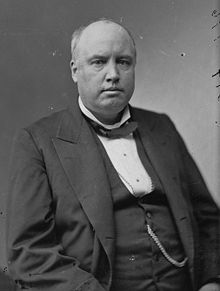
Robert G. Ingersoll - Brady-Handy.jpgThought for the Day

American lawyer, father of the feminist Eva Ingersoll Brown, a Civil War veteran, politician, and orator of the United States during the Golden Age of Free Thought, Robert Green Ingersoll wrote, “A great man does not seek applause or place; he seeks for truth; he seeks the road to happiness, and what he ascertains, he gives to others.”

Image result for newlywed jokesA Joke for Today

The newlywed wife said to her husband when he returned from work, "I have great news for you. Pretty soon, we're going to be three in this house instead of two."

Her husband ran to her with a smile on his face and delight in his eyes.

He was glowing of happiness and kissing his wife when she said, "I'm glad that you feel this way since tomorrow morning, my mother moves in with us."

Friday, August 21, 2015

Bible Readings for August 21, 2015


Today our passages are Job 1:1–3:26; 1 Corinthians 14:1-17; Psalm 37:12-29; and Proverbs 21:25-26. The readings are from the Contemporary English VersionIf you find these readings helpful, please consider sending an offering directly to Cove Presbyterian Church, 3404 Main Street, Weirton, West Virginia or through PayPal. 

Job 1-3:26 (Contemporary English Version)


Job 1

Job and His Family
 1Many years ago, a man named Job lived in the land of Uz. [a] He was a truly good person, who respected God and refused to do evil. 2Job had seven sons and three daughters. 3He owned seven thousand sheep, three thousand camels, five hundred pair of oxen, five hundred donkeys, and a large number of servants. He was the richest person in the East.    4Job's sons took turns having feasts in their homes, and they always invited their three sisters to join in the eating and drinking. 5After each feast, Job would send for his children and perform a ceremony, as a way of asking God to forgive them of any wrongs they may have done. He would get up early the next morning and offer a sacrifice for each of them, just in case they had sinned or silently cursed God.
   
Angels, the LORD, and Satan
 6One day, when the angels [b] had gathered around the LORD, and Satan [c] was there with them, 7the LORD asked, "Satan, where have you been?" Satan replied, "I have been going all over the earth."    8Then the LORD asked, "What do you think of my servant Job? No one on earth is like him--he is a truly good person, who respects me and refuses to do evil."
    9"Why shouldn't he respect you?" Satan remarked. 10"You are like a wall protecting not only him, but his entire family and all his property. You make him successful in whatever he does, and his flocks and herds are everywhere. 11Try taking away everything he owns, and he will curse you to your face."
    12The LORD replied, "All right, Satan, do what you want with anything that belongs to him, but don't harm Job."
   Then Satan left.
   
Job Loses Everything
 13Job's sons and daughters were having a feast in the home of his oldest son, 14when someone rushed up to Job and said, "While your servants were plowing with your oxen, and your donkeys were nearby eating grass, 15a gang of Sabeans [d] attacked and stole the oxen and donkeys! Your other servants were killed, and I was the only one who escaped to tell you." 16That servant was still speaking, when a second one came  running up and saying, "God sent down a fire that killed your sheep and your servants. I am the only one who escaped to tell you."    17Before that servant finished speaking, a third one raced up and said, "Three gangs of Chaldeans [e]attacked and stole your camels! All of your other servants were killed, and I am the only one who escaped to tell you." 18That servant was still speaking, when a fourth one dashed up and said, "Your children were having a feast and drinking wine at the home of your oldest son, 19when suddenly a windstorm from the desert blew the house down, crushing all of your children. I am the only one who escaped to tell you."
    20When Job heard this, he tore his clothes and shaved his head because of his great sorrow. He knelt on the ground, then worshiped God 21and said:
   "We bring nothing at birth;
   we take nothing
   with us at death.
   The LORD alone gives and takes.
   Praise the name of the LORD!"
    22In spite of everything, Job did not sin or accuse God of doing wrong.
   

Job 2

Job Loses His Health
 1When the angels [f] gathered around the LORD again, Satan [g] was there with them, 2and the LORD asked, "Satan, where have you been?" Satan replied, "I have been going all over the earth."    3Then the LORD asked, "What do you think of my servant Job? No one on earth is like him--he is a truly good person, who respects me and refuses to do evil. And he hasn't changed, even though you persuaded me to destroy him for no reason."
    4Satan answered, "There's no pain like your own. [h] People will do anything to stay alive. 5Try striking Job's own body with pain, and he will curse you to your face." 6"All right!" the LORD replied. "Make Job suffer as much as you want, but just don't kill him." 7Satan left and caused painful sores to break out all over Job's body--from head to toe.
    8Then Job sat on the ash-heap to show his sorrow. And while he was scraping his sores with a broken piece of pottery, 9his wife asked, "Why do you still trust God? Why don't you curse him and die?"
    10Job replied, "Don't talk like a fool! If we accept blessings from God, we must accept trouble as well." In all that happened, Job never once said anything against God.
   
Job's Three Friends
 11Eliphaz from Teman, Bildad from Shuah, and Zophar from Naamah [i] were three of Job's friends, and they heard about his troubles. So they agreed to visit Job and comfort him. 12When they came near enough to see Job, they could hardly recognize him. And in their great sorrow, they tore their clothes, then sprinkled dust on their heads and cried bitterly. 13For seven days and nights, they sat silently on the ground beside him, because they realized what terrible pain he was in.

Job 3

Job's First Speech
Blot Out the Day of My Birth
 1Finally, Job cursed the day   of his birth
    2by saying to God:
    3Blot out the day of my birth
   and the night when my parents
   created a son.
    4Forget about that day,
   cover it with darkness,
    5and send thick, gloomy shadows
   to fill it with dread.
    6Erase that night from the calendar
   and conceal it with darkness.
    7Don't let children be created
   or joyful shouts be heard
   ever again in that night.
    8Let those with magic powers [j] place a curse on that day.
    9Darken its morning stars
   and remove all hope of light,
    10because it let me be born
   into a world of trouble.
   
Why Didn't I Die at Birth?
 11Why didn't I die at birth?    12Why was I accepted [k] and allowed to nurse
   at my mother's breast?
    13Now I would be at peace
   in the silent world below
    14with kings and their advisors
   whose palaces lie in ruins,
    15and with rulers once rich
   with silver and gold.
    16I wish I had been born dead
   and then buried,
   never to see
   the light of day.
    17In the world of the dead,
   the wicked and the weary rest
   without a worry.
    18Everyone is there--
    19where captives and slaves
   are free at last.
   
Why Does God Let Me Live?
 20Why does God let me live   when life is miserable
   and so bitter?
    21I keep longing for death
   more than I would seek
   a valuable treasure.
    22Nothing could make me happier
   than to be in the grave.
    23Why do I go on living
   when God has me surrounded,
   and I can't see the road?
    24Moaning and groaning
   are my food and drink,
    25and my worst fears
   have all come true.
    26I have no peace or rest--
   only troubles and worries.
   

Footnotes:
  1. Job 1:1 Uz: The exact location of this place is unknown, though it was possibly somewhere in northwest Arabia.
  2. Job 1:6 angels: See the note at 15.8.
  3. Job 1:6 Satan: Hebrew "the accuser."
  4. Job 1:15 Sabeans: Perhaps the people of Sheba in what is now southwest Arabia (see Isaiah 60.6).
  5. Job 1:17 Chaldeans: People from the region of Babylonia, northeast of Palestine.
  6. Job 2:1 angels: See the note at 15.8.
  7. Job 2:1 Satan: See the note at 1.6.
  8. Job 2:4 There's no pain like your own: The Hebrew text has "Skin for skin," which was probably a popular saying.
  9. Job 2:11 Teman. . . Shuah. . . Naamah: Teman was a place in northern Edom; Shuah may have been a town on the Euphrates River or else further south, near the towns of Dedan and Sheba; Naamah may have been located on the road between Beirut and Damascus, though its exact location is unknown.
  10. Job 3:8 those with magic powers: The Hebrew text has "those who can place a curse on the day and rouse up Leviathan," which was some kind of sea monster. God's victory over this monster sometimes stood for God's power over all creation and sometimes for his defeat of his enemies (see Isaiah 27.1). In Job 41.1, Leviathan is either a sea monster or a crocodile with almost supernatural powers.
  11. Job 3:12 Why was I accepted: The Hebrew text has "Why were there knees to receive me," which may refer either to Job's mother or to his father, who would have placed Job on his knees to show that he had accepted him as his child.


1 Corinthians 14:1-17 (Contemporary English Version)


1 Corinthians 14

Speaking Unknown Languages and Prophesying
 1Love should be your guide. Be eager to have the gifts that come from the Holy Spirit, especially the gift of prophecy. 2If you speak languages that others don't know, God will understand what you are saying, though no one else will know what you mean. You will be talking about mysteries that only the Spirit understands. 3But when you prophesy, you will be understood, and others will be helped. They will be encouraged and made to feel better.    4By speaking languages that others don't know, you help only yourself. But by prophesying you help everyone in the church. 5I am glad for you to speak unknown languages, although I had rather for you to prophesy. In fact, prophesying does much more good than speaking unknown languages, unless someone can help the church by explaining what you mean.
    6My friends, what good would it do, if I came and spoke unknown languages to you and didn't explain what I meant? How would I help you, unless I told you what God had shown me or gave you some knowledge or prophecy or teaching? 7If all musical instruments sounded alike, how would you know the difference between a flute and a harp? 8If a bugle call isn't clear, how would you know to get ready for battle?
    9That's how it is when you speak unknown languages. If no one can understand what you are talking about, you will only be talking to the wind. 10There are many different languages in this world, and all of them make sense. 11But if I don't understand the language that someone is using, we will be like foreigners to each other. 12If you really want spiritual gifts, choose the ones that will be most helpful to the church.
    13When we speak languages that others don't know, we should pray for the power to explain what we mean. 14For example, if I use an unknown language in my prayers, my spirit prays but my mind is useless. 15Then what should I do? There are times when I should pray with my spirit, and times when I should pray with my mind. Sometimes I should sing with my spirit, and at other times I should sing with my mind.
    16Suppose some strangers are in your worship service, when you are praising God with your spirit. If they don't understand you, how will they know to say, "Amen"? 17You may be worshiping God in a wonderful way, but no one else will be helped.


Psalm 37:12-29 (Contemporary English Version)

12Merciless people make plots
   against good people
   and snarl like animals,
    13but the Lord laughs and knows
   their time is coming soon.
    14The wicked kill with swords
   and shoot arrows
   to murder
   the poor and the needy
   and all who do right.
    15But they will be killed
   by their own swords,
   and their arrows
   will be broken.
    16It is better to live right
   and be poor
   than to be sinful and rich.
    17The wicked will lose all
   of their power,
   but the LORD gives strength
   to everyone who is good.
    18Those who obey the LORD
   are daily in his care,
   and what he has given them
   will be theirs forever.
    19They won't be in trouble
   when times are bad,
   and they will have plenty
   when food is scarce.
    20Wicked people are enemies
   of the LORD
   and will vanish like smoke
   from a field on fire.
    21An evil person borrows
   and never pays back;
   a good person is generous
   and never stops giving.
    22Everyone the LORD blesses
   will receive the land;
   everyone the LORD curses
   will be destroyed.
    23If you do what the LORD wants,
   he will make certain
   each step you take is sure.
    24The LORD will hold your hand,
   and if you stumble,
   you still won't fall.
    25As long as I can remember,
   good people have never
   been left helpless,
   and their children have never
   gone begging for food.
    26They gladly give and lend,
   and their children
   turn out good.
    27If you stop sinning
   and start doing right,
   you will keep living
   and be secure forever.
    28The LORD loves justice,
   and he won't ever desert
   his faithful people.
   He always protects them,
   but destroys the children
   of the wicked.
    29God's people will own the land
   and live here forever.


Proverbs 21:25-26 (Contemporary English Version)

25If you want too much
   and are too lazy to work,
   it could be fatal.
    26But people who obey God
   are always generous.


Verse of the Day

“Every day, you are kind, and at night you give me a song as my prayer to you, the living LORD God.” - Psalm 42:8
Today's passage is from the Contemporary English Version.

 
Robert G. Ingersoll - Brady-Handy.jpg
Thought for the Day
 

Lawyer, a Civil War veteran, political leader, and orator of United States during the Golden Age of Freethought, noted for his broad range of culture and his defense of agnosticism, Robert Green Ingersoll wrote, “I am the inferior of any man whose rights I trample under foot.”

Sunday, April 26, 2015

Bible Readings for April 26, 2015


Today our passages are Judges 6:1-40; Luke 22:54–23:12; Psalm 95:1–96:13; and Proverbs 14:5-6. The readings are the Contemporary English Version


Judges 6:1-40 (Contemporary English Version)

Judges 6

Midian Steals Everything from Israel
 1Then once again the Israelites started disobeying the LORD, so he let the nation of Midian control Israel for seven years.     2The Midianites were so cruel that many Israelites ran to the mountains and hid in caves.
    3Every time the Israelites would plant crops, the Midianites invaded Israel together with the Amalekites and other eastern nations.
    4-5They rode in on their camels, set up their tents, and then let their livestock eat the crops as far as the town of Gaza. The Midianites stole food, sheep, cattle, and donkeys. Like a swarm of locusts, [a] they could not be counted, and they ruined the land wherever they went.
    6-7The Midianites took almost everything that belonged to the Israelites, and the Israelites begged the LORD for help.
    8-9Then the LORD sent a prophet to them with this message:
   I am the LORD God of Israel, so listen to what I say. You were slaves in Egypt, but I set you free and led you out of Egypt into this land. And when nations here made life miserable for you, I rescued you and helped you get rid of them and take their land.
    10I am your God, and I told you not to worship Amorite gods, even though you are living in the land of the Amorites. But you refused to listen.
   
The LORD Chooses Gideon
 11One day an angel from the LORD went to the town of Ophrah and sat down under the big tree that belonged to Joash, a member of the Abiezer clan. Joash's son Gideon was nearby, threshing grain in a shallow pit, where he could not be seen by the Midianites.     12The angel appeared and spoke to Gideon, " The LORD is helping you, and you are a strong warrior."
    13Gideon answered, " Please don't take this wrong, but if the LORD is helping us, then why have all of these awful things happened? We've heard how the LORD performed miracles and rescued our ancestors from Egypt. But those things happened long ago. Now the LORD has abandoned us to the Midianites."
    14Then the LORD himself said, " Gideon, you will be strong, because I am giving you the power to rescue Israel from the Midianites."
    15Gideon replied, " But how can I rescue Israel? My clan is the weakest one in Manasseh, and everyone else in my family is more important than I am."
    16" Gideon," the LORD answered, " you can rescue Israel because I am going to help you! Defeating the Midianites will be as easy as beating up one man."
    17Gideon said, " It's hard to believe that I'm actually talking to the LORD. Please do something so I'll know that you really are the LORD.
    18And wait here until I bring you an offering."
   " All right, I'll wait," the LORD answered.
    19Gideon went home and killed a young goat, then started boiling the meat. Next, he opened a big sack of flour and made it into thin bread. [b] When the meat was done, he put it in a basket and poured the broth into a clay cooking pot. He took the meat, the broth, and the bread and placed them under the big tree.
    20God's angel said, " Gideon, put the meat and the bread on this rock, and pour the broth over them." Gideon did as he was told.
    21The angel was holding a walking stick, and he touched the meat and the bread with the end of the stick. Flames jumped from the rock and burned up the meat and the bread.
   When Gideon looked, the angel was gone.
    22Gideon realized that he had seen one of the LORD's angels. " Oh!" he moaned. " Now I'm going to die." [c]
    23" Calm down!" the LORD told Gideon. " There's nothing to be afraid of. You're not going to die."
    24Gideon built an altar for worshiping the LORD and called it " The LORD Calms Our Fears." It still stands there in Ophrah, a town in the territory of the Abiezer clan.
   
Gideon Tears Down Baal's Altar
 25That night the LORD spoke to Gideon again:    Get your father's second-best bull, the one that's seven years old. Use it to pull down the altar where your father worships Baal and cut down the sacred pole [d] next to the altar.
    26Then build an altar for worshiping me on the highest part of the hill where your town is built. Use layers of stones for my altar, not just a pile of rocks. Cut up the wood from the pole, make a fire, kill the bull, and burn it as a sacrifice to me.
    27Gideon chose ten of his servants to help him, and they did everything God had said. But since Gideon was afraid of his family and the other people in town, he did it all at night.
    28When the people of the town got up the next morning, they saw that Baal's altar had been knocked over, and the sacred pole next to it had been cut down. Then they noticed the new altar covered with the remains of the sacrificed bull.
    29" Who could have done such a thing?" they asked. And they kept on asking, until finally someone told them, " Gideon the son of Joash did it."
    30The men of the town went to Joash and said, " Your son Gideon knocked over Baal's altar and cut down the sacred pole next to it. Hand him over, so we can kill him!"
    31The crowd pushed closer and closer, but Joash replied, " Are you trying to take revenge for Baal? Are you trying to rescue Baal? If you are, you will be the ones who are put to death, and it will happen before another day dawns. If Baal really is a god, let him take his own revenge on someone who tears down his altar."
    32That same day, Joash changed Gideon's name to Jerubbaal, explaining, " He tore down Baal's altar, so let Baal take revenge himself." [e]
   
Gideon Defeats the Midianites
 33All the Midianites, Amalekites, and other eastern nations got together and crossed the Jordan River. Then they invaded the land of Israel and set up camp in Jezreel Valley.     34The LORD's Spirit took control of Gideon, and Gideon blew a signal on a trumpet to tell the men in the Abiezer clan to follow him.
    35He also sent messengers to the tribes of Manasseh, Asher, Zebulun, and Naphtali, telling the men of these tribes to come and join his army. Then they set out toward the enemy camp.
    36-37Gideon prayed to God, " I know that you promised to help me rescue Israel, but I need proof. Tonight I'll put some wool on the stone floor of that threshing-place over there. If you really will help me rescue Israel, then tomorrow morning let there be dew on the wool, but let the stone floor be dry."
    38And that's just what happened. Early the next morning, Gideon got up and checked the wool. He squeezed out enough water to fill a bowl.
    39But Gideon prayed to God again. " Don't be angry at me," Gideon said. " Let me try this just one more time, so I'll really be sure you'll help me. Only this time, let the wool be dry and the stone floor be wet with dew."
    40That night, God made the stone floor wet with dew, but he kept the wool dry.
   
Footnotes:
  1. Judges 6:4 locusts: Insects like grasshoppers that travel in swarms and cause great damage to crops.
  2. Judges 6:19 thin bread: Bread made without yeast, since there was no time for the dough to rise.
  3. Judges 6:22 Now I'm going to die: The Hebrew text has " I have seen an angel of the LORD face to face." Some people believed that if they saw one of the LORD's angels, they would die (see 13.22).
  4. Judges 6:25 sacred pole: Or " sacred tree," used as a symbol of Asherah, the Canaanite goddess of fertility.
  5. Judges 6:32 Jerubbaal. . . take revenge himself: In Hebrew, " Jerubbaal" means " Let Baal take revenge."

Luke 22:54-23:12 (Contemporary English Version)

Peter Says He Doesn't Know Jesus
(Matthew 26.57,58,67-75; Mark 14.53,54,66-72; John 18.12-18, 25-27)
 54Jesus was arrested and led away to the house of the high priest, while Peter followed at a distance. 55Some people built a fire in the middle of the courtyard and were sitting around it. Peter sat there with them, 56and a servant girl saw him. Then after she had looked at him carefully, she said, "This man was with Jesus!"     57Peter said, "Woman, I don't even know that man!"
    58A little later someone else saw Peter and said, "You are one of them!"
   "No, I'm not!" Peter replied.
    59About an hour later another man insisted, "This man must have been with Jesus. They both come from Galilee."
    60Peter replied, "I don't know what you are talking about!" Right then, while Peter was still speaking, a rooster crowed.
    61The Lord turned and looked at Peter. And Peter remembered that the Lord had said, "Before a rooster crows tomorrow morning, you will say three times that you don't know me." 62Then Peter went out and cried hard.
    63The men who were guarding Jesus made fun of him and beat him. 64They put a blindfold on him and said, "Tell us who struck you!" 65They kept on insulting Jesus in many other ways.
   
Jesus Is Questioned by the Council
(Matthew 26.59-66; Mark 14.55-64; John 18.19-24)
 66At daybreak the nation's leaders, the chief priests, and the teachers of the Law of Moses got together and brought Jesus before their council. 67They said, "Tell us! Are you the Messiah?"    Jesus replied, "If I said so, you wouldn't believe me. 68And if I asked you a question, you wouldn't answer. 69But from now on, the Son of Man will be seated at the right side of God All-Powerful."
    70Then they asked, "Are you the Son of God?" [a] Jesus answered, "You say I am!" [b] 71They replied, "Why do we need more witnesses? He said it himself!"
   

Luke 23

Pilate Questions Jesus
(Matthew 27.1,2,11-14; Mark 15.1-5; John 18.28-38)
 1Everyone in the council got up and led Jesus off to Pilate. 2They started accusing him and said, "We caught this man trying to get our people to riot and to stop paying taxes to the Emperor. He also claims that he is the Messiah, our king."     3Pilate asked Jesus, "Are you the king of the Jews?"
   "Those are your words," Jesus answered.
    4Pilate told the chief priests and the crowd, "I don't find him guilty of anything."
    5But they all kept on saying, "He has been teaching and causing trouble all over Judea. He started in Galilee and has now come all the way here."
   
Jesus Is Brought before Herod
 6When Pilate heard this, he asked, "Is this man from Galilee?" 7After Pilate learned that Jesus came from the region ruled by Herod, [c] he sent him to Herod, who was in Jerusalem at that time. 8For a long time Herod had wanted to see Jesus and was very happy because he finally had this chance. He had heard many things about Jesus and hoped to see him work a miracle.     9Herod asked him a lot of questions, but Jesus did not answer. 10Then the chief priests and the teachers of the Law of Moses stood up and accused him of all kinds of bad things.
    11Herod and his soldiers made fun of Jesus and insulted him. They put a fine robe on him and sent him back to Pilate. 12That same day Herod and Pilate became friends, even though they had been enemies before this.
   
Footnotes:
  1. Luke 22:70 Son of God: This was one of the titles used for the kings of Israel.
  2. Luke 22:70 You say I am: Or " That's what you say."
  3. Luke 23:7 Herod: Herod Antipas, the son of Herod the Great.

Psalm 95-96:13 (Contemporary English Version)

Psalm 95

Worship and Obey the LORD
 1Sing joyful songs to the LORD!    Praise the mighty rock
   where we are safe.
    2Come to worship him
   with thankful hearts
   and songs of praise.
    3The LORD is the greatest God,
   king over all other gods.
    4He holds the deepest part
   of the earth in his hands,
   and the mountain peaks
   belong to him.
    5The ocean is the Lord's
   because he made it,
   and with his own hands
   he formed the dry land.
    6Bow down and worship
   the LORD our Creator!
    7The LORD is our God,
   and we are his people,
   the sheep he takes care of
   in his own pasture.
   Listen to God's voice today!
    8Don't be stubborn and rebel
   as your ancestors did
   at Meribah and Massah [a] out in the desert.
    9For forty years
   they tested God
   and saw
   the things he did.
    10Then God got tired of them
   and said,
   "You never show good sense,
   and you don't understand
   what I want you to do."
    11In his anger, God told them,
   "You people will never enter
   my place of rest."
   

Psalm 96

Sing a New Song to the LORD
 1Sing a new song to the LORD!    Everyone on this earth,
   sing praises to the LORD,
    2sing and praise his name.
   Day after day announce,
   "The LORD has saved us!"
    3Tell every nation on earth,
   "The LORD is wonderful
   and does marvelous things!
    4The LORD is great and deserves
   our greatest praise!
   He is the only God
   worthy of our worship.
    5Other nations worship idols,
   but the LORD created
   the heavens.
    6Give honor and praise
   to the LORD,
   whose power and beauty
   fill his holy temple."
    7Tell everyone of every nation,
   "Praise the glorious power
   of the LORD.
    8He is wonderful! Praise him
   and bring an offering
   into his temple.
    9Everyone on earth, now tremble
   and worship the LORD,
   majestic and holy."
    10Announce to the nations,
   "The LORD is King!
   The world stands firm,
   never to be shaken,
   and he will judge its people
   with fairness."
    11Tell the heavens and the earth
   to be glad and celebrate!
   Command the ocean to roar
   with all of its creatures
    12and the fields to rejoice
   with all of their crops.
   Then every tree in the forest
   will sing joyful songs
    13to the LORD.
   He is coming to judge
   all people on earth
   with fairness and truth.
   
Footnotes:
  1. Psalm 95:8 Meribah and Massah: See the note at 81.7.

Proverbs 14:5-6 (Contemporary English Version)

5An honest witness
   tells the truth;
   a dishonest witness
   tells nothing but lies.
    6Make fun of wisdom,
   and you will never find it.
   But if you have understanding,
   knowledge comes easily.


Verse of the Day

“He is forever able to save the people he leads to God, because he always lives to speak to God for them.” - Hebrews 7:25
Today's passage is from the Contemporary English Version.


Robert G. Ingersoll - Brady-Handy.jpg
Thought for Day
 

American lawyer, Civil War veteran, political leader, and orator of United States during the Golden Age of Freethought, noted for his broad range of culture and his defense of agnosticism, Robert Green Ingersoll wrote, “Kindness is the sunshine in which virtue grows.”