Read the Bible in a Year

Each day, we'll post passages so that you can read the Bible in one year. This is part of The Colossians 13:16 Project, sponsored by Cove Presbyterian Church, 3404 Main Street, Weirton, West Virginia. You're invited to worship with us Sundays, at 11:00 a.m. or Saturdays, at 6:30 p.m. You may also want to consider joining one our adult Bible Studies: Thursdays at 12:00 noon and Sundays at 9:30 a.m. and 10:00 a.m. We also have a full range of programs for children. If you want more information about the church, check out the other blogs. And please feel free to leave any comments.

The Bible in a Year is a ministry of Cove Presbyterian Church. We need your support to keep posting. If you find it helpful, you can support this blog by your contributions. They may be sent to Cove Presbyterian Church, 3404 Main Street, Weirton, WV 26062. You can also use the PayPal link below:

Image result for paypal donate
Showing posts with label Rabindranath Tagore. Show all posts

Tuesday, April 19, 2016

Bible Readings for April 19, 2016


Today our passages are Joshua 19:1–20:9; Luke 19:28-48; Psalm 88:1-18; and Proverbs 13:12-14. The readings are from The Message by Eugene H. Peterson. If you find these readings helpful, please consider sending an offering directly to Cove Presbyterian Church, 3404 Main Street, Weirton, West Virginia or through PayPal.

Joshua 19-20:9 (The Message)

Joshua 19

Simeon
 1-8 The second lot went to Simeon for its clans. Their inheritance was within the territory of Judah. In their inheritance they had:
   Beersheba (or Sheba), Moladah,
   Hazar Shual, Balah, Ezem,
   Eltolad, Bethul, Hormah,
   Ziklag, Beth Marcaboth, Hazar Susah,
   Beth Lebaoth, and Sharuhen—
      thirteen towns and their villages.
   Ain, Rimmon, Ether, and Ashan—
      four towns and their villages—plus all the villages around these towns as far as Baalath Beer, the Ramah of the Negev.
 8-9 This is the inheritance of the tribe of Simeon according to its clans. The inheritance of Simeon came out of the share of Judah, because Judah's portion turned out to be more than they needed. That's how the people of Simeon came to get their lot from within Judah's portion.
Zebulun
10-15 The third lot went to Zebulun, clan by clan:     The border of their inheritance went all the way to Sarid. It ran west to Maralah, met Dabbesheth, and then went to the brook opposite Jokneam. In the other direction from Sarid, the border ran east; it followed the sunrise to the border of Kisloth Tabor, on to Daberath and up to Japhia. It continued east to Gath Hepher and Eth Kazin, came out at Rimmon, and turned toward Neah. There the border went around on the north to Hannathon and ran out into the Valley of Iphtah El. It included Kattath, Nahalal, Shimron, Idalah, and Bethlehem—twelve cities with their villages.
 16 This is the inheritance of the people of Zebulun for their clans—these towns and their villages.
Issachar
17-21 The fourth lot went to Issachar, clan by clan. Their territory included:
   Jezreel, Kesulloth, Shunem,
   Hapharaim, Shion, Anaharath,
   Rabbith, Kishion, Ebez,
   Remeth, En Gannim, En Haddah, and Beth Pazzez.
 22 The boundary touched Tabor, Shahazumah, and Beth Shemesh and ended at the Jordan—sixteen towns and their villages.
 23 These towns with their villages were the inheritance of the tribe of Issachar, clan by clan.
Asher
24 The fifth lot went to the tribe of Asher, clan by clan:  25-30 Their territory included Helkath, Hali, Beten, Acshaph, Allammelech, Amad, and Mishal. The western border touched Carmel and Shihor Libnath, then turned east toward Beth Dagon, touched Zebulun and the Valley of Iphtah El, and went north to Beth Emek and Neiel, skirting Cabul on the left. It went on to Abdon, Rehob, Hammon, and Kanah, all the way to Greater Sidon. The border circled back toward Ramah, extended to the fort city of Tyre, turned toward Hosah, and came out at the Sea in the region of Aczib, Ummah, Aphek, and Rehob—twenty-two towns and their villages.
 31 These towns and villages were the inheritance of the tribe of Asher, clan by clan.
Naphtali
32 The sixth lot came to Naphtali and its clans.  33 Their border ran from Heleph, from the oak at Zaanannim, passing Adami Nekeb and Jabneel to Lakkum and ending at the Jordan.
 34 The border returned on the west at Aznoth Tabor and came out at Hukkok, meeting Zebulun on the south, Asher on the west, and the Jordan on the east.
   The fort cities were:
 35-38 Ziddim, Zer, Hammath, Rakkath, Kinnereth,
   Adamah, Ramah, Hazor,
   Kedesh, Edrei, En Hazor,
   Iron, Migdal El, Horem, Beth Anath, and Beth Shemesh—
      nineteen towns and their villages.

 39 This is the inheritance of the tribe of Naphtali, the cities and their villages, clan by clan.
Dan
40-46 The seventh lot fell to Dan. The territory of their inheritance included:
    Zorah, Eshtaol, Ir Shemesh,
   Shaalabbin, Aijalon, Ithlah,
   Elon, Timnah, Ekron,
   Eltekeh, Gibbethon, Baalath,
   Jehud, Bene Berak, Gath Rimmon,
   Me Jarkon, and Rakkon, with the region facing Joppa.
 47 But the people of Dan failed to get rid of the Westerners (Amorites), who pushed them back into the hills. The Westerners kept them out of the plain and they didn't have enough room. So the people of Dan marched up and attacked Leshem. They took it, killed the inhabitants, and settled in. They renamed it Leshem Dan after the name of Dan their ancestor.
 48 This is the inheritance of the tribe of Dan, according to its clans, these towns with their villages.

49-50 They completed the dividing of the land as inheritance and the setting of its boundaries. The People of Israel then gave an inheritance among them to Joshua son of Nun. In obedience to God's word, they gave him the city which he had requested, Timnath Serah in the hill country of Ephraim. He rebuilt the city and settled there.

 51 These are the inheritances which Eleazar the priest and Joshua son of Nun and the ancestral leaders assigned by lot to the tribes of Israel at Shiloh in the presence of God at the entrance of the Tent of Meeting. They completed the dividing of the land.

Joshua 20

Asylum-Cities
 1-3 Then God spoke to Joshua: "Tell the People of Israel: Designate the asylum-cities, as I instructed you through Moses, so that anyone who kills a person accidentally—that is, unintentionally—may flee there as a safe place of asylum from the avenger of blood.  4 "A person shall escape for refuge to one of these cities, stand at the entrance to the city gate, and lay out his case before the city's leaders. The leaders must then take him into the city among them and give him a place to live with them.
 5-6 "If the avenger of blood chases after him, they must not give him up—he didn't intend to kill the person; there was no history of ill-feeling. He may stay in that city until he has stood trial before the congregation and until the death of the current high priest. Then he may go back to his own home in his hometown from which he fled."
 7 They set apart Kedesh in Galilee in the hills of Naphtali, Shechem in the hills of Ephraim, and Kiriath Arba (that is, Hebron) in the hills of Judah.
 8-9 On the other side of the Jordan, east of Jericho, they designated Bezer on the desert plateau from the tribe of Reuben, Ramoth in Gilead from the tribe of Gad, and Golan in Bashan from the tribe of Manasseh. These were the designated cities for the People of Israel and any resident foreigner living among them, so that anyone who killed someone unintentionally could flee there and not die by the hand of the avenger of blood without a fair trial before the congregation.


Luke 19:28-48 (The Message)

God's Personal Visit
 28-31After saying these things, Jesus headed straight up to Jerusalem. When he got near Bethphage and Bethany at the mountain called Olives, he sent off two of the disciples with instructions: "Go to the village across from you. As soon as you enter, you'll find a colt tethered, one that has never been ridden. Untie it and bring it. If anyone says anything, asks, 'What are you doing?' say, 'His Master needs him.'"
 32-33The two left and found it just as he said. As they were untying the colt, its owners said, "What are you doing untying the colt?"
 34They said, "His Master needs him."
 35-36They brought the colt to Jesus. Then, throwing their coats on its back, they helped Jesus get on. As he rode, the people gave him a grand welcome, throwing their coats on the street.
 37-38Right at the crest, where Mount Olives begins its descent, the whole crowd of disciples burst into enthusiastic praise over all the mighty works they had witnessed:

   Blessed is he who comes,
      the king in God's name!
   All's well in heaven!
      Glory in the high places!
 39Some Pharisees from the crowd told him, "Teacher, get your disciples under control!"
 40But he said, "If they kept quiet, the stones would do it for them, shouting praise."
 41-44When the city came into view, he wept over it. "If you had only recognized this day, and everything that was good for you! But now it's too late. In the days ahead your enemies are going to bring up their heavy artillery and surround you, pressing in from every side. They'll smash you and your babies on the pavement. Not one stone will be left intact. All this because you didn't recognize and welcome God's personal visit."
 45-46Going into the Temple he began to throw out everyone who had set up shop, selling everything and anything. He said, "It's written in Scripture,

   My house is a house of prayer;
   You have turned it into a religious bazaar."
 47-48From then on he taught each day in the Temple. The high priests, religion scholars, and the leaders of the people were trying their best to find a way to get rid of him. But with the people hanging on every word he spoke, they couldn't come up with anything.


Psalm 88:1-18 (The Message)

Psalm 88

A Korah Prayer of Heman
 1-9 God, you're my last chance of the day. I spend the night on my knees before you.
   Put me on your salvation agenda;
      take notes on the trouble I'm in.
   I've had my fill of trouble;
      I'm camped on the edge of hell.
   I'm written off as a lost cause,
      one more statistic, a hopeless case.
   Abandoned as already dead,
      one more body in a stack of corpses,
   And not so much as a gravestone—
      I'm a black hole in oblivion.
   You've dropped me into a bottomless pit,
      sunk me in a pitch-black abyss.
   I'm battered senseless by your rage,
      relentlessly pounded by your waves of anger.
   You turned my friends against me,
      made me horrible to them.
   I'm caught in a maze and can't find my way out,
      blinded by tears of pain and frustration.

 9-12 I call to you, God; all day I call.
      I wring my hands, I plead for help.
   Are the dead a live audience for your miracles?
      Do ghosts ever join the choirs that praise you?
   Does your love make any difference in a graveyard?
      Is your faithful presence noticed in the corridors of hell?
   Are your marvelous wonders ever seen in the dark,
      your righteous ways noticed in the Land of No Memory?

 13-18 I'm standing my ground, God, shouting for help,
      at my prayers every morning, on my knees each daybreak.
   Why, God, do you turn a deaf ear?
      Why do you make yourself scarce?
   For as long as I remember I've been hurting;
      I've taken the worst you can hand out, and I've had it.
   Your wildfire anger has blazed through my life;
      I'm bleeding, black-and-blue.
   You've attacked me fiercely from every side,
      raining down blows till I'm nearly dead.
   You made lover and neighbor alike dump me;
      the only friend I have left is Darkness.


Proverbs 13:12-14 (The Message)


 12 Unrelenting disappointment leaves you heartsick,
   but a sudden good break can turn life around.

 13 Ignore the Word and suffer;
   honor God's commands and grow rich.

 14 The teaching of the wise is a fountain of life,
   so, no more drinking from death-tainted wells!


Verse of the Day
“But Christ has been raised to life! And he makes us certain that others will also be raised to life. Just as we will die because of Adam, we will be raised to life because of Christ. Adam brought death to all of us, and Christ will bring life to all of us.” - 1 Corinthians 15:20-22
Today's passage is from the Contemporary English Version.
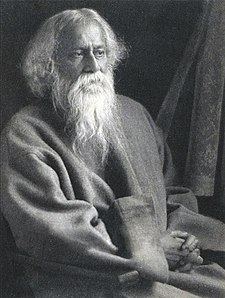
 
Late-middle-aged bearded man in Grey robes sitting on a chair looks to the right with serene composure.
Thought for the Day
Bengali polymath who reshaped Bengali literature and music, as well as Indian art with Contextual Modernism in the late 19th and early 20th centuries, Rabindranath Tagore wrote, “You can't cross the sea merely by standing and staring at the water.”

Friday, February 19, 2016

Bible Readings for February 19, 2016


Today our passages are Leviticus 7:28–9:6; Mark 3:31–4:25; Psalm 37:12-29; and Proverbs 10:5. The readings are from The Message by Eugene H. Peterson. If you find these readings helpful, please consider sending an offering directly to Cove Presbyterian Church, 3404 Main Street, Weirton, West Virginia or through PayPal.

Leviticus 7:28-9:6 (The Message)


28-34 God spoke to Moses: "Speak to the People of Israel. Tell them, When you present a Peace-Offering to God, bring some of your Peace-Offering as a special sacrifice to God, a gift to God in your own hands. Bring the fat with the breast and then wave the breast before God as a Wave-Offering. The priest will burn the fat on the Altar; Aaron and his sons get the breast. Give the right thigh from your Peace-Offerings as a Contribution-Offering to the priest. Give a portion of the right thigh to the son of Aaron who offers the blood and fat of the Peace-Offering as his portion. From the Peace-Offerings of Israel, I'm giving the breast of the Wave-Offering and the thigh of the Contribution-Offering to Aaron the priest and his sons. This is their fixed compensation from the People of Israel."

35-36 From the day they are presented to serve as priests to God, Aaron and his sons can expect to receive these allotments from the gifts of God. This is what God commanded the People of Israel to give the priests from the day of their anointing. This is the fixed rule down through the generations.
37-38 These are the instructions for the Whole-Burnt-Offering, the Grain-Offering, the Absolution-Offering, the Compensation-Offering, the Ordination-Offering, and the Peace-Offering which God gave Moses at Mount Sinai on the day he commanded the People of Israel to present their offerings to God in the wilderness of Sinai.

Leviticus 8

The Ordination of Priests
1-4 God spoke to Moses: He said, "Take Aaron and with him his sons, the garments, the anointing oil, the bull for the Absolution-Offering, the two rams, and the basket of unraised bread. Gather the entire congregation at the entrance of the Tent of Meeting." Moses did just as God commanded him and the congregation gathered at the entrance of the Tent of Meeting. 5 Moses addressed the congregation: "This is what God has commanded to be done."
6-9 Moses brought Aaron and his sons forward and washed them with water. He put the tunic on Aaron and tied it around him with a sash. Then he put the robe on him and placed the Ephod on him. He fastened the Ephod with a woven belt, making it snug. He put the Breastpiece on him and put the Urim and Thummim in the pouch of the Breastpiece. He placed the turban on his head with the gold plate fixed to the front of it, the holy crown, just as God had commanded Moses.
10-12 Then Moses took the anointing oil and anointed The Dwelling and everything that was in it, consecrating them. He sprinkled some of the oil on the Altar seven times, anointing the Altar and all its utensils, the Washbasin and its stand, consecrating them. He poured some of the anointing oil on Aaron's head, anointing him and thus consecrating him.
13 Moses brought Aaron's sons forward and put tunics on them, belted them with sashes, and put caps on them, just as God had commanded Moses.
14-17 Moses brought out the bull for the Absolution-Offering. Aaron and his sons placed their hands on its head. Moses slaughtered the bull and purified the Altar by smearing the blood on each of the horns of the Altar with his finger. He poured out the rest of the blood at the base of the Altar. He consecrated it so atonement could be made on it. Moses took all the fat on the entrails and the lobe of liver and the two kidneys with their fat and burned it all on the Altar. The bull with its hide and meat and guts he burned outside the camp, just as God had commanded Moses.
18-21 Moses presented the ram for the Whole-Burnt-Offering. Aaron and his sons laid their hands on the head of the ram. Moses slaughtered it and splashed the blood against all sides of the Altar. He cut the ram up into pieces and then burned the head, the pieces, and the fat. He washed the entrails and the legs with water and then burned the whole ram on the Altar. It was a Whole-Burnt-Offering, a pleasing fragrance—a gift to God, just as God had commanded Moses.
22-29 Moses then presented the second ram, the ram for the Ordination-Offering. Aaron and his sons laid their hands on the ram's head. Moses slaughtered it and smeared some of its blood on the lobe of Aaron's right ear, on the thumb of his right hand, and on the big toe of his right foot. Then Aaron's sons were brought forward and Moses smeared some of the blood on the lobes of their right ears, on the thumbs of their right hands, and on the big toes of their right feet. Moses threw the remaining blood against each side of the Altar. He took the fat, the fat tail, all the fat that was on the entrails, the lobe of the liver, the two kidneys with their fat, and the right thigh. From the basket of unraised bread that was in the presence of God he took one loaf of the unraised bread made with oil and one wafer. He placed these on the fat portions and the right thigh. He put all this in the hands of Aaron and his sons who waved them before God as a Wave-Offering. Then Moses took it all back from their hands and burned them on the Altar on top of the Whole-Burnt-Offering. These were the Ordination-Offerings, a pleasing fragrance to God, a gift to God. Then Moses took the breast and raised it up as a Wave-Offering before God; it was Moses' portion from the Ordination-Offering ram, just as God had commanded Moses.
30 Moses took some of the anointing oil and some of the blood from the Altar and sprinkled Aaron and his garments, and his sons and their garments, consecrating Aaron and his garments and his sons and their garments.
31-35 Moses spoke to Aaron and his sons: "Boil the meat at the entrance of the Tent of Meeting and eat it there with the bread from the basket of ordination, just as I commanded, saying, 'Aaron and his sons are to eat it.' Burn up the leftovers from the meat and bread. Don't leave through the entrance of the Tent of Meeting for the seven days that will complete your ordination. Your ordination will last seven days. God commanded what has been done this day in order to make atonement for you. Stay at the entrance of the Tent of Meeting day and night for seven days. Be sure to do what God requires, lest you die. This is what I have been commanded."
36 Aaron and his sons did everything that God had commanded by Moses.

Leviticus 9

The Priests Go to Work
1-2 On the eighth day, Moses called in Aaron and his sons and the leaders of Israel. He spoke to Aaron: "Take a bull-calf for your Absolution-Offering and a ram for your Whole-Burnt-Offering, both without defect, and offer them to God. 3-4 "Then tell the People of Israel, Take a male goat for an Absolution-Offering and a calf and a lamb, both yearlings without defect, for a Whole-Burnt-Offering and a bull and a ram for a Peace-Offering, to be sacrificed before God with a Grain-Offering mixed with oil, because God will appear to you today."
5-6 They brought the things that Moses had ordered to the Tent of Meeting. The whole congregation came near and stood before God. Moses said, "This is what God commanded you to do so that the Shining Glory of God will appear to you."


Mark 3:31-4:25 (The Message)

Jesus' Mother and Brothers
31-32Just then his mother and brothers showed up. Standing outside, they relayed a message that they wanted a word with him. He was surrounded by the crowd when he was given the message, "Your mother and brothers and sisters are outside looking for you."
33-35Jesus responded, "Who do you think are my mother and brothers?" Looking around, taking in everyone seated around him, he said, "Right here, right in front of you—my mother and my brothers. Obedience is thicker than blood. The person who obeys God's will is my brother and sister and mother."

Mark 4

The Story of the Scattered Seed
1-2 He went back to teaching by the sea. A crowd built up to such a great size that he had to get into an offshore boat, using the boat as a pulpit as the people pushed to the water's edge. He taught by using stories, many stories.
3-8"Listen. What do you make of this? A farmer planted seed. As he scattered the seed, some of it fell on the road and birds ate it. Some fell in the gravel; it sprouted quickly but didn't put down roots, so when the sun came up it withered just as quickly. Some fell in the weeds; as it came up, it was strangled among the weeds and nothing came of it. Some fell on good earth and came up with a flourish, producing a harvest exceeding his wildest dreams.
9"Are you listening to this? Really listening?"
10-12When they were off by themselves, those who were close to him, along with the Twelve, asked about the stories. He told them, "You've been given insight into God's kingdom—you know how it works. But to those who can't see it yet, everything comes in stories, creating readiness, nudging them toward receptive insight. These are people—

Whose eyes are open but don't see a thing,
Whose ears are open but don't understand a word,
Who avoid making an about-face and getting forgiven."
13He continued, "Do you see how this story works? All my stories work this way.
14-15"The farmer plants the Word. Some people are like the seed that falls on the hardened soil of the road. No sooner do they hear the Word than Satan snatches away what has been planted in them.
16-17"And some are like the seed that lands in the gravel. When they first hear the Word, they respond with great enthusiasm. But there is such shallow soil of character that when the emotions wear off and some difficulty arrives, there is nothing to show for it.
18-19"The seed cast in the weeds represents the ones who hear the kingdom news but are overwhelmed with worries about all the things they have to do and all the things they want to get. The stress strangles what they heard, and nothing comes of it.
20"But the seed planted in the good earth represents those who hear the Word, embrace it, and produce a harvest beyond their wildest dreams."
Giving, Not Getting
21-22Jesus went on: "Does anyone bring a lamp home and put it under a washtub or beneath the bed? Don't you put it up on a table or on the mantel? We're not keeping secrets, we're telling them; we're not hiding things, we're bringing them out into the open.
23"Are you listening to this? Really listening?
24-25"Listen carefully to what I am saying—and be wary of the shrewd advice that tells you how to get ahead in the world on your own. Giving, not getting, is the way. Generosity begets generosity. Stinginess impoverishes."


Psalm 37:12-29 (The Message)


12-13 Bad guys have it in for the good guys,
obsessed with doing them in.
But God isn't losing any sleep; to him
they're a joke with no punch line.

14-15 Bullies brandish their swords,
pull back on their bows with a flourish.
They're out to beat up on the harmless,
or mug that nice man out walking his dog.
A banana peel lands them flat on their faces—
slapstick figures in a moral circus.

16-17 Less is more and more is less.
One righteous will outclass fifty wicked,
For the wicked are moral weaklings
but the righteous are God-strong.

18-19 God keeps track of the decent folk;
what they do won't soon be forgotten.
In hard times, they'll hold their heads high;
when the shelves are bare, they'll be full.

20 God-despisers have had it;
God's enemies are finished—
Stripped bare like vineyards at harvest time,
vanished like smoke in thin air.

21-22 Wicked borrows and never returns;
Righteous gives and gives.
Generous gets it all in the end;
Stingy is cut off at the pass.

23-24 Stalwart walks in step with God;
his path blazed by God, he's happy.
If he stumbles, he's not down for long;
God has a grip on his hand.

25-26 I once was young, now I'm a graybeard—
not once have I seen an abandoned believer,
or his kids out roaming the streets.
Every day he's out giving and lending,
his children making him proud.

27-28 Turn your back on evil,
work for the good and don't quit.
God loves this kind of thing,
never turns away from his friends.

28-29 Live this way and you've got it made,
but bad eggs will be tossed out.
The good get planted on good land
and put down healthy roots.


Proverbs 10:5 (The Message)


5 Make hay while the sun shines—that's smart;
go fishing during harvest—that's stupid.


Verse of the Day
“Dear friends, since God loved us this much, we must love each other. No one has ever seen God. But if we love each other, God lives in us, and his love is truly in our hearts.” - 1 John 4:11-12
Today's passage is from the Contemporary English Version.


Late-middle-aged bearded man in white robes looks to the left with serene composure.
Thought for the Day
Bengali polymath who reshaped Bengali literature and music, Rabindranath Tagore wrote, “The butterfly counts not months but moments, and has time enough.”

Saturday, January 9, 2016

Bible Readings for January 9, 2016


Today our passages are Genesis 20:1–22:24; Matthew 7:15-29; Psalm 9:1-12; and Proverbs 2:16-22. The readings are from the  The Message  by Eugene H. Peterson. If you find these readings helpful, please consider sending an offering directly to Cove Presbyterian Church, 3404 Main Street, Weirton, West Virginia or through PayPal. 

Genesis 20:1-22:24 (The Message)

Genesis 20

 1-2 Abraham traveled from there south to the Negev and settled down between Kadesh and Shur. While he was camping in Gerar, Abraham said of his wife Sarah, "She's my sister."  2-3 So Abimelech, king of Gerar, sent for Sarah and took her. But God came to Abimelech in a dream that night and told him, "You're as good as dead—that woman you took, she's a married woman."
 4-5 Now Abimelech had not yet slept with her, hadn't so much as touched her. He said, "Master, would you kill an innocent man? Didn't he tell me, 'She's my sister'? And didn't she herself say, 'He's my brother'? I had no idea I was doing anything wrong when I did this."
 6-7 God said to him in the dream, "Yes, I know your intentions were pure, that's why I kept you from sinning against me; I was the one who kept you from going to bed with her. So now give the man's wife back to him. He's a prophet and will pray for you—pray for your life. If you don't give her back, know that it's certain death both for you and everyone in your family."
 8-9 Abimelech was up first thing in the morning. He called all his house servants together and told them the whole story. They were shocked. Then Abimelech called in Abraham and said, "What have you done to us? What have I ever done to you that you would bring on me and my kingdom this huge offense? What you've done to me ought never to have been done."
 10 Abimelech went on to Abraham, "Whatever were you thinking of when you did this thing?"
 11-13 Abraham said, "I just assumed that there was no fear of God in this place and that they'd kill me to get my wife. Besides, the truth is that she is my half sister; she's my father's daughter but not my mother's. When God sent me out as a wanderer from my father's home, I told her, 'Do me a favor; wherever we go, tell people that I'm your brother.'"
 14-15 Then Abimelech gave Sarah back to Abraham, and along with her sent sheep and cattle and servants, both male and female. He said, "My land is open to you; live wherever you wish."
 16 And to Sarah he said, "I've given your brother a thousand pieces of silver—that clears you of even a shadow of suspicion before the eyes of the world. You're vindicated."
 17-18 Then Abraham prayed to God and God healed Abimelech, his wife and his maidservants, and they started having babies again. For God had shut down every womb in Abimelech's household on account of Sarah, Abraham's wife.

Genesis 21

 1-4God visited Sarah exactly as he said he would; God did to Sarah what he promised: Sarah became pregnant and gave Abraham a son in his old age, and at the very time God had set. Abraham named him Isaac. When his son was eight days old, Abraham circumcised him just as God had commanded.  5-6 Abraham was a hundred years old when his son Isaac was born.
   Sarah said,

      God has blessed me with laughter
      and all who get the news will laugh with me!

 7 She also said,

      Whoever would have suggested to Abraham
      that Sarah would one day nurse a baby!
       Yet here I am! I've given the old man a son!

 8 The baby grew and was weaned. Abraham threw a big party on the day Isaac was weaned.
 9-10 One day Sarah saw the son that Hagar the Egyptian had borne to Abraham, poking fun at her son Isaac. She told Abraham, "Get rid of this slave woman and her son. No child of this slave is going to share inheritance with my son Isaac!"
 11-13 The matter gave great pain to Abraham—after all, Ishmael was his son. But God spoke to Abraham, "Don't feel badly about the boy and your maid. Do whatever Sarah tells you. Your descendants will come through Isaac. Regarding your maid's son, be assured that I'll also develop a great nation from him—he's your son, too."
 14-16 Abraham got up early the next morning, got some food together and a canteen of water for Hagar, put them on her back and sent her away with the child. She wandered off into the desert of Beersheba. When the water was gone, she left the child under a shrub and went off, fifty yards or so. She said, "I can't watch my son die." As she sat, she broke into sobs.
 17-18 Meanwhile, God heard the boy crying. The angel of God called from Heaven to Hagar, "What's wrong, Hagar? Don't be afraid. God has heard the boy and knows the fix he's in. Up now; go get the boy. Hold him tight. I'm going to make of him a great nation."
 19 Just then God opened her eyes. She looked. She saw a well of water. She went to it and filled her canteen and gave the boy a long, cool drink.
 20-21 God was on the boy's side as he grew up. He lived out in the desert and became a skilled archer. He lived in the Paran wilderness. And his mother got him a wife from Egypt.
 22-23 At about that same time, Abimelech and the captain of his troops, Phicol, spoke to Abraham: "No matter what you do, God is on your side. So swear to me that you won't do anything underhanded to me or any of my family. For as long as you live here, swear that you'll treat me and my land as well as I've treated you."
 24 Abraham said, "I swear it."
 25-26 At the same time, Abraham confronted Abimelech over the matter of a well of water that Abimelech's servants had taken. Abimelech said, "I have no idea who did this; you never told me about it; this is the first I've heard of it."
 27-28 So the two of them made a covenant. Abraham took sheep and cattle and gave them to Abimelech. Abraham set aside seven sheep from his flock.
 29 Abimelech said, "What does this mean? These seven sheep you've set aside."
 30 Abraham said, "It means that when you accept these seven sheep, you take it as proof that I dug this well, that it's my well."
 31-32 That's how the place got named Beersheba (the Oath-Well), because the two of them swore a covenant oath there. After they had made the covenant at Beersheba, Abimelech and his commander, Phicol, left and went back to Philistine territory.
 33-34 Abraham planted a tamarisk tree in Beersheba and worshiped God there, praying to the Eternal God. Abraham lived in Philistine country for a long time.

Genesis 22

 1 After all this, God tested Abraham. God said, "Abraham!"
"Yes?" answered Abraham. "I'm listening."
 2 He said, "Take your dear son Isaac whom you love and go to the land of Moriah. Sacrifice him there as a burnt offering on one of the mountains that I'll point out to you." 3-5 Abraham got up early in the morning and saddled his donkey. He took two of his young servants and his son Isaac. He had split wood for the burnt offering. He set out for the place God had directed him. On the third day he looked up and saw the place in the distance. Abraham told his two young servants, "Stay here with the donkey. The boy and I are going over there to worship; then we'll come back to you."
 6 Abraham took the wood for the burnt offering and gave it to Isaac his son to carry. He carried the flint and the knife. The two of them went off together.
 7 Isaac said to Abraham his father, "Father?"
   "Yes, my son."
   "We have flint and wood, but where's the sheep for the burnt offering?"
 8 Abraham said, "Son, God will see to it that there's a sheep for the burnt offering." And they kept on walking together.
 9-10 They arrived at the place to which God had directed him. Abraham built an altar. He laid out the wood. Then he tied up Isaac and laid him on the wood. Abraham reached out and took the knife to kill his son.
 11 Just then an angel of God called to him out of Heaven, "Abraham! Abraham!"
   "Yes, I'm listening."
 12 "Don't lay a hand on that boy! Don't touch him! Now I know how fearlessly you fear God; you didn't hesitate to place your son, your dear son, on the altar for me."
 13 Abraham looked up. He saw a ram caught by its horns in the thicket. Abraham took the ram and sacrificed it as a burnt offering instead of his son.
 14 Abraham named that place God-Yireh (God-Sees-to-It). That's where we get the saying, "On the mountain of God, he sees to it."
 15-18 The angel of God spoke from Heaven a second time to Abraham: "I swear—God's sure word!—because you have gone through with this, and have not refused to give me your son, your dear, dear son, I'll bless you—oh, how I'll bless you! And I'll make sure that your children flourish—like stars in the sky! like sand on the beaches! And your descendants will defeat their enemies. All nations on Earth will find themselves blessed through your descendants because you obeyed me."
 19 Then Abraham went back to his young servants. They got things together and returned to Beersheba. Abraham settled down in Beersheba.

20-23 After all this, Abraham got the news: "Your brother Nahor is a father! Milcah has given him children: Uz, his firstborn, his brother Buz, Kemuel (he was the father of Aram), Kesed, Hazo, Pildash, Jidlaph, and Bethuel." (Bethuel was the father of Rebekah.) Milcah gave these eight sons to Nahor, Abraham's brother.

 24 His concubine, Reumah, gave him four more children: Tebah, Gaham, Tahash, and Maacah.


Matthew 7:15-29 (The Message)

 15-20"Be wary of false preachers who smile a lot, dripping with practiced sincerity. Chances are they are out to rip you off some way or other. Don't be impressed with charisma; look for character. Who preachers are is the main thing, not what they say. A genuine leader will never exploit your emotions or your pocketbook. These diseased trees with their bad apples are going to be chopped down and burned.
 21-23"Knowing the correct password—saying 'Master, Master,' for instance— isn't going to get you anywhere with me. What is required is serious obedience—doing what my Father wills. I can see it now—at the Final Judgment thousands strutting up to me and saying, 'Master, we preached the Message, we bashed the demons, our God-sponsored projects had everyone talking.' And do you know what I am going to say? 'You missed the boat. All you did was use me to make yourselves important. You don't impress me one bit. You're out of here.'
 24-25"These words I speak to you are not incidental additions to your life, homeowner improvements to your standard of living. They are foundational words, words to build a life on. If you work these words into your life, you are like a smart carpenter who built his house on solid rock. Rain poured down, the river flooded, a tornado hit—but nothing moved that house. It was fixed to the rock.
 26-27"But if you just use my words in Bible studies and don't work them into your life, you are like a stupid carpenter who built his house on the sandy beach. When a storm rolled in and the waves came up, it collapsed like a house of cards."
 28-29When Jesus concluded his address, the crowd burst into applause. They had never heard teaching like this. It was apparent that he was living everything he was saying—quite a contrast to their religion teachers! This was the best teaching they had ever heard.


Psalm 9:1-12 (The Message)

Psalm 9

A David Psalm
 1-2 I'm thanking you, God, from a full heart, I'm writing the book on your wonders.
   I'm whistling, laughing, and jumping for joy;
      I'm singing your song, High God.

 3-4 The day my enemies turned tail and ran,
      they stumbled on you and fell on their faces.
   You took over and set everything right;
      when I needed you, you were there, taking charge.

 5-6 You blow the whistle on godless nations;
      you throw dirty players out of the game,
      wipe their names right off the roster.
   Enemies disappear from the sidelines,
      their reputation trashed,
      their names erased from the halls of fame.

 7-8 God holds the high center,
      he sees and sets the world's mess right.
   He decides what is right for us earthlings,
      gives people their just deserts.

 9-10 God's a safe-house for the battered,
      a sanctuary during bad times.
   The moment you arrive, you relax;
      you're never sorry you knocked.

 11-12 Sing your songs to Zion-dwelling God,
      tell his stories to everyone you meet:
   How he tracks down killers
      yet keeps his eye on us,
      registers every whimper and moan.


Proverbs 2:16-22 (The Message)


 16-19 Wise friends will rescue you from the Temptress—
   that smooth-talking Seductress
Who's faithless to the husband she married years ago,
   never gave a second thought to her promises before God.
Her whole way of life is doomed;
   every step she takes brings her closer to hell.
No one who joins her company ever comes back,
   ever sets foot on the path to real living.

 20-22 So—join the company of good men and women,
   keep your feet on the tried-and-true paths.
It's the men who walk straight who will settle this land,
   the women with integrity who will last here.
The corrupt will lose their lives;
   the dishonest will be gone for good.


Verse of  the Day

“[Treasures in Heaven][(Luke 12.33,34)]Don't store up treasures on earth! Moths and rust can destroy them, and thieves can break in and steal them. Instead, store up your treasures in heaven, where moths and rust cannot destroy them, and thieves cannot break in and steal them. Your heart will always be where your treasure is.” - Matthew 6:19-21
Today's passage is from the Contemporary English Version.

 
Late-middle-aged bearded man in white robes looks to the left with serene composure.
Thought for the Day

Bengali polymath who reshaped Bengali literature and music, as well as Indian art with Contextual Modernism in the late 19th and early 20th centuries, Rabindranath Tagore wrote, “Faith is the bird that feels the light when the dawn is still dark.”

Thursday, May 7, 2015

Bible Reading for May 7, 2015


Today our passages are 1 Samuel 1:1–2:21; John 5:1-23; Psalm 105:37-45; and Proverbs 14:28-29. The readings are the Contemporary English Version. 


1 Samuel 1-2:21 (Contemporary English Version)

1 Samuel 1

Hannah Asks the LORD for a Child
 1Elkanah lived in Ramah, a<="" value="[a]" >[] a town in the hill country of Ephraim. His great-great-grandfather was Zuph, so Elkanah was a member of the Zuph clan of the Ephraim tribe. Elkanah's father was Jeroham, his grandfather was Elihu, and his great-grandfather was Tohu. 2Elkanah had two wives, [b<="">] Hannah and Peninnah. Although Peninnah had children, Hannah did not have any. 3Once a year Elkanah traveled from his hometown to Shiloh, where he worshiped the LORD All-Powerful and offered sacrifices. Eli was the LORD's priest there, and his two sons Hophni and Phinehas served with him as priests. [c<="">] 4Whenever Elkanah offered a sacrifice, he gave some of the meat [d<="">] to Peninnah and some to each of her sons and daughters. 5But he gave Hannah even more, because he loved Hannah very much, even though the LORD had kept her from having children of her own. 6Peninnah liked to make Hannah feel miserable about not having any children, 7especially when the family went to the house of the LORD [e<="">] each year. One day, Elkanah was there offering a sacrifice, when Hannah began crying and refused to eat. 8So Elkanah asked, "Hannah, why are you crying? Why won't you eat? Why do you feel so bad? Don't I mean more to you than ten sons?"     9When the sacrifice had been offered, and they had eaten the meal, Hannah got up and went to pray. Eli was sitting in his chair near the door to the place of worship. 10Hannah was brokenhearted and was crying as she prayed, 11"LORD All-Powerful, I am your servant, but I am so miserable! Please let me have a son. I will give him to you for as long as he lives, and his hair will never be cut." [f<="">] 12-13Hannah prayed silently to the LORD for a long time. But her lips were moving, and Eli thought she was drunk. 14"How long are you going to stay drunk?" he asked. "Sober up!"
    15-16"Sir, please don't think I'm no good!" Hannah answered. "I'm not drunk, and I haven't been drinking. But I do feel miserable and terribly upset. I've been praying all this time, telling the LORD about my problems."
    17Eli replied, "You may go home now and stop worrying. I'm sure the God of Israel will answer your prayer."
    18"Sir, thank you for being so kind to me," Hannah said. Then she left, and after eating something, she felt much better.
   
Samuel Is Born
 19Elkanah and his family got up early the next morning and worshiped the LORD. Then they went back home to Ramah. Later the LORD blessed Elkanah and Hannah 20with a son. She named him Samuel because she had asked the LORD for him. [g<="">]
Hannah Gives Samuel to the LORD
 21The next time Elkanah and his family went to offer their yearly sacrifice, he took along a gift that he had promised to give to the LORD. 22But Hannah stayed home, because she had told Elkanah, "Samuel and I won't go until he's old enough for me to stop nursing him. Then I'll give him to the LORD, and he can stay there at Shiloh for the rest of his life."     23"You know what's best," Elkanah said. "Stay here until it's time to stop nursing him. I'm sure the LORD will help you do what you have promised." [h<="">] Hannah did not go to Shiloh until she stopped nursing Samuel. 24-25When it was the time of year to go to Shiloh again, Hannah and Elkanah [i<="">] took Samuel to the LORD's house. They brought along a three-year-old bull, [j<="">] a twenty-pound sack of flour, and a clay jar full of wine. Hannah and Elkanah offered the bull as a sacrifice, then brought the little boy to Eli. 26"Sir," Hannah said, "a few years ago I stood here beside you and asked the LORD 27to give me a child. Here he is! The LORD gave me just what I asked for. 28Now I am giving him to the LORD, and he will be the LORD's servant for as long as he lives."
   Elkanah [k<="">] worshiped the LORD there at Shiloh, and

1 Samuel 2

Hannah Prays
 1Hannah prayed:    You make me strong
   and happy, LORD.
   You rescued me.
   Now I can be glad
   and laugh at my enemies.
    2No other god [l<="">] is like you. We're safer with you
   than on a high mountain. [m<="">] 3I can tell those proud people,
   "Stop your boasting!
   Nothing is hidden from the LORD,
   and he judges what we do."
    4Our LORD, you break
   the bows of warriors,
   but you give strength
   to everyone who stumbles.
    5People who once
   had plenty to eat
   must now hire themselves out
   for only a piece of bread.
   But you give the hungry more
   than enough to eat.
   A woman did not have a child,
   and you gave her seven,
   but a woman who had many
   was left with none.
    6You take away life,
   and you give life.
   You send people down
   to the world of the dead
   and bring them back again.
    7Our LORD, you are the one
   who makes us rich or poor.
   You put some in high positions
   and bring disgrace on others.
    8You lift the poor and homeless
   out of the garbage dump
   and give them places of honor
   in royal palaces.
   You set the world on foundations,
   and they belong to you.
    9You protect your loyal people,
   but everyone who is evil
   will die in darkness.
   We cannot win a victory
   by our own strength.
    10Our LORD, those who attack you
   will be broken in pieces
   when you fight back
   with thunder from heaven.
   You will judge the whole earth
   and give power and strength
   to your chosen king.
   
Samuel Stays with Eli
 11Elkanah and Hannah went back home to Ramah, but the boy Samuel stayed to help Eli serve the LORD.    
Eli's Sons
 12-13Eli's sons were priests, but they were dishonest and refused to obey the LORD. So, while people were boiling the meat from their sacrifices, these priests would send over a servant with a large, three-pronged fork. 14The servant would stick the fork into the cooking pot, and whatever meat came out on the fork was taken back to the priests. That is how these two priests treated every Israelite who came to offer sacrifices in Shiloh. 15Sometimes, when people were offering sacrifices, the servant would come over, even before the fat had been cut off and sacrificed to the LORD. [n<="">] Then the servant would tell them, "The priest doesn't want his meat boiled! Give him some raw meat that he can roast!"     16Usually the people answered, "Take what you want. But first, let us sacrifice the fat to the LORD."
   "No," the servant would reply. "If you don't give it to me now, I'll take it by force."
    17Eli's sons did not show any respect for the sacrifices that the people offered. This was a terrible sin, and it made the LORD very angry.
   
Hannah Visits Samuel
 18The boy Samuel served the LORD and wore a special linen garment [o<="">] 19and the clothes [p<="">] his mother made for him. She would bring new clothes every year, when she and her husband came to offer sacrifices at Shiloh. 20Eli would always bless Elkanah and his wife and say, "Samuel was born in answer to your prayers. Now you have given him to the LORD. I pray that the LORD will bless you with more children to take his place." After Eli had blessed them, Elkanah and Hannah would return home.     21The LORD was kind to Hannah, and she had three more sons and two daughters. But Samuel grew up at the LORD's house in Shiloh.
   
Footnotes:
  1. 1 Samuel 1:1 Ramah: The Hebrew has "Ramathaim," a longer form of "Ramah" (see verse 19).
  2. 1 Samuel 1:2 two wives: Having more than one wife was allowed in those times.
  3. 1 Samuel 1:3 Eli. . . priests: One ancient translation; Hebrew "Hophni and Phinehas, the two sons of Eli, served the LORD as priests."
  4. 1 Samuel 1:4 meat: For some sacrifices, like this one, only part of the meat was burned. Some was given to the priest, and the rest was eaten by the family and guests of the worshiper (see Leviticus 3.1-17; 7.11-18).
  5. 1 Samuel 1:7 house of the LORD: Another name for the place of worship at Shiloh, which still may have been the sacred tent at this time.
  6. 1 Samuel 1:11 his hair. . . cut: Never cutting the child's hair would be a sign that he would belong to the LORD (see Numbers 6.1,21, especially verse 5).
  7. 1 Samuel 1:20 him: In Hebrew "Samuel" sounds something like "Someone from God" or "The name of God" or "His name is God."
  8. 1 Samuel 1:23 the LORD. . . promised: The Dead Sea Scrolls and two ancient translations; the Standard Hebrew Text "the LORD will do what he said."
  9. 1 Samuel 1:24 When it was the time of year to go to Shiloh again, Hannah and Elkanah: The Dead Sea Scrolls and one ancient translation; the Standard Hebrew Text "she."
  10. 1 Samuel 1:24 a three-year-old bull: The Dead Sea Scrolls and two ancient translations; the Standard Hebrew Text "three bulls."
  11. 1 Samuel 1:28 Elkanah: Or "They" or "Samuel."
  12. 1 Samuel 2:2 god: The Hebrew text has "holy one," a term for supernatural beings or gods.
  13. 1 Samuel 2:2 mountain: One possible meaning for the difficult Hebrew text of verse 2.
  14. 1 Samuel 2:15 sacrificed to the LORD: The fat belonged to the LORD and was supposed to be burned as a sacrifice before the rest of the animal was cooked and eaten (see Leviticus 3.3,4,9,10,14,15).
  15. 1 Samuel 2:18 a special linen garment: Either a loin cloth or a jacket or a vest worn only by priests.
  16. 1 Samuel 2:19 clothes: The Hebrew word means a sleeveless coat or robe that was worn by priests. Samuel was a small child, but his mother made him clothes just like those worn by priests.

John 5:1-23 (Contemporary English Version)

John 5

Jesus Heals a Sick Man
 1Later, Jesus went to Jerusalem for another Jewish festival. a<="" value="[a]" >[] 2In the city near the sheep gate was a pool with five porches, and its name in Hebrew was Bethzatha. [b<="">] 3-4Many sick, blind, lame, and crippled people were lying close to the pool. [c<="">] 5Beside the pool was a man who had been sick for thirty-eight years. 6When Jesus saw the man and realized that he had been crippled for a long time, he asked him, "Do you want to be healed?"     7The man answered, "Lord, I don't have anyone to put me in the pool when the water is stirred up. I try to get in, but someone else always gets there first."
    8Jesus told him, "Pick up your mat and walk!" 9Right then the man was healed. He picked up his mat and started walking around. The day on which this happened was a Sabbath.
    10When the Jewish leaders saw the man carrying his mat, they said to him, "This is the Sabbath! No one is allowed to carry a mat on the Sabbath."
    11But he replied, "The man who healed me told me to pick up my mat and walk."
    12They asked him, "Who is this man that told you to pick up your mat and walk?" 13But he did not know who Jesus was, and Jesus had left because of the crowd.
    14Later, Jesus met the man in the temple and told him, "You are now well. But don't sin anymore or something worse might happen to you." 15The man left and told the leaders that Jesus was the one who had healed him. 16They started making a lot of trouble for Jesus because he did things like this on the Sabbath.
    17But Jesus said, "My Father has never stopped working, and that is why I keep on working." 18Now the leaders wanted to kill Jesus for two reasons. First, he had broken the law of the Sabbath. But even worse, he had said that God was his Father, which made him equal with God.
   
The Son's Authority
 19Jesus told the people:    I tell you for certain that the Son cannot do anything on his own. He can do only what he sees the Father doing, and he does exactly what he sees the Father do. 20The Father loves the Son and has shown him everything he does. The Father will show him even greater things, and you will be amazed. 21Just as the Father raises the dead and gives life, so the Son gives life to anyone he wants to.
    22The Father doesn't judge anyone, but he has made his Son the judge of everyone. 23The Father wants all people to honor the Son as much as they honor him. When anyone refuses to honor the Son, that is the same as refusing to honor the Father who sent him.
Footnotes:
  1. John 5:1 another Jewish festival: Either the Festival of Shelters or Passover.
  2. John 5:2 Bethzatha: Some manuscripts have " Bethesda" and others have " Bethsaida."
  3. John 5:3 pool: Some manuscripts add, " They were waiting for the water to be stirred, because an angel from the Lord would sometimes come down and stir it. The first person to get into the pool after that would be healed."

Psalm 105:37-45 (Contemporary English Version)

37When God led Israel from Egypt,
   they took silver and gold,
   and no one was left behind.
    38The Egyptians were afraid
   and gladly let them go.
    39God hid them under a cloud
   and guided them by fire
   during the night.
    40When they asked for food,
   he sent more birds
   than they could eat.
    41God even split open a rock,
   and streams of water
   gushed into the desert.
    42God never forgot
   his sacred promise
   to his servant Abraham.
    43When the Lord rescued
   his chosen people from Egypt,
   they celebrated with songs.
    44The Lord gave them the land
   and everything else
   the nations had worked for.
    45He did this so that his people
   would obey all of his laws.
   Shout praises to the LORD!


Proverbs 14:28-29 (Contemporary English Version)

28Rulers of powerful nations
   are held in honor;
   rulers of weak nations
   are nothing at all.
    29It's smart to be patient,
   but it's stupid
   to lose your temper.


Verse of the Day

“Always be joyful and never stop praying. Whatever happens, keep thanking God because of Jesus Christ. This is what God wants you to do.” - 1 Thessalonians 5:16-18
Today's passage is from the Contemporary English Version.


Late-middle-aged bearded man in white robes looks to the left with serene composure.
Thought for the Day
 

Bengali polymath who reshaped Bengali literature and music, as well as Indian art with Contextual Modernism in the late 19th and early 20th centuries, Rabindranath Tagore wrote, “We never can have a true view of man unless we have a love for him. Civilisation must be judged and prized, not by the amount of power it has developed, but by how much it has evolved and given expression to, by its laws and institutions, the love of humanity.”