Read the Bible in a Year

Each day, we'll post passages so that you can read the Bible in one year. This is part of The Colossians 13:16 Project, sponsored by Cove Presbyterian Church, 3404 Main Street, Weirton, West Virginia. You're invited to worship with us Sundays, at 11:00 a.m. or Saturdays, at 6:30 p.m. You may also want to consider joining one our adult Bible Studies: Thursdays at 12:00 noon and Sundays at 9:30 a.m. and 10:00 a.m. We also have a full range of programs for children. If you want more information about the church, check out the other blogs. And please feel free to leave any comments.

The Bible in a Year is a ministry of Cove Presbyterian Church. We need your support to keep posting. If you find it helpful, you can support this blog by your contributions. They may be sent to Cove Presbyterian Church, 3404 Main Street, Weirton, WV 26062. You can also use the PayPal link below:

Image result for paypal donate
Showing posts with label Michel de Montaigne. Show all posts

Tuesday, February 28, 2017

Bible Readings for February 28, 2017


Today our passages are Leviticus 22:17–23:44; Mark 9:30–10:12; Psalm 44:1-8; and Proverbs 10:19. The readings are the Contemporary English VersionIf you find these readings helpful, please consider sending an offering directly to Cove Presbyterian Church, 3404 Main Street, Weirton, West Virginia or through PayPal by using the link below.
 
https://www.paypal.com/cgi-bin/webscr?cmd=_s-xclick&hosted_button_id=NX3WLYQG5864L

Leviticus 22:17-23:44 (Contemporary English Version)

Acceptable Sacrifices
 17The LORD told Moses 18to tell Aaron and his sons and everyone else the rules for offering sacrifices. He said:    The animals that are to be completely burned on the altar 19-20must have nothing wrong with them, or else I won't accept them. Bulls or rams or goats [a] are the animals to be used for these sacrifices. 21When you offer a sacrifice to ask my blessing, [b] there must be nothing wrong with the animal. This is true, whether the sacrifice is part of a promise or something you do voluntarily. 22Don't offer an animal that is blind or injured or that has an infection or a skin disease. 23If one of your cattle or lambs has a leg that is longer or shorter than the others, you may offer it voluntarily, but not as part of a promise. 24As long as you live in this land, don't offer an animal with injured testicles. 25And don't bring me animals you bought from a foreigner. I won't accept them, because they are no better than one that has something wrong with it. 26The LORD told Moses to say:
    27Newborn cattle, sheep, or goats must remain with their mothers for seven days, but on the eighth day, you may send them up in smoke to me, and I will accept the offering. 28Don't sacrifice a newborn animal and its mother on the same day.
    29When you offer a sacrifice to give thanks [c] to me, you must do it in a way that is acceptable. 30Eat all of the meat that same day and don't save any for the next day. I am the LORD your God! 31Obey my laws and teachings--I am the LORD. 32-33I demand respect from the people of Israel, so don't disgrace my holy name. Remember--I am the one who chose you to be priests and rescued all of you from Egypt, so that I would be your LORD.
   

Leviticus 23

Religious Festivals
 1The LORD told Moses 2to say to the community of Israel:    I have chosen certain times for you to come together and worship me.
    3You have six days when you can do your work, but the seventh day of each week is holy because it belongs to me. No matter where you live, you must rest on the Sabbath and come together for worship. This law will never change.
   The LORD said:
   
Passover and the Festival of Thin Bread
(Numbers 28.16-25)
 4-5Passover is another time when you must come together to worship me, and it must be celebrated on the evening of the fourteenth day of the first month [d] of each year. 6The Festival of Thin Bread begins on the fifteenth day of that same month; it lasts seven days, and during this time you must honor me by eating bread made without yeast. 7On the first day of this festival you must rest from your work and come together for worship. 8Each day of this festival you must offer sacrifices. Then on the final day you must once again rest from your work and come together for worship.    
Offering the First Part of the Harvest
 9The LORD told Moses 10to say to the community of Israel:    After you enter the land I am giving you, the first bundle of wheat from each crop must be given to me. So bring it to a priest 11on the day after the Sabbath. He will lift it up [e] in dedication to me, and I will accept you. 12You must also offer a sacrifice to please me. [f] So bring the priest a one-year-old lamb that has nothing wrong with it 13and four pounds of your finest flour mixed with olive oil. Then he will place these on the bronze altar and send them up in smoke with a smell that pleases me. Together with these, you must bring a quart of wine as a drink offering. 14I am your God, and I forbid you to eat any new grain or anything made from it until you have brought these offerings. This law will never change. The LORD said:
   
The Harvest Festival
(Numbers 28.26-31)
 15Seven weeks after you offer this bundle of grain, each family must bring another offering of new grain. 16Do this exactly fifty days later, which is the day following the seventh Sabbath. 17Bring two loaves of bread to be lifted up [g] in dedication to me. Each loaf is to be made with yeast and with four pounds of the finest flour from the first part of your harvest. 18At this same time, the entire community of Israel must bring seven lambs that are a year old, a young bull, and two rams. These animals must have nothing wrong with them, and they must be offered as a sacrifice to please me. [h] You must also offer the proper grain and wine sacrifices with each animal. [i] 19Offer a goat [j] as a sacrifice for sin, and two rams a year old as a sacrifice to ask my blessing. [k] 20The priest will lift up [l] the rams together with the bread in dedication to me. These offerings are holy and are my gift to the priest. 21This is a day of celebration and worship, a time of rest from your work. You and your descendants must obey this law. 22When you harvest your grain, always leave some of it standing around the edges of your fields and don't pick up what falls on the ground. Leave it for the poor and for those foreigners who live among you. I am the LORD your God!    
The Festival of Trumpets
(Numbers 29.1-6)
 23The LORD told Moses 24-25to say to the people of Israel:    The first day of the seventh month [m] must be a day of complete rest. Then at the sound of the trumpets, you will come together to worship and to offer sacrifices on the altar.
The Great Day of Forgiveness
(Numbers 29.7-11)
 26The LORD God said to Moses:     27The tenth day of the seventh month [n] is the Great Day of Forgiveness. [o] It is a solemn day of worship; everyone must go without eating to show sorrow for their sins, and sacrifices must be burned. 28No one is to work on that day--it is the Great Day of Forgiveness, when sacrifices will be offered to me, so that I will forgive your sins. 29I will destroy anyone who refuses to go without eating. 30-31None of my people are ever to do any work on that day--not now or in the future. And I will wipe out those who do! 32This is a time of complete rest just like the Sabbath, and everyone must go without eating from the evening of the ninth to the evening of the tenth.
The Festival of Shelters
(Numbers 29.12-40)
 33The LORD told Moses 34to say to the community of Israel:    Beginning on the fifteenth day of the seventh month, [p] and continuing for seven days, everyone must celebrate the Festival of Shelters in honor of me. 35No one is to do any work on the first day of the festival--it is a time when everyone must come together for worship. 36For seven days, sacrifices must be offered on the altar. The eighth day is also to be a day of complete rest, as well as a time of offering sacrifices on the altar and of coming together for worship. 37I have chosen these festivals as times when my people must come together for worship and when animals, grain, and wine are to be offered on the proper days. 38These festivals must be celebrated in addition to the Sabbaths and the times when you offer special gifts or sacrifices to keep a promise or as a voluntary offering.
    39Remember to begin the Festival of Shelters on the fifteenth day of the seventh month after you have harvested your crops. Celebrate this festival for seven days in honor of me and don't do any work on the first day or on the day following the festival. 40Pick the best fruit from your trees [q] and cut leafy branches to use during the time of this joyous celebration in my honor. 41I command you and all of your descendants to celebrate this festival during the seventh month of each year. 42For seven days every Israelite must live in a shelter, 43so future generations will know that I made their ancestors live in shelters when I brought them out of Egypt. I am the LORD your God. 44This is how Moses instructed the people of Israel to celebrate the LORD's festivals.
   
Footnotes:
  1. Leviticus 22:19 goats: See the note at 1.1-3.
  2. Leviticus 22:21 sacrifice to ask my blessing: See the note at 3.1.
  3. Leviticus 22:29 sacrifice to give thanks: See 7.12.
  4. Leviticus 23:4 first month: Abib (also called Nisan), the first month of the Hebrew calendar, from about mid-March to mid-April.
  5. Leviticus 23:11 lift it up: See the note at 7.29,30.
  6. Leviticus 23:12 sacrifice to please me: See the note at 1.1-3.
  7. Leviticus 23:17 lifted up: See the note at 7.29,30.
  8. Leviticus 23:18 sacrifice to please me: See the note at 1.1-3.
  9. Leviticus 23:18 proper grain. . . animal: See Numbers 15.1-16.
  10. Leviticus 23:19 goat: See the note at 1.1-3.
  11. Leviticus 23:19 sacrifice to ask my blessing: See the note at 3.1.
  12. Leviticus 23:20 lift up: See the note at 7.29,30.
  13. Leviticus 23:24 seventh month: See the note at 16.29.
  14. Leviticus 23:27 seventh month: See the note at 16.29.
  15. Leviticus 23:27 Great Day of Forgiveness: See the note at 16.34.
  16. Leviticus 23:34 seventh month: See the note at 16.29.
  17. Leviticus 23:40 best fruit from your trees: One possible meaning for the difficult Hebrew text.

Mark 9:30-10:12 (Contemporary English Version)

Jesus Again Speaks about His Death
(Matthew 17.22,23; Luke 9.43b-45)
 30Jesus left with his disciples and started through Galilee. He did not want anyone to know about it, 31because he was teaching the disciples that the Son of Man would be handed over to people who would kill him. But three days later he would rise to life. 32The disciples did not understand what Jesus meant, and they were afraid to ask.    
Who Is the Greatest?
(Matthew 18.1-5; Luke 9.46-48)
 33Jesus and his disciples went to his home in Capernaum. After they were inside the house, Jesus asked them, "What were you arguing about along the way?" 34They had been arguing about which one of them was the greatest, and so they did not answer.     35After Jesus sat down and told the twelve disciples to gather around him, he said, "If you want the place of honor, you must become a slave and serve others!"
    36Then Jesus had a child stand near him. He put his arm around the child and said, 37"When you welcome even a child because of me, you welcome me. And when you welcome me, you welcome the one who sent me."
   
For or against Jesus
(Luke 9.49,50)
 38John said, "Teacher, we saw a man using your name to force demons out of people. But he wasn't one of us, and we told him to stop."     39Jesus said to his disciples:
   Don't stop him! No one who works miracles in my name will soon turn and say something bad about me. 40Anyone who isn't against us is for us. 41And anyone who gives you a cup of water in my name, just because you belong to me, will surely be rewarded.
   
Temptations To Sin
(Matthew 18.6-9; Luke 17.1,2)
 42It will be terrible for people who cause even one of my little followers to sin. Those people would be better off thrown into the ocean with a heavy stone tied around their necks. 43-44So if your hand causes you to sin, cut it off! You would be better off to go into life crippled than to have two hands and be thrown into the fires of hell that never go out. [a] 45-46If your foot causes you to sin, chop it off. You would be better off to go into life lame than to have two feet and be thrown into hell. [b] 47If your eye causes you to sin, get rid of it. You would be better off to go into God's kingdom with only one eye than to have two eyes and be thrown into hell. 48The worms there never die, and the fire never stops burning.     49Everyone must be salted with fire. [c]
    50Salt is good. But if it no longer tastes like salt, how can it be made salty again? Have salt among you and live at peace with each other. [d]
   

Mark 10

Teaching about Divorce
(Matthew 19.1-12; Luke 16.18)
 1After Jesus left, he went to Judea and then on to the other side of the Jordan River. Once again large crowds came to him, and as usual, he taught them.     2Some Pharisees wanted to test Jesus. So they came up to him and asked if it was right for a man to divorce his wife. 3Jesus asked them, "What does the Law of Moses say about that?"
    4They answered, "Moses allows a man to write out divorce papers and send his wife away."
    5Jesus replied, "Moses gave you this law because you are so heartless. 6But in the beginning God made a man and a woman. 7That's why a man leaves his father and mother and gets married. 8He becomes like one person with his wife. Then they are no longer two people, but one. 9And no one should separate a couple that God has joined together."
    10When Jesus and his disciples were back in the house, they asked him about what he had said. 11He told them, "A man who divorces his wife and marries someone else is unfaithful to his wife. 12A woman who divorces her husband [e] and marries again is also unfaithful."
   
Footnotes:
  1. Mark 9:43 never go out: Some manuscripts add, "The worms there never die, and the fire never stops burning."
  2. Mark 9:45 thrown into hell: Some manuscripts add, "The worms there never die, and the fire never stops burning."
  3. Mark 9:49 salted with fire: Some manuscripts add "and every sacrifice will be seasoned with salt." The verse may mean that Christ's followers must suffer because of their faith.
  4. Mark 9:50 Have salt among you and live at peace with each other: This may mean that when Christ's followers have to suffer because of their faith, they must still try to live at peace with each other.
  5. Mark 10:12 A woman who divorces her husband: Roman law let a woman divorce her husband, but Jewish law did not let a woman do this.

Psalm 44:1-8 (Contemporary English Version)

Psalm 44

(A special psalm for the people of Korah and for the music leader.)
A Prayer for Help
 1Our God, our ancestors told us    what wonders you worked
   and we listened carefully.
    2You chased off the nations
   by causing them trouble
   with your powerful arm.
   Then you let our ancestors
   take over their land.
    3Their strength and weapons
   were not
   what won the land
   and gave them victory!
   You loved them and fought
   with your powerful arm
   and your shining glory.
    4You are my God and King,
   and you give victory [a] to the people of Jacob.
    5By your great power,
   we knocked our enemies down
   and stomped on them.
    6I don't depend on my arrows
   or my sword to save me.
    7But you saved us
   from our hateful enemies,
   and you put them to shame.
    8We boast about you, our God,
   and we are always grateful.
   
Footnotes:
  1. Psalm 44:4 and. . . victory: One ancient translation; Hebrew " please give victory."

Proverbs 10:19 (Contemporary English Version)

19You will say the wrong thing
   if you talk too much--
   so be sensible and watch
   what you say.


Verse of the Day

“God's Spirit doesn't make cowards out of us. The Spirit gives us power, love, and self-control.” - 2 Timothy 1:7
Today's passage is from the Contemporary English Version.


 
Thought for the Day

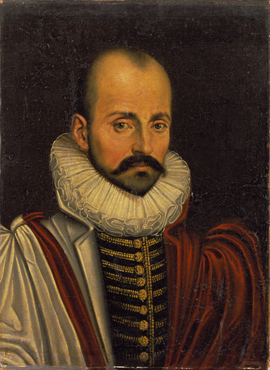
One of the most significant philosophers of the French Renaissance, Michel de Montaigne wrote, “Great abuses in the world are begotten, or, to speak more boldly, all the abuses of the world are begotten, by our being taught to be afraid of professing our ignorance, and that we are bound to accept all things we are not able to refute: we speak of all things by precepts and decisions. The style at Rome was that even that which a witness deposed to having seen with his own eyes, and what a judge determined with his most certain knowledge, was couched in this form of speaking: ‘it seems to me.’ They make me hate things that are likely, when they would impose them upon me as infallible.”

Tuesday, May 10, 2016

Bible Readings for May 10, 2016


Today our passages are 1 Samuel 8:1–9:27; John 6:22-42; Psalm 106:32-48; and Proverbs 14:34-35. The readings are from The Message by Eugene H. PetersonIf you find these readings helpful, please consider sending an offering directly to Cove Presbyterian Church, 3404 Main Street, Weirton, West Virginia or through PayPal.

1 Samuel 8-9:27 (The Message)

1 Samuel 8

Rejecting God as the King
 1-3When Samuel got to be an old man, he set his sons up as judges in Israel. His firstborn son was named Joel, the name of his second, Abijah. They were assigned duty in Beersheba. But his sons didn't take after him; they were out for what they could get for themselves, taking bribes, corrupting justice.  4-5 Fed up, all the elders of Israel got together and confronted Samuel at Ramah. They presented their case: "Look, you're an old man, and your sons aren't following in your footsteps. Here's what we want you to do: Appoint a king to rule us, just like everybody else."
 6 When Samuel heard their demand—"Give us a king to rule us!"—he was crushed. How awful! Samuel prayed to God.
 7-9 God answered Samuel, "Go ahead and do what they're asking. They are not rejecting you. They've rejected me as their King. From the day I brought them out of Egypt until this very day they've been behaving like this, leaving me for other gods. And now they're doing it to you. So let them have their own way. But warn them of what they're in for. Tell them the way kings operate, just what they're likely to get from a king."
 10-18 So Samuel told them, delivered God's warning to the people who were asking him to give them a king. He said, "This is the way the kind of king you're talking about operates. He'll take your sons and make soldiers of them—chariotry, cavalry, infantry, regimented in battalions and squadrons. He'll put some to forced labor on his farms, plowing and harvesting, and others to making either weapons of war or chariots in which he can ride in luxury. He'll put your daughters to work as beauticians and waitresses and cooks. He'll conscript your best fields, vineyards, and orchards and hand them over to his special friends. He'll tax your harvests and vintage to support his extensive bureaucracy. Your prize workers and best animals he'll take for his own use. He'll lay a tax on your flocks and you'll end up no better than slaves. The day will come when you will cry in desperation because of this king you so much want for yourselves. But don't expect God to answer."
 19-20 But the people wouldn't listen to Samuel. "No!" they said. "We will have a king to rule us! Then we'll be just like all the other nations. Our king will rule us and lead us and fight our battles."
 21-22 Samuel took in what they said and rehearsed it with God. God told Samuel, "Do what they say. Make them a king."
    Then Samuel dismissed the men of Israel: "Go home, each of you to your own city."

1 Samuel 9

Saul—Head and Shoulders Above the Crowd
 1-2 There was a man from the tribe of Benjamin named Kish. He was the son of Abiel, grandson of Zeror, great-grandson of Becorath, great-great-grandson of Aphiah—a Benjaminite of stalwart character. He had a son, Saul, a most handsome young man. There was none finer—he literally stood head and shoulders above the crowd!  3-4 Some of Kish's donkeys got lost. Kish said to his son, "Saul, take one of the servants with you and go look for the donkeys." Saul took one of the servants and went to find the donkeys. They went into the hill country of Ephraim around Shalisha, but didn't find them. Then they went over to Shaalim—no luck. Then to Jabin, and still nothing.
 5 When they got to Zuph, Saul said to the young man with him, "Enough of this. Let's go back. Soon my father is going to forget about the donkeys and start worrying about us."
 6 He replied, "Not so fast. There's a holy man in this town. He carries a lot of weight around here. What he says is always right on the mark. Maybe he can tell us where to go."
 7 Saul said, "If we go, what do we have to give him? There's no more bread in our sacks. We've nothing to bring as a gift to the holy man. Do we have anything else?"
 8-9 The servant spoke up, "Look, I just happen to have this silver coin! I'll give it to the holy man and he'll tell us how to proceed!" (In former times in Israel, a person who wanted to seek God's word on a matter would say, "Let's visit the Seer," because the one we now call "the Prophet" used to be called "the Seer.")
 10 "Good," said Saul, "let's go." And they set off for the town where the holy man lived.
 11 As they were climbing up the hill into the town, they met some girls who were coming out to draw water. They said to them, "Is this where the Seer lives?"
 12-13 They answered, "It sure is—just ahead. Hurry up. He's come today because the people have prepared a sacrifice at the shrine. As soon as you enter the town, you can catch him before he goes up to the shrine to eat. The people won't eat until he arrives, for he has to bless the sacrifice. Only then can everyone eat. So get going. You're sure to find him!"
 14 They continued their climb and entered the city. And then there he was—Samuel!—coming straight toward them on his way to the shrine!
 15-16 The very day before, God had confided in Samuel, "This time tomorrow, I'm sending a man from the land of Benjamin to meet you. You're to anoint him as prince over my people Israel. He will free my people from Philistine oppression. Yes, I know all about their hard circumstances. I've heard their cries for help."
 17 The moment Samuel laid eyes on Saul, God said, "He's the one, the man I told you about. This is the one who will keep my people in check."
 18 Saul came up to Samuel in the street and said, "Pardon me, but can you tell me where the Seer lives?"
 19-20 "I'm the Seer," said Samuel. "Accompany me to the shrine and eat with me. In the morning I'll tell you all about what's on your mind, and send you on your way. And by the way, your lost donkeys—the ones you've been hunting for the last three days—have been found, so don't worry about them. At this moment, Israel's future is in your hands."
 21 Saul answered, "But I'm only a Benjaminite, from the smallest of Israel's tribes, and from the most insignificant clan in the tribe at that. Why are you talking to me like this?"
 22-23 Samuel took Saul and his servant and led them into the dining hall at the shrine and seated them at the head of the table. There were about thirty guests. Then Samuel directed the chef, "Bring the choice cut I pointed out to you, the one I told you to reserve."
 24 The chef brought it and placed it before Saul with a flourish, saying, "This meal was kept aside just for you. Eat! It was especially prepared for this time and occasion with these guests."
    Saul ate with Samuel—a memorable day!
 25 Afterward they went down from the shrine into the city. A bed was prepared for Saul on the breeze-cooled roof of Samuel's house.
 26 They woke at the break of day. Samuel called to Saul on the roof, "Get up and I'll send you off." Saul got up and the two of them went out in the street.
 27 As they approached the outskirts of town, Samuel said to Saul, "Tell your servant to go on ahead of us. You stay with me for a bit. I have a word of God to give you."


John 6:22-42 (The Message)

 22-24The next day the crowd that was left behind realized that there had been only one boat, and that Jesus had not gotten into it with his disciples. They had seen them go off without him. By now boats from Tiberias had pulled up near where they had eaten the bread blessed by the Master. So when the crowd realized he was gone and wasn't coming back, they piled into the Tiberias boats and headed for Capernaum, looking for Jesus.
 25When they found him back across the sea, they said, "Rabbi, when did you get here?"
 26Jesus answered, "You've come looking for me not because you saw God in my actions but because I fed you, filled your stomachs—and for free.
The Bread of Life
 27"Don't waste your energy striving for perishable food like that. Work for the food that sticks with you, food that nourishes your lasting life, food the Son of Man provides. He and what he does are guaranteed by God the Father to last."
 28To that they said, "Well, what do we do then to get in on God's works?"
 29Jesus said, "Throw your lot in with the One that God has sent. That kind of a commitment gets you in on God's works."
 30-31They waffled: "Why don't you give us a clue about who you are, just a hint of what's going on? When we see what's up, we'll commit ourselves. Show us what you can do. Moses fed our ancestors with bread in the desert. It says so in the Scriptures: 'He gave them bread from heaven to eat.'"
 32-33Jesus responded, "The real significance of that Scripture is not that Moses gave you bread from heaven but that my Father is right now offering you bread from heaven, the real bread. The Bread of God came down out of heaven and is giving life to the world."
 34They jumped at that: "Master, give us this bread, now and forever!"
 35-38Jesus said, "I am the Bread of Life. The person who aligns with me hungers no more and thirsts no more, ever. I have told you this explicitly because even though you have seen me in action, you don't really believe me. Every person the Father gives me eventually comes running to me. And once that person is with me, I hold on and don't let go. I came down from heaven not to follow my own whim but to accomplish the will of the One who sent me.
 39-40"This, in a nutshell, is that will: that everything handed over to me by the Father be completed—not a single detail missed—and at the wrap-up of time I have everything and everyone put together, upright and whole. This is what my Father wants: that anyone who sees the Son and trusts who he is and what he does and then aligns with him will enter real life, eternal life. My part is to put them on their feet alive and whole at the completion of time."
 41-42At this, because he said, "I am the Bread that came down from heaven," the Jews started arguing over him: "Isn't this the son of Joseph? Don't we know his father? Don't we know his mother? How can he now say, 'I came down out of heaven' and expect anyone to believe him?"


Psalm 106:32-48 (The Message)


 32-33 They angered God again at Meribah Springs;
      this time Moses got mixed up in their evil;
   Because they defied God yet again,
      Moses exploded and lost his temper.

 34-39 They didn't wipe out those godless cultures
      as ordered by God;
   Instead they intermarried with the heathen,
      and in time became just like them.
   They worshiped their idols,
      were caught in the trap of idols.
   They sacrificed their sons and daughters
      at the altars of demon gods.
   They slit the throats of their babies,
      murdered their infant girls and boys.
   They offered their babies to Canaan's gods;
      the blood of their babies stained the land.
   Their way of life stank to high heaven;
      they lived like whores.

 40-43 And God was furious—a wildfire anger;
      he couldn't stand even to look at his people.
   He turned them over to the heathen
      so that the people who hated them ruled them.
   Their enemies made life hard for them;
      they were tyrannized under that rule.
   Over and over God rescued them, but they never learned—
      until finally their sins destroyed them.

 44-46 Still, when God saw the trouble they were in
      and heard their cries for help,
   He remembered his Covenant with them,
      and, immense with love, took them by the hand.
   He poured out his mercy on them
      while their captors looked on, amazed.

 47-48 Save us, God, our God!
      Gather us back out of exile
   So we can give thanks to your holy name
      and join in the glory when you are praised!
   Blessed be God, Israel's God!
   Bless now, bless always!
   Oh! Let everyone say Amen!
   Hallelujah!


Proverbs 14:34-35 (The Message)


 34 God-devotion makes a country strong;
   God-avoidance leaves people weak.

 35 Diligent work gets a warm commendation;
   shiftless work earns an angry rebuke.


Verse of the Day
“If one of my followers sins against you, go and point out what was wrong. But do it in private, just between the two of you. If that person listens, you have won back a follower.” - Matthew 18:15
Today's passage is from the Contemporary English Version.

 
Thought for the Day
One of the most significant philosophers of the French Renaissance, known for popularizing the essay as a literary genre, Michel de Montaigne wrote, “Nothing fixes a thing so intensely in the memory as the wish to forget it.”

Friday, March 21, 2014

Bible Readings for March 21, 2014


Today our passages are Numbers 32:1–33:39; Luke 4:31–5:11; Psalm 64:1-10; and Proverbs 11:22. The readings are from The Message by Eugene H. Peterson.


Numbers 32-33:39 (The Message)

Numbers 32

Tribes East of the Jordan
 1-4 The families of Reuben and Gad had huge herds of livestock. They saw that the country of Jazer and Gilead was just the place for grazing livestock. And so they came, the families of Gad and of Reuben, and spoke to Moses and Eleazar the priest and the leaders of the congregation, saying, "Ataroth, Dibon, Jazer, Nimrah, Heshbon, Elealeh, Sebam, Nebo, and Beon—the country that God laid low before the community of Israel—is a country just right for livestock, and we have livestock."  5 They continued, "If you think we've done a good job so far, give us this country for our inheritance. Don't make us go across the Jordan."
 6-12 Moses answered the families of Gad and Reuben: "Do you mean that you are going to leave the fighting that's ahead to your brothers while you settle down here? Why would you even think of letting the People of Israel down, demoralizing them just as they're about to move into the land God gave them? That's exactly what your ancestors did when I sent them from Kadesh Barnea to survey the country. They went as far as the Valley of Eshcol, took one look and quit. They completely demoralized the People of Israel from entering the land God had given them. And God got angry—oh, did he get angry! He swore: 'They'll never get to see it; none of those who came up out of Egypt who are twenty years and older will ever get to see the land that I promised to Abraham, Isaac, and Jacob. They weren't interested in following me—their hearts weren't in it. None, except for Caleb son of Jephunneh the Kenizzite, and Joshua son of Nun; they followed me—their hearts were in it.'
 13 "God's anger smoked against Israel. He made them wander in the wilderness for forty years, until that entire generation that acted out evil in his sight had died out.
 14-15 "And now here you are, just one more mob of sinners stepping up to replace your ancestors, throwing fuel on the already blazing anger of God against Israel. If you won't follow him, he'll do it again. He'll dump them in the desert and the disaster will be all your fault."
 16-19 They came close to him and said, "All we want to do is build corrals for our livestock and towns for our families. Then we'll take up arms and take the front lines, leading the People of Israel to their place. We'll be able to leave our families behind, secure in fortified towns, safe from those who live in the land. But we won't go back home until every Israelite is in full possession of his inheritance. We won't expect any inheritance west of the Jordan; we are claiming all our inheritance east of the Jordan."
 20-22 Moses said, "If you do what you say, take up arms before God for battle and together go across the Jordan ready, before God, to fight until God has cleaned his enemies out of the land, then when the land is secure you will have fulfilled your duty to God and Israel. Then this land will be yours to keep before God.
 23-24 "But if you don't do what you say, you will be sinning against God; you can be sure that your sin will track you down. So, go ahead. Build towns for your families and corrals for your livestock. Do what you said you'd do."
 25-27 The families of Gad and Reuben told Moses: "We will do as our master commands. Our children and wives, our flocks and herds will stay behind here in the towns of Gilead. But we, every one of us fully armed, will cross the river to fight for God, just as our master has said."
 28-30 So Moses issued orders for them to Eleazar the priest, Joshua the son of Nun, and the heads of the ancestral tribes of the People of Israel. Moses said, "If the families of Gad and Reuben cross the Jordan River with you and before God, all armed and ready to fight, then after the land is secure, you may give them the land of Gilead as their inheritance. But if they don't cross over with you, they'll have to settle up with you in Canaan."
 31-32 The families of Gad and Reuben responded: "We will do what God has said. We will cross the Jordan before God, ready and willing to fight. But the land we inherit will be here, to the east of the Jordan."
 33 Moses gave the families of Gad, Reuben, and the half-tribe of Manasseh son of Joseph the kingdom of Sihon, king of the Amorites, and the kingdom of Og, king of Bashan—the land, its towns, and all the territories connected with them—the works.
 34-36 The Gadites rebuilt Dibon, Ataroth, Aroer, Atroth Shophan, Jazer, Jogbehah, Beth Nimrah, and Beth Haran as fortified cities; they also built corrals for their animals.
 37-38 The Reubenites rebuilt Heshbon, Elealeh, and Kiriathaim, also Nebo and Baal Meon and Sibmah. They renamed the cities that they rebuilt.
 39-40 The family of Makir son of Manasseh went to Gilead, captured it, and drove out the Amorites who lived there. Moses then gave Gilead to the Makirites, the descendants of Manasseh. They moved in and settled there.
 41 Jair, another son of Manasseh, captured some villages and named them Havvoth Jair (Jair's Tent-Camps).
 42 Nobah captured Kenath and its surrounding camps. He renamed it after himself, Nobah.

Numbers 33

Campsites from Rameses to Jordan-Jericho
 1-2 These are the camping sites in the journey of the People of Israel after they left Egypt, deployed militarily under the command of Moses and Aaron. Under God's instruction Moses kept a log of every time they moved, camp by camp:  3-4 They marched out of Rameses the day after the Passover. It was the fifteenth day of the first month. They marched out heads high and confident. The Egyptians, busy burying their firstborn whom God had killed, watched them go. God had exposed the nonsense of their gods.
5-36 The People of Israel:

   left Rameses and camped at Succoth;
   left Succoth and camped at Etham at the edge of the wilderness;
   left Etham, circled back to Pi Hahiroth east of Baal Zephon, and camped near Migdol;
   left Pi Hahiroth and crossed through the Sea into the wilderness; three days into the Wilderness of Etham they camped at Marah;
   left Marah and came to Elim where there were twelve springs and seventy palm trees; they camped there;
   left Elim and camped by the Red Sea;
   left the Red Sea and camped in the Wilderness of Sin;
   left the Wilderness of Sin and camped at Dophkah;
   left Dophkah and camped at Alush;
   left Alush and camped at Rephidim where there was no water for the people to drink;
   left Rephidim and camped in the Wilderness of Sinai;
   left the Wilderness of Sinai and camped at Kibroth Hattaavah;
   left Kibroth Hattaavah and camped at Hazeroth;
   left Hazeroth and camped at Rithmah;
   left Rithmah and camped at Rimmon Perez;
   left Rimmon Perez and camped at Libnah;
   left Libnah and camped at Rissah;
   left Rissah and camped at Kehelathah;
   left Kehelathah and camped at Mount Shepher;
   left Mount Shepher and camped at Haradah;
   left Haradah and camped at Makheloth;
   left Makheloth and camped at Tahath;
   left Tahath and camped at Terah;
   left Terah and camped at Mithcah;
   left Mithcah and camped at Hashmonah;
   left Hashmonah and camped at Moseroth;
   left Moseroth and camped at Bene Jaakan;
   left Bene Jaakan and camped at Hor Haggidgad;
   left Hor Haggidgad and camped at Jotbathah;
   left Jotbathah and camped at Abronah;
   left Abronah and camped at Ezion Geber;
   left Ezion Geber and camped at Kadesh in the Wilderness of Zin.
 37-39 After they left Kadesh and camped at Mount Hor at the border of Edom, Aaron the priest climbed Mount Hor at God's command and died there. It was the first day of the fifth month in the fortieth year after the People of Israel had left Egypt. Aaron was 123 years old when he died on Mount Hor.


Luke 4:31-5:11 (The Message)

 31-32He went down to Capernaum, a village in Galilee. He was teaching the people on the Sabbath. They were surprised and impressed—his teaching was so forthright, so confident, so authoritative, not the quibbling and quoting they were used to.
 33-34In the meeting place that day there was a man demonically disturbed. He screamed, "Ho! What business do you have here with us, Jesus? Nazarene! I know what you're up to. You're the Holy One of God and you've come to destroy us!"
 35Jesus shut him up: "Quiet! Get out of him!" The demonic spirit threw the man down in front of them all and left. The demon didn't hurt him.
 36-37That set everyone back on their heels, whispering and wondering, "What's going on here? Someone whose words make things happen? Someone who orders demonic spirits to get out and they go?" Jesus was the talk of the town.
He Healed Them All
 38-39He left the meeting place and went to Simon's house. Simon's mother-in-law was running a high fever and they asked him to do something for her. He stood over her, told the fever to leave—and it left. Before they knew it, she was up getting dinner for them.
 40-41When the sun went down, everyone who had anyone sick with some ailment or other brought them to him. One by one he placed his hands on them and healed them. Demons left in droves, screaming, "Son of God! You're the Son of God!" But he shut them up, refusing to let them speak because they knew too much, knew him to be the Messiah.
 42-44He left the next day for open country. But the crowds went looking and, when they found him, clung to him so he couldn't go on. He told them, "Don't you realize that there are yet other villages where I have to tell the Message of God's kingdom, that this is the work God sent me to do?" Meanwhile he continued preaching in the meeting places of Galilee.

Luke 5

Push Out into Deep Water
 1-3Once when he was standing on the shore of Lake Gennesaret, the crowd was pushing in on him to better hear the Word of God. He noticed two boats tied up. The fishermen had just left them and were out scrubbing their nets. He climbed into the boat that was Simon's and asked him to put out a little from the shore. Sitting there, using the boat for a pulpit, he taught the crowd.
 4When he finished teaching, he said to Simon, "Push out into deep water and let your nets out for a catch."
 5-7Simon said, "Master, we've been fishing hard all night and haven't caught even a minnow. But if you say so, I'll let out the nets." It was no sooner said than done—a huge haul of fish, straining the nets past capacity. They waved to their partners in the other boat to come help them. They filled both boats, nearly swamping them with the catch.
 8-10Simon Peter, when he saw it, fell to his knees before Jesus. "Master, leave. I'm a sinner and can't handle this holiness. Leave me to myself." When they pulled in that catch of fish, awe overwhelmed Simon and everyone with him. It was the same with James and John, Zebedee's sons, coworkers with Simon.
 10-11Jesus said to Simon, "There is nothing to fear. From now on you'll be fishing for men and women." They pulled their boats up on the beach, left them, nets and all, and followed him.


Psalm 64:1-10 (The Message)

Psalm 64

A David Psalm
 1 Listen and help, O God. I'm reduced to a whine
   And a whimper, obsessed
      with feelings of doomsday.

 2-6 Don't let them find me—
      the conspirators out to get me,
   Using their tongues as weapons,
      flinging poison words,
      poison-tipped arrow-words.
   They shoot from ambush,
      shoot without warning,
      not caring who they hit.
   They keep fit doing calisthenics
      of evil purpose,
   They keep lists of the traps
      they've secretly set.
   They say to each other,
      "No one can catch us,
      no one can detect our perfect crime."
   The Detective detects the mystery
      in the dark of the cellar heart.

 7-8 The God of the Arrow shoots!
      They double up in pain,
   Fall flat on their faces
      in full view of the grinning crowd.

 9-10 Everyone sees it. God's
      work is the talk of the town.
   Be glad, good people! Fly to God!
      Good-hearted people, make praise your habit.


Proverbs 11:22 (The Message)


 22 Like a gold ring in a pig's snout
   is a beautiful face on an empty head.


Verse of the Day

“But I will bless those who trust me. They will be like trees growing beside a stream-- trees with roots that reach down to the water, and with leaves that are always green. They bear fruit every year and are never worried by a lack of rain.” - Jeremiah 17:7-8
Today's passage is from the Contemporary English Version.


Thought for the Day
 
One of the most influential writers of the French Renaissance, Michel de Montaigne wrote, “A wise man never loses anything, if he has himself.”