Read the Bible in a Year

Each day, we'll post passages so that you can read the Bible in one year. This is part of The Colossians 13:16 Project, sponsored by Cove Presbyterian Church, 3404 Main Street, Weirton, West Virginia. You're invited to worship with us Sundays, at 11:00 a.m. or Saturdays, at 6:30 p.m. You may also want to consider joining one our adult Bible Studies: Thursdays at 12:00 noon and Sundays at 9:30 a.m. and 10:00 a.m. We also have a full range of programs for children. If you want more information about the church, check out the other blogs. And please feel free to leave any comments.

The Bible in a Year is a ministry of Cove Presbyterian Church. We need your support to keep posting. If you find it helpful, you can support this blog by your contributions. They may be sent to Cove Presbyterian Church, 3404 Main Street, Weirton, WV 26062. You can also use the PayPal link below:

Image result for paypal donate
Showing posts with label James Thurber. Show all posts

Monday, April 24, 2017

Bible Readings for April 24, 2017


Today our passages are Judges 2:10–3:31; Luke 22:14-34; Psalm 92:1–93:5; and Proverbs 14:1-2. The readings are from the Contemporary English VersionIf you find these readings helpful, please consider sending an offering directly to Cove Presbyterian Church, 3404 Main Street, Weirton, West Virginia or through PayPal by using the link below.
https://www.paypal.com/cgi-bin/webscr?cmd=_s-xclick&hosted_button_id=NX3WLYQG5864L

Judges 2:10-3:31 (Contemporary English Version)

10After a while the people of Joshua's generation died, and the next generation did not know the LORD or any of the things he had done for Israel.
    11-13The LORD had brought their ancestors out of Egypt, and they had worshiped him. But now the Israelites stopped worshiping the LORD and worshiped the idols of Baal and Astarte, as well as the idols of other gods from nearby nations.
   The LORD was so angry
    14-15at the Israelites that he let other nations raid Israel and steal their crops and other possessions. Enemies were everywhere, and the LORD always let them defeat Israel in battle. The LORD had warned Israel he would do this, and now the Israelites were miserable.
   
The LORD Chooses Leaders for Israel
 16From time to time, the LORD would choose special leaders known as judges. a<="" value="[a]" >[] These judges would lead the Israelites into battle and defeat the enemies that made raids on them.     17In years gone by, the Israelites had been faithful to the LORD, but now they were quick to be unfaithful and to refuse even to listen to these judges. The Israelites would disobey the LORD, and instead of worshiping him, they would worship other gods.
    18When enemies made life miserable for the Israelites, the LORD would feel sorry for them. He would choose a judge and help that judge rescue Israel from its enemies. The LORD would be kind to Israel as long as that judge lived.
    19But afterwards, the Israelites would become even more sinful than their ancestors had been. The Israelites were stubborn--they simply would not stop worshiping other gods or following the teachings of other religions.
   
The LORD Lets Enemies Test Israel
 20The LORD was angry with Israel and said:    The Israelites have broken the agreement I made with their ancestors. They won't obey me,
    21so I'll stop helping them defeat their enemies. Israel still had a lot of enemies when Joshua died,
    22and I'm going to let those enemies stay. I'll use them to test Israel, because then I can find out if Israel will worship and obey me as their ancestors did.
    23That's why the LORD had not let Joshua get rid of all those enemy nations right away.
   

Judges 3

 1-2And the LORD had another reason for letting these enemies stay. The Israelites needed to learn how to fight in war, just as their ancestors had done. Each new generation would have to learn by fighting     3the Philistines and their five rulers, as well as the Canaanites, the Sidonians, and the Hivites that lived in the Lebanon Mountains from Mount Baal-Hermon to Hamath Pass. [b<="">]
    4Moses had told the Israelites what the LORD had commanded them to do, and now the LORD was using these nations to find out if Israel would obey.
    5-6But they refused. And it was because of the Canaanites, Hittites, Amorites, Perizzites, Hivites, and Jebusites who lived all around them. Some of the Israelites married the people of these nations, and that's how they started worshiping foreign gods.
   
Othniel
 7The Israelites sinned against the LORD by forgetting him and worshiping idols of Baal and Astarte.     8This made the LORD angry, so he let Israel be defeated by King Cushan Rishathaim of northern Syria, [c<="">] who ruled Israel eight years and made everyone pay taxes.
    9The Israelites begged the LORD for help, and he chose Othniel to rescue them. Othniel was the son of Caleb's younger brother Kenaz. [d<="">]
    10The Spirit of the LORD took control of Othniel, and he led Israel in a war against Cushan Rishathaim. The LORD gave Othniel victory,
    11and Israel was at peace until Othniel died about forty years later.
   
Ehud
 12Once more the Israelites started disobeying the LORD. So he let them be defeated by King Eglon of Moab,     13who had joined forces with the Ammonites and the Amalekites to attack Israel. Eglon and his army captured Jericho. [e<="">]
    14Then he ruled Israel for eighteen years and forced the Israelites to pay heavy taxes.
    15-16The Israelites begged the LORD for help, and the LORD chose Ehud [f<="">] from the Benjamin tribe to rescue them. They put Ehud in charge of taking the taxes to King Eglon, but before Ehud went, he made a double-edged dagger. Ehud was left-handed, so he strapped the dagger to his right thigh, where it would be hidden under his robes.
    17-18Ehud and some other Israelites took the taxes to Eglon, who was a very fat man. As soon as they gave the taxes to Eglon, Ehud said it was time to go home.
    19-20Ehud went with the other Israelites as far as the statues [g<="">] at Gilgal. [h<="">] Then he turned back and went upstairs to the cool room [i<="">] where Eglon had his throne. Ehud said, " Your Majesty, I need to talk with you in private." Eglon replied, " Don't say anything yet!" His officials left the room, and Eglon stood up as Ehud came closer.
   " Yes," Ehud said, " I have a message for you from God!"
    21Ehud pulled out the dagger with his left hand and shoved it so far into Eglon's stomach
    22-23that even the handle was buried in his fat. Ehud left the dagger there. Then after closing and locking the doors to the room, he climbed through a window onto the porch [j<="">]
    24and left. When the king's officials came back and saw that the doors were locked, they said, " The king is probably inside relieving himself."
    25They stood there waiting until they felt foolish, but Eglon never opened the doors. Finally, they unlocked the doors and found King Eglon lying dead on the floor.
    26But by that time, Ehud had already escaped past the statues. [k<="">] Ehud went to the town of Seirah
    27-28in the hill country of Ephraim and started blowing a signal on a trumpet. The Israelites came together, and he shouted, " Follow me! The LORD will help us defeat the Moabites."
   The Israelites followed Ehud down to the Jordan valley, and they captured the places where people cross the river on the way to Moab. They would not let anyone go across,
    29and before the fighting was over, they killed about ten thousand Moabite warriors--not one escaped alive.
    30Moab was so badly defeated that it was a long time before they were strong enough to attack Israel again. And Israel was at peace for eighty years.
   
Shamgar
 31Shamgar the son of Anath was the next to rescue Israel. In one battle, he used a sharp wooden pole [l<="">] to kill six hundred Philistines.    
Footnotes:
  1. Judges 2:16 special leaders known as judges: The Hebrew text has " judges." In addition to leading Israelites in battle, these special leaders also decided legal cases and sometimes performed religious duties.
  2. Judges 3:3 Hamath Pass: Or " Lebo-Hamath."
  3. Judges 3:8 northern Syria: The Hebrew text has " Aram-Naharaim," probably referring to the land around the city of Haran (see Genesis 24.10; 25.20; 28.2,6; 31.18,20; 33.18; 35.23-26; 46.8-15; 48.7).
  4. Judges 3:9 Othniel was the son of. . . Kenaz: See the note at 1.13.
  5. Judges 3:13 Jericho: See the note at 1.16.
  6. Judges 3:15 Ehud: Hebrew " Ehud the son of Gera."
  7. Judges 3:19 statues: Or " stone idols" or " stone monuments."
  8. Judges 3:19 Gilgal: About a mile and a half from Jericho, where Eglon probably was (see verse 13).
  9. Judges 3:19 upstairs. . . cool room: Houses usually had flat roofs, and sometimes a room was built on one corner of the roof where it could best catch the breeze and be kept cooler than the rest of the house.
  10. Judges 3:22 he climbed. . . porch: One possible meaning for the difficult Hebrew text.
  11. Judges 3:26 statues: See the note at 3.19,20.
  12. Judges 3:31 sharp wooden pole: The Hebrew text has " cattle-prod," a pole with a sharpened tip or metal point at one end.

Luke 22:14-34 (Contemporary English Version)

The Lord's Supper
(Matthew 26.26-30; Mark 14.22-26; 1 Corinthians 11.23-25)
 14When the time came for Jesus and the apostles to eat, 15he said to them, "I have very much wanted to eat this Passover meal with you before I suffer. 16I tell you that I will not eat another Passover meal until it is finally eaten in God's kingdom."     17Jesus took a cup of wine in his hands and gave thanks to God. Then he told the apostles, "Take this wine and share it with each other. 18I tell you that I will not drink any more wine until God's kingdom comes."
    19Jesus took some bread in his hands and gave thanks for it. He broke the bread and handed it to his apostles. Then he said, "This is my body, which is given for you. Eat this as a way of remembering me!"
    20After the meal he took another cup of wine in his hands. Then he said, "This is my blood. It is poured out for you, and with it God makes his new agreement. 21The one who will betray me is here at the table with me! 22The Son of Man will die in the way that has been decided for him, but it will be terrible for the one who betrays him!"
    23Then the apostles started arguing about who would ever do such a thing.
   
An Argument about Greatness
 24The apostles got into an argument about which one of them was the greatest. 25So Jesus told them:    Foreign kings order their people around, and powerful rulers call themselves everyone's friends. a<="" value="[a]" >[] 26But don't be like them. The most important one of you should be like the least important, and your leader should be like a servant. 27Who do people think is the greatest, a person who is served or one who serves? Isn't it the one who is served? But I have been with you as a servant. 28You have stayed with me in all my troubles. 29So I will give you the right to rule as kings, just as my Father has given me the right to rule as a king. 30You will eat and drink with me in my kingdom, and you will each sit on a throne to judge the twelve tribes of Israel.
   
Jesus' Disciples Will Be Tested
(Matthew 26.31-35; Mark 14.27-31; John 13.36-38)
 31Jesus said, "Simon, listen to me! Satan has demanded the right to test each one of you, as a farmer does when he separates wheat from the husks. [b<="">] 32But Simon, I have prayed that your faith will be strong. And when you have come back to me, help the others." 33Peter said, "Lord, I am ready to go with you to jail and even to die with you."     34Jesus replied, "Peter, I tell you that before a rooster crows tomorrow morning, you will say three times that you don't know me."
   
Footnotes:
  1. Luke 22:25 everyone's friends: This translates a Greek word that rulers sometimes used as a title for themselves or for special friends.
  2. Luke 22:31 separates wheat from the husks: See the note at 3.17.

Psalm 92-93:5 (Contemporary English Version)

Psalm 92

(A psalm and a song for the Sabbath.)
Sing Praises to the LORD
 1It is wonderful to be grateful    and to sing your praises,
   LORD Most High!
    2It is wonderful each morning
   to tell about your love
   and at night to announce
   how faithful you are.
    3I enjoy praising your name
   to the music of harps,
    4because everything you do
   makes me happy,
   and I sing joyful songs.
    5You do great things, LORD.
   Your thoughts are too deep
    6for an ignorant fool
   to know or understand.
    7Though the wicked sprout
   and spread like grass,
   they will be pulled up
   by their roots.
    8But you will rule
   over all of us forever,
    9and your hateful enemies
   will be scattered
   and then destroyed.
    10You have given me
   the strength of a wild ox,
   and you have chosen me
   to be your very own.
    11My eyes have seen,
   and my ears have heard
   the doom and destruction
   of my terrible enemies.
    12Good people will prosper
   like palm trees,
   and they will grow strong
   like the cedars of Lebanon.
    13They will take root
   in your house, LORD God,
   and they will do well.
    14They will be like trees
   that stay healthy and fruitful,
   even when they are old.
    15And they will say about you,
   "The LORD always does right!
   God is our mighty rock." a<="" value="[a]" >[]

Psalm 93

The LORD Is King
 1Our LORD, you are King!    Majesty and power
   are your royal robes.
   You put the world in place,
   and it will never be moved.
    2You have always ruled,
   and you are eternal.
    3The ocean is roaring, LORD!
   The sea is pounding hard.
    4Its mighty waves are majestic,
   but you are more majestic,
   and you rule over all.
    5Your decisions are firm,
   and your temple will always
   be beautiful and holy.
   
Footnotes:
  1. Psalm 92:15 mighty rock: See the note at 18.2.

Proverbs 14:1-2 (Contemporary English Version)

Proverbs 14

Wisdom Makes Good Sense
 1A woman's family    is held together
   by her wisdom,
   but it can be destroyed
   by her foolishness.
    2By living right, you show
   that you respect the LORD;
   by being deceitful, you show
   that you despise him.


Verse of the Day

“You were rescued from the useless way of life that you learned from your ancestors. But you know that you were not rescued by such things as silver or gold that don't last forever. You were rescued by the precious blood of Christ, that spotless and innocent lamb.” - 1 Peter 1:18-19
Today's passage is from the Contemporary English Version.


Image result for James ThurberThought for the Day

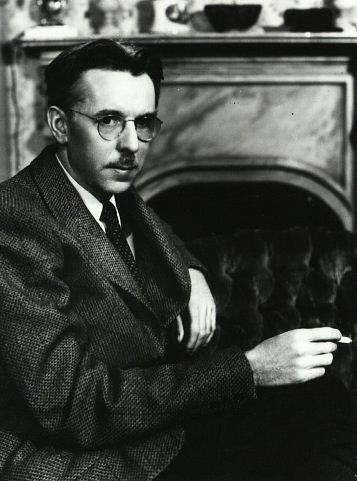
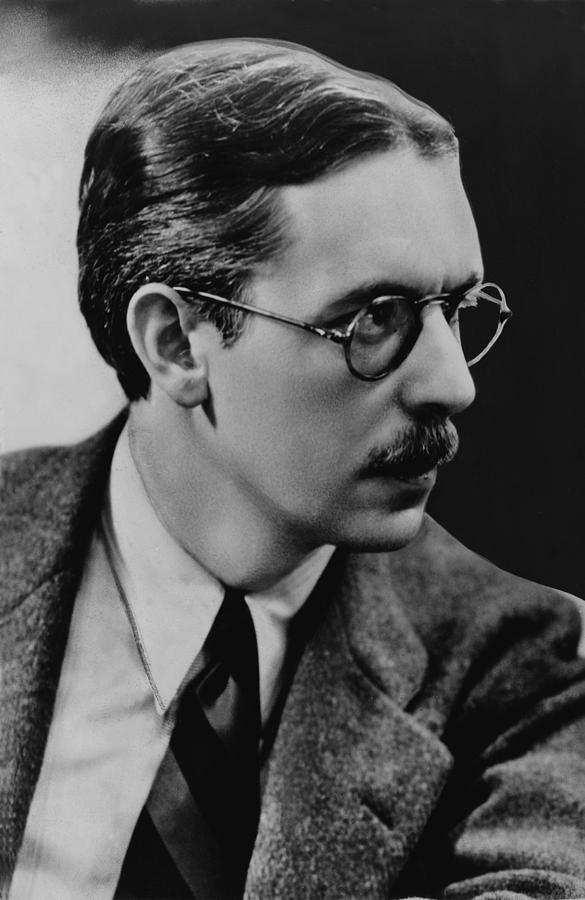
American cartoonist, author, humorist, journalist, playwright, and celebrated wit, James Thurber wrote, “You can fool too many of the people too much of the time.”

Tuesday, March 1, 2016

Bible Readings for March 1, 2016


Today our passages are Leviticus 24:1–25:46; Mark 10:13-31; Psalm 44:9-26; and Proverbs 10:20-21. The readings are from The Message by Eugene H. PetersonIf you find these readings helpful, please consider sending an offering directly to Cove Presbyterian Church, 3404 Main Street, Weirton, West Virginia or through PayPal.

Leviticus 24-25:46 (The Message)

Leviticus 24

Light and Bread
 1-4 God spoke to Moses: "Order the People of Israel to bring you virgin olive oil for light so that the lamps may be kept burning continually. Aaron is in charge of keeping these lamps burning in front of the curtain that screens The Testimony in the Tent of Meeting from evening to morning continually before God. This is a perpetual decree down through the generations. Aaron is responsible for keeping the lamps burning continually on the Lampstand of pure gold before God.  5-9 "Take fine flour and bake twelve loaves of bread, using about four quarts of flour to a loaf. Arrange them in two rows of six each on the Table of pure gold before God. Along each row spread pure incense, marking the bread as a memorial; it is a gift to God. Regularly, every Sabbath, this bread is to be set before God, a perpetual covenantal response from Israel. The bread then goes to Aaron and his sons, who are to eat it in a Holy Place. It is their most holy share from the gifts to God. This is a perpetual decree."

10-12 One day the son of an Israelite mother and an Egyptian father went out among the Israelites. A fight broke out in the camp between him and an Israelite. The son of the Israelite woman blasphemed the Name of God and cursed. They brought him to Moses. His mother's name was Shelomith, daughter of Dibri of the tribe of Dan. They put him in custody waiting for God's will to be revealed to them.

 13-16 Then God spoke to Moses: "Take the blasphemer outside the camp. Have all those who heard him place their hands on his head; then have the entire congregation stone him. Then tell the Israelites, Anyone who curses God will be held accountable; anyone who blasphemes the Name of God must be put to death. The entire congregation must stone him. It makes no difference whether he is a foreigner or a native, if he blasphemes the Name, he will be put to death.
 17-22 "Anyone who hits and kills a fellow human must be put to death. Anyone who kills someone's animal must make it good—a life for a life. Anyone who injures his neighbor will get back the same as he gave: fracture for fracture, eye for eye, tooth for tooth. What he did to hurt that person will be done to him. Anyone who hits and kills an animal must make it good, but whoever hits and kills a fellow human will be put to death. And no double standards: the same rule goes for foreigners and natives. I am God, your God."
 23 Moses then spoke to the People of Israel. They brought the blasphemer outside the camp and stoned him. The People of Israel followed the orders God had given Moses.

Leviticus 25

"The Land Will Observe a Sabbath to God"
 1-7 God spoke to Moses at Mount Sinai: "Speak to the People of Israel. Tell them, When you enter the land which I am going to give you, the land will observe a Sabbath to God. Sow your fields, prune your vineyards, and take in your harvests for six years. But the seventh year the land will take a Sabbath of complete and total rest, a Sabbath to God; you will not sow your fields or prune your vineyards. Don't reap what grows of itself; don't harvest the grapes of your untended vines. The land gets a year of complete and total rest. But you can eat from what the land volunteers during the Sabbath year—you and your men and women servants, your hired hands, and the foreigners who live in the country, and, of course, also your livestock and the wild animals in the land can eat from it. Whatever the land volunteers of itself can be eaten.
"The Fiftieth Year Shall Be a Jubilee for You"
8-12 "Count off seven Sabbaths of years—seven times seven years: Seven Sabbaths of years adds up to forty-nine years. Then sound loud blasts on the ram's horn on the tenth day of the seventh month, the Day of Atonement. Sound the ram's horn all over the land. Sanctify the fiftieth year; make it a holy year. Proclaim freedom all over the land to everyone who lives in it—a Jubilee for you: Each person will go back to his family's property and reunite with his extended family. The fiftieth year is your Jubilee year: Don't sow; don't reap what volunteers itself in the fields; don't harvest the untended vines because it's the Jubilee and a holy year for you. You're permitted to eat from whatever volunteers itself in the fields.  13 "In this year of Jubilee everyone returns home to his family property.
 14-17 "If you sell or buy property from one of your countrymen, don't cheat him. Calculate the purchase price on the basis of the number of years since the Jubilee. He is obliged to set the sale price on the basis of the number of harvests remaining until the next Jubilee. The more years left, the more money; you can raise the price. But the fewer years left, the less money; decrease the price. What you are buying and selling in fact is the number of crops you're going to harvest. Don't cheat each other. Fear your God. I am God, your God.
 18-22 "Keep my decrees and observe my laws and you will live secure in the land. The land will yield its fruit; you will have all you can eat and will live safe and secure. Do I hear you ask, 'What are we going to eat in the seventh year if we don't plant or harvest?' I assure you, I will send such a blessing in the sixth year that the land will yield enough for three years. While you plant in the eighth year, you will eat from the old crop and continue until the harvest of the ninth year comes in.
 23-24 "The land cannot be sold permanently because the land is mine and you are foreigners—you're my tenants. You must provide for the right of redemption for any of the land that you own.
 25-28 "If one of your brothers becomes poor and has to sell any of his land, his nearest relative is to come and buy back what his brother sold. If a man has no one to redeem it but he later prospers and earns enough for its redemption, he is to calculate the value since he sold it and refund the balance to the man to whom he sold it; he can then go back to his own land. If he doesn't get together enough money to repay him, what he sold remains in the possession of the buyer until the year of Jubilee. In the Jubilee it will be returned and he can go back and live on his land.
 29-31 "If a man sells a house in a walled city, he retains the right to buy it back for a full year after the sale. At any time during that year he can redeem it. But if it is not redeemed before the full year has passed, it becomes the permanent possession of the buyer and his descendants. It is not returned in the Jubilee. However, houses in unwalled villages are treated the same as fields. They can be redeemed and have to be returned at the Jubilee.
 32-34 "As to the Levitical cities, houses in the cities owned by the Levites are always subject to redemption. Levitical property is always redeemable if it is sold in a town that they hold and reverts to them in the Jubilee, because the houses in the towns of the Levites are their property among the People of Israel. The pastures belonging to their cities may not be sold; they are their permanent possession.
 35-38 "If one of your brothers becomes indigent and cannot support himself, help him, the same as you would a foreigner or a guest so that he can continue to live in your neighborhood. Don't gouge him with interest charges; out of reverence for your God help your brother to continue to live with you in the neighborhood. Don't take advantage of his plight by running up big interest charges on his loans, and don't give him food for profit. I am your God who brought you out of Egypt to give you the land of Canaan and to be your God.
 39-43 "If one of your brothers becomes indigent and has to sell himself to you, don't make him work as a slave. Treat him as a hired hand or a guest among you. He will work for you until the Jubilee, after which he and his children are set free to go back to his clan and his ancestral land. Because the People of Israel are my servants whom I brought out of Egypt, they must never be sold as slaves. Don't tyrannize them; fear your God.
 44-46 "The male and female slaves which you have are to come from the surrounding nations; you are permitted to buy slaves from them. You may also buy the children of foreign workers who are living among you temporarily and from their clans which are living among you and have been born in your land. They become your property. You may will them to your children as property and make them slaves for life. But you must not tyrannize your brother Israelites.


Mark 10:13-31 (The Message)

 13-16The people brought children to Jesus, hoping he might touch them. The disciples shooed them off. But Jesus was irate and let them know it: "Don't push these children away. Don't ever get between them and me. These children are at the very center of life in the kingdom. Mark this: Unless you accept God's kingdom in the simplicity of a child, you'll never get in." Then, gathering the children up in his arms, he laid his hands of blessing on them.
To Enter God's Kingdom
 17As he went out into the street, a man came running up, greeted him with great reverence, and asked, "Good Teacher, what must I do to get eternal life?"
 18-19Jesus said, "Why are you calling me good? No one is good, only God. You know the commandments: Don't murder, don't commit adultery, don't steal, don't lie, don't cheat, honor your father and mother."
 20He said, "Teacher, I have—from my youth—kept them all!"
 21Jesus looked him hard in the eye—and loved him! He said, "There's one thing left: Go sell whatever you own and give it to the poor. All your wealth will then be heavenly wealth. And come follow me."
 22The man's face clouded over. This was the last thing he expected to hear, and he walked off with a heavy heart. He was holding on tight to a lot of things, and not about to let go.
 23-25Looking at his disciples, Jesus said, "Do you have any idea how difficult it is for people who 'have it all' to enter God's kingdom?" The disciples couldn't believe what they were hearing, but Jesus kept on: "You can't imagine how difficult. I'd say it's easier for a camel to go through a needle's eye than for the rich to get into God's kingdom."
 26That set the disciples back on their heels. "Then who has any chance at all?" they asked.
 27Jesus was blunt: "No chance at all if you think you can pull it off by yourself. Every chance in the world if you let God do it."
 28Peter tried another angle: "We left everything and followed you."
 29-31Jesus said, "Mark my words, no one who sacrifices house, brothers, sisters, mother, father, children, land—whatever—because of me and the Message will lose out. They'll get it all back, but multiplied many times in homes, brothers, sisters, mothers, children, and land—but also in troubles. And then the bonus of eternal life! This is once again the Great Reversal: Many who are first will end up last, and the last first."


Psalm 44:9-26 (The Message)


 9-12 But now you've walked off and left us,
      you've disgraced us and won't fight for us.
   You made us turn tail and run;
      those who hate us have cleaned us out.
   You delivered us as sheep to the butcher,
      you scattered us to the four winds.
   You sold your people at a discount—
      you made nothing on the sale.

 13-16 You made people on the street,
      urchins, poke fun and call us names.
   You made us a joke among the godless,
      a cheap joke among the rabble.
   Every day I'm up against it,
      my nose rubbed in my shame—
   Gossip and ridicule fill the air,
      people out to get me crowd the street.

 17-19 All this came down on us,
      and we've done nothing to deserve it.
   We never betrayed your Covenant: our hearts
      were never false, our feet never left your path.
   Do we deserve torture in a den of jackals?
      or lockup in a black hole?

 20-22 If we had forgotten to pray to our God
      or made fools of ourselves with store-bought gods,
   Wouldn't God have figured this out?
      We can't hide things from him.
   No, you decided to make us martyrs,
      lambs assigned for sacrifice each day.

 23-26 Get up, God! Are you going to sleep all day?
      Wake up! Don't you care what happens to us?
   Why do you bury your face in the pillow?
      Why pretend things are just fine with us?
   And here we are—flat on our faces in the dirt,
      held down with a boot on our necks.
   Get up and come to our rescue.
      If you love us so much, Help us!


Proverbs 10:20-21 (The Message)


 20 The speech of a good person is worth waiting for;
   the blabber of the wicked is worthless.

 21 The talk of a good person is rich fare for many,
   but chatterboxes die of an empty heart.


Verse of the Day
“[(A song for worship.)][A Prayer for the LORD's Help]When I am in trouble, I pray,” - Psalm 120:1
Today's passage is from the Contemporary English Version.

Thought for the Day
American cartoonist, author, journalist, playwright, and celebrated wit, James Thurber wrote, “It is better to know some of the questions than all of the answers.”

Sunday, January 11, 2015

Bible Readings for January 11, 2015


Today our passages are Genesis 24:52–26:16; Matthew 8:18-34; Psalm 10:1-15; and Proverbs 3:7-8. The readings are the Contemporary English Version 


Genesis 24:52-26:16 (Contemporary English Version)

52Abraham's servant bowed down and thanked the LORD. 53Then he gave clothing, as well as silver and gold jewelry, to Rebekah. He also gave expensive gifts to her brother and her mother.
    54Abraham's servant and the men with him ate and drank, then spent the night there. The next morning they got up, and the servant told Rebekah's mother and brother, "I would like to go back to my master now."
    55"Let Rebekah stay with us for a week or ten days," they answered. "Then she may go."
    56But he said, "Don't make me stay any longer. The LORD has already helped me find a wife for my master's son. Now let us return."
    57They answered, "Let's ask Rebekah what she wants to do." 58They called her and asked, "Are you willing to leave with this man right now?"
   "Yes," she answered.
    59So they agreed to let Rebekah and an old family servant woman [a] leave immediately with Abraham's servant and his men. 60They gave Rebekah their blessing and said, "We pray that God will give you many children and grandchildren and that he will help them defeat their enemies." 61Afterwards, Rebekah and the young women who were to travel with her prepared to leave. Then they got on camels and left with Abraham's servant and his men. 62At that time Isaac was living in the southern part of Canaan near a place called "The Well of the Living One Who Sees Me." [b] 63-65One evening he was walking out in the fields, when suddenly he saw a group of people approaching on camels. So he started toward them. Rebekah saw him coming; she got down from her camel, and asked, "Who is that man?" "He is my master Isaac," the servant answered. Then Rebekah covered her face with her veil. [c] 66The servant told Isaac everything that had happened.
    67Isaac took Rebekah into the tent [d] where his mother had lived before she died, and Rebekah became his wife. He loved her and was comforted over the loss of his mother.

Genesis 25

Abraham Marries Keturah
 1Abraham married Keturah, 2and they had six sons: Zimran, Jokshan, Medan, Midian, Ishbak, and Shuah. 3Later, Jokshan became the father of Sheba and Dedan, and when Dedan grew up, he had three sons: Asshurim, Letushim, and Leummim. 4Midian also had five sons: Ephah, Epher, Hanoch, Abida, and Eldaah.     5-6While Abraham was still alive, he gave gifts to the sons of Hagar and Keturah. He also sent their sons to live in the east far from his son Isaac, and when Abraham died, he left everything to Isaac.
   
The Death of Abraham
 7-8Abraham died at the ripe old age of one hundred seventy-five. 9-10His sons Isaac and Ishmael buried him east of Hebron [e] in Machpelah Cave that was part of the field Abraham had bought from Ephron son of Zohar the Hittite. Abraham was buried there beside his wife Sarah. 11God blessed Isaac after this, and Isaac moved to a place called "The Well of the Living One Who Sees Me." [f]
Ishmael's Descendants
 12Ishmael was the son of Abraham and Hagar, the slave woman of Sarah. 13Ishmael had twelve sons, in this order: Nebaioth, Kedar, Adbeel, Mibsam, 14Mishma, Dumah, Massa, 15Hadad, Tema, Jetur, Naphish, and Kedemah. 16Each of Ishmael's sons was a tribal chief, and a village was named after each of them.     17-18Ishmael had settled in the land east of his brothers, and his sons [g] settled everywhere from Havilah to Shur, east of Egypt on the way to Asshur. [h] Ishmael was one hundred thirty-seven when he died.
The Birth of Esau and Jacob
 19Isaac was the son of Abraham, 20and he was forty years old when he married Rebekah, the daughter of Bethuel. She was also the sister of Laban, the Aramean from northern Syria. [i] Almost twenty years later, 21Rebekah still had no children. So Isaac asked the LORD to let her have a child, and the LORD answered his prayer.     22Before Rebekah gave birth, she knew she was going to have twins, because she could feel them inside her, fighting each other. She thought, "Why is this happening to me?" Finally, she asked the LORD why her twins were fighting, 23and he told her:
   "Your two sons will become
   two separate nations. [j] The younger of the two
   will be stronger,
   and the older son
   will be his servant."
    24When Rebekah gave birth, 25the first baby was covered with red hair, so he was named Esau. [k] 26The second baby grabbed on to his brother's heel, so they named him Jacob. [l] Isaac was sixty years old when they were born.
Esau Sells His Rights as the First-Born Son
 27As Jacob and Esau grew older, Esau liked the outdoors and became a good hunter, while Jacob settled down and became a shepherd. 28Esau would take the meat of wild animals to his father Isaac, and so Isaac loved him more, but Jacob was his mother's favorite son.     29One day, Jacob was cooking some stew, when Esau came home hungry 30and said, "I'm starving to death! Give me some of that red stew right now!" That's how Esau got the name "Edom." [m] 31Jacob replied, "Sell me your rights as the first-born son." [n] 32"I'm about to die," Esau answered. "What good will those rights do me?"
    33But Jacob said, "Promise me your birthrights, here and now!" And that's what Esau did. 34Jacob then gave Esau some bread and some of the bean stew, and when Esau had finished eating and drinking, he just got up and left, showing how little he thought of his rights as the first-born.
   

Genesis 26

Isaac and Abimelech
 1Once during Abraham's lifetime, the fields had not produced enough grain, and now the same thing happened. So Isaac went to King Abimelech of the Philistines in the land of Gerar, 2because the LORD had appeared to Isaac and said:    Isaac, stay away from Egypt! I will show you where I want you to go. 3You will live there as a foreigner, but I will be with you and bless you. I will keep my promise to your father Abraham by giving this land to you and your descendants.
    4I will give you as many descendants as there are stars in the sky, and I will give your descendants all of this land. They will be a blessing to every nation on earth, [o] 5because Abraham did everything I told him to do. 6Isaac moved to Gerar 7with his beautiful wife Rebekah. He was afraid that someone might kill him to get her, and so he told everyone that Rebekah was his sister. 8After Isaac had been there a long time, King Abimelech looked out a window and saw Isaac hugging and kissing Rebekah. 9Abimelech called him in and said, "Rebekah must be your wife! Why did you say she is your sister?"
   "Because I thought someone would kill me," Isaac answered.
    10"Don't you know what you've done?" Abimelech exclaimed. "If someone had slept with her, you would have made our whole nation guilty!" 11Then Abimelech warned his people that anyone who even touched Isaac or Rebekah would be put to death.
    12Isaac planted grain and had a good harvest that same year. The LORD blessed him, 13and Isaac was so successful that he became very rich. 14In fact, the Philistines were jealous of the large number of sheep, goats, and slaves that Isaac owned, 15and they stopped up the wells that Abraham's servants had dug before his death. 16Finally, Abimelech said, "Isaac, I want you to leave our country. You have become too powerful to stay here."
   
Footnotes:
  1. Genesis 24:59 old family servant woman: Probably Deborah, who had taken care of Rebekah from the time she was born (see 35.8).
  2. Genesis 24:62 Who Sees Me: Or "I Have Seen."
  3. Genesis 24:63 covered. . . veil: Since the veiling of a bride was part of the wedding ceremony, this probably means that she was willing to become the wife of Isaac.
  4. Genesis 24:67 took. . . tent: This shows that Rebekah is now the wife of Isaac and the successor of Sarah as the leading woman in the tribe.
  5. Genesis 25:9 Hebron: See the note at 23.16-18.
  6. Genesis 25:11 The Well. . . Sees Me: Or "Beer-Lahai-Roi." (see 16.14).
  7. Genesis 25:17 sons: Or "descendants."
  8. Genesis 25:17 Havilah to Shur. . . Asshur: The exact location of these places is not known.
  9. Genesis 25:20 northern Syria: See the note at 24.10.
  10. Genesis 25:23 two separate nations: Or "two nations always in conflict."
  11. Genesis 25:25 Esau: In Hebrew "Esau" sounds like "hairy."
  12. Genesis 25:26 Jacob: In Hebrew "Jacob" sounds like "heel."
  13. Genesis 25:30 Edom: In Hebrew "Edom" sounds like "red."
  14. Genesis 25:31 rights. . . son: The first-born son inherited the largest amount of property, as well as the leadership of the family.
  15. Genesis 26:4 They. . . on earth: Or "All nations on earth will ask me to bless them."

Matthew 8:18-34 (Contemporary English Version)

Some Who Wanted To Go with Jesus
(Luke 9.57-62)
 18When Jesus saw the crowd, [a] he went across Lake Galilee. 19A teacher of the Law of Moses came up to him and said, "Teacher, I'll go anywhere with you!" 20Jesus replied, "Foxes have dens, and birds have nests. But the Son of Man doesn't have a place to call his own."     21Another disciple said to Jesus, "Lord, let me wait till I bury my father."
    22Jesus answered, "Come with me, and let the dead bury their dead." [b]
A Storm
(Mark 4.35-41; Luke 8.22-25)
 23After Jesus left in a boat with his disciples, 24a terrible storm suddenly struck the lake, and waves started splashing into their boat.    Jesus was sound asleep, 25so the disciples went over to him and woke him up. They said, "Lord, save us! We're going to drown!"
    26But Jesus replied, "Why are you so afraid? You surely don't have much faith." Then he got up and ordered the wind and the waves to calm down. And everything was calm.
    27The men in the boat were amazed and said, "Who is this? Even the wind and the waves obey him."
   
Two Men with Demons in Them
(Mark 5.1-20; Luke 8.26-39)
 28After Jesus had crossed the lake, he came to shore near the town of Gadara [c] and started down the road. Two men with demons in them came to him from the tombs. [d] They were so fierce that no one could travel that way. 29Suddenly they shouted, "Jesus, Son of God, what do you want with us? Have you come to punish us before our time?" 30Not far from there a large herd of pigs was feeding. 31So the demons begged Jesus, "If you force us out, please send us into those pigs!" 32Jesus told them to go, and they went out of the men and into the pigs. All at once the pigs rushed down the steep bank into the lake and drowned.     33The people taking care of the pigs ran to the town and told everything, especially what had happened to the two men. 34Everyone in town came out to meet Jesus. When they saw him, they begged him to leave their part of the country.
   
Footnotes:
  1. Matthew 8:18 saw the crowd: Some manuscripts have "large crowd." Others have "large crowds."
  2. Matthew 8:22 let the dead bury their dead: For the Jewish people a proper burial of their dead was a very important duty. But Jesus teaches that following him is even more important.
  3. Matthew 8:28 Gadara: Some manuscripts have "Gergesa." Others have "Gerasa."
  4. Matthew 8:28 tombs: It was thought that demons and evil spirits lived in tombs and in caves that were used for burying the dead.

Psalm 10:1-15 (Contemporary English Version)

Psalm 10

A Prayer for Help
 1Why are you far away, LORD?    Why do you hide yourself
   when I am in trouble?
    2Proud and brutal people
   hunt down the poor.
   But let them get caught
   by their own evil plans!
    3The wicked brag about
   their deepest desires.
   Those greedy people hate
   and curse you, LORD.
    4The wicked are too proud
   to turn to you
   or even think about you.
    5They are always successful,
   though they can't understand
   your teachings,
   and they keep sneering
   at their enemies.
    6In their hearts they say,
   "Nothing can hurt us!
   We'll always be happy
   and free from trouble."
    7They curse and tell lies,
   and all they talk about
   is how to be cruel
   or how to do wrong.
    8They hide outside villages,
   waiting to strike and murder
   some innocent victim.
    9They are hungry lions
   hiding in the bushes,
   hoping to catch
   some helpless passerby.
   They trap the poor in nets
   and drag them away.
    10They crouch down and wait
   to grab a victim.
    11They say, "God can't see!
   He's got on a blindfold."
    12Do something, LORD God,
   and use your powerful arm
   to help those in need.
    13The wicked don't respect you.
   In their hearts they say,
   "God won't punish us!"
    14But you see the trouble
   and the distress,
   and you will do something.
   The poor can count on you,
   and so can orphans.
    15Now break the arms
   of all merciless people.
   Punish them for doing wrong
   and make them stop.


Proverbs 3:7-8 (Contemporary English Version)

7Don't ever think that you
   are wise enough,
   but respect the LORD
   and stay away from evil.
    8This will make you healthy,
   and you will feel strong.


Verse of the Day

“When I was really hurting, I prayed to the LORD. He answered my prayer, and took my worries away. The LORD is on my side, and I am not afraid of what others can do to me.” - Psalm 118:5-6
Today's passage is from the Contemporary English Version.


Thought for the Day
 

American cartoonist, author, journalist, playwright, and celebrated wit, James Thurber wrote, “It is better to know some of the questions than all of the answers.”