Read the Bible in a Year

Each day, we'll post passages so that you can read the Bible in one year. This is part of The Colossians 13:16 Project, sponsored by Cove Presbyterian Church, 3404 Main Street, Weirton, West Virginia. You're invited to worship with us Sundays, at 11:00 a.m. or Saturdays, at 6:30 p.m. You may also want to consider joining one our adult Bible Studies: Thursdays at 12:00 noon and Sundays at 9:30 a.m. and 10:00 a.m. We also have a full range of programs for children. If you want more information about the church, check out the other blogs. And please feel free to leave any comments.

The Bible in a Year is a ministry of Cove Presbyterian Church. We need your support to keep posting. If you find it helpful, you can support this blog by your contributions. They may be sent to Cove Presbyterian Church, 3404 Main Street, Weirton, WV 26062. You can also use the PayPal link below:

Image result for paypal donate
Showing posts with label Esther. Show all posts

Tuesday, August 20, 2019

Bible Readings for August 20, 2019

Today our passages are Esther 8:1–10:3; 1 Corinthians 12:27–13:13; Psalm 37:1-11; and Proverbs 21:23-24. The readings are from the Contemporary English VersionIf you find these readings helpful, please consider sending an offering directly to Cove Presbyterian Church, 3404 Main Steet, Weirton, West Virginia or through PayPal by using the link below.
https://www.paypal.com/cgi-bin/webscr?cmd=_s-xclick&hosted_button_id=NX3WLYQG5864L


Esther 8-10:3 (Contemporary English Version)


Esther 8

A Happy Ending for the Jews
 1Before the end of the day, King Xerxes gave Esther everything that had belonged to Haman, the enemy of the Jews. Esther told the king that Mordecai was her cousin. So the king made Mordecai one of his highest officials 2and gave him the royal ring that Haman had worn. Then Esther put Mordecai in charge of Haman's property.     3Once again Esther went to speak to the king. This time she fell down at his feet, crying and begging, " Please stop Haman's evil plan to have the Jews killed!" 4King Xerxes held out the golden scepter to Esther, 5and she got up and said, " Your Majesty, I know that you will do the right thing and that you really love me. Please stop what Haman has planned. He has already sent letters demanding that the Jews in all your provinces be killed, 6and I can't bear to see my people and my own relatives destroyed." 
    7King Xerxes then said to Esther and Mordecai, " I have already ordered Haman to be hanged and his house given to Esther, because of his evil plans to kill the Jews. 8I now give you permission to make a law that will save the lives of your people. You may use my ring to seal the law, so that it can never be changed." 
    9On the twenty-third day of Sivan, [a] the third month, the king's secretaries wrote the law. They obeyed Mordecai and wrote to the Jews, the rulers, the governors, and the officials of all one hundred twenty-seven provinces from India to Ethiopia. [b] The letters were written in every language used in the kingdom, including the Jewish language. 10They were written in the name of King Xerxes and sealed with his ring. Then they were taken by messengers who rode the king's finest and fastest horses. 11-13In these letters the king said: 
   On the thirteenth day of Adar, [c] the twelfth month, the Jews in every city and province will be allowed to get together and defend themselves. They may destroy any army that attacks them, and they may kill all of their enemies, including women and children. They may also take everything that belongs to their enemies. A copy of this law is to be posted in every province and read by everyone. 
    14-15Then the king ordered his messengers to take their fastest horses and deliver the law as quickly as possible to every province. When Mordecai left, he was wearing clothes fit for a king. He wore blue and white robes, a large gold crown, and a cape made of fine linen and purple cloth. 
   After the law was announced in Susa, everyone shouted and cheered, 16and the Jews were no longer afraid. In fact, they were very happy and felt that they had won a victory. 
    17In every province and city where the law was sent, the Jews had parties and celebrated. Many of the people in the provinces accepted the Jewish religion, because they were now afraid of the Jews. 
    

Esther 9

The Jews Destroy Their Enemies
 1The first law that the king had made was to be followed on the thirteenth day of Adar, [d] the twelfth month. This was the very day that the enemies of the Jews had hoped to do away with them. But the Jews turned things around, 2and in the cities of every province they came together to attack their enemies. Everyone was afraid of the Jews, and no one could do anything to oppose them. 3The leaders of the provinces, the rulers, the governors, and the court officials were afraid of Mordecai and took sides with the Jews. 4Everyone in the provinces knew that the king had promoted him and had given him a lot of power.     5The Jews took their swords and did away with their enemies, without showing any mercy. 6-10They killed five hundred people in Susa, [e] but they did not take anything that belonged to the ones they killed. Haman had been one of the worst enemies of the Jews, and ten of his sons were among those who were killed. Their names were Parshandatha, Dalphon, Aspatha, Poratha, Adalia, Aridatha, Parmashta, Arisai, Aridai, and Vaizatha. 11Later that day, someone told the king how many people had been killed in Susa. [f] 12Then he told Esther, " Five hundred people, including Haman's ten sons, have been killed in Susa alone. If that many were killed here, what must have happened in the provinces? Is there anything else you want done? Just tell me, and it will be done." 13Esther answered, " Your Majesty, please let the Jews in Susa fight to defend themselves tomorrow, just as they did today. And order the bodies of Haman's ten sons to be hanged in public." 
    14King Xerxes did what Esther had requested, and the bodies of Haman's sons were hung in Susa. 15Then on the fourteenth day of Adar the Jews of the city got together and killed three hundred more people. But they still did not take anything that belonged to their enemies. 
    16-17On the thirteenth day of Adar, the Jews in the provinces had come together to defend themselves. They killed seventy-five thousand of their enemies, but the Jews did not take anything that belonged to the ones they killed. Then on the fourteenth day of the month the Jews celebrated with a feast. 
    18On the fifteenth day of the month the Jews in Susa held a holiday and celebrated, after killing their enemies on the thirteenth and the fourteenth. 19This is why the Jews in the villages now celebrate on the fourteenth day of the month. It is a joyful holiday that they celebrate by feasting and sending gifts of food to each other.     
The Festival of Purim
 20Mordecai wrote down everything that had happened. Then he sent letters to the Jews everywhere in the provinces 21and told them:    Each year you must celebrate on both the fourteenth and the fifteenth of Adar, 22the days when we Jews defeated our enemies. Remember this month as a time when our sorrow was turned to joy, and celebration took the place of crying. Celebrate by having parties and by giving to the poor and by sharing gifts of food with each other. 
    23They followed Mordecai's instructions and set aside these two days every year as a time of celebration.     
The Reason for the Festival of Purim
 24Haman was the son of Hammedatha and a descendant of Agag. He hated the Jews so much that he planned to destroy them, but he wanted to find out the best time to do it. So he cast lots. [g] 25Esther went to King Xerxes and asked him to save her people. Then the king gave written orders for Haman and his sons to be punished in the same terrible way that Haman had in mind for the Jews. So they were hanged. 26Mordecai's letter had said that the Jews must celebrate for two days because of what had happened to them. This time of celebration is called Purim, [h] which is the Hebrew word for the lots that were cast. 27Now every year the Jews set aside these two days for having parties and celebrating, just as they were told to do. 28From now on, all Jewish families must remember to celebrate Purim on these two days each year. 29Queen Esther, daughter of Abihail, wanted to give full authority to Mordecai's letter about the Festival of Purim, and with his help she wrote a letter about the feast. 30Copies of this letter were sent to Jews in the one hundred twenty-seven provinces of King Xerxes. In the letter they said:    We pray that all of you will live in peace and safety. 
    31You and your descendants must always remember to celebrate Purim at the time and in the way that we have said. You must also follow the instructions that we have given you about mourning and going without eating. [i] 32These laws about Purim are written by the authority of Queen Esther. 
    

Esther 10

The Greatness of Xerxes and Mordecai
 1King Xerxes made everyone in his kingdom pay taxes, even those in lands across the sea. 2All the great and famous things that King Xerxes did are written in the record books of the kings of Media and Persia. These records also tell about the honors that the king gave to Mordecai. 3Next to the king himself, Mordecai was the highest official in the kingdom. He was a popular leader of the Jews, because he helped them in many ways and would even speak to the king for them.     
Footnotes:
  1. Esther 8:9 Sivan: The third month of the Hebrew calendar, from about mid-May to mid-June.
  2. Esther 8:9 Ethiopia: See the note at 1.1,2.
  3. Esther 8:11 Adar: See the note at 3.7.
  4. Esther 9:1 Adar: See the note at 3.7.
  5. Esther 9:6 in Susa: Or " in the royal fortress in Susa."
  6. Esther 9:11 in Susa: Or " in the royal fortress in Susa."
  7. Esther 9:24 cast lots: See the note at 3.7.
  8. Esther 9:26 Purim: The Jewish festival of Purim got its name from " purim," which is the Babylonian name for the lots that Haman used. Purim is celebrated each year on the 14th and 15th of Adar, which is about the first of March.
  9. Esther 9:31 going without eating: See the note at 4.3.

1 Corinthians 12:27-13:13 (Contemporary English Version)


27Together you are the body of Christ. Each one of you is part of his body. 28First, God chose some people to be apostles and prophets and teachers for the church. But he also chose some to work miracles or heal the sick or help others or be leaders or speak different kinds of languages. 29Not everyone is an apostle. Not everyone is a prophet. Not everyone is a teacher. Not everyone can work miracles. 30Not everyone can heal the sick. Not everyone can speak different kinds of languages. Not everyone can tell what these languages mean. 31I want you to desire the best gifts. [a]So I will show you a much better way. 

1 Corinthians 13

Love
 1What if I could speak    all languages 
   of humans 
   and of angels? 
   If I did not love others, 
   I would be nothing more 
   than a noisy gong 
   or a clanging cymbal. 
    2What if I could prophesy 
   and understand all secrets 
   and all knowledge? 
   And what if I had faith 
   that moved mountains? 
   I would be nothing, 
   unless I loved others. 
    3What if I gave away all 
   that I owned 
   and let myself 
   be burned alive? [b] I would gain nothing, 
   unless I loved others. 
    4Love is kind and patient, 
   never jealous, boastful, 
   proud, or 5rude. 
   Love isn't selfish 
   or quick tempered. 
   It doesn't keep a record 
   of wrongs that others do. 
    6Love rejoices in the truth, 
   but not in evil. 
    7Love is always supportive, 
   loyal, hopeful, 
   and trusting. 
    8Love never fails! 
   Everyone who prophesies 
   will stop, 
   and unknown languages 
   will no longer 
   be spoken. 
   All that we know 
   will be forgotten. 
    9We don't know everything, 
   and our prophecies 
   are not complete. 
    10But what is perfect 
   will someday appear, 
   and what isn't perfect 
   will then disappear. 
    11When we were children, 
   we thought and reasoned 
   as children do. 
   But when we grew up, 
   we quit our childish ways. 
    12Now all we can see of God 
   is like a cloudy picture 
   in a mirror. 
   Later we will see him 
   face to face. 
   We don't know everything, 
   but then we will, 
   just as God completely 
   understands us. 
    13For now there are faith, 
   hope, and love. 
   But of these three, 
   the greatest is love. 
    
Footnotes:
  1. 1 Corinthians 12:31 I want you to desire the best gifts: Or "You desire the best gifts."
  2. 1 Corinthians 13:3 and let myself be burned alive: Some manuscripts have "so that I could brag."

Psalm 37:1-11 (Contemporary English Version)


Psalm 37

(By David.)
Trust the LORD
 1Don't be annoyed by anyone    who does wrong, 
   and don't envy them. 
    2They will soon disappear 
   like grass without rain. 
    3Trust the LORD and live right! 
   The land will be yours, 
   and you will be safe. 
    4Do what the LORD wants, 
   and he will give you 
   your heart's desire. 
    5Let the LORD lead you 
   and trust him to help. 
    6Then it will be as clear 
   as the noonday sun 
   that you were right. 
    7Be patient and trust the LORD. 
   Don't let it bother you 
   when all goes well for those 
   who do sinful things. 
    8Don't be angry or furious. 
   Anger can lead to sin. 
    9All sinners will disappear, 
   but if you trust the LORD, 
   the land will be yours. 
    10Sinners will soon disappear, 
   never to be found, 
    11but the poor will take the land 
   and enjoy a big harvest.


Proverbs 21:23-24 (Contemporary English Version)


23Watching what you say
   can save you
   a lot of trouble.
    24If you are proud and conceited,
   everyone will say,
   "You're a snob!" 


Verse of the Day

“I will always look to you, as you stand beside me and protect me from fear.” - Psalm 16:8 
Today's passage is from the Contemporary English Version.

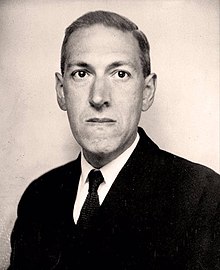
Lovecraft in 1934Thought for the Day

American writer of weird fiction and horror fiction, H. P. Lovecraft wrote, “We live on a placid island of ignorance in the midst of black seas of infinity, and it was not meant that we should voyage far.”


Image result for fortune teller jokes
A Joke for Today

In a dark and hazy room, peering into a crystal ball, the mystic delivered grave news:

"There's no easy way to say this, so I'll just be blunt - prepare yourself to be a widow. Your husband will die a violent and horrible death this year."

Visibly shaken, Laura stared at the woman's lined face, then at the single flickering candle, then down at her hands. She took a few deep breaths to compose herself.

She simply had to know. She met the fortune teller's gaze, steadied her voice, and asked:
"Will I be acquitted?"

Monday, August 19, 2019

Bible Readings for August 19, 2019

Today our passages are Esther 4:1–7:10; 1 Corinthians 12:1-26; Psalm 36:1-12; and Proverbs 21:21-22. The readings are from the Contemporary English VersionIf you find these readings helpful, please consider sending an offering directly to Cove Presbyterian Church, 3404 Main Steet, Weirton, West Virginia or through PayPal by using the link below.
https://www.paypal.com/cgi-bin/webscr?cmd=_s-xclick&hosted_button_id=NX3WLYQG5864L


Esther 4-7:10 (Contemporary English Version)


Esther 4

Mordecai Asks for Esther's Help
 1When Mordecai heard about the letter, he tore his clothes in sorrow and put on sackcloth. Then he covered his head with ashes and went through the city, crying and weeping. 2But he could go only as far as the palace gate, because no one wearing sackcloth was allowed inside the palace. 3In every province where the king's orders were read, the Jews cried and mourned, and they went without eating. [a] Many of them even put on sackcloth and sat in ashes. 4When Esther's servant girls and her other servants told her what Mordecai was doing, she became very upset and sent Mordecai some clothes to wear in place of the sackcloth. But he refused to take them.     5Esther had a servant named Hathach, who had been given to her by the king. So she called him in and said, " Find out what's wrong with Mordecai and why he's acting this way."
    6Hathach went to Mordecai in the city square in front of the palace gate, 7and Mordecai told him everything that had happened. He also told him how much money Haman had promised to add to the king's treasury, if all the Jews were killed.
    8Mordecai gave Hathach a copy of the orders for the murder of the Jews and told him that these had been read in Susa. He said, " Show this to Esther and explain what it means. Ask her to go to the king and beg him to have pity on her people, the Jews!"
    9Hathach went back to Esther and told her what Mordecai had said. 10She answered, " Tell Mordecai 11there is a law about going in to see the king, and all his officials and his people know about this law. Anyone who goes in to see the king without being invited by him will be put to death. The only way that anyone can be saved is for the king to hold out the gold scepter to that person. And it's been thirty days since he has asked for me."
    12When Mordecai was told what Esther had said, 13he sent back this reply, " Don't think that you will escape being killed with the rest of the Jews, just because you live in the king's palace. 14If you don't speak up now, we will somehow get help, but you and your family will be killed. It could be that you were made queen for a time like this!"
    15Esther sent a message to Mordecai, saying, 16" Bring together all the Jews in Susa and tell them to go without eating for my sake! Don't eat or drink for three days and nights. My servant girls and I will do the same. Then I will go in to see the king, even if it means I must die."
    17Mordecai did everything Esther told him to do.
    

Esther 5

Esther Invites the King and Haman to a Dinner
 1Three days later, Esther dressed in her royal robes and went to the inner court of the palace in front of the throne. The king was sitting there, facing the open doorway. 2He was happy to see Esther, and he held out the gold scepter to her.    When Esther came up and touched the tip of the scepter, 3the king said, " Esther, what brings you here? Just ask, and I will give you as much as half of my kingdom."
    4Esther answered, " Your Majesty, please come with Haman to a dinner I will prepare for you later today."
    5The king said to his servants, " Hurry and get Haman, so we can accept Esther's invitation."
   The king and Haman went to Esther's dinner, 6and while they were drinking wine, the king asked her, " What can I do for you? Just ask, and I will give you as much as half of my kingdom."
    7-8Esther replied, " Your Majesty, if you really care for me and are willing to do what I want, please come again tomorrow with Haman to the dinner I will prepare for you. At that time I will answer Your Majesty's question."
    
Haman Plans To Kill Mordecai
 9Haman was feeling great as he left. But when he saw Mordecai at the palace gate, he noticed that Mordecai did not stand up or show him any respect. This made Haman really angry, 10but he did not say a thing.    When Haman got home, he called together his friends and his wife Zeresh 11and started bragging about his great wealth and all his sons. He told them the many ways that the king had honored him and how all the other officials and leaders had to respect him. 12Haman added, " That's not all! Besides the king himself, I'm the only person Queen Esther invited for dinner. She has also invited the king and me to dinner tomorrow. 13But none of this makes me happy, as long as I see that Jew Mordecai sitting at the palace gate."
    14Haman's wife and friends said to him, " Have a tower built about seventy-five feet high, and tomorrow morning ask the king to hang Mordecai there. Then later, you can have dinner with the king and enjoy yourself."
   This seemed like a good idea to Haman, and he had the tower built.
    

Esther 6

The King Honors Mordecai
 1That night the king could not sleep, and he had a servant read him the records of what had happened since he had been king. 2When the servant read how Mordecai had kept Bigthana and Teresh from killing the king, 3the king asked, " What has been done to reward Mordecai for this?"    " Nothing, Your Majesty!" the king's servants replied.
    4About this time, Haman came in to ask the king to have Mordecai hanged on the tower he had built. The king saw him and asked, " Who is that man waiting in front of the throne room?"
    5The king's servants answered, " Your Majesty, it is Haman."
   " Have him come in," the king commanded.
    6When Haman entered the room, the king asked him, " What should I do for a man I want to honor?"
   Haman was sure that he was the one the king wanted to honor. 7So he replied, " Your Majesty, if you wish to honor a man, 8have someone bring him one of your own robes and one of your own horses with a fancy headdress. 9Have one of your highest officials place your robe on this man and lead him through the streets on your horse, while someone shouts, `This is how the king honors a man!' "
    10The king replied, " Hurry and do just what you have said! Don't forget a thing. Get the robe and the horse for Mordecai the Jew, who is on duty at the palace gate!"
    11Haman got the king's robe and put it on Mordecai. He led him through the city on the horse and shouted as he went, " This is how the king honors a man!"
    12Afterwards, Mordecai returned to his duties at the palace gate, and Haman hurried home, hiding his face in shame. 13Haman told his wife and friends what had happened. Then his wife and his advisors said, " If Mordecai is a Jew, this is just the beginning of your troubles! You will end up a ruined man." 14They were still talking, when the king's servants came and quickly took Haman to the dinner that Esther had prepared.
    

Esther 7

Haman Is Punished
 1The king and Haman were dining with Esther 2and drinking wine during the second dinner, when the king again said, " Esther, what can I do for you? Just ask, and I will give you as much as half of my kingdom!"     3Esther answered, " Your Majesty, if you really care for me and are willing to help, you can save me and my people. That's what I really want, 4because a reward has been promised to anyone who kills my people. Your Majesty, if we were merely going to be sold as slaves, I would not have bothered you." [b] 5" Who would dare to do such a thing?" the king asked.
    6Esther replied, " That evil Haman is the one out to get us!"
   Haman was terrified, as he looked at the king and the queen.
    7The king was so angry that he got up, left his wine, and went out into the palace garden.
   Haman realized that the king had already decided what to do with him, and he stayed and begged Esther to save his life.
    8Just as the king came back into the room, Haman got down on his knees beside Esther, who was lying on the couch. The king shouted, " Now you're even trying to rape my queen here in my own palace!"
   As soon as the king said this, his servants covered Haman's head. 9Then Harbona, one of the king's personal servants, said, " Your Majesty, Haman built a tower seventy-five feet high beside his house, so he could hang Mordecai on it. And Mordecai is the very one who spoke up and saved your life."
   " Hang Haman from his own tower!" the king commanded. 10Right away, Haman was hanged on the tower he had built to hang Mordecai, and the king calmed down.
    
Footnotes:
  1. Esther 4:3 went without eating: The Israelites would sometimes go without eating (also called " fasting" ) in times of great sorrow or danger.
  2. Esther 7:4 I would. . . bothered you: One possible meaning for the difficult Hebrew text.

1 Corinthians 12:1-26 (Contemporary English Version)


1 Corinthians 12

Spiritual Gifts
 1My friends, you asked me about spiritual gifts. 2I want you to remember that before you became followers of the Lord, you were led in all the wrong ways by idols that cannot even talk. 3Now I want you to know that if you are led by God's Spirit, you will say that Jesus is Lord, and you will never curse Jesus.     4There are different kinds of spiritual gifts, but they all come from the same Spirit. 5There are different ways to serve the same Lord, 6and we can each do different things. Yet the same God works in all of us and helps us in everything we do.
    7The Spirit has given each of us a special way of serving others. 8Some of us can speak with wisdom, while others can speak with knowledge, but these gifts come from the same Spirit. 9To others the Spirit has given great faith or the power to heal the sick 10or the power to work mighty miracles. Some of us are prophets, and some of us recognize when God's Spirit is present. [a] Others can speak different kinds of languages, and still others can tell what these languages mean. 11But it is the Spirit who does all this and decides which gifts to give to each of us. 
One Body with Many Parts
 12The body of Christ has many different parts, just as any other body does. 13Some of us are Jews, and others are Gentiles. Some of us are slaves, and others are free. But God's Spirit baptized each of us and made us part of the body of Christ. Now we each drink from that same Spirit. [b] 14Our bodies don't have just one part. They have many parts. 15Suppose a foot says, "I'm not a hand, and so I'm not part of the body." Wouldn't the foot still belong to the body? 16Or suppose an ear says, "I'm not an eye, and so I'm not part of the body." Wouldn't the ear still belong to the body? 17If our bodies were only an eye, we couldn't hear a thing. And if they were only an ear, we couldn't smell a thing. 18But God has put all parts of our body together in the way that he decided is best.     19A body isn't really a body, unless there is more than one part. 20It takes many parts to make a single body. 21That's why the eyes cannot say they don't need the hands. That's also why the head cannot say it doesn't need the feet. 22In fact, we cannot get along without the parts of the body that seem to be the weakest. 23We take special care to dress up some parts of our bodies. We are modest about our personal parts, 24but we don't have to be modest about other parts.
   God put our bodies together in such a way that even the parts that seem the least important are valuable. 25He did this to make all parts of the body work together smoothly, with each part caring about the others. 26If one part of our body hurts, we hurt all over. If one part of our body is honored, the whole body will be happy.
    
Footnotes:
  1. 1 Corinthians 12:10 and some of us. . . present: Or "and some of us recognize the difference between God's Spirit and other spirits."
  2. 1 Corinthians 12:13 Some of us are Jews. . . that same Spirit: Verse 13 may also be translated, "God's Spirit is inside each of us, and all around us as well. So it doesn't matter that some of us are Jews and others are Gentiles and that some are slaves and others are free. Together we are one body."

Psalm 36:1-12 (Contemporary English Version)


Psalm 36

(For the music leader by David, the LORD's servant.)
Human Sin and God's Goodness
 1Sinners don't respect God;    sin is all they think about.
    2They like themselves too much
   to hate their own sins
   or even to see them.
    3They tell deceitful lies,
   and they don't have the sense
   to live right.
    4Those people stay awake,
   thinking up mischief,
   and they follow the wrong road,
   refusing to turn from sin.
    5Your love is faithful, LORD,
   and even the clouds in the sky
   can depend on you.
    6Your decisions are always fair.
   They are firm like mountains,
   deep like the sea,
   and all people and animals
   are under your care.
    7Your love is a treasure,
   and everyone finds shelter
   in the shadow of your wings.
    8You give your guests a feast
   in your house,
   and you serve a tasty drink
   that flows like a river.
    9The life-giving fountain
   belongs to you,
   and your light gives light
   to each of us.
    10Our LORD, keep showing love
   to everyone who knows you,
   and use your power to save
   all whose thoughts please you.
    11Don't let those proud
   and merciless people
   kick me around
   or chase me away.
    12Look at those wicked people!
   They are knocked down,
   never to get up again. 


Proverbs 21:21-22 (Contemporary English Version)


21If you try to be kind and good,
   you will be blessed with life
   and goodness and honor.
    22One wise person can defeat
   a city full of soldiers
   and capture their fortress. 


Verse of the Day

“And so, if we have God's Son, we have this life. But if we don't have the Son, we don't have this life.” - 1 John 5:12 
Today's passage is from the Contemporary English Version.

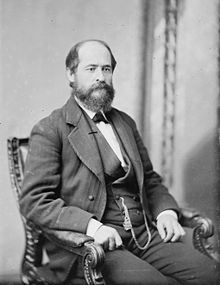
Richard P. Bland - Brady-Handy.jpgThought for the Day

American politician, lawyer, and educator from Missouri, Richard Parks Bland wrote, “Many now born, by the time they are voters will compose part of a nation with a genius nowhere equaled, and with a vast territory upon which those energies and that genius can operate.”

A Joke for Today

Image result for playing house jokes

A little girl and a little boy were at day-care one day. The girl approached the boy and said, "Hey Billy, want to play house?"

He said, "Sure! What do you want me to do?"

Sally replied, "I want you to communicate your feelings."

"Communicate my feelings?" said a bewildered Billy. "I have no idea what that means."

The little girl nods and says, "Perfect. You can be the husband".

Saturday, August 17, 2019

Bible Readings for August 18, 2019

Today our passages are Esther 1:1–3:15; 1 Corinthians 11:17-34; Psalm 35:17-28; and Proverbs 21:19-20. The readings are from the Contemporary English VersionIf you find these readings helpful, please consider sending an offering directly to Cove Presbyterian Church, 3404 Main Steet, Weirton, West Virginia or through PayPal by using the link below.
https://www.paypal.com/cgi-bin/webscr?cmd=_s-xclick&hosted_button_id=NX3WLYQG5864L


Esther 1-3:15 (Contemporary English Version)


Esther 1

Queen Vashti Disobeys King Xerxes
 1-2King Xerxes [a] of Persia lived in his capital city of Susa [b] and ruled one hundred twenty-seven provinces from India to Ethiopia. [c] 3During the third year of his rule, Xerxes gave a big dinner for all his officials and officers. The governors and leaders of the provinces were also invited, and even the commanders of the Persian and Median armies came. 4For one hundred eighty days he showed off his wealth and spent a lot of money to impress his guests with the greatness of his kingdom. 5King Xerxes soon gave another dinner and invited everyone in the city of Susa, no matter who they were. The eating and drinking lasted seven days in the beautiful palace gardens. 6The area was decorated with blue and white cotton curtains tied back with purple linen cords that ran through silver rings fastened to marble columns. Couches of gold and silver rested on pavement that had all kinds of designs made from costly bright-colored stones and marble and mother-of-pearl.     7The guests drank from gold cups, and each cup had a different design. The king was generous 8and said to them, " Drink all you want!" Then he told his servants, " Keep their cups full." 
    9While the men were enjoying themselves, Queen Vashti gave the women a big dinner inside the royal palace. 
    10By the seventh day, King Xerxes was feeling happy because of so much wine. And he asked his seven personal servants, Mehuman, Biztha, Harbona, Bigtha, Abagtha, Zethar, and Carkas, 11to bring Queen Vashti to him. The king wanted her to wear her crown and let his people and his officials see how beautiful she was. 12The king's servants told Queen Vashti what he had said, but she refused to go to him, and this made him terribly angry. 
    13-14The king called in the seven highest officials of Persia and Media. They were Carshena, Shethar, Admatha, Tarshish, Meres, Marsena, and Memucan. These men were very wise and understood all the laws and customs of the country, and the king always asked them what they thought about such matters. 
    15The king said to them, " Queen Vashti refused to come to me when I sent my servants for her. What does the law say I should do about that?" 
    16Then Memucan told the king and the officials: 
   Your Majesty, Queen Vashti has not only embarrassed you, but she has insulted your officials and everyone else in all the provinces. 
    17The women in the kingdom will hear about this, and they will refuse to respect their husbands. They will say, " If Queen Vashti doesn't obey her husband, why should we?" 18Before this day is over, the wives of the officials of Persia and Media will find out what Queen Vashti has done, and they will refuse to obey their husbands. They won't respect their husbands, and their husbands will be angry with them. 
    19Your Majesty, if you agree, you should write for the Medes and Persians a law that can never be changed. This law would keep Queen Vashti from ever seeing you again. Then you could let someone who respects you be queen in her place. 
    20When the women in your great kingdom hear about this new law, they will respect their husbands, no matter if they are rich or poor. 
    21King Xerxes and his officials liked what Memucan had said, 22and he sent letters to all of his provinces. Each letter was written in the language of the province to which it was sent, and it said that husbands should have complete control over their wives and children. 
    

Esther 2

Esther Becomes Queen
 1After a while, King Xerxes got over being angry. But he kept thinking about what Vashti had done and the law that he had written because of her. 2Then the king's personal servants said:    Your Majesty, a search must be made to find you some beautiful young women. 3You can select officers in every province to bring them to the place where you keep your wives in the capital city of Susa. Put your servant Hegai in charge of them since that is his job. He can see to it that they are given the proper beauty treatments. 4Then let the young woman who pleases you most take Vashti's place as queen. 
   King Xerxes liked these suggestions, and he followed them. 
    5At this time a Jew named Mordecai was living in Susa. His father was Jair, and his grandfather Shimei was the son of Kish from the tribe of Benjamin. 6Kish [d] was one of the people that Nebuchadnezzar had taken from Jerusalem, when he took King Jeconiah of Judah to Babylonia. 7Mordecai had a very beautiful cousin named Esther, whose Hebrew name was Hadassah. He had raised her as his own daughter, after her father and mother died. 8When the king ordered the search for beautiful women, many were taken to the king's palace in Susa, and Esther was one of them. 
   Hegai was put in charge of all the women, 9and from the first day, Esther was his favorite. He began her beauty treatments at once. He also gave her plenty of food and seven special maids from the king's palace, and they had the best rooms. 
    10Mordecai had warned Esther not to tell anyone that she was a Jew, and she obeyed him. 11He was anxious to see how Esther was getting along and to learn what had happened to her. So each day he would walk back and forth in front of the court where the women lived. 
    12The young women were given beauty treatments for one whole year. The first six months their skin was rubbed with olive oil and myrrh, and the last six months it was treated with perfumes and cosmetics. Then each of them spent the night alone with King Xerxes. 13When a young woman went to the king, she could wear whatever clothes or jewelry she chose from the women's living quarters. 14In the evening she would go to the king, and the following morning she would go to the place where his wives stayed after being with him. There a man named Shaashgaz was in charge of the king's wives. [e] Only the ones the king wanted and asked for by name could go back to the king. 15-16Xerxes had been king for seven years when Esther's turn came to go to him during Tebeth, [f] the tenth month of the year. Everyone liked Esther. The king's personal servant Hegai was in charge of the women, and Esther trusted Hegai and asked him what she ought to take with her. [g] 17Xerxes liked Esther more than he did any of the other young women. None of them pleased him as much as she did, and right away he fell in love with her and crowned her queen in place of Vashti. 18In honor of Esther he gave a big dinner for his leaders and officials. Then he declared a holiday everywhere in his kingdom and gave expensive gifts.     

Mordecai Saves the King's Life
 19When the young women were brought together again, Esther's cousin Mordecai had become a palace official. 20He had told Esther never to tell anyone that she was a Jew, and she obeyed him, just as she had always done.     21Bigthana and Teresh were the two men who guarded King Xerxes' rooms, but they got angry with the king and decided to kill him. 22Mordecai found out about their plans and asked Queen Esther to tell the king what he had found out. 23King Xerxes learned that Mordecai's report was true, and he had the two men hanged. Then the king had all of this written down in his record book as he watched. 
    

Esther 3

Haman Plans To Destroy the Jews
 1Later, King Xerxes promoted Haman the son of Hammedatha to the highest position in his kingdom. Haman was a descendant of Agag, [h] 2and the king had given orders for his officials at the royal gate to honor Haman by kneeling down to him. All of them obeyed except Mordecai. 3When the other officials asked Mordecai why he disobeyed the king's command, 4he said, " Because I am a Jew." They spoke to him for several days about kneeling down, but he still refused to obey. Finally, they reported this to Haman, to find out if he would let Mordecai get away with it. 5Haman was furious to learn that Mordecai refused to kneel down and honor him. 6And when he found out that Mordecai was a Jew, he knew that killing only Mordecai was not enough. Every Jew in the whole kingdom had to be killed.     7It was now the twelfth year of the rule of King Xerxes. During Nisan, [i] the first month of the year, Haman said, " Find out the best time for me to do this." [j] The time chosen was Adar, [k] the twelfth month. 8Then Haman went to the king and said: 
   Your Majesty, there are some people who live all over your kingdom and won't have a thing to do with anyone else. They have customs that are different from everyone else's, and they refuse to obey your laws. We would be better off to get rid of them! 9Why not give orders for all of them to be killed? I can promise that you will get tons of silver for your treasury. 
    10The king handed his official ring to Haman, who hated the Jews, and the king told him, 11" Do what you want with those people! You can keep their money." 
    12On the thirteenth day of Nisan, Haman called in the king's secretaries and ordered them to write letters in every language used in the kingdom. The letters were written in the name of the king and sealed by using the king's own ring. [l] At once they were sent to the king's highest officials, the governors of each province, and the leaders of the different nations in the kingdom of Xerxes. 13The letters were taken by messengers to every part of the kingdom, and this is what was said in the letters: 
   On the thirteenth day of Adar, the twelfth month, all Jewish men, women, and children are to be killed. And their property is to be taken. 
    14-15King Xerxes gave orders for these letters to be posted where they could be seen by everyone all over the kingdom. The king's command was obeyed, and one of the letters was read aloud to the people in the walled city of Susa. Then the king and Haman sat down to drink together, but no one in the city [m] could figure out what was going on. 

Footnotes:
  1. Esther 1:1 Xerxes: The Hebrew text has " Ahasuerus," who was better known as King Xerxes I (485-465 B.C.).
  2. Esther 1:1 in his capital city of Susa: Or " in his royal fortress in the city of Susa." Susa was a city east of Babylon and a winter home for Persian kings.
  3. Esther 1:1 Ethiopia: The Hebrew text has " Cush," which was a region south of Egypt that included parts of the present countries of Ethiopia and Sudan.
  4. Esther 2:6 Kish: Or " Mordecai." The Hebrew text has " He."
  5. Esther 2:14 wives: This translates a Hebrew word for women who were legally bound to a man, but without the full privileges of a wife.
  6. Esther 2:15 Tebeth: The tenth month of the Hebrew calendar, from about mid-December to mid-January.
  7. Esther 2:15 her: The Hebrew text adds, " Esther was the daughter of Abihail and was the cousin of Mordecai, who had adopted her after her parents died" (see verse 7).
  8. Esther 3:1 Agag: Agag was a king who had fought against the Jews long before the time of Esther (see 1 Samuel 15.1-33).
  9. Esther 3:7 Nisan: The first month of the Hebrew calendar, from about mid-March to mid-April.
  10. Esther 3:7 Find out. . . do this: The Hebrew text has " cast lots," which were pieces of wood or stone used to find out how and when to do something. For " lots" the Hebrew text uses the Babylonian word " purim."
  11. Esther 3:7 Adar: The twelfth month of the Hebrew calendar, from about mid-February to mid-March.
  12. Esther 3:12 king's own ring: Melted wax was used to seal a letter, and while the wax was still soft, the king's ring was pressed in the wax to show that the letter was official.
  13. Esther 3:14 walled city. . . city: Or " royal fortress. . . rest of the city."

1 Corinthians 11:17-34 (Contemporary English Version)


Rules for the Lord's Supper
 17Your worship services do you more harm than good. I am certainly not going to praise you for this. 18I am told that you can't get along with each other when you worship, and I am sure that some of what I have heard is true. 19You are bound to argue with each other, but it is easy to see which of you have God's approval.     20When you meet together, you don't really celebrate the Lord's Supper. 21You even start eating before everyone gets to the meeting, and some of you go hungry, while others get drunk. 22Don't you have homes where you can eat and drink? Do you hate God's church? Do you want to embarrass people who don't have anything? What can I say to you? I certainly cannot praise you. 
    

The Lord's Supper
(Matthew 26.26-29; Mark 14.22-25; Luke 22.14-20)
 23I have already told you what the Lord Jesus did on the night he was betrayed. And it came from the Lord himself.   He took some bread in his hands. 24Then after he had given thanks, he broke it and said, "This is my body, which is given for you. Eat this and remember me." 
    25After the meal, Jesus took a cup of wine in his hands and said, "This is my blood, and with it God makes his new agreement with you. Drink this and remember me." 
    26The Lord meant that when you eat this bread and drink from this cup, you tell about his death until he comes. 
    27But if you eat the bread and drink the wine in a way that isn't worthy of the Lord, you sin against his body and blood. 28That's why you must examine the way you eat and drink. 29If you fail to understand that you are the body of the Lord, you will condemn yourselves by the way you eat and drink. 30That's why many of you are sick and weak and why a lot of others have died. 31If we carefully judge ourselves, we won't be punished. 32But when the Lord judges and punishes us, he does it to keep us from being condemned with the rest of the world. 
    33My dear friends, you should wait until everyone gets there before you start eating. 34If you really are hungry, you can eat at home. Then you won't condemn yourselves when you meet together. 
   After I arrive, I will instruct you about the other matters. 


Psalm 35:17-28 (Contemporary English Version)


17But all you do is watch! 
   When will you do something? 
   Save me from the attack 
   of those vicious lions. 
    18And when your people meet, 
   I will praise you 
   and thank you, Lord, 
   in front of them all. 
    19Don't let my brutal enemies 
   be glad because of me. 
   They hate me for no reason. 
   Don't let them wink 
   behind my back. 
    20They say hurtful things, 
   and they lie to people 
   who want to live in peace. 
    21They are quick to accuse me. 
   They say, "You did it! 
   We saw you ourselves." 
    22You see everything, LORD! 
   Please don't keep silent 
   or stay so far away. 
    23Fight to defend me, Lord God, 
    24and prove that I am right 
   by your standards. 
   Don't let them laugh at me 
    25or say to each other, 
   "Now we've got what we want! 
   We'll gobble him down!" 
    26Disappoint and confuse 
   all who are glad 
   to see me in trouble, 
   but disgrace and embarrass 
   my proud enemies 
   who say to me, 
   "You are nothing!" 
    27Let all who want me to win 
   be happy and joyful. 
   From now on let them say, 
   "The LORD is wonderful! 
   God is glad when all goes well 
   for his servant." 
    28Then I will shout all day, 
   "Praise the LORD God! 
   He did what was right."


Proverbs 21:19-20 (Contemporary English Version)


19It's better out in the desert
   than at home with a nagging,
   complaining wife.
    20Be sensible and store up
   precious treasures--
   don't waste them
   like a fool. 


Verse of the Day

“If I live, it will be for Christ, and if I die, I will gain even more.” - Philippians 1:21 

Today's passage is from the Contemporary English Version.

Drummond Henry frontispiece.jpgThought for the Day

Scottish evangelist, biologist, writer and lecturer, Henry Drummond wrote, “Unless a man undertakes more than he possibly can do, he will never do all he can do.”


Image result for stupid men jokeA Joke for Today

Eleven people were hanging on a rope under a helicopter, ten men and one woman. The rope was not strong enough to carry them all, so they decided that one has to drop off, otherwise they are all going to fall.

They were not able to choose that person, but then the woman made a very touching speech.

She said that she would voluntarily let go of the rope, because as woman she was used to giving up everything for her husband and kids, and for men in general, without ever getting anything in return. As soon as she finished her speech, all the men started clapping their hands.