Read the Bible in a Year

Each day, we'll post passages so that you can read the Bible in one year. This is part of The Colossians 13:16 Project, sponsored by Cove Presbyterian Church, 3404 Main Street, Weirton, West Virginia. You're invited to worship with us Sundays, at 11:00 a.m. or Saturdays, at 6:30 p.m. You may also want to consider joining one our adult Bible Studies: Thursdays at 12:00 noon and Sundays at 9:30 a.m. and 10:00 a.m. We also have a full range of programs for children. If you want more information about the church, check out the other blogs. And please feel free to leave any comments.

The Bible in a Year is a ministry of Cove Presbyterian Church. We need your support to keep posting. If you find it helpful, you can support this blog by your contributions. They may be sent to Cove Presbyterian Church, 3404 Main Street, Weirton, WV 26062. You can also use the PayPal link below:

Image result for paypal donate
Showing posts with label Ellen Glasgow. Show all posts

Wednesday, April 12, 2017

Bible Readings for April 12, 2017


Today our passages are Joshua 7:16–9:2; Luke 16:1-18; Psalm 82:1-8; and Proverbs 13:2-3. The readings are from the Contemporary English Version. If you find these readings helpful, please consider sending an offering directly to Cove Presbyterian Church, 3404 Main Street, Weirton, West Virginia or through PayPal by using the link below.
 
https://www.paypal.com/cgi-bin/webscr?cmd=_s-xclick&hosted_button_id=NX3WLYQG5864L
 

Joshua 7:16-9:2 (Contemporary English Version)

16Joshua got up early the next morning and brought each tribe to the place of worship, where the LORD showed that the Judah tribe was guilty. 17Then Joshua brought the clans of Judah to the LORD, and the LORD showed that the Zerah clan was guilty. One by one he brought the leader of each family in the Zerah clan to the LORD, and the LORD showed that Zabdi's family was guilty. 18Finally, Joshua brought each man in Zabdi's family to the LORD, and the LORD showed that Achan was the guilty one.
    19" Achan," Joshua said, " the LORD God of Israel has decided that you are guilty. Is this true? Tell me what you did, and don't try to hide anything."
    20" It's true," Achan answered. " I sinned and disobeyed the LORD God of Israel. 21-22While we were in Jericho, I saw a beautiful Babylonian robe, two hundred pieces of silver, and a gold bar that weighed the same as fifty pieces of gold. I wanted them for myself, so I took them. I dug a hole under my tent and hid the silver, the gold, and the robe."
   Joshua had some people run to Achan's tent, where they found the silver, the gold, and the robe. 23They brought them back and put them in front of the sacred chest, so Joshua and the rest of the Israelites could see them. 24Then everyone took Achan and the things he had stolen to Trouble Valley. [a] They also took along his sons and daughters, his cattle, donkeys, and sheep, his tent, and everything else that belonged to him. 25Joshua said, " Achan, you caused us a lot of trouble. Now the LORD is paying you back with the same kind of trouble."
   The people of Israel then stoned to death Achan and his family. They made a fire and burned the bodies, together with what Achan had stolen, and all his possessions. 26They covered the remains with a big pile of rocks, which is still there. Then the LORD stopped being angry with Israel.
   That's how the place came to be called Trouble Valley.
   

Joshua 8

Israel Destroys the Town of Ai
 1-2The LORD told Joshua:    Don't be afraid, and don't be discouraged by what happened at the town of Ai. Take the army and attack again. But first, have part of the army set up an ambush on the other side of the town. I will help you defeat the king of Ai and his army, and you will capture the town and the land around it. Destroy Ai and kill its king as you did at Jericho. But you may keep the livestock and everything else you want.
    3-4Joshua quickly got the army ready to attack Ai. He chose thirty thousand of his best soldiers and gave them these orders:
   Tonight, while it is dark, march to Ai and take up a position behind the town. Get as close to the town as you can without being seen, but be ready to attack.
    5-6The rest of the army will come with me and attack near the gate. When the people of Ai come out to fight, we'll run away and let them chase us. They will think we are running from them just like the first time. But when we've let them chase us far enough away, 7you come out of hiding. The LORD our God will help you capture the town. 8Then set it on fire, as the LORD has told us to do. Those are your orders, 9now go!
   The thirty thousand soldiers went to a place on the west side of Ai, between Ai and Bethel, where they could hide and wait to attack.
   That night, Joshua stayed in camp with the rest of the army. 10Early the next morning he got his troops ready to move out, and he and the other leaders of Israel led them to Ai. 11They set up camp in full view of the town, across the valley to the north. 12Joshua had already sent five thousand soldiers to the west side of the town to hide and wait to attack. 13Now all his troops were in place. Part of the army was in the camp to the north of Ai, and the others were hiding to the west, ready to make a surprise attack. That night, Joshua went into the valley. [b] 14-15The king of Ai saw Joshua's army, so the king and his troops hurried out early the next morning to fight them. Joshua and his army pretended to be beaten, and they let the men of Ai chase them toward the desert. The king and his army were facing the Jordan valley as Joshua had planned.
   The king did not realize that some Israelite soldiers were hiding behind the town. 16-17So he called out every man in Ai to go after Joshua's troops. They all rushed out to chase the Israelite army, and they left the town gates wide open. Not one man was left in Ai or in Bethel. [c] Joshua let the men of Ai chase him and his army farther and farther away from Ai. 18Finally, the LORD told Joshua, " Point your sword [d] at the town of Ai, because now I am going to help you defeat it!" As soon as Joshua pointed his sword at the town, 19the soldiers who had been hiding got up and ran into the town. They captured it and set it on fire.
    20-21When Joshua and his troops saw smoke rising from the town, they knew that the other part of their army had captured it. So they turned and attacked.
   The men of Ai looked back and saw smoke rising from their town. But they could not escape, because the soldiers they had been chasing had suddenly turned and started fighting. 22-24Meanwhile, the other Israelite soldiers had come from the town and attacked the men of Ai from the rear. The Israelites captured the king of Ai and brought him to Joshua. They also chased the rest of the men of Ai into the desert and killed them. [e] The Israelite army went back to Ai and killed everyone there. 25-26Joshua kept his sword pointed at the town of Ai until every last one of Ai's twelve thousand people was dead. 27But the Israelites took the animals and the other possessions of the people of Ai, because this was what the LORD had told Joshua to do.
    28-29Joshua made sure every building in Ai was burned to the ground. He told his men to kill the king of Ai and hang his body on a tree. Then at sunset he told the Israelites to take down the body, [f] throw it in the gateway of the town, and cover it with a big pile of rocks. Those rocks are still there, and the town itself has never been rebuilt.
Joshua Reads the Blessings and Curses
(Deuteronomy 27.1-26)
 30-32One day, Joshua led the people of Israel to Mount Ebal, where he told some of his men, " Build an altar for offering sacrifices to the LORD. And use stones that have never been cut with iron tools, [g] because that is what Moses taught in The Book of the Law." [h] Joshua offered sacrifices to please the LORD [i] and to ask his blessing. [j] Then with the Israelites still watching, he copied parts of The Book of the Law [k] of Moses onto stones. 33-35Moses had said that everyone in Israel was to go to the valley between Mount Ebal and Mount Gerizim, where they were to be blessed. So everyone went there, including the foreigners, the leaders, officials, and judges. Half of the people stood on one side of the valley, and half on the other side, with the priests from the Levi tribe standing in the middle with the sacred chest. Then in a loud voice, Joshua read the blessings and curses from The Book of the Law [l] of Moses. [m]

Joshua 9

The People of Gibeon Trick the Leaders of Israel
 1-2The kings west of the Jordan River heard about Joshua's victories, and so they got together and decided to attack Joshua and Israel. These kings were from the hill country and from the foothills to the west, as well as from the Mediterranean seacoast as far north as the Lebanon Mountains. Some of them were Hittites, others were Amorites or Canaanites, and still others were Perizzites, Hivites, or Jebusites.    
Footnotes:
  1. Joshua 7:24 Trouble Valley: Or " Achor Valley."
  2. Joshua 8:13 valley: This may refer either to the Jordan River valley or to the valley between the Israelite camp and Ai.
  3. Joshua 8:16 Ai or in Bethel: Hebrew; one ancient translation " Ai."
  4. Joshua 8:18 sword: Or " spear."
  5. Joshua 8:22 Joshua. They also chased. . . them: Or " Joshua. The men of Ai had chased the Israelites into the desert, but the Israelites killed them there."
  6. Joshua 8:28 take down the body: See Deuteronomy 21.22,23.
  7. Joshua 8:30 use stones. . . iron tools: See Exodus 20.25.
  8. Joshua 8:30 taught. . . Law: Or " commanded. . . Teachings."
  9. Joshua 8:30 sacrifices to please the LORD: These sacrifices have been traditionally called " whole burnt offerings" because the whole animal was burned on the altar. A main purpose of such sacrifices was to please the LORD with the smell of the sacrifice, and so in the CEV they are often called " sacrifices to please the LORD."
  10. Joshua 8:30 to ask his blessing: These sacrifices have traditionally been called " peace offerings," or " offerings of well-being." A main purpose was to ask for the LORD's blessing, and so in the CEV they are often called " sacrifices to ask the LORD's blessing."
  11. Joshua 8:30 Law: Or " Teachings."
  12. Joshua 8:33 the blessings. . . Moses: Or " all of The Book of the Law of Moses, including the blessings and the
  13. Joshua 8:33 zcurses."

Luke 16:1-18 (Contemporary English Version)

Luke 16

A Dishonest Manager
 1Jesus said to his disciples:    A rich man once had a manager to take care of his business. But he was told that his manager was wasting money. 2So the rich man called him in and said, "What is this I hear about you? Tell me what you have done! You are no longer going to work for me."
    3The manager said to himself, "What shall I do now that my master is going to fire me? I can't dig ditches, and I'm ashamed to beg. 4I know what I'll do, so that people will welcome me into their homes after I've lost my job."
    5Then one by one he called in the people who were in debt to his master. He asked the first one, "How much do you owe my master?"
    6"A hundred barrels of olive oil," the man answered.
   So the manager said, "Take your bill and sit down and quickly write `fifty'."
    7The manager asked someone else who was in debt to his master, "How much do you owe?"
   "A thousand bushels [a] of wheat," the man replied. The manager said, "Take your bill and write `eight hundred'."
    8The master praised his dishonest manager for looking out for himself so well. That's how it is! The people of this world look out for themselves better than the people who belong to the light.
    9My disciples, I tell you to use wicked wealth to make friends for yourselves. Then when it is gone, you will be welcomed into an eternal home. 10Anyone who can be trusted in little matters can also be trusted in important matters. But anyone who is dishonest in little matters will be dishonest in important matters. 11If you cannot be trusted with this wicked wealth, who will trust you with true wealth? 12And if you cannot be trusted with what belongs to someone else, who will give you something that will be your own? 13You cannot be the slave of two masters. You will like one more than the other or be more loyal to one than to the other. You cannot serve God and money.
   
Some Sayings of Jesus
(Matthew 11.12,13; 5.31,32; Mark 10.11,12)
 14The Pharisees really loved money. So when they heard what Jesus said, they made fun of him. 15But Jesus told them:    You are always making yourselves look good, but God sees what is in your heart. The things that most people think are important are worthless as far as God is concerned.
    16Until the time of John the Baptist, people had to obey the Law of Moses and the Books of the Prophets. [b] But since God's kingdom has been preached, everyone is trying hard to get in. 17Heaven and earth will disappear before the smallest letter of the Law does. 18It is a terrible sin [c] for a man to divorce his wife and marry another woman. It is also a terrible sin for a man to marry a divorced woman.
Footnotes:
  1. Luke 16:7 A thousand bushels: The Greek text has " A hundred measures," and each measure is about ten or twelve bushels.
  2. Luke 16:16 the Law of Moses and the Books of the Prophets: The Jewish Scriptures, that is, the Old Testament.
  3. Luke 16:18 a terrible sin: The Greek text uses a word that means the sin of being unfaithful in marriage.

Psalm 82:1-8 (Contemporary English Version)

Psalm 82

(A psalm by Asaph.)
Please Do Something, God!
 1When all of the other gods [a] have come together,    the Lord God judges them
   and says:
    2"How long will you
   keep judging unfairly
   and favoring evil people?
    3Be fair to the poor
   and to orphans.
   Defend the helpless
   and everyone in need.
    4Rescue the weak and homeless
   from the powerful hands
   of heartless people.
    5"None of you know
   or understand a thing.
   You live in darkness,
   while the foundations
   of the earth tremble. [b] 6"I, the Most High God, say
   that all of you are gods [c] and also my own children.
    7But you will die,
   just like everyone else,
   including powerful rulers."
    8Do something, God!
   Judge the nations of the earth;
   they belong to you.
   
Footnotes:
  1. Psalm 82:1 the other gods: This probably refers to the gods of the nations that God defeated, but it could refer to God's servants (angels) in heaven or even to human rulers.
  2. Psalm 82:5 foundations. . . tremble: In ancient times it was believed that the earth was flat and supported by columns.
  3. Psalm 82:6 all of you are gods: See the note at 82.1.

Proverbs 13:2-3 (Contemporary English Version)

2You will be well rewarded
   for saying something kind,
   but all some people think about
   is how to be cruel and mean.
    3Keep what you know to yourself,
   and you will be safe;
   talk too much,
   and you are done for.


Verse of the Day

“Then Jesus said to all the people: If any of you want to be my followers, you must forget about yourself. You must take up your cross each day and follow me. If you want to save your life, you will destroy it. But if you give up your life for me, you will save it.” - Luke 9:23-24
Today's passage is from the Contemporary English Version.
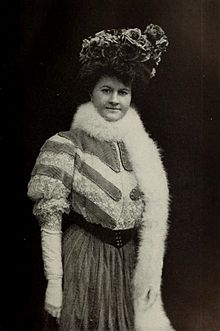

 
Portrait of Ellen Glasgow.jpg
Thought for the Day

American novelist, Ellen Glasgow wrote, “All change is not growth, as all movement is not forward.”

Sunday, February 12, 2017

Bible Readings for February 12, 2017


Today our passages are Exodus 34:1–35:9; Matthew 27:15-31; Psalm 33:12-22; and Proverbs 9:1-6. The readings are the Contemporary English Version. If you find these readings helpful, please consider sending an offering directly to Cove Presbyterian Church, 3404 Main Street, Weirton, West Virginia or through PayPal by using the link below.
 
https://www.paypal.com/cgi-bin/webscr?cmd=_s-xclick&hosted_button_id=NX3WLYQG5864L

Exodus 34-35:9 (Contemporary English Version)

Exodus 34

The Second Set of Commandments
(Deuteronomy 10.1-5)
 1One day the LORD said to Moses, " Cut two flat stones like the first ones I made, and I will write on them the same commandments that were on the two you broke. 2Be ready tomorrow morning to come up Mount Sinai and meet me at the top. 3No one is to come with you or to be on the mountain at all. Don't even let the sheep and cattle graze at the foot of the mountain." 4So Moses cut two flat stones like the first ones, and early the next morning he carried them to the top of Mount Sinai, just as the LORD had commanded.     5The LORD God came down in a cloud and stood beside Moses there on the mountain. God spoke his holy name, " the LORD." [a] 6Then he passed in front of Moses and called out, " I am the LORD God. I am merciful and very patient with my people. I show great love, and I can be trusted. 7I keep my promises to my people forever, but I also punish anyone who sins. When people sin, I punish them and their children, and also their grandchildren and great-grandchildren." 8Moses quickly bowed down to the ground and worshiped the LORD. 9He prayed, " LORD, if you really are pleased with me, I pray that you will go with us. It is true that these people are sinful and rebellious, but forgive our sin and let us be your people."
   
A Promise and Its Demands
(Exodus 23.14-19; Deuteronomy 7.1-5; 16.1-17)
 10The LORD said:    I promise to perform miracles for you that have never been seen anywhere on earth. Neighboring nations will stand in fear and know that I was the one who did these marvelous things. 11I will force out the Amorites, the Canaanites, the Hittites, the Perizzites, the Hivites, and the Jebusites, but you must do what I command you today. 12Don't make treaties with any of those people. If you do, it will be like falling into a trap. 13Instead, you must destroy their altars and tear down the sacred poles [b] they use in the worship of the goddess Asherah. 14I demand your complete loyalty--you must not worship any other god! 15Don't make treaties with the people there, or you will soon find yourselves worshiping their gods and taking part in their sacrificial meals. 16Your men will even marry their women and be influenced to worship their gods. 17Don't make metal images of gods.
    18Don't fail to observe the Festival of Thin Bread in the month of Abib. [c] Obey me and eat bread without yeast for seven days during Abib, because that is the month you left Egypt. 19The first-born males of your families and of your flocks and herds belong to me.
    20You can save the life of a first-born donkey [d] by sacrificing a lamb; if you don't, you must break the donkey's neck. You must save every first-born son. Bring an offering every time you come to worship.
    21Do your work in six days and rest on the seventh day, even during the seasons for plowing and harvesting. 22Celebrate the Harvest Festival [e] each spring when you start harvesting your wheat, and celebrate the Festival of Shelters [f] each autumn when you pick your fruit. 23Your men must come to worship me three times a year, because I am the LORD God of Israel. 24I will force the nations out of your land and enlarge your borders. Then no one will try to take your property when you come to worship me these three times each year.
    25When you sacrifice an animal on the altar, don't offer bread made with yeast. And don't save any part of the Passover meal for the next day.
    26I am the LORD your God, and you must bring the first part of your harvest to the place of worship.
   Don't boil a young goat in its mother's milk.
    27The LORD told Moses to put these laws in writing, as part of his agreement with Israel. 28Moses stayed on the mountain with the LORD for forty days and nights, without eating or drinking. And he wrote down the Ten Commandments, the most important part of God's agreement with his people.
   
Moses Comes Down from Mount Sinai
 29Moses came down from Mount Sinai, carrying the Ten Commandments. His face was shining brightly because the LORD had been speaking to him. But Moses did not know at first that his face was shining. 30When Aaron and the others looked at Moses, they saw that his face was shining, and they were afraid to go near him. 31Moses called out for Aaron and the leaders to come to him, and he spoke with them. 32Then the rest of the people of Israel gathered around Moses, and he gave them the laws that the LORD had given him on Mount Sinai.     33The face of Moses kept shining, and after he had spoken with the people, he covered his face with a veil. 34Moses would always remove the veil when he went into the sacred tent to speak with the LORD. And when he came out, he would tell the people everything the LORD had told him to say. 35They could see that his face was still shining. So after he had spoken with them, he would put the veil back on and leave it on until the next time he went to speak with the LORD.
   

Exodus 35

Laws for the Sabbath
 1Moses called together the people of Israel and told them that the LORD had said:     2You have six days in which to do your work. But the seventh day must be dedicated to me, your LORD, as a day of rest. Whoever works on the Sabbath will be put to death. 3Don't even build a cooking fire at home on the Sabbath.
   
Offerings for the Sacred Tent
(Exodus 25.1-9; 35.10-19)
 4Moses told the people of Israel that the LORD had said:     5I would welcome an offering from anyone who wants to give something. You may bring gold, silver, or bronze; 6blue, purple, or red wool; fine linen; goat hair; 7tanned ram skin or fine leather; acacia wood; 8olive oil for the lamp; sweet-smelling spices for the oil of dedication and for the incense; or 9onyx [g] stones or other gems for the sacred vest and breastpiece.
Footnotes:
  1. Exodus 34:5 the LORD: See the note at 3.14,15.
  2. Exodus 34:13 sacred poles: Or " trees," used as symbols of Asherah, the goddess of fertility.
  3. Exodus 34:18 Abib: See the note at 12.2.
  4. Exodus 34:20 donkey: See the note at 13.13.
  5. Exodus 34:22 Harvest Festival: See the note at 23.16.
  6. Exodus 34:22 Festival of Shelters: See the note at 23.16.
  7. Exodus 35:9 onyx: See the note at 25.7.

Matthew 27:15-31 (Contemporary English Version)

The Death Sentence
(Mark 15.6-15; Luke 23.13-26; John 18.39--19.16)
 15During Passover the governor always freed a prisoner chosen by the people. 16At that time a well-known terrorist named Jesus Barabbas [a] was in jail. 17So when the crowd came together, Pilate asked them, "Which prisoner do you want me to set free? Do you want Jesus Barabbas or Jesus who is called the Messiah?" 18Pilate knew that the leaders had brought Jesus to him because they were jealous. 19While Pilate was judging the case, his wife sent him a message. It said, "Don't have anything to do with that innocent man. I have had nightmares because of him."     20But the chief priests and the leaders convinced the crowds to ask for Barabbas to be set free and for Jesus to be killed. 21Pilate asked the crowd again, "Which of these two men do you want me to set free?"
   "Barabbas!" they replied.
    22Pilate asked them, "What am I to do with Jesus, who is called the Messiah?"
   They all yelled, "Nail him to a cross!"
    23Pilate answered, "But what crime has he done?"
   "Nail him to a cross!" they yelled even louder.
    24Pilate saw that there was nothing he could do and that the people were starting to riot. So he took some water and washed his hands [b] in front of them and said, "I won't have anything to do with killing this man. You are the ones doing it!" 25Everyone answered, "We and our own families will take the blame for his death!"
    26Pilate set Barabbas free. Then he ordered his soldiers to beat Jesus with a whip and nail him to a cross.
   
Soldiers Make Fun of Jesus
(Mark 15.16-21; John 19.2,3)
 27The governor's soldiers led Jesus into the fortress [c] and brought together the rest of the troops. 28They stripped off Jesus' clothes and put a scarlet robe [d] on him. 29They made a crown out of thorn branches and placed it on his head, and they put a stick in his right hand. The soldiers knelt down and pretended to worship him. They made fun of him and shouted, "Hey, you king of the Jews!" 30Then they spit on him. They took the stick from him and beat him on the head with it.
Jesus Is Nailed to a Cross
(Mark 15.22-32; Luke 23.27-43; John 19.17-27)
 31When the soldiers had finished making fun of Jesus, they took off the robe. They put his own clothes back on him and led him off to be nailed to a cross.
Footnotes:
  1. Matthew 27:16 Jesus Barabbas: Here and in verse 17 many manuscripts have "Barabbas."
  2. Matthew 27:24 washed his hands: To show that he was innocent.
  3. Matthew 27:27 fortress: The place where the Roman governor stayed. It was probably at Herod's palace west of Jerusalem, though it may have been Fortress Antonia north of the temple, where the Roman troops were stationed.
  4. Matthew 27:28 scarlet robe: This was probably a Roman soldier's robe.

Psalm 33:12-22 (Contemporary English Version)

12The LORD blesses each nation
   that worships only him.
   He blesses his chosen ones.
    13The LORD looks at the world
    14from his throne in heaven,
   and he watches us all.
    15The LORD gave us each a mind,
   and nothing we do
   can be hidden from him.
    16Mighty armies alone
   cannot win wars for a king;
   great strength by itself
   cannot keep a soldier safe.
    17In war the strength of a horse
   cannot be trusted
   to take you to safety.
    18But the LORD watches over
   all
   who honor him
   and trust his kindness.
    19He protects them from death
   and starvation.
    20We depend on you, LORD,
   to help and protect us.
    21You make our hearts glad
   because we trust you,
   the only God.
    22Be kind and bless us!
   We depend on you.


Proverbs 9:1-6 (Contemporary English Version)

Proverbs 9

Wisdom Gives a Feast
 1Wisdom has built her house    with its seven columns.
    2She has prepared the meat
   and set out the wine.
   Her feast is ready.
    3She has sent her servant women
   to announce her invitation
   from the highest hills:
    4"Everyone who is ignorant
   or foolish is invited!
    5All of you are welcome
   to my meat and wine.
    6If you want to live,
   give up your foolishness
   and let understanding
   guide your steps."


Verse of the Day

“Love rejoices in the truth, but not in evil. Love is always supportive, loyal, hopeful, and trusting.” - 1 Corinthians 13: 6-7
Today's passage is from the Contemporary English Version.


Portrait of Ellen Glasgow.jpg
Thought for the Day

American novelist who portrayed the changing world of the contemporary south, Ellen Glasgow wrote, “All change is not growth, as all movement is not forward.”

Monday, March 28, 2016

Bible Readings for March 28, 2016


Today our passages are Deuteronomy 9:1–10:22; Luke 8:4-21; Psalm 69:19-36; and Proverbs 12:2-3. The readings are from The Message by Eugene H. Peterson. If you find these readings helpful, please consider sending an offering directly to Cove Presbyterian Church, 3404 Main Street, Weirton, West Virginia or through PayPal.

Deuteronomy 9-10:22 (The Message)

Deuteronomy 9

 1-2 Attention, Israel! This very day you are crossing the Jordan to enter the land and dispossess nations that are much bigger and stronger than you are. You're going to find huge cities with sky-high fortress-walls and gigantic people, descendants of the Anakites—you've heard all about them; you've heard the saying, "No one can stand up to an Anakite."  3 Today know this: God, your God, is crossing the river ahead of you—he's a consuming fire. He will destroy the nations, he will put them under your power. You will dispossess them and very quickly wipe them out, just as God promised you would.
 4-5 But when God pushes them out ahead of you, don't start thinking to yourselves, "It's because of all the good I've done that God has brought me in here to dispossess these nations." Actually it's because of all the evil these nations have done. No, it's nothing good that you've done, no record for decency that you've built up, that got you here; it's because of the vile wickedness of these nations that God, your God, is dispossessing them before you so that he can keep his promised word to your ancestors, to Abraham, Isaac, and Jacob.
 6-10 Know this and don't ever forget it: It's not because of any good that you've done that God is giving you this good land to own. Anything but! You're stubborn as mules. Keep in mind and don't ever forget how angry you made God, your God, in the wilderness. You've kicked and screamed against God from the day you left Egypt until you got to this place, rebels all the way. You made God angry at Horeb, made him so angry that he wanted to destroy you. When I climbed the mountain to receive the slabs of stone, the tablets of the covenant that God made with you, I stayed there on the mountain forty days and nights: I ate no food; I drank no water. Then God gave me the two slabs of stone, engraved with the finger of God. They contained word for word everything that God spoke to you on the mountain out of the fire, on the day of the assembly.
 11-12 It was at the end of the forty days and nights that God gave me the two slabs of stone, the tablets of the covenant. God said to me, "Get going, and quickly. Get down there, because your people whom you led out of Egypt have ruined everything. In almost no time at all they have left the road that I laid out for them and gone off and made for themselves a cast god."
 13-14 God said, "I look at this people and all I see are hardheaded, hardhearted rebels. Get out of my way now so I can destroy them. I'm going to wipe them off the face of the map. Then I'll start over with you to make a nation far better and bigger than they could ever be."
 15-17 I turned around and started down the mountain—by now the mountain was blazing with fire—carrying the two tablets of the covenant in my two arms. That's when I saw it: There you were, sinning against God, your God—you had made yourselves a cast god in the shape of a calf! So soon you had left the road that God had commanded you to walk on. I held the two stone slabs high and threw them down, smashing them to bits as you watched.
 18-20 Then I prostrated myself before God, just as I had at the beginning of the forty days and nights. I ate no food; I drank no water. I did this because of you, all your sins, sinning against God, doing what is evil in God's eyes and making him angry. I was terrified of God's furious anger, his blazing anger. I was sure he would destroy you. But once again God listened to me. And Aaron! How furious he was with Aaron—ready to destroy him. But I prayed also for Aaron at that same time.
 21 But that sin-thing that you made, that calf-god, I took and burned in the fire, pounded and ground it until it was crushed into a fine powder, then threw it into the stream that comes down the mountain.
 22 And then there was Camp Taberah (Blaze), Massah (Testing-Place), and Camp Kibroth Hattaavah (Graves-of-the-Craving)—more occasions when you made God furious with you.
 23-24 The most recent was when God sent you out from Kadesh Barnea, ordering you: "Go. Possess the land that I'm giving you." And what did you do? You rebelled. Rebelled against the clear orders of God, your God. Refused to trust him. Wouldn't obey him. You've been rebels against God from the first day I knew you.
 25-26 When I was on my face, prostrate before God those forty days and nights after God said he would destroy you, I prayed to God for you, "My Master, God, don't destroy your people, your inheritance whom, in your immense generosity, you redeemed, using your enormous strength to get them out of Egypt.
 27-28 "Remember your servants Abraham, Isaac, and Jacob; don't make too much of the stubbornness of this people, their evil and their sin, lest the Egyptians from whom you rescued them say, 'God couldn't do it; he got tired and wasn't able to take them to the land he promised them. He ended up hating them and dumped them in the wilderness to die.'
 29 "They are your people still, your inheritance whom you powerfully and sovereignly rescued."

Deuteronomy 10

 1-2 God responded. He said, "Shape two slabs of stone similar to the first ones. Climb the mountain and meet me. Also make yourself a wooden chest. I will engrave the stone slabs with the words that were on the first ones, the ones you smashed. Then you will put them in the Chest."  3-5 So I made a chest out of acacia wood, shaped two slabs of stone, just like the first ones, and climbed the mountain with the two slabs in my arms. He engraved the stone slabs the same as he had the first ones, the Ten Words that he addressed to you on the mountain out of the fire on the day of the assembly. Then God gave them to me. I turned around and came down the mountain. I put the stone slabs in the Chest that I made and they've been there ever since, just as God commanded me.

6-7 The People of Israel went from the wells of the Jaakanites to Moserah. Aaron died there and was buried. His son Eleazar succeeded him as priest. From there they went to Gudgodah, and then to Jotbathah, a land of streams of water.

 8-9 That's when God set apart the tribe of Levi to carry God's Covenant Chest, to be on duty in the Presence of God, to serve him, and to bless in his name, as they continue to do today. And that's why Levites don't have a piece of inherited land as their kinsmen do. God is their inheritance, as God, your God, promised them.
 10 I stayed there on the mountain forty days and nights, just as I did the first time. And God listened to me, just as he did the first time: God decided not to destroy you.
 11 God told me, "Now get going. Lead your people as they resume the journey to take possession of the land that I promised their ancestors that I'd give to them."
 12-13 So now Israel, what do you think God expects from you? Just this: Live in his presence in holy reverence, follow the road he sets out for you, love him, serve God, your God, with everything you have in you, obey the commandments and regulations of God that I'm commanding you today—live a good life.
 14-18 Look around you: Everything you see is God's—the heavens above and beyond, the Earth, and everything on it. But it was your ancestors who God fell in love with; he picked their children—that's you!—out of all the other peoples. That's where we are right now. So cut away the thick calluses from your heart and stop being so willfully hardheaded. God, your God, is the God of all gods, he's the Master of all masters, a God immense and powerful and awesome. He doesn't play favorites, takes no bribes, makes sure orphans and widows are treated fairly, takes loving care of foreigners by seeing that they get food and clothing.

 19-21 You must treat foreigners with the same loving care—
      remember, you were once foreigners in Egypt.
   Reverently respect God, your God, serve him, hold tight to him,
      back up your promises with the authority of his name.
   He's your praise! He's your God!
   He did all these tremendous, these staggering things
      that you saw with your own eyes.

 22 When your ancestors entered Egypt, they numbered a mere seventy souls. And now look at you—you look more like the stars in the night skies in number. And your God did it.


Luke 8:4-21 (The Message)

The Story of the Seeds
 4-8As they went from town to town, a lot of people joined in and traveled along. He addressed them, using this story: "A farmer went out to sow his seed. Some of it fell on the road; it was tramped down and the birds ate it. Other seed fell in the gravel; it sprouted, but withered because it didn't have good roots. Other seed fell in the weeds; the weeds grew with it and strangled it. Other seed fell in rich earth and produced a bumper crop.
   "Are you listening to this? Really listening?"
 9His disciples asked, "Why did you tell this story?"
 10He said, "You've been given insight into God's kingdom—you know how it works. There are others who need stories. But even with stories some of them aren't going to get it:

   Their eyes are open but don't see a thing,
   Their ears are open but don't hear a thing.
 11-12"This story is about some of those people. The seed is the Word of God. The seeds on the road are those who hear the Word, but no sooner do they hear it than the Devil snatches it from them so they won't believe and be saved.
 13"The seeds in the gravel are those who hear with enthusiasm, but the enthusiasm doesn't go very deep. It's only another fad, and the moment there's trouble it's gone.
 14"And the seed that fell in the weeds—well, these are the ones who hear, but then the seed is crowded out and nothing comes of it as they go about their lives worrying about tomorrow, making money, and having fun.
 15"But the seed in the good earth—these are the good-hearts who seize the Word and hold on no matter what, sticking with it until there's a harvest.
Misers of What You Hear
16-18"No one lights a lamp and then covers it with a washtub or shoves it under the bed. No, you set it up on a lamp stand so those who enter the room can see their way. We're not keeping secrets; we're telling them. We're not hiding things; we're bringing everything out into the open. So be careful that you don't become misers of what you hear. Generosity begets generosity. Stinginess impoverishes."
 19-20His mother and brothers showed up but couldn't get through to him because of the crowd. He was given the message, "Your mother and brothers are standing outside wanting to see you."
 21He replied, "My mother and brothers are the ones who hear and do God's Word. Obedience is thicker than blood."


Psalm 69:19-36 (The Message)


 19 You know how they kick me around—
   Pin on me the donkey's ears, the dunce's cap.

 20 I'm broken by their taunts,
   Flat on my face, reduced to a nothing.

   I looked in vain for one friendly face. Not one.
   I couldn't find one shoulder to cry on.

 21 They put poison in my soup,
   Vinegar in my drink.

 22 Let their supper be bait in a trap that snaps shut;
   May their best friends be trappers who'll skin them alive.

 23 Make them become blind as bats,
   Give them the shakes from morning to night.

 24 Let them know what you think of them,
   Blast them with your red-hot anger.

 25 Burn down their houses,
   Leave them desolate with nobody at home.

 26 They gossiped about the one you disciplined,
   Made up stories about anyone wounded by God.

 27 Pile on the guilt,
   Don't let them off the hook.

 28 Strike their names from the list of the living;
   No rock-carved honor for them among the righteous.

 29 I'm hurt and in pain;
   Give me space for healing, and mountain air.

 30 Let me shout God's name with a praising song,
   Let me tell his greatness in a prayer of thanks.

 31 For God, this is better than oxen on the altar,
   Far better than blue-ribbon bulls.

 32 The poor in spirit see and are glad—
   Oh, you God-seekers, take heart!

 33 For God listens to the poor,
   He doesn't walk out on the wretched.

 34 You heavens, praise him; praise him, earth;
   Also ocean and all things that swim in it.

 35 For God is out to help Zion,
   Rebuilding the wrecked towns of Judah.

   Guess who will live there—
   The proud owners of the land?

 36 No, the children of his servants will get it,
   The lovers of his name will live in it.


Proverbs 12:2-3 (The Message)


 2 A good person basks in the delight of God,
   and he wants nothing to do with devious schemers.

 3 You can't find firm footing in a swamp,
   but life rooted in God stands firm.


Verse of the Day
“There is only one God, and Christ Jesus is the only one who can bring us to God. Jesus was truly human, and he gave himself to rescue all of us. God showed us this at the right time.” - 1 Timothy 2:5-6
Today's passage is from the Contemporary English Version.

 
Portrait of Ellen Glasgow.jpg
Thought for the Day
American novelist who portrayed the changing world of the contemporary south, Ellen Glasgow wrote, “All change is not growth, as all movement is not forward.”

Thursday, February 12, 2015

Bible Reading for February 12, 2015


Today our passages are Exodus 34:1–35:9; Matthew 27:15-31; Psalm 33:12-22; and Proverbs 9:1-6. The readings are the Contemporary English Version.  


Exodus 34-35:9 (Contemporary English Version)

Exodus 34

The Second Set of Commandments
(Deuteronomy 10.1-5)
 1One day the LORD said to Moses, " Cut two flat stones like the first ones I made, and I will write on them the same commandments that were on the two you broke. 2Be ready tomorrow morning to come up Mount Sinai and meet me at the top. 3No one is to come with you or to be on the mountain at all. Don't even let the sheep and cattle graze at the foot of the mountain." 4So Moses cut two flat stones like the first ones, and early the next morning he carried them to the top of Mount Sinai, just as the LORD had commanded.     5The LORD God came down in a cloud and stood beside Moses there on the mountain. God spoke his holy name, " the LORD." [a] 6Then he passed in front of Moses and called out, " I am the LORD God. I am merciful and very patient with my people. I show great love, and I can be trusted. 7I keep my promises to my people forever, but I also punish anyone who sins. When people sin, I punish them and their children, and also their grandchildren and great-grandchildren." 8Moses quickly bowed down to the ground and worshiped the LORD. 9He prayed, " LORD, if you really are pleased with me, I pray that you will go with us. It is true that these people are sinful and rebellious, but forgive our sin and let us be your people."
   
A Promise and Its Demands
(Exodus 23.14-19; Deuteronomy 7.1-5; 16.1-17)
 10The LORD said:    I promise to perform miracles for you that have never been seen anywhere on earth. Neighboring nations will stand in fear and know that I was the one who did these marvelous things. 11I will force out the Amorites, the Canaanites, the Hittites, the Perizzites, the Hivites, and the Jebusites, but you must do what I command you today. 12Don't make treaties with any of those people. If you do, it will be like falling into a trap. 13Instead, you must destroy their altars and tear down the sacred poles [b] they use in the worship of the goddess Asherah. 14I demand your complete loyalty--you must not worship any other god! 15Don't make treaties with the people there, or you will soon find yourselves worshiping their gods and taking part in their sacrificial meals. 16Your men will even marry their women and be influenced to worship their gods. 17Don't make metal images of gods.
    18Don't fail to observe the Festival of Thin Bread in the month of Abib. [c] Obey me and eat bread without yeast for seven days during Abib, because that is the month you left Egypt. 19The first-born males of your families and of your flocks and herds belong to me.
    20You can save the life of a first-born donkey [d] by sacrificing a lamb; if you don't, you must break the donkey's neck. You must save every first-born son. Bring an offering every time you come to worship.
    21Do your work in six days and rest on the seventh day, even during the seasons for plowing and harvesting. 22Celebrate the Harvest Festival [e] each spring when you start harvesting your wheat, and celebrate the Festival of Shelters [f] each autumn when you pick your fruit. 23Your men must come to worship me three times a year, because I am the LORD God of Israel. 24I will force the nations out of your land and enlarge your borders. Then no one will try to take your property when you come to worship me these three times each year.
    25When you sacrifice an animal on the altar, don't offer bread made with yeast. And don't save any part of the Passover meal for the next day.
    26I am the LORD your God, and you must bring the first part of your harvest to the place of worship.
   Don't boil a young goat in its mother's milk.
    27The LORD told Moses to put these laws in writing, as part of his agreement with Israel. 28Moses stayed on the mountain with the LORD for forty days and nights, without eating or drinking. And he wrote down the Ten Commandments, the most important part of God's agreement with his people.
   
Moses Comes Down from Mount Sinai
 29Moses came down from Mount Sinai, carrying the Ten Commandments. His face was shining brightly because the LORD had been speaking to him. But Moses did not know at first that his face was shining. 30When Aaron and the others looked at Moses, they saw that his face was shining, and they were afraid to go near him. 31Moses called out for Aaron and the leaders to come to him, and he spoke with them. 32Then the rest of the people of Israel gathered around Moses, and he gave them the laws that the LORD had given him on Mount Sinai.     33The face of Moses kept shining, and after he had spoken with the people, he covered his face with a veil. 34Moses would always remove the veil when he went into the sacred tent to speak with the LORD. And when he came out, he would tell the people everything the LORD had told him to say. 35They could see that his face was still shining. So after he had spoken with them, he would put the veil back on and leave it on until the next time he went to speak with the LORD.
   

Exodus 35

Laws for the Sabbath
 1Moses called together the people of Israel and told them that the LORD had said:     2You have six days in which to do your work. But the seventh day must be dedicated to me, your LORD, as a day of rest. Whoever works on the Sabbath will be put to death. 3Don't even build a cooking fire at home on the Sabbath.
   
Offerings for the Sacred Tent
(Exodus 25.1-9; 35.10-19)
 4Moses told the people of Israel that the LORD had said:     5I would welcome an offering from anyone who wants to give something. You may bring gold, silver, or bronze; 6blue, purple, or red wool; fine linen; goat hair; 7tanned ram skin or fine leather; acacia wood; 8olive oil for the lamp; sweet-smelling spices for the oil of dedication and for the incense; or 9onyx [g] stones or other gems for the sacred vest and breastpiece.
Footnotes:
  1. Exodus 34:5 the LORD: See the note at 3.14,15.
  2. Exodus 34:13 sacred poles: Or " trees," used as symbols of Asherah, the goddess of fertility.
  3. Exodus 34:18 Abib: See the note at 12.2.
  4. Exodus 34:20 donkey: See the note at 13.13.
  5. Exodus 34:22 Harvest Festival: See the note at 23.16.
  6. Exodus 34:22 Festival of Shelters: See the note at 23.16.
  7. Exodus 35:9 onyx: See the note at 25.7.

Matthew 27:15-31 (Contemporary English Version)

The Death Sentence
(Mark 15.6-15; Luke 23.13-26; John 18.39--19.16)
 15During Passover the governor always freed a prisoner chosen by the people. 16At that time a well-known terrorist named Jesus Barabbas [a] was in jail. 17So when the crowd came together, Pilate asked them, "Which prisoner do you want me to set free? Do you want Jesus Barabbas or Jesus who is called the Messiah?" 18Pilate knew that the leaders had brought Jesus to him because they were jealous. 19While Pilate was judging the case, his wife sent him a message. It said, "Don't have anything to do with that innocent man. I have had nightmares because of him."     20But the chief priests and the leaders convinced the crowds to ask for Barabbas to be set free and for Jesus to be killed. 21Pilate asked the crowd again, "Which of these two men do you want me to set free?"
   "Barabbas!" they replied.
    22Pilate asked them, "What am I to do with Jesus, who is called the Messiah?"
   They all yelled, "Nail him to a cross!"
    23Pilate answered, "But what crime has he done?"
   "Nail him to a cross!" they yelled even louder.
    24Pilate saw that there was nothing he could do and that the people were starting to riot. So he took some water and washed his hands [b] in front of them and said, "I won't have anything to do with killing this man. You are the ones doing it!" 25Everyone answered, "We and our own families will take the blame for his death!"
    26Pilate set Barabbas free. Then he ordered his soldiers to beat Jesus with a whip and nail him to a cross.
   
Soldiers Make Fun of Jesus
(Mark 15.16-21; John 19.2,3)
 27The governor's soldiers led Jesus into the fortress [c] and brought together the rest of the troops. 28They stripped off Jesus' clothes and put a scarlet robe [d] on him. 29They made a crown out of thorn branches and placed it on his head, and they put a stick in his right hand. The soldiers knelt down and pretended to worship him. They made fun of him and shouted, "Hey, you king of the Jews!" 30Then they spit on him. They took the stick from him and beat him on the head with it.
Jesus Is Nailed to a Cross
(Mark 15.22-32; Luke 23.27-43; John 19.17-27)
 31When the soldiers had finished making fun of Jesus, they took off the robe. They put his own clothes back on him and led him off to be nailed to a cross.
Footnotes:
  1. Matthew 27:16 Jesus Barabbas: Here and in verse 17 many manuscripts have "Barabbas."
  2. Matthew 27:24 washed his hands: To show that he was innocent.
  3. Matthew 27:27 fortress: The place where the Roman governor stayed. It was probably at Herod's palace west of Jerusalem, though it may have been Fortress Antonia north of the temple, where the Roman troops were stationed.
  4. Matthew 27:28 scarlet robe: This was probably a Roman soldier's robe.

Psalm 33:12-22 (Contemporary English Version)

12The LORD blesses each nation
   that worships only him.
   He blesses his chosen ones.
    13The LORD looks at the world
    14from his throne in heaven,
   and he watches us all.
    15The LORD gave us each a mind,
   and nothing we do
   can be hidden from him.
    16Mighty armies alone
   cannot win wars for a king;
   great strength by itself
   cannot keep a soldier safe.
    17In war the strength of a horse
   cannot be trusted
   to take you to safety.
    18But the LORD watches over
   all
   who honor him
   and trust his kindness.
    19He protects them from death
   and starvation.
    20We depend on you, LORD,
   to help and protect us.
    21You make our hearts glad
   because we trust you,
   the only God.
    22Be kind and bless us!
   We depend on you.


Proverbs 9:1-6 (Contemporary English Version)

Proverbs 9

Wisdom Gives a Feast
 1Wisdom has built her house    with its seven columns.
    2She has prepared the meat
   and set out the wine.
   Her feast is ready.
    3She has sent her servant women
   to announce her invitation
   from the highest hills:
    4"Everyone who is ignorant
   or foolish is invited!
    5All of you are welcome
   to my meat and wine.
    6If you want to live,
   give up your foolishness
   and let understanding
   guide your steps."


Verse of the Day

“Love rejoices in the truth, but not in evil. Love is always supportive, loyal, hopeful, and trusting.” - 1 Corinthians 13: 6-7
Today's passage is from the Contemporary English Version.


Portrait of Ellen Glasgow.jpg
Thought for the Day
 

American novelist who portrayed the changing world of the contemporary south, Ellen Glasgow wrote, “All change is not growth, as all movement is not forward.”