Read the Bible in a Year

Each day, we'll post passages so that you can read the Bible in one year. This is part of The Colossians 13:16 Project, sponsored by Cove Presbyterian Church, 3404 Main Street, Weirton, West Virginia. You're invited to worship with us Sundays, at 11:00 a.m. or Saturdays, at 6:30 p.m. You may also want to consider joining one our adult Bible Studies: Thursdays at 12:00 noon and Sundays at 9:30 a.m. and 10:00 a.m. We also have a full range of programs for children. If you want more information about the church, check out the other blogs. And please feel free to leave any comments.

The Bible in a Year is a ministry of Cove Presbyterian Church. We need your support to keep posting. If you find it helpful, you can support this blog by your contributions. They may be sent to Cove Presbyterian Church, 3404 Main Street, Weirton, WV 26062. You can also use the PayPal link below:

Image result for paypal donate

Wednesday, July 11, 2012

Bible Readings for July 11, 2012


Today our passages are 1 Chronicles 11:1–12:18; Acts 28:1-31; Psalm 9:1-12; and Proverbs 19:1-3. The readings are from The Message by Eugene H. Peterson.
 

1 Chronicles 11-12:18 (The Message)


1 Chronicles 11

King David
 1-3Then all Israel assembled before David at Hebron. "Look at us," they said. "We're your very flesh and blood. In the past, yes, even while Saul was king, you were the real leader of Israel. God told you, 'You will shepherd my people Israel; you are to be the ruler of my people Israel.'" When all the elders of Israel came to the king at Hebron, David made a covenant with them in the presence of God at Hebron. Then they anointed David king over Israel exactly as God had commanded through Samuel.  4-6 David and all Israel went to Jerusalem (it was the old Jebus, where the Jebusites lived). The citizens of Jebus told David, "No trespassing—you can't come here." David came on anyway and captured the fortress of Zion, the City of David. David had said, "The first person to kill a Jebusite will be commander-in-chief." Joab son of Zeruiah was the first; and he became the chief.
 7-9 David took up residence in the fortress city; that's how it got its name, "City of David." David fortified the city all the way around, both the outer bulwarks (the Millo) and the outside wall. Joab rebuilt the city gates. David's stride became longer, his embrace larger—yes, God-of-the-Angel-Armies was with him!
David's Mighty Men
10-11 These are the chiefs of David's Mighty Men, the ones who linked arms with him as he took up his kingship, with all Israel joining in, helping him become king in just the way God had spoken regarding Israel. The list of David's Mighty Men:     Jashobeam son of Hacmoni was chief of the Thirty. Singlehandedly he killed three hundred men, killed them all in one skirmish.
 12-14 Next was Eleazar son of Dodai the Ahohite, one of the Big Three of the Mighty Men. He was with David at Pas Dammim, where the Philistines had mustered their troops for battle. It was an area where there was a field of barley. The army started to flee from the Philistines and then took its stand right in that field—and turned the tide! They slaughtered the Philistines, God helping them—a huge victory.
 15-19 The Big Three from the Thirty made a rocky descent to David at the Cave of Adullam while a company of Philistines was camped in the Valley of Rephaim. David was holed up in the Cave while the Philistines were prepared for battle at Bethlehem. David had a sudden craving: "What I wouldn't give for a drink of water from the well in Bethlehem, the one at the gate!" The Three penetrated the Philistine camp, drew water from the well at the Bethlehem gate, shouldered it, and brought it to David. And then David wouldn't drink it! He poured it out as a sacred offering to God, saying, "I'd rather be damned by God than drink this! It would be like drinking the lifeblood of these men—they risked their lives to bring it." So he refused to drink it. These are the kinds of things that the Big Three of the Mighty Men did.
 20-21 Abishai brother of Joab was the chief of the Thirty. Singlehandedly he fought three hundred men, and killed the lot, but he never made it into the circle of the Three. He was highly honored by the Thirty—he was their chief—still, he didn't measure up to the Three.
 22-25 Benaiah son of Jehoiada was a Mighty Man from Kabzeel with many exploits to his credit: he killed two famous Moabites; he climbed down into a pit and killed a lion on a snowy day; and he killed an Egyptian, a giant seven and a half feet tall. The Egyptian had a spear like a ship's boom but Benaiah went at him with a mere club, tore the spear from the Egyptian's hand, and killed him with it. These are some of the things Benaiah son of Jehoiada did. But he was never included with the Three. He was highly honored among the Thirty, but didn't measure up to the Three. David put him in charge of his personal bodyguard.
 26-47 The Mighty Men of the military were Asahel brother of Joab, Elhanan son of Dodo of Bethlehem, Shammoth the Harorite, Helez the Pelonite, Ira son of Ikkesh the Tekoite, Abiezer the Anathothite, Sibbecai the Hushathite, Ilai the Ahohite, Maharai the Netophathite, Heled son of Baanah the Netophathite, Ithai son of Ribai from Gibeah of the Benjaminite, Benaiah the Pirathonite, Hurai from the ravines of Gaash, Abiel the Arbathite, Azmaveth the Baharumite, Eliahba the Shaalbonite, the sons of Hashem the Gizonite, Jonathan son of Shagee the Hararite, Ahiam son of Sacar the Haranite, Eliphal son of Ur, Hepher the Mekerathite, Ahijah the Pelonite, Hezro the Carmelite, Naarai son of Ezbai, Joel brother of Nathan, Mibhar son of Hagri, Zelek the Ammonite, Naharai the Berothite, the armor bearer of Joab son of Zeruiah, Ira the Ithrite, Gareb the Ithrite, Uriah the Hittite, Zabad son of Ahlai, Adina son of Shiza the Reubenite, the Reubenite chief of the Thirty, Hanan son of Maacah, Joshaphat the Mithnite, Uzzia the Ashterathite, Shama and Jeiel the sons of Hotham the Aroerite, Jediael son of Shimri, Joha the Tizite his brother, Eliel the Mahavite, Jeribai and Joshaviah the sons of Elnaam, Ithmah the Moabite, Eliel, Obed, and Jaasiel the Mezobaite.

1 Chronicles 12

 1-2 These are the men who joined David in Ziklag; it was during the time he was banished by Saul the son of Kish; they were among the Mighty Men, good fighters. They were armed with bows and could sling stones and shoot arrows either right or left-handed. They hailed from Saul's tribe, Benjamin.  3-7 The first was Ahiezer; then Joash son of Shemaah the Gibeathite; Jeziel and Pelet the sons of Azmaveth; Beracah; Jehu the Anathothite; Ishmaiah the Gibeonite, a Mighty Man among the Thirty, a leader of the Thirty; Jeremiah; Jahaziel; Johanan; Jozabad the Gederathite; Eluzai; Jerimoth; Bealiah; Shemariah; Shephatiah the Haruphite; Elkanah; Isshiah; Azarel; Joezer; Jashobeam; the Korahites; and Joelah and Zebadiah, the sons of Jeroham from Gedor.
 8-15 There were some Gadites there who had defected to David at his wilderness fortress; they were seasoned and eager fighters who knew how to handle shield and spear. They were wild in appearance, like lions, but as agile as gazelles racing across the hills. Ezer was the first, then Obadiah, Eliab, Mishmannah, Jeremiah, Attai, Eliel, Johanan, Elzabad, Jeremiah, and Macbannai—eleven of them. These Gadites were the cream of the crop—any one of them was worth a hundred lesser men, and the best of them were worth a thousand. They were the ones who crossed the Jordan when it was at flood stage in the first month, and put everyone in the lowlands to flight, both east and west.
 16-17 There were also men from the tribes of Benjamin and Judah who joined David in his wilderness fortress. When David went out to meet them, this is what he said: "If you have come in peace and to help me, you are most welcome to join this company; but if you have come to betray me to my enemies, innocent as I am, the God of our ancestors will see through you and bring judgment on you."
 18 Just then Amasai chief of the Thirty, moved by God's Spirit, said,
    We're on your side, O David,
      We're committed, O son of Jesse;
   All is well, yes, all is well with you,
      And all's well with whoever helps you.
   Yes, for your God has helped and does help you.
    So David took them on and assigned them a place under the chiefs of the raiders.


Acts 28:1-31 (The Message)


Acts 28

 1-2Once everyone was accounted for and we realized we had all made it, we learned that we were on the island of Malta. The natives went out of their way to be friendly to us. The day was rainy and cold and we were already soaked to the bone, but they built a huge bonfire and gathered us around it.  3-6Paul pitched in and helped. He had gathered up a bundle of sticks, but when he put it on the fire, a venomous snake, roused from its torpor by the heat, struck his hand and held on. Seeing the snake hanging from Paul's hand like that, the natives jumped to the conclusion that he was a murderer getting his just deserts. Paul shook the snake off into the fire, none the worse for wear. They kept expecting him to drop dead, but when it was obvious he wasn't going to, they jumped to the conclusion that he was a god!
 7-9The head man in that part of the island was Publius. He took us into his home as his guests, drying us out and putting us up in fine style for the next three days. Publius's father was sick at the time, down with a high fever and dysentery. Paul went to the old man's room, and when he laid hands on him and prayed, the man was healed. Word of the healing got around fast, and soon everyone on the island who was sick came and got healed.
Rome
 10-11We spent a wonderful three months on Malta. They treated us royally, took care of all our needs and outfitted us for the rest of the journey. When an Egyptian ship that had wintered there in the harbor prepared to leave for Italy, we got on board. The ship had a carved Gemini for its figurehead: "the Heavenly Twins."  12-14We put in at Syracuse for three days and then went up the coast to Rhegium. Two days later, with the wind out of the south, we sailed into the Bay of Naples. We found Christian friends there and stayed with them for a week.
 14-16And then we came to Rome. Friends in Rome heard we were on the way and came out to meet us. One group got as far as Appian Court; another group met us at Three Taverns—emotion-packed meetings, as you can well imagine. Paul, brimming over with praise, led us in prayers of thanksgiving. When we actually entered Rome, they let Paul live in his own private quarters with a soldier who had been assigned to guard him.
 17-20Three days later, Paul called the Jewish leaders together for a meeting at his house. He said, "The Jews in Jerusalem arrested me on trumped-up charges, and I was taken into custody by the Romans. I assure you that I did absolutely nothing against Jewish laws or Jewish customs. After the Romans investigated the charges and found there was nothing to them, they wanted to set me free, but the Jews objected so fiercely that I was forced to appeal to Caesar. I did this not to accuse them of any wrongdoing or to get our people in trouble with Rome. We've had enough trouble through the years that way. I did it for Israel. I asked you to come and listen to me today to make it clear that I'm on Israel's side, not against her. I'm a hostage here for hope, not doom."
 21-22They said, "Nobody wrote warning us about you. And no one has shown up saying anything bad about you. But we would like very much to hear more. The only thing we know about this Christian sect is that nobody seems to have anything good to say about it."
 23They agreed on a time. When the day arrived, they came back to his home with a number of their friends. Paul talked to them all day, from morning to evening, explaining everything involved in the kingdom of God, and trying to persuade them all about Jesus by pointing out what Moses and the prophets had written about him.
 24-27Some of them were persuaded by what he said, but others refused to believe a word of it. When the unbelievers got cantankerous and started bickering with each other, Paul interrupted: "I have just one more thing to say to you. The Holy Spirit sure knew what he was talking about when he addressed our ancestors through Isaiah the prophet:

   Go to this people and tell them this:
   "You're going to listen with your ears,
      but you won't hear a word;
   You're going to stare with your eyes,
      but you won't see a thing.
   These people are blockheads!
   They stick their fingers in their ears
      so they won't have to listen;
   They screw their eyes shut
      so they won't have to look,
      so they won't have to deal with me face-to-face
      and let me heal them."
 28"You've had your chance. The non-Jewish outsiders are next on the list. And believe me, they're going to receive it with open arms!"
 30-31Paul lived for two years in his rented house. He welcomed everyone who came to visit. He urgently presented all matters of the kingdom of God. He explained everything about Jesus Christ. His door was always open.


Psalm 9:1-12 (The Message)


Psalm 9

A David Psalm
 1-2 I'm thanking you, God, from a full heart, I'm writing the book on your wonders.
   I'm whistling, laughing, and jumping for joy;
      I'm singing your song, High God.

 3-4 The day my enemies turned tail and ran,
      they stumbled on you and fell on their faces.
   You took over and set everything right;
      when I needed you, you were there, taking charge.

 5-6 You blow the whistle on godless nations;
      you throw dirty players out of the game,
      wipe their names right off the roster.
   Enemies disappear from the sidelines,
      their reputation trashed,
      their names erased from the halls of fame.

 7-8 God holds the high center,
      he sees and sets the world's mess right.
   He decides what is right for us earthlings,
      gives people their just deserts.

 9-10 God's a safe-house for the battered,
      a sanctuary during bad times.
   The moment you arrive, you relax;
      you're never sorry you knocked.

 11-12 Sing your songs to Zion-dwelling God,
      tell his stories to everyone you meet:
   How he tracks down killers
      yet keeps his eye on us,
      registers every whimper and moan.
 

Proverbs 19:1-3 (The Message)


Proverbs 19

If You Quit Listening
 1 Better to be poor and honest than a rich person no one can trust.

 2 Ignorant zeal is worthless;
   haste makes waste.

 3 People ruin their lives by their own stupidity,
   so why does God always get blamed?

 
Verse of the Day
 
“LORD God, you stretched out your mighty arm and made the sky and the earth. You can do anything.” - Jeremiah 32:17
Today's passage is from the Contemporary English Version.


Thought for the Day
American author Harper Lee wrote, “I wanted you to see what real courage is, instead of getting the idea that courage is a man with a gun in his hand. It's when you know you're licked before you begin, but you begin anyway and see it through no matter what.”

Tuesday, July 10, 2012

Bible Readings for July 10, 2012


Today our passages are 1 Chronicles 9:1–10:14; Acts 27:21-44; Psalm 8:1-9; and Proverbs 18:23-24. The readings are from The Message by Eugene H. Peterson.


 Chronicles 9-10:14 (The Message)

1 Chronicles 9

 1 This is the complete family tree for all Israel, recorded in the Royal Annals of the Kings of Israel and Judah at the time they were exiled to Babylon because of their unbelieving and disobedient lives.
The Back-from-Exile Community in Jerusalem
2 The first Israelites to return from exile to their homes and cities were the priests, the Levites, and the temple support staff.  3-6 Returning to Jerusalem from the families of Judah, Benjamin, Ephraim, and Manasseh were the following: Uthai son of Ammihud, the son of Omri, the son of Imri, the son of Bani, from the line of Perez son of Judah; from the Shilonites were Asaiah the firstborn and his sons; from the family of Zerah there was Jeuel. There were 690 in the Judah group.
 7-9 From the family of Benjamin were Sallu son of Meshullam, the son of Hodaviah, the son of Hassenuah, and Ibneiah son of Jeroham, and Elah son of Uzzi, the son of Micri, and Meshullam son of Shephatiah, the son of Reuel, the son of Ibnijah. There were 956 in the Benjamin group. All these named were heads of families.
 10-13 From the company of priests there were Jedaiah; Jehoiarib; Jakin; Azariah son of Hilkiah, the son of Meshullam, the son of Zadok, the son of Meraioth, the son of Ahitub, who was in charge of taking care of the house of God; Adaiah son of Jeroham, the son of Pashhur, the son of Malkijah; also Maasai son of Adiel, the son of Jahzerah, the son of Meshullam, the son of Meshillemith, the son of Immer. The priests, all of them heads of families, numbered 1,760, skilled and seasoned servants in the work of worshiping God.
 14-16 From the Levites were Shemaiah son of Hasshub, the son of Azrikam, the son of Hashabiah, a Merarite; then Bakbakkar, Heresh, Galal, Mattaniah son of Mica, the son of Zicri, the son of Asaph; also Obadiah son of Shemaiah, the son of Galal, the son of Jeduthun; and finally Berekiah son of Asa, the son of Elkanah, who lived in the villages of the Netophathites.
 17-18 The security guards were Shallum, Akkub, Talmon, Ahiman, and their brothers. Shallum was the chief and up to now the security guard at the King's Gate on the east. They also served as security guards at the camps of Levite families.
 19-25 Shallum son of Kore, the son of Ebiasaph, the son of Korah, along with his brothers in the Korahite family, were in charge of the services of worship as doorkeepers of the Tent, as their ancestors had guarded the entrance to the camp of God. In the early days, Phinehas son of Eleazar was in charge of the security guards—God be with him! Now Zechariah son of Meshelemiah was the security guard at the entrance of the Tent of Meeting. The number of those who had been chosen to be security guards was 212—they were officially registered in their own camps. David and Samuel the seer handpicked them for their dependability. They and their sons had the permanent responsibility for guarding the gates of God's house, the house of worship; the main security guards were posted at the four entrances, east, west, north, and south; their brothers in the villages were scheduled to give them relief weekly—the four main security guards were responsible for round-the-clock surveillance.
 26-32 Being Levites, they were responsible for the security of all supplies and valuables in the house of God. They kept watch all through the night and had the key to open the doors each morning. Some were in charge of the articles used in The Temple worship—they counted them both when they brought them in and when they took them out. Others were in charge of supplies in the sanctuary—flour, wine, oil, incense, and spices. And some of the priests were assigned to mixing the oils for the perfume. The Levite Mattithiah, the firstborn son of Shallum the Korahite, was responsible for baking the bread for the services of worship. Some of the brothers, sons of the Kohathites, were assigned to preparing the bread set out on the table each Sabbath.
 33-34 And then there were the musicians, all heads of Levite families. They had permanent living quarters in The Temple; because they were on twenty-four-hour duty, they were exempt from all other duties. These were the heads of Levite families as designated in their family tree. They lived in Jerusalem.
The Family of Saul
35-38 Jeiel the father of Gibeon lived at Gibeon; his wife was Maacah. His firstborn son was Abdon, followed by Zur, Kish, Baal, Ner, Nadab, Gedor, Ahio, Zechariah, and Mikloth. Mikloth had Shimeam. They lived in the same neighborhood as their relatives in Jerusalem.  39-44 Ner had Kish, Kish had Saul, Saul had Jonathan, Malki-Shua, Abinadab, and Esh-Baal. Merib-Baal was the son of Jonathan and Merib-Baal had Micah. Micah's sons were Pithon, Melech, and Tahrea. Ahaz had Jarah, Jarah had Alemeth, Azmaveth, and Zimri; Zimri had Moza, Moza had Binea, Rephaiah was his son, Eleasah was his son, and Azel was his son. Azel had six sons: Azrikam, Bokeru, Ishmael, Sheariah, Obadiah, and Hanan—the sons of Azel.

1 Chronicles 10

 1-5 The Philistines went to war against Israel; the Israelites ran for their lives from the Philistines but fell, slaughtered on Mount Gilboa. The Philistines zeroed in on Saul and his sons and killed his sons Jonathan, Abinadab, and Malki-Shua. The battle went hard against Saul—the archers found him and wounded him. Saul said to his armor bearer, "Draw your sword and finish me off before these pagan pigs get to me and make a sport of my body." But his armor bearer, restrained by both reverence and fear, wouldn't do it. So Saul took his own sword and killed himself. The armor bearer, panicked because Saul was dead, then killed himself.  6-7 So Saul and his three sons—all four the same day—died. When all the Israelites in the valley saw that the army had fled and that Saul and his sons were dead, they abandoned their cities and ran off; the Philistines came and moved in.
 8-10 The next day the Philistines came to plunder the dead bodies and found Saul and his sons dead on Mount Gilboa. They stripped Saul, removed his head and his armor, and put them on exhibit throughout Philistia, reporting the victory news to their idols and the people. Then they put Saul's armor on display in the temple of their gods and placed his skull as a trophy in the temple of their god Dagon.
 11-12 The people of Jabesh Gilead heard what the Philistines had done to Saul. All of their fighting men went into action—retrieved the bodies of Saul and his sons and brought them to Jabesh, gave them a dignified burial under the oak at Jabesh, and mourned their deaths for seven days.
 13-14 Saul died in disobedience, disobedient to God. He didn't obey God's words. Instead of praying, he went to a witch to seek guidance. Because he didn't go to God for help, God took his life and turned the kingdom over to David son of Jesse.


Acts 27:21-44 (The Message)


 21-22With our appetite for both food and life long gone, Paul took his place in our midst and said, "Friends, you really should have listened to me back in Crete. We could have avoided all this trouble and trial. But there's no need to dwell on that now. From now on, things are looking up! I can assure you that there'll not be a single drowning among us, although I can't say as much for the ship—the ship itself is doomed.
 23-26"Last night God's angel stood at my side, an angel of this God I serve, saying to me, 'Don't give up, Paul. You're going to stand before Caesar yet—and everyone sailing with you is also going to make it.' So, dear friends, take heart. I believe God will do exactly what he told me. But we're going to shipwreck on some island or other."
 27-29On the fourteenth night, adrift somewhere on the Adriatic Sea, at about midnight the sailors sensed that we were approaching land. Sounding, they measured a depth of 120 feet, and shortly after that ninety feet. Afraid that we were about to run aground, they threw out four anchors and prayed for daylight.
 30-32Some of the sailors tried to jump ship. They let down the lifeboat, pretending they were going to set out more anchors from the bow. Paul saw through their guise and told the centurion and his soldiers, "If these sailors don't stay with the ship, we're all going down." So the soldiers cut the lines to the lifeboat and let it drift off.
 33-34With dawn about to break, Paul called everyone together and proposed breakfast: "This is the fourteenth day we've gone without food. None of us has felt like eating! But I urge you to eat something now. You'll need strength for the rescue ahead. You're going to come out of this without even a scratch!"
 35-38He broke the bread, gave thanks to God, passed it around, and they all ate heartily—276 of us, all told! With the meal finished and everyone full, the ship was further lightened by dumping the grain overboard.
 39-41At daybreak, no one recognized the land—but then they did notice a bay with a nice beach. They decided to try to run the ship up on the beach. They cut the anchors, loosed the tiller, raised the sail, and ran before the wind toward the beach. But we didn't make it. Still far from shore, we hit a reef and the ship began to break up.
 42-44The soldiers decided to kill the prisoners so none could escape by swimming, but the centurion, determined to save Paul, stopped them. He gave orders for anyone who could swim to dive in and go for it, and for the rest to grab a plank. Everyone made it to shore safely.


Psalm 8:1-9 (The Message)


Psalm 8

A David Psalm
 1 God, brilliant Lord, yours is a household name.

 2 Nursing infants gurgle choruses about you;
      toddlers shout the songs
   That drown out enemy talk,
      and silence atheist babble.

 3-4 I look up at your macro-skies, dark and enormous,
      your handmade sky-jewelry,
   Moon and stars mounted in their settings.
      Then I look at my micro-self and wonder,
   Why do you bother with us?
      Why take a second look our way?

 5-8 Yet we've so narrowly missed being gods,
      bright with Eden's dawn light.
   You put us in charge of your handcrafted world,
      repeated to us your Genesis-charge,
   Made us lords of sheep and cattle,
      even animals out in the wild,
   Birds flying and fish swimming,
      whales singing in the ocean deeps.

 9 God, brilliant Lord,
      your name echoes around the world.

Proverbs 18:23-24 (The Message)

 23 The poor speak in soft supplications;
   the rich bark out answers.

 24 Friends come and friends go,
   but a true friend sticks by you like family.


Verse of the Day

“God is the one who began this good work in you, and I am certain that he won't stop before it is complete on the day that Christ Jesus returns.” - Philippians 1:6
Today's passage is from the Contemporary English Version.


Thought for the Day

Victorian author Samuel Butler wrote, “Most people have never learned that one of the main aims in life is to enjoy it.”

Monday, July 9, 2012

Bible Readings for July 9, 2012

Today our passages are 1 Chronicles 7:1–8:40; Acts 27:1-20; Psalm 7:1-17; and Proverbs 18:22. The readings are from The Message by Eugene H. Peterson.

1 Chronicles 7-8:40 (The Message)

1 Chronicles 7

The Family of Issachar
1-5 The sons of Issachar were Tola, Puah, Jashub, and Shimron—four sons. The sons of Tola were Uzzi, Rephaiah, Jeriel, Jahmai, Ibsam, and Samuel—the chiefs of their families. During David's reign, the Tola family counted 22,600 warriors in their lineage. The son of Uzzi was Izrahiah; the sons of Izrahiah were Michael, Obadiah, Joel, and Isshiah—five sons and all of them chiefs. They counted 36,000 warriors in their lineage because they had more wives and sons than their brothers. The extended families of Issachar accounted for 87,000 warriors—all of them listed in the family tree.
The Family of Benjamin
6-12 Benjamin had three sons: Bela, Beker, and Jediael. Bela had five: Ezbon, Uzzi, Uzziel, Jerimoth, and Iri, all of them chiefs and warriors. They counted 22,034 names in their family tree. Beker's sons were Zemirah, Joash, Eliezer, Elioenai, Omri, Jeremoth, Abijah, Anathoth, and Alemeth. Through these chiefs their family tree listed 20,200 warriors. Jediael's son was Bilhan and the sons of Bilhan were Jeush, Benjamin, Ehud, Kenaanah, Zethan, Tarshish, and Ahishahar—all sons of Jediael and family chiefs; they counted 17,200 combat-ready warriors. Shuppim and Huppim were the sons of Ir; Hushim were from the family of Aher.
The Family of Naphtali
13 The sons of Naphtali were Jahziel, Guni, Jezer, and Shallum; they are listed under the maternal line of Bilhah, their grandfather's concubine.
The Family of Manasseh
14-19 Manasseh's sons, born of his Aramean concubine, were Asriel and Makir the father of Gilead. Makir got his wife from the Huppites and Shuppites. His sister's name was Maacah. Another son, Zelophehad, had only daughters. Makir's wife Maacah bore a son whom she named Peresh; his brother's name was Sheresh and his sons were Ulam and Rakem. Ulam's son was Bedan. This accounts for the sons of Gilead son of Makir, the son of Manasseh. His sister Hammoleketh gave birth to Ishdod, Abiezer, and Mahlah. The sons of Shemida were Ahian, Shechem, Likhi, and Aniam.
The Family of Ephraim
20-24 The sons of Ephraim were Shuthelah, Bered his son, Tahath his son, Eleadah his son, Tahath his son, Zabad his son, Shuthelah his son, and Ezer and Elead, cattle-rustlers, killed on one of their raids by the natives of Gath. Their father Ephraim grieved a long time and his family gathered to give him comfort. Then he slept with his wife again. She conceived and produced a son. He named him Beriah (Unlucky), because of the bad luck that had come to his family. His daughter was Sheerah. She built Lower and Upper Beth Horon and Uzzen Sheerah. 25-29 Rephah was Ephraim's son and also Resheph; Telah was his son, Tahan his son, Ladan his son, Ammihud his son, Elishama his son, Nun his son, and Joshua his son. They occupied Bethel and the neighboring country from Naaran on the east to Gezer and its villages on the west, along with Shechem and its villages, and extending as far as Ayyah and its villages. Stretched along the borders of Manasseh were Beth Shan, Taanach, Megiddo, and Dor, together with their satellite villages. The families descended from Joseph son of Israel lived in all these places.
The Family of Asher
30-32 The sons of Asher were Imnah, Ishvah, Ishvi, and Beriah; Serah was their sister. The sons of Beriah were Heber and Malkiel, who had Birzaith. Heber had Japhlet, Shomer, Hotham, and Shua their sister. 33-40 Japhlet had Pasach, Bimhal, and Ashvath. His brother Shomer had Rohgah, Hubbah, and Aram. His brother Helem had Zophah, Imna, Shelesh, and Amal. Zophah had Suah, Harnepher, Shual, Beri, Imrah, Bezer, Hod, Shamma, Shilshah, Ithran, and Beera. Jether had Jephunneh, Pispah, and Ara. Ulla had Arah, Hanniel, and Rizia. These were Asher's sons, all of them responsible, excellent in character, and brave in battle—good leaders. They listed 26,000 combat-ready men in their family tree.

1 Chronicles 8

The Family of Benjamin (Continued)
1-5 Benjamin's firstborn son was Bela, followed by Ashbel, Aharah, Nohah, and Rapha—five in all. Bela's sons were Addar, Gera, Abihud, Abishua, Naaman, Ahoah, Gera, Shephuphan, and Huram. 6-7 These are the families of Ehud that lived in Geba and were exiled to Manahath: Naaman, Ahijah, and Gera, who led them to exile and had Uzza and Ahihud.
8-12 In the land of Moab, Shaharaim had children after he divorced his wives Hushim and Baara. From his new wife Hodesh he had Jobab, Zibia, Mesha, Malcam, Jeuz, Sakia, and Mirmah—sons who became heads of families. From his earlier wife Hushim he had Abitub and Elpaal. Elpaal's sons were Eber, Misham, and Shemed, who built Ono and Lod with all their villages.
13-28 Beriah and Shema were family chiefs who lived at Aijalon. They drove out the citizens of Gath. Their brothers were Shashak and Jeremoth. The sons of Beriah were Zebadiah, Arad, Eder, Michael, Ishpah, and Joha. The sons of Elpaal were Zebadiah, Meshullam, Hizki, Heber, Ishmerai, Izliah, and Jobab. The sons of Shimei were Jakim, Zicri, Zabdi, Elienai, Zillethai, Eliel, Adaiah, Beraiah, and Shimrath. The sons of Shashak were Ishpan, Eber, Eliel, Abdon, Zicri, Hanan, Hananiah, Elam, Anthothijah, Iphdeiah, and Penuel. The sons of Jeroham were Shamsherai, Shehariah, Athaliah, Jaareshiah, Elijah, and Zicri. These were the chiefs of the families as listed in their family tree. They lived in Jerusalem.
29-32 Jeiel the father of Gibeon lived in Gibeon. His wife's name was Maacah. Abdon was his firstborn son, followed by Zur, Kish, Baal, Nadab, Gedor, Ahio, Zeker, and Mikloth. Mikloth had Shimeah. They lived in the neighborhood of their extended families in Jerusalem.
33-40 Ner had Kish, Kish had Saul, and Saul had Jonathan, Malki-Shua, Abinadab, and Esh-Baal. Jonathan had Merib-Baal, and Merib-Baal had Micah. Micah's sons were Pithon, Melech, Tarea, and Ahaz. Ahaz had Jehoaddah and Jehoaddah had Alemeth, Azmaveth, and Zimri. Zimri had Moza and Moza had Binea. Raphah was his son, Eleasah his son, and Azel his son. Azel had six sons named Azrikam, Bokeru, Ishmael, Sheariah, Obadiah, and Hanan. His brother Eshek's sons were Ulam his firstborn, followed by Jeush and Eliphelet. Ulam's sons were warriors well known as archers. They had lots of sons and grandsons—at least 150. These were all in Benjamin's family tree.

Acts 27:1-20 (The Message)

Acts 27

A Storm at Sea
1-2As soon as arrangements were complete for our sailing to Italy, Paul and a few other prisoners were placed under the supervision of a centurion named Julius, a member of an elite guard. We boarded a ship from Adramyttium that was bound for Ephesus and ports west. Aristarchus, a Macedonian from Thessalonica, went with us. 3The next day we put in at Sidon. Julius treated Paul most decently—let him get off the ship and enjoy the hospitality of his friends there.
4-8Out to sea again, we sailed north under the protection of the northeast shore of Cyprus because winds out of the west were against us, and then along the coast westward to the port of Myra. There the centurion found an Egyptian ship headed for Italy and transferred us on board. We ran into bad weather and found it impossible to stay on course. After much difficulty, we finally made it to the southern coast of the island of Crete and docked at Good Harbor (appropriate name!).
9-10By this time we had lost a lot of time. We had passed the autumn equinox, so it would be stormy weather from now on through the winter, too dangerous for sailing. Paul warned, "I see only disaster ahead for cargo and ship—to say nothing of our lives!—if we put out to sea now."
12-11But it was not the best harbor for staying the winter. Phoenix, a few miles further on, was more suitable. The centurion set Paul's warning aside and let the ship captain and the shipowner talk him into trying for the next harbor.
13-15When a gentle southerly breeze came up, they weighed anchor, thinking it would be smooth sailing. But they were no sooner out to sea than a gale-force wind, the infamous nor'easter, struck. They lost all control of the ship. It was a cork in the storm.
16-17We came under the lee of the small island named Clauda, and managed to get a lifeboat ready and reef the sails. But rocky shoals prevented us from getting close. We only managed to avoid them by throwing out drift anchors.
18-20Next day, out on the high seas again and badly damaged now by the storm, we dumped the cargo overboard. The third day the sailors lightened the ship further by throwing off all the tackle and provisions. It had been many days since we had seen either sun or stars. Wind and waves were battering us unmercifully, and we lost all hope of rescue.

Psalm 7:1-17 (The Message)

Psalm 7

A David Psalm
1-2 God! God! I am running to you for dear life; the chase is wild.
If they catch me, I'm finished:
ripped to shreds by foes fierce as lions,
dragged into the forest and left
unlooked for, unremembered.

3-5 God, if I've done what they say—
betrayed my friends,
ripped off my enemies—
If my hands are really that dirty,
let them get me, walk all over me,
leave me flat on my face in the dirt.

6-8 Stand up, God; pit your holy fury
against my furious enemies.
Wake up, God. My accusers have packed
the courtroom; it's judgment time.
Take your place on the bench, reach for your gavel,
throw out the false charges against me.
I'm ready, confident in your verdict:
"Innocent."

9-11 Close the book on Evil, God,
but publish your mandate for us.
You get us ready for life:
you probe for our soft spots,
you knock off our rough edges.
And I'm feeling so fit, so safe:
made right, kept right.
God in solemn honor does things right,
but his nerves are sandpapered raw.

11-13 Nobody gets by with anything.
God is already in action—
Sword honed on his whetstone,
bow strung, arrow on the string,
Lethal weapons in hand,
each arrow a flaming missile.

14 Look at that guy!
He had sex with sin,
he's pregnant with evil.
Oh, look! He's having
the baby—a Lie-Baby!

15-16 See that man shoveling day after day,
digging, then concealing, his man-trap
down that lonely stretch of road?
Go back and look again—you'll see him in it headfirst,
legs waving in the breeze.
That's what happens:
mischief backfires;
violence boomerangs.

17 I'm thanking God, who makes things right.
I'm singing the fame of heaven-high God.

Proverbs 18:22 (The Message)

22 Find a good spouse, you find a good life—
and even more: the favor of God!


Verse of the Day

“I pray that Christ Jesus and the church will forever bring praise to God. His power at work in us can do far more than we dare ask or imagine. Amen.” - Ephesians 3:20-21
Today's passage is from the Contemporary English Version.

Thought for the Day

Polish-born American rabbi and one of the leading Jewish theologians and Jewish philosophers of the 20th century Abraham Joshua Heschel wrote, “Wonder rather than doubt is the root of all knowledge.”

Sunday, July 8, 2012

Bible Readings for July 8, 2012


Today our passages are 1 Chronicles 5:18–6:81; Acts 26:1-32; Psalm 6:1-10; and Proverbs 18:20-21. The readings are from The Message by Eugene H. Peterson.

1 Chronicles 5:18-6:81 (The Message)


18-22 The families of Reuben, Gad, and the half-tribe of Manasseh had 44,760 men trained for war—physically fit and skilled in handling shield, sword, and bow. They fought against the Hagrites, Jetur, Naphish, and Nodab. God helped them as they fought. God handed the Hagrites and all their allies over to them, because they cried out to him during the battle. God answered their prayers because they trusted him. They plundered the Hagrite herds and flocks: 50,000 camels, 250,000 sheep, and 2,000 donkeys. They also captured 100,000 people. Many were killed, because the battle was God's. They lived in that country until the exile.

23-26 The half-tribe of Manasseh had a large population. They occupied the land from Bashan to Baal Hermon, that is, to Senir (Mount Hermon). The heads of their families were Epher, Ishi, Eliel, Azriel, Jeremiah, Hodaviah, and Jahdiel—brave warriors, famous, and heads of their families. But they were not faithful to the God of their ancestors. They took up with the ungodly gods of the peoples of the land whom God had gotten rid of before they arrived. So the God of Israel stirred up the spirit of Pul king of Assyria (Tiglath-Pileser king of Assyria) to take the families of Reuben, Gad, and the half-tribe of Manasseh into exile. He deported them to Halah, Habor, Hara, and the river of Gozan. They've been there ever since.

1 Chronicles 6

The Family of Levi
 1-14 The sons of Levi were Gershon, Kohath, and Merari. The sons of were Kohath Amram, Izhar, Hebron, and Uzziel. The children of Amram were Aaron, Moses, and Miriam. The sons of Aaron were Nadab, Abihu, Eleazar, and Ithamar. Eleazar had Phinehas, Phinehas had Abishua, Abishua had Bukki, Bukki had Uzzi, Uzzi had Zerahiah, Zerahiah had Meraioth, Meraioth had Amariah, Amariah had Ahitub, Ahitub had Zadok, Zadok had Ahimaaz, Ahimaaz had Azariah, Azariah had Johanan, and Johanan had Azariah (who served as priest in the temple Solomon built in Jerusalem). Azariah had Amariah, Amariah had Ahitub, Ahitub had Zadok, Zadok had Shallum, Shallum had Hilkiah, Hilkiah had Azariah, Azariah had Seraiah, and Seraiah had Jehozadak.  15 Jehozadak went off to exile when God used Nebuchadnezzar to take Judah and Jerusalem into exile.

16-30 The sons of Levi were Gershon, Kohath, and Merari. These are the names of the sons of Gershon: Libni and Shimei. The sons of Kohath were Amram, Izhar, Hebron, and Uzziel. The sons of Merari were Mahli and Mushi. These are the Levitical clans according to families: the sons of Gershon were Libni his son, Jehath his son, Zimmah his son, Joah his son, Iddo his son, Zerah his son, and Jeatherai his son. The sons of Kohath were Amminadab his son, Korah his son, Assir his son, Elkanah his son, Ebiasaph his son, Assir his son, Tahath his son, Uriel his son, Uzziah his son, and Shaul his son. The sons of Elkanah were Amasai and Ahimoth, Elkanah his son, Zophai his son, Nahath his son, Eliab his son, Jeroham his son, and Elkanah his son. The sons of Samuel were Joel his firstborn son and Abijah his second. The sons of Merari were Mahli, Libni his son, Shimei his son, Uzzah his son, Shimea his son, Haggiah his son, and Asaiah his son.
David's Worship Leaders
31-32 These are the persons David appointed to lead the singing in the house of God after the Chest was placed there. They were the ministers of music in the place of worship, which was the Tent of Meeting until Solomon built The Temple of God in Jerusalem. As they carried out their work, they followed the instructions given to them.  33-38 These are the persons, together with their sons, who served by preparing for and directing worship: from the family of the Kohathites was Heman the choirmaster, the son of Joel, the son of Samuel, the son of Elkanah, the son of Jeroham, the son of Eliel, the son of Toah, the son of Zuph, the son of Elkanah, the son of Mahath, the son of Amasai, the son of Elkanah, the son of Joel, the son of Azariah, the son of Zephaniah, the son of Tahath, the son of Assir, the son of Ebiasaph, the son of Korah, the son of Izhar, the son of Kohath, the son of Levi, the son of Israel.
 39-43 Heman's associate Asaph stood at his right hand. Asaph was the son of Berekiah, the son of Shimea, the son of Michael, the son of Baaseiah, the son of Malkijah, the son of Ethni, the son of Zerah, the son of Adaiah, the son of Ethan, the son of Zimmah, the son of Shimei, the son of Jahath, the son of Gershon, the son of Levi.
 44-47 Of the sons of Merari, the associates who stood at his left hand, was Ethan the son of Kishi, the son of Abdi, the son of Malluch, the son of Hashabiah, the son of Amaziah, the son of Hilkiah, the son of Amzi, the son of Bani, the son of Shemer, the son of Mahli, the son of Mushi, the son of Merari, the son of Levi.
 48 The rest of the Levites were assigned to all the other work in the place of worship, the house of God.

49 Aaron and his sons offered the sacrifices on the Altar of Burnt Offering and the Altar of Incense; they were in charge of all the work surrounding the Holy of Holies. They made atonement for Israel following the instructions commanded by Moses, servant of God.
 50-53 These are the sons of Aaron: Eleazar his son, Phinehas his son, Abishua his son, Bukki his son, Uzzi his son, Zerahiah his son, Meraioth his son, Amariah his son, Ahitub his son, Zadok his son, and Ahimaaz his son.
The Priestly Cities
54-81 And these are the places where the priestly families were assigned to live. The first assignment went by lot to the sons of Aaron of the Kohathite family; they were given Hebron in the land of Judah and all the neighboring pastures. Caleb the son of Jephunneh got the fields and villages around the city. The family of Aaron was also given the cities of refuge, with pastures included: Hebron, Libnah, Jattir, Eshtemoa, Hilen, Debir, Ashan, and Beth Shemesh. They were also given Geba from the tribe of Benjamin, Alemeth, and Anathoth, all with pastures included. In all, thirteen cities were distributed among the Kohathite families. The rest of the Kohathites were given another ten cities, distributed by lot from the half-tribe of Manasseh. The sons of Gershon were given, family by family, thirteen cities from the tribes of Issachar, Asher, Naphtali, and Manasseh in Bashan. The sons of Merari, family by family, were assigned by lot twelve cities from the tribes of Reuben, Gad, and Zebulun. The sons of Israel gave the Levites both the cities and their pastures. They also distributed by lot cities from the tribes of Judah, Simeon, and Benjamin. Some of the Kohath families were given their cities from the tribe of Ephraim, cities of refuge: Shechem in the hill country of Ephraim, Gezer, Jokmeam, Beth Horon, Aijalon, and Gath Rimmon—all with their pastures. The rest of the sons of Kohath were given Aner and Bileam with their pastures from the half-tribe of Manasseh. The sons of Gershon were given, family by family, from the half-tribe of Manasseh, Golan in Bashan and Ashtaroth; from the tribe of Issachar, Kedesh, Daberath, Ramoth, and Anem; from the tribe of Asher, Mashal, Abdon, Hukok, and Rehob; from the tribe of Naphtali, Kedesh in Galilee, Hammon, and Kiriathaim. The rest of the sons of Merari got Rimmono and Tabor from the tribe of Zebulun; Bezer in the desert, Jahzah, Kedemoth, and Mephaath from the tribe of Reuben to the east of the Jordan; and Ramoth in Gilead, Mahanaim, Heshbon, and Jazer from the tribe of Gad. Pastures were included in all these towns.

Acts 26:1-32 (The Message)


Acts 26

"I Couldn't Just Walk Away"
 1-3Agrippa spoke directly to Paul: "Go ahead—tell us about yourself." Paul took the stand and told his story. "I can't think of anyone, King Agrippa, before whom I'd rather be answering all these Jewish accusations than you, knowing how well you are acquainted with Jewish ways and all our family quarrels. 4-8"From the time of my youth, my life has been lived among my own people in Jerusalem. Practically every Jew in town who watched me grow up—and if they were willing to stick their necks out they'd tell you in person—knows that I lived as a strict Pharisee, the most demanding branch of our religion. It's because I believed it and took it seriously, committed myself heart and soul to what God promised my ancestors—the identical hope, mind you, that the twelve tribes have lived for night and day all these centuries—it's because I have held on to this tested and tried hope that I'm being called on the carpet by the Jews. They should be the ones standing trial here, not me! For the life of me, I can't see why it's a criminal offense to believe that God raises the dead.  9-11"I admit that I didn't always hold to this position. For a time I thought it was my duty to oppose this Jesus of Nazareth with all my might. Backed with the full authority of the high priests, I threw these believers—I had no idea they were God's people!—into the Jerusalem jail right and left, and whenever it came to a vote, I voted for their execution. I stormed through their meeting places, bullying them into cursing Jesus, a one-man terror obsessed with obliterating these people. And then I started on the towns outside Jerusalem.
 12-14"One day on my way to Damascus, armed as always with papers from the high priests authorizing my action, right in the middle of the day a blaze of light, light outshining the sun, poured out of the sky on me and my companions. Oh, King, it was so bright! We fell flat on our faces. Then I heard a voice in Hebrew: 'Saul, Saul, why are you out to get me? Why do you insist on going against the grain?'
 15-16"I said, 'Who are you, Master?'
   "The voice answered, 'I am Jesus, the One you're hunting down like an animal. But now, up on your feet—I have a job for you. I've handpicked you to be a servant and witness to what's happened today, and to what I am going to show you.
 17-18"'I'm sending you off to open the eyes of the outsiders so they can see the difference between dark and light, and choose light, see the difference between Satan and God, and choose God. I'm sending you off to present my offer of sins forgiven, and a place in the family, inviting them into the company of those who begin real living by believing in me.'
 19-20"What could I do, King Agrippa? I couldn't just walk away from a vision like that! I became an obedient believer on the spot. I started preaching this life-change—this radical turn to God and everything it meant in everyday life—right there in Damascus, went on to Jerusalem and the surrounding countryside, and from there to the whole world.
 21-23"It's because of this 'whole world' dimension that the Jews grabbed me in the Temple that day and tried to kill me. They want to keep God for themselves. But God has stood by me, just as he promised, and I'm standing here saying what I've been saying to anyone, whether king or child, who will listen. And everything I'm saying is completely in line with what the prophets and Moses said would happen: One, the Messiah must die; two, raised from the dead, he would be the first rays of God's daylight shining on people far and near, people both godless and God-fearing."
 24That was too much for Festus. He interrupted with a shout: "Paul, you're crazy! You've read too many books, spent too much time staring off into space! Get a grip on yourself, get back in the real world!"
 25-27But Paul stood his ground. "With all respect, Festus, Your Honor, I'm not crazy. I'm both accurate and sane in what I'm saying. The king knows what I'm talking about. I'm sure that nothing of what I've said sounds crazy to him. He's known all about it for a long time. You must realize that this wasn't done behind the scenes. You believe the prophets, don't you, King Agrippa? Don't answer that—I know you believe."
 28But Agrippa did answer: "Keep this up much longer and you'll make a Christian out of me!"
 29Paul, still in chains, said, "That's what I'm praying for, whether now or later, and not only you but everyone listening today, to become like me—except, of course, for this prison jewelry!"
 30-31The king and the governor, along with Bernice and their advisors, got up and went into the next room to talk over what they had heard. They quickly agreed on Paul's innocence, saying, "There's nothing in this man deserving prison, let alone death."
 32Agrippa told Festus, "He could be set free right now if he hadn't requested the hearing before Caesar."


Psalm 6:1-10 (The Message)


Psalm 6

A David Psalm
 1-2 Please, God, no more yelling, no more trips to the woodshed.
   Treat me nice for a change;
      I'm so starved for affection.

 2-3 Can't you see I'm black-and-blue,
      beat up badly in bones and soul?
   God, how long will it take
      for you to let up?

 4-5 Break in, God, and break up this fight;
      if you love me at all, get me out of here.
   I'm no good to you dead, am I?
      I can't sing in your choir if I'm buried in some tomb!

 6-7 I'm tired of all this—so tired. My bed
      has been floating forty days and nights
   On the flood of my tears.
      My mattress is soaked, soggy with tears.
   The sockets of my eyes are black holes;
      nearly blind, I squint and grope.

 8-9 Get out of here, you Devil's crew:
      at last God has heard my sobs.
   My requests have all been granted,
      my prayers are answered.

 10 Cowards, my enemies disappear.
   Disgraced, they turn tail and run.

Proverbs 18:20-21 (The Message)

 20 Words satisfy the mind as much as fruit does the stomach;
   good talk is as gratifying as a good harvest.

 21 Words kill, words give life;
   they're either poison or fruit—you choose.


Verse of the Day


“I worship at your holy temple and praise you for your love and your faithfulness. You were true to your word and made yourself more famous than ever before.” - Psalm 138:2
Today's passage is from the Contemporary English Version.


Thought for the Day

French fabulist and one of the most widely read French poets of the 17th century Jean de La Fontaine wrote, “By the work one knows the workman.”

Saturday, July 7, 2012

Bible Readings for July 7, 2012


Today our passages are 1 Chronicles 4:5–5:17; Acts 25:1-27; Psalm 5:1-12; and Proverbs 18:19. The readings are from The Message by Eugene H. Peterson.

1 Chronicles 4:5-5:17 (The Message)


 5-8 Ashhur the father of Tekoa had two wives, Helah and Naarah. Naarah gave birth to Ahuzzam, Hepher, Temeni, and Haahashtari—Naarah's children. Helah's sons were Zereth, Zohar, Ethnan, and Koz, who had Anub, Hazzobebah, and the families of Aharhel son of Harum.

9-10 Jabez was a better man than his brothers, a man of honor. His mother had named him Jabez (Oh, the pain!), saying, "A painful birth! I bore him in great pain!" Jabez prayed to the God of Israel: "Bless me, O bless me! Give me land, large tracts of land. And provide your personal protection—don't let evil hurt me." God gave him what he asked.

11-12 Kelub, Shuhah's brother, had Mehir; Mehir had Eshton; Eshton had Beth Rapha, Paseah, and Tehinnah, who founded Ir Nahash (City of Smiths). These were known as the men of Recah.
 13 The sons of Kenaz: Othniel and Seraiah.
    The sons of Othniel: Hathath and Meonothai.
 14 Meonothai had Ophrah; Seraiah had Joab, the founder of Ge Harashim (Colony of Artisans).
 15 The sons of Caleb son of Jephunneh: Iru, Elah, and Naam.
    The son of Elah: Kenaz.
 16 The sons of Jehallelel: Ziph, Ziphah, Tiria, and Asarel.
 17-18 The sons of Ezrah: Jether, Mered, Epher, and Jalon. One of Mered's wives, Pharaoh's daughter Bithiah, gave birth to Miriam, Shammai, and Ishbah the father of Eshtemoa. His Judean wife gave birth to Jered father of Gedor, Heber father of Soco, and Jekuthiel father of Zanoah.
 19 The sons of Hodiah's wife, Naham's sister: the father of Keilah the Garmite, and Eshtemoa the Maacathite.
 20 The sons of Shimon: Amnon, Rinnah, Ben-Hanan, and Tilon.
    The sons of Ishi: Zoheth and Ben-Zoheth.
 21-23 The sons of Shelah son of Judah: Er the father of Lecah, Laadah the father of Mareshah and the family of linen workers at Beth Ashbea, Jokim, the men of Cozeba, and Joash and Saraph, who ruled in Moab and Jashubi Lehem. (These records are from very old traditions.) They were the potters who lived at Netaim and Gederah, resident potters who worked for the king.
The Family of Simeon
24-25 The Simeon family tree: Nemuel, Jamin, Jarib, Zerah, and Shaul; Shaul had Shallum, Shallum had Mibsam, and Mibsam had Mishma.  26 The sons of Mishma: Hammuel had Zaccur and Zaccur had Shimei.
 27-33 Shimei had sixteen sons and six daughters, but his brothers were not nearly as prolific and never became a large family like Judah. They lived in Beersheba, Moladah, Hazar Shual, Bilhah, Ezem, Tolad, Bethuel, Hormah, Ziklag, Beth Marcaboth, Hazar Susim, Beth Biri, and Shaaraim. They lived in these towns until David became king. Other settlements in the vicinity were the five towns of Etam, Ain, Rimmon, Token, and Ashan, and all the villages around these towns as far as Baalath. These were their settlements. And they kept good family records.
 34-40 Meshobab; Jamlech; Joshah the son of Amaziah; Joel; Jehu the son of Joshibiah, the son of Seraiah, the son of Asiel; Elioenai; Jaakobah; Jeshohaiah; Asaiah; Adiel; Jesimiel; Benaiah; and Ziza the son of Shiphi, the son of Allon, the son of Jedaiah, the son of Shimri, the son of Shemaiah—all these were the leaders in their families. They prospered and increased in numbers so that they had to go as far as Gedor (Gerar) to the east of the valley looking for pasture for their flocks. And they found it—lush pasture, lots of elbow room, peaceful and quiet.
 40-43 Some Hamites had lived there in former times. But the men in these family trees came when Hezekiah was king of Judah and attacked the Hamites, tearing down their tents and houses. There was nothing left of them, as you can see today. Then they moved in and took over because of the great pastureland. Five hundred of these Simeonites went on and invaded the hill country of Seir, led by Pelatiah, Neariah, Rephaiah, and Uzziel, the sons of Ishi. They killed all the escaped Amalekites who were still around. And they still live there.

1 Chronicles 5

The Family of Reuben
 1-2 The family of Reuben the firstborn of Israel: Though Reuben was Israel's firstborn, after he slept with his father's concubine, a defiling act, his rights as the firstborn were passed on to the sons of Joseph son of Israel. He lost his "firstborn" place in the family tree. And even though Judah became the strongest of his brothers and King David eventually came from that family, the firstborn rights stayed with Joseph.  3 The sons of Reuben, firstborn of Israel: Hanoch, Pallu, Hezron, and Carmi.
 4-6 The descendants of Joel: Shemaiah his son, Gog his son, Shimei his son, Micah his son, Reaiah his son, Baal his son, and Beerah his son, whom Tiglath-Pileser king of Assyria took into exile. Beerah was the prince of the Reubenites.
 7-10 Beerah's brothers are listed in the family tree by families: first Jeiel, followed by Zechariah: then Bela son of Azaz, the son of Shema, the son of Joel. Joel lived in the area from Aroer to Nebo and Baal Meon. His family occupied the land up to the edge of the desert that goes all the way to the Euphrates River, since their growing herds of livestock spilled out of Gilead. During Saul's reign they fought and defeated the Hagrites; they then took over their tents and lived in them on the eastern frontier of Gilead.

11-12 The family of Gad were their neighbors in Bashan, as far as Salecah: Joel was the chief, Shapham the second-in-command, and then Janai, the judge in Bashan.
 13-15 Their brothers, by families, were Michael, Meshullam, Sheba, Jorai, Jacan, Zia, and Eber—seven in all. These were the sons of Abihail son of Huri, the son of Jaroah, the son of Gilead, the son of Michael, the son of Jeshishai, the son of Jahdo, the son of Buz. Ahi son of Abdiel, the son of Guni, was head of their family.
 16 The family of Gad lived in Gilead and Bashan, including the outlying villages and extending as far as the pastures of Sharon.
 17 They were all written into the official family tree during the reigns of Jotham king of Judah and Jeroboam king of Israel.


Acts 25:1-27 (The Message)


Acts 25

An Appeal to Caesar
 1-3Three days after Festus arrived in Caesarea to take up his duties as governor, he went up to Jerusalem. The high priests and top leaders renewed their vendetta against Paul. They asked Festus if he wouldn't please do them a favor by sending Paul to Jerusalem to respond to their charges. A lie, of course—they had revived their old plot to set an ambush and kill him along the way.  4-5Festus answered that Caesarea was the proper jurisdiction for Paul, and that he himself was going back there in a few days. "You're perfectly welcome," he said, "to go back with me then and accuse him of whatever you think he's done wrong."
 6-7About eight or ten days later, Festus returned to Caesarea. The next morning he took his place in the courtroom and had Paul brought in. The minute he walked in, the Jews who had come down from Jerusalem were all over him, hurling the most extreme accusations, none of which they could prove.
 8Then Paul took the stand and said simply, "I've done nothing wrong against the Jewish religion, or the Temple, or Caesar. Period."
 9Festus, though, wanted to get on the good side of the Jews and so said, "How would you like to go up to Jerusalem, and let me conduct your trial there?"
 10-11Paul answered, "I'm standing at this moment before Caesar's bar of justice, where I have a perfect right to stand. And I'm going to keep standing here. I've done nothing wrong to the Jews, and you know it as well as I do. If I've committed a crime and deserve death, name the day. I can face it. But if there's nothing to their accusations—and you know there isn't—nobody can force me to go along with their nonsense. We've fooled around here long enough. I appeal to Caesar."
 12Festus huddled with his advisors briefly and then gave his verdict: "You've appealed to Caesar; you'll go to Caesar!"
 13-17A few days later King Agrippa and his wife, Bernice, visited Caesarea to welcome Festus to his new post. After several days, Festus brought up Paul's case to the king. "I have a man on my hands here, a prisoner left by Felix. When I was in Jerusalem, the high priests and Jewish leaders brought a bunch of accusations against him and wanted me to sentence him to death. I told them that wasn't the way we Romans did things. Just because a man is accused, we don't throw him out to the dogs. We make sure the accused has a chance to face his accusers and defend himself of the charges. So when they came down here I got right on the case. I took my place in the courtroom and put the man on the stand.
 18-21"The accusers came at him from all sides, but their accusations turned out to be nothing more than arguments about their religion and a dead man named Jesus, who the prisoner claimed was alive. Since I'm a newcomer here and don't understand everything involved in cases like this, I asked if he'd be willing to go to Jerusalem and be tried there. Paul refused and demanded a hearing before His Majesty in our highest court. So I ordered him returned to custody until I could send him to Caesar in Rome."
 22Agrippa said, "I'd like to see this man and hear his story."
   "Good," said Festus. "We'll bring him in first thing in the morning and you'll hear it for yourself."
 23The next day everybody who was anybody in Caesarea found his way to the Great Hall, along with the top military brass. Agrippa and Bernice made a flourishing grand entrance and took their places. Festus then ordered Paul brought in.
 24-26Festus said, "King Agrippa and distinguished guests, take a good look at this man. A bunch of Jews petitioned me first in Jerusalem, and later here, to do away with him. They have been most vehement in demanding his execution. I looked into it and decided that he had committed no crime. He requested a trial before Caesar and I agreed to send him to Rome. But what am I going to write to my master, Caesar? All the charges made by the Jews were fabrications, and I've uncovered nothing else.
 26-27"That's why I've brought him before this company, and especially you, King Agrippa: so we can come up with something in the nature of a charge that will hold water. For it seems to me silly to send a prisoner all that way for a trial and not be able to document what he did wrong."


Psalm 5:1-12 (The Message)


Psalm 5

A David Psalm
 1-3 Listen, God! Please, pay attention! Can you make sense of these ramblings, my groans and cries? King-God, I need your help.
   Every morning
      you'll hear me at it again.
   Every morning
      I lay out the pieces of my life
      on your altar
      and watch for fire to descend.

 4-6 You don't socialize with Wicked,
      or invite Evil over as your houseguest.
   Hot-Air-Boaster collapses in front of you;
      you shake your head over Mischief-Maker.
   God destroys Lie-Speaker;
      Blood-Thirsty and Truth-Bender disgust you.

 7-8 And here I am, your invited guest—
      it's incredible!
   I enter your house; here I am,
      prostrate in your inner sanctum,
   Waiting for directions
      to get me safely through enemy lines.

 9-10 Every word they speak is a land mine;
      their lungs breathe out poison gas.
   Their throats are gaping graves,
      their tongues slick as mudslides.
   Pile on the guilt, God!
      Let their so-called wisdom wreck them.
   Kick them out! They've had their chance.

 11-12 But you'll welcome us with open arms
      when we run for cover to you.
   Let the party last all night!
      Stand guard over our celebration.
   You are famous, God, for welcoming God-seekers,
      for decking us out in delight.
 

Proverbs 18:19 (The Message)

 19 Do a favor and win a friend forever;
   nothing can untie that bond.


Verse of the Day

“Your way is perfect, LORD, and your word is correct. You are a shield for those who run to you for help.” - Psalm 18:30
Today's passage is from the Contemporary English Version.


http://en.wikipedia.org/wiki/File:Heinlein-face.jpg
Thought for the Day
American science fiction writer Robert A. Heinlein wrote, “Sin is cruelty and injustice, all else is peccadillo. Oh, a sense of sin comes from violating the customs of your tribe. But breaking custom is not sin even when it feels so; sin is wronging another person.”

Friday, July 6, 2012

Bible Readings for July 6, 2012


Today our passages are 1 Chronicles 2:18–4:4; Acts 24:1-27; Psalm 4:1-8; and Proverbs 18:16-18. The readings are from The Message by Eugene H. Peterson.

1 Chronicles 2:18-4:4 (The Message)


The Family of Caleb
18-24 Caleb son of Hezron had children by his wife Azubah and also by Jerioth. Azubah's sons were Jesher, Shobab, and Ardon. After Azubah died, Caleb married Ephrath, who gave birth to Hur. Hur had Uri and Uri had Bezalel. Some time later Hezron married the daughter of Makir the father of Gilead; he was sixty years old when he married her; she gave birth to Segub. Then Segub had Jair who owned twenty-three cities in the land of Gilead. Geshur and Aram captured the nomadic villages of Jair and Kenath and their satellite settlements—sixty towns. These all belonged to Makir the father of Gilead. After the death of Hezron, Caleb married Ephrathah the wife of his father Hezron; she then gave birth to Ashhur the father of Tekoa.
The Family of Jerahmeel
25-26 The sons of Jerahmeel, Hezron's firstborn: Ram his firstborn, followed by Bunah, Oren, Ozem, and Ahijah. Jerahmeel had another wife whose name was Atarah; she gave birth to Onam.  27 The sons of Ram, Jerahmeel's firstborn: Maaz, Jamin, and Eker.
 28-29 The sons of Onam: Shammai and Jada.
    The sons of Shammai: Nadab and Abishur. Abishur's wife was Abihail; she gave birth to Ahban and Molid.
 30 Nadab had Seled and Appaim. Seled died leaving no sons.
 31 Appaim had Ishi; Ishi had Sheshan; and Sheshan had Ahlai.
 32 Jada, Shammai's brother, had Jether and Jonathan. Jether died leaving no sons.
 33 Jonathan had Peleth and Zaza.
    This is the family tree of the sons of Jerahmeel.

34-41 Sheshan had no sons, only daughters. But Sheshan had an Egyptian servant, Jarha. Sheshan married his daughter to Jarha and she gave birth to Attai. Attai had Nathan, Nathan had Zabad, Zabad had Ephlal, Ephlal had Obed, Obed had Jehu, Jehu had Azariah, Azariah had Helez, Helez had Eleasah, Eleasah had Sismai, Sismai had Shallum, Shallum had Jekamiah, and Jekamiah had Elishama.

42 Jerahmeel's brother Caleb had a son, his firstborn, named Mesha; Mesha had Ziph; Ziph's son was Mareshah the father of Hebron.
 43-44 The sons of Hebron: Korah, Tappuah, Rekem, and Shema. Shema had Raham the father of Jorkeam; Rekem had Shammai.
 45 Shammai's son was Maon and Maon was the father of Beth Zur.
 46 Caleb's concubine Ephah gave birth to Haran, Moza, and Gazez; Haran had Gazez.
 47 The sons of Jahdai: Regem, Jotham, Geshan, Pelet, Ephah, and Shaaph.
 48-50 Another concubine of Caleb, Maacah, gave birth to Sheber and Tirhanah. She also bore Shaaph the father of Madmannah and Sheva the father of Macbenah and Gibea. Caleb's daughter was Acsah. These made up the Caleb branch of the family tree.
 50-51 The sons of Hur, Ephrathah's firstborn: Shobal who had Kiriath Jearim, Salma who had Bethlehem, and Hareph father of Beth Gader.
 52-53 The family of Shobal, father of Kiriath Jearim: Haroeh, half of the population of Manahath, the families of Kiriath Jearim, the Ithrites, the Puthites, the Shumathites, and the Mishraites. The Zorathites and Eshtaolites also came from this line.
 54-55 The sons of Salma: Bethlehem, the Netophathites, Atroth Beth Joab, half of the Manahathites, the Zorites, and the families of Sopherim who lived at Jabez—the Tirathites, the Shimeathites, and the Sucathites. They made up the Kenites who came from Hammath the father of the house of Recab.

1 Chronicles 3

The Family of David
 1-3These are the sons that David had while he lived at Hebron: His firstborn was Amnon by Ahinoam of Jezreel;    second, Daniel by Abigail of Carmel;
   third, Absalom born of Maacah, daughter of Talmai king of Geshur;
   fourth, Adonijah born of Haggith;
   fifth, Shephatiah born of Abital;
   sixth, Ithream born of his wife Eglah.
 4-9 He had these six sons while he was in Hebron; he was king there for seven years and six months.
    He went on to be king in Jerusalem for another thirty-three years. These are the sons he had in Jerusalem: first Shammua, then Shobab, Nathan, and Solomon. Bathsheba daughter of Ammiel was the mother of these four. And then there were another nine sons: Ibhar, Elishua, Eliphelet, Nogah, Nepheg, Japhia, Elishama, Eliada, Eliphelet—David's sons, plus Tamar their sister. There were other sons by his concubines.
 10-14 In the next generation Solomon had Rehoboam, who had Abijah, who had Asa, who had Jehoshaphat, who had Jehoram, who had Ahaziah, who had Joash, who had Amaziah, who had Azariah, who had Jotham, who had Ahaz, who had Hezekiah, who had Manasseh, who had Amon, who had Josiah.
 15 Josiah's firstborn was Johanan, followed by Jehoiakim, then Zedekiah, and finally Shallum.
 16 Jehoiakim's sons were Jeconiah (Jehoiachin) and Zedekiah.
 17-18 The sons of Jeconiah born while he was captive in Babylon: Shealtiel, Malkiram, Pedaiah, Shenazzar, Jekamiah, Hoshama, and Nedabiah.
 19-20 Pedaiah had Zerubbabel and Shimei; Zerubbabel had Meshullam and Hananiah. Shelomith was their sister. And then five more—Hashubah, Ohel, Berekiah, Hasadiah, and Jushab-Hesed.
 21 Hananiah's sons were Pelatiah and Jeshaiah. There were also sons of Rephaiah, sons of Arnan, sons of Obadiah, and sons of Shecaniah.
 22 Shecaniah had Shemaiah who in his turn had Hattush, Igal, Bariah, Neariah, and Shaphat—six of them.
 23 Neariah had three sons: Elioenai, Hizkiah, and Azrikam.
 24 And Elioenai had seven sons: Hodaviah, Eliashib, Pelaiah, Akkub, Johanan, Delaiah, and Anani.

1 Chronicles 4

An Appendix to the Family of Judah
 1-2 Sons of Judah: Perez, Hezron, Carmi, Hur, and Shobal. Reaiah, Shobal's son, had Jahath; and Jahath had Ahumai and Lahad. These made up the families of the Zorathites.  3-4 Sons of Etam: Jezreel, Ishma, and Idbash. Their sister was named Hazzelelponi. Penuel had Gedor and Ezer had Hushah. These were the sons of Hur, firstborn son of Ephrathah, who was the father of Bethlehem.


Acts 24:1-27 (The Message)


Acts 24

Paul States His Defense
 1-4 Within five days, the Chief Priest Ananias arrived with a contingent of leaders, along with Tertullus, a trial lawyer. They presented the governor with their case against Paul. When Paul was called before the court, Tertullus spoke for the prosecution: "Most Honorable Felix, we are most grateful in all times and places for your wise and gentle rule. We are much aware that it is because of you and you alone that we enjoy all this peace and gain daily profit from your reforms. I'm not going to tire you out with a long speech. I beg your kind indulgence in listening to me. I'll be quite brief.  5-8"We've found this man time and again disturbing the peace, stirring up riots against Jews all over the world, the ringleader of a seditious sect called Nazarenes. He's a real bad apple, I must say. We caught him trying to defile our holy Temple and arrested him. You'll be able to verify all these accusations when you examine him yourself."
 9The Jews joined in: "Hear, hear! That's right!"
 10-13The governor motioned to Paul that it was now his turn. Paul said, "I count myself fortunate to be defending myself before you, Governor, knowing how fair-minded you've been in judging us all these years. I've been back in the country only twelve days—you can check out these dates easily enough. I came with the express purpose of worshiping in Jerusalem on Pentecost, and I've been minding my own business the whole time. Nobody can say they saw me arguing in the Temple or working up a crowd in the streets. Not one of their charges can be backed up with evidence or witnesses.
 14-15"But I do freely admit this: In regard to the Way, which they malign as a dead-end street, I serve and worship the very same God served and worshiped by all our ancestors and embrace everything written in all our Scriptures. And I admit to living in hopeful anticipation that God will raise the dead, both the good and the bad. If that's my crime, my accusers are just as guilty as I am.
 16-19"Believe me, I do my level best to keep a clear conscience before God and my neighbors in everything I do. I've been out of the country for a number of years and now I'm back. While I was away, I took up a collection for the poor and brought that with me, along with offerings for the Temple. It was while making those offerings that they found me quietly at my prayers in the Temple. There was no crowd, there was no disturbance. It was some Jews from around Ephesus who started all this trouble. And you'll notice they're not here today. They're cowards, too cowardly to accuse me in front of you.
 20-21"So ask these others what crime they've caught me in. Don't let them hide behind this smooth-talking Tertullus. The only thing they have on me is that one sentence I shouted out in the council: 'It's because I believe in the resurrection that I've been hauled into this court!' Does that sound to you like grounds for a criminal case?"
 22-23Felix shilly-shallied. He knew far more about the Way than he let on, and could have settled the case then and there. But uncertain of his best move politically, he played for time. "When Captain Lysias comes down, I'll decide your case." He gave orders to the centurion to keep Paul in custody, but to more or less give him the run of the place and not prevent his friends from helping him.
 24-26A few days later Felix and his wife, Drusilla, who was Jewish, sent for Paul and listened to him talk about a life of believing in Jesus Christ. As Paul continued to insist on right relations with God and his people, about a life of moral discipline and the coming Judgment, Felix felt things getting a little too close for comfort and dismissed him. "That's enough for today. I'll call you back when it's convenient." At the same time he was secretly hoping that Paul would offer him a substantial bribe. These conversations were repeated frequently.
 27After two years of this, Felix was replaced by Porcius Festus. Still playing up to the Jews and ignoring justice, Felix left Paul in prison.


Psalm 4:1-8 (The Message)


Psalm 4

A David Psalm
 1 When I call, give me answers. God, take my side! Once, in a tight place, you gave me room;
   Now I'm in trouble again: grace me! hear me!

 2 You rabble—how long do I put up with your scorn?
   How long will you lust after lies?
   How long will you live crazed by illusion?

 3 Look at this: look
   Who got picked by God!
   He listens the split second I call to him.

 4-5 Complain if you must, but don't lash out.
   Keep your mouth shut, and let your heart do the talking.
   Build your case before God and wait for his verdict.

 6-7 Why is everyone hungry for more? "More, more," they say.
   "More, more."
   I have God's more-than-enough,
   More joy in one ordinary day

 7-8 Than they get in all their shopping sprees.
   At day's end I'm ready for sound sleep,
   For you, God, have put my life back together.
 

Proverbs 18:16-18 (The Message)

 16 A gift gets attention;
   it buys the attention of eminent people.

 17 The first speech in a court case is always convincing—
   until the cross-examination starts!

 18 You may have to draw straws
   when faced with a tough decision.


Verse of the Day

“The sky and the earth won't last forever, but my words will.” - Matthew 24:35
Today's passage is from the Contemporary English Version.


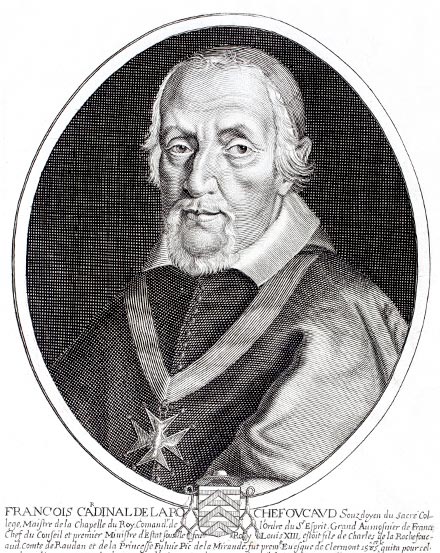
François de la Rochefoucauld - gravure de Daret - repro © Norbert PousseurThought for the Day

French Cardinal François de La Rochefoucauld wrote, “Jealousy springs more from love of self than from love of another.”